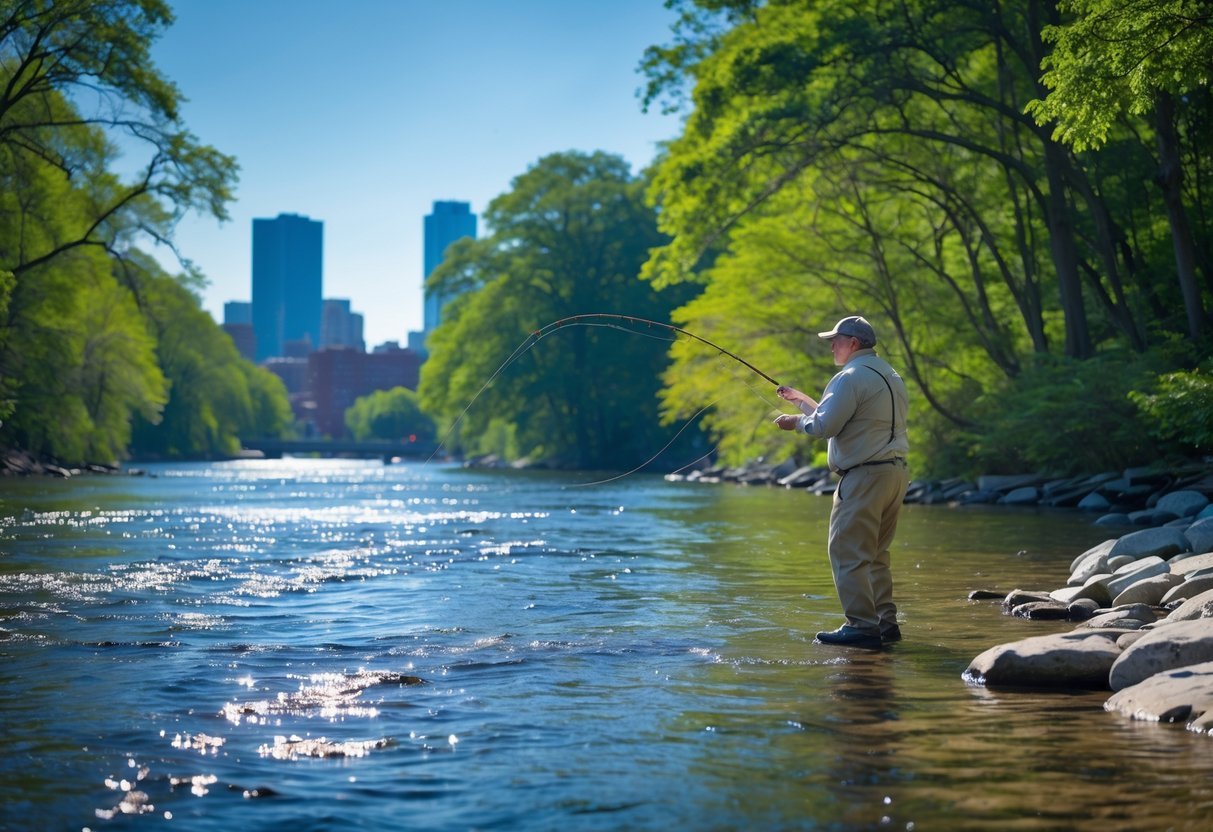
Fishing in Boston’s rivers offers a mix of urban convenience and natural calm. From the Charles River winding through the city to smaller streams on the outskirts, these waters give anglers easy access to both relaxation and excitement. To fish in Boston’s rivers, you need a Massachusetts freshwater fishing license, basic gear, and an understanding of local fish habits.
Boston’s rivers hold a variety of species, including bass, perch, and trout, making them great for both beginners and experienced anglers. With the right techniques and equipment, anyone can enjoy productive fishing without leaving the city. The combination of scenic views and accessible spots makes river fishing here a rewarding experience.
This guide explains where to go, what to bring, and how to fish effectively in Boston’s freshwater rivers. It also covers local regulations, conservation practices, and nearby saltwater options for those who want to explore beyond the rivers.
Overview of River Fishing in Boston
Boston’s rivers offer a mix of calm freshwater and tidal brackish waters that attract both local and visiting anglers. The city’s waterways support a range of fish species and provide easy access for shore and boat fishing within minutes of downtown.
Types of Rivers and Waterways
Boston’s main fishing river is the Charles River, which runs through the city and empties into Boston Harbor. It’s a slow-moving waterway with both freshwater and tidal sections. Anglers can find largemouth bass, carp, catfish, and crappie in its middle and upper stretches.
Smaller bodies like Mystic River, Neponset River, and nearby Jamaica Pond also provide accessible fishing spots. These areas often have walking paths, docks, and public access points that make them suitable for beginners and casual fishers.
The Charles River Basin, between the Longfellow and Boston University Bridges, is a popular area for both shore and small-boat fishing. It’s regularly monitored for water quality, and catch-and-release fishing is common there.
| River/Waterway | Common Fish Species | Access Type |
|---|---|---|
| Charles River | Bass, Carp, Catfish, Crappie | Shore, Kayak |
| Mystic River | Perch, Bass, Sunfish | Shore |
| Neponset River | Pickerel, Bluegill, Perch | Shore |
| Jamaica Pond | Trout, Bass | Shore, Small Boat |
Freshwater vs. Saltwater Influences
The Charles River and Mystic River are partly tidal near their mouths, creating brackish zones where freshwater mixes with saltwater. These areas can host both freshwater and salt-tolerant fish such as striped bass and white perch.
Upstream sections remain fully freshwater. Here, anglers often target largemouth bass, sunfish, and carp. Downstream, closer to Boston Harbor, the water becomes influenced by the Atlantic tides, which can change the fish behavior and bait preferences.
Tidal changes affect when and where fish feed. Knowing the tide schedule helps anglers plan their casts, especially in the lower Charles River Basin, where saltwater pushes inland during high tide.
Best Times of Year to Fish
Fishing in Boston’s rivers is most productive from late spring through early fall. May to October offers the best conditions, with warm water temperatures and active fish. During this period, bass and panfish are abundant in the Charles River and nearby ponds.
In spring, migratory species like striped bass move into tidal areas, providing strong action near the harbor. Summer brings steady freshwater fishing for bass and carp, especially early in the morning or near dusk.
Fall is ideal for cooler-water species and fewer crowds. Winter fishing is limited, but some anglers still target hardy species like pickerel and catfish in deeper sections where water remains unfrozen.
Top Boston Rivers for Fishing

Boston’s rivers offer easy access, varied fish species, and scenic spots suitable for both beginners and experienced anglers. Each location provides different conditions, from calm freshwater stretches to tidal zones that attract striped bass and perch.
Charles River Hotspots
The Charles River runs through downtown Boston and Cambridge, offering several reliable fishing areas. Popular spots include the Esplanade near the Hatch Shell, Herter Park in Allston, and Magazine Beach in Cambridge. These areas have docks, piers, and grassy banks that make casting simple.
Common catches include largemouth bass, smallmouth bass, carp, and bluegill. The river’s slow current and accessible shoreline make it ideal for shore fishing. Early morning and late afternoon hours tend to produce the most bites.
Anglers often use soft plastic lures, worms, or spinnerbaits for bass. A valid Massachusetts freshwater fishing license is required. Waders help when fishing near shallow coves, but many prefer casting from park benches or pedestrian bridges.
Mystic River Locations
The Mystic River flows from the Upper Mystic Lake through Medford and Somerville before entering Boston Harbor. It offers both freshwater and brackish zones, giving anglers a chance to catch striped bass, white perch, and sunfish.
Good access points include the Assembly Row waterfront, Draw Seven Park, and the Blessing of the Bay Boathouse area. These sites have parking, paved paths, and open riverbanks.
During spring and early summer, striped bass migrate upriver following baitfish. Light spinning tackle with swim shads or cut bait works well in these conditions. The river’s tidal influence means timing around high tide can improve results.
Neponset River Access Points
The Neponset River runs through Dorchester, Milton, and Quincy, offering quieter fishing away from downtown crowds. Access is easy from the Neponset River Greenway Trail, Pope John Paul II Park, and Milton Landing.
Anglers can target largemouth bass, pickerel, yellow perch, and crappie in the freshwater sections. Closer to the estuary, striped bass appear during warmer months.
The river has both calm pools and faster-moving stretches. Light tackle and live bait such as minnows or nightcrawlers are effective. Local fishing groups often note that the Neponset’s cleaner waters have improved the quality and size of fish caught in recent years.
Popular Fish Species in Boston Rivers
Boston’s rivers hold a mix of saltwater and freshwater fish that attract both local and visiting anglers. Species such as striped bass, bluefish, and flounder appear in different seasons and require specific techniques to catch successfully. Understanding their habits, feeding patterns, and migration timing helps fishers plan productive trips.
Striped Bass Migration and Seasons
Striped bass migrate through Boston’s rivers each year, moving in with warmer waters in May and staying until late October. They enter the Charles River and nearby estuaries to feed on baitfish like mackerel, herring, and menhaden.
These fish prefer shallow, structured areas such as rocky shorelines, bridges, and tidal flats. Early morning and evening hours usually offer the best bite.
Anglers often use live bait (eel or pogies) or artificial lures like jigs and plugs. Regulations allow only one striped bass per person, so catch-and-release is common. Paying attention to water temperature and tide changes helps predict when stripers will move upriver or back toward the harbor.
Bluefish Habits and Techniques
Bluefish appear in Boston’s rivers and harbor during summer, following schools of baitfish. They are aggressive predators known for fast strikes and strong fights. Most weigh between 5 and 15 pounds, though smaller “snappers” are common closer to shore.
Because bluefish have sharp teeth, anglers use a wire leader to prevent line cuts. Effective lures include spinners, spoons, and topwater plugs. When fishing from a boat, trolling near the river mouth or harbor edge can produce steady action.
Bluefish often feed in groups, chasing bait to the surface. Watching for diving seabirds can help locate active schools. Handling them carefully with pliers is important, as they can bite even after being landed.
Flounder and Other Target Species
Flounder thrive in soft, sandy bottoms along the lower Charles River and Boston Harbor. They feed on worms, clams, and small crustaceans. Spring and early summer bring the best results, especially on incoming tides when food moves inland.
A simple bottom rig with clam strips or sea worms works well. Light tackle helps detect subtle bites since flounder often nibble before taking the hook.
Other species found in Boston’s rivers include white perch, sunfish, and largemouth bass. These fish add variety for anglers using lighter gear or fishing from piers and riverbanks.
Essential Gear and Tackle for River Fishing
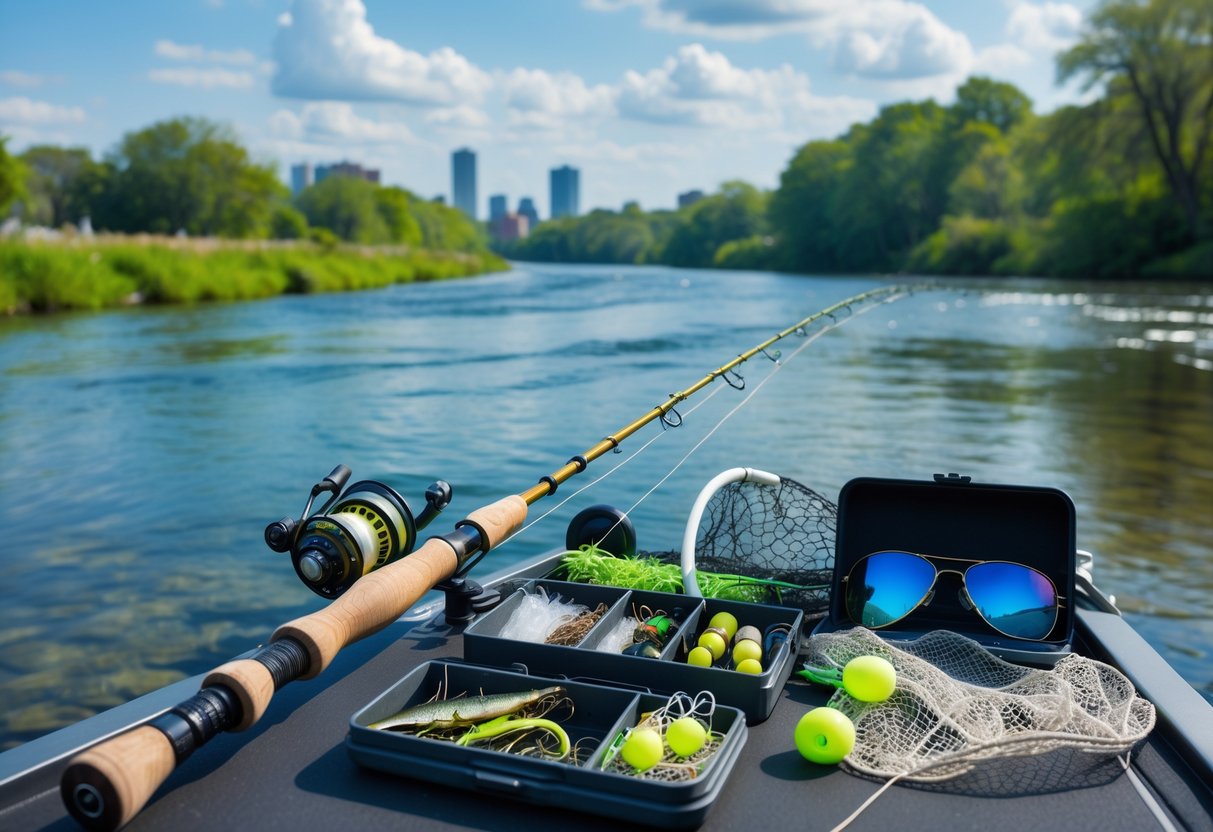
Successful river fishing around Boston depends on choosing the right rod and reel setup, understanding which baits and lures attract local fish, and matching tackle to the target species. Each piece of equipment affects how well anglers handle the variety of fish found in Massachusetts rivers.
Rod and Reel Recommendations
A medium-light to medium power spinning rod between 6’6” and 7’ works well for most river conditions. Pairing it with a 3000-size spinning reel provides enough strength and line capacity for striped bass, bluefish, or flounder found in local waterways.
Anglers often use 8–10 lb fluorocarbon line for clear rivers, as it offers low visibility and solid sensitivity. In deeper or murkier water, switching to a braided line improves durability and casting distance.
A smooth drag system is important when fighting larger fish like striped bass or pollock. Reels made from corrosion-resistant materials, such as aluminum or stainless steel, last longer in brackish or tidal rivers. Keeping gear lightweight helps reduce fatigue during long sessions.
| Rod Power | Reel Size | Line Type | Target Fish |
|---|---|---|---|
| Medium-Light | 2500–3000 | Fluorocarbon | Flounder, trout |
| Medium | 3000–4000 | Braided | Striped bass, bluefish |
Bait and Lure Selection
Boston’s rivers host both saltwater and freshwater species, so bait choice depends on location and season. Live bait like minnows, worms, or small crabs often attracts striped bass and flounder. For bluefish or cod near river mouths, cut bait such as mackerel strips works effectively.
Artificial lures are useful for covering more water. Spinnerbaits and crankbaits mimic small fish and appeal to active predators. Soft plastics shaped like sand eels or shrimp can trigger strikes from haddock and pollock in tidal zones.
Color and size matter. In clear water, use natural tones; in stained water, use brighter colors. Carry several lure weights to adjust for current speed and depth changes.
Tackle for Different Species
Each fish species in Boston’s rivers requires a slightly different setup. Striped bass respond well to medium-action rods, braided line, and strong circle hooks. Bluefish need wire leaders to prevent bite-offs. Flounder prefer bottom rigs with small hooks and light sinkers to keep bait near the riverbed.
For cod, haddock, and pollock, heavier tackle helps handle stronger currents and deeper channels. A two-hook rig with a 4–6 oz sinker keeps bait steady in moving water. Using fluorocarbon leaders improves stealth when fish are cautious.
Keeping tackle organized in a small waterproof box allows quick changes between rigs. Matching gear to conditions increases efficiency and reduces missed opportunities on the river.
Techniques and Strategies for Success
Fishing in Boston’s rivers, such as the Charles River, requires adapting to changing conditions, understanding fish behavior, and using the right gear for the environment. Success depends on reading the water, choosing proper bait, and matching techniques to the setting and season.
Bank and Shoreline Fishing Methods
Anglers along the Charles River and other Boston waterways often rely on casting accuracy and bait selection. Shaded banks, bridge pilings, and slow-moving edges attract bass, perch, and trout. Lightweight spinning rods with soft plastic lures or live bait like worms work well in these areas.
Early morning and late evening hours produce more bites when fish move closer to shore. Using slip bobbers helps control depth and keeps bait near feeding zones.
Maintaining quiet movements and avoiding sudden vibrations improves results, especially in clear water. A small tackle box with hooks, sinkers, and extra line is practical for walking between spots.
Kayak and Small Boat Approaches
Fishing from a kayak or small boat opens access to deeper channels and mid-river structures where larger fish feed. Stable kayaks with rod holders allow hands-free casting and better control. Electric motors or paddles help anglers move quietly through the Charles River’s calm sections.
Recommended setups:
| Target Fish | Suggested Bait or Lure | Depth Range |
|---|---|---|
| Largemouth Bass | Spinnerbaits, crankbaits | 4–10 ft |
| Catfish | Cut bait, chicken liver | Near bottom |
| Trout | Small jigs, spinners | 2–6 ft |
Anchoring near drop-offs or bridge supports allows longer casts into feeding zones. Safety gear such as life vests and waterproof storage is essential.
Urban vs. Natural Settings
Boston’s urban rivers, including the Charles, present unique challenges. Noise, boat traffic, and limited casting space require patience and short, controlled casts. Anglers often find success near docks, retaining walls, and drainage outlets where fish seek cover.
In more natural settings like the upper Charles or suburban tributaries, stealth and observation matter most. Clearer water demands lighter line and natural-colored lures.
Key differences:
- Urban areas: Focus on structure and current breaks.
- Natural areas: Emphasize quiet approach and water clarity.
Both environments reward preparation, awareness, and respect for local regulations and conditions.
Regulations and Conservation Practices
Fishing in Boston’s rivers requires following clear rules that protect fish populations and support healthy waterways. Anglers must hold valid licenses, follow daily catch limits, and respect seasonal closures that keep species like striped bass and trout sustainable for future generations.
Licensing and Permit Requirements
Anyone 15 years or older must have a valid Massachusetts freshwater fishing license to fish in rivers such as the Charles, Mystic, or Neponset. Licenses are available through the MassFishHunt system online or at approved vendors.
Residents ages 15–17 and those 70 or older can obtain licenses at no cost, while others pay a small annual fee. Nonresidents must purchase separate permits.
For saltwater species like striped bass or cod caught in tidal areas, a Massachusetts Recreational Saltwater Fishing Permit is required. This applies to all anglers, including those fishing from shore or private boats.
Carrying the license while fishing is mandatory. Officers from MassWildlife or the Division of Marine Fisheries (DMF) may request to see it at any time. Failure to produce a valid license can result in fines or loss of fishing privileges.
Catch Limits and Seasonal Restrictions
Daily catch and size limits protect fish stocks from overharvest. For example:
| Species | Daily Limit | Minimum Length | Notes |
|---|---|---|---|
| Striped Bass | 1 fish | 28–31 inches | Must be caught on circle hooks when using bait |
| Cod (in nearby coastal waters) | 1 fish | 22 inches | Open season varies by federal rules |
| Haddock | 15 fish | 17 inches | Subject to seasonal closures |
Freshwater species like trout and bass also have specific limits. Most rivers allow 3–5 fish per day, depending on the species.
Certain areas, such as parts of the Swift or Deerfield Rivers, are catch-and-release only or restricted to artificial lures. Seasons may close temporarily to protect spawning fish. Always check MassWildlife’s current regulations before fishing.
Sustainable Fishing Tips
Responsible anglers help conserve fish populations and habitats. Using barbless hooks makes releasing fish easier and reduces injury.
Avoid using lead sinkers or jigs under one ounce, as they are banned to protect wildlife from lead poisoning. Dispose of fishing line and bait containers properly to prevent pollution.
Practice catch-and-release for large breeding fish, especially striped bass, to maintain healthy stocks. Handle fish gently, keep them in the water when possible, and release them quickly.
Choosing locally sourced bait, respecting private property, and reporting invasive species also support long-term conservation. These actions ensure Boston’s rivers remain productive for both recreation and ecosystem health.
Nearby Saltwater Opportunities
Boston’s coastal access gives anglers a chance to move from river fishing to saltwater areas rich with marine life. Productive waters near the city hold species like flounder, cod, and pollock, offering reliable catches for those with small boats or charter access.
Boston Harbor River Mouths
The Boston Harbor area connects several rivers to the Atlantic, creating nutrient-rich zones that attract many fish. Anglers often target winter flounder and striped bass near the Neponset, Mystic, and Charles River mouths. These areas provide calm conditions compared to open water, making them suitable for small vessels or shore fishing.
Public access points such as Castle Island, Deer Island, and the piers near East Boston allow easy entry. The Massachusetts Division of Marine Fisheries maintains several of these sites, and many include lighting and cleaning stations.
Tides strongly affect fishing success. Incoming tides bring baitfish into the harbor, which draws larger predators. Light tackle and natural baits like seaworms or clams work well for bottom species such as flounder.
| Common Species | Best Season | Typical Method |
|---|---|---|
| Flounder | April–June | Bottom rigs with bait |
| Striped Bass | May–October | Casting or trolling |
| Pollock | Summer | Jigs near structure |
Stellwagen Bank Day Trips
Stellwagen Bank, about 25 miles east of Boston, offers deeper offshore fishing. The underwater plateau supports cod, haddock, and pollock, which feed along the bank’s edges. Most anglers reach the area through charter boats departing from Boston or nearby coastal towns.
Trips usually last a full day due to travel time and depth. The waters can be rough, so proper gear and weather checks are essential. Cod and haddock respond well to baited rigs dropped near the bottom, while pollock often strike metal jigs worked through midwater.
Fishing here requires a valid Massachusetts saltwater license. Because regulations change, anglers should confirm size and bag limits before departure. The combination of distance, depth, and diverse species makes Stellwagen Bank one of the most productive saltwater destinations accessible from Boston.