A beginner-friendly cast net should open predictably, sink fast enough to reach bait, and hold up when it drags through sand, grass, or a little shell. For most new anglers, the best cast net for beginners is the one that is easiest to open consistently, sized to local bait, and built with a mesh and sinker setup that matches the water they fish most often.
Mesh size matters more than many first-time buyers expect. A 3/8-inch mesh is a common sweet spot for minnows, shrimp, and small baitfish, while heavier sinkers help the net drop quickly, and lighter, compact designs can be easier to learn on. A good beginner net also benefits from a comfortable wrist strap, a manageable radius, and clear setup instructions, which is why the easiest-to-throw options stand out below.
Best for first-time throwers: Betts CH4-I-EZ Buddy Throw Net, 4′, Chartreuse
Best for value and rugged build: BasicGear Cast Net
Best for easy spread and step-by-step learning: Fitec RS750 SUPER SPREADER Cast Net 5 ft radius Clear
Best for heavier-duty lead sinkers: American Pro Cast Net
Best for multiple mesh options and larger sizes: Drasry Saltwater Fishing Cast Net
BasicGear Cast Net

Pros
- Comes with a repair kit and storage box
- Comfortable wrist strap and double lead line
- Available in several sizes and mesh options
Cons
- The netting may feel less refined than premium options
- Larger sizes can be awkward for absolute beginners
- Zinc-based sinkers need proper rinsing and drying
The BasicGear net feels aimed at practical use rather than polish. The 4-foot version is a sensible place to start because it is easier to control while still being large enough to gather usable bait.
Its 3/8-inch mesh fits the beginner sweet spot for minnows and small baitfish. The included instructions and repair kit add real value, especially for someone who expects a few rough throws while learning.
Fitec RS750 SUPER SPREADER Cast Net

Pros
- Opens in a broad, even spread
- Includes throwing aid and step-by-step instructions
- Lightweight feel makes practice less tiring
Cons
- Clear mesh can be harder to see in the water
- Not the most heavy-duty option for rough terrain
- Best results depend on good technique
The RS750 is one of the easier nets to learn with because the spread is predictable and the included throwing aid helps steady the cast. That makes it a good match for anglers who are still building muscle memory.
It sinks with enough confidence for typical bait work, and the comfort cuff reduces wrist irritation during repeated practice. The clear construction also keeps the net visually unobtrusive, which some anglers prefer in shallow water.
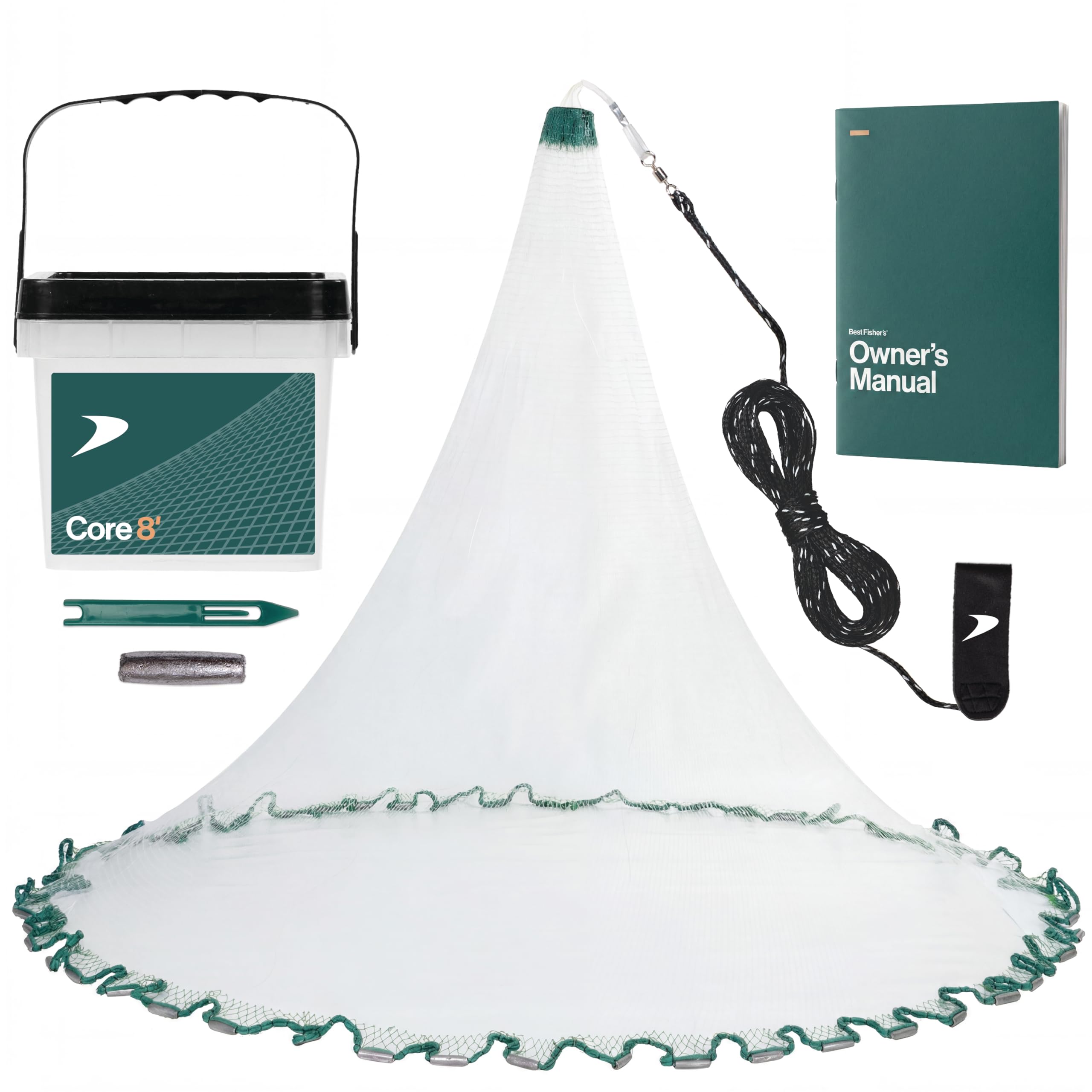
American Pro Cast Net
Pros
- Real lead sinkers improve drop speed
- Double line adds durability
- Includes a repair kit and storage bin
Cons
- Heavier feel can take practice to manage
- More net than some first-timers need
- Larger sizes can be overkill for small bait
The American Pro model feels built for anglers who want to buy once and keep using the same net for a long time. The reinforced construction helps when the net is used often around docks, sand, or mixed shorelines.
For beginners, the 3/8-inch mesh is a familiar, usable choice. The net rewards decent technique, and once the throw is consistent, it opens and sinks in a way that makes bait-catching feel more controlled.
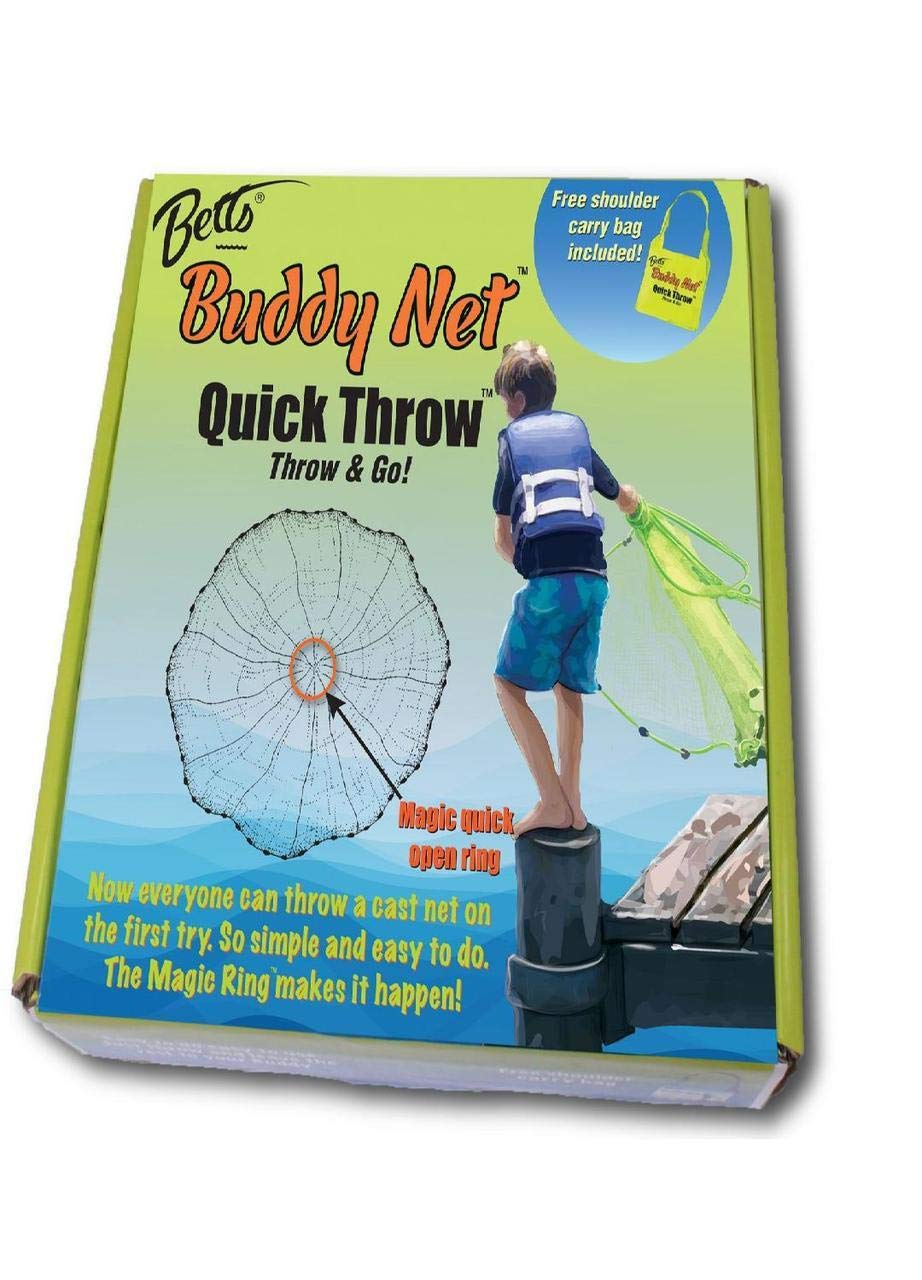
Betts CH4-I-EZ Buddy Throw Net
Pros
- Easy to handle and carry
- Quick-throw ring simplifies the learning curve
- Good size for shallow-water bait gathering
Cons
- Small radius limits coverage
- Not ideal for larger bait schools
- Synthetic build is less rugged than heavier-duty models
The quick-throw ring is the reason this model stands out. It helps new users get a usable cast without fighting the net as much, which can make the early learning phase less frustrating.
The 4-foot size is modest, yet that is part of the appeal. It is easier to control, easier to store, and easier to practice with near shore or in calm water where minnows and small baitfish tend to gather.
Drasry Saltwater Fishing Cast Net

Pros
- Multiple mesh and radius choices
- Pure lead sinkers help the net drop fast
- Includes a bucket and repair kit
Cons
- More configuration choices can confuse first-time buyers
- Heavier models take more strength to throw
- Some units may need careful inspection on arrival
The Drasry net is flexible enough to fit different bait targets, from smaller freshwater minnows to larger saltwater bait. The 3/8-inch mesh version is the safest starting point for most beginners.
Its heavier sinker setup gives it a decisive drop, which helps in moving water. That said, the net feels better for a beginner who is ready to practice and wants a more serious bait-catching tool rather than the easiest possible throw.
Buying Guide
Choosing the best beginner cast net comes down to matching the net to the bait, the water, and the thrower’s skill level. A net that is too large or too heavy can discourage practice, while one that is too small may not catch enough bait to be useful.
Mesh Size
For most beginners, 3/8-inch mesh is the safest starting point. It is versatile for minnows, shrimp, and common baitfish, while still being easier to throw than fine-mesh designs that can clog or tangle more easily.
- 1/4-inch mesh: Better for very small bait, but it can be less forgiving.
- 3/8-inch mesh: Best all-around choice for beginners.
- 1/2-inch mesh: Tougher and often easier to manage, though less suited to tiny bait.
Radius and Weight
A smaller radius is easier to learn with. Many first-time buyers do well with a 4-foot to 5-foot net, especially if they are practicing from shore or a dock.
Heavier nets sink faster, which helps bait stay from escaping, but they also require more effort to throw. That trade-off matters if the user is small-statured or plans to practice for long sessions.
| What to prioritize | Why it matters |
|---|---|
| Easy-open design | Reduces tangles and frustration |
| Moderate size | Easier to control while learning |
| Appropriate mesh | Matches local bait size |
| Comfortable wrist strap | Helps during repeated throws |
| Included repair kit | Useful after rough practice or snagging |
Material and Durability
Monofilament and reinforced lines are common in beginner nets because they balance flexibility and toughness. Lead sinkers tend to drop faster than lighter alternatives, while coated or zinc-style components may need more careful rinsing after saltwater use.
Beginner-Friendly Extras
Helpful extras can make a real difference:
- Throwing instructions
- Repair kit
- Carry bucket or storage box
- Throwing aid or ring
- Comfortable hand strap
A beginner net should make the learning curve manageable, not fight the user at every step. The best choice is usually the one that opens predictably, sinks cleanly, and feels easy enough to practice with until the motion becomes natural.