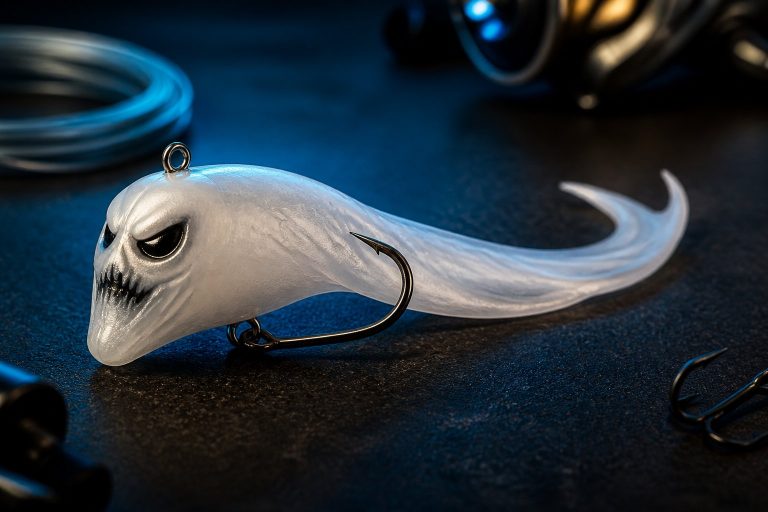
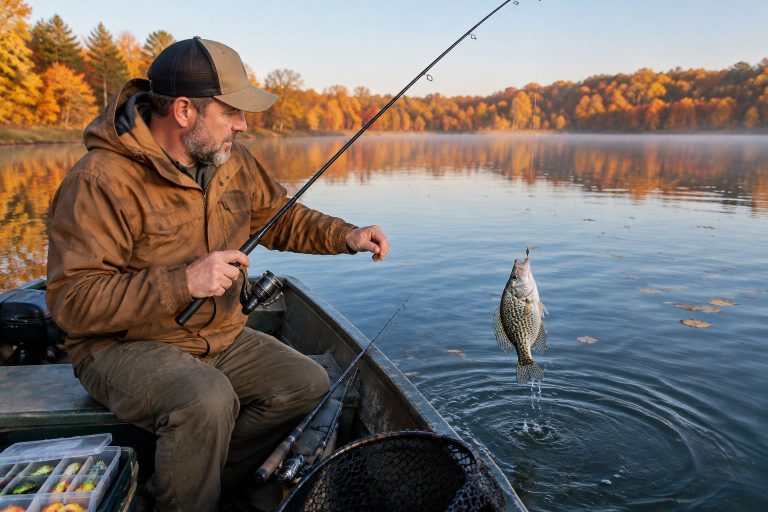
For a beginner-friendly catfish rig for bank fishing, start with a Carolina rig: you get a simple slip-sinker setup that keeps bait near the bottom on clean sand or firm mud. You need only a sliding sinker, bead, swivel, leader, and hook, so you spend less of a short trip sorting tackle.
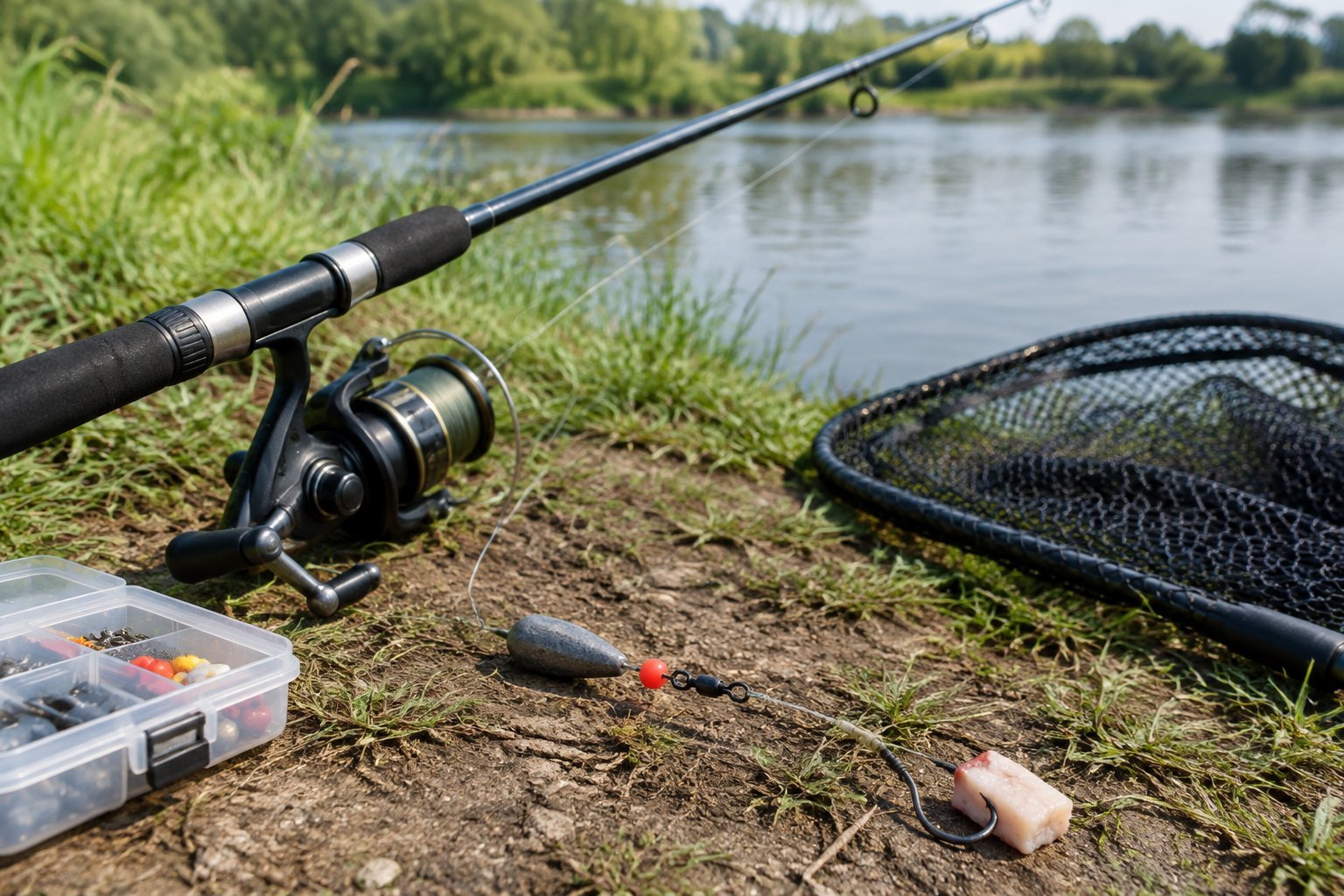
When you’re bank fishing for catfish after work or with your kids, an easy-to-manage presentation helps you keep bait in the water. You improve your chances to catch catfish by matching that presentation to the bottom and keeping your hook point exposed.
Which Setup Should You Use From Shore?
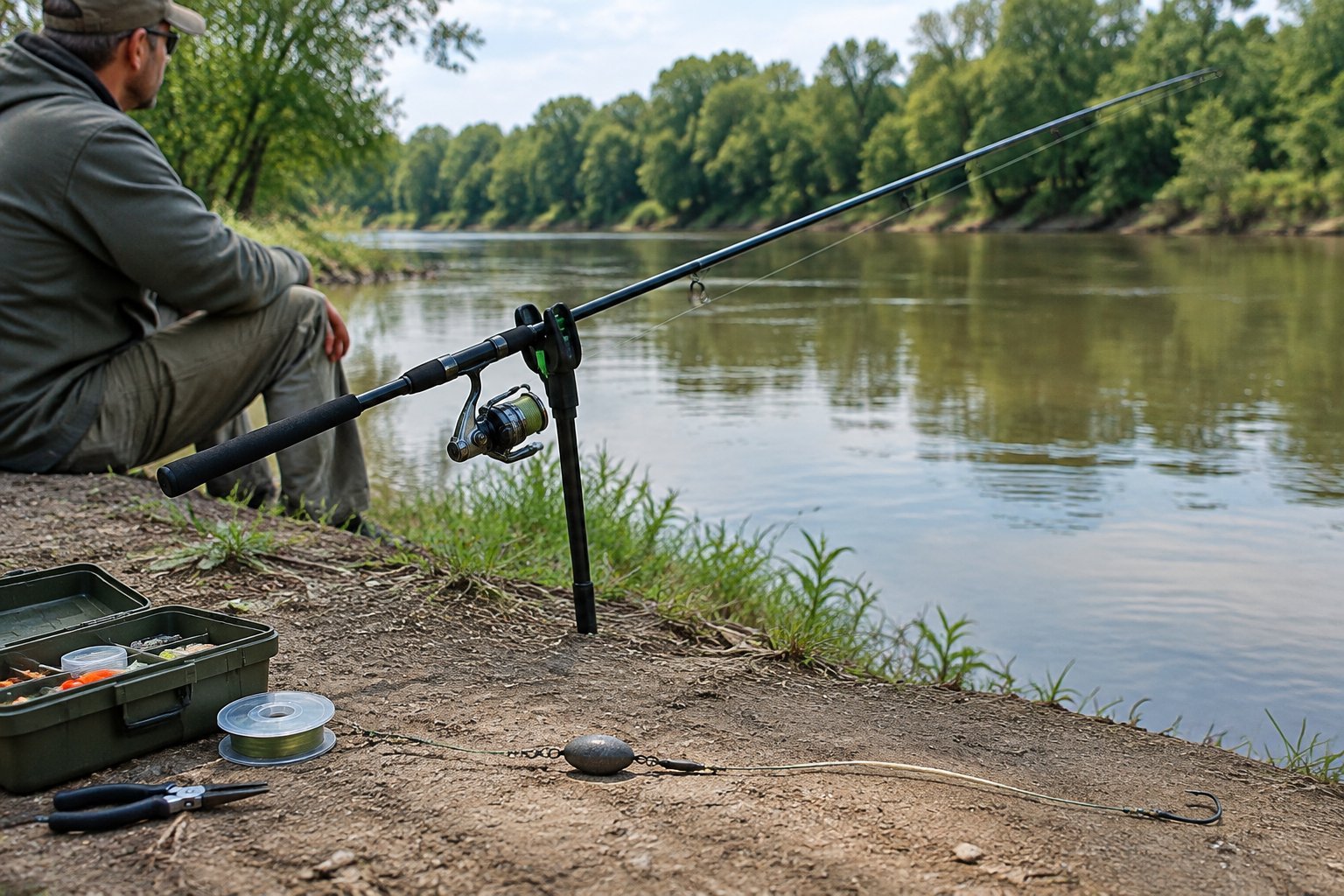
Choose your bank fishing rig by the obstacle between your bait and a feeding fish: bottom debris, current, or vegetation. You’ll find the best catfish rigs easier to select when you separate bottom-contact setups from suspended presentations.
| Your choice | Carolina rig | Santee-Cooper rig | Three-way rig | Slip float rig |
|---|---|---|---|---|
| Best starting conditions | Clean bottom | Silt, light debris | Current, rough bottom | Weed edges, suspended fish |
| Bait position | Near bottom | Lifted above bottom | Separate from sinker | Set depth below float |
| Adjustment point | Leader length | Float buoyancy | Dropper length | Float stop |
Clean Bottom and Quick Trips: Start With a Carolina Rig
Choose a Carolina rig for a pond bank or lake shoreline with an open bottom. With relatively few components, you have fewer places for a leader to wrap during a cast.
For a quick trip, begin with one bait size and one casting lane. During shore fishing, you gain little from extra casting distance if your bait lands beyond the accessible bottom feature.
Silt and Light Debris: Lift Bait With a Santee-Cooper Rig
Use a Santee-Cooper rig when your retrieved bait comes back coated in soft mud or dead leaves. Its underwater float adds lift near the hook, helping keep bait clear of light debris.
You still need enough buoyancy to support the bait you choose. A small float paired with a heavy chunk of fish will provide less lift than the same float carrying a narrow strip.
River Current and Rough Bottom: Consider a Three-Way Rig
Choose a three-way rig when you want the sinker on its own replaceable dropper. This arrangement gives you separate control over the weight connection and bait leader.
You still face snags around riprap and submerged timber. Start along the softer edge of a current seam, where holding bottom requires less weight than casting into the main flow.
Weeds and Suspended Bait: Choose a Slip Float Rig
Choose a slip float rig when you need to hold bait above vegetation or fish a specific depth beside cover. You adjust the fishing depth with a movable stop on your line.
You also need room for the float to drift without carrying your hook into branches. Fish the open edge of weeds, and retrieve before the float reaches an obstruction.
How Do You Tie These Four Rigs?
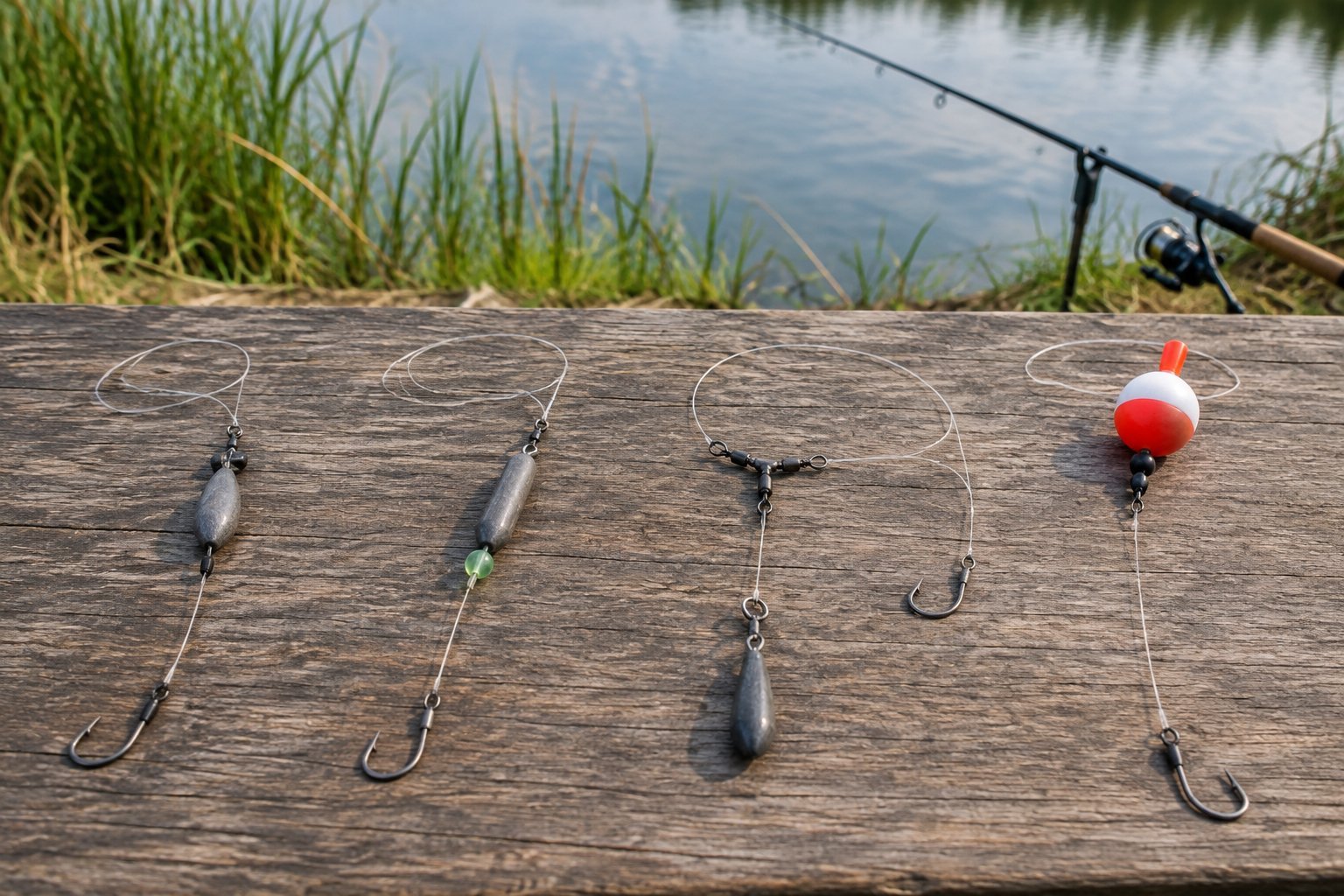
Build each rig around secure connections, then adjust the leader or float to suit your spot. Practice your beginner fishing knots at home so your bank-side preparation takes less time.
Carolina Rig: Parts and Step-by-Step Assembly
Gather a sliding egg or no-roll sinker, protective bead, barrel swivel, 18–24 inches of monofilament leader, and a circle hook. Select the sinker and hook using your rod rating and bait size.
- Slide the sinker onto your main line.
- Add the bead below the sinker.
- Tie your main line to one end of the swivel.
- Tie the leader to the other end.
- Attach your hook, wet each knot, and tighten it steadily.
Pull-test the connections before baiting up. If your leader repeatedly wraps around the main line, shorten it to about 12–18 inches.
Santee-Cooper Rig: Add and Adjust a Peg Float
For a Santee Cooper rig, gather the Carolina components plus a peg float and a 24–36-inch leader. You’ll place the float near the hook to support your bait underwater.
- Thread your sinker and bead onto the main line.
- Tie on the swivel and attach your leader.
- Slide the peg float onto the leader.
- Tie on your circle hook.
- Secure the float a few inches above the hook.
Test the baited leader in shallow water before casting. You control lift through float buoyancy, bait weight, and leader geometry; moving the float alone does not establish an exact height above bottom.
Three-Way Rig: Separate the Sinker and Bait Leaders
Gather a three-way swivel, sinker, hook, 18–30-inch bait leader, and 10–18-inch sinker dropper. Use a lower breaking-strength line for the dropper if you want a sacrificial weight connection.
- Tie your main line to one swivel eye.
- Attach the bait leader and hook to another eye.
- Tie the sinker dropper to the remaining eye.
- Secure your sinker to the dropper.
- Stretch the branches apart and check every knot.
Keep the dropper strong enough for your casting load. A hard cast with a heavy sinker and weak dropper creates a dangerous break-off risk.
Slip Float Rig: Set the Stopper and Balance the Float
Gather a bobber stop, small bead, slip float, suitable weight, swivel, 18–24-inch leader, and hook. For these catfish float rigs, match the float’s carrying capacity to the combined bait and weight.
- Install the stop on your main line.
- Thread on the bead and slip float.
- Add the weight below the float, following the float’s rigging instructions.
- Tie on your swivel, leader, and hook.
- Move the stop to set your fishing depth.
Check the baited rig beside the bank. Add or remove weight until the float sits upright with its visible tip above water, and account for your leader when setting depth.
What Hooks, Line, and Weights Do You Need?
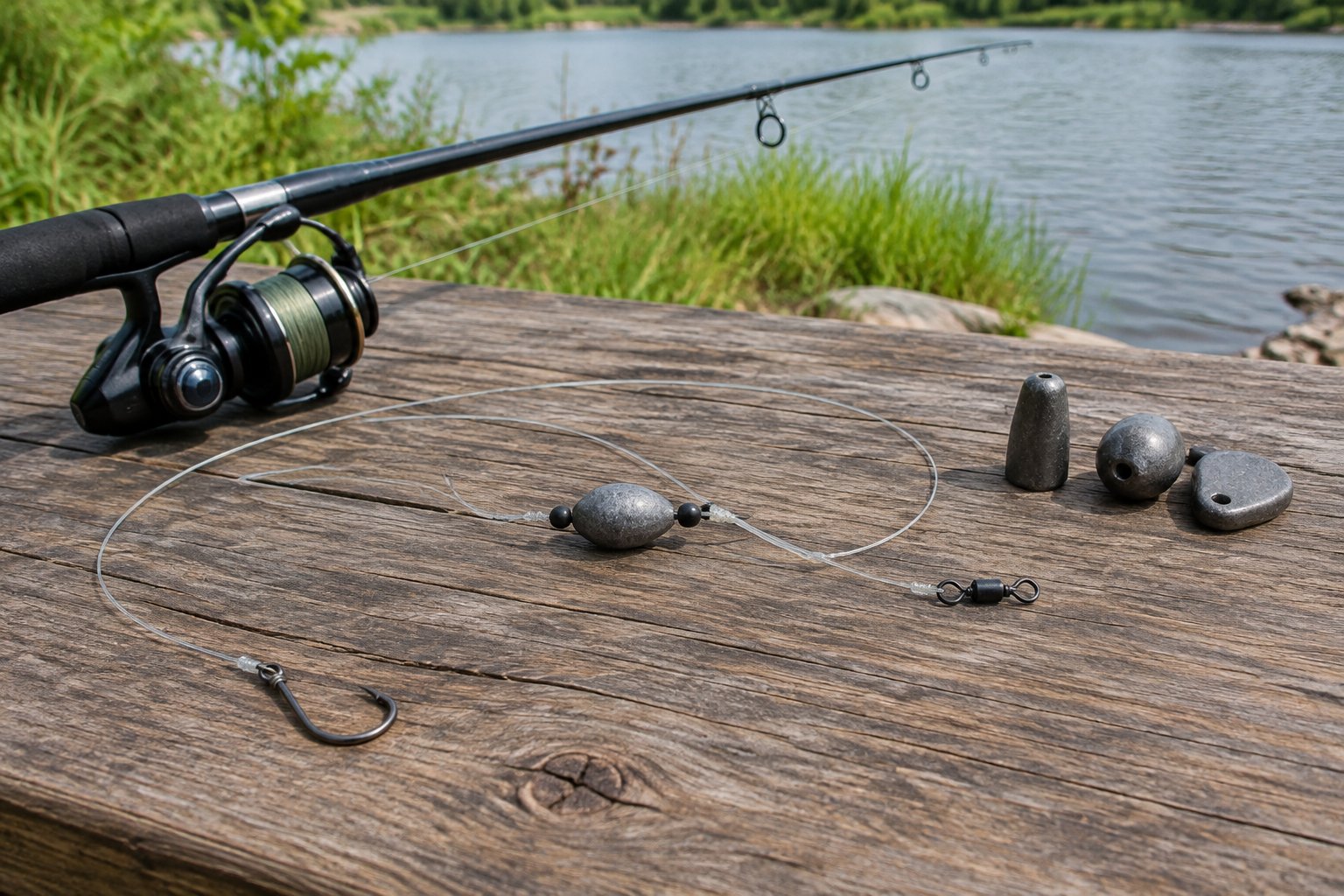
Match your hook to the bait and keep your total casting load within your rod’s printed rating. For ordinary channel-catfish trips, you have little reason to start with trophy-sized tackle.
Match Circle Hook Size to Your Bait
Begin around 2/0–4/0 for nightcrawlers or small cut baits, and consider 5/0–8/0 for larger pieces. Hook dimensions vary by manufacturer, so compare the actual gap when choosing fishing hooks as a beginner.
Leave the point and gap clear after baiting. Reserve 10/0 circle hooks for bulky presentations that justify their size, and check local rules for any requirements concerning non-offset catfish hooks.
Choose a Rod, Reel, and Abrasion-Resistant Leader
For a versatile shore setup, consider a 7–9-foot medium-heavy rod with a moderate action and a smooth-drag spinning reel. You’ll want enough backbone for your sinker while retaining some flex as a fish pulls.
Start with 20–30 lb monofilament main line or 30–50 lb braid, then add a 40–60 lb mono leader around abrasive bottom. When you set up a spinning reel, match its line capacity to your chosen diameter. For trophy catfish, step up your equipment as a complete system, including your landing net.
Use Enough Sinker Weight Without Overloading Your Rod
Carry several sinker sizes, with 1–3 oz covering many modest-current bottom-fishing situations. Begin lighter in still water and increase only when your rig moves out of the intended lane.
Count bait weight as part of your casting load. If holding bottom requires more weight than your rod supports, move into softer current or use appropriately rated equipment.
Which Baits Work With Each Setup?
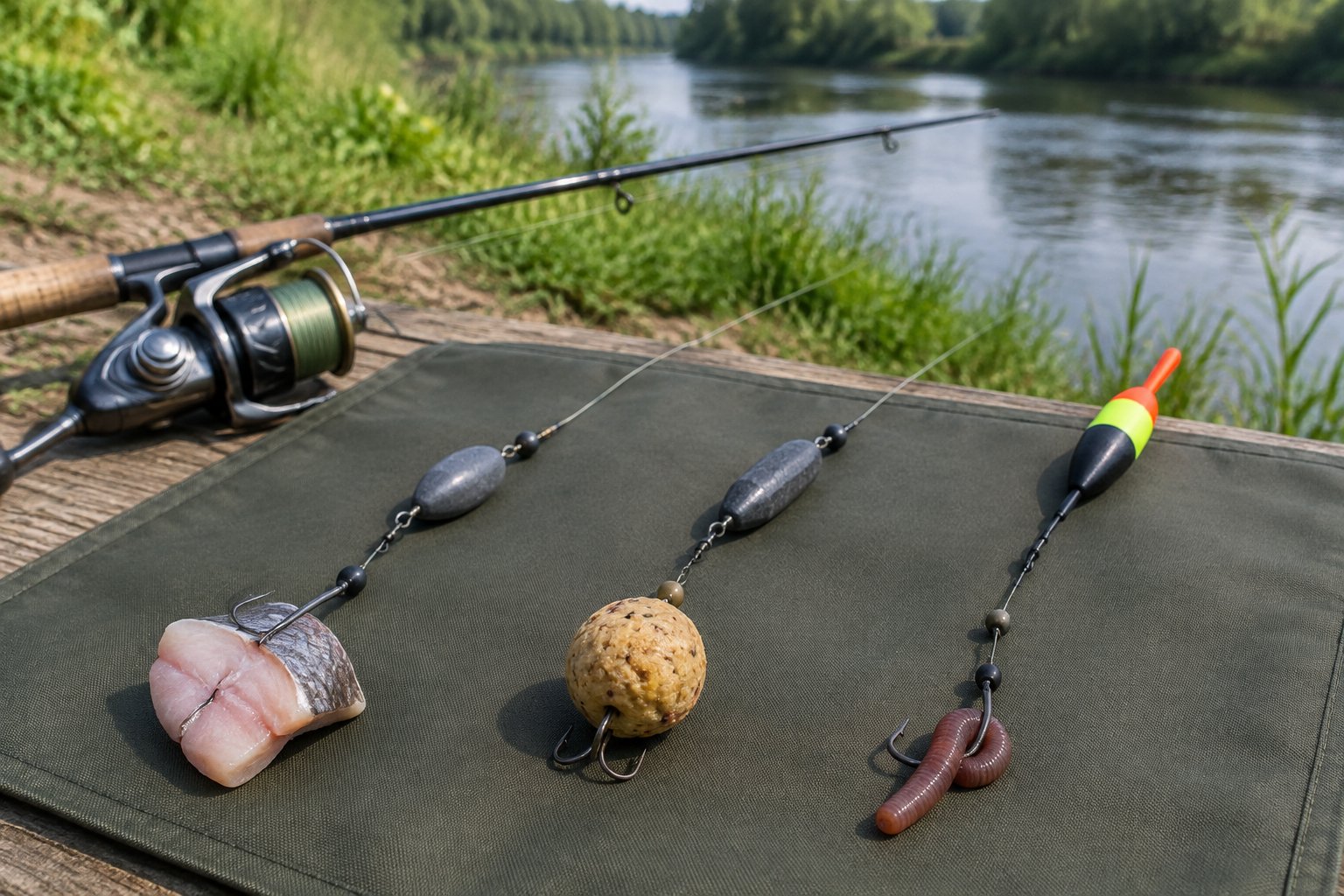
Use nightcrawlers or small cut bait for an approachable first trip, then match larger fish baits to your target species. With every setup, keep your bait secure enough to survive the cast.
Nightcrawlers and Small Cut Baits for Channel Catfish
For channel catfish, thread a nightcrawler securely onto your hook while leaving the point exposed. You’ll find this manageable with a Carolina rig on clean bottom or a slip float above shallow weeds.
Small pieces of legally obtained cut fish also fit a short-trip approach. If you use a Santee-Cooper rig, check that your float lifts the bait before sending it into deeper water.
Cut Shad and Skipjack for Blue Catfish
When targeting blue catfish, use fresh or properly chilled cut shad or skipjack where legal. Hook through a firm section of skin so the bait stays attached during your cast.
With river fishing bait, keep spare portions cold and cut only what you need. Try a Santee-Cooper presentation over soft bottom or a three-way setup along a manageable current seam.
When Live Bait Makes Sense and What Rules to Check
Consider live bait fishing for catfish when you’re deliberately targeting predators such as flatheads. When choosing bait for flathead catfish, a legally obtained live baitfish is a practical option around suitable cover.
Before collecting bait, check your state’s rules and the specific waterbody’s restrictions. Verify permitted species, collection methods, transport requirements, and whether live fish are allowed as bait; release leftover bait only where regulations explicitly permit it.
How Can You Make a Short Bank Trip Count?
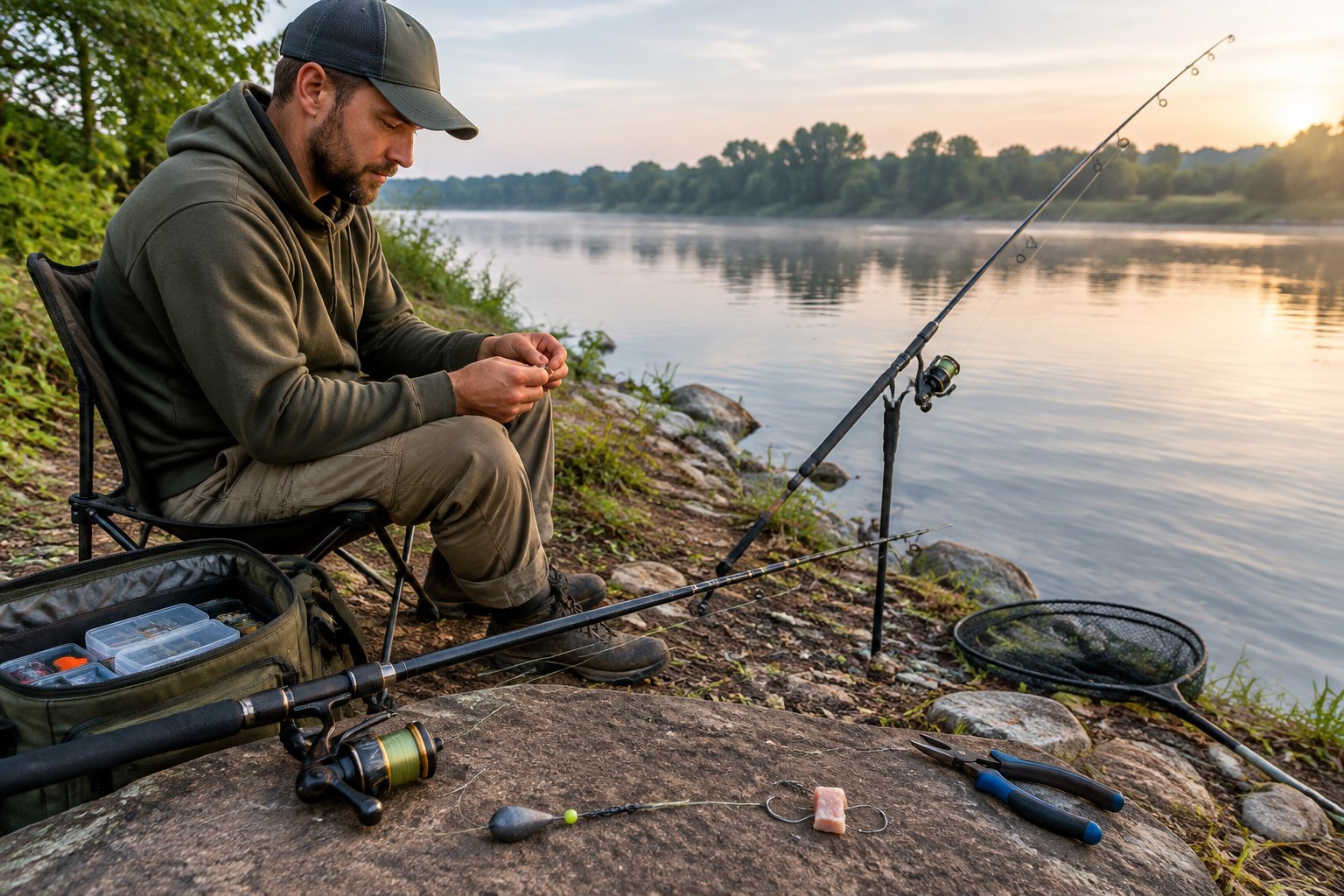
Make your bank fishing trip manageable by choosing safe access and preparing your terminal tackle before leaving home. For family catfish bank fishing, start with one active rod while everyone gets comfortable.
Pick an Accessible Spot With a Safe Landing Area
Choose legal access with firm footing and a low, open place to net a fish. Look for a nearby depth change or current seam that you can reach with a controlled cast.
Keep children back from steep edges and use properly fitted life jackets beside deep or moving water. Avoid flooded banks, unstable riprap, and restricted dam areas.
Pre-Tie Leaders and Pack a Small Family Fishing Kit
Store a few finished leaders on a rig board or in labeled sleeves. Pack pliers, line cutters, spare weights, a landing net, hand-cleaning supplies, and a small first-aid kit.
Use secure bank fishing rod holders that suit your ground conditions. Check your license and local rod limits before setting up, and keep bait knives and loose hooks under adult control.
Cast Smoothly and Fix Tangles or Drifting Sinkers
Make an overhead clearance check, then use a smooth casting motion. When you cast an open-face reel, close the bail by hand and remove loose line before settling the rod.
If the leader tangles repeatedly, shorten it and reduce your casting force. If your sinker keeps drifting, change your casting angle or move toward slower water before adding weight within the rod’s rating.
Let Circle Hooks Load Instead of Making a Hard Hookset
With circle hooks, let a sustained pull bend the rod, then reel steadily while lifting into the fish. Keep your drag engaged at a sensible setting and maintain consistent pressure.
Avoid reacting to every small tap. Once you have a fish close, guide it into your net; lifting a heavy catfish by the line risks a break at the bank.
Should You Buy Pre-Tied Rigs or Make Your Own?
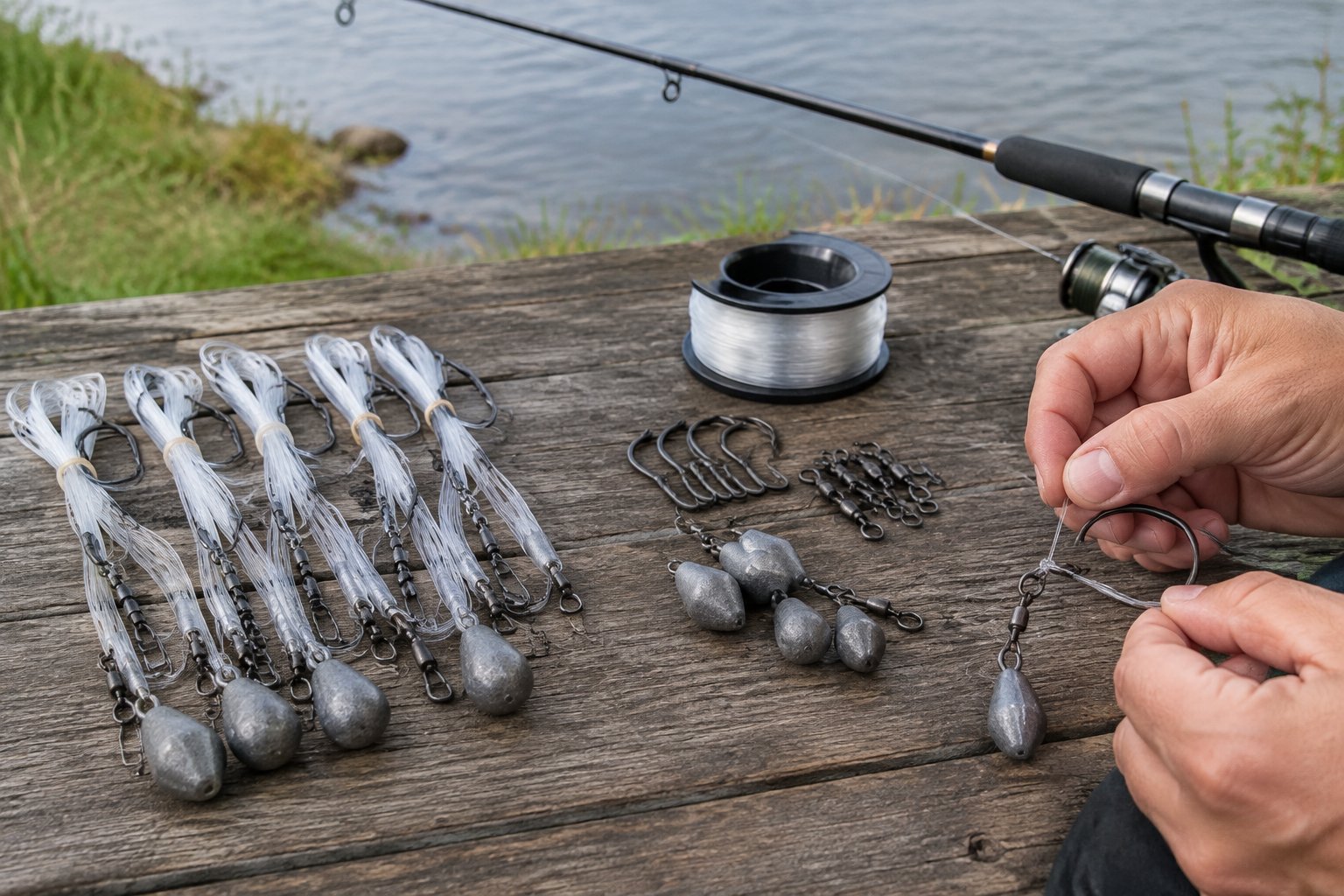
Buy pre-tied rigs when reducing preparation is your priority; tie your own when you want exact control over component sizes. You’ll benefit from carrying a replacement either way, especially around snag-prone shorelines.
Compare Setup Time, Replacement Cost, and Component Quality
With a pre-tied leader, you shorten the steps between arriving and baiting your hook. Check whether the package includes the sinker and main-line connection before treating it as a complete setup.
When comparing cost, calculate the price per usable rig with any extra components included. Inspect hook points and pull-test knots, then replace any leader showing roughness or damage.
Check Dovesun, YOTO, Narcissus, and Pfeibk Listings Carefully
When shopping for Dovesun catfish float rigs or a YOTO Santee Cooper rig, confirm the selected variation’s hook size and leader material. Check float adjustability and whether the listed weight is included.
Apply the same checks to a Narcissus Catfish Rigs Set and a Pfeibk 4 Pack Catfish Rigs listing. Compare the package contents and connection layout with the rig you intend to build, then inspect the delivered components before fishing.
Treat Rattling Floats as Optional, Not a Catch Guarantee
Choose a float first for its ability to support your bait. Treat rattling floats as an optional feature, and keep your hook size and leader strength appropriate for the presentation.
If you want to compare a rattling float with a plain one, keep your bait size and location consistent across several trips. Record whether your bait returns clean and whether the rig stays in position.
Get your gear ready and explore the related beginner-friendly guides before your next trip.