Fishing hooks for beginners are easiest to choose when you start with the fish and bait you plan to use. For a first freshwater tackle box, choose a #6 baitholder hook for bluegill and sunfish, then add a #4 baitholder for larger panfish and a #1 EWG hook for bass soft plastics. These sizes cover common pond and bank-fishing situations without making your setup complicated.
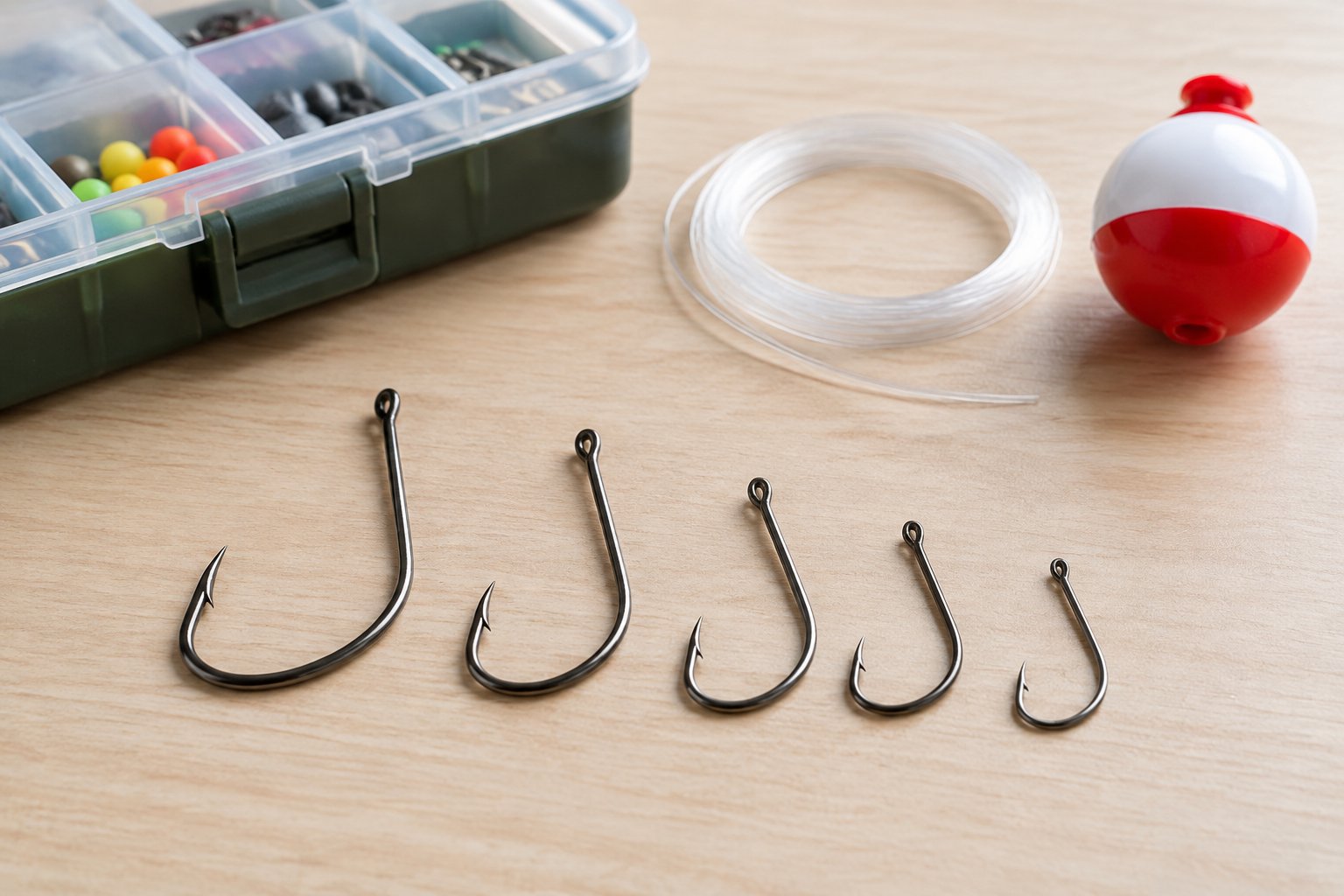
A hook that fits your bait is easier to rig and helps you present it naturally. For a quick trip or a child’s first outing, keep a few sizes organized and use pliers when changing hooks.
1. #8 Aberdeen Hook for Tiny Panfish
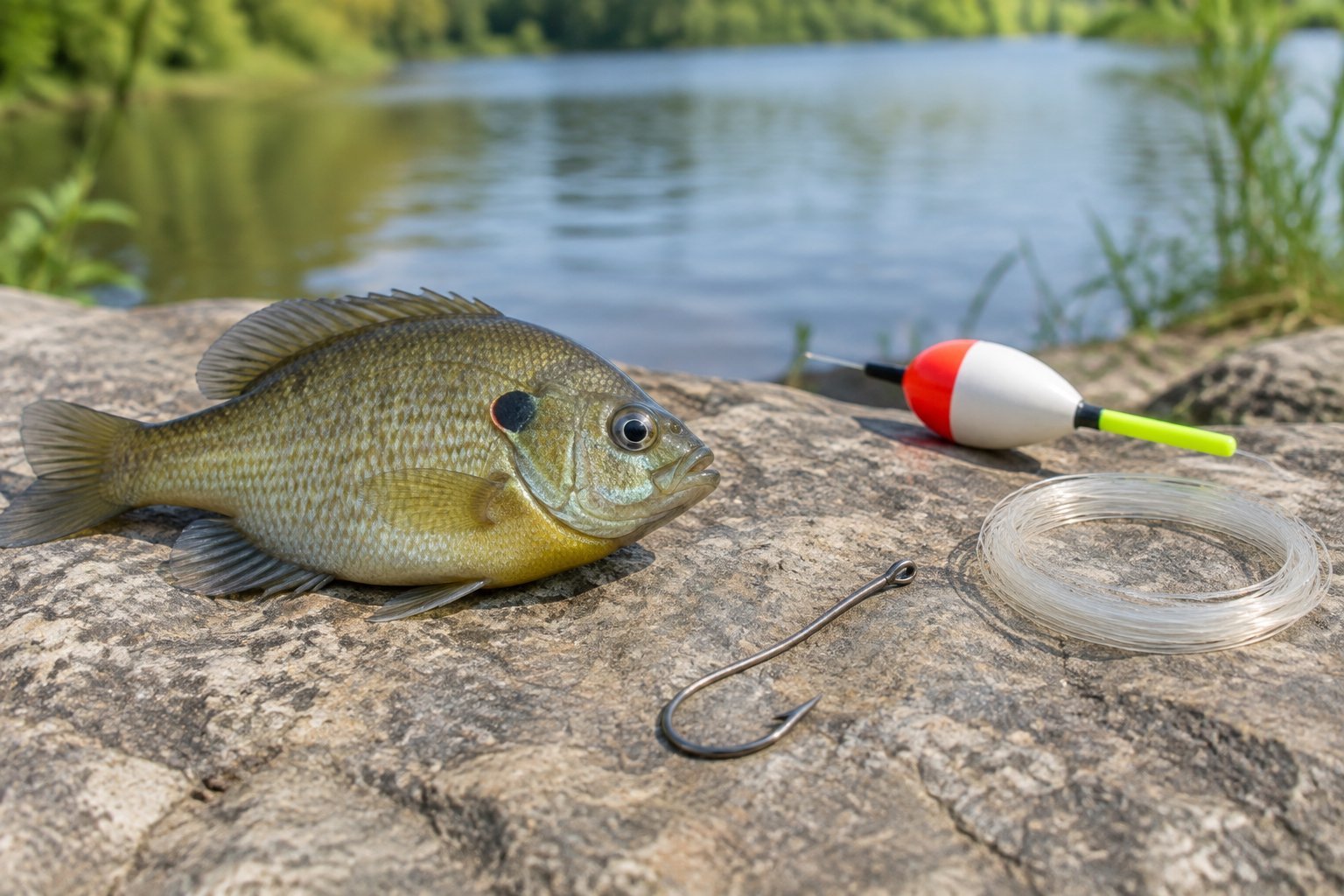
A #8 Aberdeen hook works well when you’re targeting small bluegill or other tiny panfish with a small piece of worm. Its long shank gives you more room to grip the hook during unhooking, which is useful when small fish swallow bait quickly.
Thread a small piece of worm onto the hook and leave the point exposed. If your bait covers the point or bunches up into a lump, trim it down so the hook can catch cleanly. A thin-wire Aberdeen hook keeps the presentation light for small fish.
2. #6 Baitholder Hook for Bluegill and Sunfish
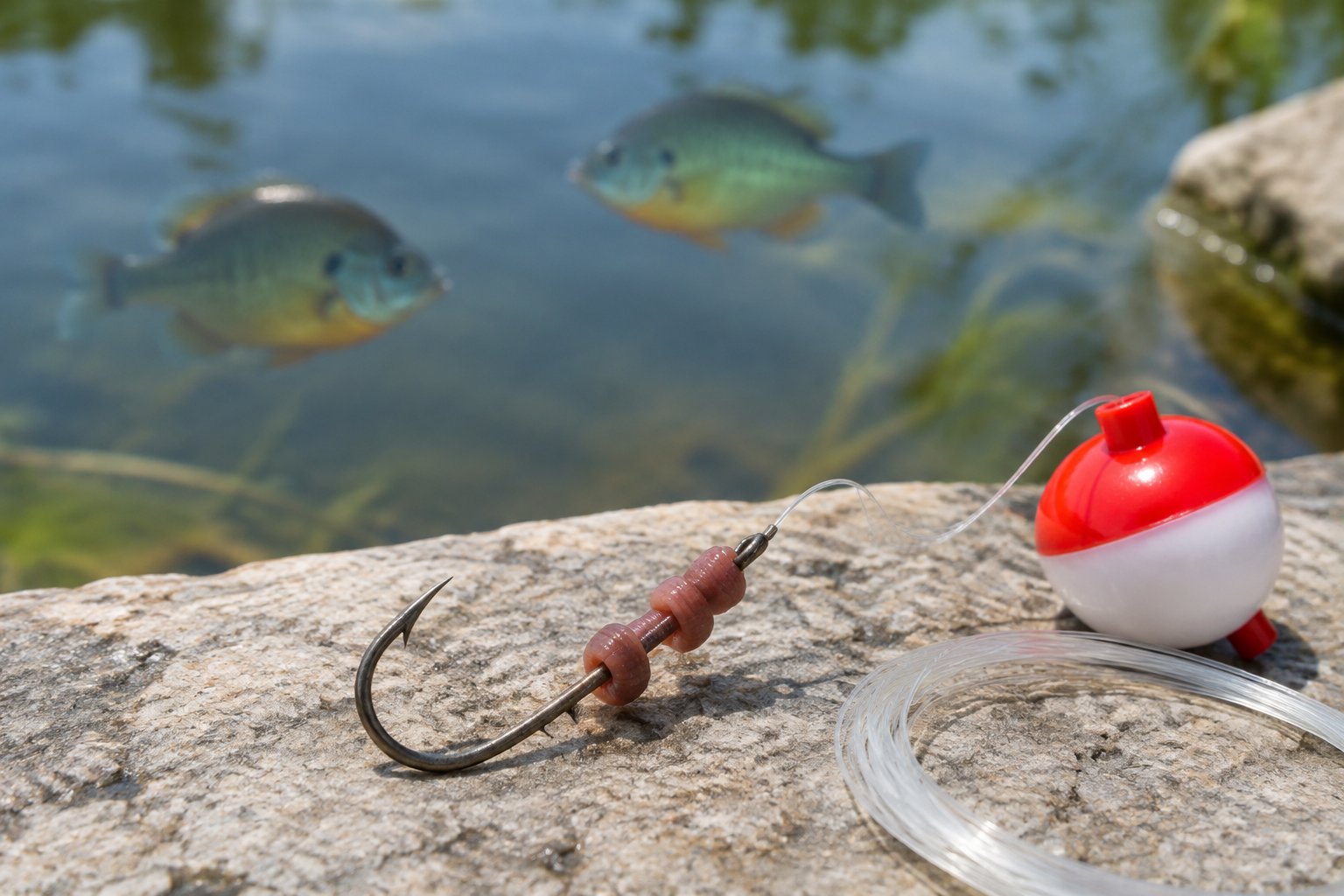
A #6 baitholder hook is a practical starter size for bluegill and sunfish because its small shank and barbs help keep worm bait in place. Use a single worm segment beneath a bobber for a straightforward pond setup.
The small barbs along the shank grip soft bait as you cast. Pinch the barb down if you want easier hook removal, especially when fishing with children, and check that the point remains exposed. You can pair this hook with bluegill baits such as worms or other small offerings.
3. #4 Baitholder Hook for Crappie and Perch
A #4 baitholder gives you more room for a larger worm piece when you’re fishing for crappie or perch. Its bait-holding barbs help keep live bait on the shank during a cast.
Use a bait portion that fits the hook gap, the open space between the point and shank. If bait fills that gap, a fish has less room to take the hook. For a simple setup, suspend the bait below a bobber and adjust the depth until it reaches the fish.
4. #2 Octopus Hook for Live-Bait Trout
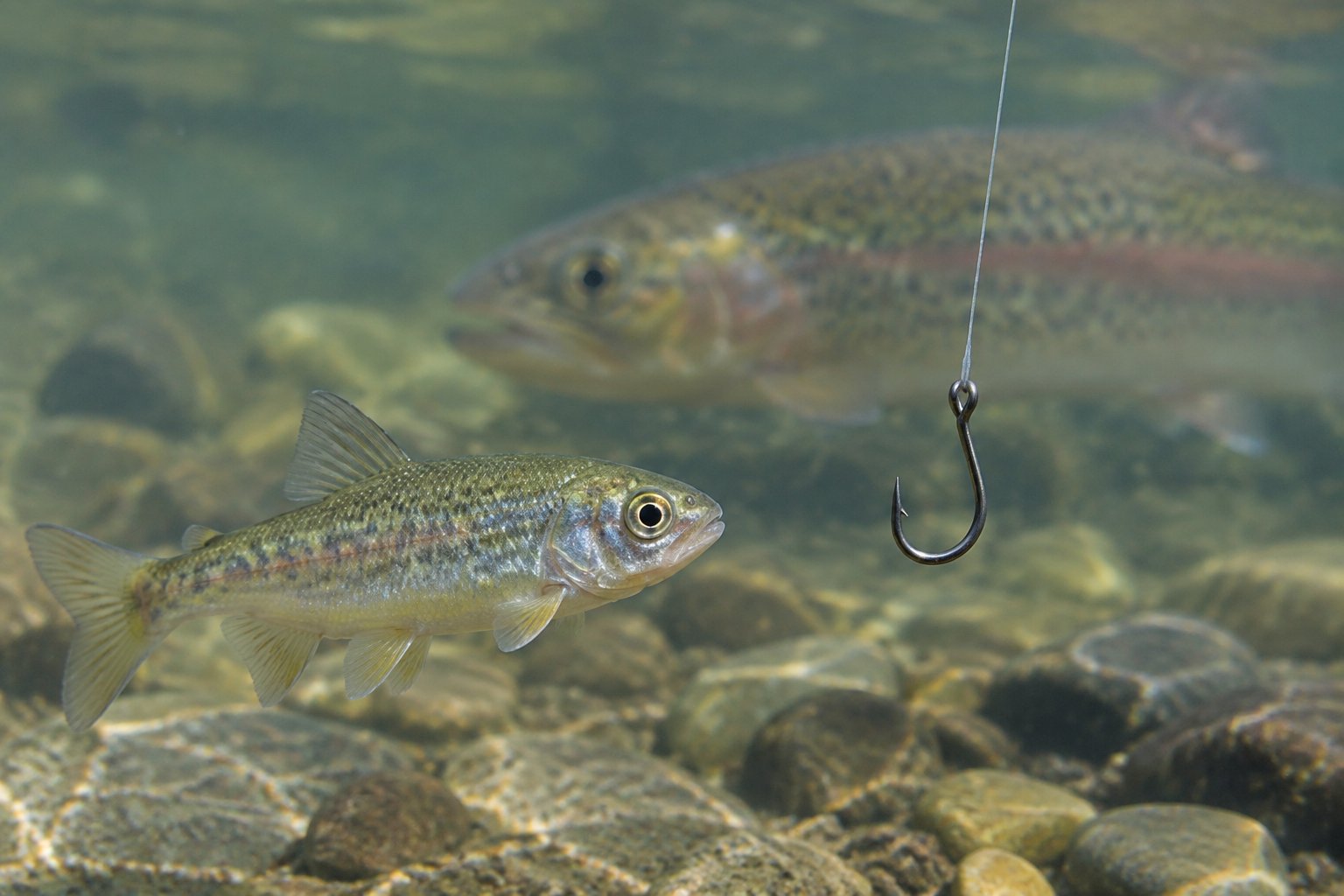
A #2 octopus hook suits live-bait trout fishing when you need a compact hook with a curved shape and short shank. The bend helps the hook sit neatly in a small baitfish or a piece of natural bait.
Pass the hook through a secure part of the bait while keeping the point clear. Match the bait size to the hook so it does not hide the point or prevent the fish from taking it. For more beginner context on choosing bait and setting up, see this guide to trout fishing for beginners.
5. #1 Circle Hook for Channel Catfish
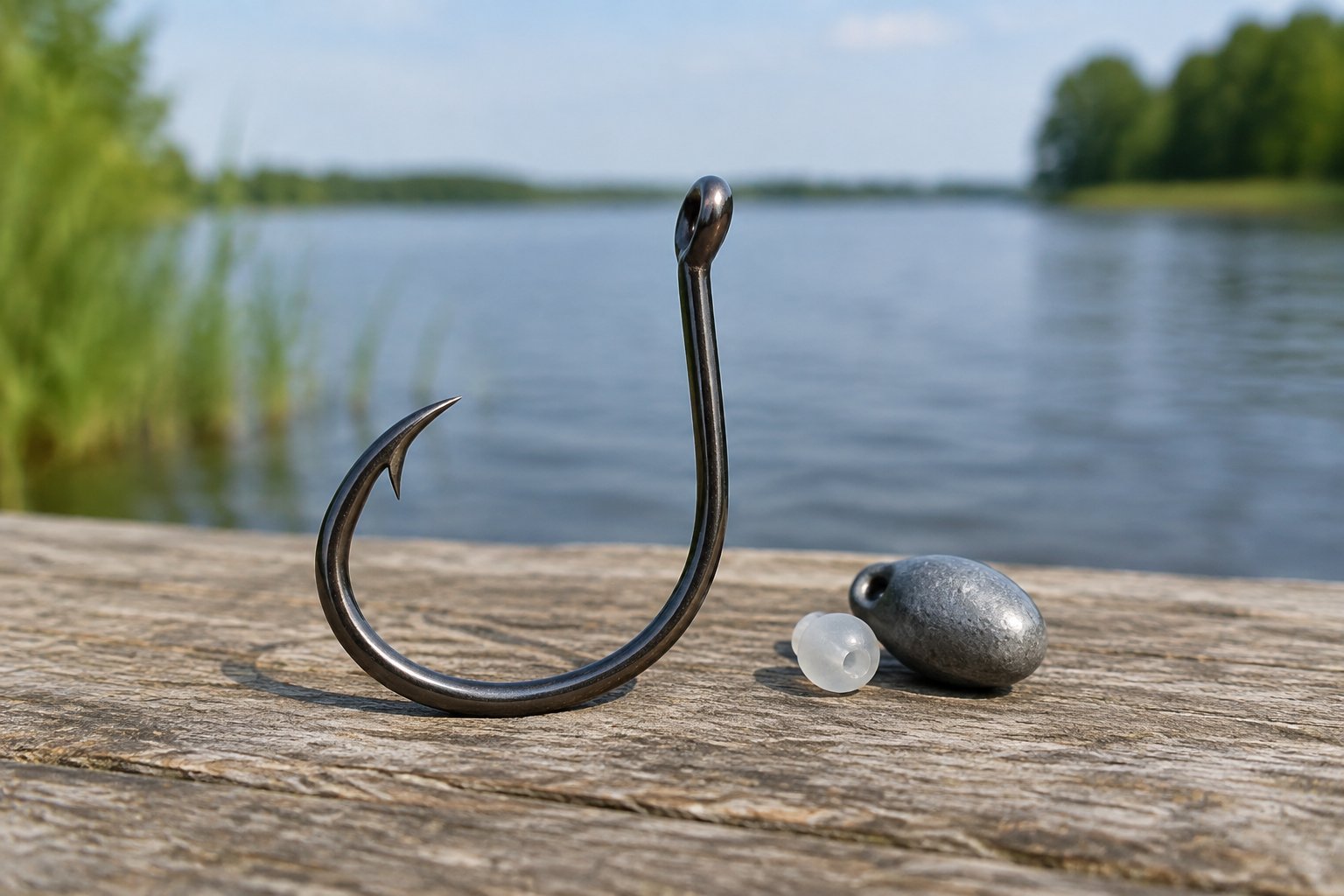
A #1 circle hook is a useful choice for channel catfish when you’re using natural bait and want a hook designed to catch near the corner of the mouth. Its point curves inward toward the shank.
With a circle hook, let the line come tight and lift steadily instead of making a sharp, hard hookset. The fish’s movement helps the hook rotate into position. Choose bait that fits inside the hook’s curve, leaving enough space for the point to engage.
6. #1 EWG Hook for Bass Soft Plastics
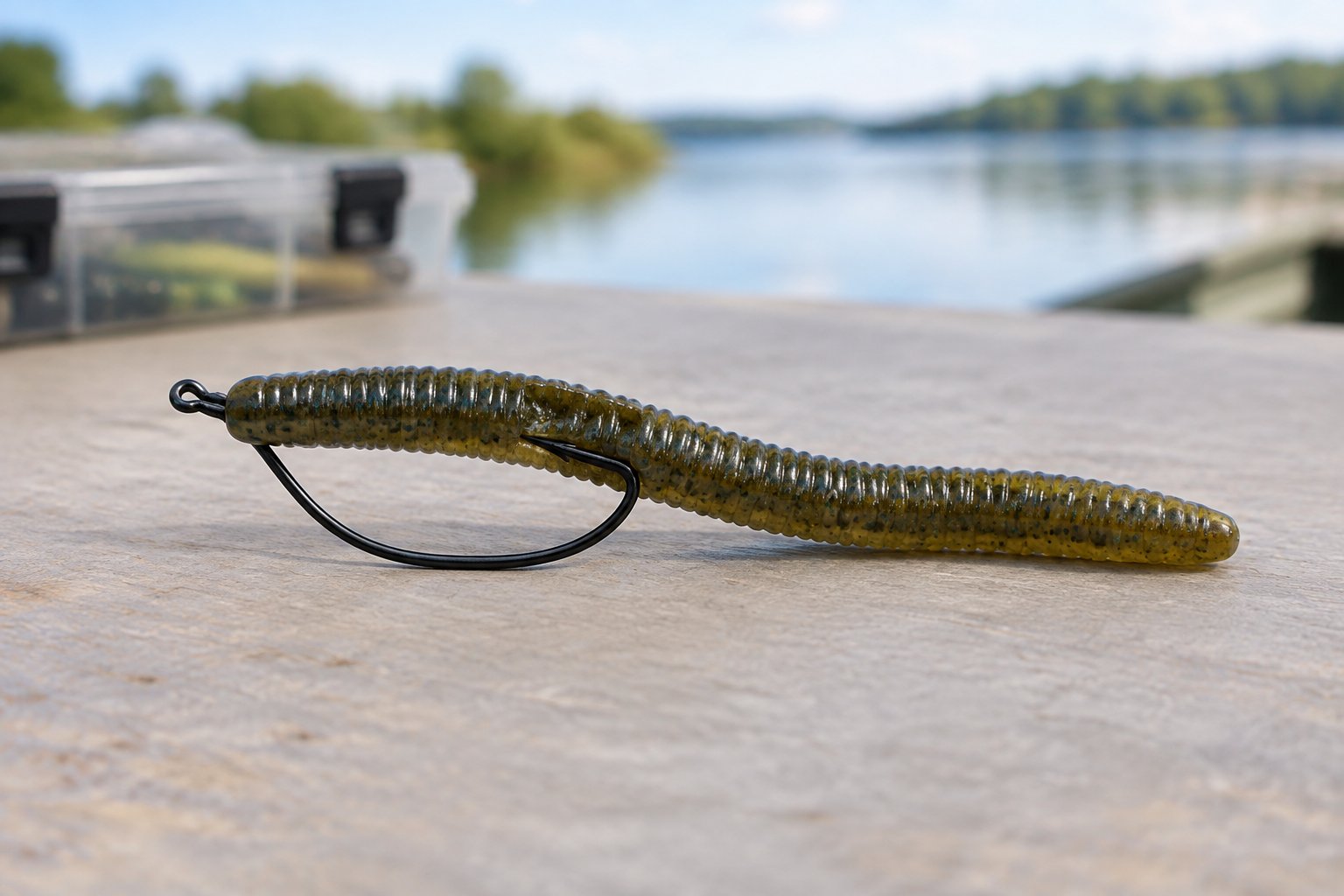
A #1 extra-wide-gap (EWG) hook is a beginner-friendly option for rigging a small soft-plastic worm weedless. The wide gap leaves room for the plastic to compress when a bass bites.
Push the point into the worm’s nose, bring it out through the body, then tuck the point lightly into the plastic. This Texas-style rig reduces snagging around weeds and cover. Keep the hook point close to the surface so it can emerge when you set the hook.
7. 2/0 EWG Hook for Larger Bass Worms and Craws
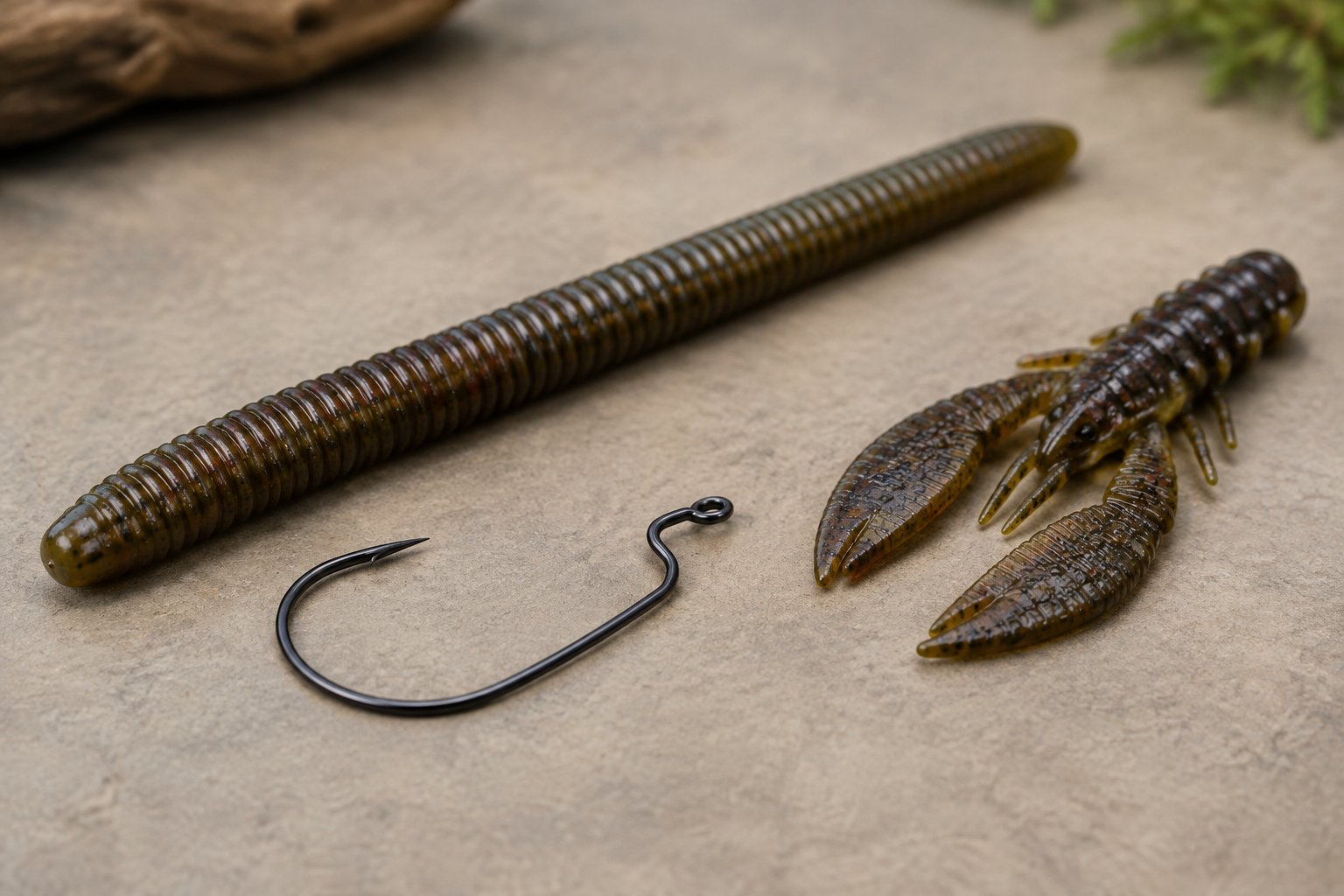
A 2/0 EWG hook pairs with larger soft-plastic worms and craw lures that need a wider hook gap. The larger size gives the bait room to fold down during a bite.
Rig the plastic straight along the hook shank so it moves naturally and stays weedless. If the lure bends or twists when you retrieve it, reposition the point and check that the body lies straight. For worm choices and rigging ideas, explore plastic worms for bass fishing.
8. #1 Wacky-Rig Hook for Stickbaits
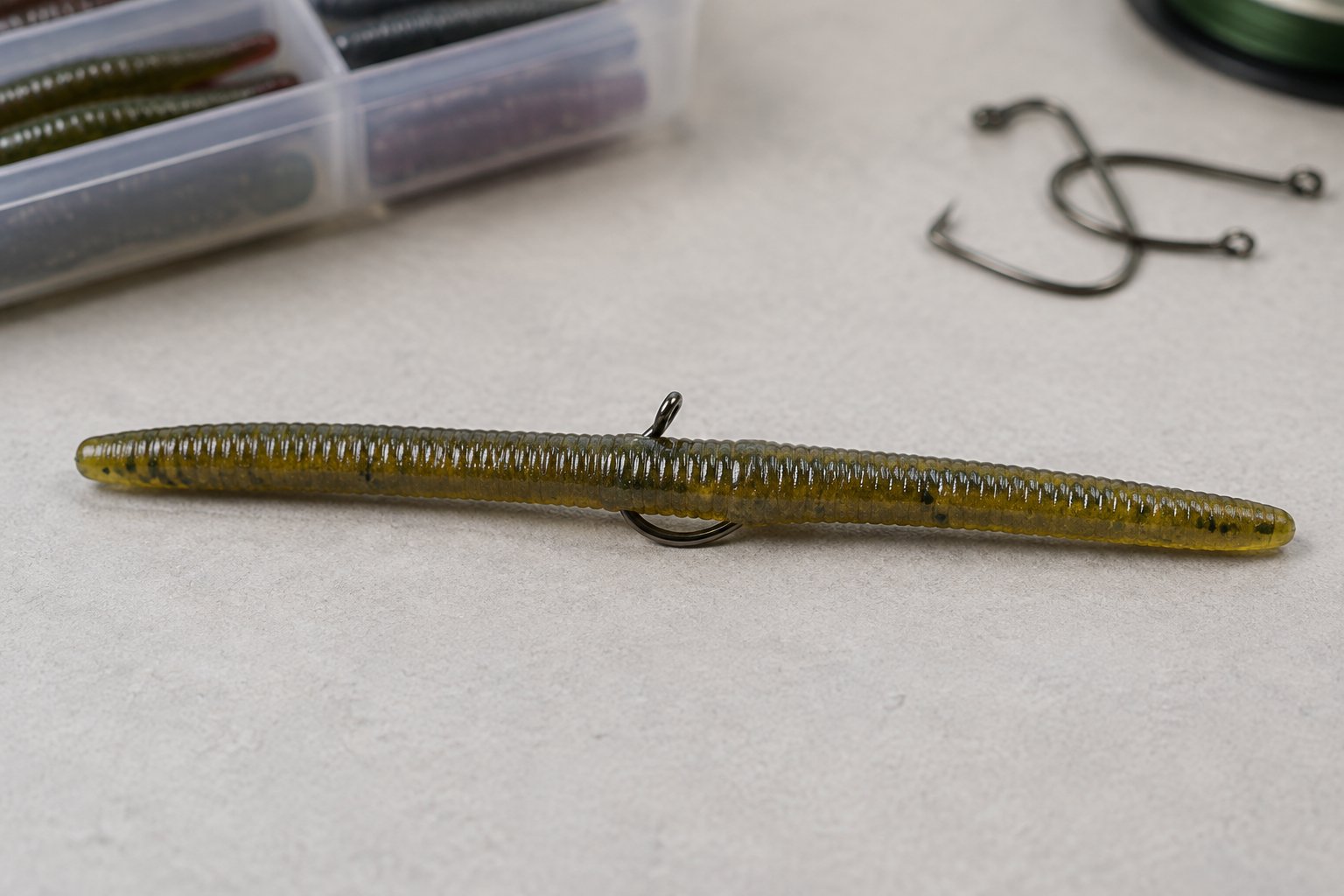
A #1 wacky-rig hook is sized for a stickbait hooked through its middle, leaving both ends free to flutter as it sinks. This simple presentation works well when you want to fish a soft plastic with minimal rigging.
Pierce the bait’s center with the hook point, then lower it beside cover or along a bank. A weed guard helps reduce snags around vegetation. Keep the line controlled as the bait falls so you can notice a pause or a change in tension.
9. #6 Treble Hook for Trout Dough Bait
A #6 treble hook can hold trout dough bait because its three points help keep the molded bait in place. Treble hooks need careful handling, so use this setup when an adult can manage the cast and unhooking.
Shape a small piece of dough around the hook while keeping the points covered only as much as the bait requires. Keep the bait compact, and use pliers to remove the hook. For a child’s first outing, a single hook is easier to handle.
10. #1 Inline Single Hook for Small Lures
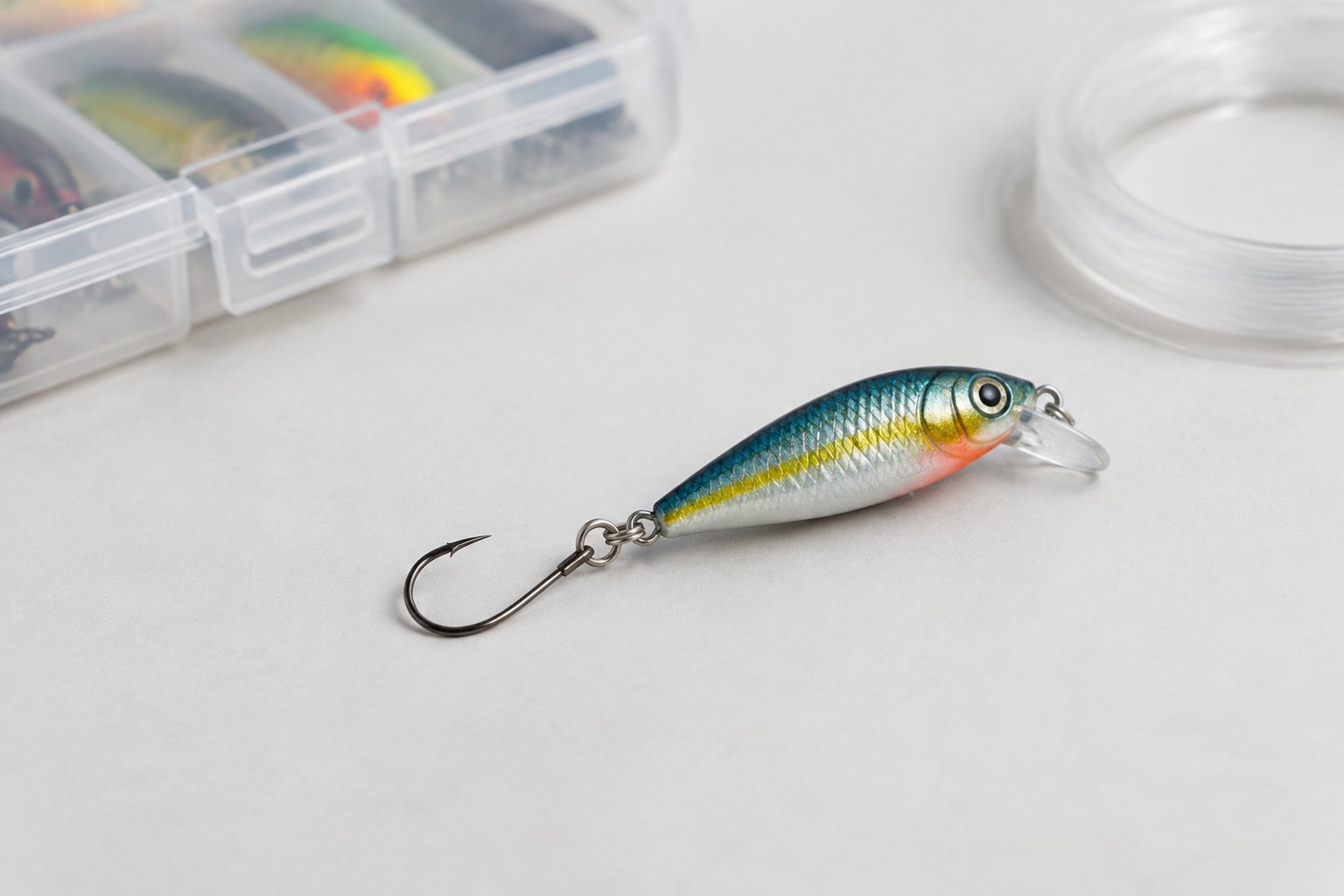
A #1 inline single hook is a simple choice for small lures when you want one point in line with the lure’s body. Single hooks are easier to handle during lure changes and fish release than trebles.
Check that the hook faces the correct direction and moves freely from the lure’s split ring. Keep the lure balanced after changing hooks, since a heavier replacement can alter its action. If you’re learning how to attach tackle, follow these steps to put a hook on a fishing pole.
How Hook Sizes Work
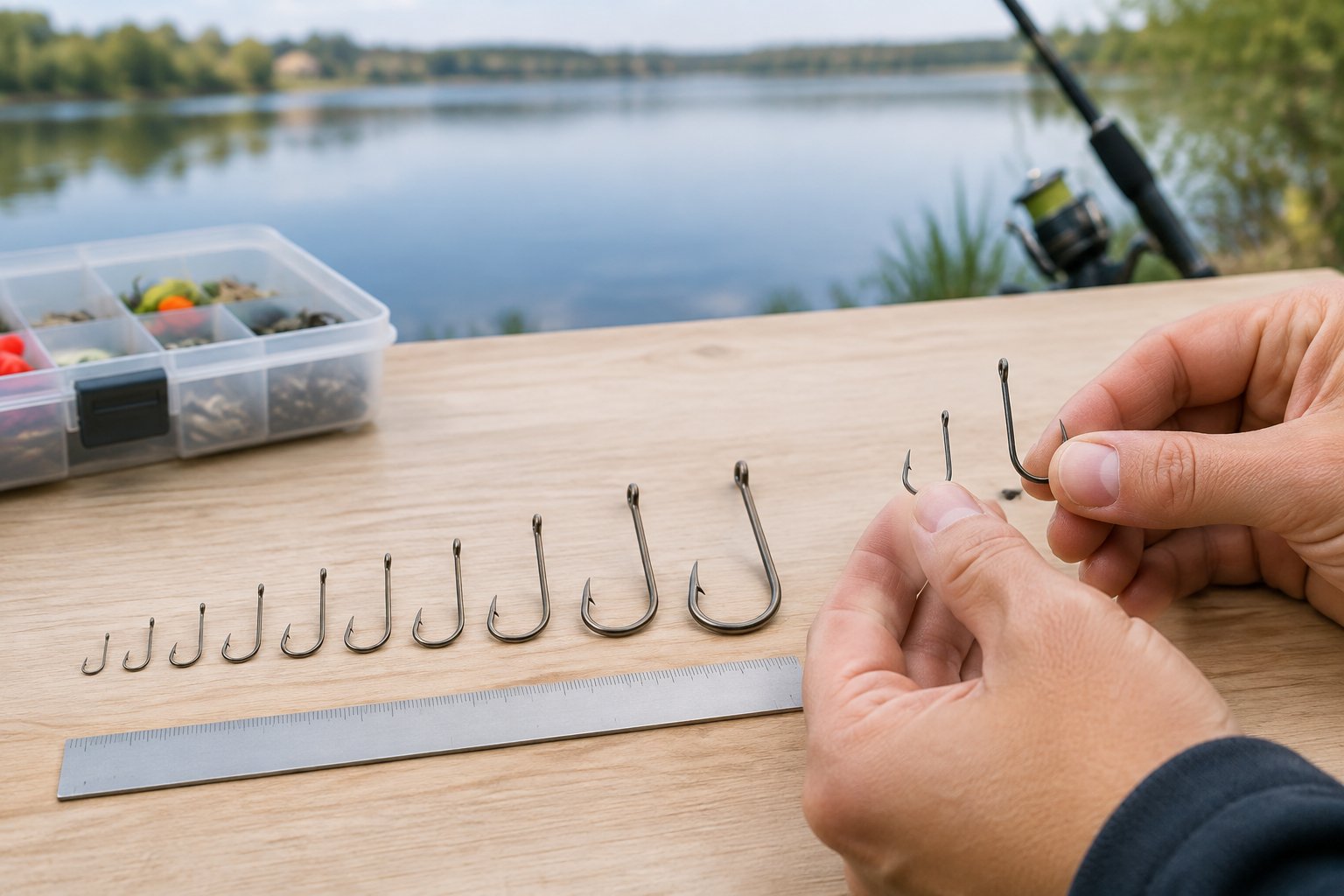
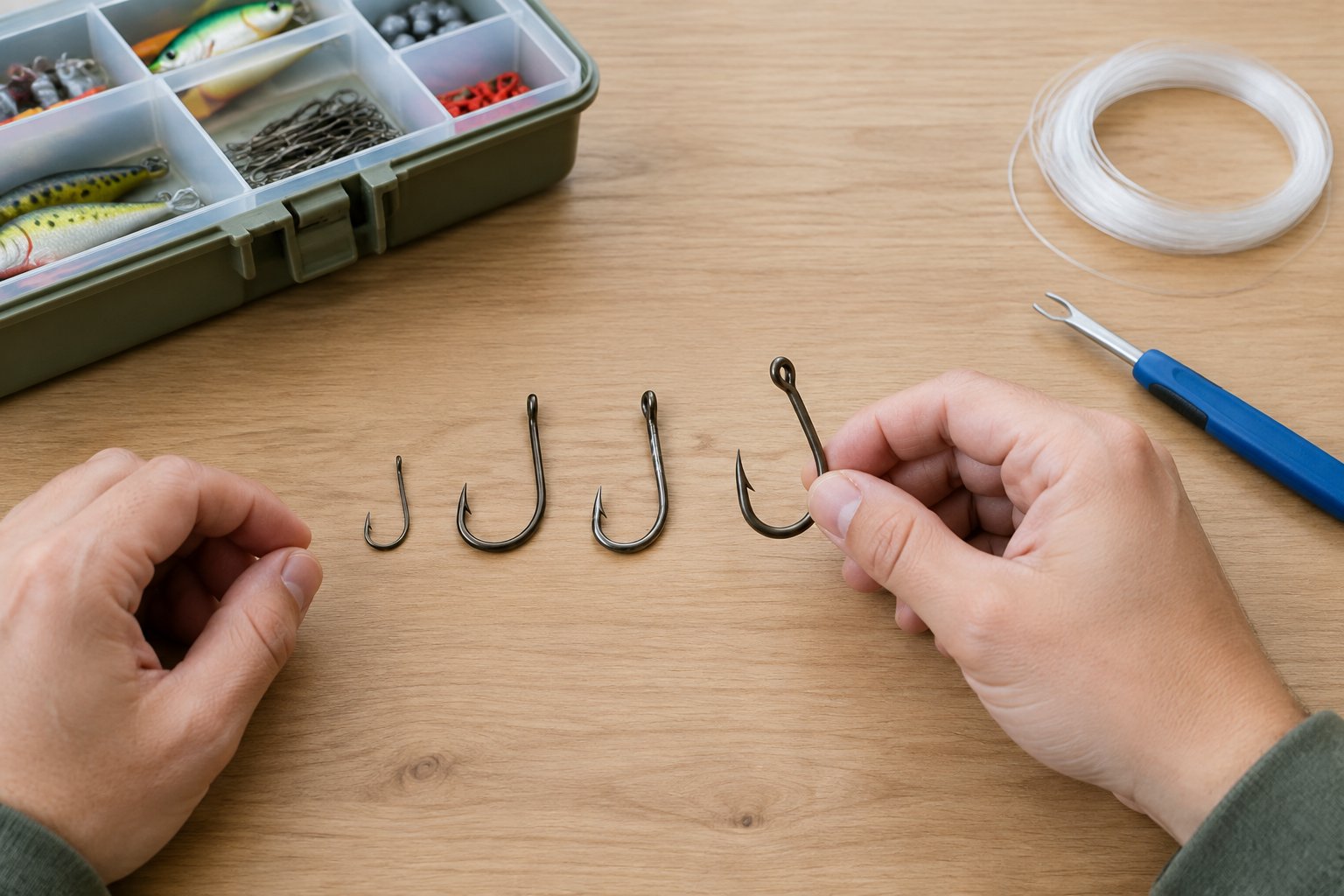
Hook sizing uses two number scales: standard sizes such as #6 and #1, and aught sizes such as 1/0 and 2/0. Within the standard scale, the number gets smaller as the hook gets larger; once you reach 1/0, the aught sizes grow as the number increases.
Why does a smaller hook number mean a bigger hook?
A size #8 hook is smaller than a size #4 hook, and a size #1 is larger than both. This count-down pattern applies to standard sizes, which run from smaller numbers toward size 1.
After size 1, the scale moves to 1/0, 2/0, and larger aught sizes. Each step up in aught size indicates a larger hook. Brand dimensions vary, so compare the hook’s gap and shank with your bait when choosing between similar sizes.
What does 1/0 mean compared with size 1?
A 1/0 hook is larger than a size 1 hook. The “aught” label marks the transition from standard sizes to the larger sizes used for bigger baits and fish.
A 1/0 hook can fit a larger worm or a larger piece of bait than size 1. For beginner freshwater fishing, you can start with #6 for small panfish and move up to #4 or #2 when your bait and target fish call for more hook gap.
How should hook size match bait and fish?
Choose a hook that fits the bait while leaving its point and gap clear. A large hook can overwhelm a small bait, while a small hook can be buried in a bulky bait.
Match the hook to the fish you’re targeting, then check how the bait sits on it before casting. A #6 baitholder with a short worm piece is a manageable panfish setup; a 2/0 EWG gives a larger soft plastic room to compress for bass.
Hook Safety for Beginners and Kids
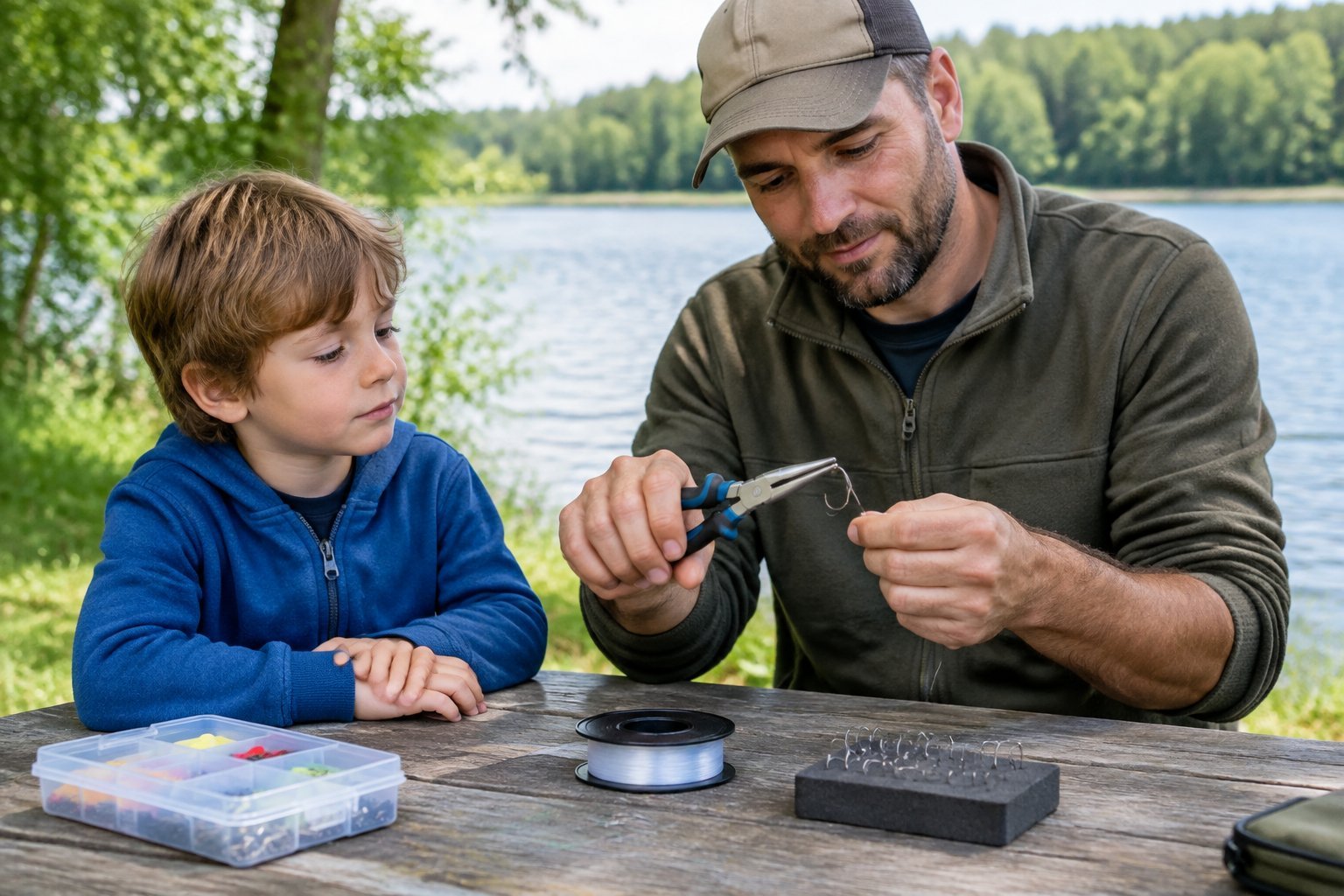
Safe hook handling starts with keeping the point controlled and using pliers for removal. For fishing with kids, have an adult tie on hooks, manage treble-hook lures, and remove any hook that is difficult to reach.
How can you handle and remove a hook safely?
Keep hooks in a closed tackle box and point them away from your hands while tying or baiting. Use needle-nose pliers or hemostats to grip a hook during removal, and keep your fingers clear of the point.
If a fish is small, wet your hands before holding it and support it gently. Avoid squeezing near the gills. For a barbed hook, guide it out along the path it entered; do not yank against the barb.
When should an adult handle treble hooks?
An adult should handle treble hooks when children are nearby, during lure changes, and when removing a fish. Three exposed points can catch clothing, skin, or fishing nets, so keep the lure under control while working on it.
Place the lure on a stable surface and use pliers to grip the hook shank. Keep the free treble points facing away from your hand and the child. A single-hook lure is a simpler option for a first family fishing trip.
What should you do if a hook becomes deeply embedded?
Stop pulling if a hook is deeply embedded, lodged in a joint, or near the eye, face, or neck. Cover the area with a clean dressing and get prompt medical care.
Do not cut, twist, or push a deeply embedded hook through the skin at home. For a shallow hook caught in clothing or lightly touching skin, keep the point still and seek help if you are unsure how to remove it safely.
Frequently Asked Questions
What is the best fishing hook for beginners?
A #6 baitholder hook is a useful first hook for beginners fishing for bluegill and sunfish with worms. Its bait-holding barbs help keep soft bait on the shank, and its size suits small panfish.
What hook size works for bluegill?
A #6 baitholder works well for many bluegill setups, while a #8 Aberdeen suits tiny fish or very small bait. Keep the worm piece small enough that the hook point stays exposed.
What is the difference between a baitholder and a circle hook?
A baitholder has small barbs along its shank to help secure bait, while a circle hook has an inward-curving point designed to catch as the line comes tight. Use a baitholder for common worm-and-bobber fishing, and let a circle hook load steadily without a sharp hookset.
What hook is smaller, size 1 or 1/0?
Size 1 is smaller than 1/0. Standard hook sizes count down as the hook grows, then the aught scale begins at 1/0.
Can beginners use treble hooks safely?
Beginners can use treble hooks safely with adult supervision, controlled handling, and pliers for removal. For young children or a first outing, a single hook reduces the number of exposed points to manage.
Get your gear ready and explore the related beginner-friendly guides before your next trip.