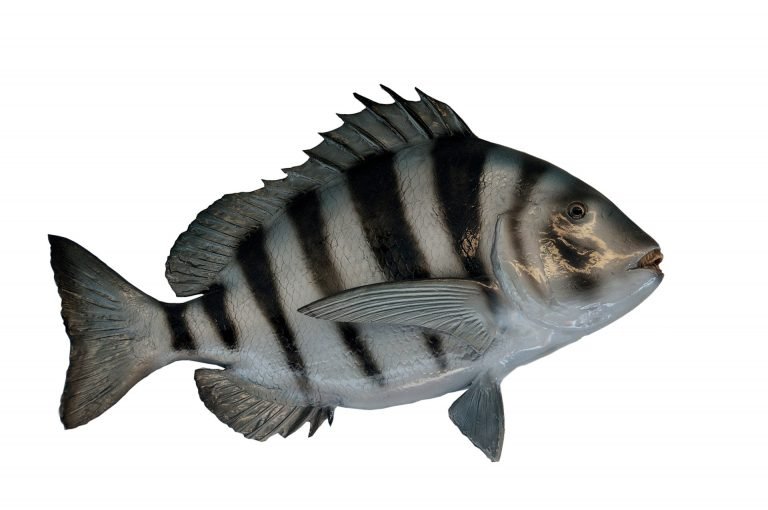
Catfishing rewards practical bait choices, and live bait gives beginners a dependable way to put natural scent, movement, and flavor in front of feeding fish. Worms work for many channel catfish, while lively baitfish and sunfish appeal to larger predators.
For a short trip, match the bait to the catfish species, keep the rig uncomplicated, and check local regulations before collecting or using live bait. A small container of healthy bait, a correctly sized circle hook, and a slip-sinker rig cover many pond, lake, and river situations. Anglers ready to refine their setup can also explore this guide to catch catfish for additional practical ideas.
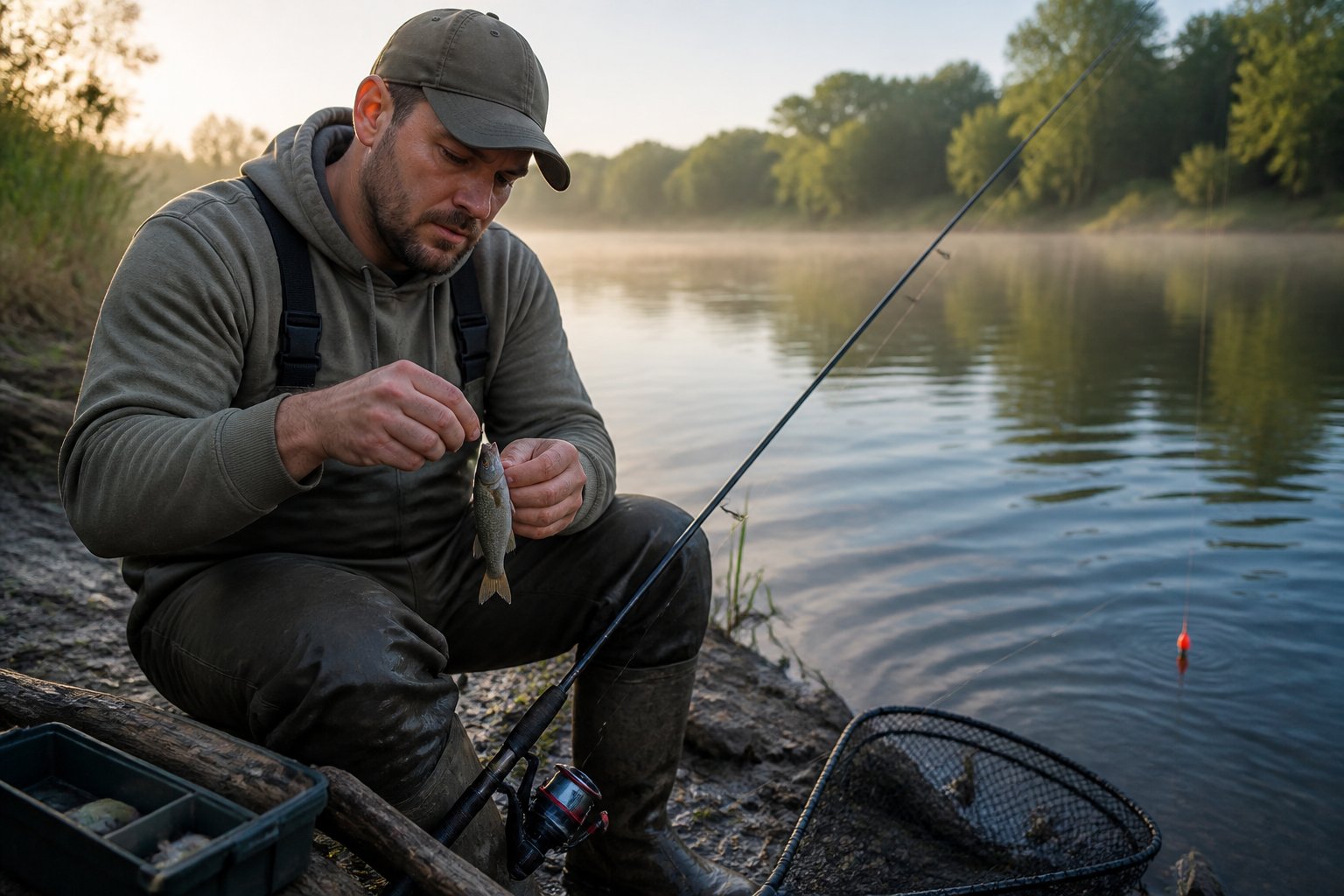
Which Live Baits Catch Catfish Most Reliably?
Worms, live shad, bluegill, and other legal natural forage provide reliable starting points for catfish fishing. The best catfish bait depends on the species, water body, bait availability, and whether the goal is steady action or a larger fish.
Live Shad and Other Baitfish for Big Fish
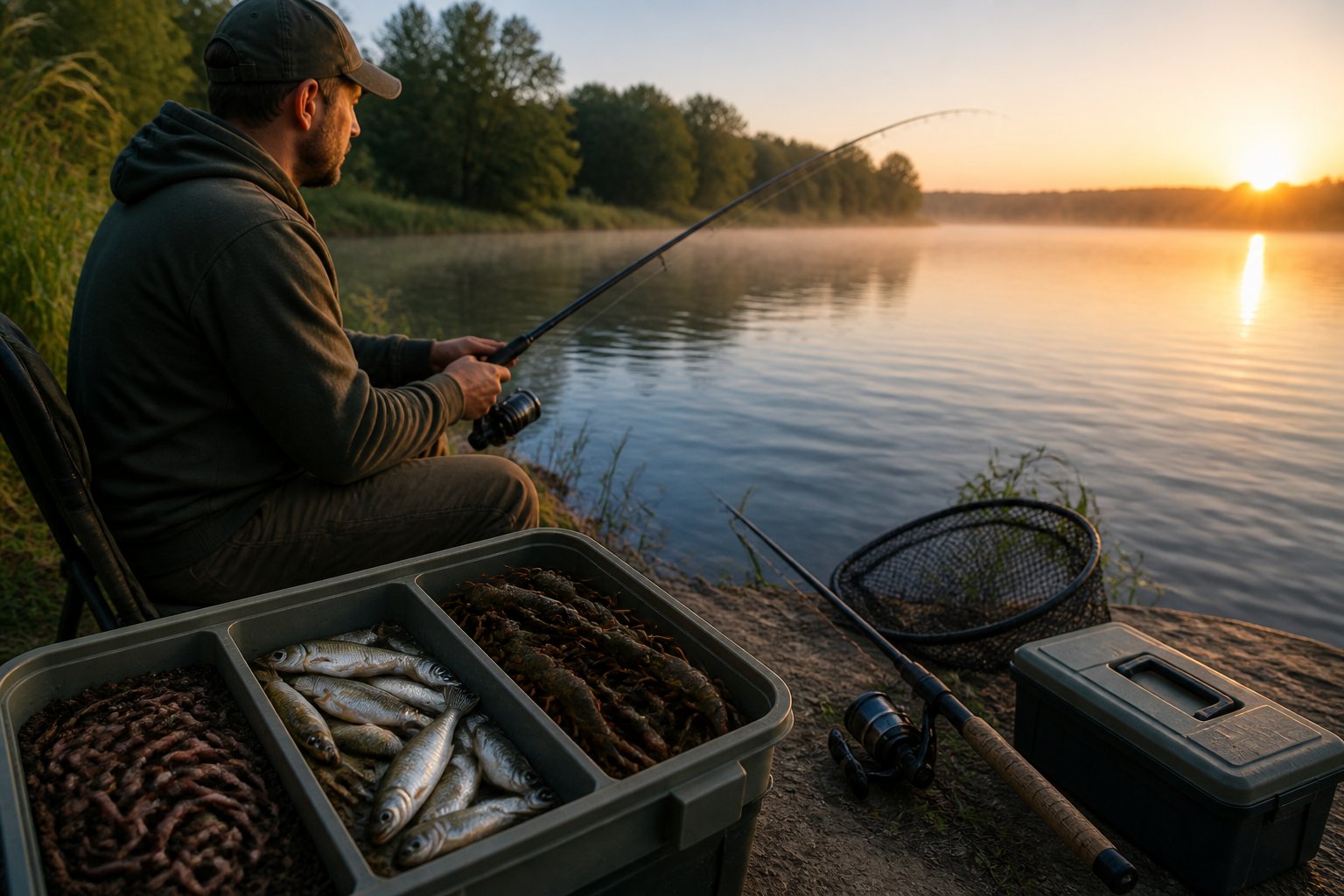
Live shad are a strong choice for blue catfish and larger channel catfish. Threadfin shad work well when they are common in the lake or river, while gizzard shad provide a larger meal for big fish. Keep baitfish lively in an aerated bucket and replace weak bait promptly.
Other productive baitfish include minnows, herring, skipjack herring, white suckers, and legal Asian carp. Skipjack herring are especially useful in rivers where blue cats already feed on them. Regulations differ by state, so anglers should confirm whether each species may be captured, transported, or used as bait.
Bluegill, Sunfish, and Bullheads for Flatheads
Flathead catfish prefer live prey, making live bluegill, bream, sunfish, and small bullheads effective choices where regulations permit them. A healthy baitfish that swims naturally near timber, rock, or submerged cover can draw a flathead after dark.
Use a bait size that fits the target fish and local rules. Large catfish require stronger tackle, while smaller live sunfish are easier for beginners to cast and keep lively.
Crawfish, Minnows, and Nightcrawlers for Versatile Action
Crawfish appeal to channel catfish and smaller blue cats around rocky shorelines, riprap, and shallow cover. Minnows work in ponds and creeks, while nightcrawlers and earthworms remain among the easiest catfish baits to carry for a quick outing.
Goldfish, carp, and other nonnative bait choices require special caution. Some waters prohibit them because released bait can damage native fish populations. Eating-size channel catfish often respond well to a lively worm, small minnow, or freshly gathered crawfish.
How to Match Bait to the Catfish You Want to Catch
Species and habitat should determine the bait choice: channel cats favor accessible natural bait, blue cats track forage in current and open water, and flatheads hunt live fish around heavy cover. Fresh bait presentation helps, while prepared bait, cut bait, and natural baits each serve different situations.
Channel Cats in Ponds and Small Lakes
Channel catfish in ponds and small lakes respond well to nightcrawlers, live minnows, crawfish, shrimp, and small pieces of fresh cut bait. Chicken livers, hot dogs, and prepared catfish bait also work when fish are feeding by scent.
A worm under a slip float is easy for children and beginners because the float shows movement and keeps the bait above soft bottom. For deeper water, a light slip-sinker rig places the bait on or near the bottom without making the setup difficult to cast.
Blue Cats on Rivers and Reservoirs
Blue catfish feed heavily on baitfish, so cut shad, fresh cut bait, bait chunks, and live shad are productive choices. Shad guts release scent quickly, while a whole live baitfish can appeal to roaming fish in open water.
In rivers, place the bait along current seams, below outside bends, or near submerged structure. Heavy sinkers hold the rig in place, and a strong leader helps manage larger fish.
Flatheads Around Timber and Other Cover
Flathead catfish are specialized predators that favor live bluegill, sunfish, bullheads, and other legal baitfish. Fish the edge of timber, brush piles, steep banks, and other heavy cover during low-light periods.
A stout rod, abrasion-resistant leader, and secure hook placement are essential near cover. The bait should remain active while the hook stays exposed enough for a clean hookup.
Simple Rigs and Hook Placement for Live Bait
The slip-sinker rig handles most bottom fishing, a slip float keeps bait suspended, and a three-way rig controls depth in current. Circle hooks are beginner-friendly because they work best with steady pressure instead of a hard hookset.
The Slip-Sinker Rig for Bottom Fishing
Thread the main line through a sliding sinker, add a bead if needed, and tie the line to a swivel. Attach a leader to the swivel and finish with a circle hook sized for the bait and target catfish.
This setup lets a catfish move with the bait while the sinker stays on the bottom. Use enough weight to hold position, especially in current, while keeping the rig light enough for a natural presentation.
When to Use a Slip Float or Float Rig
A slip float works well when catfish feed above weeds, mud, brush, or shallow flats. Set the stop to place the bait at the depth where fish are marking or feeding, then let the float drift along a bank or weed edge.
Float rigs also make bait easier to monitor during family fishing trips. A slow, steady disappearance signals a bite, and circle hooks allow the angler to reel down smoothly.
Three-Way Rigs for Current and Drifting
Tie the main line to one eye of a three-way swivel, connect a leader and hook to another, and attach a shorter dropper with the sinker to the remaining eye. The dropper breaks away more easily when it catches bottom.
This rig excels when drifting a river or holding live bait just above rough bottom. Adjust the dropper length to control the bait’s height, and use a heavier sinker when current pushes the rig downstream.
Where to Hook Shad, Bluegill, Crawfish, and Minnows
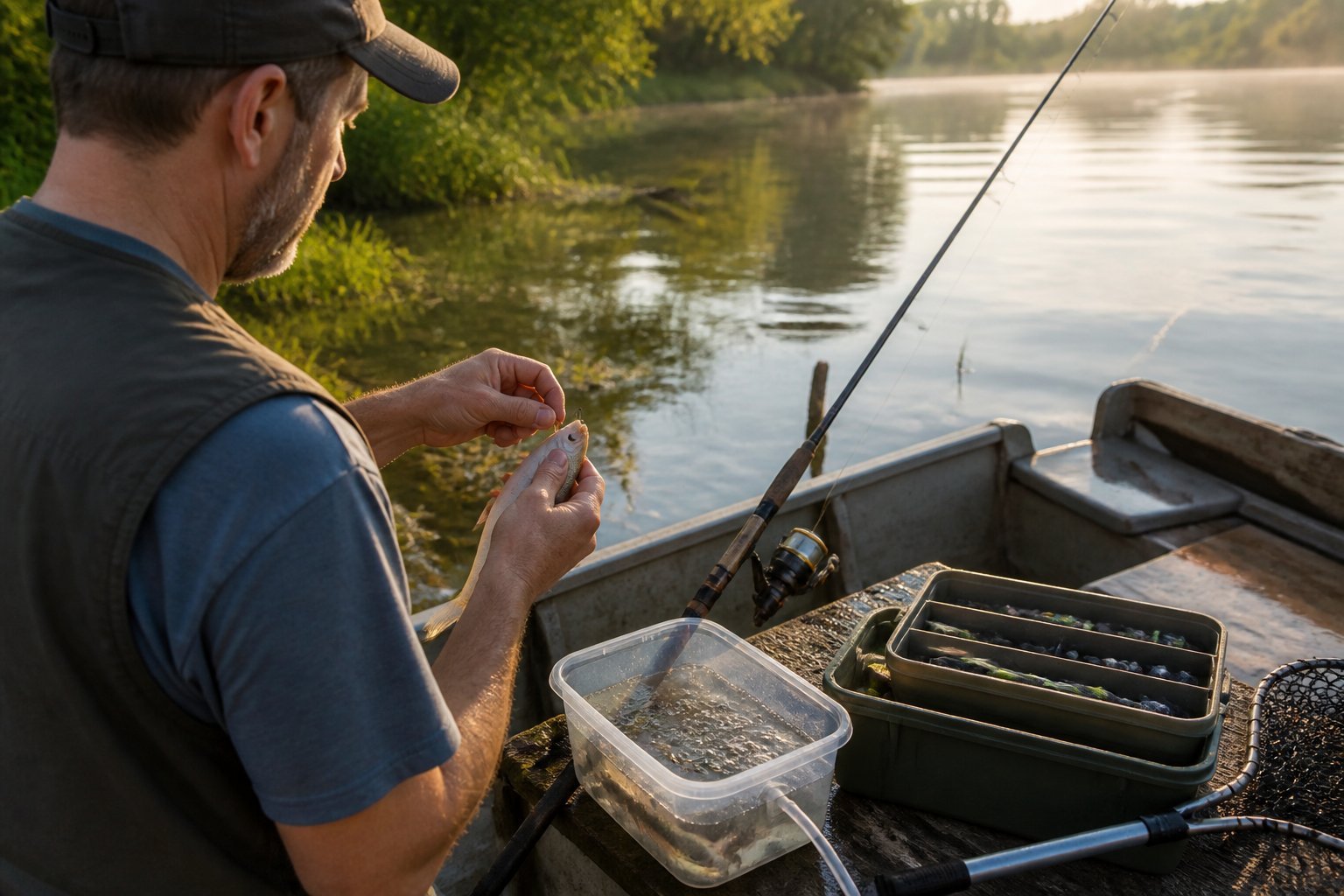
Hook shad and minnows lightly through the upper lip for forward swimming or through the back behind the dorsal fin when the bait must move with more freedom. Avoid the backbone and keep the hook point clear.
Hook bluegill and sunfish through the area behind the dorsal fin or lightly through the lips. Insert a hook into the tough rear portion of a crawfish, keeping the point exposed. Treble hooks can hold bulky bait, though a single circle hook is easier to remove and safer for release fishing.
Adjusting Your Presentation to Water Conditions
Water conditions determine whether live bait should be suspended, anchored near bottom, or moved through current. Still water favors controlled depth, moving water carries scent trails, and murky water rewards vibration, movement, and strong scent dispersion.
Still Water, Clear Water, and Shallow Edges
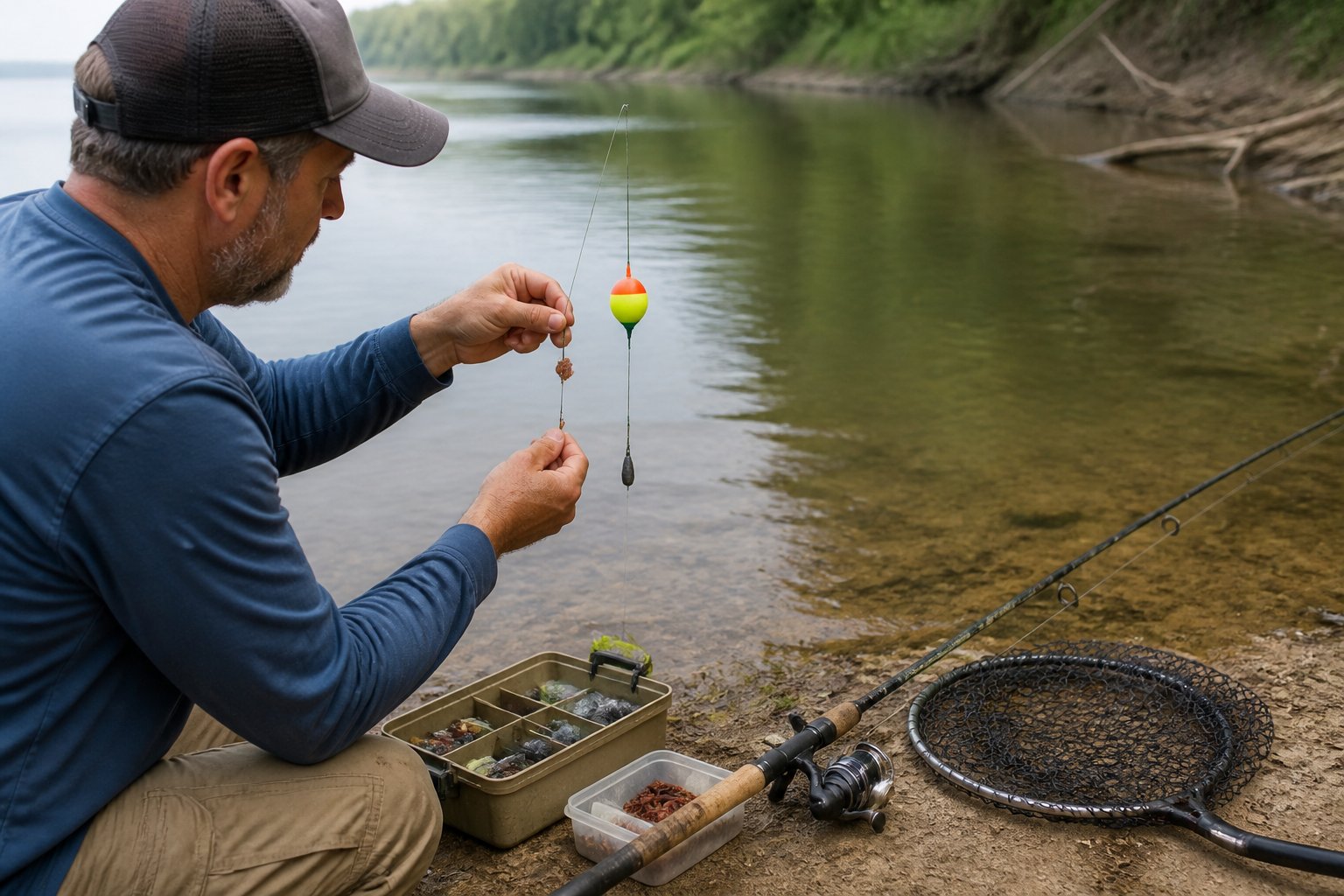
In still water, place live bait near drop-offs, weed lines, docks, and shallow edges where catfish search for forage. Clear water calls for natural movement, lighter leaders, and careful handling around wary fish.
A slip float lets anglers search several depths without repeatedly recasting. Keep the bait lively and minimize excess weight so it swims naturally.
Moving Water and Scent Trails
Current spreads scent from blood, amino acids, and injured prey downstream. Position bait near seams, eddies, current breaks, and the downstream side of structure where catfish can intercept food.
Fresh cut bait creates a strong scent trail, while live bait supplies movement. A dip bait, punch bait, or dip worm can supplement the presentation when channel cats are feeding by smell, though these products are designed for scent-based fishing.
Murky Water and Low-Light Feeding
Murky water and low light favor active bait, larger profiles, and strong scent. Live bluegill, shad, crawfish, blood bait, stink bait, and punch baits help catfish locate food when visibility is poor.
Garlic powder and homemade catfish bait can add scent to dough bait, while a sponge or dip worm carries liquid attractant. Artificial bait has a place for convenience, though live bait provides movement without repeated manipulation.
Fresh, Legal Bait Makes Short Trips More Productive
Healthy, legal bait saves time because it stays active, casts cleanly, and needs less frequent re-baiting. Anglers should check state regulations for collection methods, size limits, species restrictions, transport rules, and release requirements before leaving home.
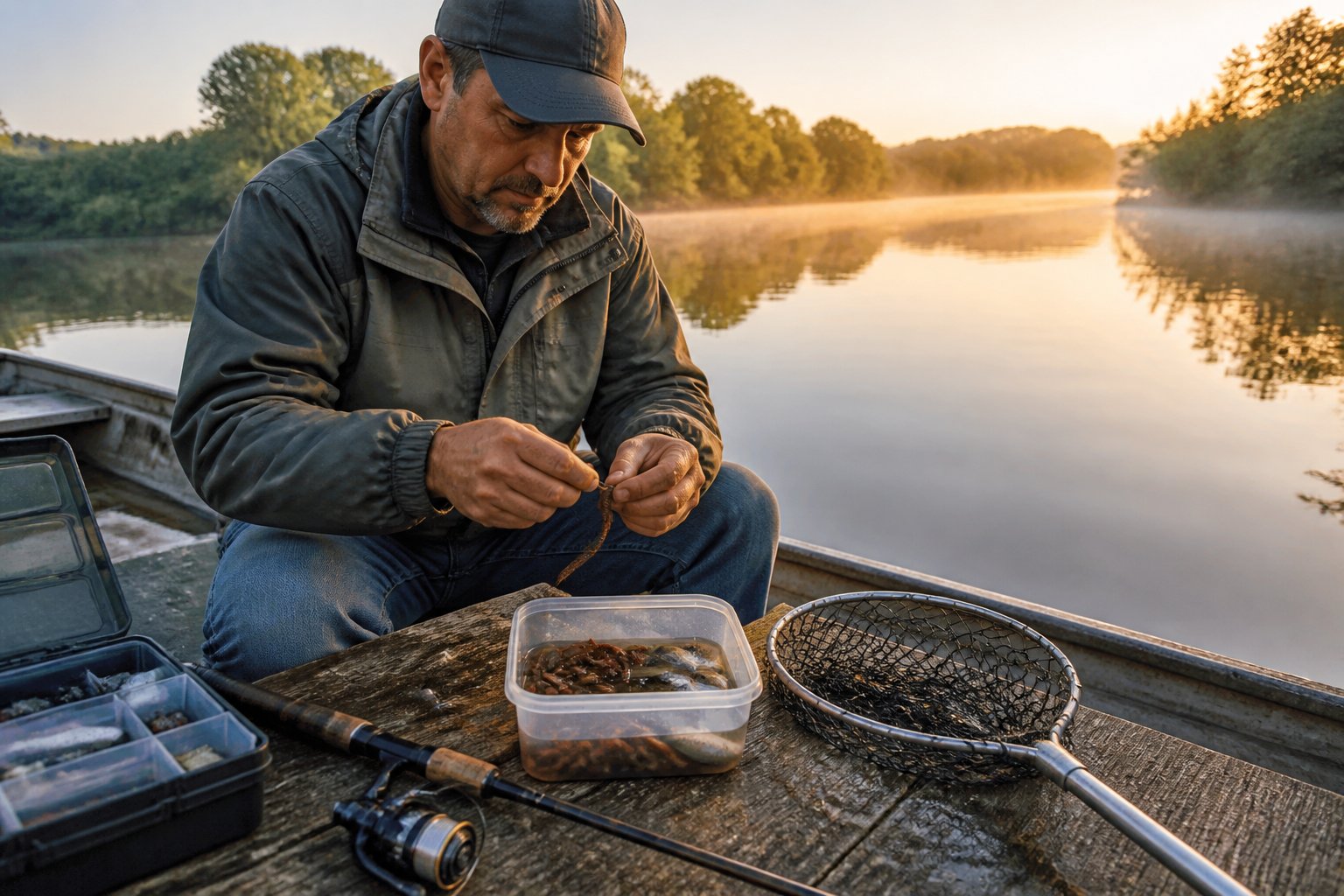
Use an aerated container sized for the bait, keep it shaded, and change water with water from the fishing location when appropriate. Overcrowding reduces bait longevity, especially on hot days. A small cast net can gather legal shad or minnows, while a tackle box should carry spare hooks, leaders, sinkers, and a bait towel.
Store worms and crawfish cool, protect baitfish from sudden temperature changes, and check each bait before casting. Fresh cut bait should remain cold until use, with unused portions sealed to prevent odor and contamination. A quick pre-trip check prevents wasted time searching for replacement bait on the water.
Frequently Asked Questions
What is the best live bait for catfish?
Nightcrawlers are the best all-purpose starting bait for many channel catfish. Live shad and legal sunfish become stronger choices when targeting blue cats or flatheads that feed on baitfish.
Do catfish prefer live bait or cut bait?
Catfish respond to both live bait and cut bait, with species and conditions guiding the choice. Flatheads strongly favor live fish, while blue cats and channel cats often respond well to fresh cut shad and other natural bait.
What is a good live bait setup for catfish?
A slip-sinker rig with a sliding sinker, swivel, leader, and circle hook is a dependable beginner setup. A slip float works better when catfish are feeding above bottom or along shallow edges.
Where should I hook live bait for catfish?
Hook minnows and shad through the lips or lightly behind the dorsal fin, keeping the hook point exposed. Hook bluegill in the same areas, and place a crawfish hook through its durable rear section without covering the point.
What live bait is best for channel catfish in ponds?
Nightcrawlers, minnows, crawfish, and small live sunfish are productive pond choices for channel catfish. A worm beneath a slip float provides an easy setup for beginners and children.
Can I use bluegill or other fish as live catfish bait legally?
Bluegill and other fish are legal live catfish bait only where state and local regulations allow them. Anglers should verify species, size, collection method, possession, and transport rules before using any baitfish.