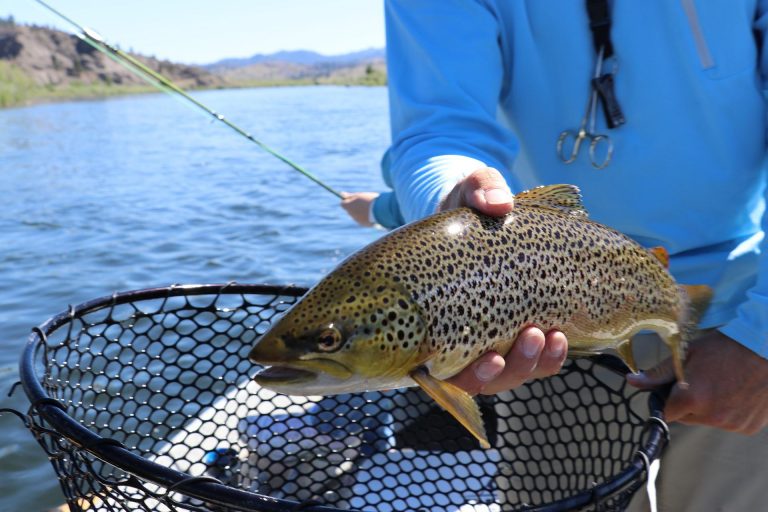
Redear sunfish feed on the bottom, so the simplest way to catch them is to put a small piece of worm right on the lake or pond floor and wait for a slow, steady pull. For beginners and families, the best setup is a red wiggler or a small nightcrawler piece on a size 8 hook, held on the bottom with one split shot, fished near weeds or firm sand in late spring. That one rig covers most of what you need for shellcracker fishing from the bank.
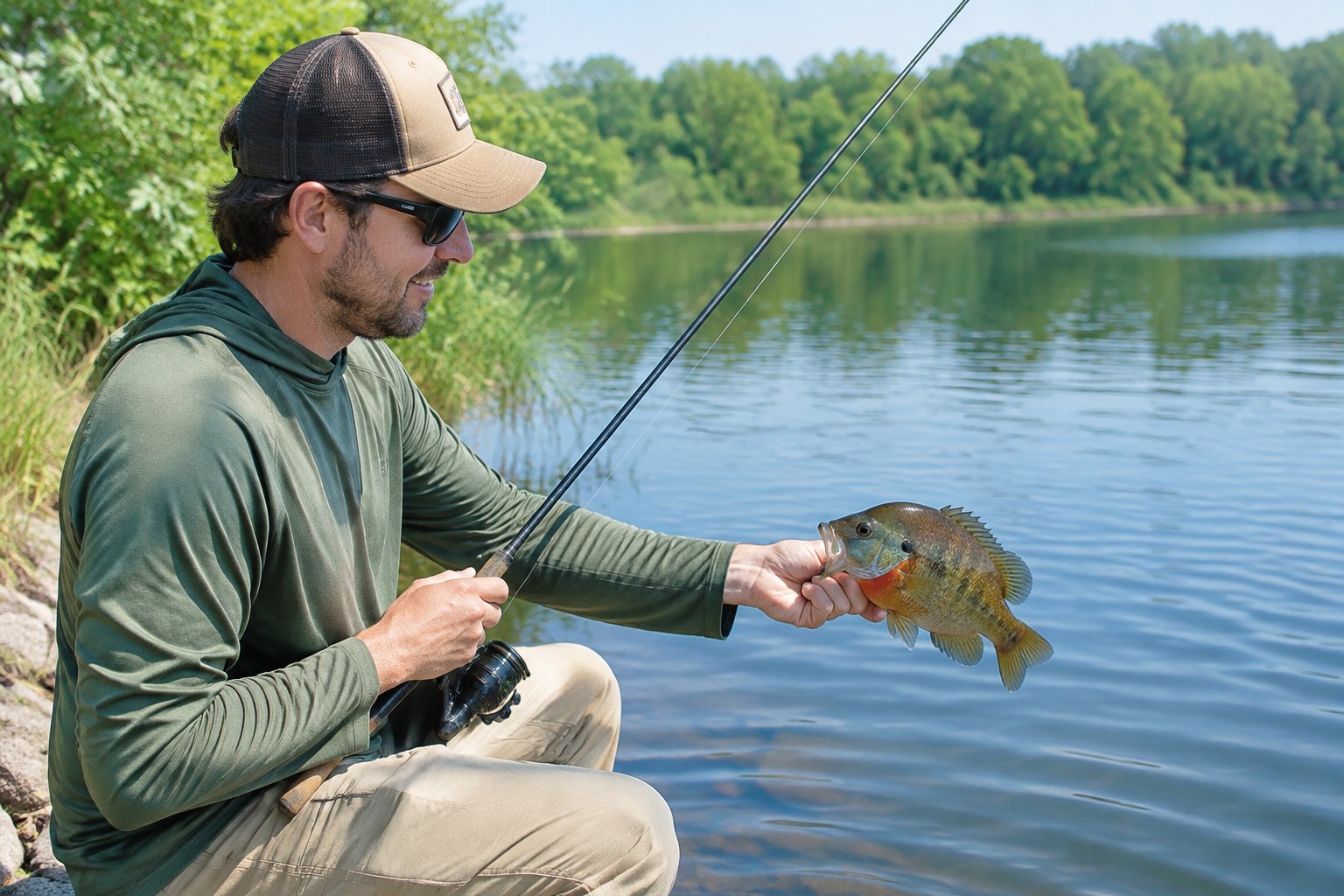
Redear grow bigger than most bluegill and pull hard on light gear, which makes them a thrill for kids. Once you know how to spot one, where it eats, and how to keep bait low, you can catch redear sunfish on a short after-work trip without fancy tackle.
How Can You Tell a Redear From a Bluegill?
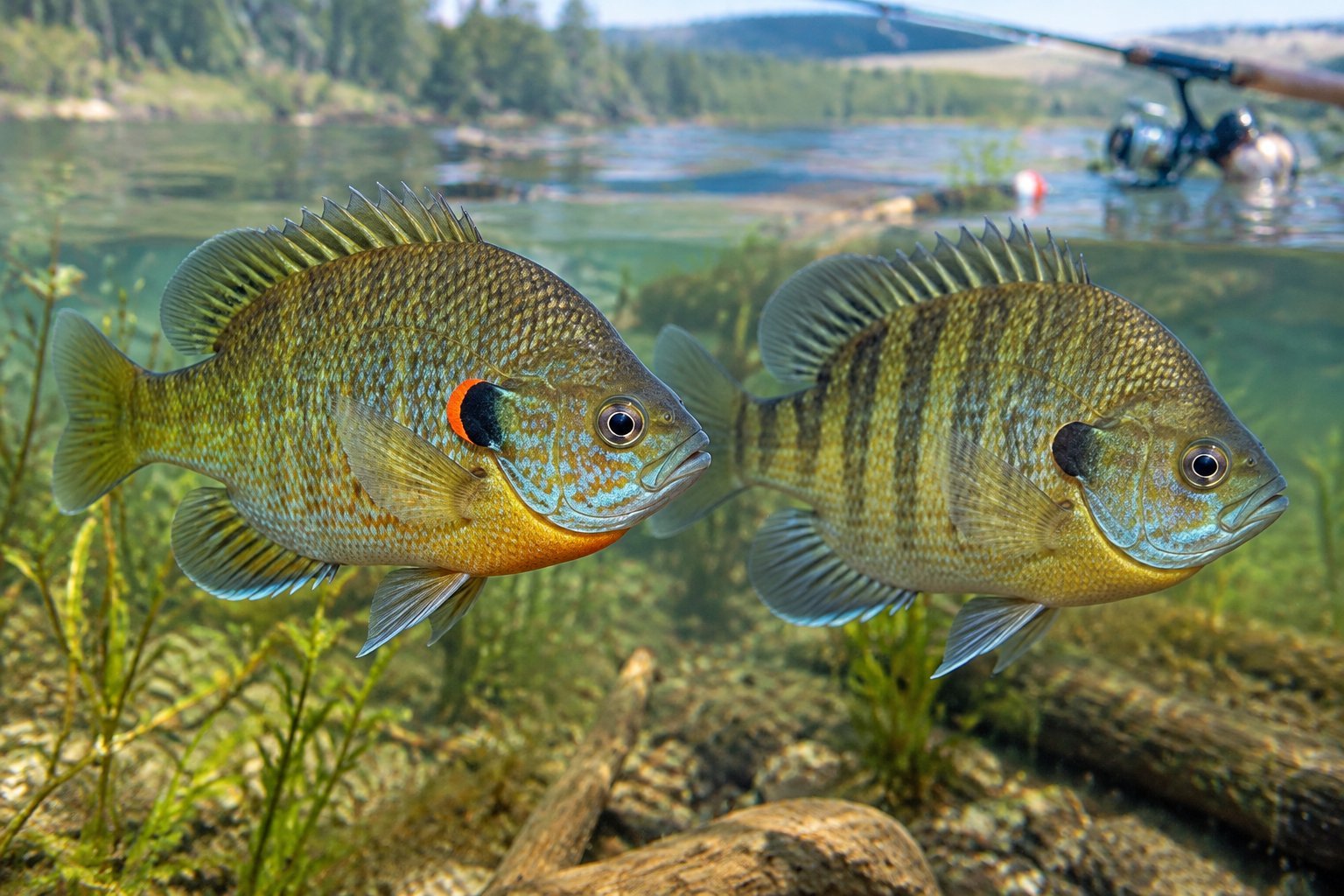
The quickest way to tell a redear from a bluegill is the colored edge on its ear flap. Body shape and eating habits give you extra clues, and they also explain why redear bite in different spots than other panfish.
Look for the Red or Orange Edge on the Gill Flap
Every sunfish has a small dark “ear” at the back of the gill cover. On a redear sunfish (Lepomis microlophus), that black flap has a red or orange border. That’s where the name comes from. Males show the brightest color.
A bluegill has a solid black ear flap with no red edge. It also carries a dark spot near the back of the top fin and darker vertical bars on its sides.
Use this quick check when your kid lands a fish:
| Feature | Redear (Shellcracker) | Bluegill |
|---|---|---|
| Ear flap | Black with red or orange edge | Solid black |
| Body color | Olive to golden, few markings | Darker, with vertical bars |
| Pectoral fin | Long and pointed | Shorter |
| Typical size | Larger | Smaller in the same pond |
| Feeding zone | Bottom | Whole water column |
Both fish belong to the Centrarchidae family, so hybrids show up in some ponds. If a fish looks mixed, call it a sunfish and follow your state’s panfish rules. If you mostly catch bluegill in your pond, these tips for catching big bluegill help you sort the larger fish too.
Why Shellcrackers Feed Differently From Other Panfish
Redear earned the nickname “shellcracker” because they crush snails, mussels, and other mollusks with tooth-like plates in their throats. They spit out the shells and eat the soft parts.
That diet keeps shellcrackers near the bottom. Bluegill will rise to grab bugs off the surface, but redear rarely do. If your bobber holds bait two feet off the bottom, a bluegill will find it first.
This one habit shapes everything else in this guide. Keep your bait on or just above the floor, and you’ll catch far more redear than other freshwater fish.
Where and When Should You Look for Redear?
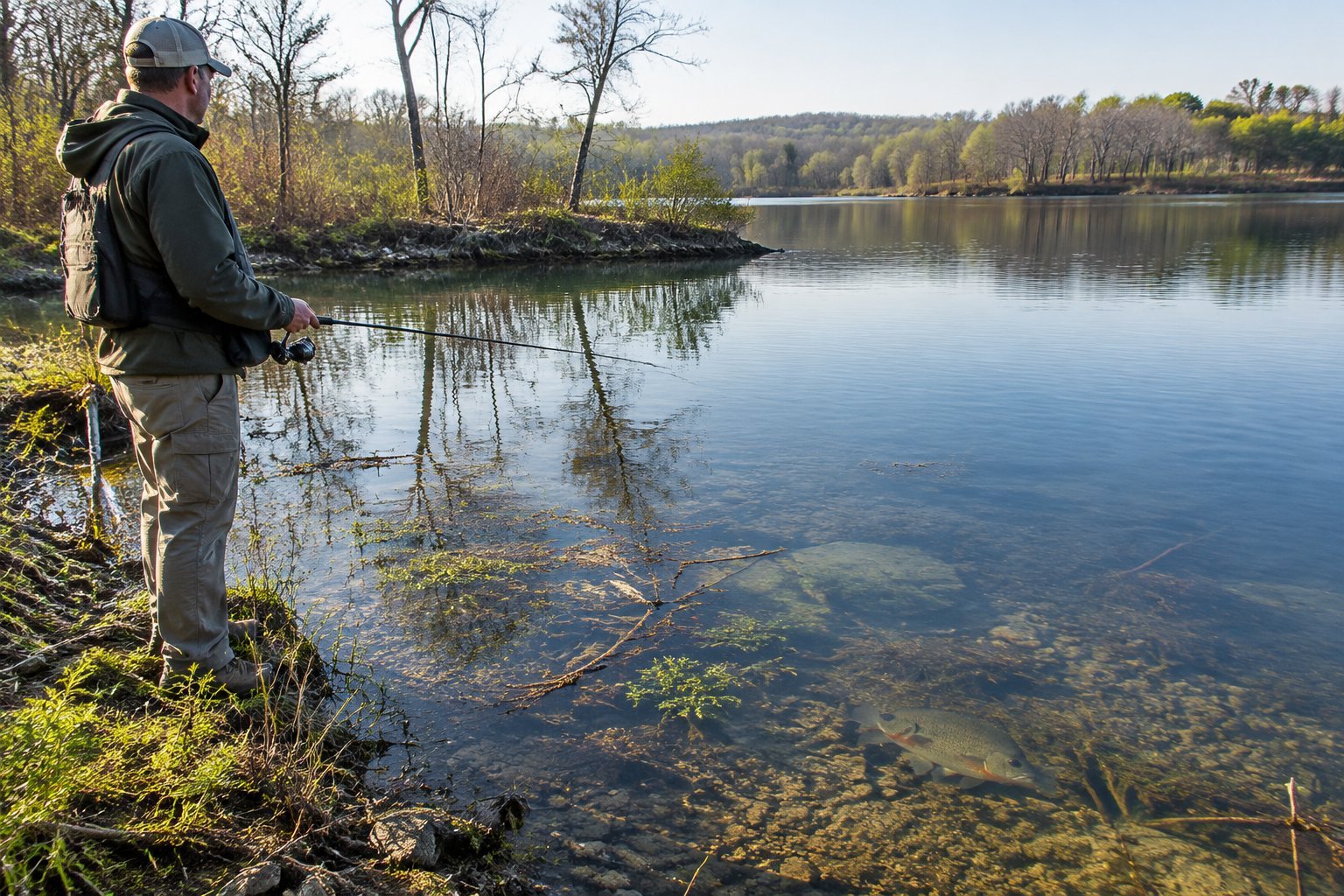
Look for redear wherever snails live: firm bottoms, weed edges, and woody cover. Spring brings them shallow to spawn, then summer pushes them to deeper edges.
Find Accessible Banks Near Vegetation and Firm Bottoms
Where to find redear sunfish comes down to food. Snails and mollusks cling to the base of aquatic vegetation, sunken logs, and sand or gravel bottoms. Redear follow them there.
From the bank, watch for these spots:
- Weed lines that end close to shore
- Sandy or gravel points
- Fallen trees and stumps near the water’s edge
- Dock posts and fishing piers
- Banks where you can see tiny shells in the shallows
Redear are native to the southeastern United States, but stocking has spread them into ponds across much of the country. Many neighborhood lakes and office park ponds hold them, so check your state wildlife agency’s stocking list. A small pond close to home beats a famous lake you never have time to visit.
Look for Spring Spawning Beds as the Water Warms
Late spring is the easiest time to catch redear. When water climbs into the 70s, they move into 2 to 6 feet of water and fan out round spawning beds in sand or gravel.
Redear spawn a little after bluegill. On many Southern lakes, May is prime time. Look for pale, plate-sized circles on the bottom, often on the outer edge of a bluegill bed or tight against a log.
Once you catch one redear on a bed, more sit nearby. Rest the spot for 20 minutes after a few fish and come back, since catching them stirs up the area.
Follow Deeper Edges After the Spawn
After spawning, redear drift back out to deeper water. In clear lakes, they feed around 6 to 15 feet deep. In shallow, weedy ponds, they stay closer, sometimes in less than 4 feet.
From shore, cast to the spot where shallow water drops off. Humps with stumps and the outside edge of weed beds are good targets. Early morning and evening produce the best bites in summer heat. If you’re new to reading water, these pond fishing basics show you how to spot drop-offs from the bank.
Which Baits Are Best for Beginners?
Worms catch more redear than anything else, and they’re cheap at almost any bait shop. Crickets and grubs make good backups, and small jigs are a fun next step once you’ve caught a few fish on live bait.
Start With Red Wigglers or Small Nightcrawler Pieces
Red wigglers (also sold as red worms) are the top pick among baits for redear sunfish. They’re small, lively, and fit a redear’s little mouth.
Nightcrawlers work too, but they’re big. Pinch off a 1-inch piece. Thread the hook through the worm two or three times and leave a short tail wiggling.
Fresh bait makes a big difference. A limp, washed-out worm draws fewer bites, so swap it every 10 to 15 minutes. Keep your worm container in the shade or a small cooler on warm days.
When to Try Crickets, Mealworms, or Wax Worms
Switch baits when worms stop working or the bluegill keep stealing them.
- Crickets: Great in summer and where bluegill and redear mix. Hook them once just behind the head.
- Mealworms: Tough and easy for kids to handle. They stay on the hook through several nibbles.
- Wax worms: Soft and smelly, good on slow days. Use small hooks because they’re tiny.
Redear rely on smell more than bluegill, so scented baits pull them in. Many of the same bluegill baits you might already own work on redear when you fish them on the bottom.
Are Small Jigs Worth Trying?
Small jigs work well once you’re comfortable. A 1/32- or 1/16-ounce jig under a bobber, or slowly dragged along the bottom, catches redear around wood cover in spring.
For a beginner or a kid, though, jigs mean more missed fish. Redear peck at bait before they take it, and live bait gives them a reason to hang on. Tip a jig with a small piece of worm to get the best of both.
What Simple Tackle and Rigs Do You Need?
A light spinning rod, 4- to 6-pound line, small hooks, and a few split shot cover nearly every redear trip. You’ll build one of three rigs depending on depth and bottom type.
Choose a Light Rod, Manageable Reel, and Small Hook
A light-action rod around 5 to 7 feet long lets you feel soft bites and turns a 10-inch redear into a real fight. Pair it with a small spinning reel or a push-button reel for young kids. The best ultralight setup for small ponds handles redear well.
Use these basics:
- Line: 4- to 8-pound monofilament. Thin mono stretches during hard runs and is easy for beginners to tie.
- Hook: Size 6 to 10, thin wire. Long-shank Aberdeen hooks make unhooking easier.
- Weights: A pack of assorted split shot.
Sharp hooks hold redear’s soft mouths. Check your point often, and use these beginner fishing hook tips to pick the right size. If you’re unsure about line, this guide to fishing line for beginners keeps it simple.
Build a Split-Shot Rig for Bottom Fishing
The split-shot rig is your go-to for bottom fishing. It takes two minutes to tie.
- Tie your hook to the end of the line with an improved clinch or Palomar knot.
- Pinch one small split shot onto the line 6 to 12 inches above the hook.
- Bait the hook and cast to your spot.
- Let it sink, then reel up slack until the line is just snug.
Use only enough weight to reach bottom. Heavy sinkers hide bites. Every minute or so, drag the bait a foot and let it sit.
Set a Bobber to Keep Bait Near the Bottom
Kids love watching a bobber, and you can still fish the bottom with one. Find the depth first: clip on a weight, drop it straight down near shore, and note where the line meets the surface.
Set the bobber so the bait sits just touching bottom, or a couple of inches above it. If the bobber lies flat, your weight is resting on the bottom, which is fine. Twitch it 6 inches every so often and let it settle.
Use a Drop Shot Rig When Bait Gets Buried
On muddy or weedy bottoms, a worm sinks out of sight. A drop shot rig lifts it a few inches up.
Tie a size 6 Aberdeen hook with a Palomar knot and leave a 6-inch tag end below it. Clip a 1/8-ounce bell sinker to that tag. Hook a red worm, cast, then slowly pull the sinker a foot and pause. Redear bites feel like a few small pecks, then a slow pull away. That’s when you lean in.
How Can You Make a Short Family Trip More Successful?
A short trip works best when your gear is ready before you leave and you move quickly when bites fade. A few kid-friendly habits keep everyone happy on the bank.
Pack Ahead for an After-Work Pond Visit
Keep a small bag packed so you can leave the house in five minutes. A beginner tackle bag with these items covers a one-hour redear trip:
- Hooks in sizes 6 to 10 and a pack of split shot
- Two or three small bobbers
- Pliers and line clippers
- Hand wipes and a small towel
- Sunscreen, bug spray, and water
Buy worms on the way and store them in a cooler. With your rods rigged at home, you’re fishing within minutes of arrival.
Adjust Depth, Refresh Bait, and Move When Bites Stop
Give each spot about 15 minutes. If nothing bites, try deeper or shallower water first. Redear move up and down with temperature and food.
Still quiet? Put on fresh bait, then walk to the next weed edge or log. When you find one redear, slow down, since more are close by. Keep a mental list of three or four good spots so you can rotate through them.
Help Kids Spot Bites and Set the Hook Gently
Redear bites are subtle. Teach your kids to watch for a bobber that wiggles, slides sideways, or slowly sinks. On a bottom rig, they’ll feel light taps.
Tell them to wait for the steady pull, then lift the rod smoothly and reel. A hard jerk tears the hook out of a soft mouth. Once hooked, a redear bores down hard, so keep the rod tip up and let the rod do the work.
Wet your hands before touching the fish to protect its slime. Hold it from underneath and smooth the top fin back to avoid the spines.
Check Local Rules and Keep Bankside Fishing Safe
Most states require a license for adults, and some set daily limits on panfish. Check your state wildlife agency’s site before you go. If you fish a neighborhood pond, learn how to fish retention ponds legally so you know who owns the water.
For safety, keep kids back from steep or slippery banks, and use a life jacket near deep water. Watch for alligators and snakes in Southern ponds. Point hooks away from people during every cast.
Start With Worms, One Simple Rig, and a Nearby Pond
You can catch redear with very little: a light rod, small hooks, red worms, and a split shot to hold bait on the bottom. Check the ear flap for that red edge, fish near weeds and firm bottoms, and plan your best trips for late spring spawning season.
If you already have a bluegill fishing rig tied up, lower it to the bottom and you’re set for redear too. Try a nearby pond for an hour after work, give each spot 15 minutes, and swap bait often.
Get your gear ready and explore the related beginner-friendly guides before your next trip.