
A bobber rig is the easiest bluegill fishing rig for beginners and kids because it suspends bait at a visible depth and shows bites with a dip or twitch. For a quick pond trip, pair it with a small hook, a little weight, and a piece of worm.
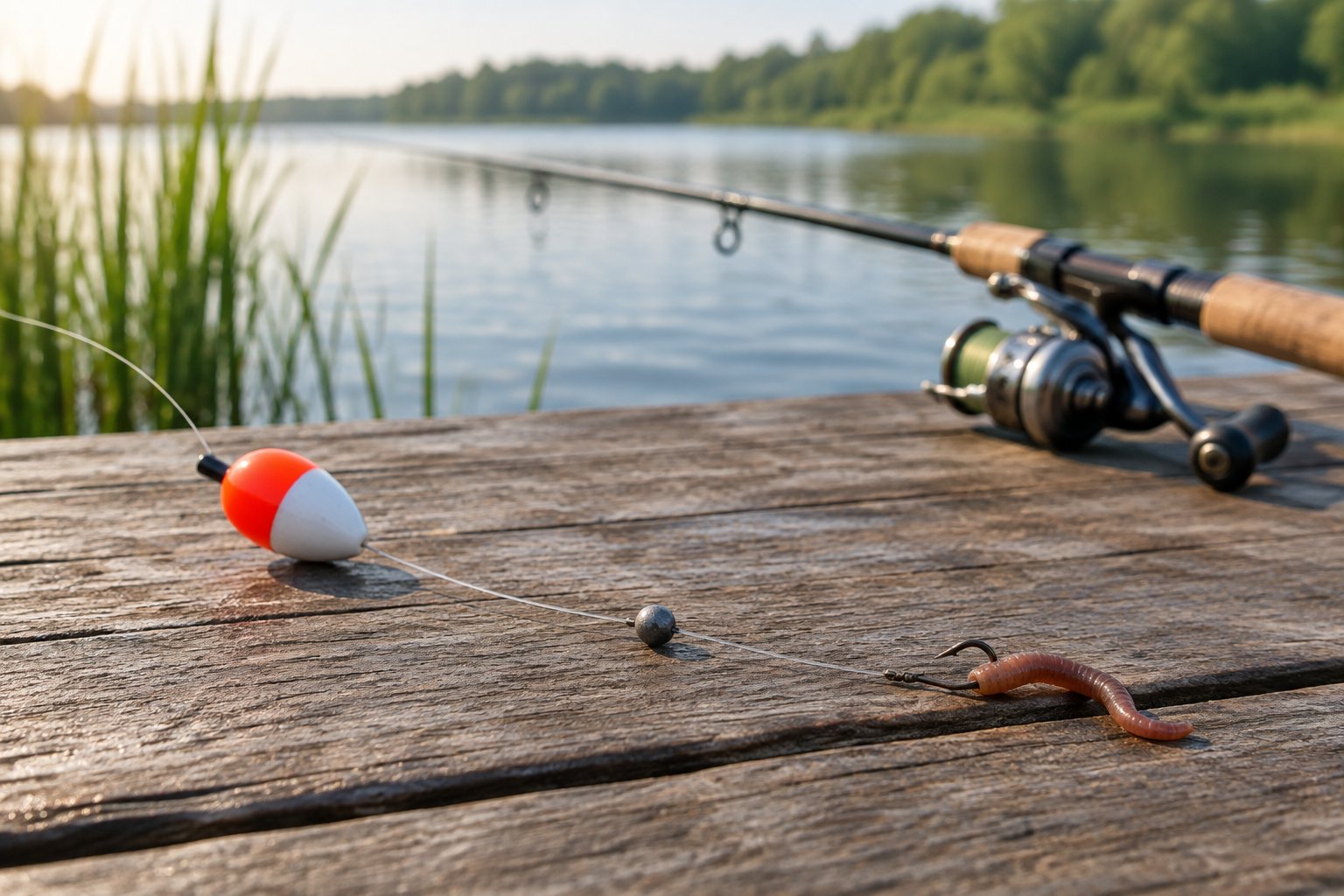
Bluegill (Lepomis macrochirus) are a friendly first target when you want a simple setup and a chance to keep a child engaged. Start with a float, adjust the bait depth if bites are scarce, and switch to a bottom presentation when fish are feeding near the lakebed.
Which Rig Is Best for a Quick Bluegill Trip?
For most quick outings, a bobber rig is the clearest starting choice for bluegill fishing: it keeps bait suspended and makes bites easy to see. A split shot rig or drop shot rig gives you a useful option when fish are holding closer to the bottom.
Why a Bobber Rig Is the Easiest Starting Point
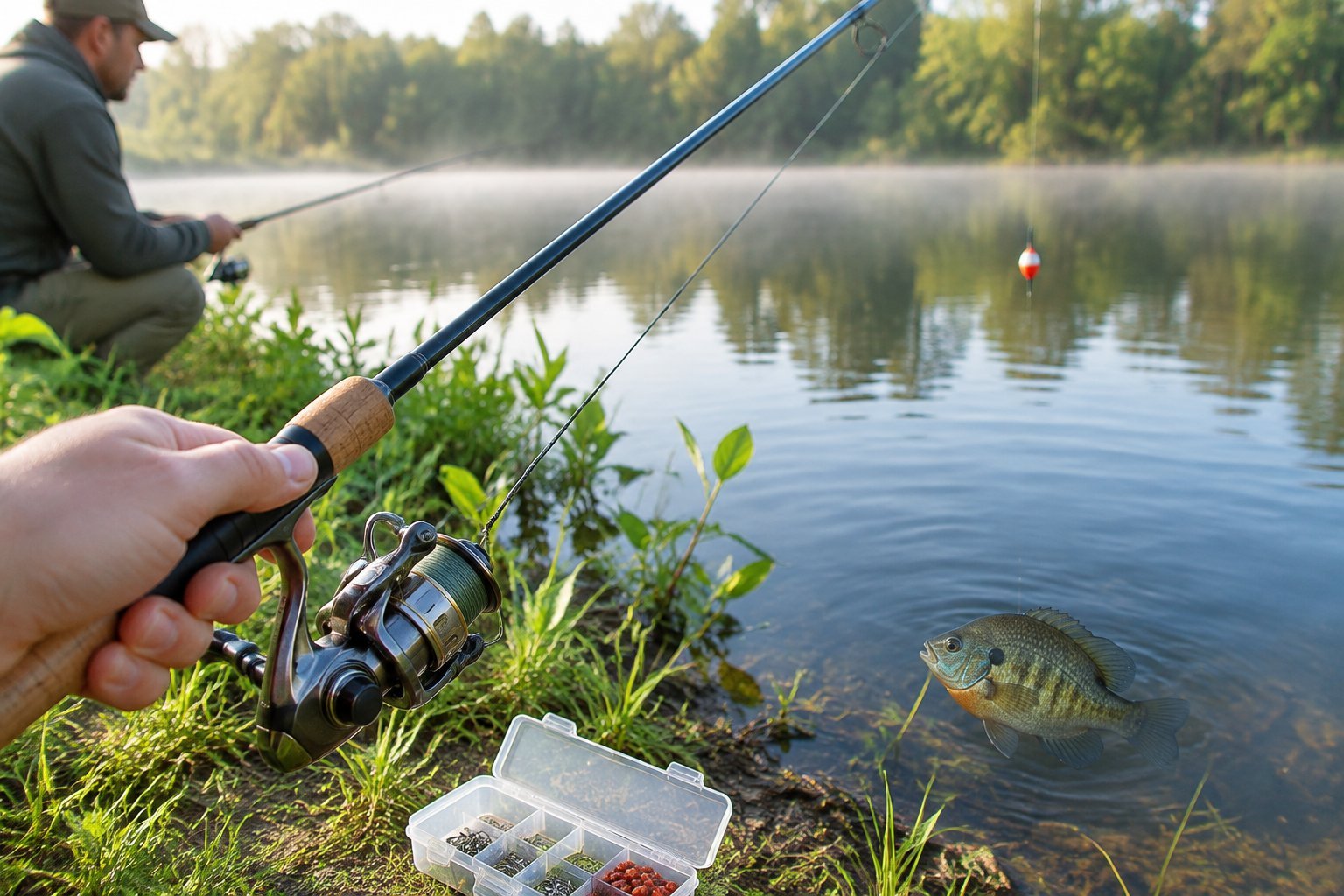
A bobber rig, also called a float rig, keeps your bait at a set depth. Cast near a dock or weed edge, then watch the float; a sudden dip, sideways movement, or repeated bobbing can signal a bite.
This presentation suits new anglers because you can see what the line is doing without reading subtle rod-tip movement. It also gives kids a clear activity while they wait: watch the bobber and raise the rod smoothly when it goes under.
When to Choose a Split Shot or Drop-Shot Rig
Choose a split shot rig when you want a simple bait presentation that sinks toward the bottom. Pinch one small split shot onto the line above the hook, cast near cover, and let the bait descend; add or move weight only as needed to reach the depth where fish are feeding.
A drop shot rig keeps the hook and bait above a sinker at the end of the line. It helps you hold bait near a specific depth while the weight stays close to the bottom, which is useful when bluegill are feeding low or wind makes a float harder to control.
Which Setup Works Best for Beginners and Kids?
Use a fixed bobber rig for a first outing, especially when fishing from shore in calm water. Its visible bite signal makes it easier to follow, and you can change the bait depth by moving the float.
Keep the first setup uncomplicated: one hook, a small piece of bait, and only enough weight to help the bait sink. Check that the hook is small enough for the bait and fish, and supervise children closely when handling hooks.
How Do You Assemble a Bobber Rig?
Build a bobber rig by putting the float above a small sinker and hook, then baiting the hook with a small piece of bait. This arrangement suspends the bait and gives you a visible signal when a fish takes it.
What Order Should the Bobber, Weight, and Hook Go In?
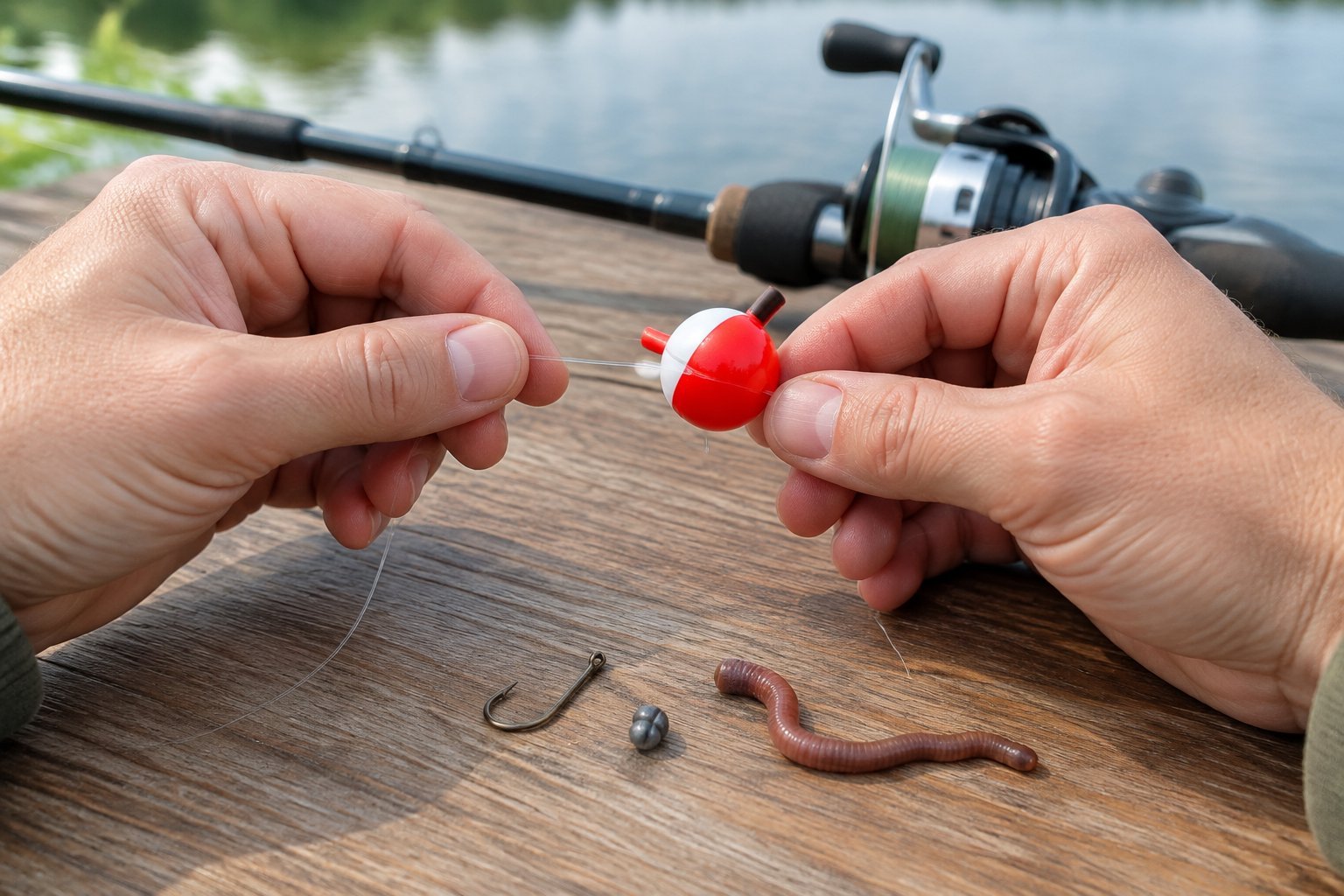
On your fishing line, place the bobber first, followed by a split shot sinker, then tie on an Aberdeen hook at the end. Clip-on bobbers attach directly to the line; position one at the depth you want the bait to hang.
Pinch the split shot onto the line several inches above the hook. Use a light enough sinker that the bobber stays visible, with just part of it sitting below the surface. Tie the hook with a secure knot, then check that the line runs freely and the hook point is clear.
How Do You Set the Bait Depth?
Set the distance between the bobber and hook to the depth where you want the bait to hang. Begin with the bait a couple of feet below the surface in shallow water, then adjust the float if you see fish deeper or get no bites.
Move the bobber farther from the hook to fish deeper; move it closer to fish shallower. Make one adjustment at a time and keep track of the depth that gets bites. In deeper water, a slip bobber lets the float slide along the line while a stop sets the maximum depth.
When Is a Bobber Setup Most Useful?
Use a bobber setup when you’re fishing from a bank, dock, or other spot where you want to suspend bait near visible cover. It works especially well in calm water, where the float stays easy to watch.
A float also helps keep bait above weeds and soft bottom. If a breeze pushes it across your target, shorten your cast or reposition the setup so the bait stays near the fish-holding area.
How Do You Build Bottom-Fishing Setups?
A split shot rig is the simplest bottom-fishing setup; a drop shot rig gives you more control over how high the bait sits above the sinker. Both use light weight and a small Aberdeen hook to present bait near the bottom.
How Do You Arrange a Split Shot Rig?
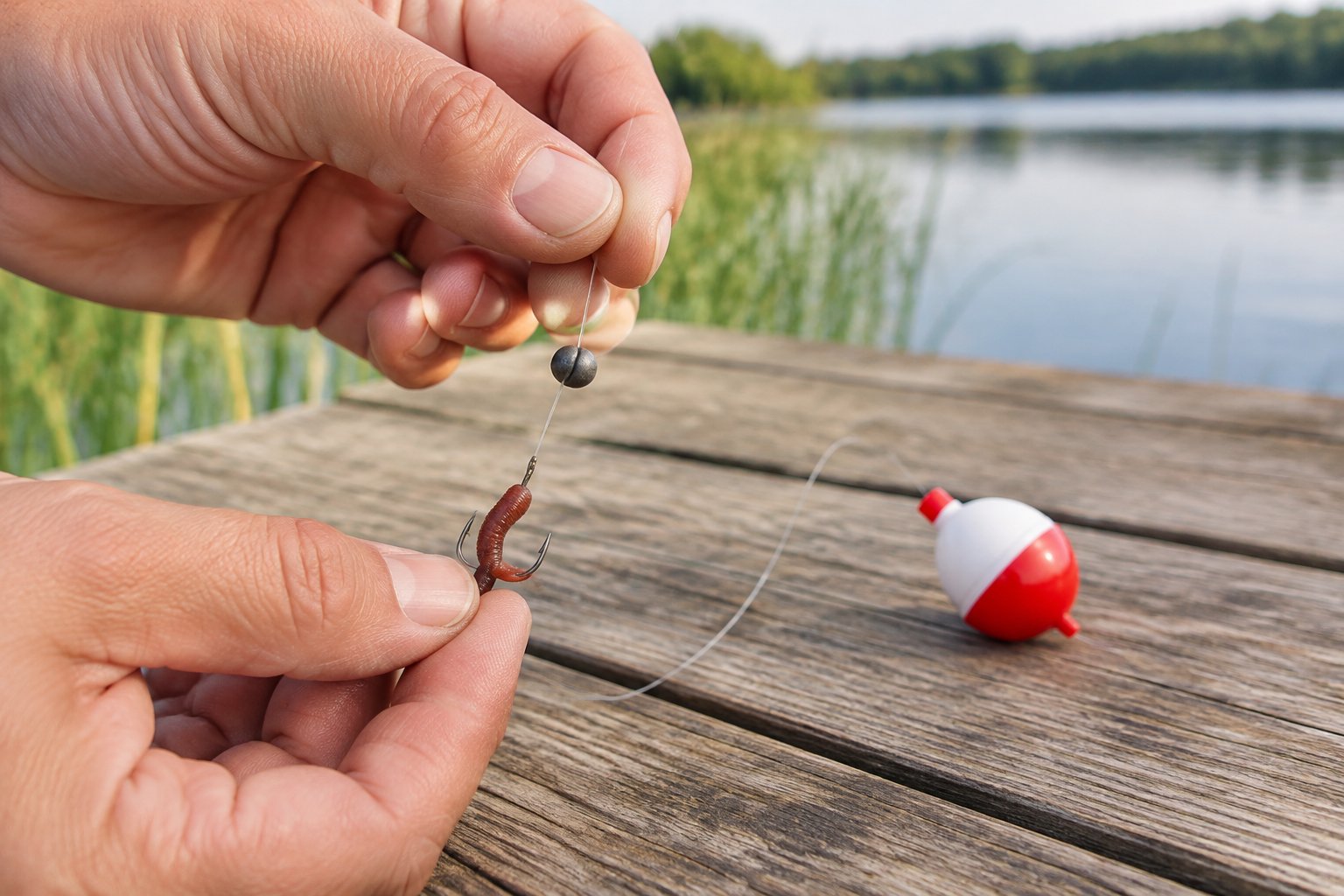
Tie an Aberdeen hook to the end of your line, then pinch a split shot onto the line several inches above it. The bait hangs below the weight and sinks toward the bottom after you cast.
Start with one small shot. If the bait takes too long to reach the bottom, add a little weight; if it catches weeds or drags heavily, reduce the weight or move the shot closer to the hook. Let the bait settle, then retrieve slowly with short pauses.
How Do You Tie and Fish a Drop-Shot Rig?
Tie a drop-shot rig by attaching the hook partway down the line with a Palomar knot and leaving a long tag end for the sinker. Pass the tag end back through the hook eye so the hook points outward, then tie the sinker to the end of the tag. The hook sits above the weight, keeping bait off the bottom.
Use a fluorocarbon leader if you want a separate, clear section between your main line and rig. Start with the hook about a foot above the sinker, then adjust the spacing to raise the bait higher. Lower the weight to the bottom and twitch the line gently so the bait moves while the sinker stays in place.
What Bait or Lures Should You Use?
Small live baits are an easy match for a bobber or bottom rig, while compact bluegill lures let you cover water with repeated casts. Choose a bait that fits the hook and present it in small portions.
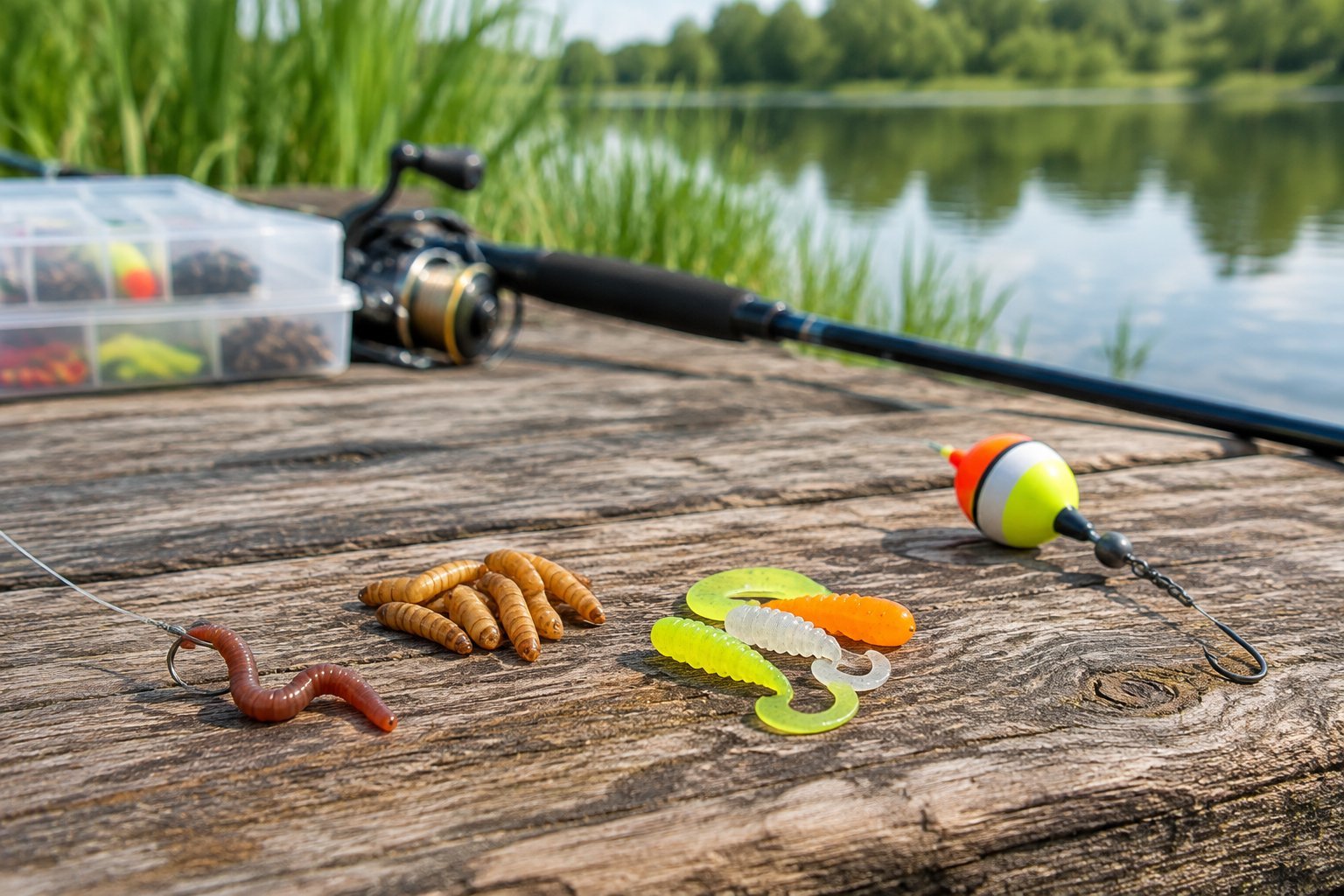
Which Live Baits Are Simple and Reliable?
Worms, nightcrawlers, crickets, and a wax worm are practical choices for bluegill. Thread on a small piece of nightcrawler or worm so the hook point remains exposed; large bait can make it harder for a small fish to take the hook.
Crickets and small insects work well when bluegill are feeding near the surface or around shallow cover. Bring one bait you can handle easily, and keep it fresh and securely attached so it stays on the hook after a cast. For more options, browse these bluegill baits.
When Are Small Lures Worth Trying?
Try bluegill lures when you want to search several spots without rebaiting after every cast. Small soft plastics and inline spinners can be cast near docks or weed edges, then retrieved slowly with brief pauses.
Keep the lure compact and use light tackle so you can cast it and detect gentle takes. If fish follow without striking, slow the retrieve or switch to a live bait. You can compare more choices in this guide to best bluegill lures.
What Gear and Spots Make Fishing Easier?
Light tackle and a short, accurate cast are enough to get started with bluegill from shore. Focus on docks, weed edges, and shallow cover where you can present bait without making a complicated setup.
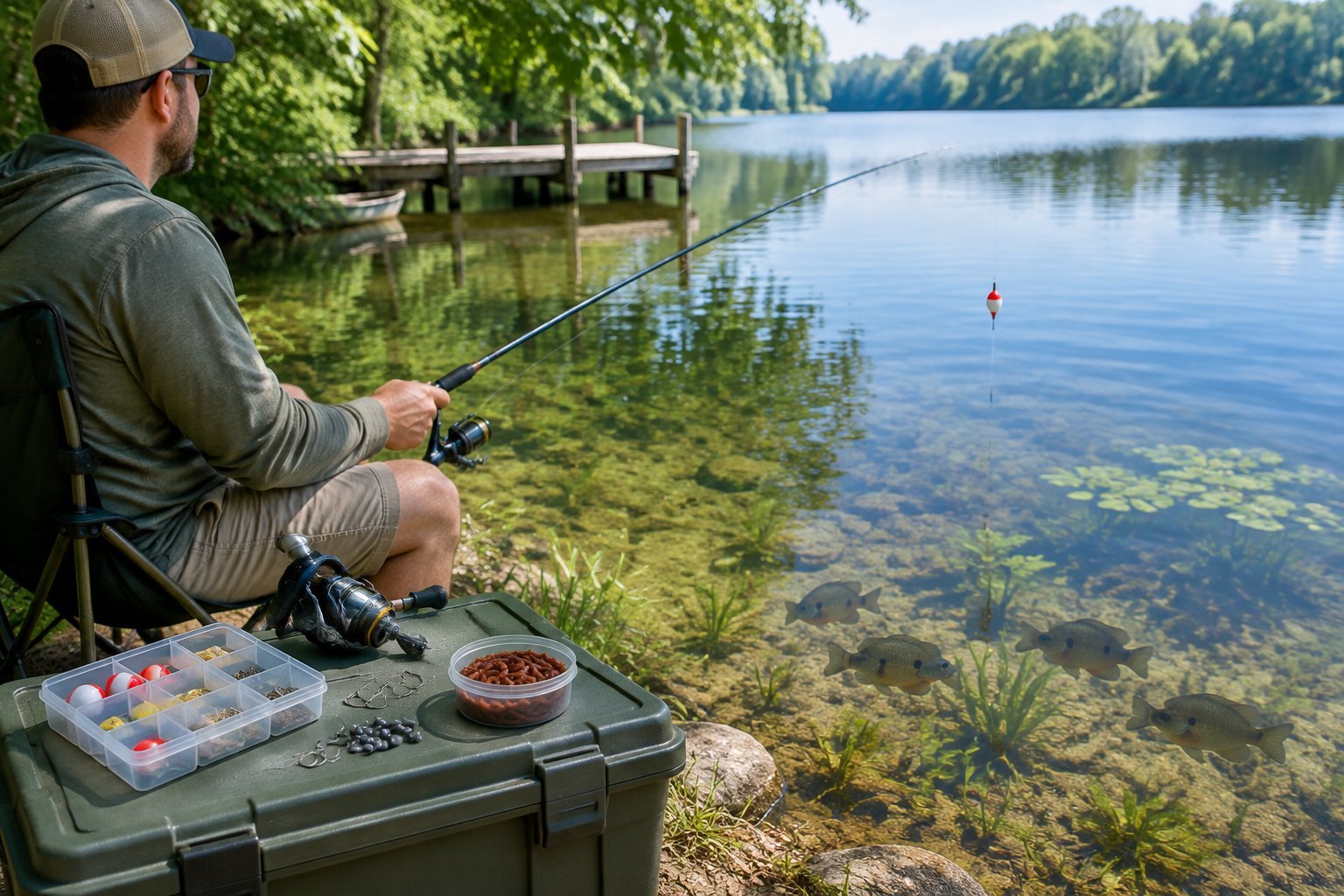
What Light Gear Is Enough for Bluegill?
A light rod with a small spinning reel and light fishing line handles a basic bobber or split shot rig. Choose line that suits your rod and reel, and keep the hook and sinker small so the bait still moves naturally.
You can start with the gear you already own if it casts a light float and lets you control the fish. Tie one rig before you leave home, and pack a few spare hooks and split shots so you can replace lost tackle quickly.
Where Should You Cast From Shore?
Cast along dock edges, weed lines, and other shallow cover, leaving enough room to bring the fish in without snagging your line. Start close to shore; bluegill often hold near cover within an easy cast.
If the first spot stays quiet, shift your position and try a new edge or opening in the weeds. Keep casts short and controlled around people, trees, and docks, and check the area for snags before you cast.
How Can You Spot Shallow Fish?
Polarized sunglasses reduce surface glare and make it easier to see into shallow water. Scan quiet pockets near weeds and docks for movement, fish shapes, or patches of activity, then cast beyond the target and draw the bait toward it.
Approach the shoreline quietly and watch the water before you cast. If you spot fish but get no bites, adjust the bait depth in small increments and present the hook near their level. Get your gear ready and explore the related beginner-friendly guides before your next trip.

