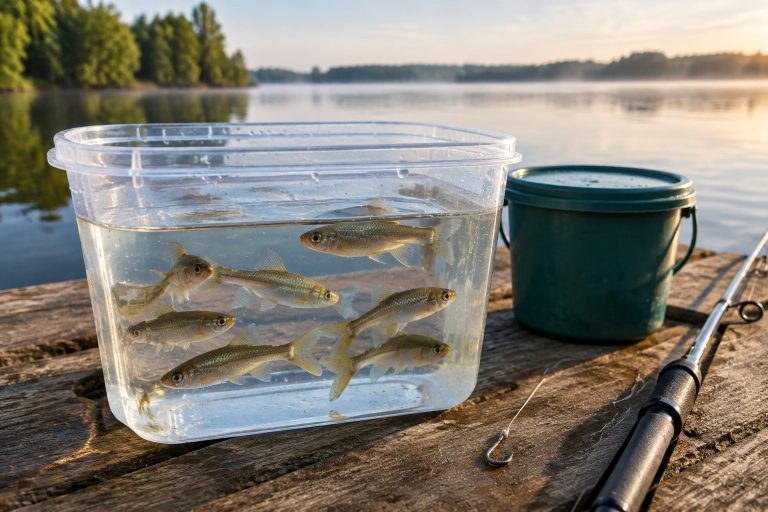
To catch big bluegill, fish a small piece of worm or a tiny jig along a weed edge, dock, or drop-off, then adjust your depth until you find the larger fish. You can do it with one light rod and a short trip to a pond or lake, even if you’re taking a child fishing for the first time.
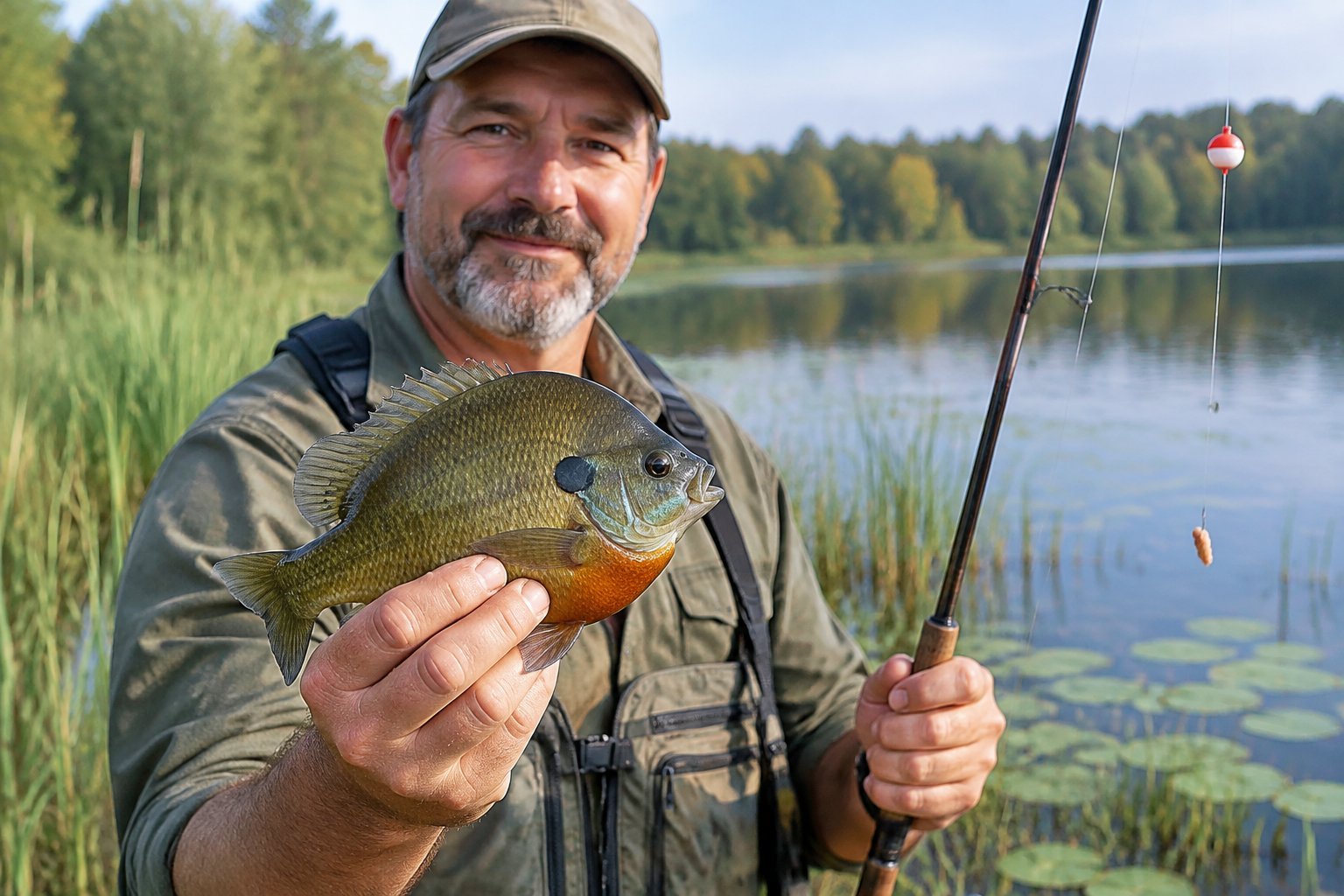
In bluegill fishing, the quickest bites may come from small fish close to shore. A larger bluegill can be a few feet farther out or lower in the water, close enough to reach once you know where to place your bait.
Where Do Larger Bluegill Hold?
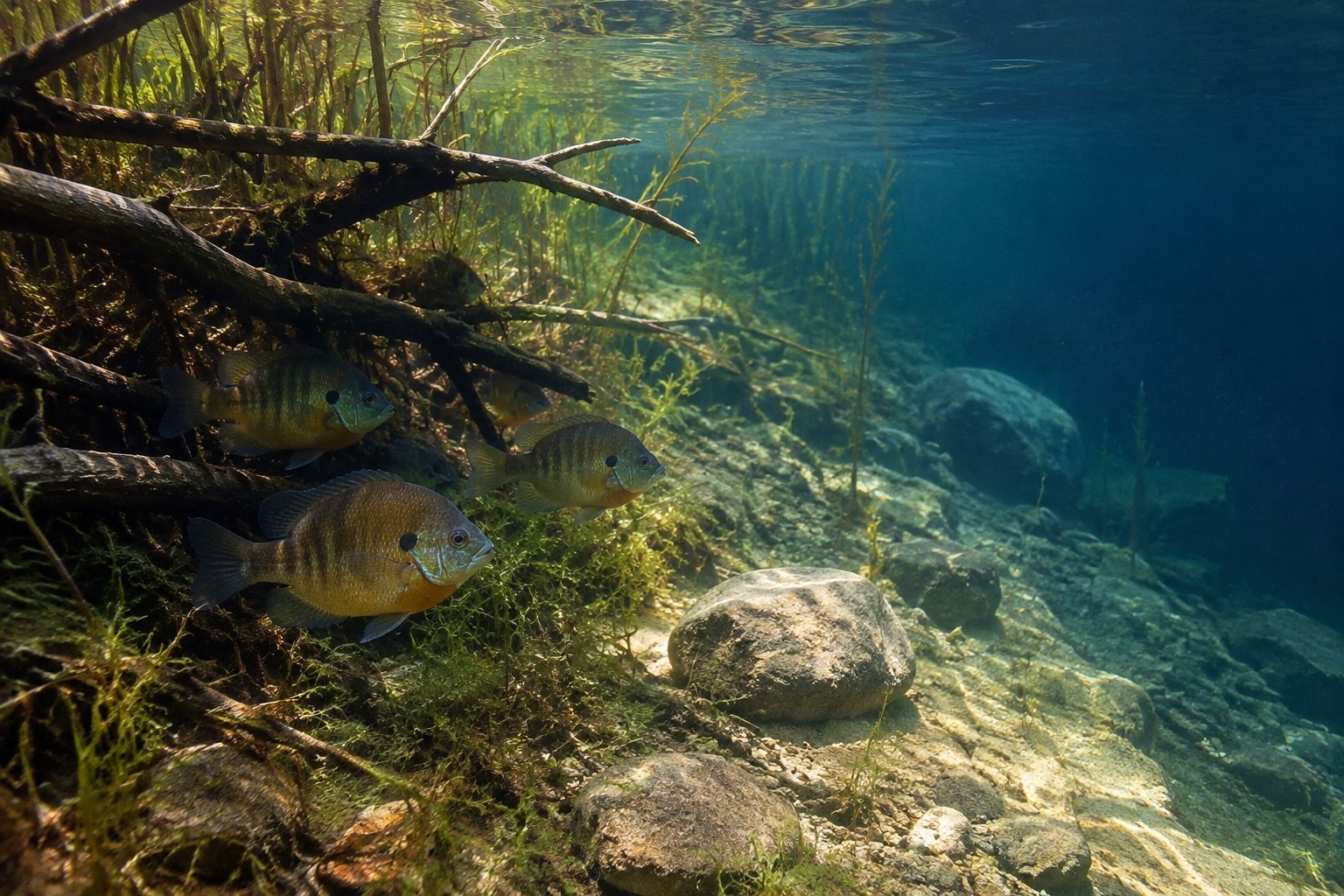
Start finding big bluegills where cover meets open water, especially along weed edges, docks, and nearby depth changes. These spots give you clear targets from the bank and let you search several depths without changing locations.
Start at Weed Edges, Docks, and Nearby Drop-Offs
Cast beside the outside edge of a weed bed, along a dock’s shaded side, or near submerged branches. Aim beside the cover so your bait stays visible and your line has a clear path back to you.
If you know where a shallow flat drops into deeper water, work along that transition. A few casts at different distances will help you locate the edge even when you cannot see it. Keep track of where your float gets bites so you can repeat the cast.
Look Beyond the Shallows for Bull Bluegills
Bluegill in shallow water are easy to spot, especially during the spawn. Outside that period, bull bluegills may hold along the deeper side of the same weeds or near a drop-off beside a spawning flat. If small panfish keep taking your bait at the shoreline, move your cast toward that deeper edge.
“Bull bluegill” commonly refers to a large, thick-bodied bluegill, especially a mature male. You do not need to know the exact depth before casting: let your rig search from the shallow edge outward until the size of the fish changes.
How Can You Tell Bluegill from Other Sunfish?
Check the fish before you count it as a bluegill. Look for a deep, flattened body, a dark ear flap on the gill cover, faint vertical bars along the side, and a dark spot toward the rear of the soft dorsal fin. Color varies, so use several features together.
“Sunfish” and “panfish” are broad names that include other fish you may catch in the same spot. A redear sunfish, for example, has a red or orange border on its ear flap. If you plan to keep fish, check your state’s identification guidance and local limits first.
What Simple Setup Works Best?
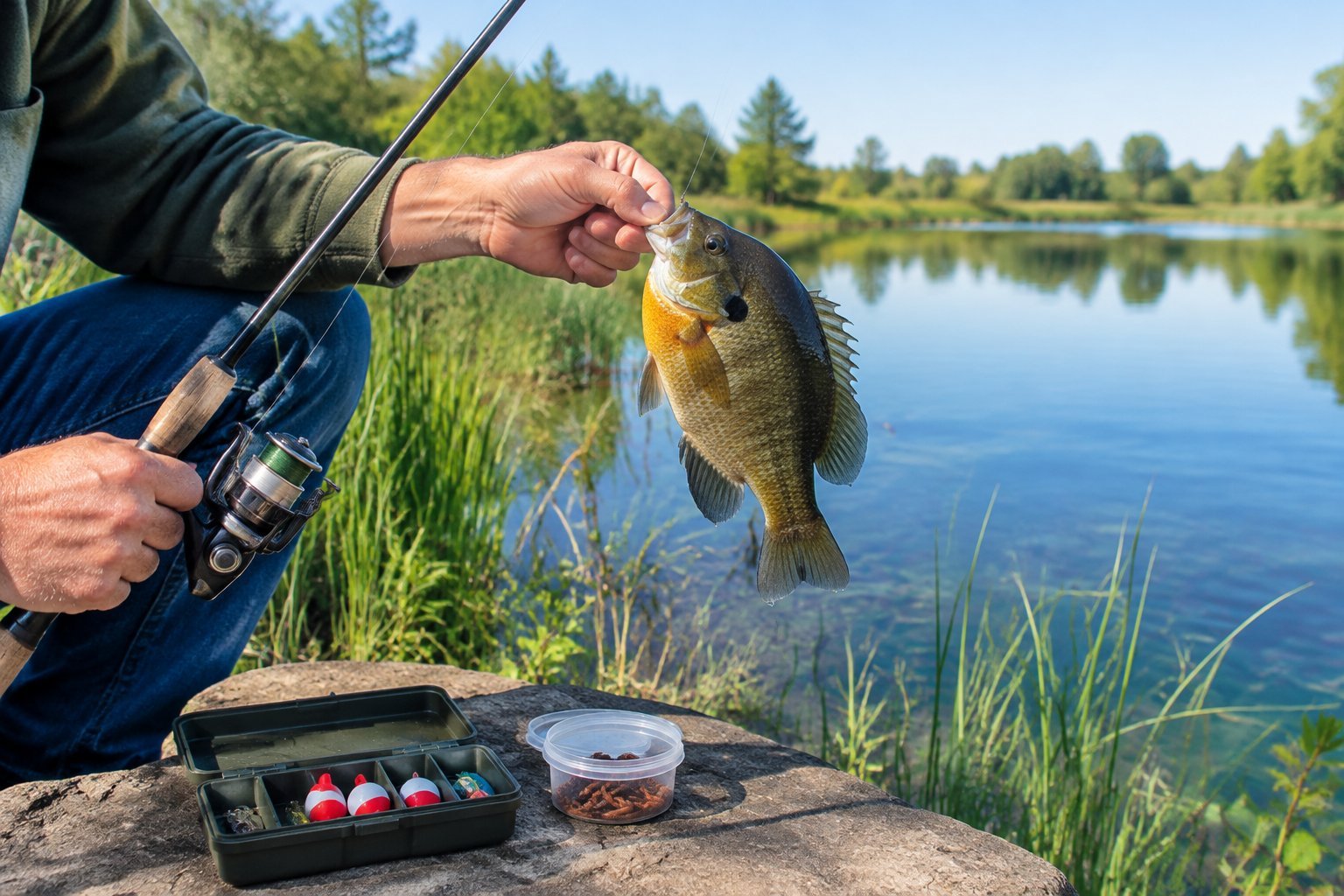
An ultralight spinning rod, light line, a small hook, and an adjustable float make a practical big-bluegill setup. You can cast it from shore, see gentle bites, and change depth without tying a new rig.
Choose Light Tackle and a Small Hook
A small-pond ultralight setup with 4- to 6-pound line gives you enough casting control for tiny baits. Start with a size 8 or 10 aberdeen hook; its long shank gives you room to handle a small piece of worm. Pinch on a small split shot above the hook if you need help sinking the bait.
Keep the drag light enough for a strong fish to take line. If you use fluorocarbon leaders, tie a short length between your main line and hook, and check the knot after pulling a fish past weeds or wood.
Set a Slip Bobber to the Fish’s Depth
A slip-bobber fishing rig makes deeper water manageable because the float slides down toward your hook for the cast. Thread a bobber stop onto your line, followed by the float. Add a small split shot and hook below it; the stop sets how deep the bait hangs.
Begin with the hook suspended above the weeds or bottom. If you snag plants, slide the stop closer to the hook. If bites come as the bait sinks but stop once the float settles, set the stop farther up the line so the bait can hang deeper.
Which Baits and Lures Should You Try?
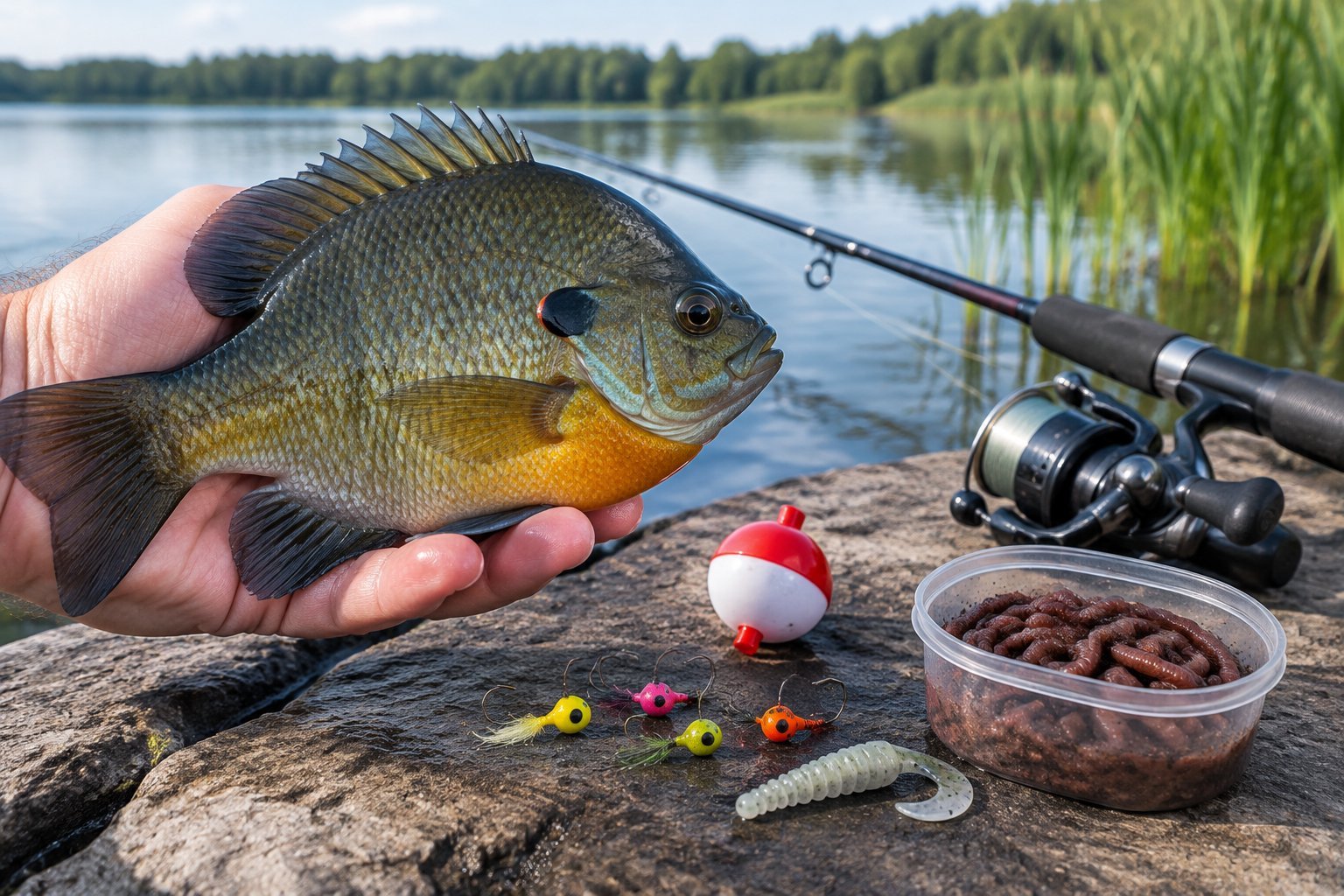
A small piece of live bait is your easiest starting choice; tiny jigs and spinners help you search when fish are spread out. Keep every offering small enough for a bluegill’s mouth.
Start with a Small Piece of Live Bait
Among easy-to-carry bluegill baits, worms are a straightforward first choice. Pinch off a short piece of worm or nightcrawler and thread it onto the hook so the point remains exposed. A long loose end gives small fish more to grab without taking the hook.
Crickets also work well near weeds and docks. Waxworms and mealworms fit small hooks neatly, which makes them handy when you want less time spent rebaiting, especially with kids along. Keep live bait shaded and follow local rules on collecting or transporting it.
Try Tiny Jigs and Spinners When Covering Water
A small jig lets you cast along a weed edge and count it down to a likely depth. Rabbit hair jigs provide a compact offering that moves with gentle rod-tip lifts. Let each jig sink before beginning a slow retrieve, and watch for a twitch in your line on the way down.
A small beetle spin gives you a way to search open lanes between cover. Reel just fast enough to keep its blade turning. If you find a productive stretch, make shorter casts through it with the jig or your bait rig. Those are two useful roles to consider when choosing lures for bluegill.
Use Surface Bugs or Flies for Feeding Fish
When you see bluegill picking insects off the surface, place a small popper near the activity and let the ripples fade. Give it a short twitch, pause, and watch for the fish to take it before lifting the rod.
If fish show interest below the surface, try small wet flies or nymphs with light tackle suited to casting them. You can keep this approach simple: match the depth where you see feeding, then give the fly time to sink between gentle movements.
How Should You Present the Bait?
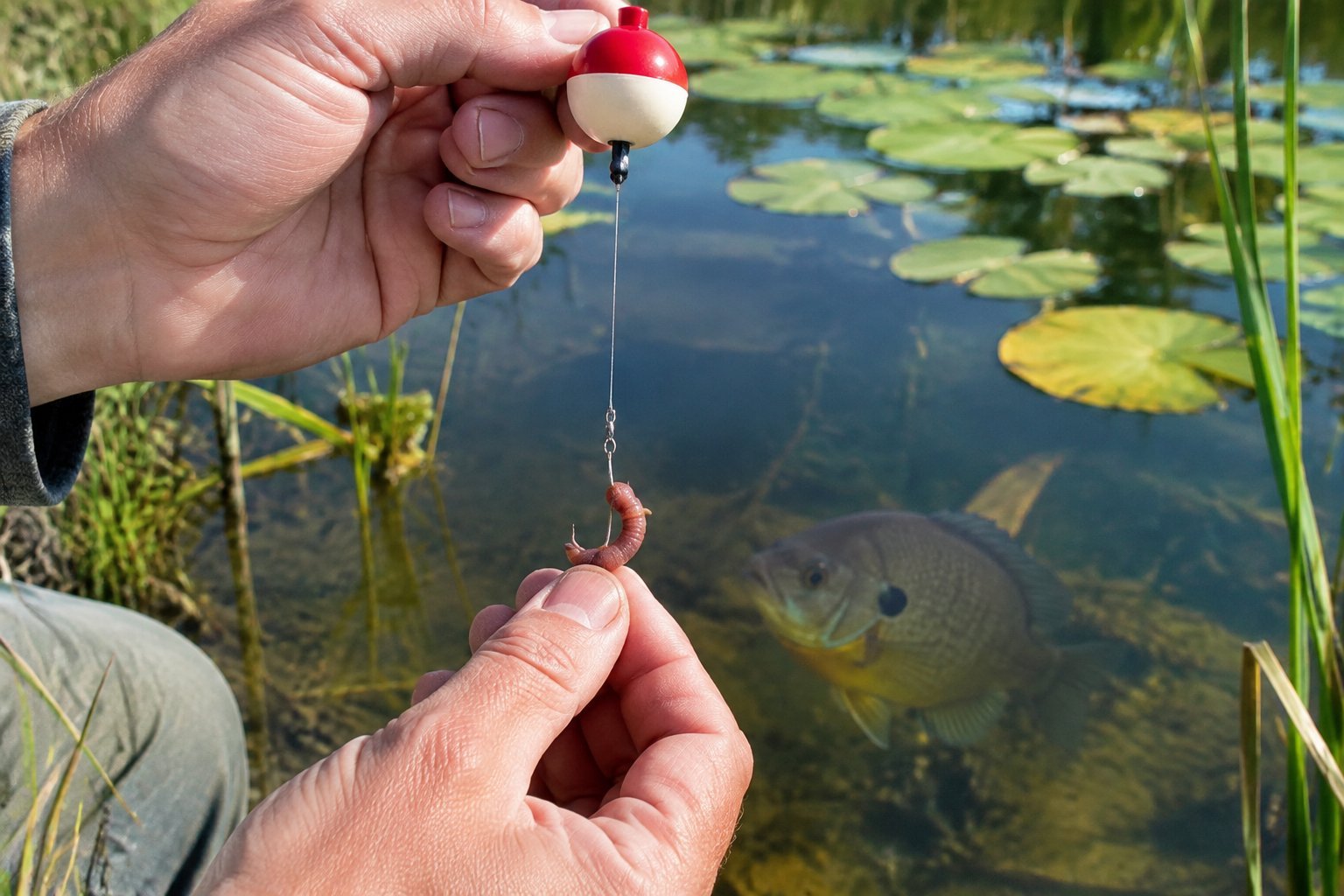
Let your bait fall and pause near the cover, then change its depth before changing what is on the hook. A careful presentation helps you learn whether fish are passing over the bait or ignoring it.
Let Small Offerings Fall Naturally
Land your cast beyond the spot you want to fish and draw the bait gently into position. With a float, allow the bait to settle before adding movement. A slight lift of the rod tip is enough to make a worm or jig rise and fall again.
Watch the float for a sideways glide or a quiet dip. Bluegill sometimes hold a bait without pulling the float under, so lift the rod smoothly when the float moves with purpose.
Adjust Depth Before Changing Bait
If you get no bites beside promising cover, change the bobber stop by about a foot and try the same casting lane again. Work from above the weeds toward the bottom, checking each depth with several casts. This keeps you from changing bait and depth at once, which makes a good bite harder to repeat.
If you catch small bluegill at one depth, try below them or closer to the outside edge. Keeping the hook clear of weeds will help you recognize a bite.
Slow Down When Big Fish Follow but Do Not Bite
If a larger fish trails your jig without taking it, pause and let the lure drop. On the next cast, use a slower retrieve and fewer rod-tip movements. Give the fish a chance to close the distance while the offering stays within its reach.
With bait under a float, leave it still for a short stretch after a twitch. These bluegill fishing tips are easiest to apply when you change one thing at a time and notice which cast draws a response.
How Does the Season Change Your Approach?
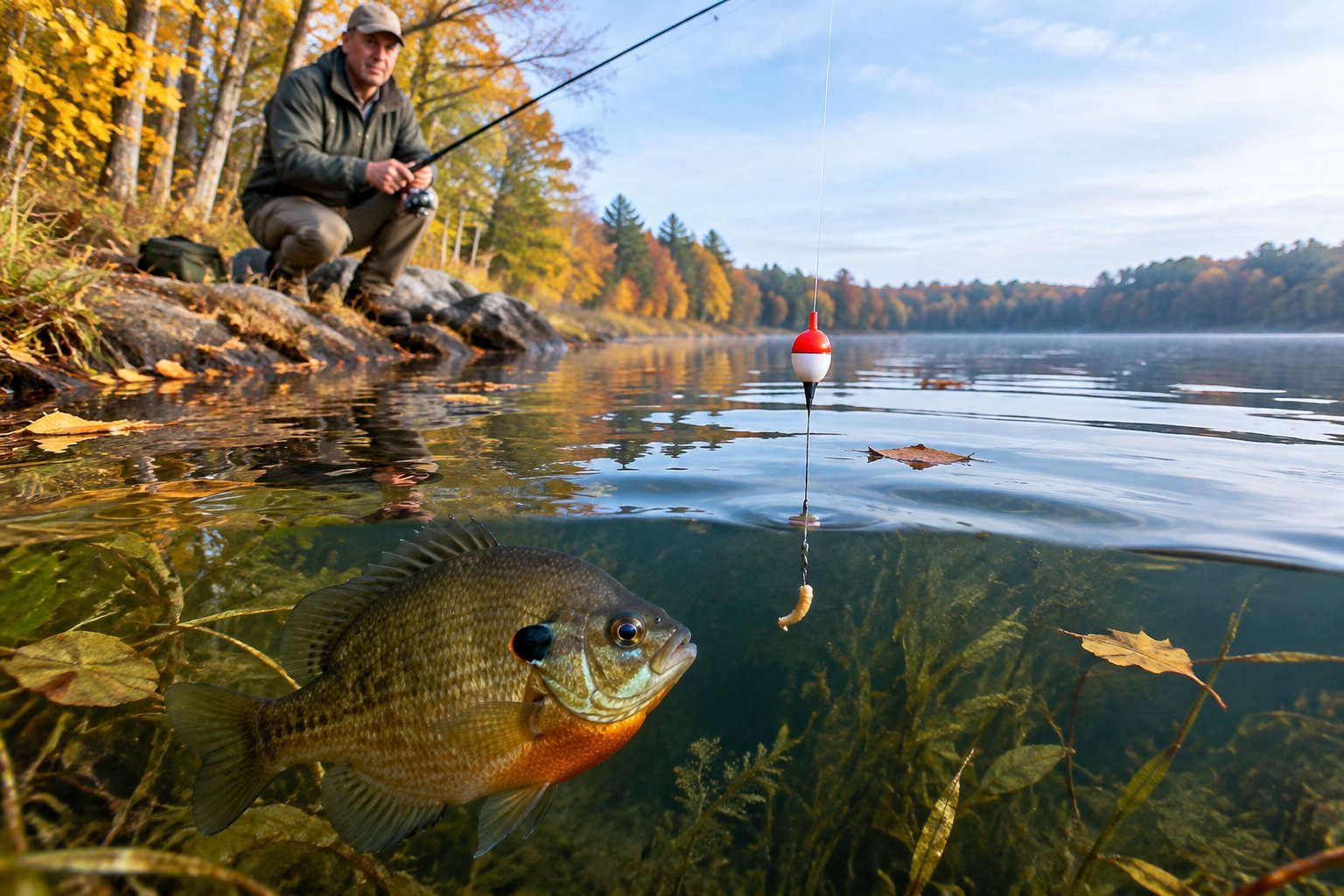
Fish shallow bedding areas during the bluegill spawn, then shift toward deeper cover as the fish leave the beds. In winter, living weeds and deeper flats give you starting points.
Find Spawning Beds Without Overworking Them
During the spring fishing season, look for clusters of pale, round nests on firm bottom in protected shallow water. Cast gently to the edge of a bed and keep your movements quiet so you can see whether a large fish is present.
Spawning fish are guarding nests. Handle any fish you release with wet hands, get it back into the water promptly, and give a bed a break after a few casts. Check local harvest rules before keeping bluegill.
Fish Deeper Cover After the Spawn
Once nesting activity ends, start at the outside weed line or a drop-off near the former beds. Shade beneath docks and submerged brush also gives you defined places to cast. Set your slip bobber so the bait hangs near the cover without settling into it.
In fall, use the same cover-first search as water conditions change. Check the shallower side when you see feeding activity there, and work outward if your casts go unanswered.
Check Healthy Weeds and Deeper Flats in Winter
For open-water winter fishing, start near standing green weeds if the lake still has them. In lakes where those weeds have faded, try a deeper flat close to a drop-off. Keep your bait small and give fish longer to respond to each presentation.
If you go ice fishing, check current local ice-safety guidance before stepping onto any frozen water. Fish several positions along a weed edge or flat, and adjust your bait depth at each one.
What Is a Good Plan for a Short Trip?
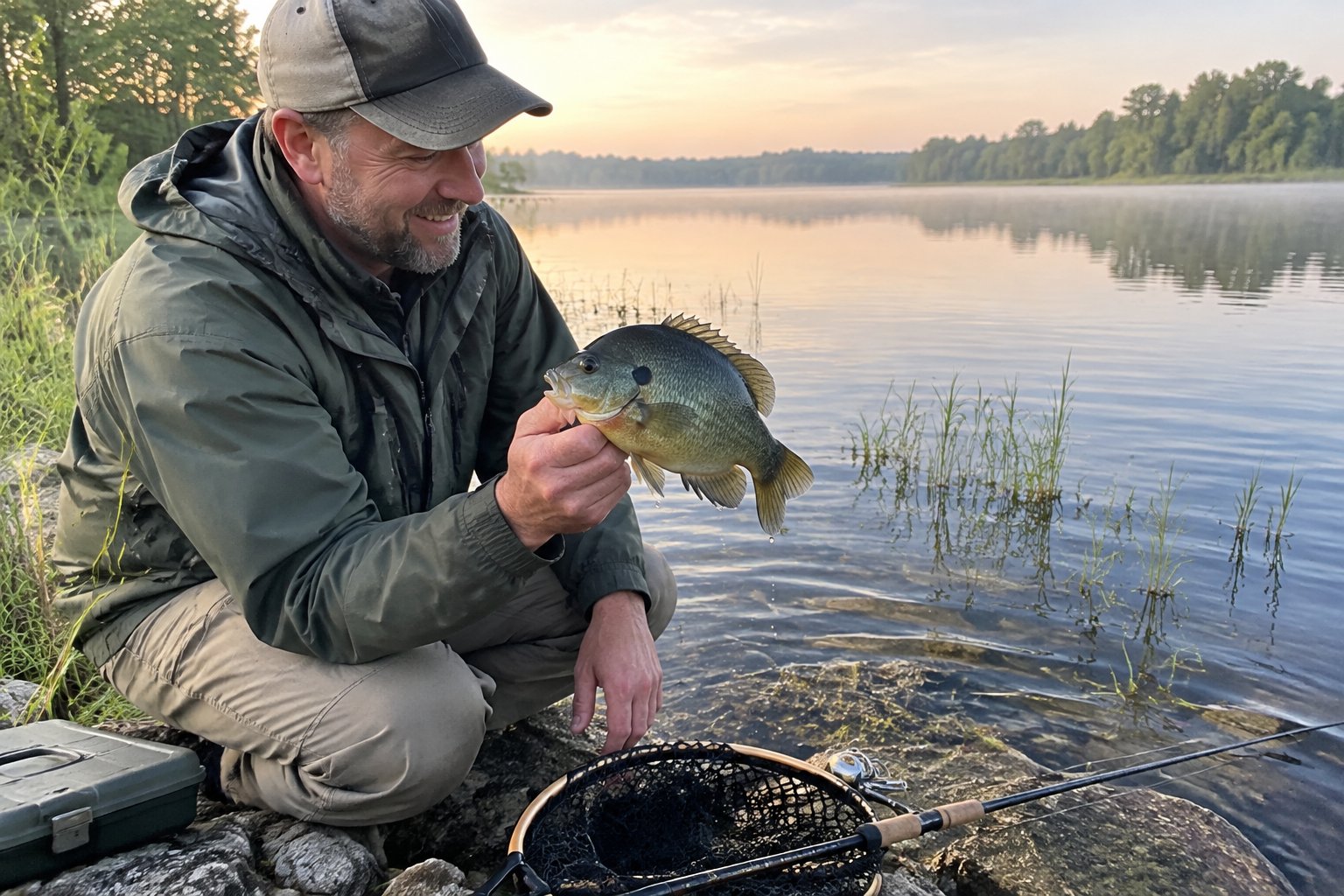
For a short trip, choose two reachable spots with cover and take one rod rigged with a slip bobber, small hook, and bait. You will spend your fishing time testing useful water instead of setting up on the bank.
Pick Two Likely Spots and Bring One Ready-to-Fish Rig
Choose a dock or weed edge for your first stop and a nearby drop-off or patch of brush for your second. Set the bobber stop before you leave home, then bring a few spare hooks, split shot, and enough worm pieces or other bait for the trip.
If you are taking a child, start where you have safe footing and room to cast. A float makes bites easy to see, and one ready-to-fish rig leaves your hands free to help. You can use the same plan for a morning or evening fishing trip around your schedule.
When Should You Move or Change Depth?
Give your first spot several casts at one depth, then adjust the bobber stop and cover it again. If you find only tiny fish, cast farther along the cover or hang the bait deeper. If you get no response across those positions, walk to your second spot.
That sequence gives you a repeatable way to learn how to catch bluegill when time is limited: note the cover, depth, and cast that produced the larger fish, then start there on your next visit.
Get your gear ready and explore the related beginner-friendly guides before your next trip.