
For beginner pond fishing, start from a legal, accessible bank with a light spinning or spincast outfit and a small piece of worm under a bobber, then fish beside shade or weed edges where bluegill feed. You need only a compact tackle kit and a nearby pond to fit a useful outing around work or family plans.
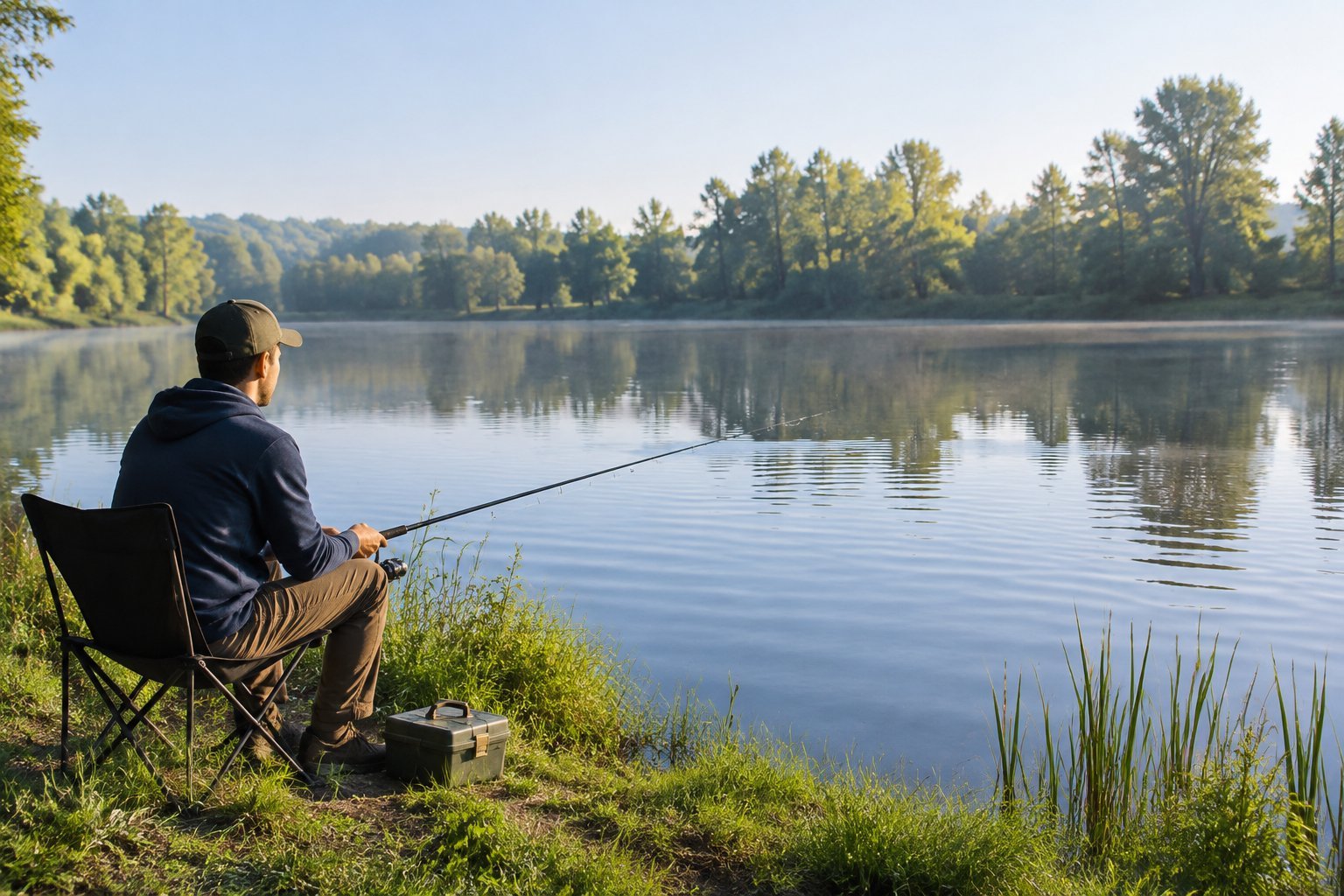
When you’re fishing in ponds, your first opportunity might be just a few feet from shore. With a manageable setup and a short route between promising spots, you spend more of your available time fishing and less of it sorting equipment.
How Do You Find a Pond You Can Legally Fish?
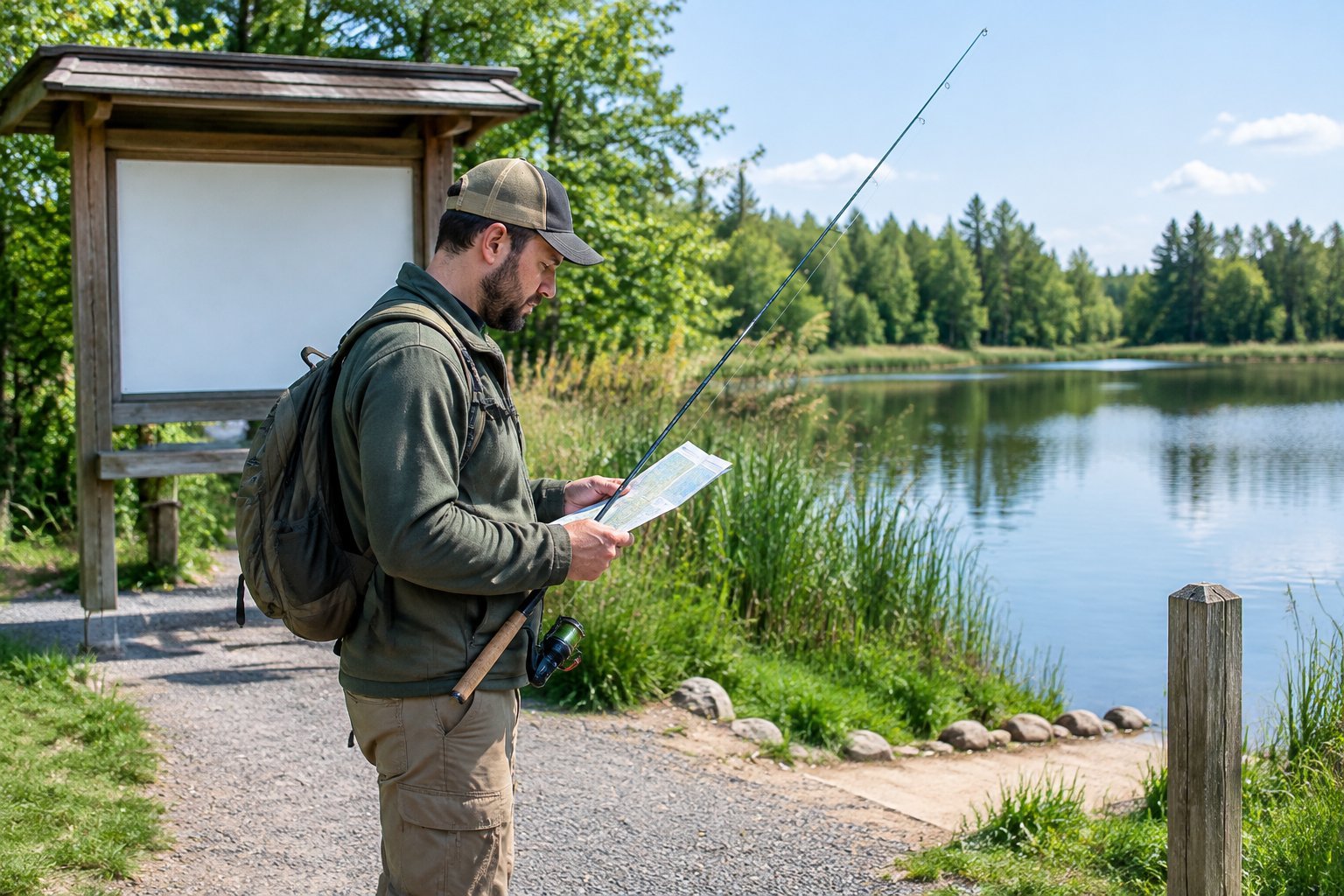
Start with your state wildlife agency’s fishing-access map, then confirm permission and the rules for that specific pond. Choose a location with safe bank access and a documented population of beginner-friendly fish.
Find Public Access and Check Which Fish Are Present
Search your state fisheries website and local parks department for public fishing ponds. Look for designated bank-fishing areas, parking, opening hours, and recent stocking information. A satellite map helps you spot paths and shoreline cover, but it doesn’t establish public access.
Check species lists before choosing your bait. For a first outing with children, prioritize a pond with bluegill or other sunfish and a clear place to stand. You’ll have an easier start along an open bank than beside steep slopes or dense brush.
Check Permission, License Requirements, and Local Rules
Get permission from the landowner or authorized property manager before entering private property. When you’re checking whether you can fish retention ponds legally, verify both shoreline access and permission to fish. An open gate or an unmarked pond establishes neither.
Check your state’s fishing license requirements for each participant, including age exemptions. Private-property exemptions vary, so verify those separately.
Before leaving, confirm:
- Fishing hours and seasonal closures.
- Bait restrictions, including live bait and minnows.
- Size limits, harvest limits, and catch-and-release requirements.
- Any special permits or designated fishing areas.
What Gear and Bait Do You Need to Start?
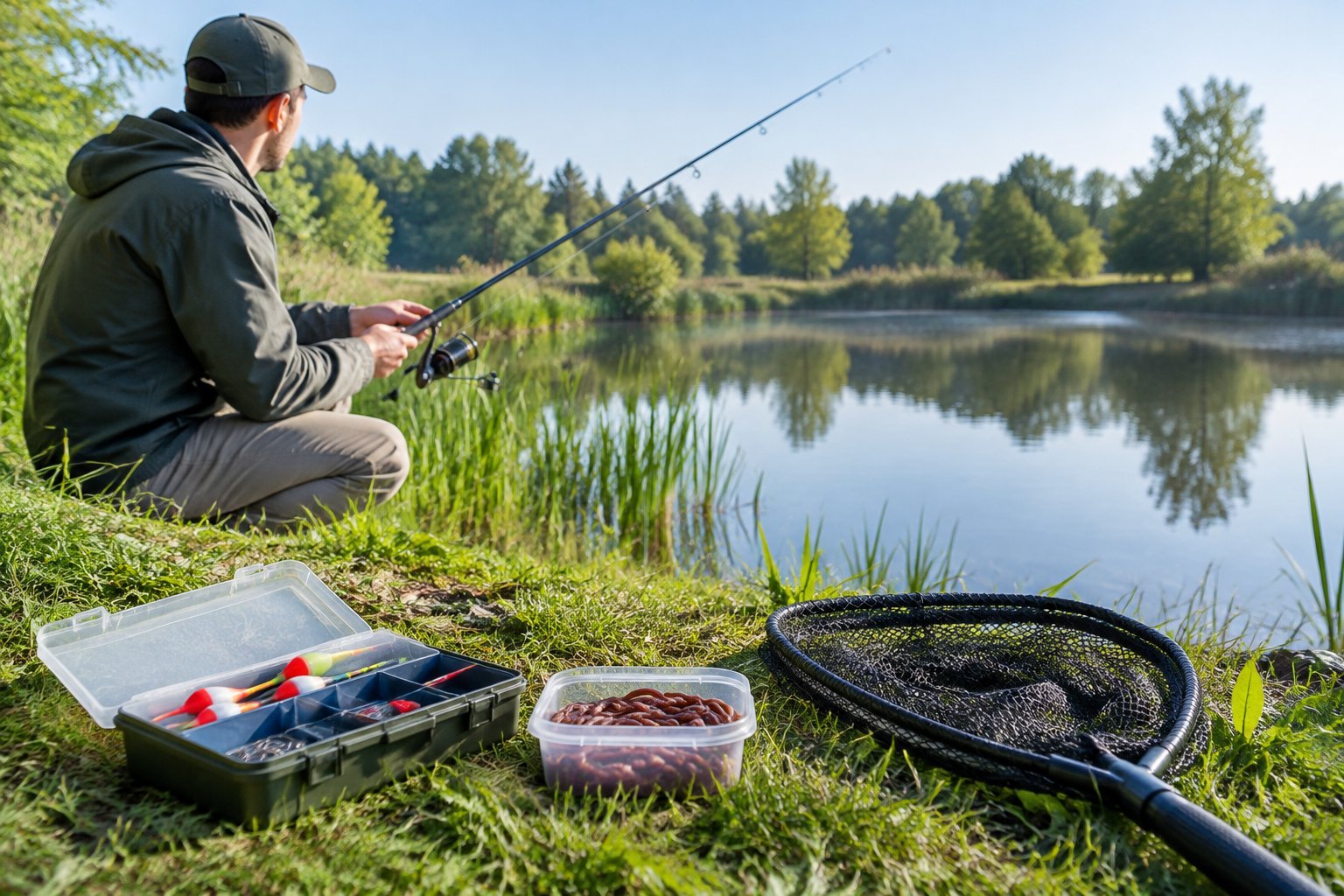
Bring one manageable rod, a worm-and-bobber rig, and a few spare tackle pieces. Add lures only for fish you intend to target, keeping your first kit small enough to carry along the bank.
Choose a Simple Spinning or Spincast Setup
For mixed panfish and modest bass around light cover, choose a 6- to 7-foot light or medium-light spinning rod with 6-pound monofilament. A push-button spincast outfit gives you another straightforward starting option, especially while a child learns casting timing.
Match the line and lure weight to the ratings printed on your rod and reel. If you’re choosing an ultralight fishing setup for small ponds, reserve it for small fish and relatively open water; heavy vegetation calls for stronger tackle.
Pack needle-nose pliers, line cutters, spare hooks, a small net, and polarized sunglasses. The glasses reduce glare so you see submerged cover more clearly.
Rig a Worm Under a Bobber for Your First Fish
Use a small worm piece as your starting pond fishing bait. You’ll get fewer missed bites when a bluegill can take the bait and hook together.
- Tie on a size 8 bait hook using an improved clinch knot, then moisten and tighten it.
- Thread on a short piece of worm, leaving the hook point exposed.
- Attach a small bobber 12–24 inches above the hook.
- Add a small split shot 6–10 inches above the hook if needed to settle the bait.
When choosing fishing hooks for beginners, check the hook’s physical size because numbering differs across hook styles. Use a bobber small enough to show light bites, and lift the rod smoothly when it travels steadily sideways or submerges.
Pack a Small Selection of Beginner-Friendly Lures
Carry a few lures with distinct jobs:
- Small inline spinner: Retrieve steadily through open water for panfish or stocked trout.
- Small jig with a soft-plastic body: Fish beside cover for panfish and crappie.
- Soft-plastic worm: Work slowly near bass cover.
- Compact spinnerbait: Retrieve beside weed edges for active bass.
- Small topwater popper: Use over open pockets during warm-water, low-light periods.
Keep treble-hook lures in a closed box when fishing with kids. For your first family trip, a single-hook live bait rig keeps casting and unhooking more manageable.
How Do You Catch Fish From the Bank?
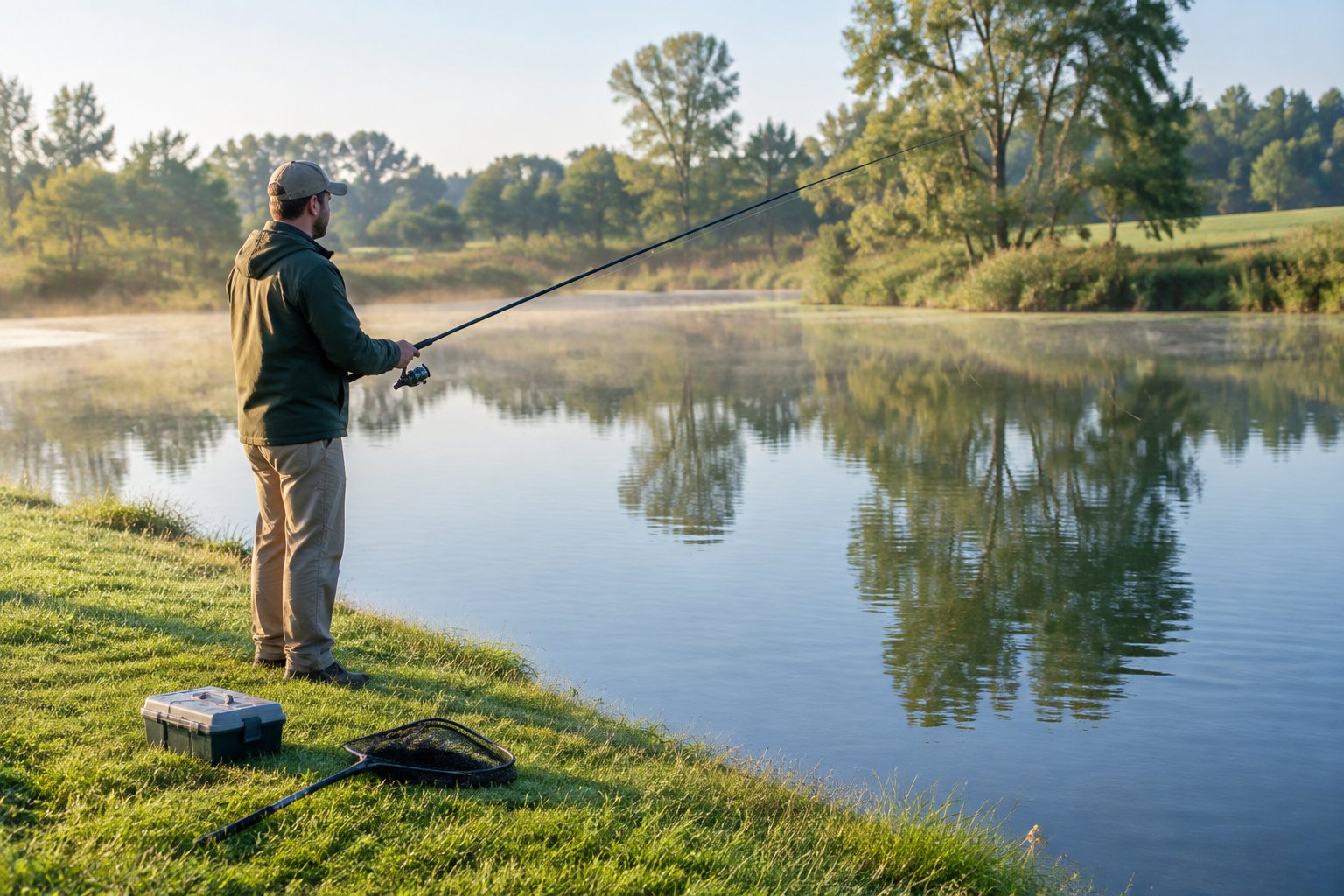
Fish close to cover, begin with short casts, and change one part of your presentation when bites stop. You’ll learn more from a deliberate pass along several promising spots than from repeatedly casting toward the pond’s center.
Find Shade, Cover, and Changes in Depth
Look for docks, overhanging branches, submerged wood, points, and weed beds. These features provide shelter and feeding opportunities; baitfish gather around cover, drawing predators nearby.
Position your bait beside the outside edge of aquatic vegetation or near a shaded opening. With basic shore fishing tactics, you can reach productive water by casting parallel to the bank.
Where access allows, also investigate a shoreline that drops quickly into deeper water. Near a dam, use designated access and stay clear of spillways, steep faces, and restricted structures.
Approach Quietly and Make Your First Casts Close
Stop several feet back from the water and scan the near shoreline before stepping forward. Keep your shadow off shallow fish when possible, and avoid dropping your tackle bag or stomping along a dock.
Make your first casts to the nearest cover, then extend your range. Cast along a weed edge so your bait remains beside it for more of the retrieve.
Before each cast, check behind you for people and branches. With children, establish a clear casting space and have everyone pause while you help untangle a line.
Adjust Depth, Retrieve, or Location When Bites Stop
Use a simple troubleshooting sequence so you know what helped:
- Check your bait. Replace a missing or badly damaged worm piece.
- Change depth. Move the bobber about 6 inches at a time while keeping the hook above weeds or bottom debris.
- Change movement. Pause a lure longer or slow its retrieve.
- Change location. Move to the next accessible patch of shade or cover after several unproductive casts.
If fish peck at the worm without taking the hook, shorten the bait. If the bobber lies sideways because your sinker rests on the bottom, shorten the distance between bobber and hook.
Which Fish Should You Target?
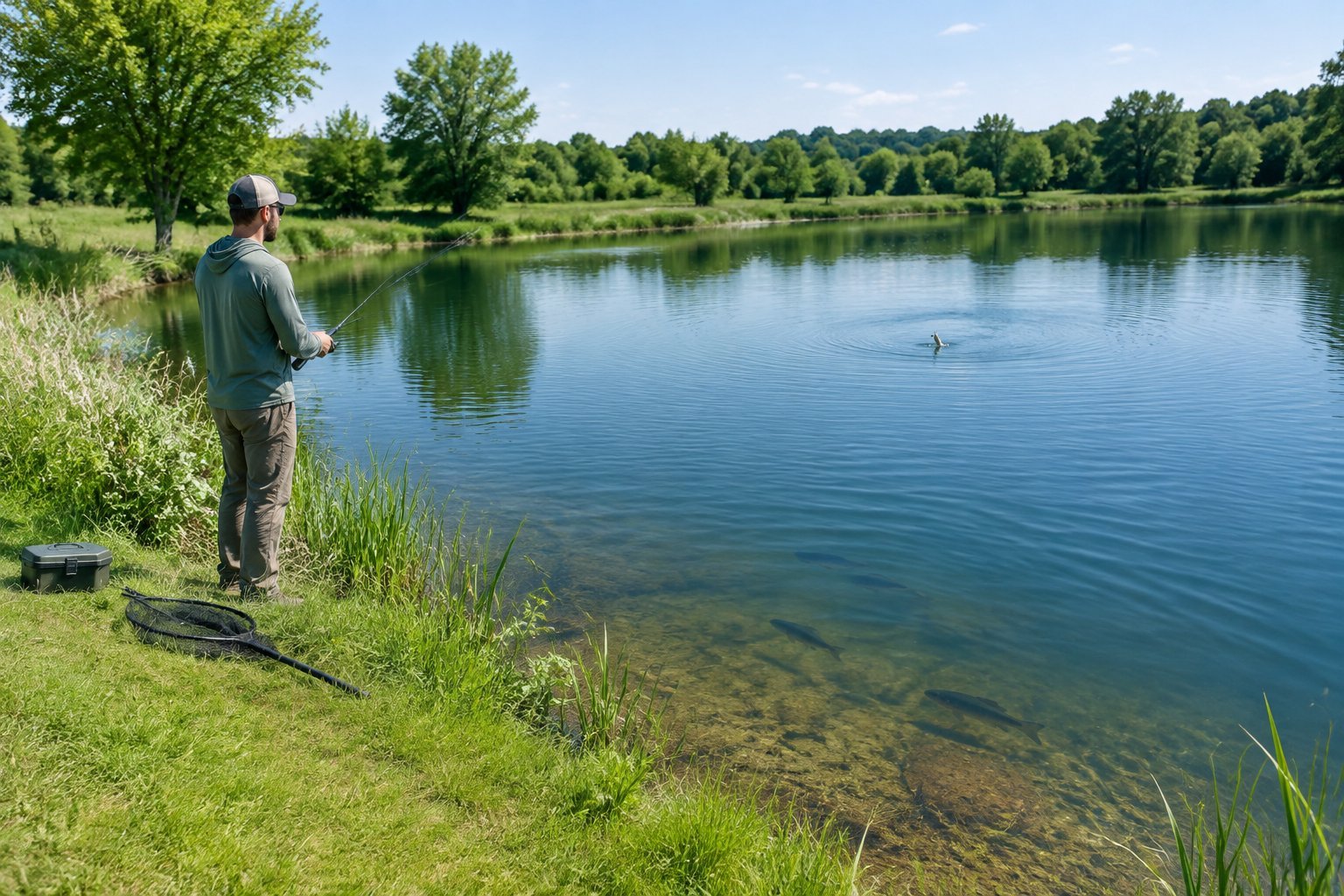
Target bluegill and other abundant panfish for your first trip, then choose larger species once you know what the pond holds. Match your tackle to the fish and nearby cover before casting.
Start With Bluegill and Other Panfish for Frequent Bites
Choose bluegill or other small sunfish when you want frequent opportunities to practice. Fish a worm piece beneath a small bobber beside shallow cover, leaving enough room to retrieve without dragging through branches.
You’ll recognize many panfish bites as a bobber twitch followed by steady movement. Keep slack under control so you’re ready to lift the rod.
Where yellow perch are present, try a small worm or jig near vegetation and depth changes. If you catch several small fish from one spot, continue working nearby before making a large depth adjustment.
Match Simple Presentations to Bass, Crappie, and Catfish
For bass fishing, begin with a soft-plastic worm worked slowly beside cover. When choosing bait for bass, match your presentation to the available casting space and vegetation. Largemouth bass also take compact spinnerbaits worked along open weed edges.
For crappie, suspend a small jig or legally obtained minnows beside brush or docks. Try several depths because schooling fish feed above or alongside submerged cover. Confirm whether your pond contains black crappie, white crappie, or both.
For channel catfish, use a suitable bait on a bottom rig in an open area. A catfish rig for bank fishing with a sliding sinker lets you present bait near bottom; adjust hook and line size for the expected fish.
Check Local Records for Stocked Trout and Less Common Species
Check stocking schedules before planning around trout. If you’re fishing for stocked trout, confirm bait restrictions and try a small spinner or permitted bait during suitable cool-water conditions. Rainbow trout stocked seasonally in warm regions require different timing from resident fish in cold ponds.
Use local survey records to check for carp, smallmouth bass, pickerel, pike, northern pike, and walleye. You shouldn’t expect every pond to support these species.
If you deliberately target toothy fish such as pickerel or northern pike, bring suitable bite protection and long-handled unhooking tools. Keep your fingers away from their mouths.
When Should You Fish, and What Changes With Conditions?
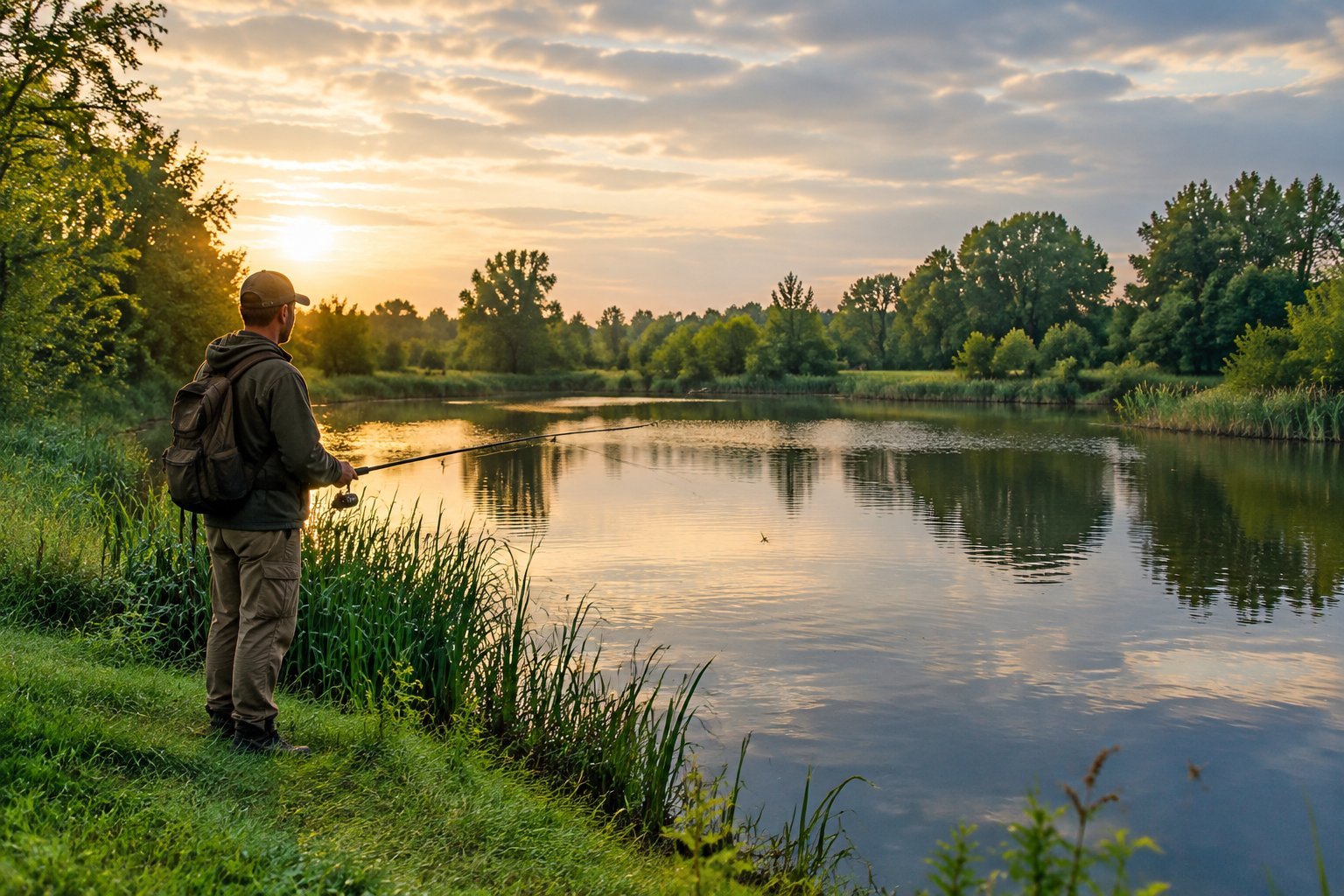
Choose morning or evening for a convenient warm-weather starting window, then adjust to water temperature and visibility. Keep your presentation near reachable cover and change depth as conditions shift.
Choose a Productive Window Before or After Work
For warm-water fish, start around sunrise or during the last daylight hours. You get lower light and relief from summer heat, which helps make a short bank session comfortable.
Your best fishing time of day also changes with the season. During cold weather, try the warmer afternoon hours when your schedule permits.
If lunch is your available window, fish shade or accessible deeper edges. Check opening hours before an early visit, and allow enough time to pack up while you still have safe visibility.
Adjust for Spring, Summer, Fall, and Cold Water
Use seasonal conditions to narrow your first choice:
- Spring: Begin near warming shallows and nearby cover. Follow local spawning-season protections.
- Summer: Try low-light periods and shaded banks. Deep water in a hot pond sometimes lacks adequate oxygen, so investigate depth gradually.
- Fall: Look for baitfish activity and remaining healthy aquatic vegetation.
- Cold water: Retrieve slowly and place small baits close to holding areas.
Try topwater lures when warm-water bass are feeding near the surface. If you see fish gulping at the surface across the pond or numerous distressed fish, stop fishing and notify the property manager or wildlife agency.
Troubleshoot Clear Water, Muddy Water, and Heavy Weeds
In clear water, stand farther back and reduce unnecessary movement. Try a smaller bait with a subtle presentation, particularly where fish have a clear view of the bank.
In muddy water, place your bait close to cover and give fish time to locate it. For bass, a compact spinnerbait provides vibration that helps them find the lure.
In heavy weeds, work openings and outside edges. Shorten your bobber rig to suspend live bait above submerged growth, or use an appropriately rigged weedless soft plastic. Check your hook after each cast and remove attached vegetation.
How Can You Make a Short Family Trip Easier?
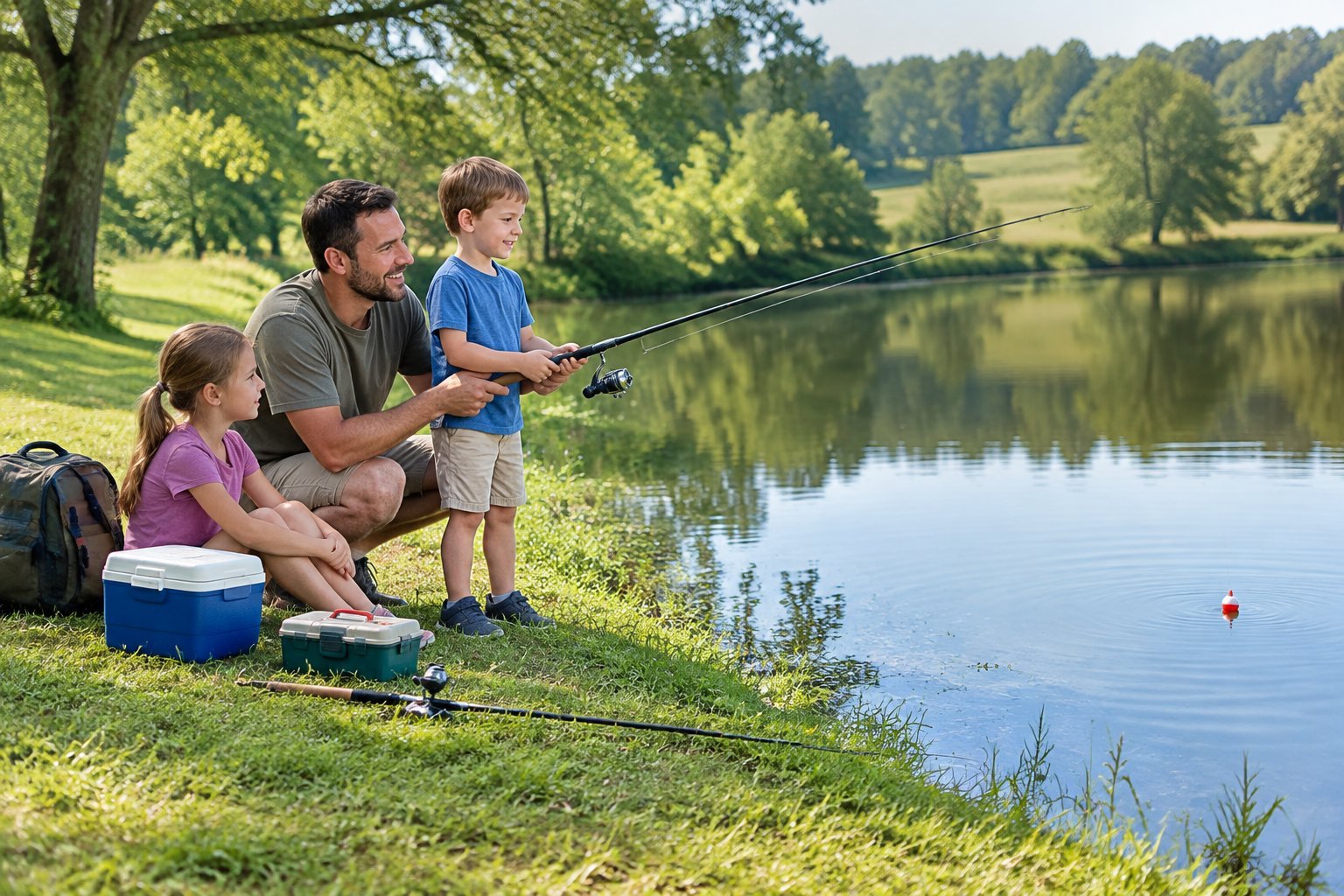
Prepare one ready-to-go kit and plan a short session at an accessible panfish pond. Give each child enough help to stay involved, with clear rules for casting and moving near the water.
Use a Ready-to-Go Kit and a 30-Minute Fishing Plan
Build your beginner fishing kit around ready-rigged rods with covered hooks, spare bobbers, small hooks, split shot, pliers, and line cutters. Keep live bait cool and out of direct sun; store it separately from equipment left in a hot vehicle.
For a 30-minute pond fishing session, use this plan:
- First 5 minutes: Check the bank, establish casting spaces, and bait hooks.
- Next 20 minutes: Fish one productive stretch, making small adjustments as needed.
- Last 5 minutes: Release or legally retain your catch, collect tackle, and pack up.
Start with one active rod if several children need close assistance. Add another when you can supervise both safely.
Keep Kids Safe and Handle Fish With Care
Choose a stable bank with room behind you for casting. Fit children with properly sized, U.S. Coast Guard-approved life jackets near water, and maintain close adult supervision. Bring drinking water, sun protection, and a small first-aid kit; leave promptly if you hear thunder.
Wet your hands before touching a fish, support its body, and keep it off dry grass or dirt. Have pliers ready so you can remove an accessible hook quickly. If a hook is deeply swallowed, follow local handling guidance and avoid pulling against internal tissue.
Before leaving, collect discarded line and bait packaging. Never release unused live bait into the pond, and check local fish-consumption advisories if you plan to keep your catch.
Get your gear ready and explore the related beginner-friendly guides before your next trip.
