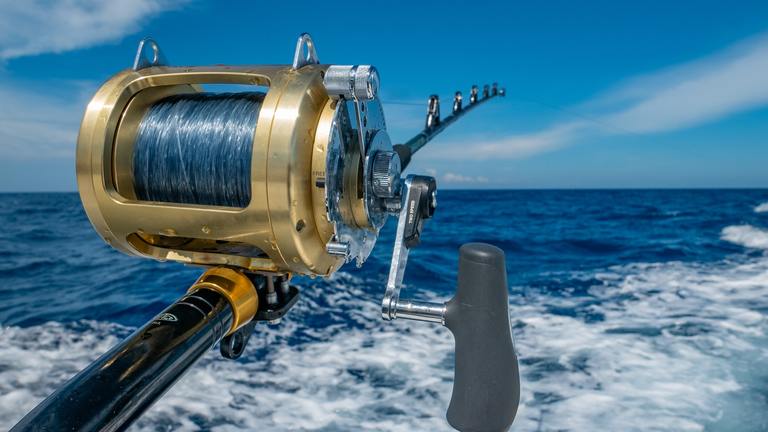
For fishing line for beginners, start with clear 8–10 lb monofilament on a compatible freshwater spinning combo: you get easy knot tying and stretch that cushions sudden pulls from fish. That gives you a straightforward setup for pond bass and mixed-species bank fishing, with less preparation before a short trip.
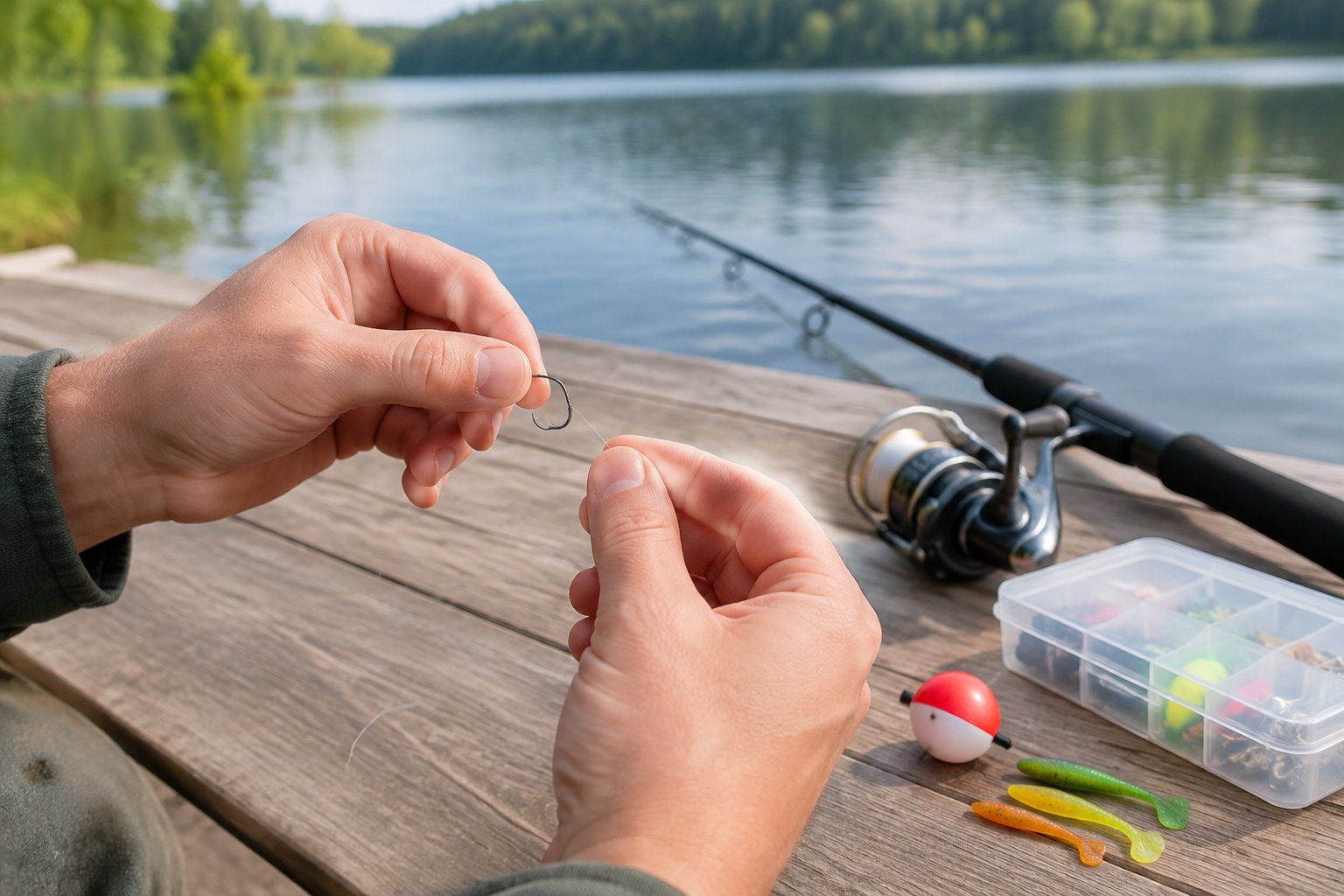
When you’re fitting fishing around work or taking your kids along, manageable gear helps you spend more time with a bait in the water. You’ll still need to match your fishing line to your equipment, especially if you’re using a small panfish outfit or targeting larger fish around heavy cover.
Why Start with Monofilament?
You get the most forgiving first-spool setup from monofilament fishing line because it handles easily and cushions sudden tension. For everyday freshwater learning, those qualities make mono a practical choice for the best fishing line for beginners.
How Does Mono Make Learning Easier?
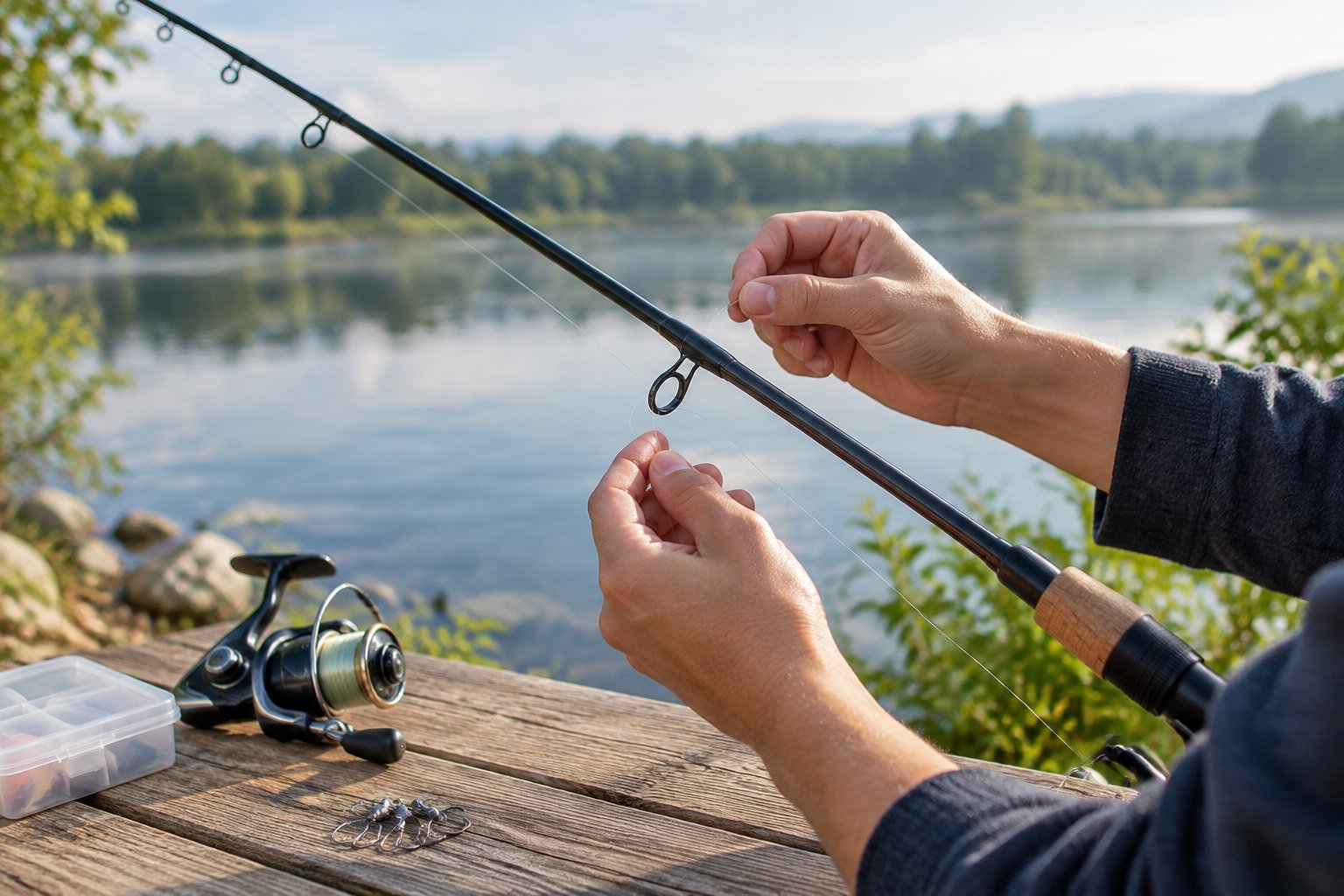
You’ll find monofilament line easier to work with when you’re threading small hook eyes or practicing knots. Its single nylon strand has enough body to handle, and its stretch absorbs some of the shock when a fish pulls against your rod.
You also get an economical beginner fishing line to replace after tangles or damage. Mono does develop spool-shaped coils, called memory, so you’ll still benefit from careful filling and routine inspections.
A Simple First Spool for Pond and Bank Fishing
Start with one spool of clear monofilament in a strength your rod and reel both support. For a medium-light or medium freshwater spinning combo rated for it, 8 lb is a useful choice around open banks and light cover.
Keep your first rig equally straightforward: a small hook with bait, a suitable sinker, and a float when you need one. When you attach a bobber to your fishing line, set the depth so your bait hangs above the bottom and stays clear of submerged debris.
Is Berkley Trilene XL a Good Starter Option?
You get a sensible starter option with Berkley Trilene XL, a supple monofilament suited to general freshwater spinning setups. Its manageable handling makes it a reasonable choice while you learn to cast and tie dependable knots.
Choose the pound test first, then check that the package contains enough line for your reel. When selecting monofilament for a spinning reel, prioritize a suitable diameter and easy handling; extra-heavy line creates unnecessary casting difficulty on a small spool.
How Do Mono, Braid, and Fluorocarbon Compare?
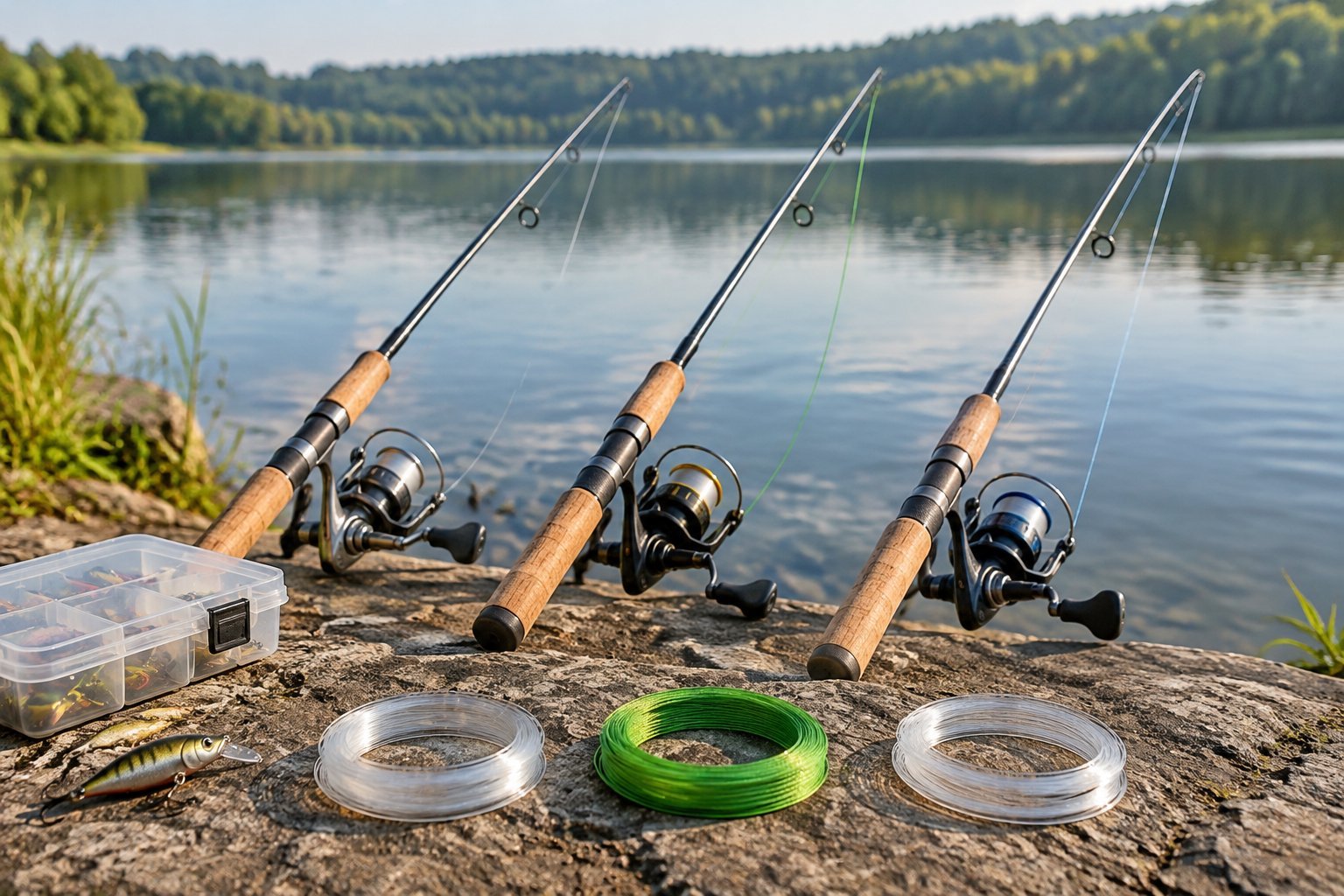
Use mono for your first general-purpose setup, braid when you need low stretch, and fluorocarbon when a sinking, lower-visibility connection suits your presentation. These fishing line types solve different problems, so you only need to add complexity when your fishing calls for it.
| What you’ll notice | Monofilament | Braid | Fluorocarbon |
|---|---|---|---|
| Handling on a beginner spinning setup | Forgiving | Needs slack control | Stiffer handling |
| Stretch | Noticeable | Very little | Noticeable |
| Diameter at equal rated strength | Thicker than braid | Thin | Thicker than braid |
| Underwater visibility | Visible | More conspicuous | Less conspicuous |
| Useful first role | General-purpose main line | Specialized main line | Short leader |
Which Line Works Best for Quick Trips and Fishing with Kids?
Choose mono when your priority is getting a simple bait rig fishing quickly. You have fewer connection knots to inspect when you tie your hook directly to the main line.
For children, prepare the rig beforehand and supervise hook handling. Keep everyone behind the caster, and use properly fitted life jackets near deep water or wherever a fall would be dangerous.
When Does Braid Make Sense?
Consider braided fishing line when you want clearer feedback from your lure or need strength with a thin diameter. Its very low stretch transmits light taps well, but it also demands a controlled hookset and properly adjusted drag.
Before switching, practice tying knots in braided fishing line because slick braid requires a suitable knot. Check your reel’s instructions for backing requirements, and keep braid away from bare fingers under tension.
When Is a Fluorocarbon Leader Worth Adding?
Add a fluorocarbon leader when you’re using braid in clear water or want a replaceable section near rocks and other abrasive surfaces. A leader around 2–4 feet long is manageable for many basic spinning presentations.
You gain a less conspicuous connection near your bait, but fluorocarbon line remains visible under some conditions. Inspect it after contact with cover, and remember that fluorocarbon fishing line sinks, which affects floating lures and shallow presentations.
Why Is Fly Fishing Line Different?
With fly fishing line, you cast the weight of the line to carry a lightweight fly. With your spinning outfit, the bait, lure, or added sinker supplies the casting weight.
You therefore match a fly line to a fly rod’s designated line weight. For your first pond-fishing spinning combo, stay with conventional mono and leave fly-line selection for a dedicated fly outfit.
What Strength and Color Should You Choose?
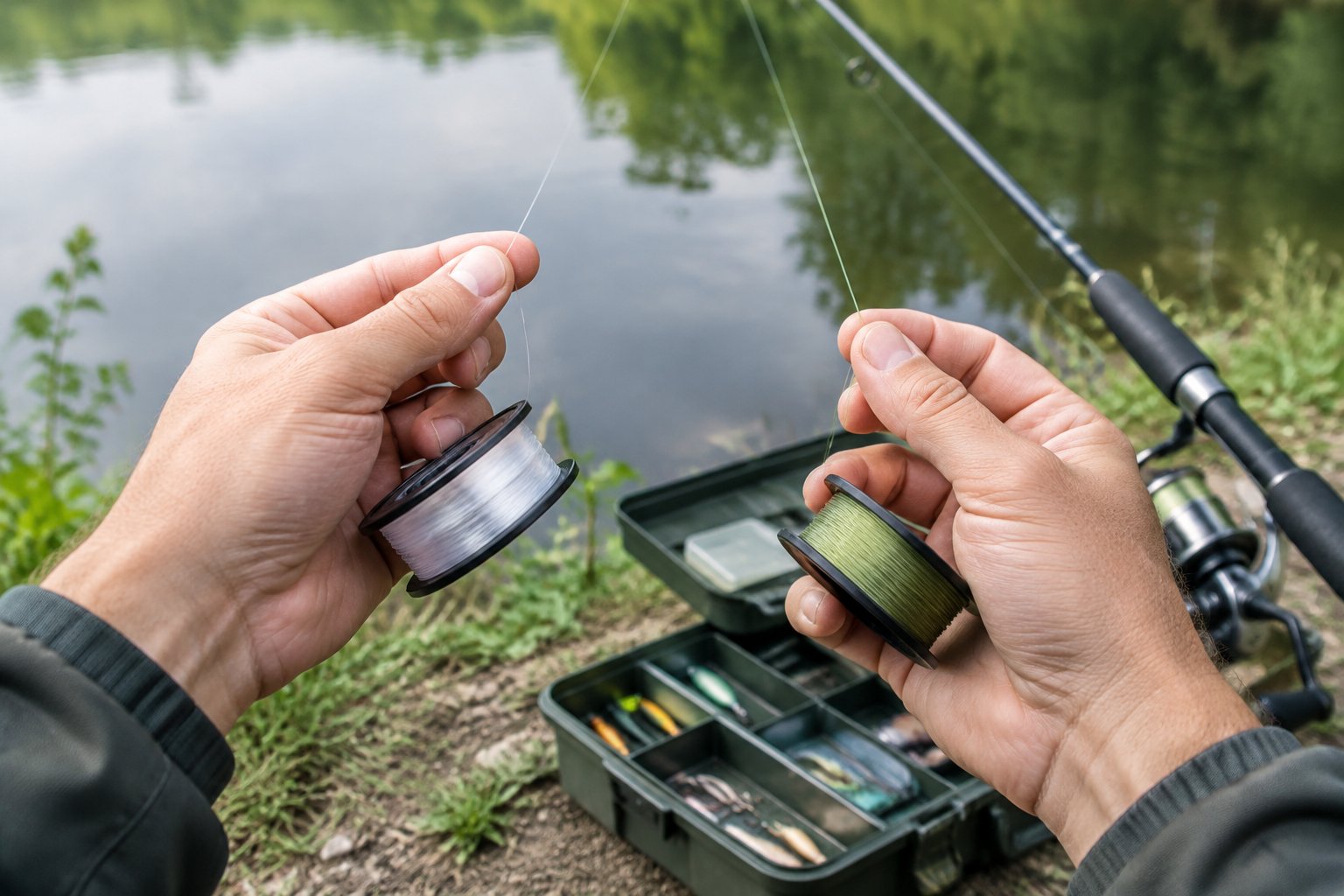
Choose line strength within your equipment’s ratings, then adjust for fish size and nearby cover. You’ll make choosing the right fishing line easier by treating pound test as a breaking-strength rating, measured in pulling force, rather than a fish-weight limit.
When Is 8–10 lb Mono a Useful Starting Point?
Use 8–10 lb monofilament for general freshwater bank fishing when your combo supports that range. You get a useful balance of manageable diameter and strength for bass and mixed catches around relatively open water.
An 8 lb spool is a practical starting point for many medium-light outfits; 10 lb adds some strength if your equipment accommodates it. Land fish with a net or appropriate handling technique, since lifting them by the line puts concentrated strain on your knot.
When Should You Use Lighter or Heavier Line?
Drop to roughly 4–6 lb mono for small panfish or stocked trout on light tackle, especially when casting small offerings. Your line choice for trout should account for clear water and the weight of your bait or lure.
Move toward 12–15 lb or heavier line when larger fish and substantial cover justify it, using an appropriately rated outfit. For bass-fishing line, give extra attention to weeds or wood that a hooked fish could reach.
How Do You Match Line to Your Rod and Reel?
Read the line-rating range printed on your rod blank and the capacity information on your reel spool. Choose a strength that fits both, and check the reel manual if its markings are unclear.
A marking such as “8 lb/140 yd” indicates approximate capacity for that line size. Actual capacity changes with diameter, so use the package’s diameter information when comparing different materials or brands.
Is Clear Line a Sensible Default?
Choose clear fishing line for a straightforward all-purpose mono setup. You’ll have a neutral option for varied water conditions without needing several colors in your tackle bag.
If seeing your line is difficult, a high-visibility version helps you track its movement above water. Clear mono still reflects light, so keep your approach quiet and avoid casting shadows over shallow fish.
How Do You Spool Your Reel and Tie Reliable Knots?
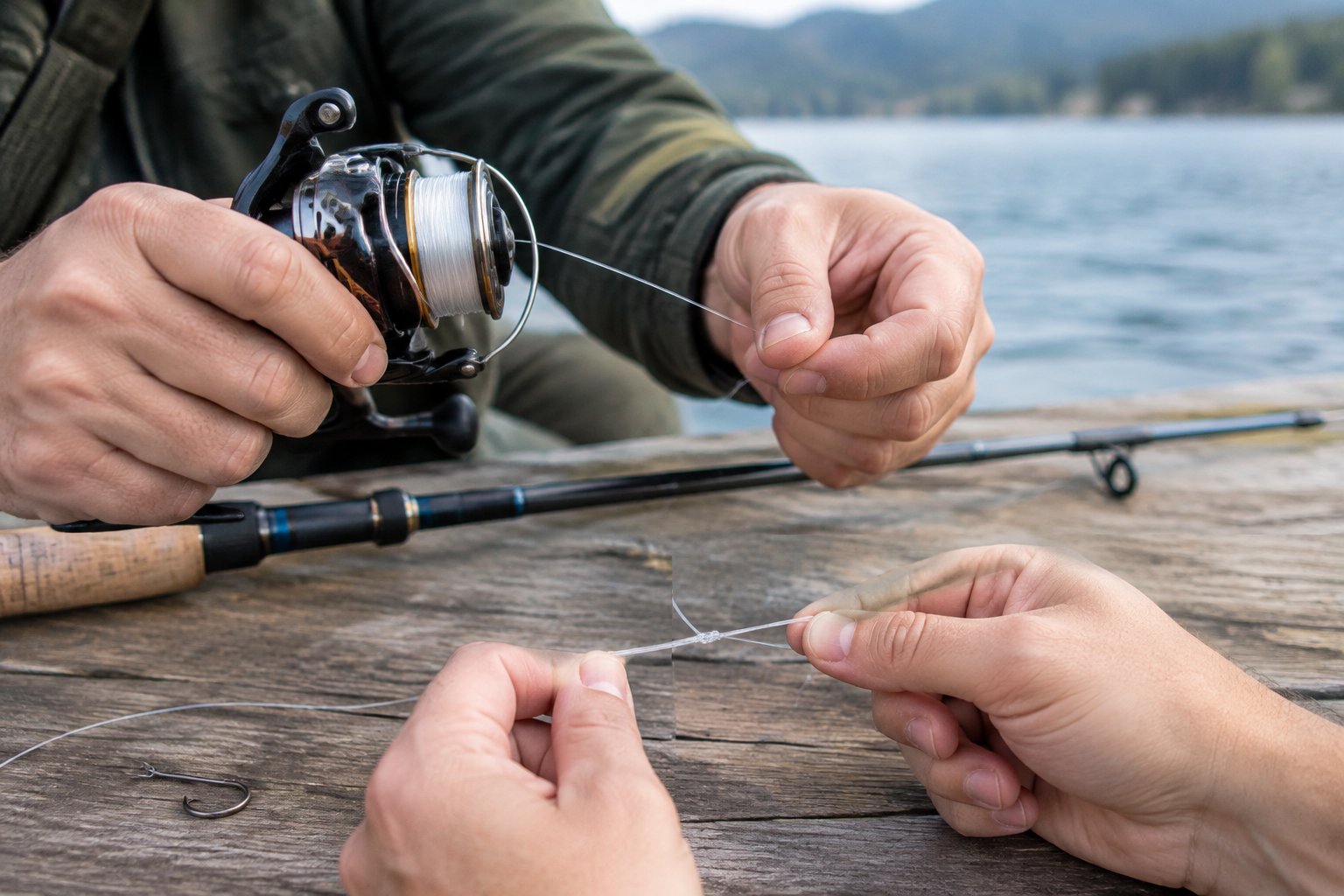
Fill your reel evenly under light tension, then practice one dependable hook knot before leaving home. You prevent many early problems by checking spool fill and testing every finished connection with a steady pull.
Attach Line with an Arbor Knot and Fill Under Light Tension
For a spinning reel, pass the line through the rod guide closest to the reel, then open the bail. Wrap the line around the spool’s arbor and tie an arbor knot:
- Tie a simple overhand knot around the standing line.
- Tie another overhand knot near the end of the tag to form a stopper.
- Pull the standing line until the first knot slides against the arbor and catches the stopper.
- Trim the excess tag, then close the bail by hand.
As you set up your spinning reel, confirm that the line passes beneath the bail’s line roller. Wind slowly while maintaining light tension with a damp cloth held between the supply spool and rod guide.
Avoid Overfilling and Check for Line Twist
Follow your reel manufacturer’s fill guidance; about 1/8 inch below the spool lip is a useful starting point for many spinning reels. When deciding how much line to put on a spinning reel, stop before loose coils crowd the edge.
Use the supply-spool orientation recommended in your reel instructions. After several handle turns, pause and allow a little slack; if the line twists tightly around itself, correct the feed orientation before continuing.
After casting, close the bail by hand and gently tension the line before retrieving. If a loose loop lands on the spool, pull it off and straighten it before winding again.
Tie an Improved Clinch Knot for Mono
Use the improved clinch knot to connect light- or medium-strength mono to a hook, swivel, or suitable lure eye. Keep the hook point clear of your hands while you work.
- Pass the tag through the eye, leaving about 6 inches to work with.
- Wrap the tag around the standing line five or six times.
- Pass the tag through the small loop beside the eye.
- Bring it back through the larger loop you just formed.
- Moisten the knot and pull slowly until the wraps seat neatly.
- Test with a firm, steady pull, then trim the tag to roughly 1/8 inch.
When practicing beginner fishing knots, inspect the finished wraps closely. Retie any knot with crossed wraps, visible damage, or slipping.
When Should You Use a Palomar Knot?
Use a Palomar knot when you want a dependable connection for braid or a suitable mono rig. You’ll need enough doubled line to pass a loop over the entire hook or lure.
Double about 6 inches of line and pass the loop through the eye, then tie a loose overhand knot with the doubled section. Pass the hook or lure through the remaining loop, moisten the line, and tighten evenly while keeping the strands uncrossed.
Follow your line manufacturer’s knot guidance for fluorocarbon. Test the connection before casting, particularly if the doubled strands crossed during tightening.
How Can You Prevent Line Problems on Short Trips?
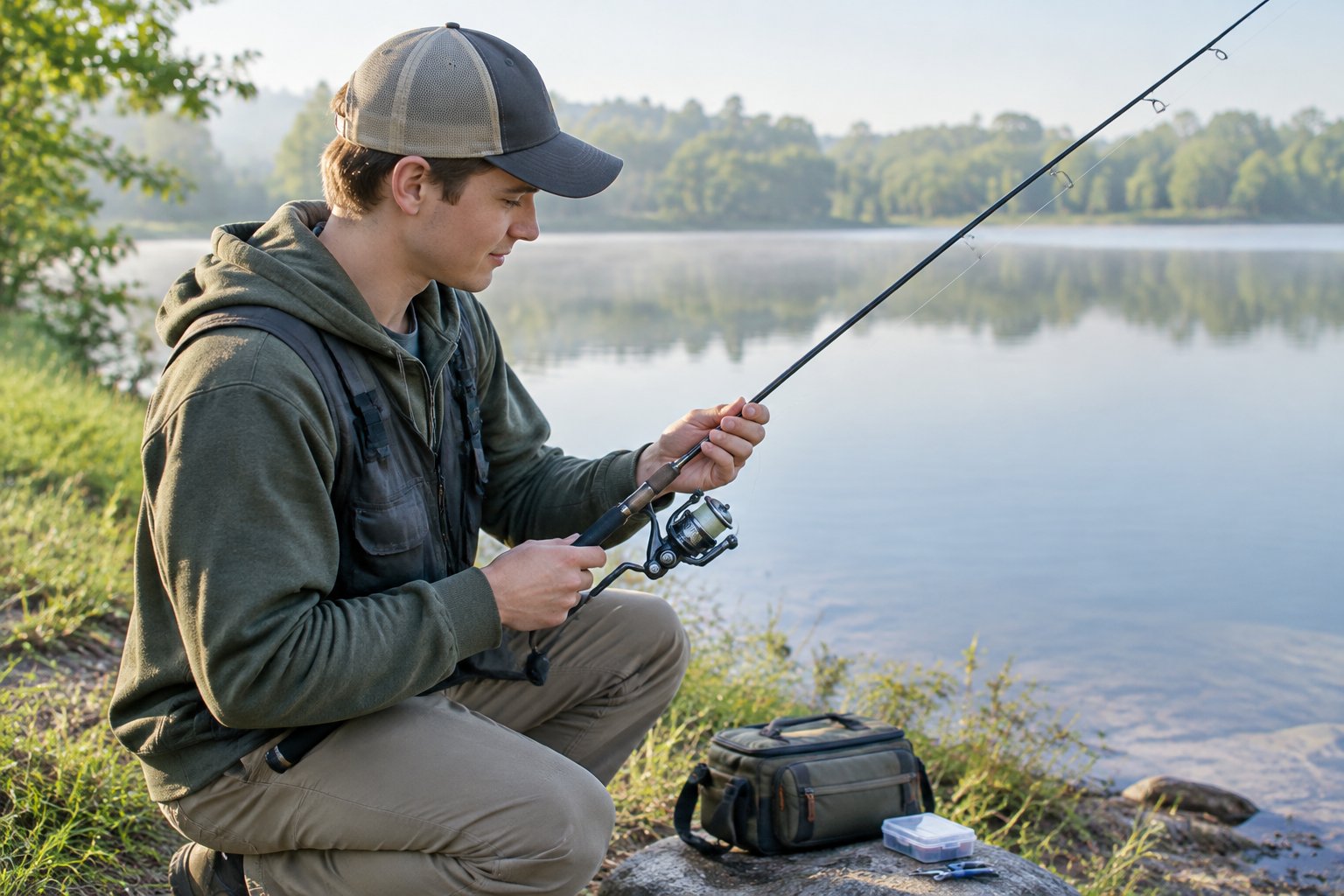
Check your line at home, set a forgiving drag, and keep replacement tackle together so small problems consume less fishing time. You’ll get more use from a short outing when your first cast starts with a sound knot and an orderly spool.
Check for Frays, Coils, and Loose Loops Before Leaving
Run your fingers gently along the last several feet of fishing line, keeping clear of the hook. Cut back beyond rough spots, flattened sections, or visible nicks, then retie.
Pull off a little line to check whether severe coils remain after gentle straightening. During practice with an open-face reel, use smooth casts and remove loose loops before they become buried under fresh wraps.
Set the Drag and Handle Snags Safely
Set your drag so the spool releases line under a firm, steady pull. A starting setting around one-quarter to one-third of the line’s rated strength gives you a useful baseline, which you can check with a scale.
Keep the hook secured safely during that check, with everyone clear of its path. If you snag, avoid high-sticking the rod or wrapping line around your hand; use a purpose-made line breaker according to its instructions, and keep people away from the likely recoil path.
When Should You Replace Your Line?
Replace monofilament line when it feels brittle, shows widespread abrasion, or retains troublesome coils despite correct handling. If you have no reliable history for a pre-spooled reel, fitting fresh line gives you a known starting condition.
Before a new fishing season, inspect mono that has spent months on the reel. Replace it sooner after frequent use or prolonged heat and sunlight exposure, and store spare spools somewhere cool and shaded.
Keep a Simple Family Fishing Kit Ready to Go
Keep a beginner fishing kit packed with spare mono, hooks, floats, sinkers, clippers, pliers, and a small bag for discarded line. Store sharp tackle in closed compartments beyond young children’s reach.
Secure hooks for transport and check your license requirements before heading out. If finding time remains your biggest obstacle, Be The Hero’s 10 step process to go fishing more often offers a structured way to plan outings around your commitments.
Get your gear ready and explore the related beginner-friendly guides before your next trip.