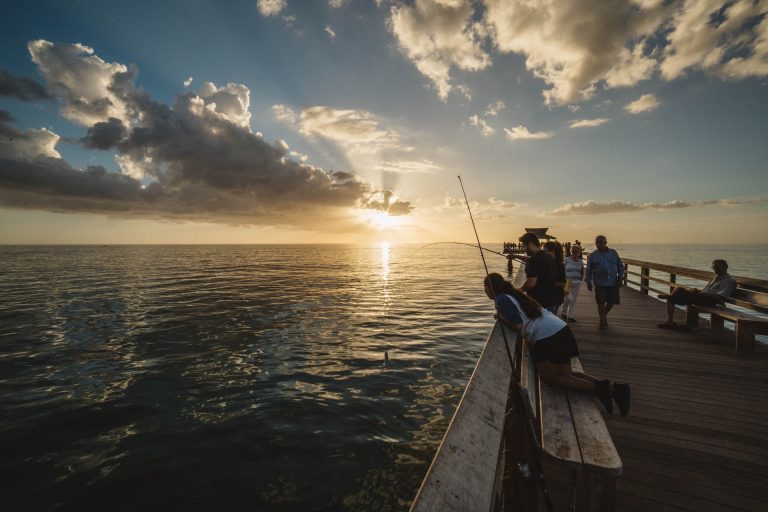
A good beginner tackle bag does a simple job well, it keeps trays, tools, line, and a few small extras organized without turning a short fishing trip into a hauling exercise. For new anglers, the best beginner tackle bag usually means a soft-sided design with a comfortable shoulder strap, enough room for a few tackle trays, and pockets that make it easy to separate hooks, soft plastics, pliers, and terminal tackle.
The most useful features are capacity, carry comfort, and practical organization, not just the largest bag or the most pockets. Water resistance, tray compatibility, and bag stability matter too, especially for bank and pond fishing where the bag may sit on damp grass, gravel, or a boat deck. The picks below focus on easy transport and straightforward layouts that make getting started simpler.
Best for most beginners: KastKing Fishing Gear & Tackle Bags
Best for organized backpack carry: Piscifun Fishing Tackle Backpack
Best for compact day trips: Plano Weekend 3500 Tackle Bag
Best for a ready-to-go starter kit: Calamus GearMaster Fishing Sling Tackle Bag & Tool Set
Best for larger soft-sided storage: KastKing Hoss Tackle Bag
KastKing Fishing Tackle Bag

Pros
- Comfortable shoulder strap and carry handle
- Wide opening makes trays and tools easy to reach
- Water-resistant build with useful side pockets
Cons
- Trays are not included
- Can feel larger than a minimal day bag
- Best when packed with a plan, not random loose gear
The layout is beginner-friendly, especially for anglers who want to see their gear fast and avoid digging around. It works well for a bank setup with a few trays, pliers, line, and terminal tackle.
The bag’s soft structure and padded strap make it easier to carry than a hard box, which matters on uneven paths or when walking a shoreline. It also has the kind of pocket layout that rewards simple organization instead of overpacking.
Piscifun Fishing Tackle Backpack
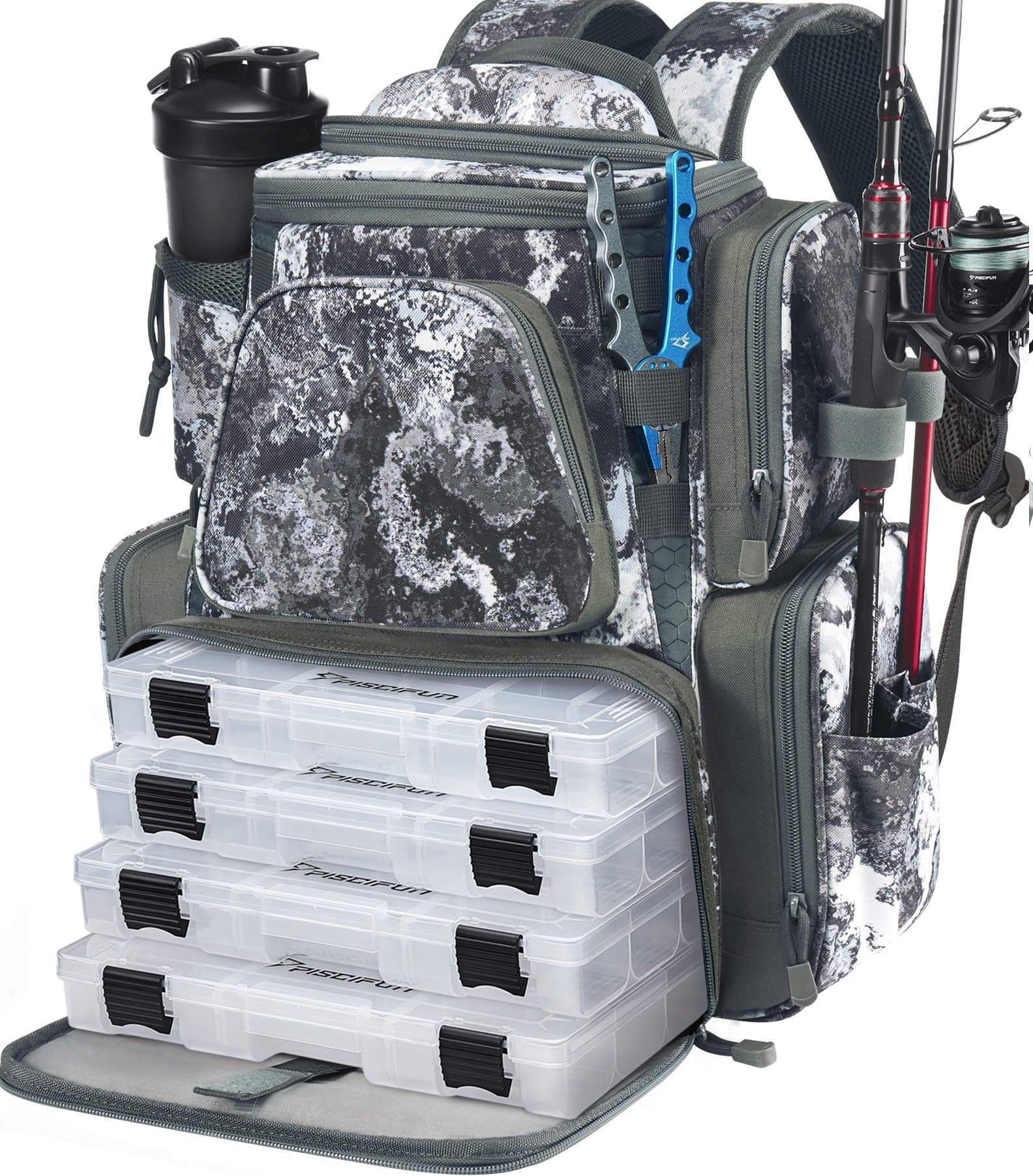
Pros
- Backpack carry spreads weight well
- Includes rain cover and rod holders
- Plenty of compartments for sorting small gear
Cons
- More complex than a simple shoulder bag
- Can encourage overpacking
- Some beginners may not need this much structure
The best part is how stable it feels when set down. That matters on a muddy bank or beside a dock, where a bag that tips easily becomes annoying fast.
It suits anglers who like a hands-free carry and want room for trays, a bottle, and extras. The organization is more advanced than a basic starter bag, yet it still makes sense after a little setup.
Plano Weekend 3500 Tackle Bag
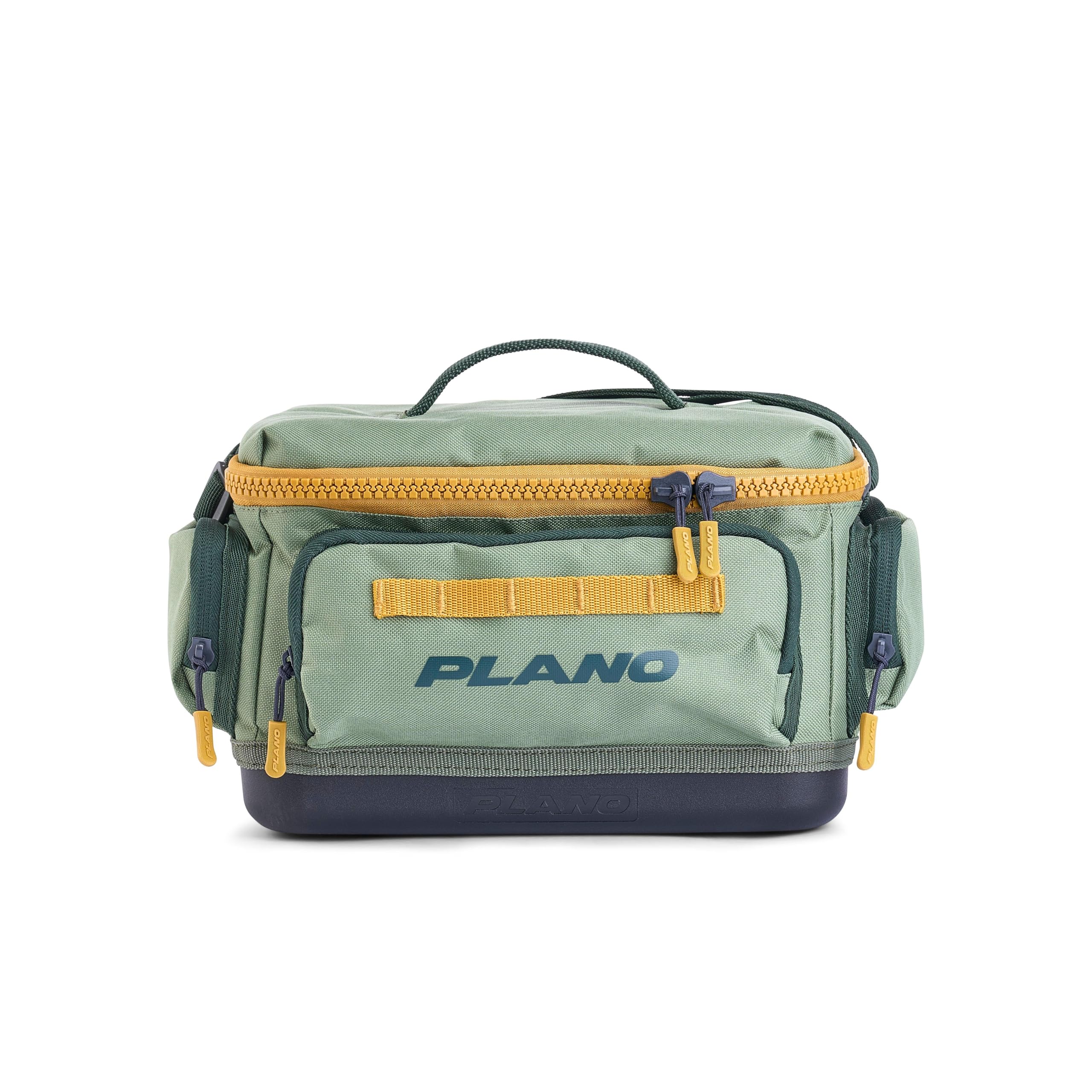
Pros
- Small and easy to transport
- Waterproof base helps on damp ground
- Clean layout for a few essential items
Cons
- Limited capacity compared with larger bags
- Best for short trips, not full tackle loads
- Fewer expansion options than bigger bags
Its compact shape makes it easy to stash in a car or carry to a nearby pond. The molded base is especially practical, since it helps keep the bag out of puddles and mud.
The internal space is enough for a modest beginner setup, such as one tray, a few tools, and some spare tackle. It is a sensible first bag for someone who wants less bulk and fewer decisions.
KastKing Hoss Tackle Bag

Pros
- Large capacity for a soft-sided bag
- Water-resistant materials and molded bottom
- Plenty of pockets for tools and small gear
Cons
- Bulkier than a true day bag
- No trays included
- Can be more bag than a total beginner needs
The Hoss stands out when a beginner wants one bag that can handle the learning curve. It keeps room for extra trays, which is useful as a tackle collection starts to grow.
The shoulder strap helps, though the bag is better suited to anglers who do not mind a little extra size. For pond and bank fishing, it offers a useful mix of storage and portability.
Calamus GearMaster Fishing Sling Tackle Bag & Tool Set
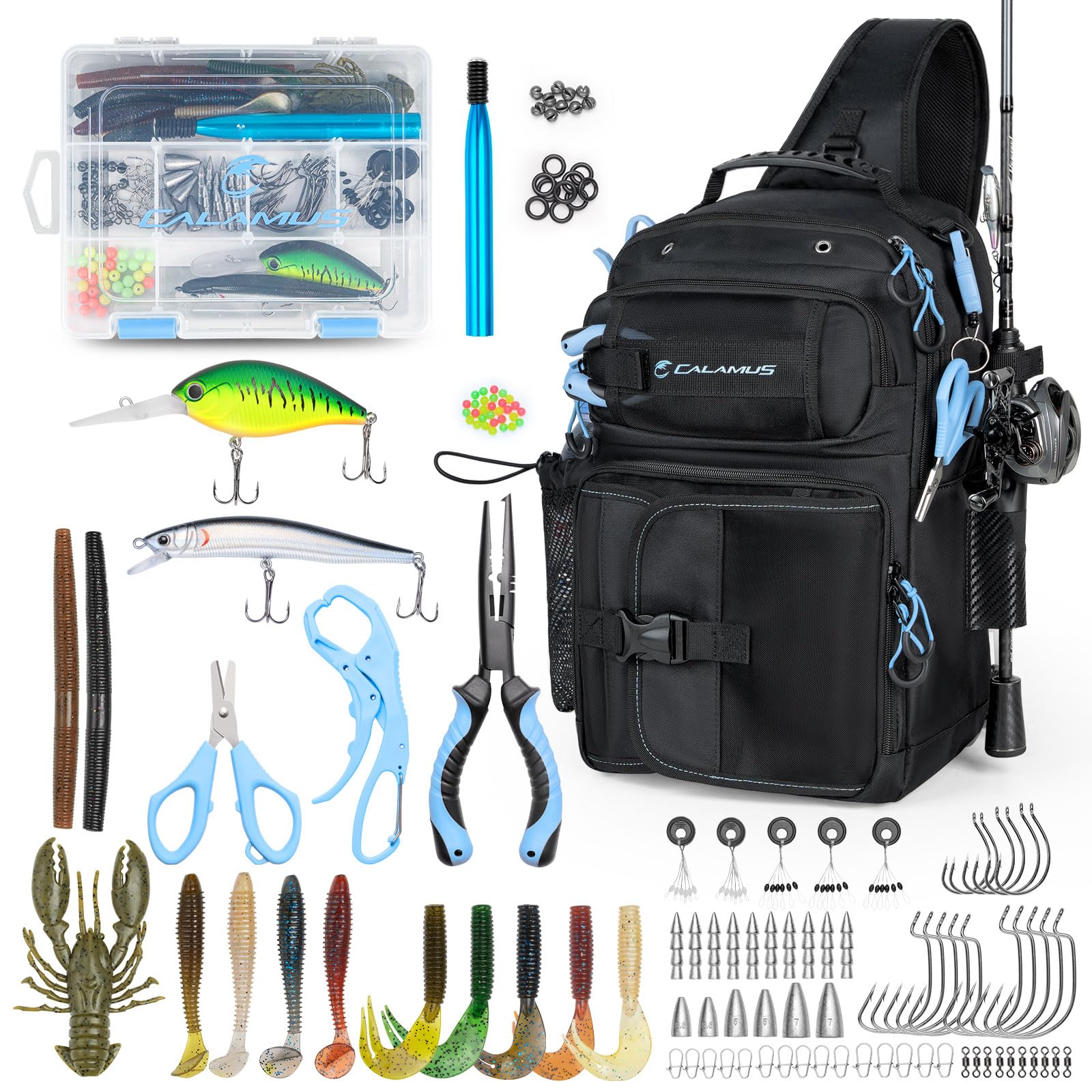
Pros
- Includes tools and a loaded tackle box
- Sling style is easy for short walks
- Good value for someone starting from scratch
Cons
- Sling carry is less stable than a backpack for longer walks
- Tool quality is functional, not premium
- Less flexible than a bag built around trays alone
The bundled gear makes this especially appealing for someone who does not yet own pliers, scissors, or a lip gripper. That removes some of the guesswork from buying the first setup.
The bag itself is compact and practical for light trips. It is best for beginners who want fewer separate purchases and a more complete starting point.
Buying Guide
Choosing the best beginner tackle bag comes down to how the bag will actually be carried and how much gear it needs to hold. A bag that feels simple on the first trip should still be easy to load, easy to clean, and easy to keep organized later.
What to prioritize
| Feature | What it should do | Why it matters |
|---|---|---|
| Carry style | Shoulder strap, sling, or backpack | Determines comfort on banks, trails, and docks |
| Tray fit | Supports common tray sizes | Makes lures and terminal tackle easier to organize |
| Water resistance | Sheds splashes and wet ground | Protects gear during shoreline use |
| Base design | Stays upright and off the ground | Keeps contents cleaner and easier to access |
| Pocket layout | Sorts tools and small items | Prevents digging through one big compartment |
Choose the right size
A small bag works well for short trips with one or two trays, a few lures, and basic tools. A larger bag makes sense once a beginner starts carrying backup line, extra plastics, or multiple rig options.
Match the bag to the fishing style
For walk-and-cast fishing, a shoulder bag or sling keeps things light and quick. For longer bank sessions or heavier loads, a backpack usually carries better and feels less tiring.
Check the little details
Padded straps, sturdy zippers, and a bag that sits upright make a bigger difference than many first-time buyers expect. Beginner anglers usually benefit more from dependable organization than from maximum capacity, so a simple layout often works better than a crowded one.