Ice Fishing Basics
I focus on understanding how frozen lakes form, why timing matters, and what defines ice fishing as a winter activity. Knowing these details helps me stay safe, plan better trips, and make the most of the ice fishing season.
What Is Ice Fishing
I describe ice fishing as catching fish through holes drilled into a frozen lake or pond. I use an ice auger to cut through the ice and drop a line into the cold water below. Common targets include perch, walleye, and northern pike.
I rely on special gear like short rods, tip-ups, and insulated shelters. These tools keep me warm and make fishing efficient. I also wear layered clothing and waterproof boots to handle freezing temperatures.
Some anglers prefer to fish inside portable shelters, while others sit outside near their holes. Either way, staying alert for bites is key. Ice fishing combines patience, skill, and preparation to safely enjoy the winter outdoors.
How Ice Forms on Lakes
I watch how ice forms because it determines when it’s safe to fish. When temperatures stay below freezing for several days, a thin sheet of ice begins to form on calm water. As the cold continues, the ice thickens and strengthens.
The freezing process depends on air temperature, wind, and snow cover. Clear, calm nights help ice grow faster, while snow can insulate the surface and slow freezing. I always measure thickness before stepping on the ice.
| Ice Thickness | Safe Use (Approx.) |
|---|---|
| 2 inches | Unsafe |
| 4 inches | Walking only |
| 5–7 inches | Snowmobiles/ATVs |
| 8–12 inches | Small vehicles |
I never assume uniform thickness across a frozen lake. Currents, springs, or moving water can weaken certain areas, even when most of the surface looks solid.
Ice Fishing Season Timing
I plan my trips around local ice conditions rather than the calendar. In most northern regions, the ice fishing season begins once lakes freeze to a safe depth, often in late December or early January. The season usually lasts until early spring when thawing begins.
I monitor daily temperatures and local reports before heading out. Early-season ice tends to be clearer and stronger, while late-season ice softens and becomes unpredictable. I avoid fishing when daytime melting or rain weakens the surface.
Timing also affects fish behavior. During midwinter, fish often move deeper, requiring different bait and techniques. By adjusting to seasonal changes, I improve both safety and success on the ice.
Safety on the Ice
I focus on three main factors when staying safe during ice fishing: the strength of the ice, the risks from cold exposure, and the gear that can prevent accidents. Each plays a direct role in keeping me safe and prepared in unpredictable winter conditions.
Ice Thickness Guidelines
I always check the ice thickness before stepping out. Ice should be at least 4 inches thick for walking and fishing. I measure it with an auger or ice chisel at several points since thickness can vary.
Here’s a quick guide I use:
| Activity | Minimum Ice Thickness |
|---|---|
| Walking or fishing | 4 inches |
| Snowmobile or ATV | 5–7 inches |
| Car or small pickup | 8–12 inches |
| Medium truck | 12–15 inches |
I stay away from moving water, inlets, and areas with slush because ice there weakens faster. Clear, blue ice is usually stronger than cloudy or white ice. I also check local reports before heading out since weather changes can quickly affect conditions.
Cold Weather Hazards
Cold temperatures can cause frostbite and hypothermia if I’m not careful. I dress in layers—a moisture-wicking base, an insulating middle, and a waterproof outer shell. This helps me stay warm while preventing sweat from freezing against my skin.
Wind chill can drop body temperature fast. I cover exposed skin and keep a spare set of dry gloves and socks in case I get wet. If I start shivering or feel numbness, I move indoors or to a heated shelter immediately.
I also watch for early signs of hypothermia: confusion, slurred speech, and loss of coordination. Quick action—like warming up with dry clothes and warm fluids—can prevent serious harm.
Essential Safety Equipment
I never go ice fishing without basic safety gear. Ice picks help me pull myself out if I fall through. A throw rope and life vest add extra protection. I keep a spud bar for checking ice strength as I move.
I carry a first aid kit, whistle, and headlamp in case of emergencies. A charged phone or two-way radio keeps me connected if I need help.
For warmth, I bring a portable heater but always use it in a well-ventilated shelter to avoid carbon monoxide buildup. Staying organized and prepared keeps every trip safe and manageable.
Ice Fishing Gear Essentials
I rely on dependable tools that handle freezing temperatures, thick ice, and cautious fish. The right rod, line, and drilling gear make a big difference in how efficiently I fish and how comfortable I stay on the ice.
Ice Fishing Rods and Reels
I use short, sturdy rods between 24 and 36 inches long. Shorter rods give me better control when jigging in tight spaces like shelters. A medium or medium-light action rod covers most species, while ultra-light rods work well for panfish.
For reels, I prefer small spinning reels in the 1000–2500 range. They balance well on short rods and handle cold weather smoothly. Inline reels are another good option because they reduce line twist and improve vertical jigging control.
When choosing a rod and reel combo, I look for sensitivity and durability. A sensitive tip helps detect light bites, and a smooth drag system prevents line breaks when fighting larger fish. I keep at least two setups ready—one for lighter jigs and one for heavier spoons or tip-ups.
Best Fishing Lines for Ice
Cold temperatures make some lines stiff, so I stick with lines designed for winter use. Fluorocarbon line works well because it stays flexible and nearly invisible under clear ice. I usually spool 4–8 lb test for most conditions.
Monofilament is a good budget option. It stretches more than fluorocarbon, which helps prevent hooks from tearing out during fights. However, I make sure it’s labeled for cold weather to avoid memory issues.
For deeper water, I use braided line with a short fluorocarbon leader. The braid gives me excellent sensitivity, while the leader keeps the setup stealthy. I always check my line for frays after each trip since ice edges can weaken it.
Augers and Drilling Tools
Without a reliable ice auger, I can’t fish. I use different types depending on ice thickness and location. A hand auger is lightweight and quiet, ideal for early-season ice or short walks. It’s affordable and easy to maintain.
When drilling through thick ice, I switch to an electric auger. Modern lithium batteries last long and eliminate fuel fumes. For heavy-duty use, a gas-powered auger cuts holes quickly but requires more upkeep.
I also carry a spare blade set and blade guards to keep the auger sharp and safe during transport. A metal ice scoop clears slush from holes, and a spud bar helps me test ice thickness before drilling. These tools keep me efficient and safe on the ice.
Electronics and Tools for Success
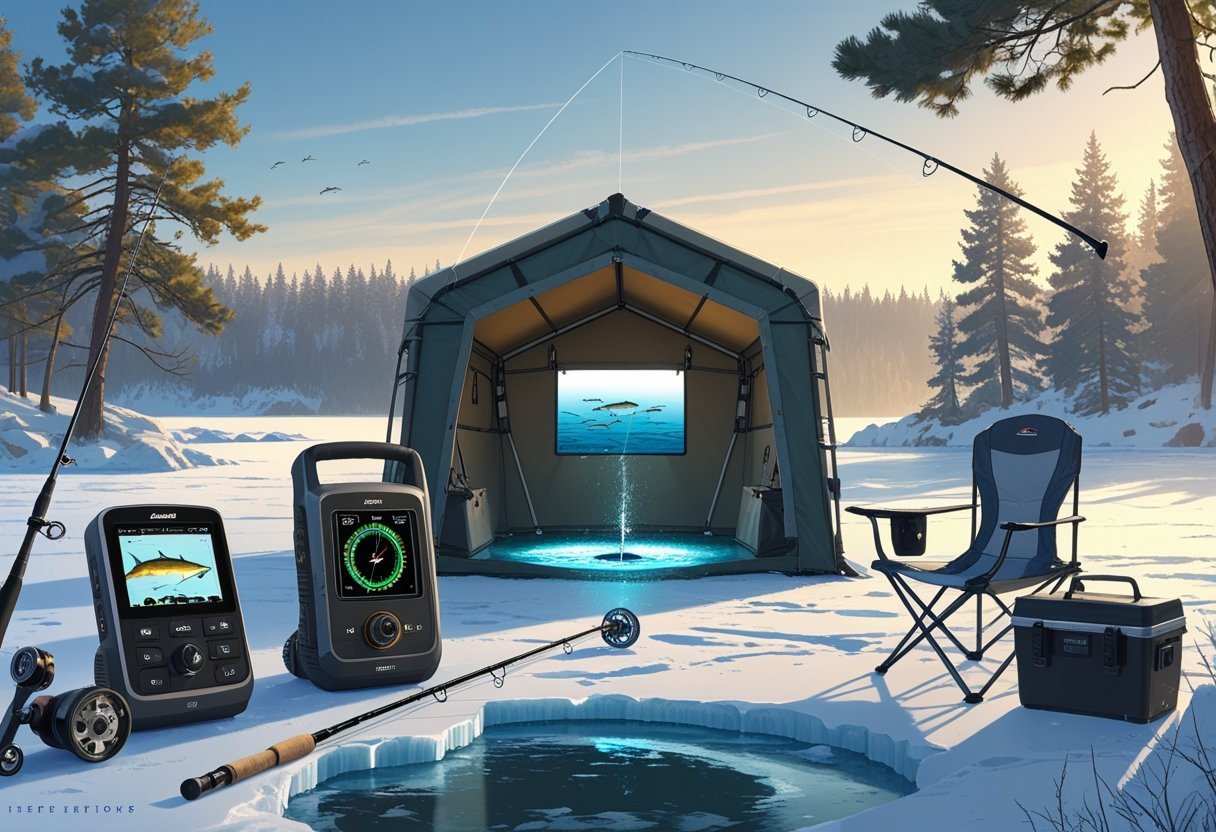
I rely on electronic tools to locate fish, study underwater conditions, and reduce wasted effort on unproductive spots. Using sonar and cameras helps me make informed decisions about where and how to fish through the ice.
Fish Finders
I use a fish finder to read what’s happening beneath the ice. The device sends sonar waves that bounce off fish, plants, and the lake bottom, displaying the results on a screen. This helps me see depth, structure, and fish activity in real time.
I adjust the sensitivity and gain settings to get a clear reading. A stronger return usually means a harder bottom or larger fish, while weak signals often show softer ground or small baitfish.
To stay efficient, I mark productive areas on my GPS. This keeps me from drilling unnecessary holes and helps me return to the same location later. I also check battery levels often since cold weather drains power quickly.
| Setting | Purpose | Tip |
|---|---|---|
| Gain | Adjusts signal strength | Increase slowly until clutter appears, then reduce slightly |
| Depth Range | Sets viewing depth | Match to water depth for accurate display |
| Zoom | Focuses on a section | Use when fish are near bottom or suspended |
Underwater Cameras
An underwater camera gives me a direct view of fish behavior and habitat. I can identify species, estimate size, and watch how fish react to my bait. This lets me adjust lure color, motion, or depth to match their mood.
I position the camera carefully to avoid spooking fish. Clear water and good lighting improve visibility, while murky water limits range.
I use the camera to check bottom structure—rocks, weeds, or drop-offs—and to confirm what sonar shows. When I see fish ignoring my lure, I change presentation until I get a reaction.
To conserve power, I limit camera use to short observation periods and keep batteries insulated from the cold.
Popular Ice Fishing Techniques
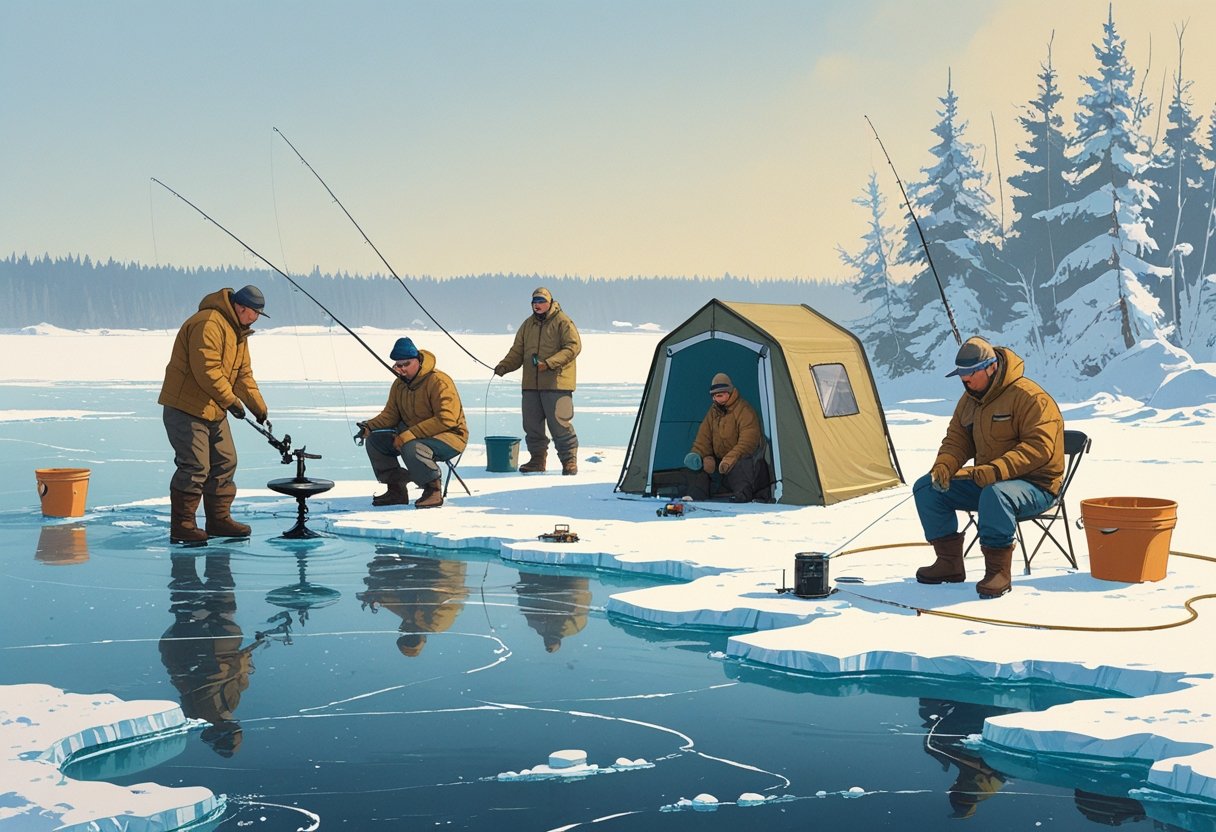
I focus on methods that keep me active and alert on the ice. Some approaches rely on motion and precision, while others let me monitor multiple holes at once for larger or cautious fish. Both depend on preparation, timing, and understanding fish behavior in cold water.
Jigging Methods
I use jigging when I want to attract fish through movement. It involves raising and lowering a jig or lure to mimic injured prey. The goal is to trigger a reaction bite from species like walleye, perch, or crappie.
I adjust my rhythm based on fish activity. A lift-and-pause motion works well for finicky fish, while a twitch-and-drop approach can draw aggressive strikes. When fish are sluggish, I slow my cadence and hold still longer between lifts.
The right jig weight matters. I use tungsten jigs for deep water because they sink fast and stay vertical. For shallow areas, lighter lead jigs move more naturally. Color choice also helps—bright hues in cloudy water and natural tones in clear conditions.
I watch my sonar to see how fish react. If they rise but don’t bite, I change color or motion instead of moving holes right away.
Tip-Ups and Set Lines
When I target larger fish like northern pike or lake trout, I rely on tip-ups or set lines. These devices let me fish multiple holes without holding a rod. The flag “tips up” when a fish takes the bait, signaling a strike.
I spool each tip-up with strong braided line and attach a fluorocarbon leader to reduce visibility. Large live baits such as shiners or suckers work best for predators.
Spacing holes 15–20 feet apart helps me cover more area and test different depths. I check lines often to keep bait lively and prevent tangles.
In calm weather, I combine one active jigging rod with nearby tip-ups. This mix keeps me engaged while giving me a better chance at catching both active and passive fish.
Bait and Lures for Ice Fishing
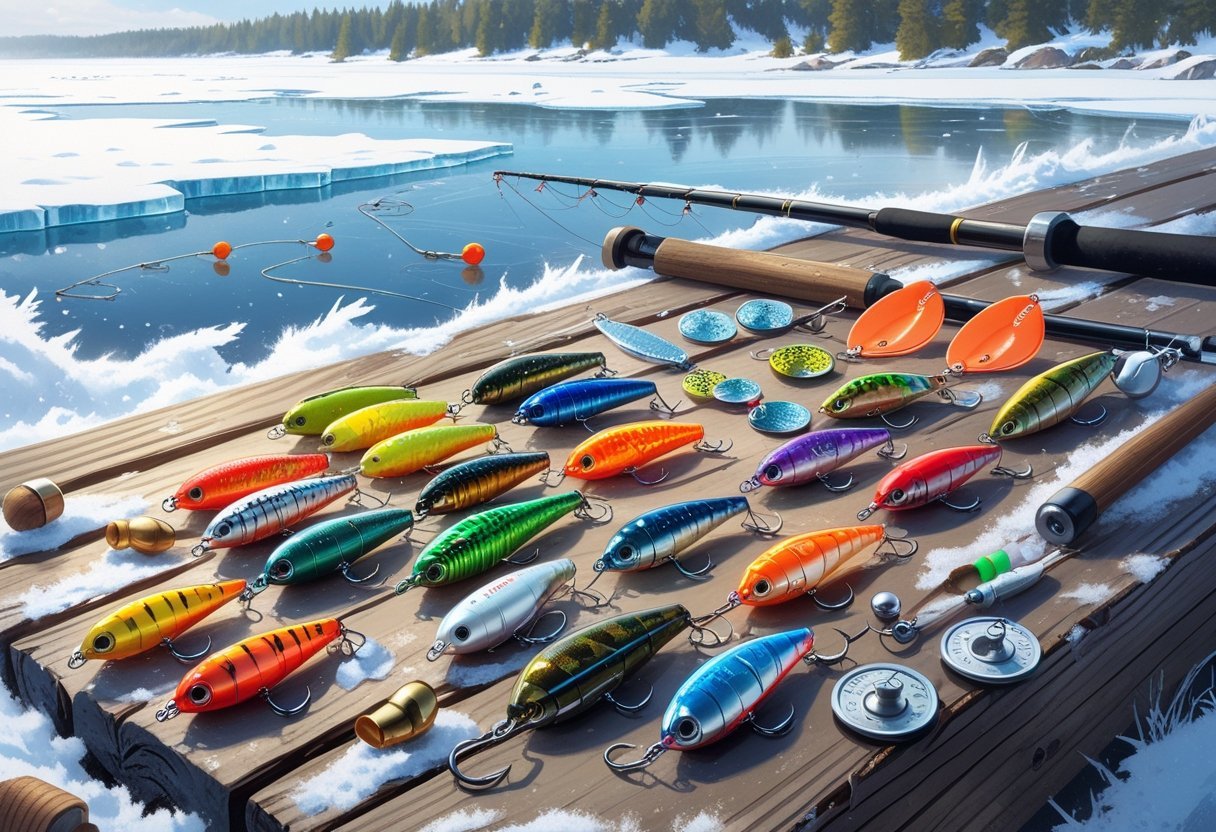
I rely on a mix of natural and artificial presentations to trigger strikes under the ice. Fish respond differently depending on water temperature, clarity, and mood, so I adjust my bait or lure choice to match their behavior and the species I’m targeting.
Live Bait Options
Live bait gives off natural scent and movement that often convinces fish to bite when nothing else works. I use minnows, wax worms, spikes, and maggots most often. Each has its purpose.
- Minnows attract larger predators like walleye, pike, and bass. I hook them through the back or lips for a natural swim.
- Wax worms and spikes are ideal for panfish such as bluegill, perch, and crappie.
I keep bait lively by storing it in insulated containers and changing water often. Cold, oxygenated water helps minnows stay active. I also match bait size to the fish’s feeding habits—small grubs for finicky fish and larger minnows for aggressive ones.
| Bait Type | Best For | Hooking Method |
|---|---|---|
| Minnow | Walleye, Pike | Through back or lips |
| Wax Worm | Bluegill, Perch | Thread onto small jig |
| Spike/Maggot | Crappie, Trout | Tip on tungsten jig |
Artificial Lures
Artificial lures let me cover more water and test different actions quickly. I use gliding jigs, jigging spoons, and tungsten jigs most often because they create flash and vibration that draw fish from a distance.
- Jigging spoons imitate dying baitfish and work well for walleye and perch.
- Gliding jigs move in wide circles that trigger strikes from active predators.
- Tungsten jigs sink fast and present small profiles that tempt cautious panfish.
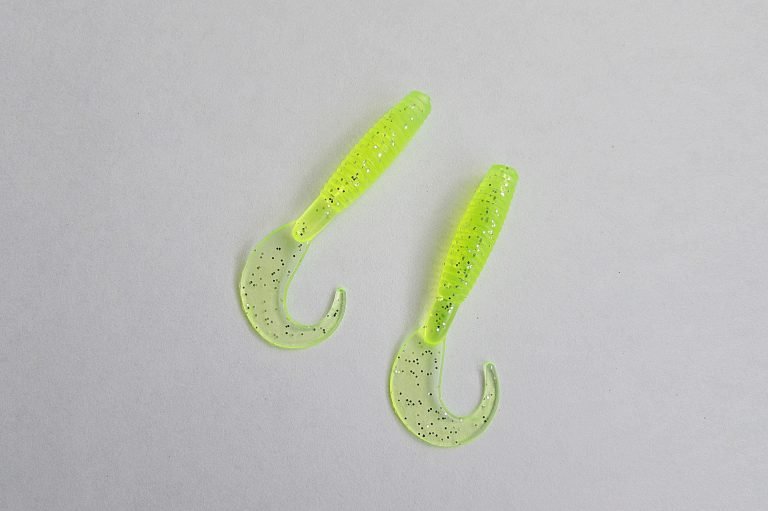
I adjust color and motion based on water clarity. In clear water, I prefer natural tones like silver or perch patterns. In stained water, I switch to bright colors such as chartreuse or orange. Adding a small piece of live bait to an artificial lure can also increase success when fish are hesitant.
Target Species and Where to Find Them
I focus on species that stay active during cold months and offer consistent action through the ice. Each fish type prefers certain depths, structures, and bait, so knowing where and how to target them makes a big difference in success.
Panfish: Perch, Crappie, and Bluegill
I often start with panfish because they’re reliable and plentiful. Yellow perch school near the bottom, especially around weed edges or drop-offs. I use small jigs tipped with waxworms or minnows and move until I locate a school.
Crappie prefer deeper water near submerged trees or brush piles. They bite best at dawn or dusk. Light tackle and small minnows work well, and I keep my presentation slow to match their winter feeding behavior.
Bluegill stay in shallower bays early in the season, then move deeper as ice thickens. They respond to small jigs or baited hooks with worms. I pay attention to subtle bites because bluegills can be cautious in cold water.
| Species | Depth Range | Common Bait | Best Time |
|---|---|---|---|
| Perch | 10–30 ft | Minnows, waxworms | Midday |
| Crappie | 15–35 ft | Small minnows | Dawn/Dusk |
| Bluegill | 5–20 ft | Worms, small jigs | All day |
Predators: Northern Pike, Lake Trout, and Walleye
Predator fish add excitement because they fight hard and require heavier gear. Northern pike patrol weed beds and drop-offs. I use large live bait or flashy spoons on tip-ups to draw them in. They’re aggressive and often strike suddenly.
Lake trout prefer deep, cold water near rocky points or ledges. I target them with heavy jigs or spoons and fish vertically. Early morning tends to produce the best bites. Because they roam widely, drilling multiple holes can help locate active fish.
Walleye feed in low light. I fish near rocky humps or points at dawn and dusk. Jigging with minnows or soft plastics works well. I stay patient and keep movements slow since walleye often strike lightly before committing.
Other Species: Bass and Kokanee
Winter bass fishing can be slower, but both largemouth and smallmouth remain catchable. I look for them near submerged structures or deep drop-offs. Slow jigging with live bait helps trigger bites when they’re less active.
Kokanee salmon, a landlocked form of sockeye, thrive in deep, cold lakes. They school tightly, so I use sonar to locate them before dropping small spoons or glow jigs. Kokanee respond to subtle jigging and often bite gently.
I adjust my depth based on water temperature and oxygen levels. In clear lakes, kokanee and bass may suspend higher, while in stained water, they stay closer to the bottom. Matching lure color to light conditions improves results.
Top Ice Fishing Destinations
I focus on places where the ice stays thick, the fish are active, and access is reliable. These spots offer consistent catches, good local facilities, and safe conditions for both new and experienced anglers.
Lake of the Woods
I find Lake of the Woods, located between Minnesota and Canada, to be one of the most dependable ice fishing destinations in North America. The lake’s large size and variety of fish make it ideal for long winter trips.
Common catches include Walleye, Sauger, and Northern Pike. Many anglers also pull up Perch and Eelpout through the ice. The season usually runs from December through March, depending on weather and ice thickness.
Local resorts maintain heated fish houses on the ice, which makes it easier to stay warm and productive. I often use a snowmobile or tracked vehicle to reach deeper areas, where bigger fish tend to bite.
Nearby towns such as Baudette, MN, provide bait shops, guides, and rentals. This support network makes the lake accessible even for first-time visitors.
| Key Details | Information |
|---|---|
| Main Species | Walleye, Sauger, Pike |
| Best Months | December–March |
| Access Points | Baudette, Warroad, Kenora |
| Facilities | Heated shelters, guides, local lodging |
Other Notable Frozen Lakes
I also recommend several other lakes that consistently deliver good ice fishing. Red Lake (MN) offers early ice and strong Walleye action. Saginaw Bay (MI) produces large Walleye near shore, while Lake Cascade (ID) is famous for jumbo Yellow Perch.
In Rhinelander, WI, anglers enjoy a mix of Panfish, Pike, and Walleye across dozens of small lakes. For more remote fishing, Fort Peck Lake (MT) provides trophy-sized Lake Trout and Pike in a quiet setting.
Each location has local guides, maintained access points, and nearby lodging. I always check ice conditions through local reports before heading out, as safety depends on daily weather changes.