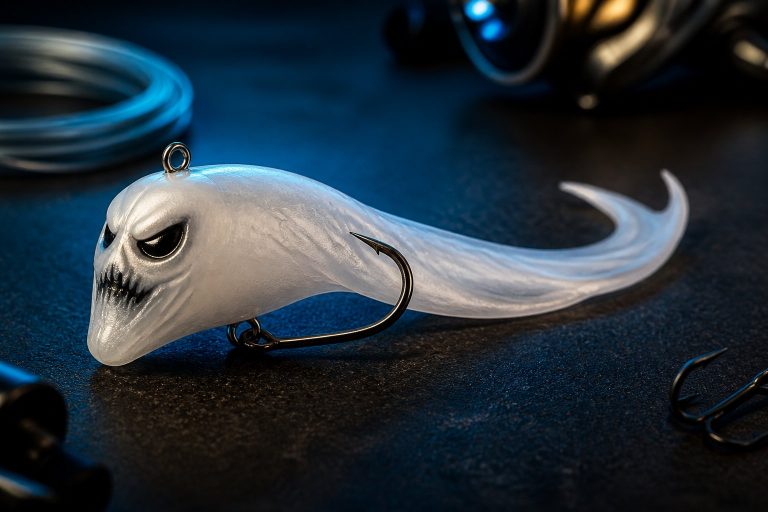
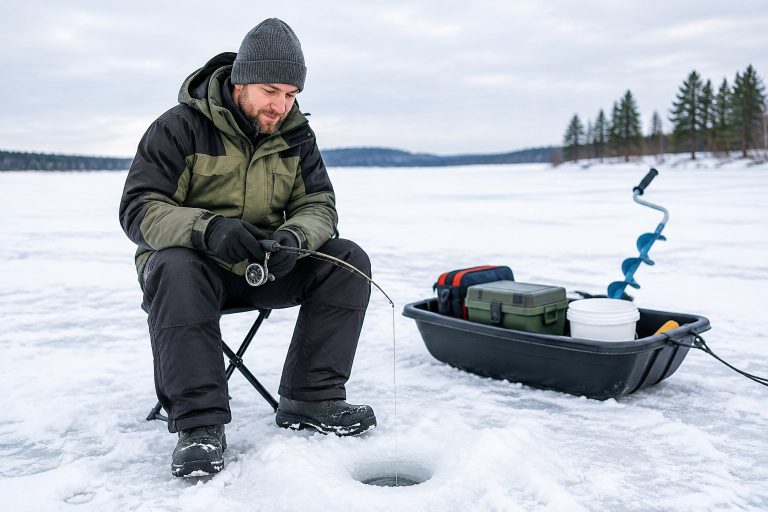
Bluegill keep feeding all winter, so a frozen lake gives you one of the easiest bites of the season. For ice fishing for bluegill, start on safe ice near green weeds in 4 to 15 feet of water, then fish a 1/32- or 1/64-ounce tungsten jig tipped with a waxworm or spike on 2- to 4-pound line under a spring bobber. That one setup catches fish from first ice to last ice, and it fits in a coat pocket.
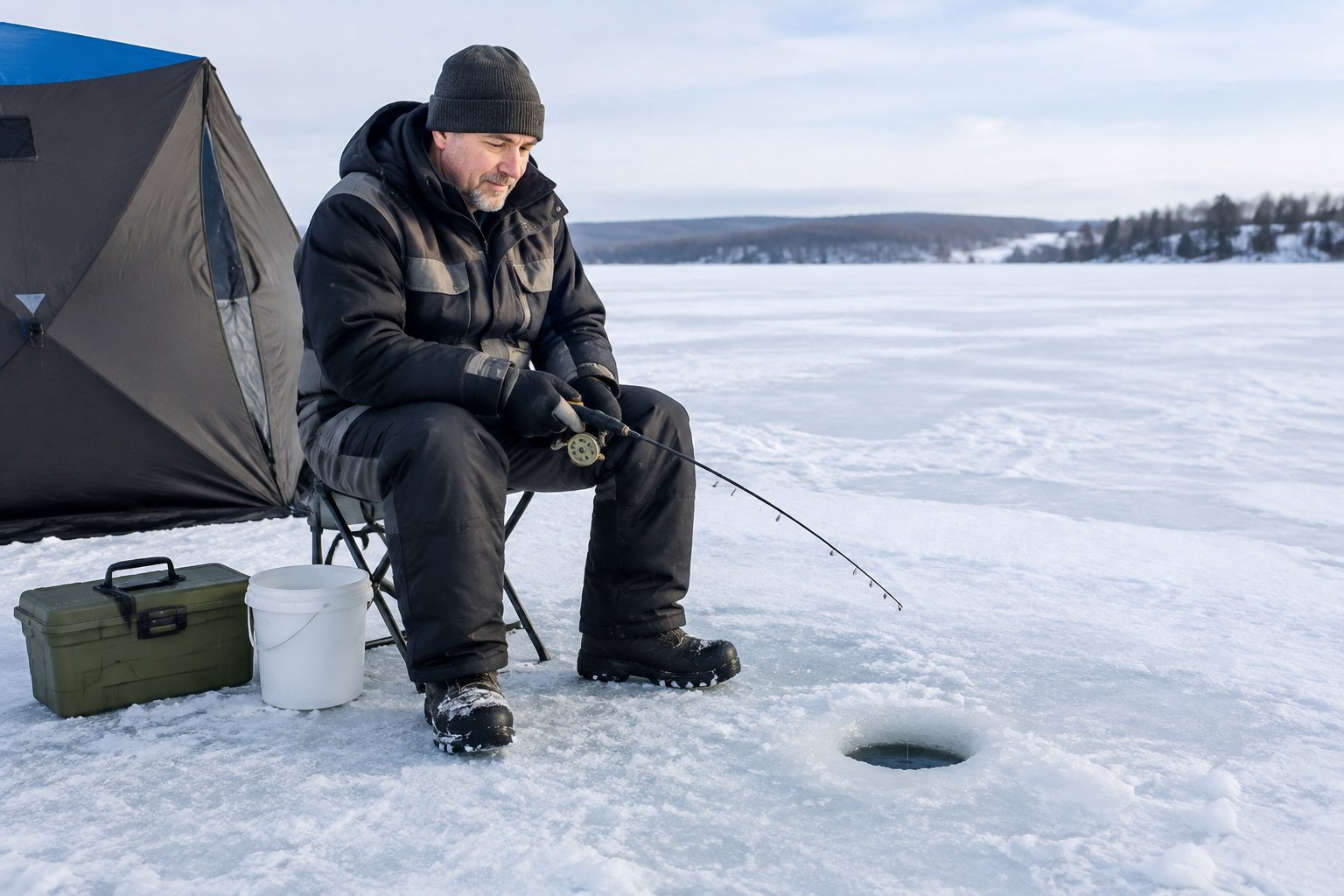
Winter panfish also school up tight. Once you find a few, you can stay on one spot for an hour and keep catching, which makes a short trip before work or a quick outing with your kids worth the effort, even if you are brand new to ice fishing for beginners.
How Do You Check Ice and Choose a Safe Access Point?
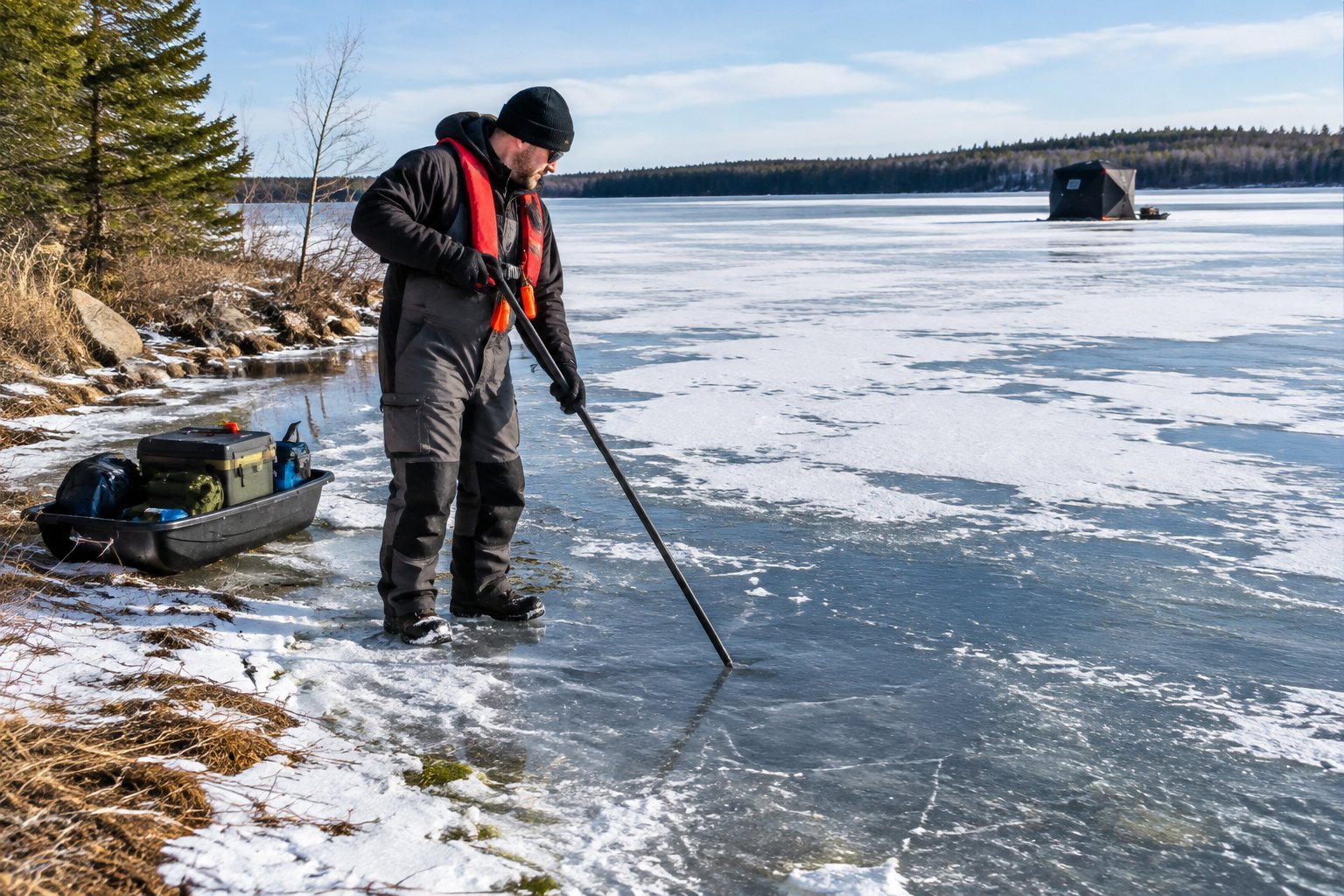
You check ice by measuring it yourself, starting at shore and testing every few steps on the way out. No ice is ever 100 percent safe. Your job is to stack the odds in your favor before you drill a single hole.
Check Local Conditions and Measure Ice Along Your Route
Start at home. Call a local bait shop or check your state’s ice reports, and look at the weather for the past week. Rain, wind, and warm spells weaken ice fast, even ice that held fine a few days ago.
Use these common ice thickness guidelines for clear, solid ice:
| Clear Ice Thickness | What It Supports |
|---|---|
| 4 inches | Walking |
| 6 inches | Snowmobile or ATV |
| 8 to 10 inches | Small car |
| 12 inches or more | Medium truck |
Clear ice is the strongest. White, snowy, or layered ice holds less weight, so treat it as thinner than it measures. Drill or chop test holes near shore, then again every so often as you walk out, since thickness changes across a lake.
Bring Safety Gear and Avoid Current, Cracks, and Deteriorating Ice
Wear ice picks around your neck where you can grab them fast. Carry a throw rope, wear cleats on slick ice, and use a spud bar. Strike the ice ahead of you as you walk. If the spud goes through in one hit, turn back. A float coat keeps you on top of the water if the worst happens.
Stay away from these trouble spots:
- Inlets, outlets, and any spot with moving water
- Pressure cracks and dark or gray patches
- Areas near cattails, where rotting plants give off heat
- Docks and rocks that hold warmth from the sun
Fish with a partner whenever you can. If you fall in, turn back the way you came, kick your legs up behind you, and use your picks to pull yourself out flat on your belly. A short list of solid ice fishing gear should always include safety items first.
Where Do Bluegill Hold During Winter?
Bluegill follow living weeds and food, so their spots shift as winter goes on. Early ice puts them shallow in green coontail and cabbage, midwinter can push them to deep weed edges and mud flats, and late ice pulls them back toward shallow bays.
Early Ice: Start With Green Weeds and Protected Bays
At first ice, walk to shallow, flat bays with weeds in 4 to 10 feet of water. Green weeds give off oxygen and hold bugs, so they hold fish. Coontail is a favorite because it stays green longer than many plants.
Drill a hole and check the weeds. If you pull up green stems on your jig, you are in a good area. Brown, slimy weeds mean the fish have likely moved on. Fish cribs and old dock areas in these bays are worth a few holes too.
Clear water helps this weed bite. In clear lakes, weeds grow deeper because light reaches farther, so bluegill can sit in weeds out to 15 feet.
Midwinter: Check Weed Edges, Basin Transitions, and Soft Bottoms
By midwinter, thick ice and snow block light. Many weeds die, oxygen levels drop, and bluegill slide out to the deep edge of the weedline. Inside turns along that edge are great places to start, since fish bunch up there.
If the weeds look dead, move deeper. Bluegill school over soft, muddy bottoms in roughly 15 to 30 feet of water, where they feed on insect larvae. A drop-off between a flat and a deep hole is a good path to follow. In mild winters with lots of green weeds, fish may stay shallow all season, so check the weeds first and then work out.
Late Ice: Look Toward Shallow Bays Without Chasing Unsafe Ice
As spring nears, bluegill move back toward 3 to 10 feet of water. Look at the inside edges of weed beds, the back ends of shallow bays, and areas near creek mouths.
This is also when ice gets dangerous. Shorelines melt first, and creek mouths have current. If the edge looks gray, slushy, or open, skip it. No fish is worth that risk. You can still catch plenty of fish a bit farther out on solid ice.
Use Maps and Optional Electronics to Narrow Your Search
A lake map or a phone app shows depth lines, drop-offs, and bays before you leave the house. Mark a few weed flats and a nearby deep basin so you have a plan.
Electronics help but are not required. An ice fishing flasher shows fish and your jig as colored marks, so you see when a fish rises. Underwater cameras let you spot green weeds and watch fish look at your bait. Without either, drill holes 10 to 20 feet apart and jig each one for a few minutes. More of our bluegill fishing tips apply here too, since bluegill relate to the same cover all year.
What Simple Rod, Rig, and Bait Setup Works Best?
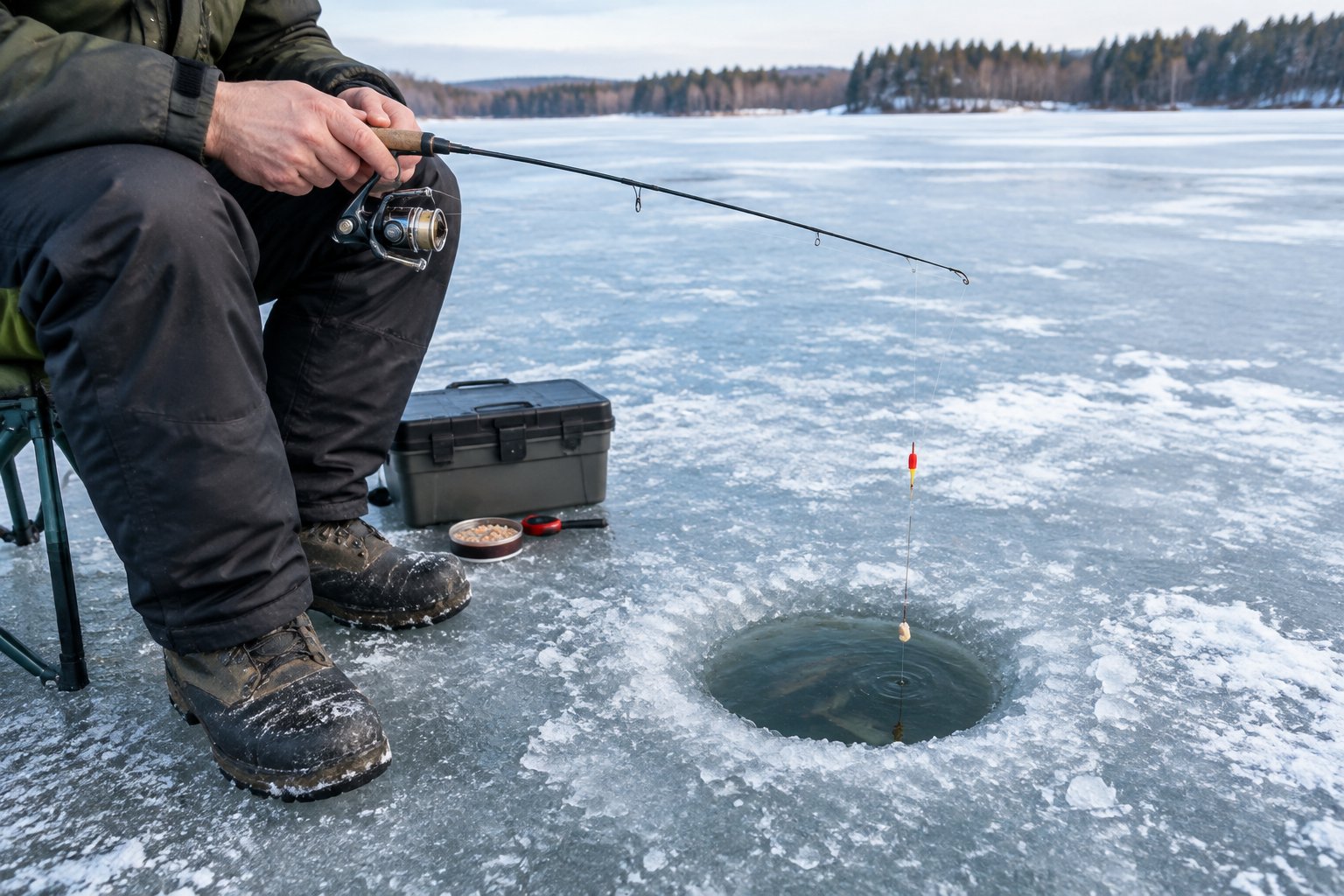
The best setup is a short, light rod with a spring bobber, light fluorocarbon line, and a tiny tungsten jig tipped with live bait. That rig handles almost every bluegill you will see and costs little to put together.
Choose a Light Rod, Small Reel, and Bite Indicator
Pick an ultralight ice fishing rod between 24 and 30 inches long. A short rod keeps you close to the hole and makes it easy to watch your line. Pair it with a small spinning reel or an inline reel. Inline reels twist line less, which helps stop jig spin.
Add a sensitive spring bobber to the rod tip. This thin wire bends under the weight of your jig and moves when a fish bites. For kids, a spring bobber makes bites easy to see, and they love watching it.
Tie a Small Jig to Light Line
Spool with 2- to 4-pound line. Bluegill are line shy, so lighter is better, and 1- or 2-pound line works in clear water. Fluorocarbon line is hard for fish to see. If you use mono on your reel, add a short fluorocarbon leader.
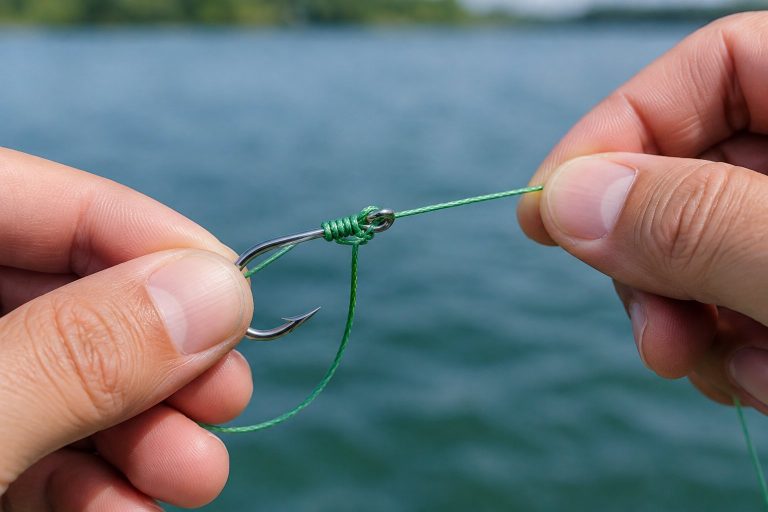
Tie on a 1/32- or 1/64-ounce tungsten jig. Tungsten is heavier than lead for its size, so it sinks fast and keeps your line tight. Start with bright colors in stained water and white, silver, or gold in clear water. Use a simple knot like an improved clinch, and retie if your line gets curly. For more ideas, a basic bluegill fishing rig from open water carries over with smaller hooks.
Tip Your Jig With Waxworms, Spikes, or a Tiny Plastic
Live bait adds scent that pulls fish in. These four work well:
- Waxworms: soft, juicy, and easy for kids to hook
- Spikes: small maggots that stay lively in cold water
- Eurolarvae: colored spikes that add a touch of color
- Mousies: grubs with a little tail that wiggles
Pinch the bait once before you hook it. That squeezes out more scent. Hook a waxworm through one end so it hangs straight, since a curled bait spins and turns fish away. Keep your ice fishing bait from freezing in an inside pocket or an ice fishing bait bucket.
When fish bite fast, swap to a tiny soft plastic. You rebait less often, which saves cold fingers.
Keep Your Auger and Tackle Kit Simple
A hand auger works fine on early ice and for a few holes. A power auger makes drilling many search holes faster, which helps midwinter. Either one should cut a 6- or 8-inch hole, plenty for bluegill.
Pack a small kit:
- Two rods rigged before you leave
- A small box of ice fishing jigs in a few colors
- A skimmer to clear slush from holes
- Pliers or forceps for unhooking
- A bucket to sit on and carry gear
How Do You Jig, Detect Bites, and Fix a Slow Bite?
Small motions catch winter bluegill. Keep your jig quivering, pause often, and watch closely, because many bites barely move your line.
Start Near Cover or Just Above Marked Fish
Drop your jig to the bottom, then reel up a foot or so. Near weeds, fish just above the weed tops. If you see fish on a flasher, set your jig slightly above them. Bluegill look up to feed, so they will rise to a bait more readily than they will dig down.
Use Small Quivers, Pauses, and a Slow Lift
Shake the rod tip in tiny motions so the jig shivers like a bug. Then stop and hold still for a few seconds. When a fish comes close, raise the jig slowly while it keeps quivering. That slow lift makes the bait look like it is getting away.
Avoid big, sharp jerks. Those scare fish more than they draw them in.
Watch for Lift Bites and Set the Hook Gently
Bluegill often bite by rising under the jig. Your spring bobber springs up because the weight is suddenly gone. Set the hook on any odd move: a rise, a dip, or line going slack. Use a short, light lift of the wrist. A hard swing tears the small hook out of their soft mouth.
Downsize, Stop Jig Spin, or Move When Fish Will Not Bite
If fish look but will not bite, go smaller. Drop to a 1/64-ounce jig or lighter line. Check that your bait hangs straight and your jig does not spin. A small ball-bearing swivel tied a foot above the jig fixes spin.
Try holding the jig dead still. On cold days, any motion can send fish away. If nothing works after 10 minutes, drill new holes 10 to 15 feet away. Bigger bull bluegills hang back while small fish crowd in first, so a patient, slow bait catches the big ones. Our guide on how to catch big bluegill covers more on finding larger fish.
How Can You Make a Short Family Outing Work?
A great family trip on the ice is short, close to home, and planned the night before. Ninety minutes of steady action beats a long, cold day every time.
Pick Nearby Water and Prepare Your Gear Before Leaving
Choose a lake within about 20 minutes of home with easy parking and a known safe access point. Check the latest ice report that morning.
Rig every rod the night before. Tie on jigs, set spring bobbers, and pack bait, snacks, and safety gear in one sled. When you arrive, you can drill and fish in minutes. The same plan works for a quick session after work, and tips on how to catch fish quickly in 30 minutes fit a short winter trip well.
Keep Kids Warm, Supervised, and Involved
Dress kids in layers, waterproof boots, a hat, and spare gloves. Bring hand warmers and a hot drink. Cold kids quit fast, so pack more warmth than you think you need. A pop-up shelter blocks wind and makes a big difference.
Keep kids within arm’s reach and away from open holes. Give each child a job: skimming slush, watching the spring bobber, or holding the bait cup. Short rods and spring bobbers let little anglers see bites themselves. More ideas for fishing with kids carry over to ice trips too.
Check Local Limits and Handle Your Catch Carefully
Check your state rules on licenses, daily bag limits, and how many lines you can fish. Rules vary by state and lake.
Handle fish with wet hands and unhook them fast with forceps. Release the bigger bulls when you can, since they help keep a lake’s bluegill healthy, and keep a few medium fish for dinner if the limit allows.
Keep Your Next Trip Safe, Simple, and Easy to Repeat
Winter bluegill reward a simple plan. Measure ice along your whole route and carry picks and a rope. Start on green weeds early, slide to deep edges and soft bottoms midwinter, and move back toward shallow bays late, while staying off weak shoreline ice.
Fish a light rod, a spring bobber, and a tiny tungsten jig tipped with a waxworm or spike. Keep it quivering, pause often, and set the hook gently on any rise. Pack your sled the night before so a 90-minute trip with your kids starts the moment you reach the ice.
Get your gear ready and explore the related beginner-friendly guides before your next trip.