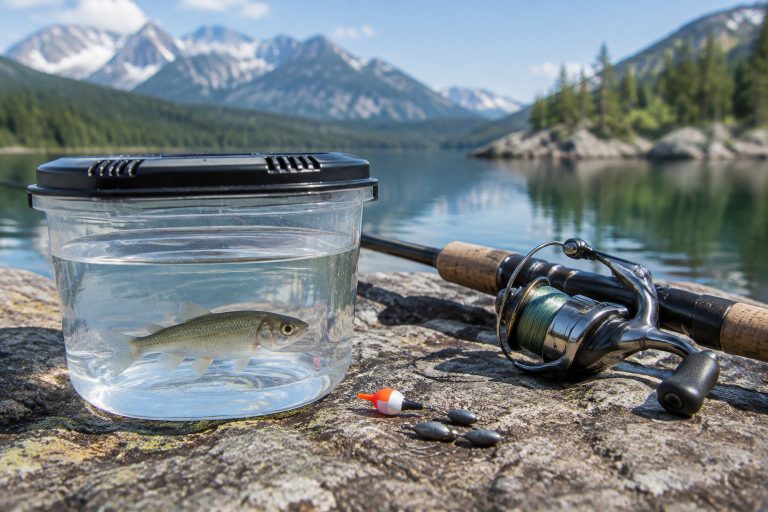
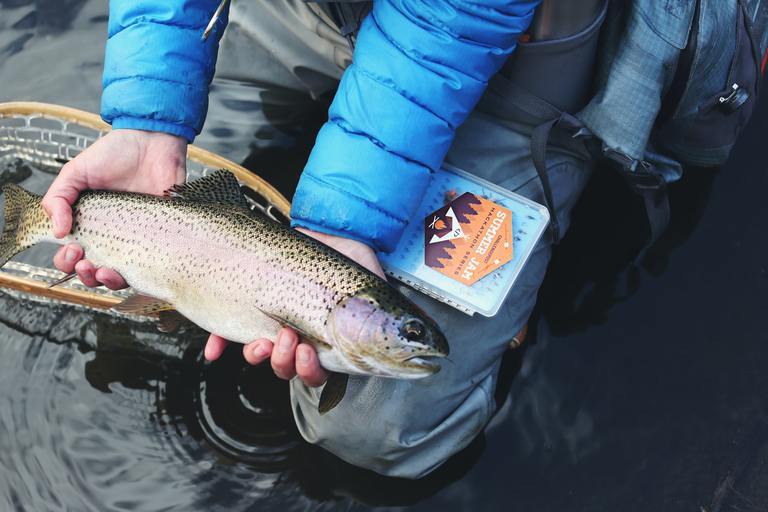
For most ice trips, start with a small jig tipped with live bait. If you are fishing for bluegill, crappie, or perch, bring waxworms and a few small jigs. If you want walleye or pike, bring live minnows. Those two setups cover most fish you will see through the ice, and they are easy for beginners and kids to use.
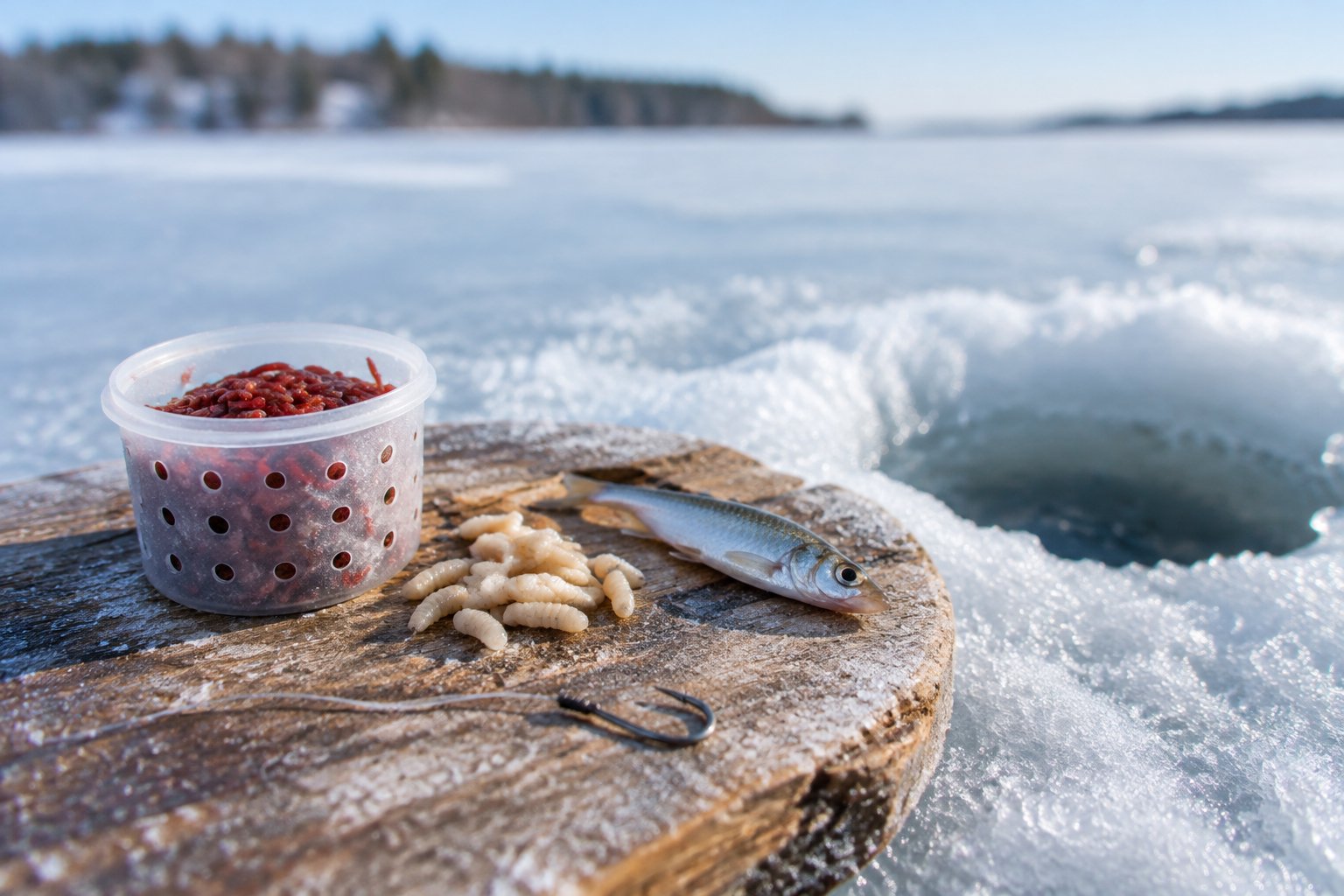
The right ice fishing bait also depends on your local rules, because some states limit live bait, minnow transport, or the number of lines you can run. With one reliable bait and one backup, you can drill a hole after work or on a short weekend morning and spend more time catching fish. If you are brand new, our guide to ice fishing for beginners covers the first steps on the ice.
Which Live Baits Are Worth Bringing?
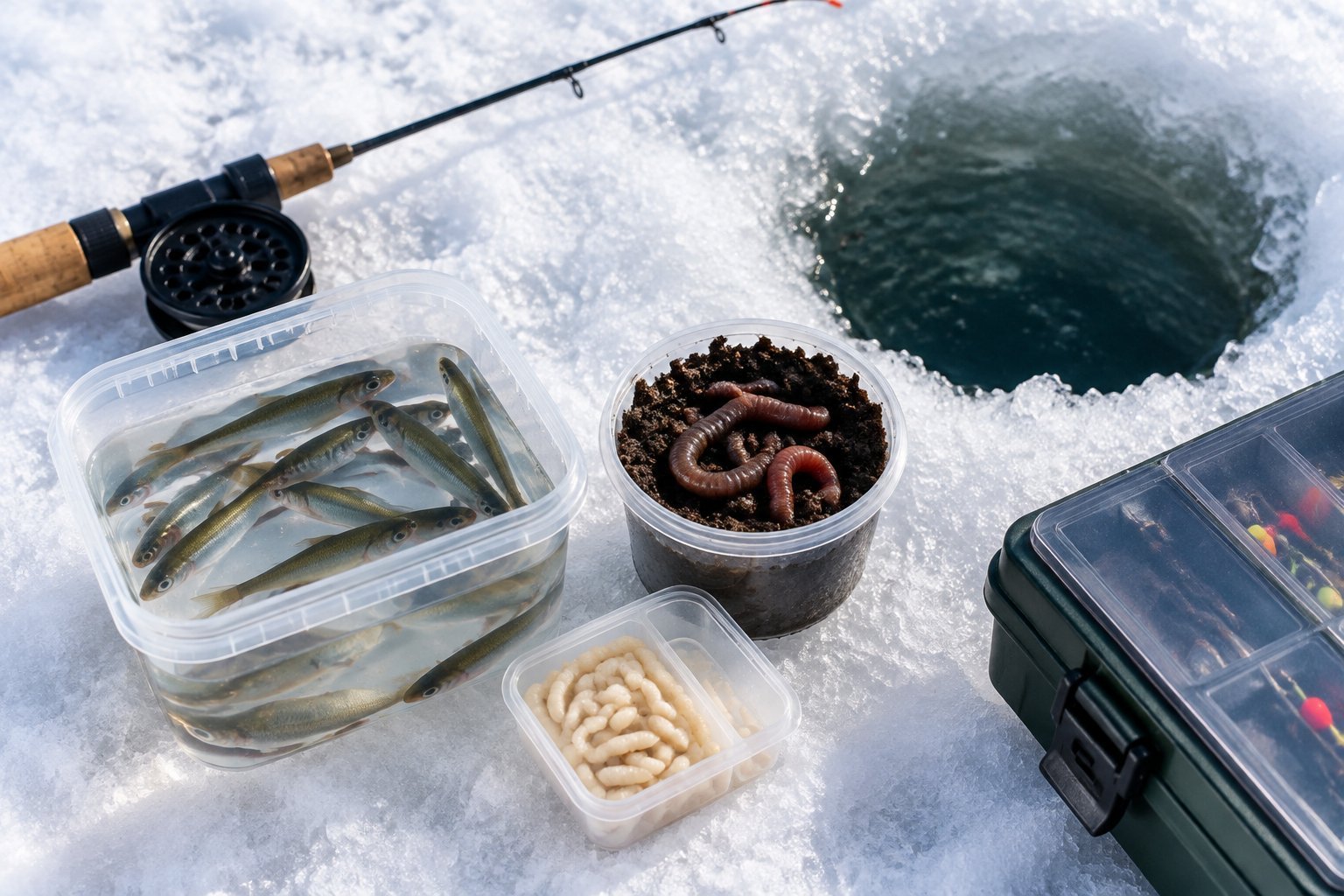
Waxworms and minnows are the two live baits worth packing first. Small larvae like waxies, mealworms, and spikes catch panfish. Minnows draw in walleye, pike, and trout, and freshwater shrimp fill a smaller role where they are sold and allowed.
Waxworms and Mealworms for Easy Panfish Fishing
Waxworms are the classic ice bait. Many anglers call them waxies. They are soft, white, and smell good to bluegill, crappie, and perch.
Hook one waxworm through the end so most of it hangs free. If the fish nip it off, use two. A single waxie on a small jig is the setup you will see on almost every panfish lake.
Mealworms are tougher and stay on the hook longer. That makes them handy for kids, who tend to lose bait on missed bites.
- Waxworms: soft, juicy, top choice for panfish
- Mealworms: firmer, last longer, good for small trout and perch
- Storage: keep both cool in their bedding, never frozen
Spikes and Maggots for Small, Subtle Presentations
Spikes are fly larvae, often from the blue bottle fly (Calliphora vicina). White maggots and spikes are tiny, so they work well when fish are picky and won’t take a full waxworm.
Put two or three spikes on a very small jig. They wiggle in cold water, which adds motion without you moving the rod. Some days they outfish waxies, so a small cup of each gives you a quick swap.
Live Minnows for Fish That Feed on Baitfish
Live minnows are the go-to for walleye, pike, bass, and big perch or crappie. Fatheads are tough and easy to keep alive. Shiners swim harder and draw more attention.
Hook a minnow through the lips or just under the back fin so its tail moves freely. Use small 1- to 2-inch minnows for crappie and perch. Use 3- to 4-inch minnows for walleye and bass, and larger ones for pike. Our freshwater bait fish guide explains the common types, and you can match sizes for deeper fish with this guide to live bait for lake trout.
You need a bucket with clean water and, for longer trips, a small battery aerator.
When Are Freshwater Shrimp a Useful Option?
Freshwater shrimp help in lakes where fish already eat them, such as some trout and perch waters. You can tip a jig with one, or thread a few on a small hook.
They are hard to find in many bait shops, and some states restrict them. Ask the local shop what fish are eating and whether shrimp are legal there. If the answer is unclear, stick with waxworms and minnows.
When Should You Choose Artificial Lures?
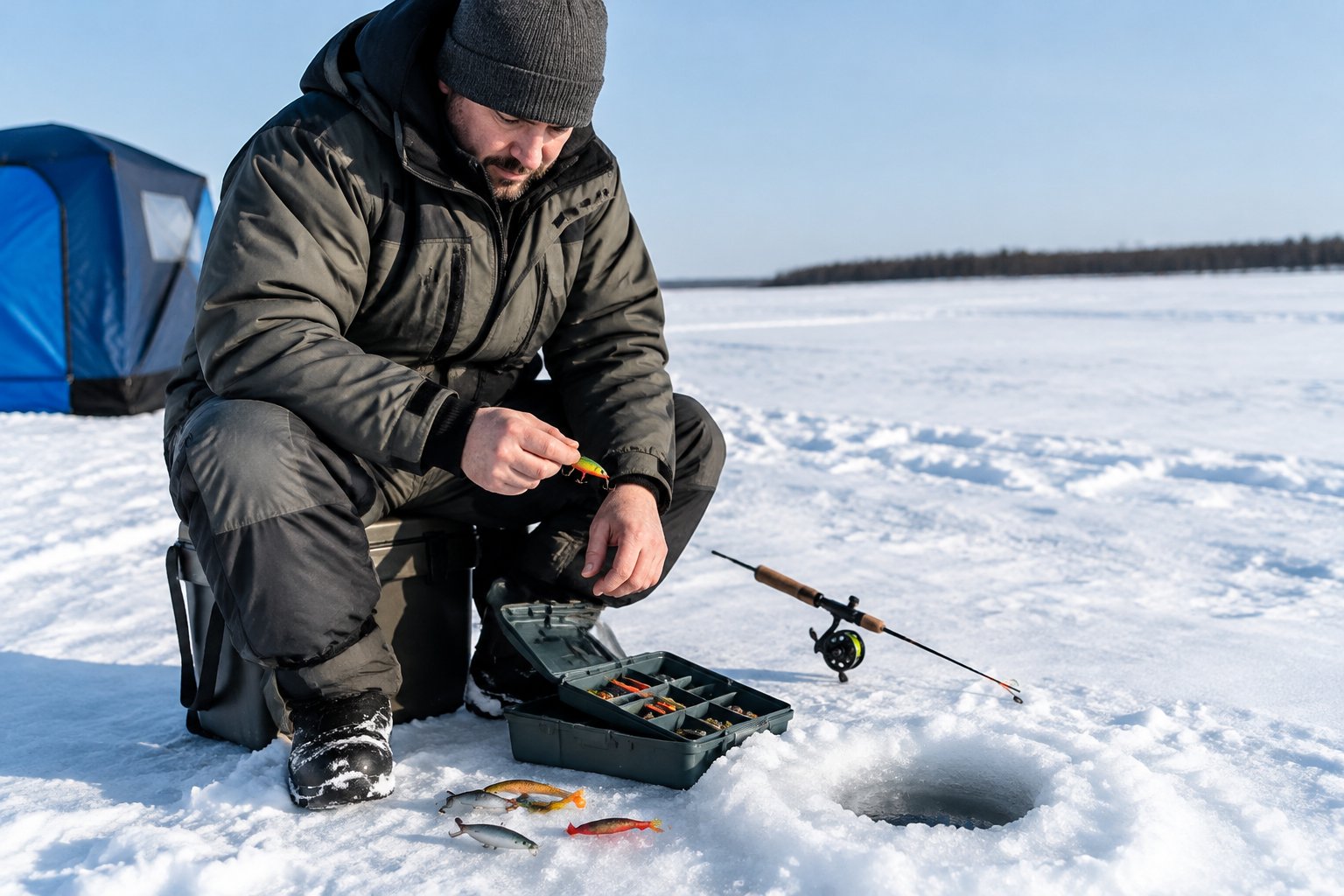
Choose artificial lures when live bait is restricted, hard to get, or too messy for your trip. Small jigs and soft plastics handle panfish, while spoons and swimming lures call in walleye, pike, and lake trout. If you are weighing the two styles, this look at fishing lures vs live bait covers the trade-offs in more detail.
Tungsten vs. Lead Jigs: Compact Size or Lower Cost?
Ice fishing jigs come in two main metals. Tungsten is heavier for its size, so a tungsten jig is smaller and sinks faster. Lead jigs cost less and work fine in shallow water.
| Feature | Tungsten Jigs | Lead Jigs |
|---|---|---|
| Size for same weight | Smaller | Larger |
| Sink speed | Fast | Slower |
| Cost | Higher | Lower |
| Best use | Deep water, picky fish | Shallow water, kids, budget |
For a family trip, a pack of cheap lead panfish jigs is fine. Kids snag and lose jigs, so that lower cost helps.
Soft Plastics for Less Bait Handling
Soft plastics are small rubber bodies shaped like bugs, worms, or minnows. Thread one on a small jig and you can fish all day without touching live bait.
They are great for quick trips, lunch-break outings, or kids who don’t want to handle worms. Red, white, and pink are good starting colors. If fish ignore a plastic, add one waxworm to the hook for scent.
Jigging Spoons for Flash, Flutter, and Sound
Jigging spoons are metal lures that flash and flutter as they fall. Rattle spoons add sound, which helps fish find your bait in dark or stained water.
The Swedish Pimple is an old favorite. The Northland Buck-Shot Rattle Spoon and Lindy Perch Talker add rattles. Tip the treble hook with a minnow head or a few waxies to get more bites from perch and walleye.
Swimming Lures for Active Predators
Swimming lures like the Rapala Jigging Rap dart in circles when you lift and drop them. That motion looks like a fleeing baitfish and draws hard strikes from walleye, pike, and lake trout.
Use them when fish are active, especially at dawn and dusk. Lift the rod about a foot, let it fall, and pause. These lures are best for adults or older kids, since the treble hooks need careful handling.
What Should You Use for Your Target Fish?
Small fish need small baits, and fish that eat baitfish want minnows or minnow-shaped lures. Panfish bite tiny jigs with larvae. Walleye and pike prefer minnows, and trout and bass shift with what they eat in your lake.
Bluegill, Crappie, and Yellow Perch: Start Small
Panfish have small mouths, so go tiny. A small jig with one waxworm or two spikes is the best starting setup. These ice fishing baits are cheap and easy for kids.
- Bluegill: smallest jigs, one waxie or spikes. See more bluegill baits.
- Crappie: small jigs or small minnows, often suspended off the bottom. Our guide to ice fishing for crappie covers depth.
- Yellow perch: jig near the bottom with waxies, plastics, or a small spoon tipped with a minnow head.
Crappie bite upward, so watch for your line going slack.
Walleye and Northern Pike: Match the Baitfish
Walleye and northern pike hunt baitfish, so match that food. For walleye, use a rattle spoon or jigging lure tipped with a minnow head, or a live minnow under a bobber. Low light at sunrise and sunset brings the best bites, and these walleye ice fishing tips help you time it.
For pike, use larger minnows on a tip-up. Add a steel leader, since pike teeth cut regular line.
Trout, Lake Trout, and Bass: Adjust to Local Feeding Habits
Trout and bass eat what their lake offers. Stocked rainbow trout bite small spoons, waxies, mealworms, and small minnows. Lake trout live deep and chase larger spoons and swimming lures.
Bass slow down in winter. A small minnow or a slowly worked jig near weeds or structure is a good bet. Ask the local bait shop what is biting; they see fish come in every day.
A Quick Decision Guide for Beginners and Families
If you only have a couple of hours, use this table to pack fast.
| Target Fish | First Choice | Backup | Kid-Friendly? |
|---|---|---|---|
| Bluegill | Small jig + waxworm | Soft plastic | Yes |
| Crappie | Small minnow or jig + waxie | Small spoon | Yes |
| Yellow perch | Jig + waxworm | Spoon + minnow head | Yes |
| Walleye | Rattle spoon + minnow head | Live minnow on bobber | With help |
| Northern pike | Large minnow on tip-up | Large spoon | Adults handle hooks |
| Trout | Small spoon or waxie | Mealworm | Yes |
Not sure what’s in the lake? Start with a small jig and waxworm. It catches the widest mix of fish.
How Do You Rig Bait and Get More Bites?
Most bites come from a small, slow bait held at the right depth. A tipped jig, a bobber, gentle jigging, and a tip-up cover almost every beginner setup.
Tip a Small Jig or Suspend Bait Under a Bobber
Tie a small jig to your line and add a waxworm or plastic. Drop it to the bottom, then reel up a few inches. Many fish sit just above the bottom.
For kids, a small bobber is easier. Set it so the bait hangs just above the bottom, and let them watch for it to dip. This bluegill fishing rig uses the same simple idea.
Use Gentle Vertical Jigging and Pause for the Bite
Vertical jigging means moving your bait straight up and down under the hole. Lift your rod tip a few inches, let it fall, then hold still for 5 to 10 seconds.
Most bites happen during the pause. Watch your line or rod tip. A small tick, a sideways move, or slack line means a fish took it. Set the hook with a short lift of the wrist.
Set a Tip-Up Where Local Rules Allow
A tip-up holds a baited line in a hole and pops up a flag when a fish bites. It lets you fish a second hole while you jig the first, if your state allows more than one line.
Hook a live minnow under the back fin and set it a foot or two off the bottom. These tip up ice fishing tips cover setup and flag timing. Kids love racing to a flag.
Adjust Size, Color, and Action When Fish Refuse
If fish look but won’t bite, change one thing at a time. Go smaller first, since picky fish take tiny baits.
- Size: drop to a smaller jig or fewer waxies
- Color: switch from bright to natural, or try a glow coating in dark water
- Action: jig less, pause longer
- Match the hatch: use minnow-shaped lures where fish eat baitfish, bug shapes where they eat insects
Give each change about 10 minutes before trying another.
What Should You Check Before a Short Ice Trip?
Check the rules, the ice, and your bait before you leave home. A five-minute check keeps a short trip safe and legal.
Check Local Bait, Hook, Line, and Harvest Regulations
Rules change by state and sometimes by lake. Look up your state wildlife agency’s fishing rules for:
- Whether live minnows are allowed and whether you can move them between waters
- How many lines or tip-ups each person can use
- Size and daily limits for each fish
- License rules for adults and kids
Many states ban dumping leftover minnows into the lake. Bring them home or throw them in the trash.
Keep Bait Healthy Without Freezing or Overheating It
Live bait for ice fishing needs to stay cool but not frozen. Keep waxworms and spikes in an inside coat pocket on the ice so they stay just above freezing.
Keep the minnow bucket covered so it won’t freeze over. Change some water if minnows slow down, and don’t crowd them. At home, store larvae in the fridge, never near a heater.
Pack Simple Gear and Verify Ice Conditions
A short trip needs very little ice fishing gear:
- Short ice fishing rod and reel
- Ice auger and a skimmer to clear slush
- Small tackle box with jigs, spoons, and a bobber
- Bucket to sit on and carry gear
- Ice picks, spud bar, and a phone in a dry bag
Many safety guides call for at least 4 inches of clear ice for walking. Check the depth as you go and ask local shops about current conditions. Our full ice fishing gear checklist helps you pack fast.
Make Bait Handling and Hook Safety Easier for Kids
Kids have more fun when bait is easy. Give them soft plastics or mealworms if waxies feel too squishy. Pre-bait their hooks on cold days so small hands stay in gloves.
Use single-hook jigs for kids and keep treble hooks for adults. Bring a pair of pliers to remove hooks, and teach kids to hold the line, not the hook, when a fish comes up.
Bring One Reliable Bait and One Simple Backup
Your best ice fishing bait plan is one proven option plus a backup. For panfish, pack waxworms and small jigs, then add soft plastics in case bait runs out or fish get picky. For walleye and pike, bring live minnows and a rattle spoon.
Check your state’s bait and line rules, keep bait cool, and pause often when you jig. Get your gear ready and explore the related beginner-friendly guides before your next trip.