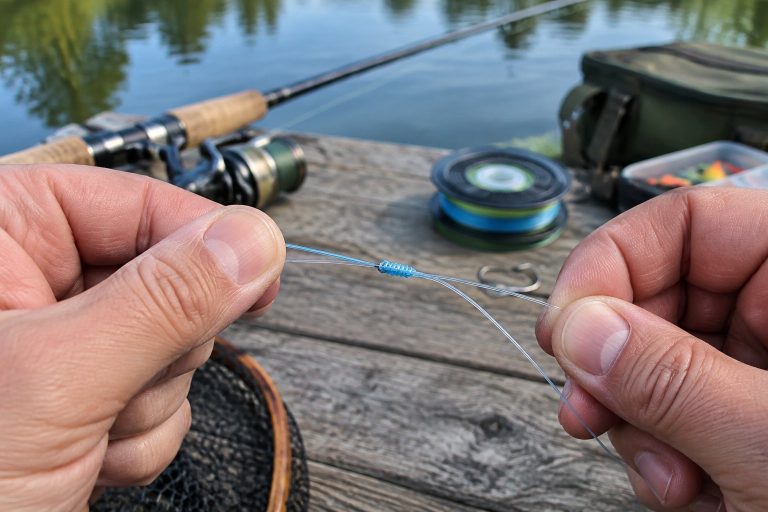
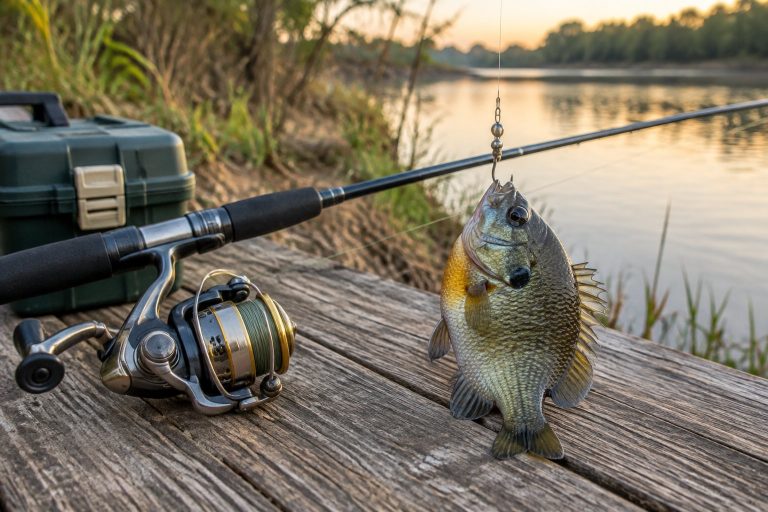
A small hook baited with a piece of worm and suspended under a bobber is one of the quickest, most dependable ways to catch bluegill from shore. Aim your cast toward weed edges, reeds, or submerged cover, then watch the float for a dip or sideways glide.
Bluegill are widespread, bite-sized targets that make a short fishing trip rewarding for new anglers and kids. With a simple setup and a few adjustments to bait depth, you can spend less time rigging and more time fishing.
Where Can You Find Bluegill From Shore?
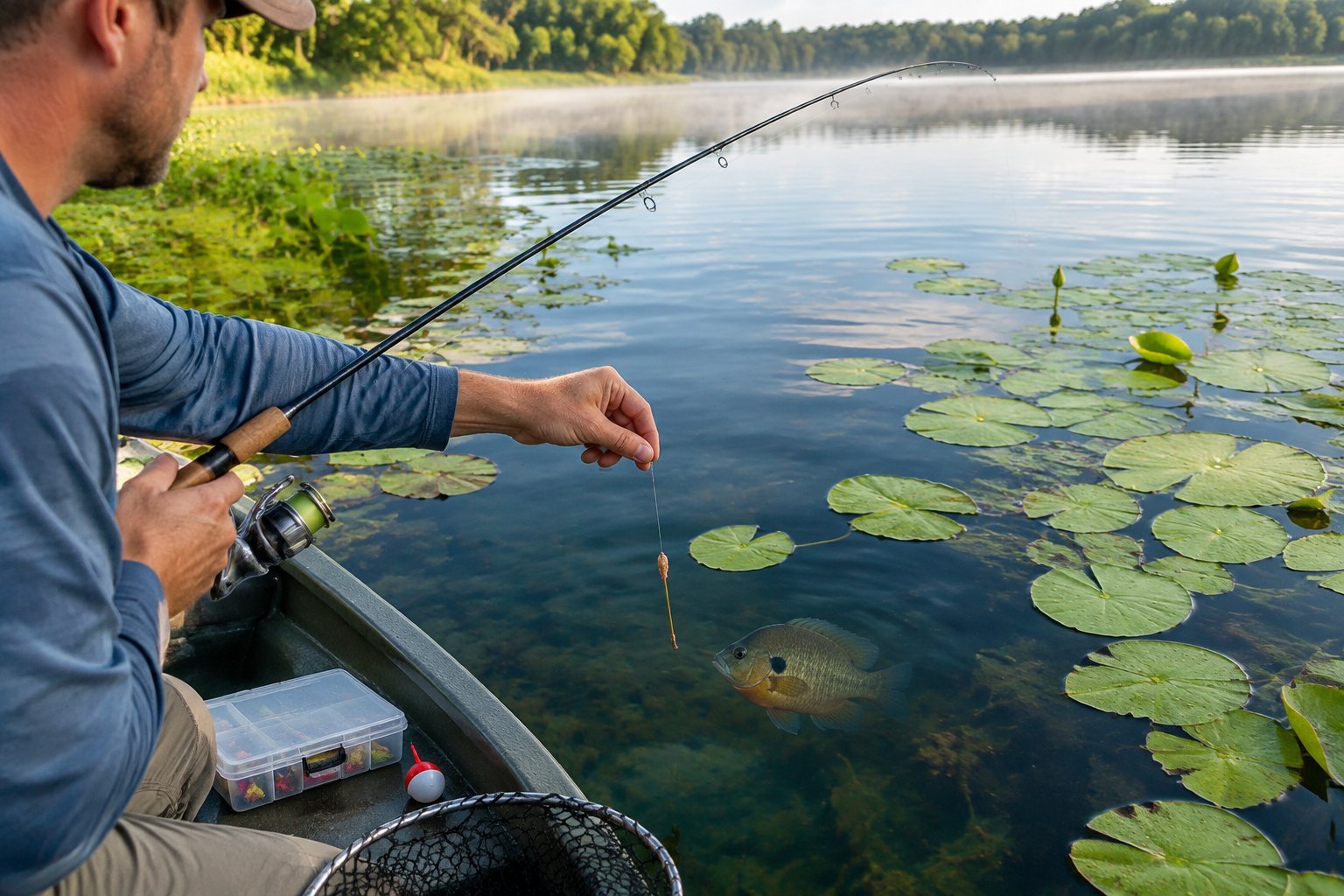
Look for bluegill in shallow water near weed edges, reeds, and other cover, then try a nearby pond if you want a quick shore-fishing start. This sunfish, Lepomis macrochirus, lives in lakes and ponds as well as lakes and rivers, and shoreline vegetation gives you a practical place to begin searching.
Check Weed Lines, Cover, and Shallow Edges
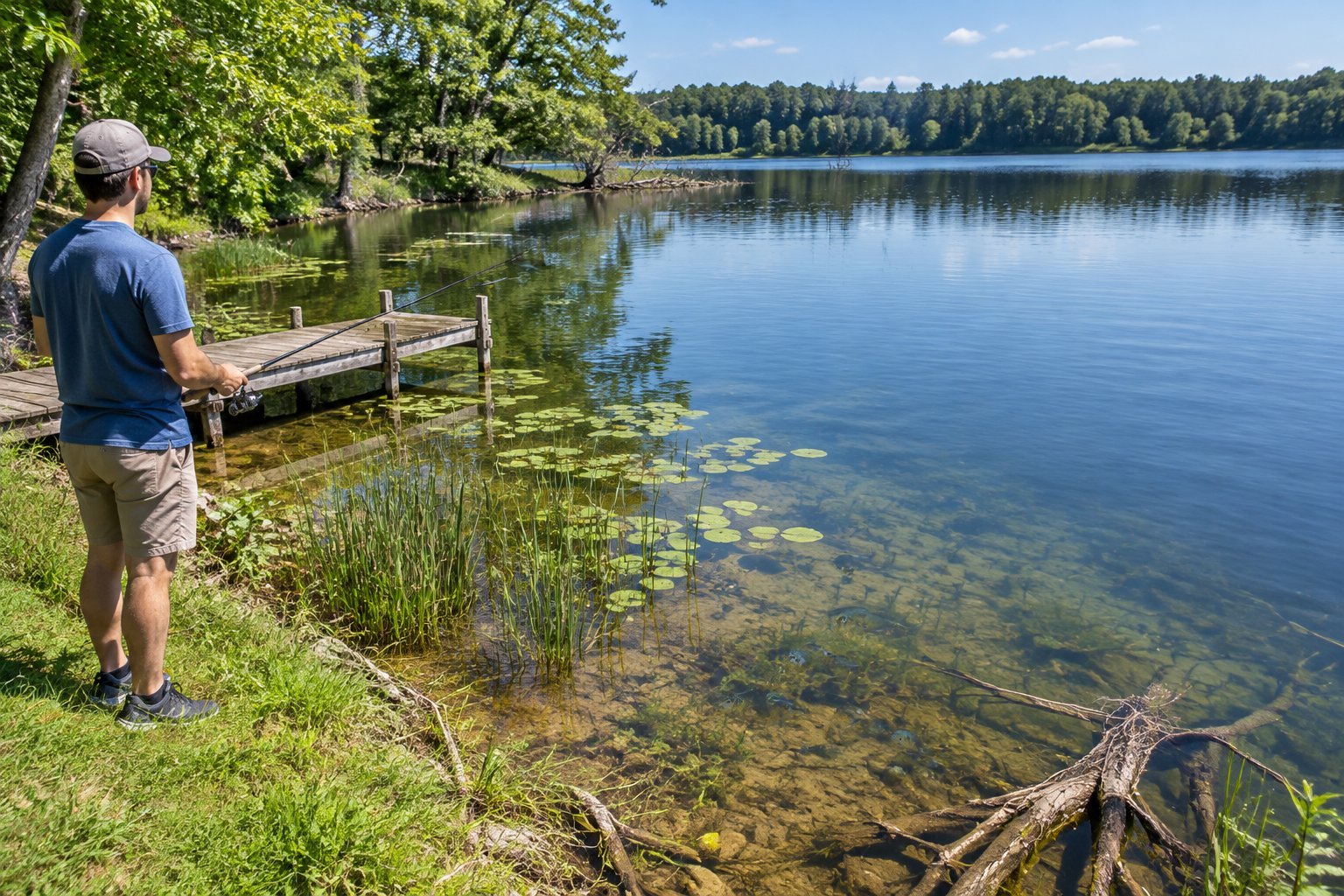
Start where weeds meet open water. Cast along the edge, then work around reeds, lily pads, submerged branches, docks, or gaps in the vegetation. Bluegill feed on small prey around cover, including crayfish, grass shrimp, and minnows.
If you don’t get a bite after several casts, move a few steps along the bank and try the next opening or edge. In warm weather, check the outside weed edges too, where fish can hold close to plants while facing open water. Keep your cast short and accurate so your bait settles beside cover without landing in thick weeds.
Start With Ponds, Including Farm Ponds
Small ponds give you a compact area to fish and make it easy to try several spots from shore. Look for a shallow cove, a weedy bank, or an area with submerged cover, then begin close to shore before casting farther out.
Farm ponds can hold bluegill, though many sit on private land. Ask the owner for permission before fishing, and check local access rules at public ponds. A five-minute scan of the bank for weeds, open casting lanes, and places to stand safely can help you choose a productive starting spot.
When Are Bluegill Most Likely to Bite?
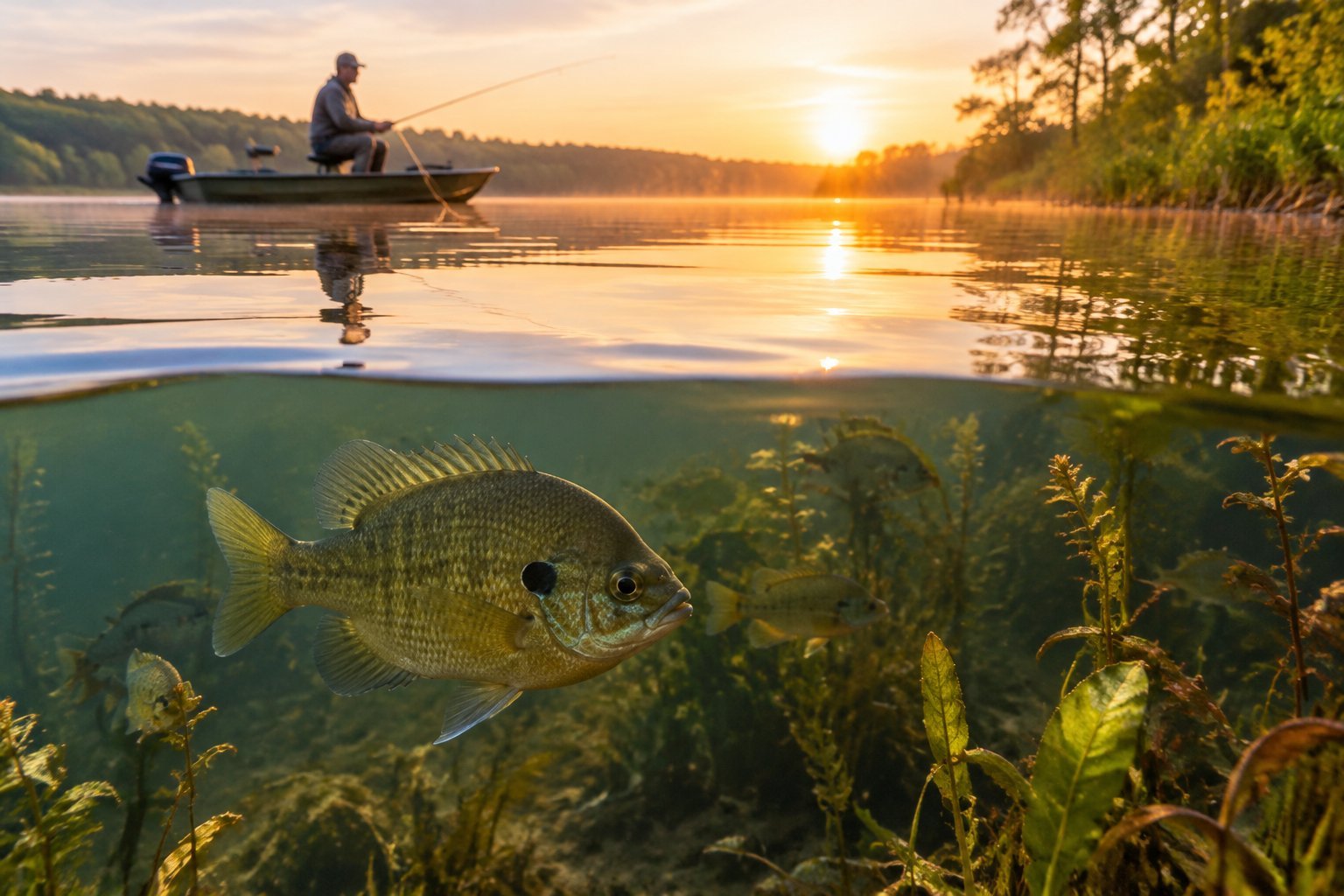
Target the warming season and the hours around morning or evening feeding periods for a strong chance of finding active bluegill. Water temperature helps you anticipate when fish move shallow, while the bluegill spawn can concentrate them near shore.
Use Water Temperature and the Spawn as Seasonal Clues
As water warms in spring, bluegill move toward shallow areas to feed and spawn. Around 70°F is a useful clue that spawning activity may be underway, though timing varies by region and local conditions. Look for fish holding near protected shorelines and shallow cover.
After spawning, fish may spread out. In a small pond, try the shallows near vegetation; in a larger lake, work the weed edge and check deeper water if the shoreline bite slows. Treat temperature as a guide, then let the bobber tell you whether fish are feeding at your chosen depth.
Plan Around Morning and Evening Feeding Periods
Morning and evening give you comfortable windows to fish and often bring bluegill close to shore to feed. If your schedule is tight, a brief trip around sunrise or the last part of daylight can fit before or after other commitments.
Bluegill also bite during daylight. On a midday trip, pick shaded banks or fish beside vegetation, then adjust your depth if the first few casts draw no attention. A quick change in location can be more useful than waiting a long time in an empty spot.
What Gear Makes Bluegill Fishing Easier?
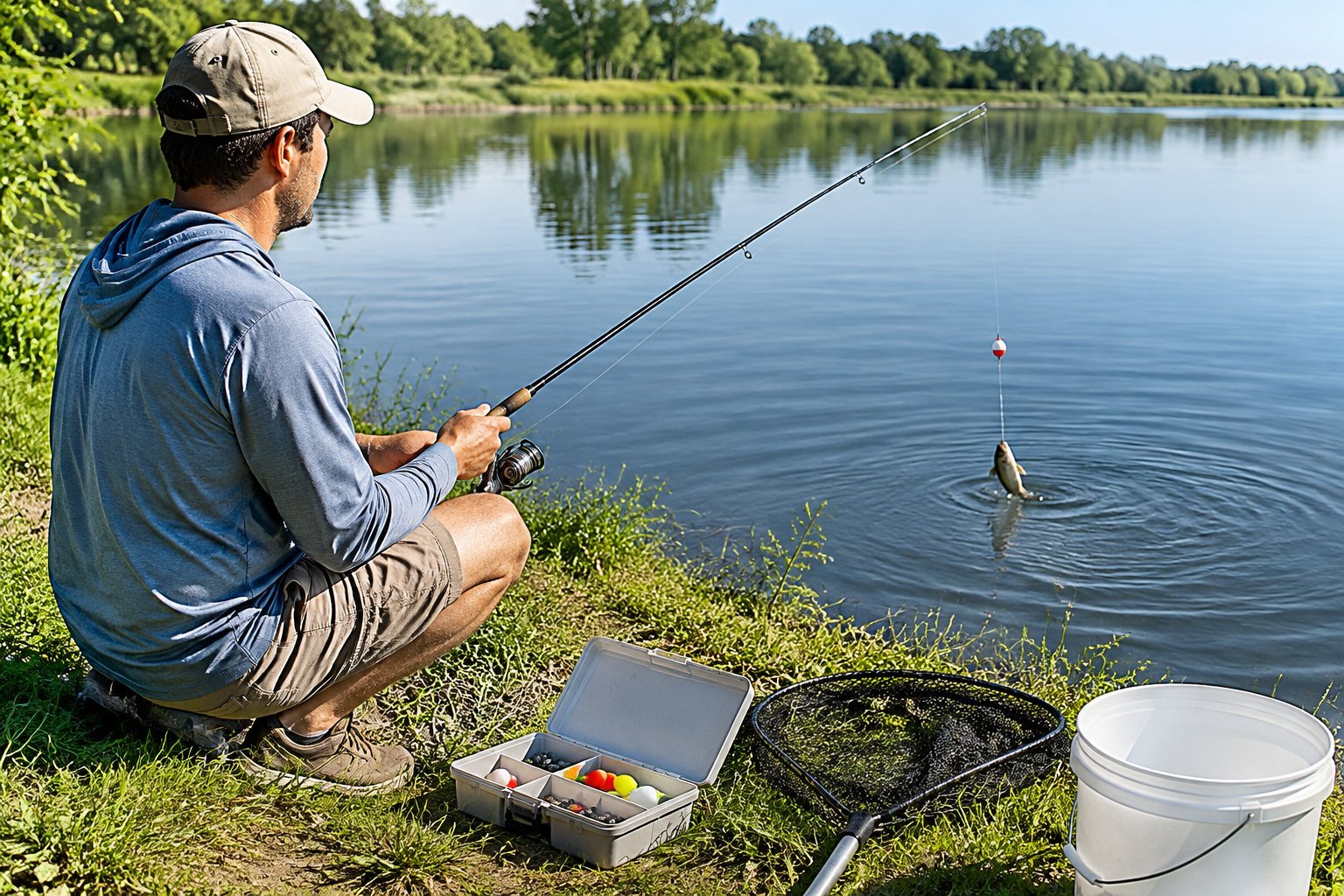
Light tackle paired with a spinning reel makes a simple, sensitive setup for bluegill fishing. Small hooks and light fishing line help you present a modest bait and notice the fish’s gentle taps.
Choose Light Tackle and a Spinning Reel
A light or ultralight rod with a small spinning reel is easy to cast from shore and comfortable for beginners to handle. Choose a rod that feels manageable in your hands, then spool it with light fishing line suited to the size of your hook and bait.
A spinning reel is straightforward to operate: open the bail, hold the line, cast, and close the bail to retrieve. Set the drag so line can pull out under pressure, which helps protect light line if a fish runs or your hook catches on weeds.
Match Small Hooks and Light Fishing Line
Bluegill have small mouths, so a small hook gives them a better chance to take the bait. A number 6 hook is a useful starting size for a simple bait rig; keep the hook point clear of excess bait so you can detect a bite and set the hook cleanly.
Fluorocarbon line is one option for a light leader. Tie a short leader to your main line if you want to replace a worn or tangled section quickly. Check the knot and hook point before casting, especially after pulling a rig free from vegetation.
Which Bait Works Best for a Simple Setup?
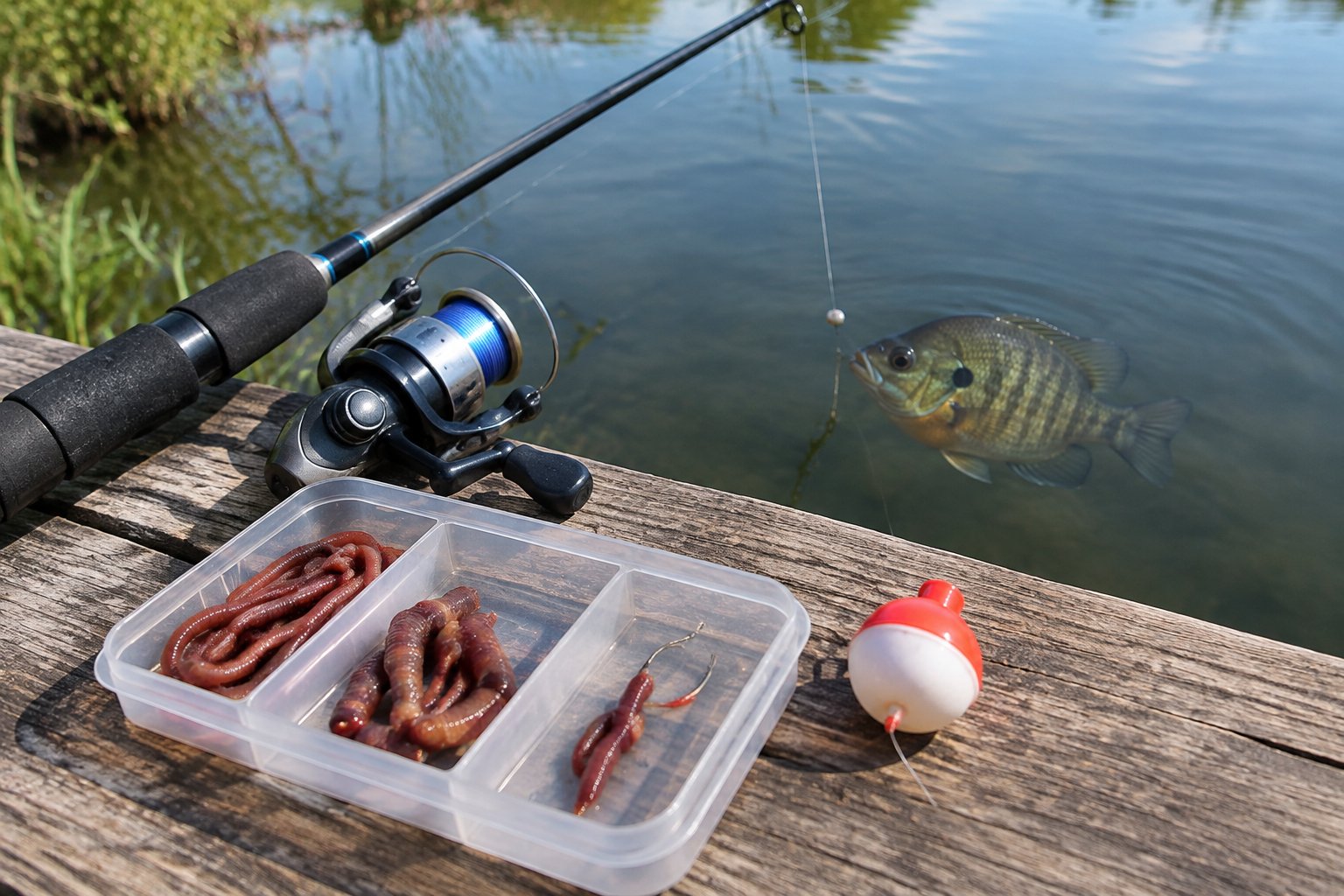
Live bait such as a small piece of worm or a cricket is an easy starting choice for bluegill. Keep the offering small enough for the fish to take, and change baits if you see repeated nibbles without a hookup.
Rig Worms, Nightcrawlers, or Crickets Under a Bobber
Thread a short piece of worm or nightcrawler onto a small hook, leaving a little bait exposed at the point. A whole nightcrawler can be too much for a small fish to take, so pinch off a manageable section. Crickets also work well on a small hook; handle them gently to keep them lively.
For a basic rig, tie on the hook, add a small split shot above it if needed, and attach a bobber so the bait hangs below the surface. Start with the bait about a foot below the float, then adjust the depth until you see bites. For more simple bait ideas, browse these bluegill baits.
Try Grasshoppers or Minnows When the Bite Changes
If bluegill ignore worms or crickets, switch to a small grasshopper or a minnow and keep the presentation close to cover. Use a small bait and hook that suit the fish and the local rules; local regulations may restrict baitfish use or transport.
Change one detail at a time, such as bait type or depth, so you can tell what prompted a bite. Keep live bait shaded and secured between casts, and return unused bait according to local rules.
How Do You Present Bait and Detect Bites?
Use a bobber to suspend bait at a controlled depth, then watch for a dip, tilt, or sideways movement. A simple float rig works for beginners, while small lures and other presentations help you cover water when fish are active.
Set the Depth With Bobber Fishing or Slip Floats
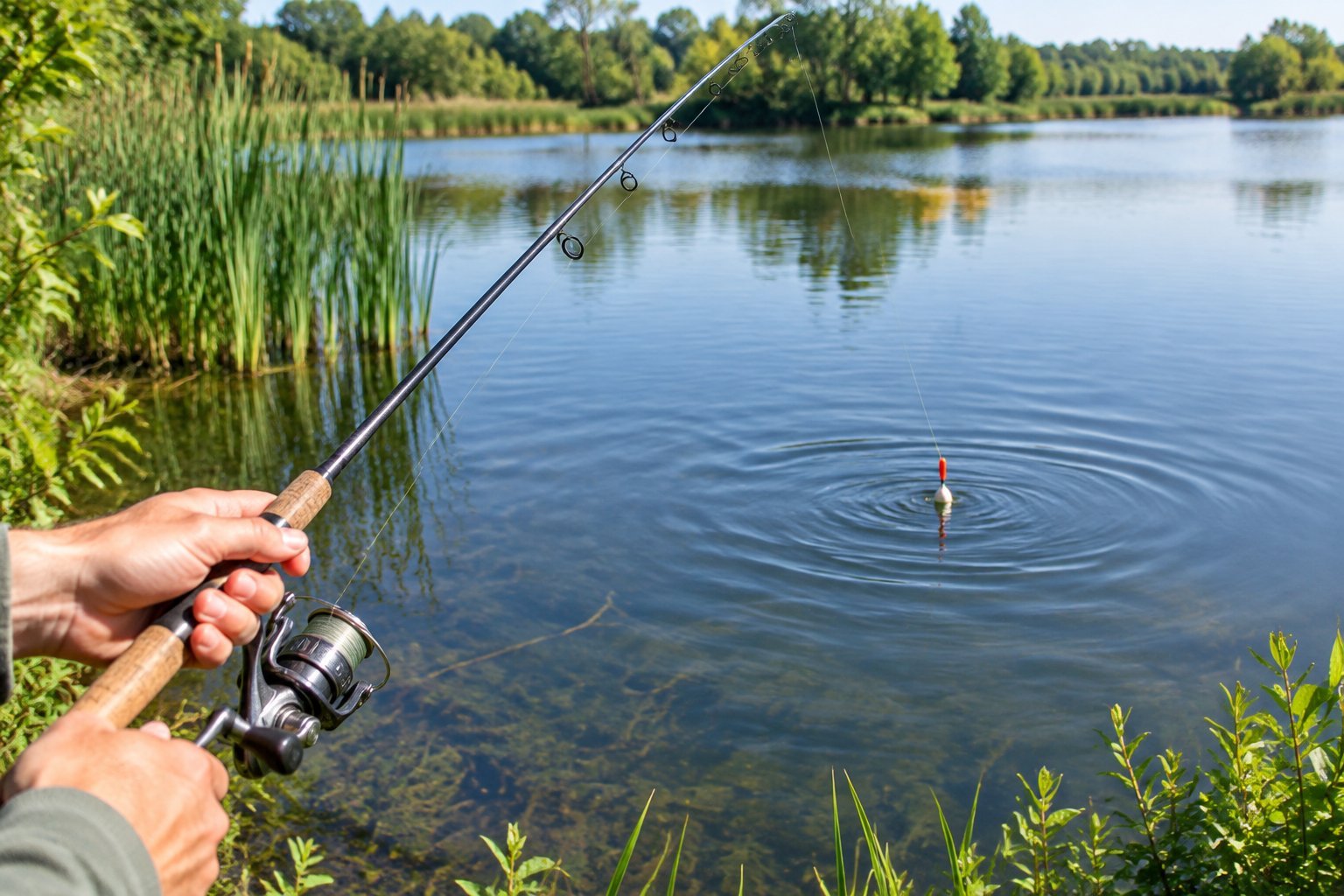
For basic bobber fishing, position the float so the bait hangs just above weeds or near the depth where fish are holding. If the bait rests on the bottom or catches plants, shorten the distance between hook and bobber. If you get no action, lower the bait farther.
Slip floats and slip bobbers let you set deeper presentations while keeping the rig manageable to cast. Move the bobber stop to change depth, and keep your casts close to weed lines or cover. When the float dips below the surface or glides sideways, lift the rod smoothly to set the hook.
Use Small Jigs and Other Lures for Active Fish
Small jigs and soft plastics, including tiny grubs, let you search a shoreline without rebaiting after each cast. Cast beside vegetation and retrieve slowly, adding a small twitch if the lure passes a likely holding spot without a strike. For more options, see these best bluegill lures.
Spoons, crankbaits, and lipless crankbaits can cover more water, though keep them small for bluegill. Drop-shotting presents bait or a lure below a weight, which helps when fish hold deeper. Fly fishing for bluegill also works with small, light offerings; choose a method you can manage from your bank space.
Adjust When Bluegill Nibble, Miss, or Stop Biting
If the bait disappears without a hookup, reduce its size and leave more of the hook point exposed. Watch the float closely and lift the rod as soon as it moves with purpose; waiting too long gives a fish more time to swallow the hook.
When bites stop, try a new depth first. If the float stays still, move along the bank to the next weed edge or opening, then switch bait or lure. Small changes make it easier to identify whether fish moved or lost interest in the presentation.
How Can You Make a Short Trip Work for the Whole Family?
Keep a ready-to-fish shore setup packed with a light rod, a bobber rig, and a small container of bait. A simple routine gives you more fishing time and helps kids stay involved while you handle hooks and line.
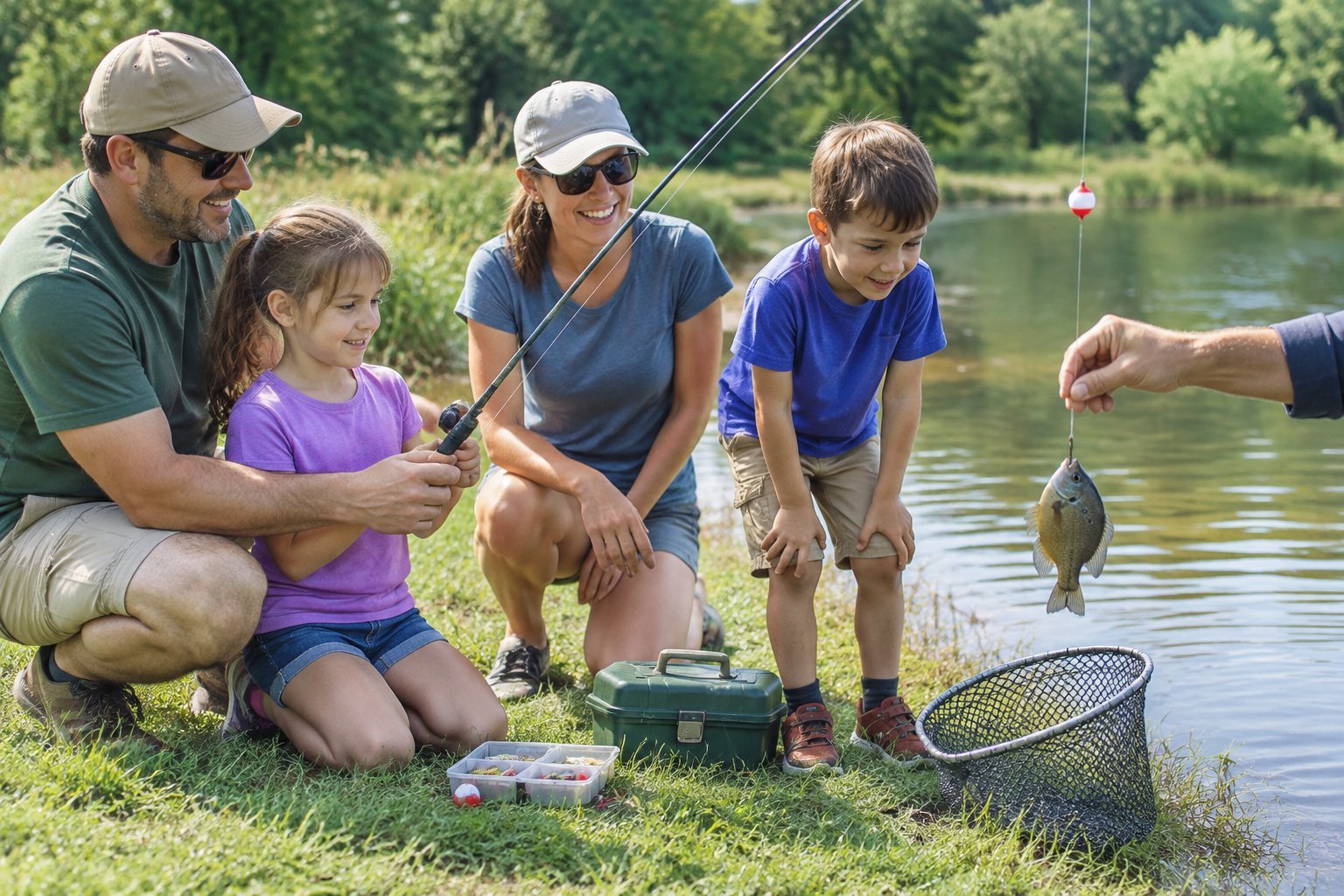
Pack a Ready-to-Fish Shore Setup
Store a compact tackle box with hooks, bobbers, split shot, and a few soft plastics beside your rod and reel. Add pliers, a towel, water, and a small bait container. Check that your fishing license and local rules are covered before you leave.
Choose a familiar bank with room to cast and a clear path away from the water’s edge. Keep hooks secured when you walk, and carry a small container for discarded line and bait packaging. A ready-to-go kit cuts setup time when you have a short window to fish.
Keep Kids Engaged With Simple Tasks and Quick Bites
Give children manageable jobs, such as holding the rod, watching the bobber, or helping choose the next fishing spot. Show them how to keep fingers away from the hook point, and handle baiting and hook removal when they need help.
Start near visible cover and use small bait so kids can notice the float and recognize a bite. Take a short break if attention fades, then move to another shoreline opening or wrap up while the trip still feels enjoyable. Get your gear ready and explore the related beginner-friendly guides before your next trip.