You fish with a bobber by hanging your bait at the depth where fish are feeding, casting it gently near cover, and watching the float for any dip, slide, or lift. For most beginners and kids on a pond or bank, a small fixed bobber with a light split shot and a worm on a small hook, set 2 to 4 feet deep near weeds or a dock, is the fastest way to start getting bites. The float does two jobs at once: it holds your bait in the zone and acts as a strike indicator you can see from shore.
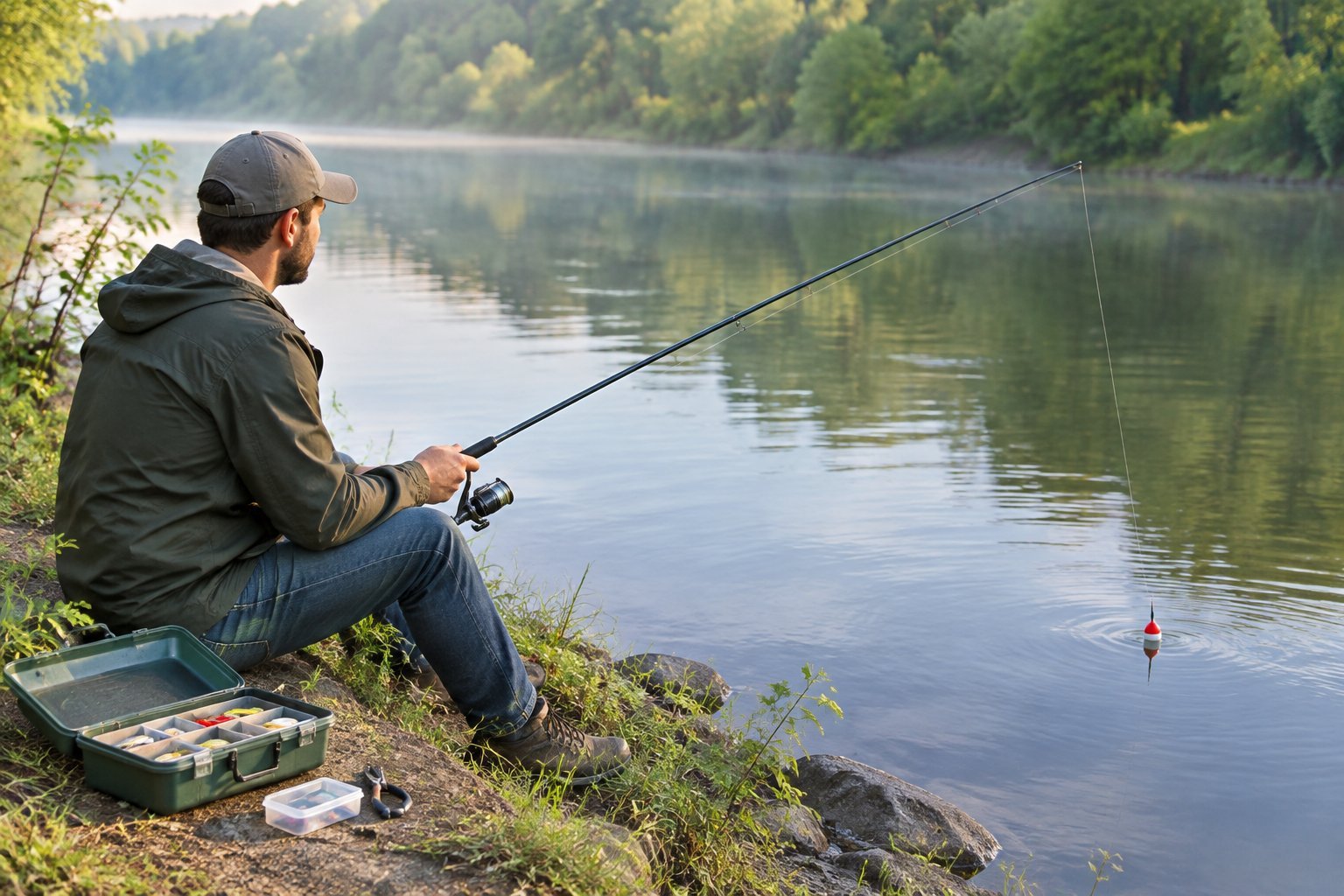
Bobber fishing works well for short trips before work, at lunch, or with your kids after school, because one good cast keeps fishing while you watch. Small choices make the difference between a float that sits for an hour and one that keeps going under: how deep the bait hangs, where it lands, and how you react when the bobber moves.
Which Bobber, Bait, and Tackle Should You Use?
A small float, a single split shot sinker, and a size 8 to 10 hook covers most panfish trips. Pick a fixed bobber for shallow water and a slip bobber once the depth gets longer than you can comfortably cast.
Fixed vs. Slip Bobbers: Which Fits Your Fishing Spot?
Fixed bobbers clip onto the line at one point and stay there. The classic red-and-white clip-on bobber and the round bobber are the easiest for kids to watch and adjust. They shine in water under about 6 feet.
Slip bobbers slide on the line and stop at a bobber stop you set. On the cast, the float slides down near the hook, so the rig stays short and easy to throw. When it lands, the weight pulls line through until the float hits the stop. A slip bobber fishing rig is the better tool for drop-offs, deep docks, or any spot deeper than 5 or 6 feet.
| Feature | Fixed bobber | Slip bobber |
|---|---|---|
| Best depth | Under 6 feet | 5 feet and deeper |
| Ease for kids | Very easy | Takes practice |
| Changing depth | Move the clip | Slide the stop |
| Casting long rigs | Tangles easily | Casts short and clean |
Choose a Small Float and Just Enough Weight
Use the smallest float that holds your bait up. A big bobber makes a fish pull hard before you see anything, and panfish often spit the bait when they feel that resistance. For bluegill, a 1-inch float is plenty.
A pencil float or slim slip float is more sensitive than a round one and cuts through wind chop better. Add split shot until about one-third of the float shows above water. Place it 6 to 12 inches above the hook. If you’re shopping for a first set, the best fishing bobbers for kids are the bright, small ones that stay easy to see.
Spool 4- to 8-pound monofilament fishing line. It floats, casts easily on a spinning or spincast reel, and handles any panfish or small bass that grabs the bait.
Keep Bait and Hooks Simple for Panfish
Live fishing bait is the easiest way to get bites. Good choices:
- Red worms or nightcrawler pieces: thread a 1-inch piece on so the hook point barely shows.
- Wax worms or crickets: great for bluegill that nip at bigger baits.
- Small minnows: best for crappie; learn how to hook a minnow through the lips so it stays alive.
A thin-wire Aberdeen hook in size 8 or 10 fits small mouths and bends free from snags. For crappie, swap the hook for small jig heads, such as a 1/32-ounce jig or a marabou jig tipped with a wax worm. The jig adds weight, so you often skip the split shot. Our fishing tackle for bluegill list covers the few extras worth carrying.
How Deep Should You Set Your Bait?
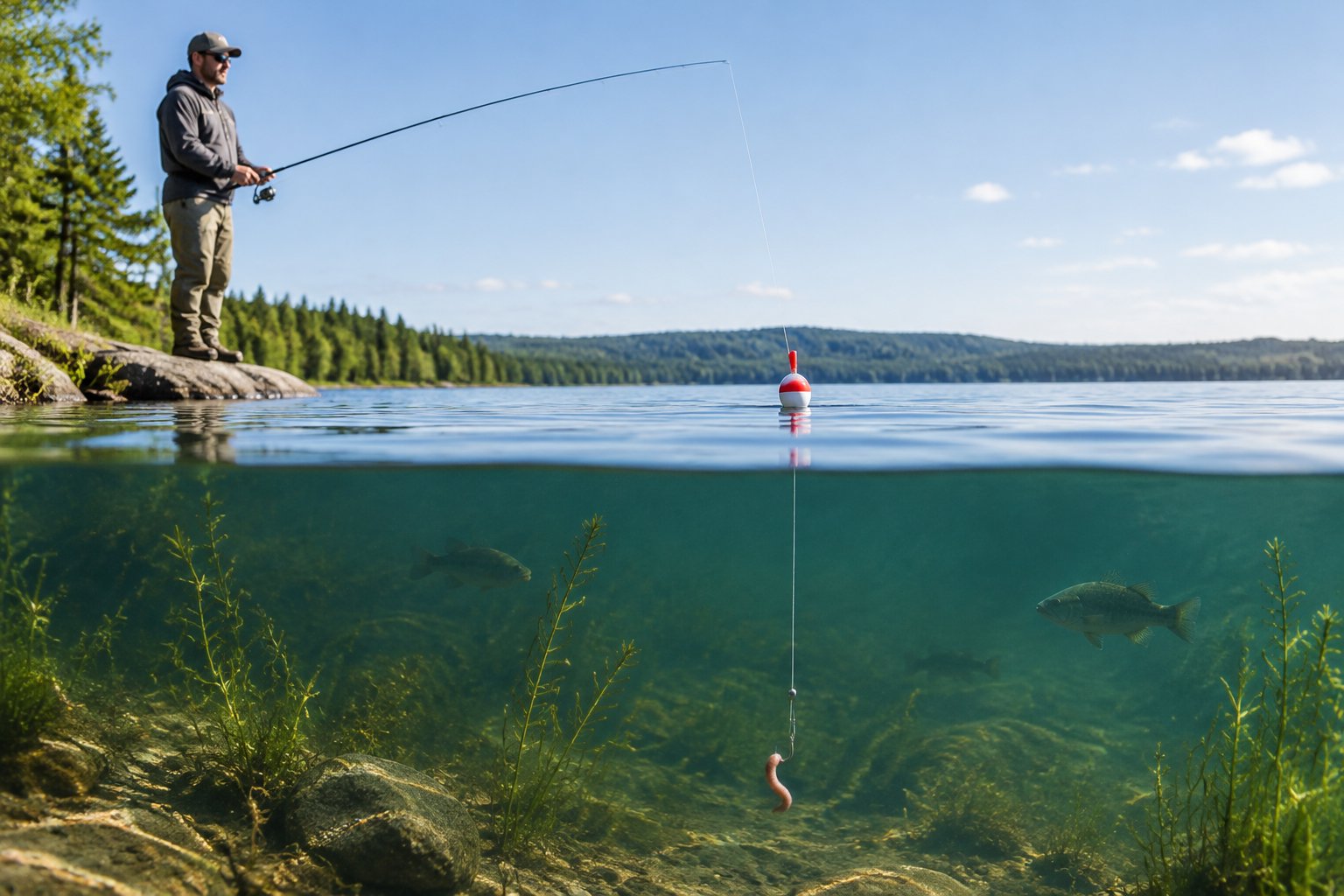
Set your bait just above the weeds or about a foot off the bottom, then adjust in small steps until fish respond. Fishing depth is the single setting that changes your results the most, and it costs nothing to change.
Start Above Weeds or Just off the Bottom
Fish hold near cover and the bottom, so start your bait 6 to 12 inches above whichever comes first. Bait buried in weeds or mud is hard for fish to find and hard for you to see bites on.
Good starting points:
- Shallow bank water: 1 to 3 feet.
- Open pond or lake water: 2 to 4 feet.
- Deeper docks or drop-offs: 4 to 8 feet, with a slip bobber rig.
To find the bottom, set the bobber deep and cast to a clean spot. If the float lies flat or tips sideways, your weight is touching bottom. Shorten the depth until the float stands upright again, then go up about another 6 inches.
Move the Bobber or Stop to Change Fishing Depth
Measure from the bobber to the hook, not to the sinker. That gap is how deep your bait hangs.
On a fixed rig, slide the clip up the line for deeper water and down for shallower. If you need a refresher on putting a bobber on a fishing line, get that step solid first. On a slip rig, move the bobber stops up to fish deeper. Bobber stops grip the line, so push them gently and they’ll hold where you leave them.
Search Different Depths When Fish Are Not Biting
If your bait comes back untouched after 5 to 10 minutes, change depth by 6 to 12 inches. Keep the same cast spot so you know depth was the only change.
Work down step by step until you get bites, hit bottom, or snag weeds. Fish sit shallower in low light at dawn and dusk and slide deeper under bright midday sun. When you hook one, note the depth and keep fishing it.
Where Should You Cast and How Should You Present the Bait?
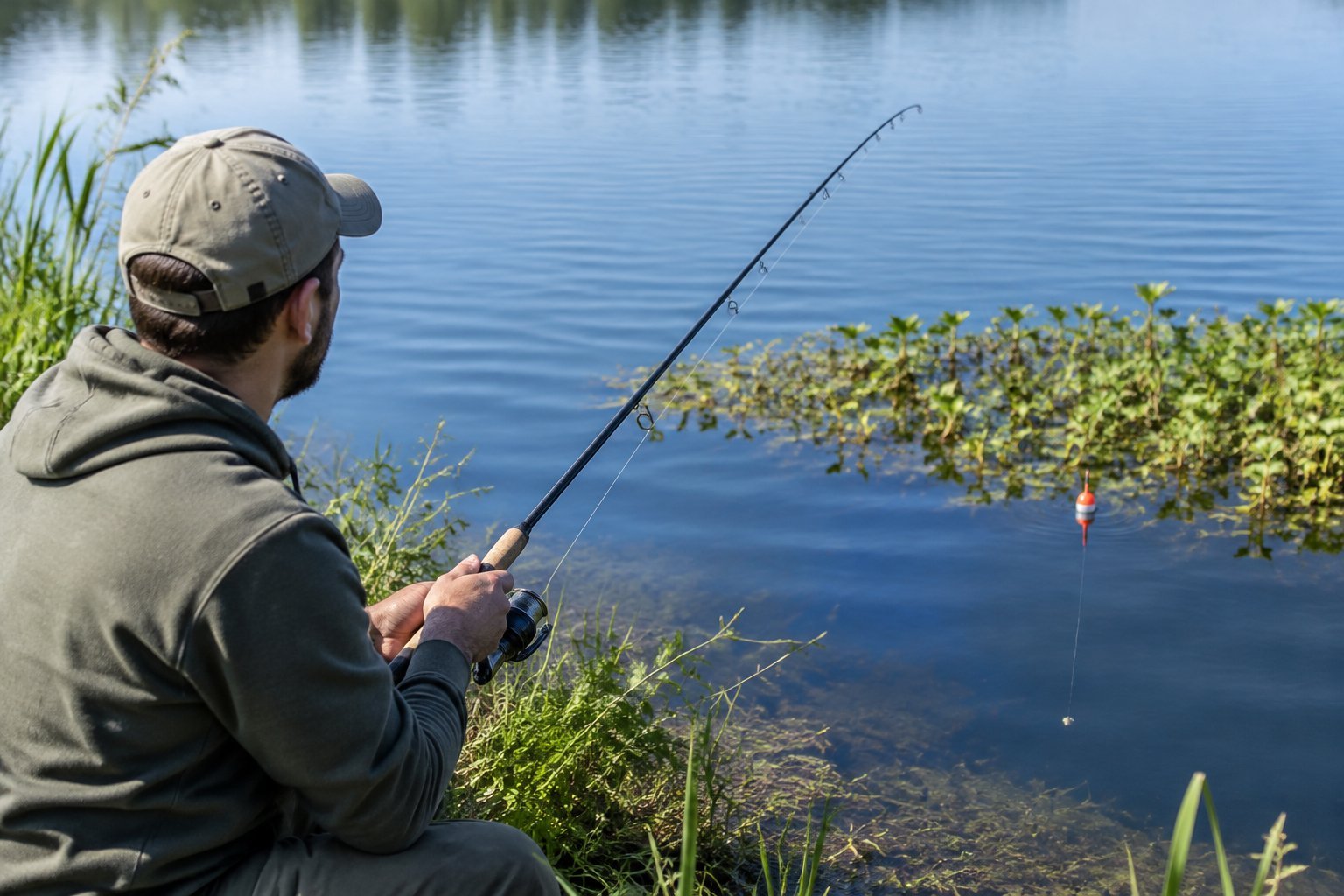
Cast close to cover, land the rig softly, and let the bait sit or drift naturally. Most missed opportunities in float fishing come from casting to open water far from where fish live.
Target Weed Edges, Dock Edges, and Nearby Cover
Fish hide along edges. Aim for these spots first:
- The outside edge of a weed line
- Shade lines under docks and overhanging trees
- Fallen logs and brush piles
- Points where the bottom drops from shallow to deeper water
Drop the bobber a foot or two outside the cover. Bluegill and crappie swim out to grab it. If you’re after bigger ones, the tips for catching big bluegill focus on these same edges.
Make Gentle Casts Without Tangling the Rig
Use a smooth, lobbing sidearm or overhead cast. A hard snap whips the hook around the float and tangles the line.
Leave about 1 to 2 feet of line between the rod tip and the bobber before you cast. Feather the line with your finger as the rig nears the target so it lands softly. Short, accurate casts beat long ones. If your casts feel clumsy, practice casting an open face reel in the yard with just a float tied on.
Manage Slack and Let the Bait Drift Naturally
After the rig lands, reel up the loose line until it runs fairly straight to the float. Leave a little sag so wind doesn’t drag the bobber toward you.
In a river or creek, let the current carry the float at its own speed. A bobber dragging against the current looks fake to fish. Keep your rod tip up and mend line upstream to keep the drift clean.
When Should You Leave the Bait Still or Add Movement?
Leave live bait still. A worm or minnow moves on its own, and fish come to it.
Add movement when bites stop or you’re fishing a marabou jig. Give the rod a light twitch, wait 5 to 10 seconds, and repeat. You can also reel a few cranks, pause, and let the jig swing back under the float. That small hop often triggers a fish that was only looking.
How Do You Read Bites, Set the Hook, and Land Fish?
Any movement that differs from the wind is a bite. The bobber is a strike indicator, and learning its signals is the most fun part of bobber fishing.
Recognize Dips, Sideways Movement, and Lift Bites
Watch for these signs:
- Bobber goes under: the classic bite. Set the hook.
- Quick dips and taps: a small fish pecking. Wait for a steady pull or slide.
- Sideways run: a fish swimming off with the bait. Set the hook.
- Float rises or lies flat: a “lift bite,” where a fish picked up the bait and took the weight off the float.
- Bobber moves against the wind: something is pulling it.
Watch your float for a minute with no fish around. You’ll learn how wind moves it, which makes the real bites stand out.
Reel Up Slack and Set the Hook Gently
When the float moves, reel in any slack first. Then lift the rod tip up and back in one firm, smooth motion. A big jerk tears small hooks out of panfish mouths.
With circle hooks, skip the lift. Reel steadily as the line tightens and the hook slides into the corner of the mouth. Circle hooks reduce deep hooking, which helps when you release fish.
Guide the Fish to a Net Instead of Lifting It by the Line
Keep the rod tip up and reel at a steady pace. Let the rod bend do the work.
For a small bluegill, swing it in close to shore. For anything bigger, slide a net under the fish headfirst. Lifting a heavy fish by the line snaps knots and bends hooks. A short-handled net is easy for kids to hold.
Unhook and Release Fish Safely with Kids
Wet your hands before holding a fish. Smooth the spiny top fin down from front to back, then grip the fish gently around the middle.
Use needle-nose pliers or a hook remover. If the hook is deep, cut the line close to the eye and let the fish go. When fishing with kids, let them hold and release the fish while you handle the hook. Return the fish to the water quickly.
What Should You Change When the Bobber Will Not Cooperate?
Change one thing at a time, starting with depth and weight. Most bobber problems trace back to a rig that’s out of balance.
Why Does the Bobber Sink or Lie Flat?
A bobber that sinks with no fish has too much weight. Remove a split shot or switch to a slightly larger float.
A float lying flat means your split shot sinker or bait is resting on bottom, or you don’t have enough weight. Shorten the depth first. If it still lies flat, add a small split shot until one-third of the float stands above water.
Why Do You Keep Missing Bites?
Missed bites point to three fixes:
- Hook too big: drop to a size 10 hook for bluegill.
- Bait too long: shorten the worm so fish can’t nibble the tail.
- Float too big: a smaller float lets fish take the bait without feeling resistance.
Constant tapping with no hookups usually means tiny fish. Try a slightly deeper fishing depth to reach larger ones.
How Can You Reduce Tangles and Wind Drift?
Long fixed rigs tangle on the cast. If your rig is longer than your rod, switch to a slip float with a bobber stop.
In wind, use a pencil float, cast with your back to the wind, and keep less line out. Placing a second small split shot partway up the line helps hold the bait steady. Fishing a protected shoreline helps too.
Use a Quick Reset Before Changing Spots
Before moving, run a 2-minute check:
- Reel in and look at the hook for weeds or missing bait.
- Check the line for twists or nicks near the knot. Retie if rough.
- Confirm the float still sits at your chosen depth.
- Try one more depth change and two casts.
If that brings nothing, walk 20 to 50 yards to new cover. The same tips for catching fish easily apply here: moving to active fish beats waiting on quiet ones.
Keep Your Next Fishing Trip Simple and Short
A basic bobber rig, a cup of worms, and 30 to 60 minutes is enough for a good trip. Bobber fishing rewards small adjustments more than more gear.
Before you go, remember the core steps:
- Pick a small float and add weight until one-third shows above water.
- Start 6 to 12 inches above weeds or bottom, then change depth in small steps.
- Cast softly to weed edges, docks, and shade.
- Set the hook on any dip, slide, or lift with a smooth upward lift.
- Net bigger fish and release them with wet hands.
Keep a pre-rigged rod in your car so you can fish before work or on the way home. A short list of gear for busy people fishing before work keeps that kit small. Dawn and dusk give you the best shot at active fish, and the morning vs evening fishing tips help you pick the window that fits your day. Be The Hero also offers a 10 step process to go fishing more often if your schedule keeps getting in the way.
Get your gear ready and explore the related beginner-friendly guides before your next trip.