For your first family kit, choose the Zebco 33 Micro Spincast Combo as your starting fishing tackle for bluegill: its push-button casting gives beginners a straightforward way to fish small natural baits. Add small hooks, a light float, split shot, and worms, and you have the core equipment for a short pond trip with your kids.
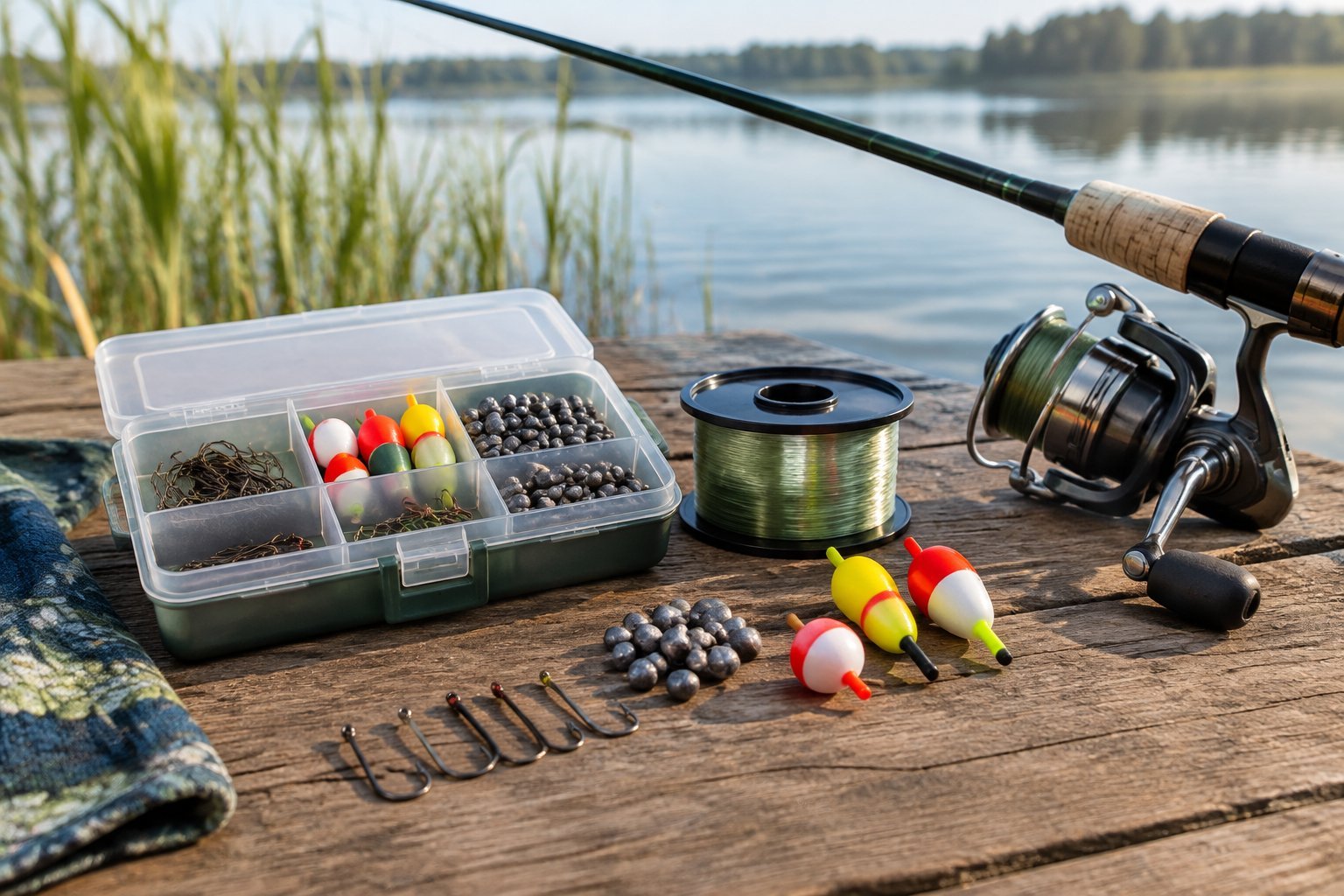
You save time by keeping a compact kit ready between outings. Buy around the gear you already own, share the accessories, and leave room in your budget for properly fitted life jackets when children come along.
Quick picks:
- Beginner starting point: Zebco 33 Micro Spincast Combo for push-button casting.
- Shared family organizer: Plano 3600 StowAway for small terminal tackle.
- Backup bait: Berkley Gulp! Alive! Waxies when live worms are unavailable.
1. Zebco 33 Micro Spincast Combo: A Simple Starting Point
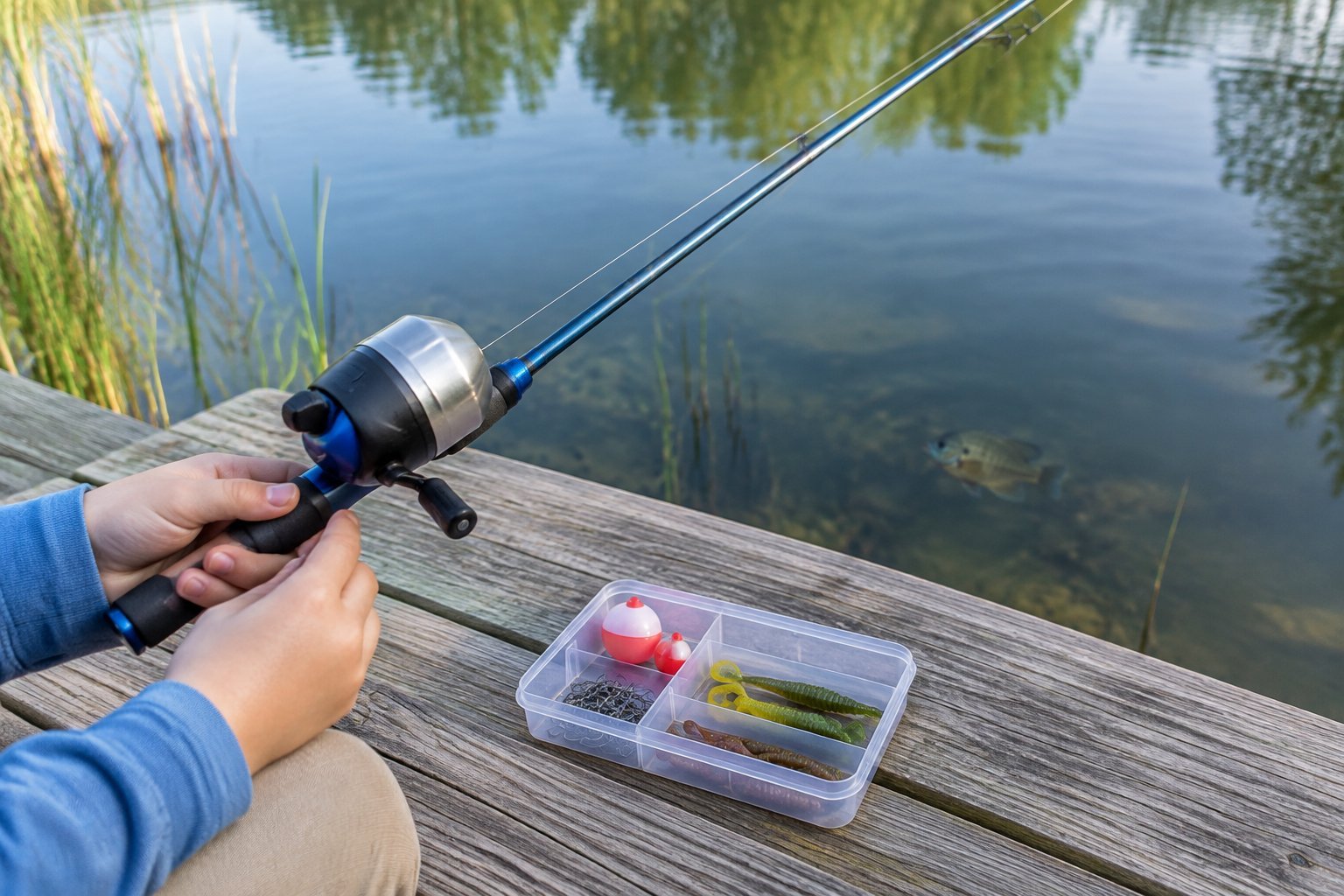
You get a straightforward starting setup with the Zebco 33 Micro Spincast Combo, especially when you want to teach push-button casting.
With a beginner spincast combo, you keep the initial casting lesson focused on pressing and releasing the button. Match the rod to your child’s reach, and check the exact package for rod length, line rating, and included line before ordering.
- Useful advantage: You buy a paired rod and reel together.
- Buying tradeoff: You should check replacement-line compatibility before choosing a spool.
Have your child hold the assembled combo before buying when possible. You want comfortable control of the grip without the rod feeling cumbersome.
2. Berkley Trilene XL Monofilament: Replacement Line
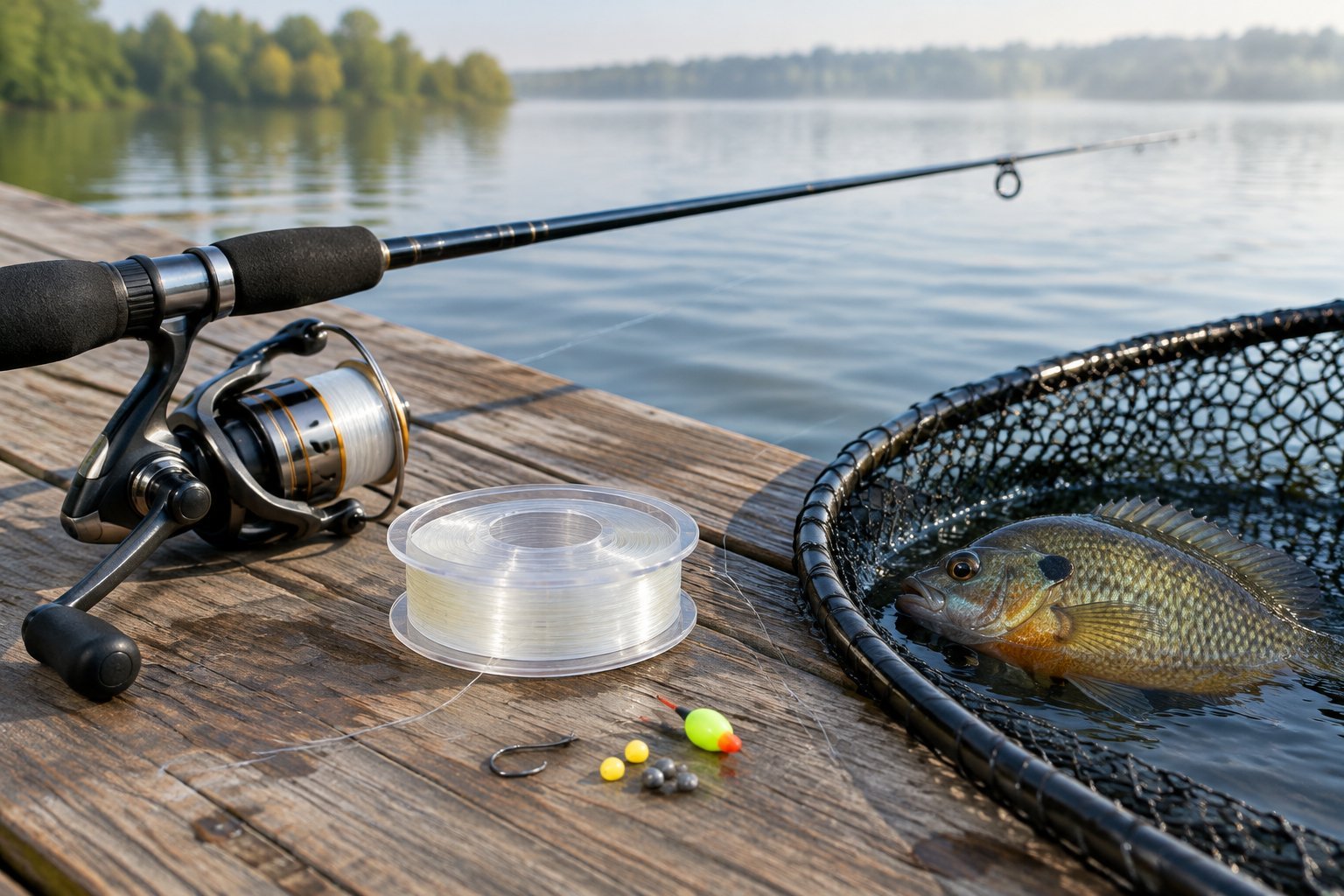
Keep Berkley Trilene XL on your replacement list when your reel’s existing monofilament becomes worn or too short.
For open-water bluegill fishing, consider 4-pound-test line if your rod and reel support it. Choose a heavier compatible rating when your fishing spot has cover that demands it. Follow the reel’s capacity marking during replacement.
You also have a familiar option if your family already uses a spinning reel: monofilament line for spinning reels keeps a basic freshwater outfit straightforward.
Buying tradeoff: Fresh, undamaged factory line lets you postpone this purchase. Check the line near the hook for roughness after snags, and remove damaged sections before your next cast.
3. Eagle Claw Aberdeen Hooks: Small Hooks for Natural Bait
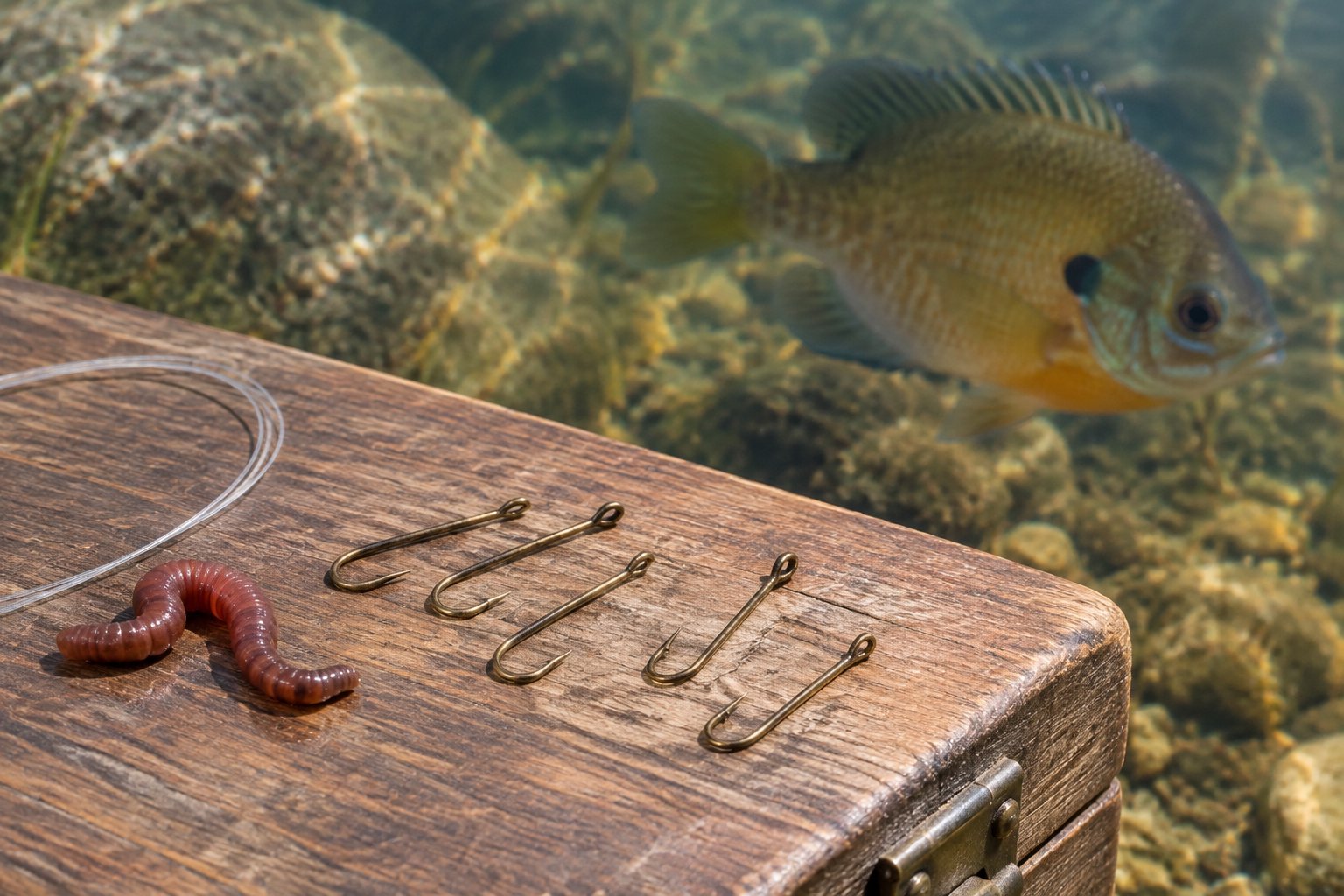
Choose small Eagle Claw Aberdeen hooks when you plan to fish worm pieces for bluegill.
Start with sizes #8 or #10, then match the hook to your bait and the fish you encounter. You get a longer shank with the Aberdeen pattern, giving an adult a more accessible place to grip during routine hook removal.
When choosing fishing hooks for beginners, buy a small packet in a useful size. A large assortment adds sorting work and leaves you carrying sizes you seldom need.
Keep the hook point exposed when baiting. You should handle baiting and unhooking until your child has the coordination and attention to manage sharp tackle safely.
4. Thill America’s Favorite Spring Float: Easy Bite Watching
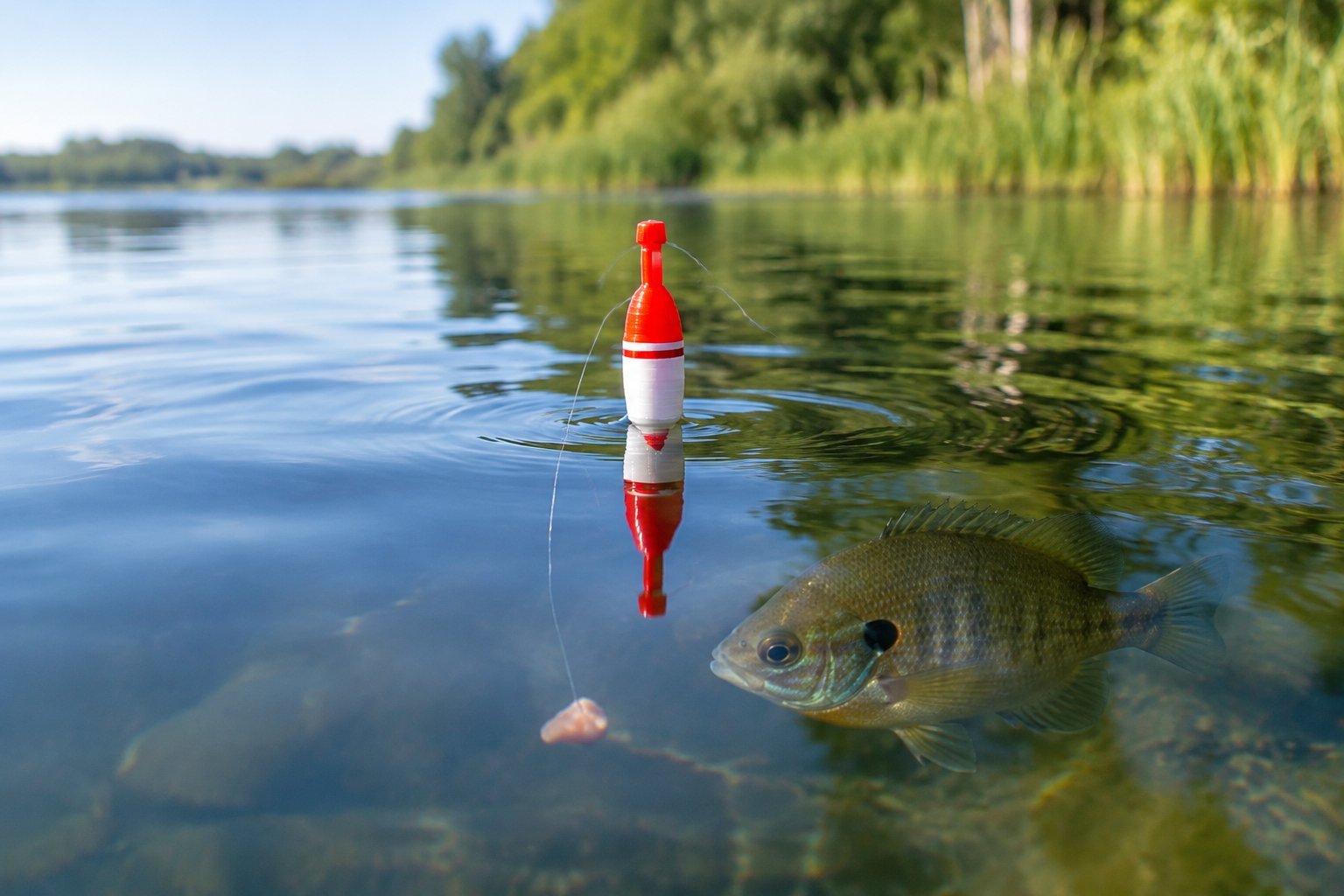
A Thill America’s Favorite Spring Float gives you a visible bite indicator for relaxed bank fishing.
Choose the smallest size that supports your bait and sinker while remaining easy for your child to see. An oversized float adds resistance when a bluegill takes the bait, making subtle bites harder to read.
You get convenient depth adjustment from the spring attachment. Check that the attachment holds securely before casting, and inspect the line at the contact point during your outing.
Buying tradeoff: Buy a couple of matching floats for your usual pond conditions. You gain a spare without filling the tackle box with several unfamiliar styles.
5. Water Gremlin Removable Split Shot: Adjustable Weight
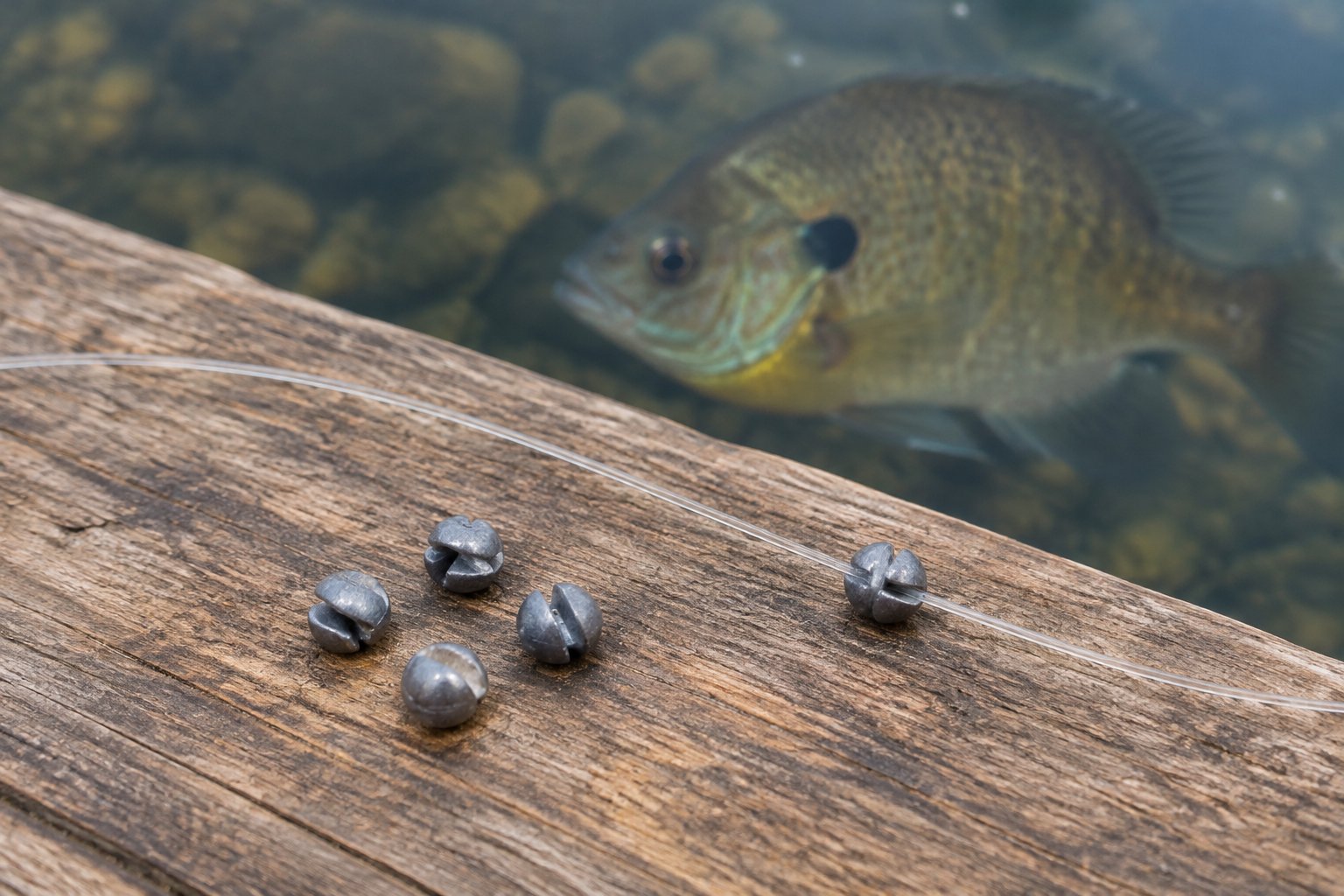
Use Water Gremlin Removable Split Shot to add small amounts of weight to your float-fishing setup.
Start with the lightest shot that settles your bait and leaves the float riding properly. You need enough buoyancy remaining to see a bite clearly. With a removable style, you have a way to adjust the weight as conditions change.
Apply and remove shot with an appropriate tool under adult control. Keep sinkers out of children’s mouths, and collect loose pieces immediately.
Buying tradeoff: A compact selection of small sizes serves a bluegill kit well. Check the package material and your local restrictions before purchasing, particularly where lead tackle rules apply.
6. Berkley Gulp! Alive! Waxies: A Backup to Live Bait
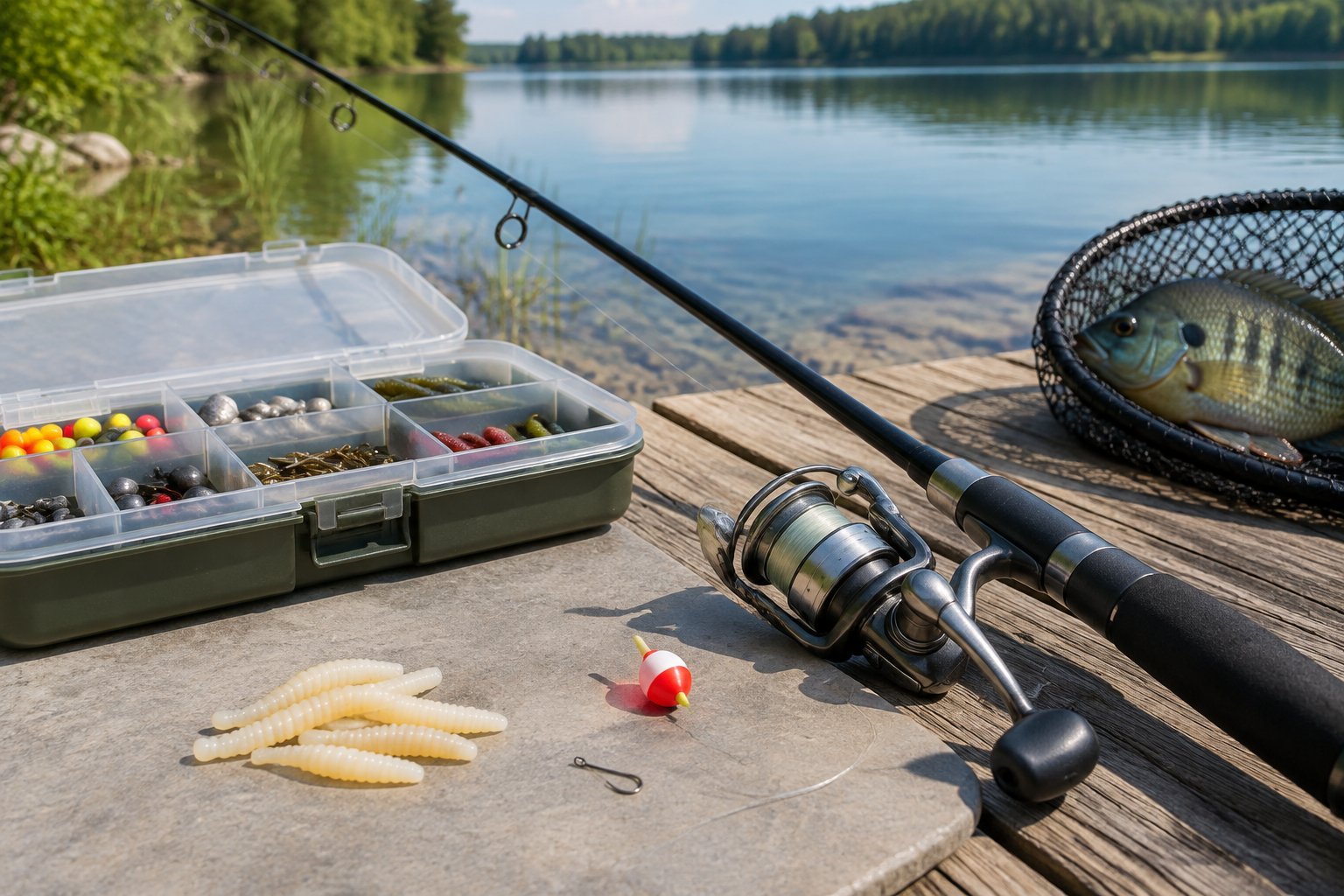
Pack Berkley Gulp! Alive! Waxies when you want a prepared bait option that saves a live-bait stop.
You get a scented waxworm-style bait to try on a small hook. Use a modest amount so a bluegill has room to take the bait and hook together. Keep the container closed and follow the storage instructions on its label.
Your bluegill bait choices should match what you can reliably bring to the water. Live worms remain a practical starting choice, while prepared bait earns its place when convenience helps you make the trip.
Buying tradeoff: Add this after your basic tackle is covered. You still need to check local rules governing bait use.
7. Dr. Slick Scissor Clamp: An Adult-Handled Unhooking Tool
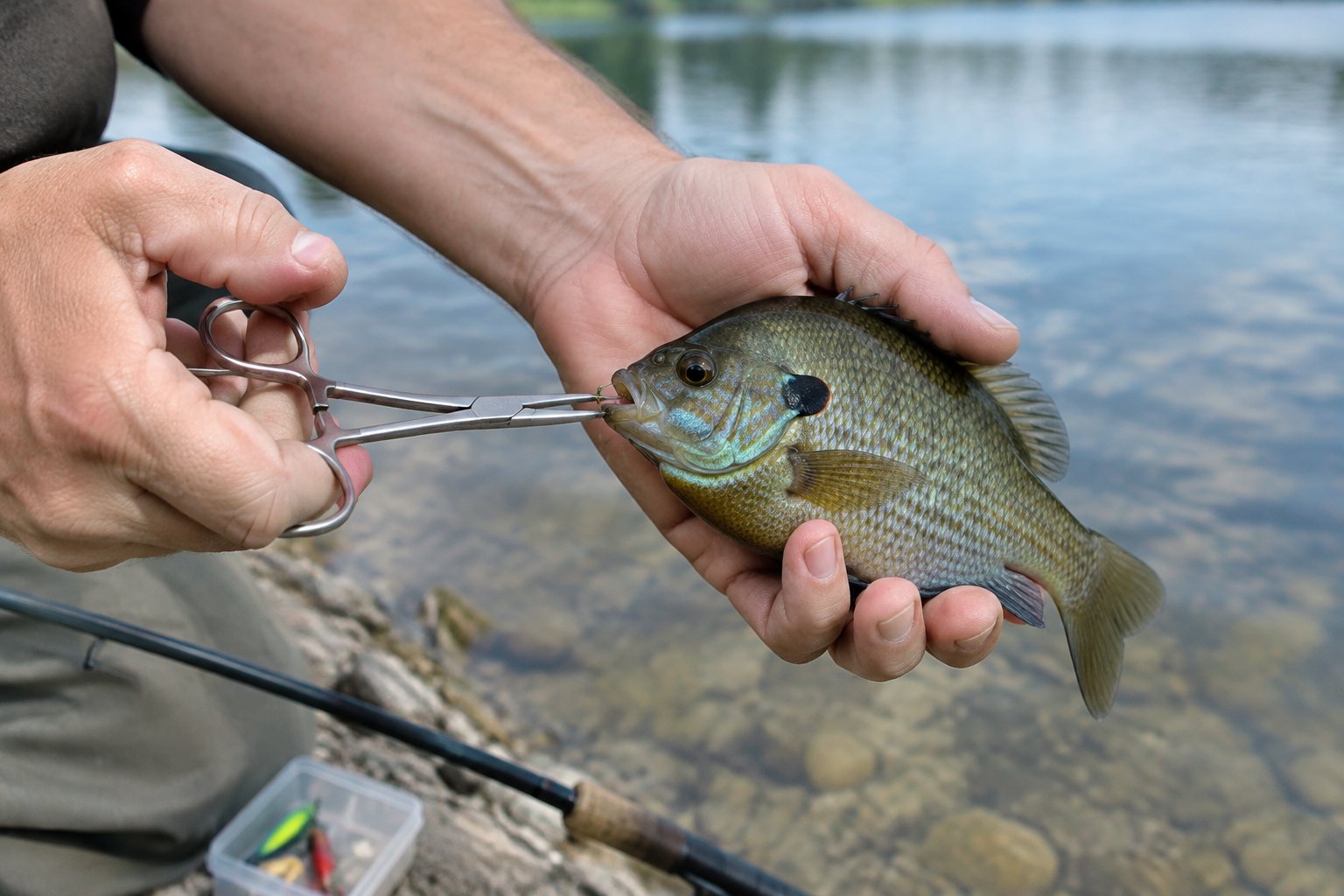
Reserve the Dr. Slick Scissor Clamp for adult-controlled hook removal and small tackle tasks.
You get gripping jaws and a cutting function in one tool. Keep the working end accessible in your kit while shielding it from children’s hands. Practice opening and releasing the clamp before your trip so you can operate it without fumbling beside a fish.
When choosing a fishing hook remover, prioritize controlled access to small hooks.
Wet your hands before handling a bluegill and support its body. If a hook is deeply swallowed, avoid forceful probing; cut the line close when removal would cause additional injury. Follow applicable release or harvest rules.
8. Plano 3600 StowAway: Shared Family Tackle Storage
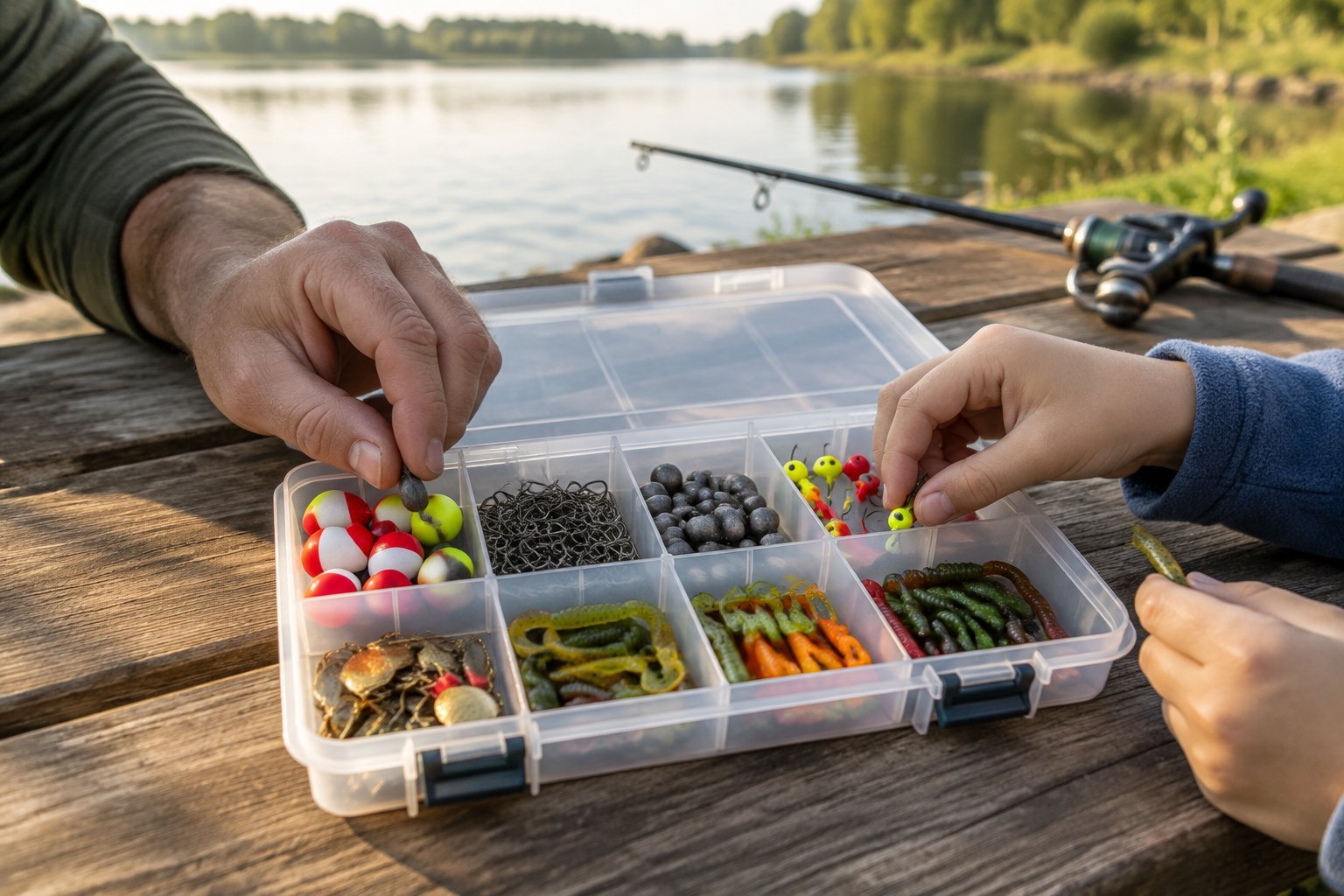
Use a Plano 3600 StowAway as your shared organizer for hooks, floats, and other small tackle.
Select a configuration with compartments that suit your supplies. Keep hooks in their packets or a secure inner container, and separate them from items your child is allowed to retrieve.
You make a beginner fishing kit easier to maintain when every item has a fixed place. Leave live bait and liquid bait containers outside the dry terminal-tackle compartments.
Buying tradeoff: Reuse a sound tackle box if you already have one. After each outing, remove wet tackle and let it dry before closing the box for storage.
9. Magic Products Bait Saver: A Container for Live Worms
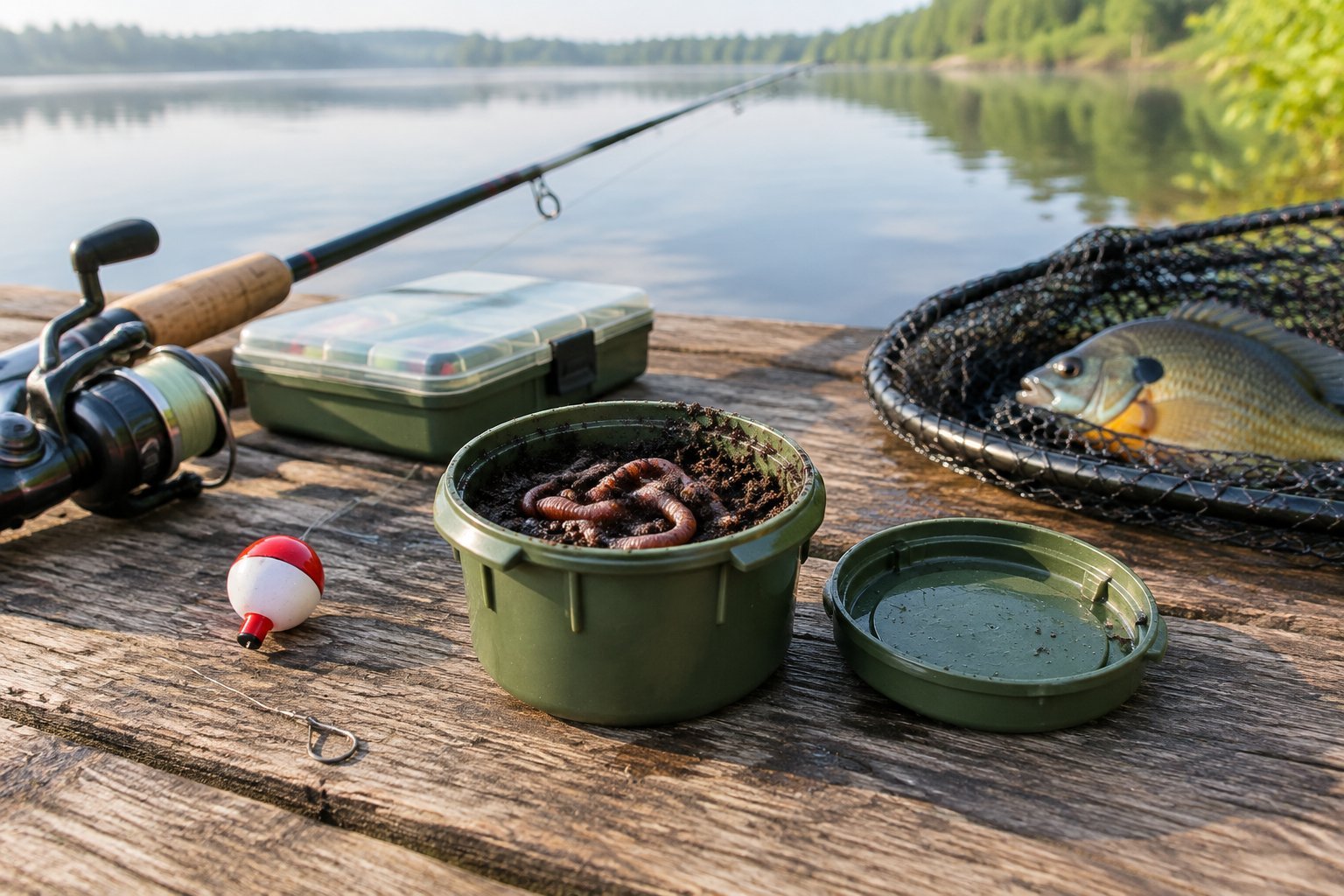
Consider a Magic Products Bait Saver when live worms become part of your regular fishing routine.
Choose the version intended for the bait you plan to carry, and follow its bedding and storage directions. Keep your worms shaded and cool without freezing them. Bring a modest quantity for a short family session.
You should check the lid before putting the container in your bag. Store it where it stays upright and where your child can access it only with permission.
Buying tradeoff: A suitable container supplied with purchased worms serves occasional trips. Upgrade when repeated outings make a reusable bait container worthwhile, and dispose of unused bait according to local guidance.
10. Frabill Floating Trout Net: An Optional Landing Aid
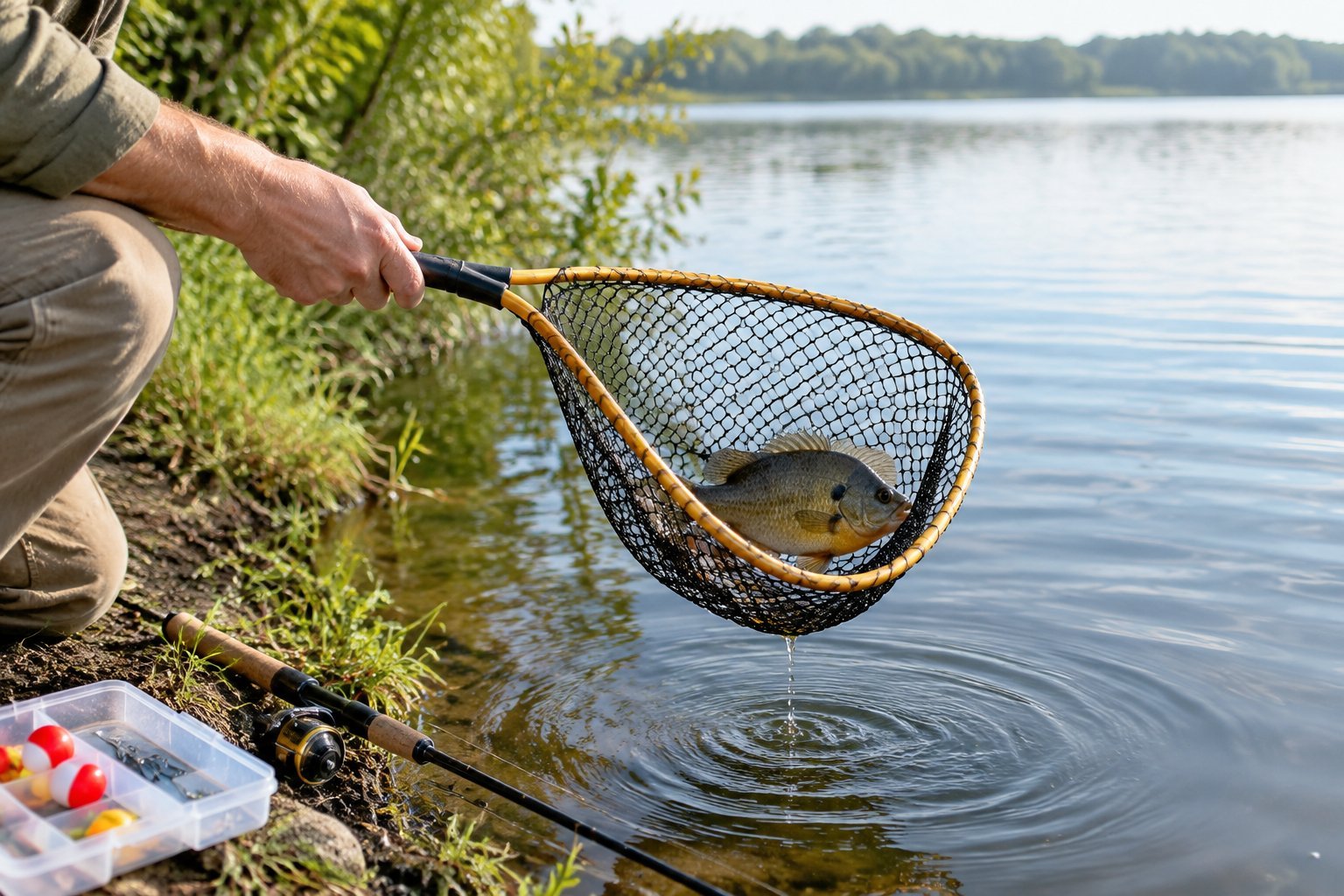
Add a Frabill Floating Trout Net when your bank position makes landing fish awkward.
You gain an aid for bringing a fish within reach while keeping your child back from the edge. Check the specific model’s handle reach and mesh before buying. For catch-and-release fishing, choose fish-friendly mesh and keep handling brief.
A floating design helps you recover a dropped net when it remains within safe reach. You should never enter unsafe water to retrieve equipment.
Buying tradeoff: Skip this purchase for an accessible shoreline where you can safely bring bluegill close. Add it when the landing area creates a clear need, while keeping everyone away from unstable banks.
How to Build a Smaller Family Bluegill Kit
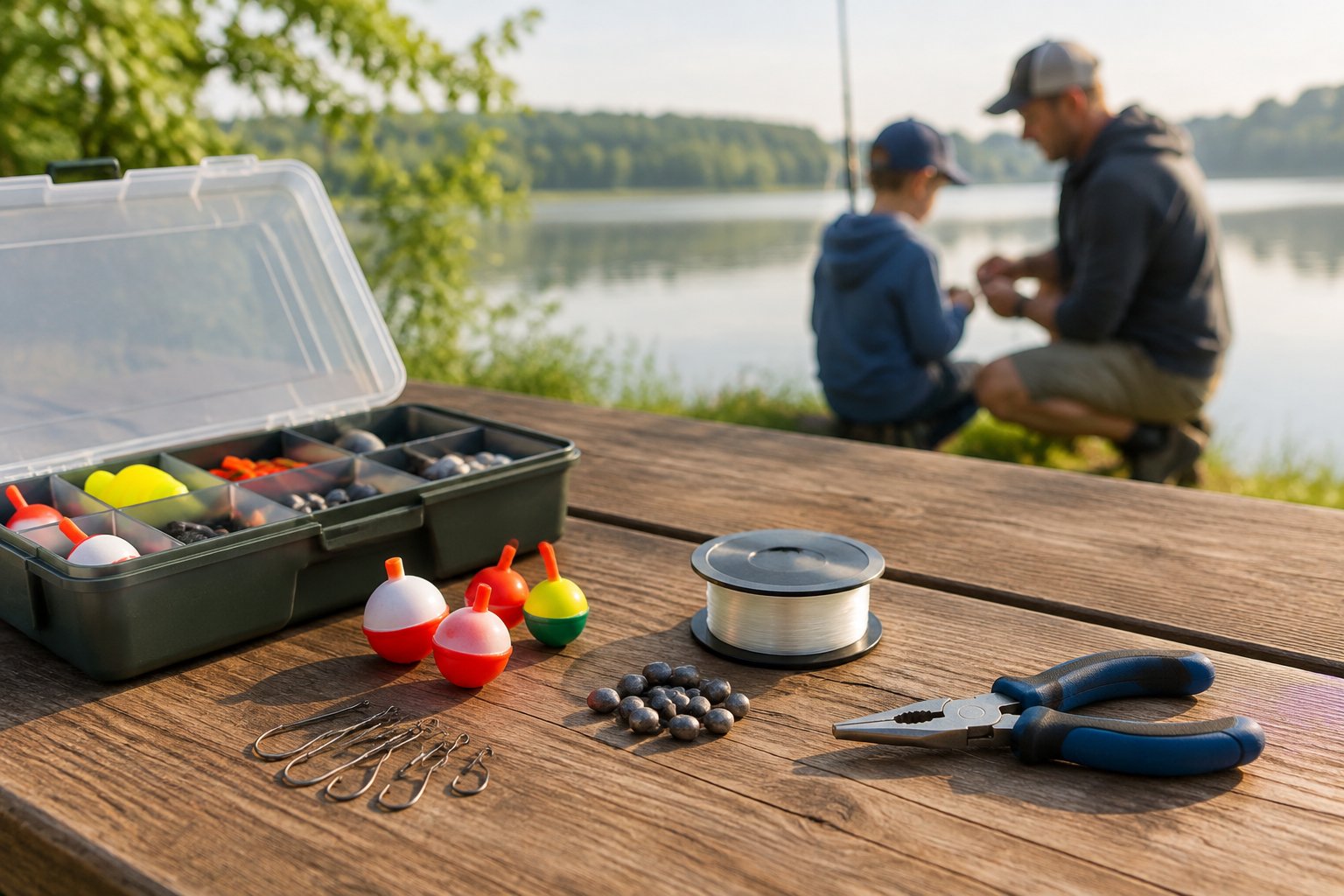
Build your smaller kit around the equipment needed to fish, then add convenience items as your trips become regular.
| Pick | Job in your kit | Purchase priority | Family sharing |
|---|---|---|---|
| Zebco 33 Micro Spincast Combo | Casting outfit | Essential category | Take turns |
| Berkley Trilene XL | Replacement line | Conditional | One spool |
| Eagle Claw Aberdeen Hooks | Hold natural bait | Essential category | One packet |
| Thill America’s Favorite Spring Float | Show bites | Essential for float fishing | Spare supply |
| Water Gremlin Removable Split Shot | Add weight | Essential for weighted float setup | One pack |
| Berkley Gulp! Alive! Waxies | Prepared backup bait | Optional | One container |
| Dr. Slick Scissor Clamp | Hook removal | Essential tool category | Adult-controlled |
| Plano 3600 StowAway | Organize tackle | Reuse or buy | One box |
| Magic Products Bait Saver | Carry live worms | Conditional | One container |
| Frabill Floating Trout Net | Assist landing | Optional | One net |
Which Purchases Are Essential, Conditional, or Optional?
Your essential categories are a working rod and reel with suitable line, hooks, bait, and a safe unhooking tool. For float fishing, include a float and suitable weight. You can fill these categories with equipment you already own.
Treat replacement line and a dedicated worm container as condition-based purchases. Backup bait and a landing net come later, once you know what your usual fishing spot requires.
Choose a bluegill fishing rig before buying extra terminal tackle. You avoid purchasing sinkers and attachments that serve no purpose in your chosen setup.
What Can the Family Share, and What Does Each Child Need?
Share your tackle box, bait supply, replacement line, and adult-handled tools. Keep the sharp items under one responsible adult’s control so you always know where they are.
Give each child a correctly fitted life jacket where water exposure warrants one, along with appropriate sun protection. Each child fishing simultaneously needs a manageable rod-and-reel outfit.
For your first outing, taking turns with one rod reduces the number of exposed hooks you supervise. Add another outfit when you are comfortable managing the casting space.
When Is Borrowing or Reusing Gear the Better Buy?
Borrow or reuse an outfit when it works properly and fits the person using it. Check the guides for damage, operate the reel, and inspect the line before your trip.
You have a useful head start if you already own an ultralight fishing setup for small ponds. Check its line rating and condition before buying another combo.
A loaner also lets your child try the grip and casting method before you commit. Ask about library or parks-department fishing-equipment loans in your area.
Which Kit Choices Fit Your Next Trip?
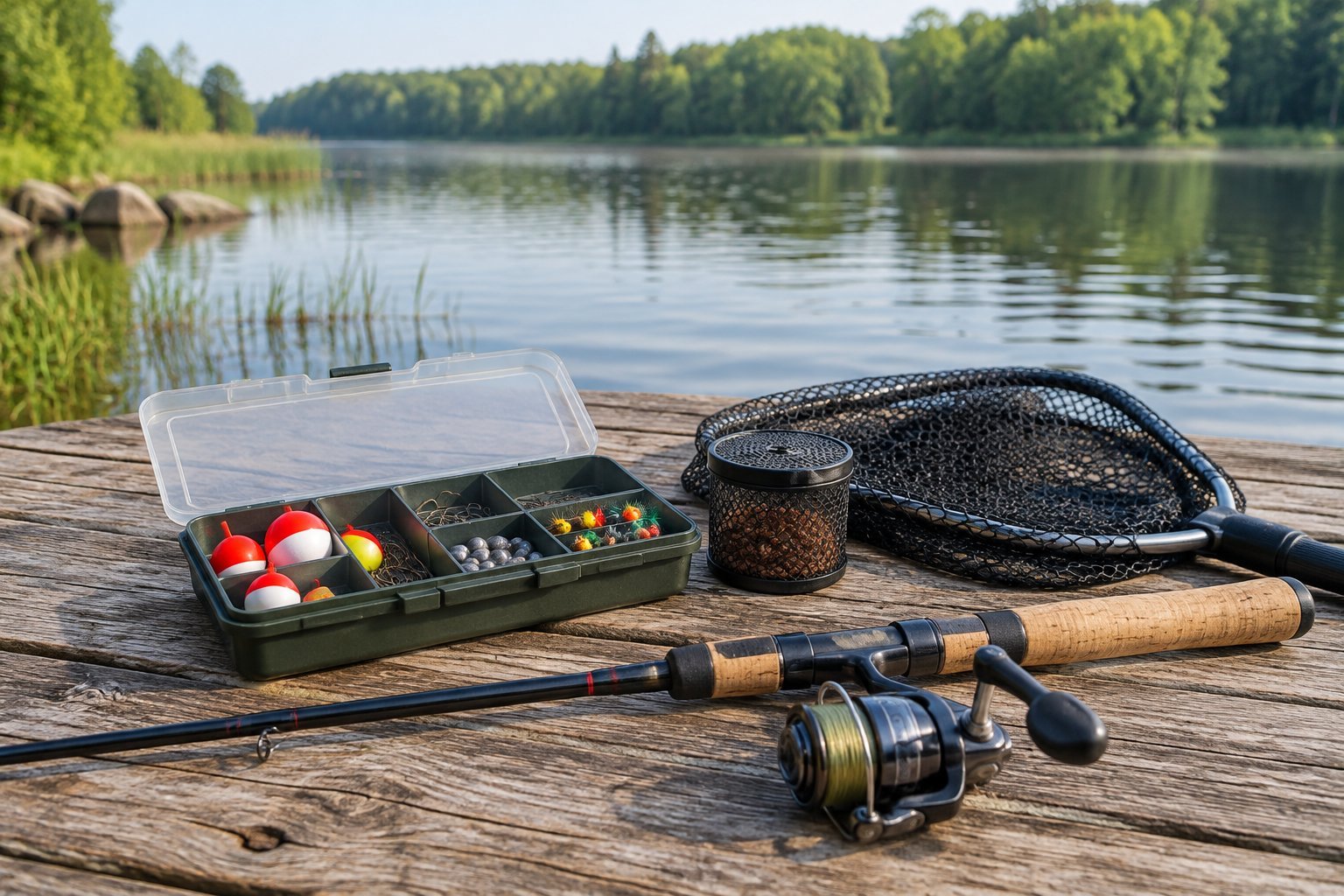
Match your packed gear to your access point and the amount of supervision your trip requires.
What Should a Beginner Buy First?
Buy or borrow one manageable combo, then fill the essential tackle categories in small quantities. Choose a single hook size and float style so your first shopping trip stays focused.
Before leaving home, practice casting a hookless practice plug in a clear area. Check the drag and learn how to retrieve line smoothly.
Keep your early bluegill fishing approach focused on accessible water and short sessions. You will have fewer tasks competing for your attention while you learn the equipment.
What Should Stay Packed for an After-Work Pond Trip?
Keep your dry tackle and tools together in one ready-to-carry bag. Store the rod where it stays protected from crushing, and keep hooks secured during transport.
Use a short departure check: rod, tackle box, bait, water, and any required license. Add live worms shortly before leaving, and check prepared bait against its storage directions.
After the trip, replace used hooks or damaged floats while the missing items are fresh in your mind. Dry wet equipment before repacking.
What Changes When Young Children Come Along?
Reduce the number of active rods and choose a clear bank with dependable footing. Position yourself close enough to control the hook during baiting and to stop an unsafe cast.
Give your child a specific job, such as watching the float or handing you the closed bait container. Keep casting lanes separated from other people.
Pack drinking water and spare clothing, and plan an easy stopping point. Finish when your child loses focus around hooks or the water’s edge.
What Safety and Local Rules Should You Check?
Check your state fish and wildlife agency’s current license requirements, including youth exemptions, before fishing. Review bluegill harvest limits, bait restrictions, and any rules specific to your chosen water.
Confirm park hours and shoreline access, particularly for an evening trip. Check posted fish-consumption advisories if you plan to keep your catch.
Keep a basic first-aid kit available, watch for changing weather, and use properly fitted life jackets around docks, steep banks, or deep water. Store every loose hook before you walk back to your vehicle.
Check the current price and customer reviews for the Zebco 33 Micro Spincast Combo before your next fishing trip.