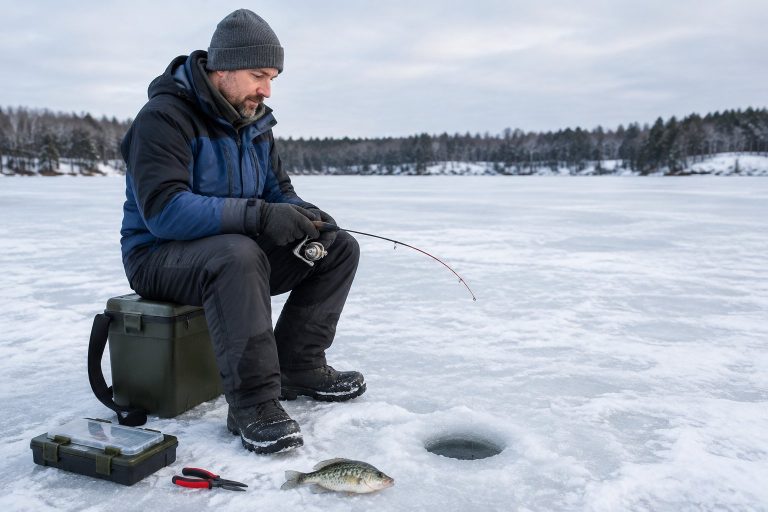
Most fishing line tangles come from one of three problems: line twist, loose loops that get wound onto the spool, or baitcaster backlash. The fastest fix is to name the tangle first, then use the matching step: let twisted line unwind with the rig removed, pull loose loops off a spinning reel with the bail open, and ease out a bird’s nest on a baitcaster with the spool released and your thumb guiding it. Pulling hard on a knot only makes it tighter.
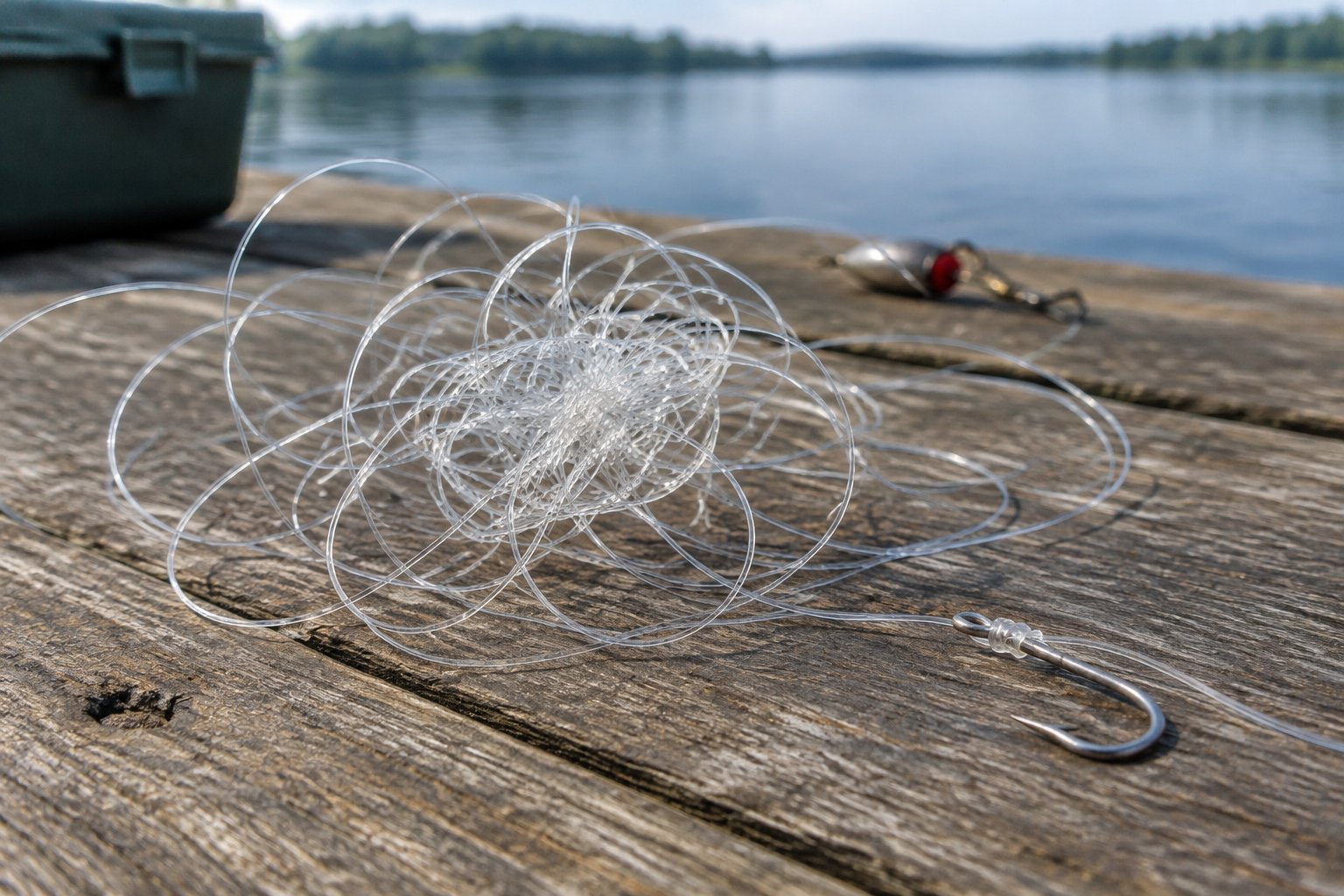
Prevention is mostly setup work you do at home. Spool the reel with steady tension, leave a small gap below the rim, and build a few casting habits. Do that and a 45-minute trip before work or with your kids stays a fishing trip, with very little time spent picking at knots.
Is It Line Twist, Loose Loops, or Backlash?
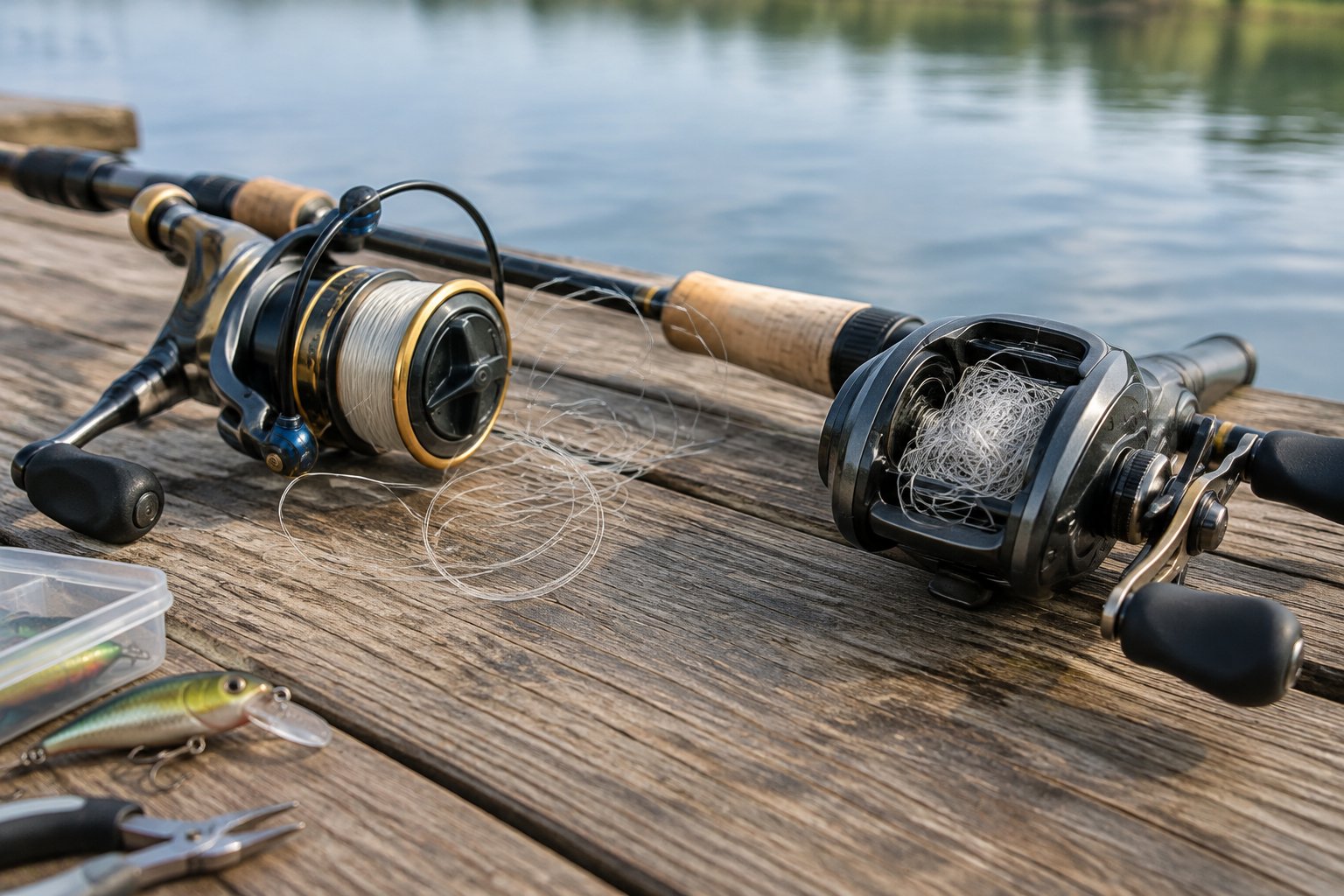
You can tell these apart by where the mess shows up. Twist makes curly line that wraps around itself when it goes slack. Loose loops sit inside the packed line on a spinning reel and fly out on the next cast. Backlash is a puffy bird’s nest on a baitcaster spool.
Line Twist: Slack Line Spins Back on Itself
Line twist works like a rubber band you keep turning. It stays straight while tight. Once you let it go slack, it kinks and spins into little pigtails and loops.
Look for these signs:
- Line coils into spirals when you drop the rod tip.
- Your lure spins in the air while you reel it in.
- The line wraps around itself between the rod tip and the lure.
The usual causes are spinning lures like in-line spinners, a crooked soft plastic, and reeling while the drag slips. On a spinning reel, letting the handle flip the bail closed adds a small twist on every cast. Over a morning of casting, those small twists add up.
Loose Loops and Wind Knots: Slack Gets Wound onto the Spool
Wind knots start when slack line gets wound onto the spool. Wind can bow your line, a lure can land with no tension, or you might start reeling before the line is tight. A loose loop then gets buried under tighter wraps.
On the next cast, that buried loop leaves the spool with a clump of line on top of it. You see a small knot or a big wad hanging near the first rod guide. Spinning reels get most of these, and braid makes them worse because it is so limp. If you are still learning how to cast an open face reel, loose loops are the tangle you will see most often.
Baitcaster Backlash: The Spool Outruns the Lure
Backlash happens when a baitcaster spool keeps spinning faster than the lure pulls line off. The extra line has nowhere to go, so it puffs up into a bird’s nest right on the spool.
It shows up when:
- The lure hits the water and you do not thumb the spool.
- The brakes or spool tension are set too loose.
- You cast hard into the wind or throw a lure that is too light.
Beginners who want fewer nests often start with one of the best anti backlash baitcast reels, which use stronger brake systems to slow the spool.
How Do You Untangle Your Reel Without Making It Worse?
Go slow and take tension off the line before you touch the knot. Most messes open up when you loosen them, and they turn into hard knots when you yank on them. A small pick or an unfolded paper clip helps you lift single loops.
Spinning Reels: Open the Bail and Gently Pull Out Loose Loops
If the tangle sits outside the reel, near the first guide, start there.
- Open the bail so the spool turns freely.
- Find the line that runs to the spool and follow it into the mess.
- Pull loops open with your fingers. Do not pull the ends.
- Strip line off by hand until you reach clean, tight wraps.
- Close the bail by hand and reel back on while you pinch the line lightly with two fingers.
If you see a loop down inside the spool, loosen the drag, close the bail, and pull line off by hand until you reach that loop. This lets you remove it without casting it into a fresh knot.
Baitcasting Reels: Release the Spool and Ease Out Trapped Loops
Push the thumb bar to free the spool. Then pull the line straight out from the reel in short, gentle pulls. When it stops, look for the loop that is pinching the line.
- Press your thumb on the spool and turn the handle back a few clicks. This often loosens the trapped loop.
- Lift that loop free with a fingertip or pick, then keep pulling line out.
- Repeat until the line comes off smooth.
Reel it back on under light tension and tighten the brake a notch before your next cast.
Twisted Line: Remove the Rig Before Letting the Line Unwind
Twisted line needs to spin free. Cut or unclip the lure, hook, and sinker so nothing on the end blocks it.
On a boat, open the bail and let 50 to 70 yards of bare line trail behind you while you move slowly, then reel it in. On the bank, let current carry the bare line downstream. You can also tie the tag end to a fence post, walk back a long cast, and reel in with the rod bent to keep tension. The kinks relax, and the line goes back on tight.
When Should You Cut Out Damaged Line and Retie?
Cut it when a knot will not open in a minute or two, or when the line looks hurt. Check for:
- Flat, kinked, or curly spots that stay bent
- White or rough, frayed areas
- A tight knot you had to pull on
Any knot in the line cuts its strength, so fish lost to a weak spot cost more than a few feet of line. Snip above the damage and retie with one of your go-to beginner fishing knots. If you have cut off so much that the spool looks low, add new line before the next trip.
How Should You Spool Your Reel to Prevent Repeat Tangles?
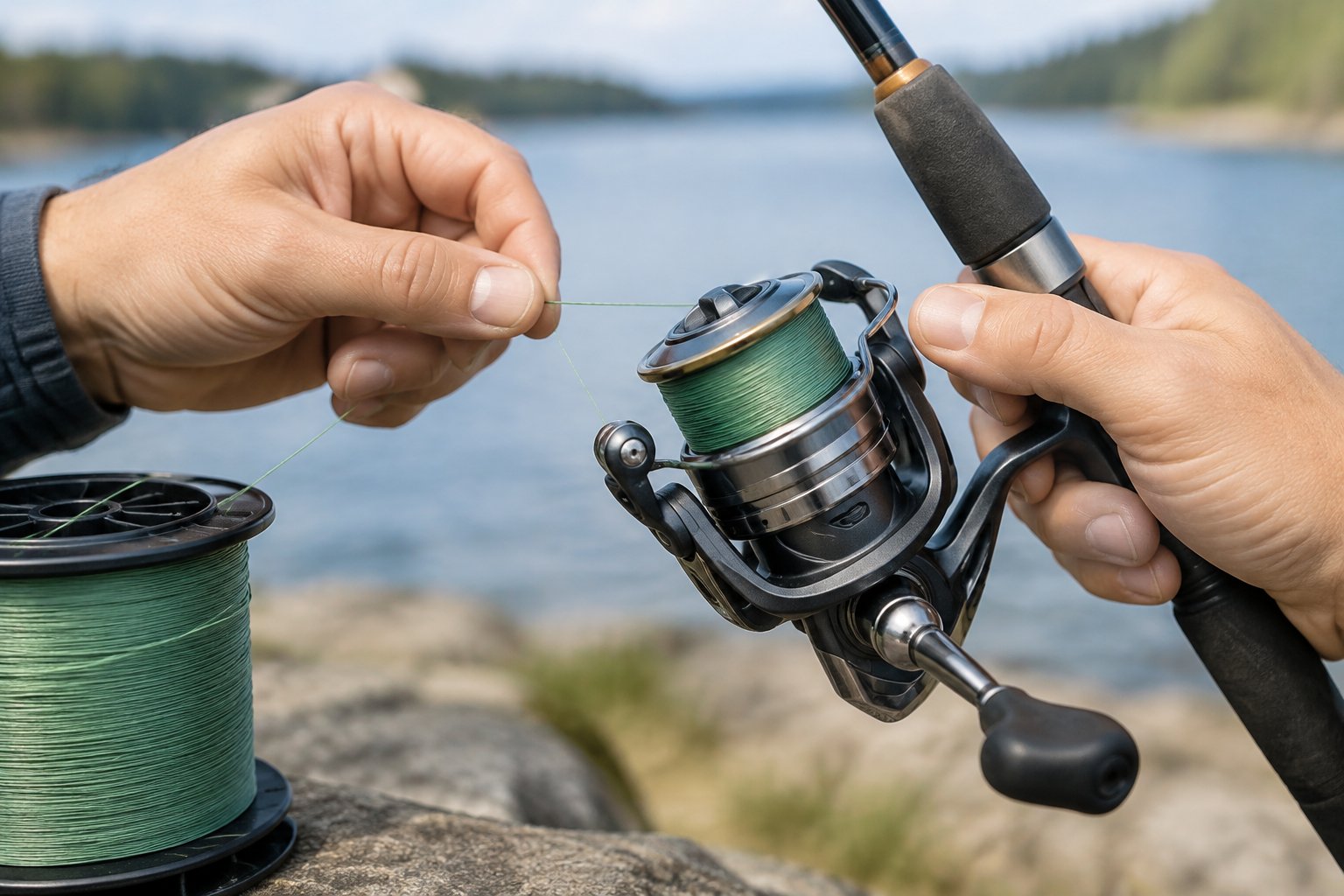
Good spooling stops most repeat tangles before they start. Use line your reel is rated for, wind it on firmly with no twist, and stop a bit short of the rim.
Match Line Diameter and Strength to Your Rod and Reel
Every reel lists its line ratings on the spool or in the paperwork. A small trout spinning reel might hold 200 yards of 2-pound test, 150 yards of 4-pound, or 100 yards of 6-pound. Stay inside that range.
Line that is too heavy for a small reel comes off in stiff coils, and the small bail can’t gather it neatly. Very thin braid on a big reel can slip behind the spool or catch under the bail. Your rod also has a line weight printed near the handle, so match both. If you are putting a new outfit together, set up the spinning reel and line as a matched pair.
Load Line Under Steady Tension and Check for Twist
Loose line on the spool leads to loops faster than anything else. Pinch the line between your fingers just ahead of the reel while you crank, or pinch it against the rod blank behind the first guide. Wear a glove with braid because it can cut you.
For spinning reels, lay the filler spool flat on the floor, label side up. Reel about 15 turns, then drop the rod tip and look at the slack line. If it curls, flip the filler spool over and keep going. Baitcasters take line straight off, so run a pencil through the filler spool’s hole and have a friend hold it. For braid on a baitcaster, follow the steps for spooling a baitcaster with braid, including a short mono backing so the braid grips the spool.
Leave the Recommended Gap Below the Spool Rim
An overfilled spool throws extra coils on almost every cast. On a spinning reel, fill to about 1/8 inch below the lip. On a baitcaster, leave a thin edge of bare spool showing all the way around.
Too little line hurts casting distance, so stay near that line. For exact fill levels, check how much line to put on a spinning reel for your size of reel. After spooling, make a few long casts with a heavier lure and reel against light pressure. That packs the line tight.
Which Casting and Retrieving Habits Keep Line Under Control?
A few small habits keep slack off your spool: tight line before you reel, a thumb on the baitcaster, a lure that fits the rod, and a swivel for anything that spins.
Spinning Reels: Close the Bail by Hand and Take Up Slack
Flip the bail closed with your hand after each cast. Cranking the handle to close it adds twist and can let a loose wrap drop onto the spool.
As your lure lands, feather the line with your index finger to slow it down. Then give the line a quick tug, or lift the rod tip, so it is tight before your first turn of the handle. If you fish with lots of twitches and pauses, make a long straight retrieve every so often to repack the line firmly.
Baitcasters: Adjust Brakes and Use Your Thumb to Control the Spool
Set spool tension with your lure tied on. Hold the rod level, push the thumb bar, and tighten the knob until the lure drops slowly and the spool stops when the lure lands. Start with the brakes set high, then back them off a little at a time as your casts smooth out.
Keep your thumb hovering over the spool during the cast. Press lightly when the lure slows and stop the spool fully as it touches the water. Short, easy casts are best while you learn. Spinning tackle stays simpler if you are teaching kids.
Match Lure Weight to Your Setup and Cast Smoothly in Wind
A lure lighter than your rod’s rating won’t pull line off cleanly, so slack builds up. Check the lure weight range on the rod, and tie your bait on correctly so it runs straight. A short refresher on how to put a lure on a fishing line helps kids get this right.
Wind is the big one. Cast with the wind at your back or to the side when you can. Use a smooth, sweeping cast in place of a hard snap, and keep your rod tip low on the retrieve so the wind can’t bow the line.
Reduce Lure Spin and Avoid Reeling Against a Slipping Drag
In-line spinners and some drop-shot rigs twist the line on every cast. Tie a small barrel swivel, size 8 or so, between your main line and a short leader. The lure spins, and the main line stays straight. Pick a swivel big enough that it won’t get pulled into your guides.
Never crank while the drag is giving line to a fish. The spool turns one way while you wind the other, and that puts a lot of twist in fast. Pump the rod up, reel on the way down, and set your drag correctly before you cast. If you are new to it, learn what drag in fishing does so you know when to stop reeling.
Can Different Line or Simple Maintenance Reduce Tangles?
Yes. Softer line with less memory tangles less, and a quick gear check catches the worn parts that keep twisting your line.
Compare Mono, Fluorocarbon, and Braid for Everyday Fishing
| Line | Memory | Tangle risk | Good fit |
|---|---|---|---|
| Monofilament | Medium | Low to medium | Beginners, kids, ponds |
| Fluorocarbon | Higher | Medium | Clear water, leaders |
| Braid | Very low | Wind knots if slack | Weeds, long casts |
Monofilament line is easy to tie and forgiving, which makes it the best fit for most quick trips and family fishing. The best monofilament line for spinning reels tends to be soft and limp. Fluorocarbon line is stiffer and holds coils, so many anglers use it as a fluorocarbon leader tied to braid. Braid has almost no memory but forms wind knots whenever slack gets on the spool. For general picks, fishing line for beginners usually points back to mono.
Manage Line Memory and Know What Conditioner Can Help
Line memory is the coil shape line keeps after sitting on the spool. It is worst in cold weather and on reels that sat in the garage all winter.
- Stretch the line before a trip by tying it off and walking back, as described above.
- Make your first cast with a heavier lure to pull out the coils.
- Replace mono and fluorocarbon at least once a season, sooner if you fish often.
A line conditioner spray makes mono and fluorocarbon slicker, so it comes off the spool smoother. Use it as a helper. It won’t fix line that is already badly kinked.
Check the Line Roller, Rod Guides, and Worn Line Before a Trip
The line roller on a spinning reel’s bail should spin when you push it with a fingertip. A stuck roller drags the line and adds twist. Put one drop of reel oil on it.
Run a cotton ball through each rod guide. If it snags, the guide has a crack that will fray your line. Last, run the first 10 feet of line through your fingers and cut off any rough spots. This check takes about two minutes, a good fit for the night before a lunch-break trip.
Spend Your Next Short Trip Fishing, Not Untangling
Good line management comes down to a short list. Spot the tangle type first: curls mean twist, buried loops mean slack got wound on, and a puffy nest means baitcaster backlash. Loosen knots before you pull, and cut out any line that stays kinked or frayed.
For preventing fishing line tangles on every trip:
- Spool under steady tension and stop about 1/8 inch below the rim.
- Close a spinning bail by hand and take up slack before you reel.
- Thumb the baitcaster and set the brakes with your lure tied on.
- Add a barrel swivel for spinning lures, and stop cranking when the drag slips.
- Check the line roller and guides before you go.
Pack a small pick, clippers, and a spare spool in your gear for fishing before work so a bad tangle only costs you a few minutes.
Get your gear ready and explore the related beginner-friendly guides before your next trip.