For most family trips and catch-and-release outings, barbless hooks are the better pick: they come out of fish, clothes, and fingers in seconds, and you keep nearly all your fish if you hold steady line pressure. Barbed hooks still have a place when you plan to keep fish for dinner or fish with live bait where local rules allow them.
The trade-off is real. In one Florida saltwater study, anglers using natural bait landed 22% more fish on barbed hooks, but they unhooked fish much faster on barbless ones. Knowing where that gap comes from helps you choose the right hook for a quick evening trip or a morning at the pond with your kids.
What Does a Hook Barb Actually Do?
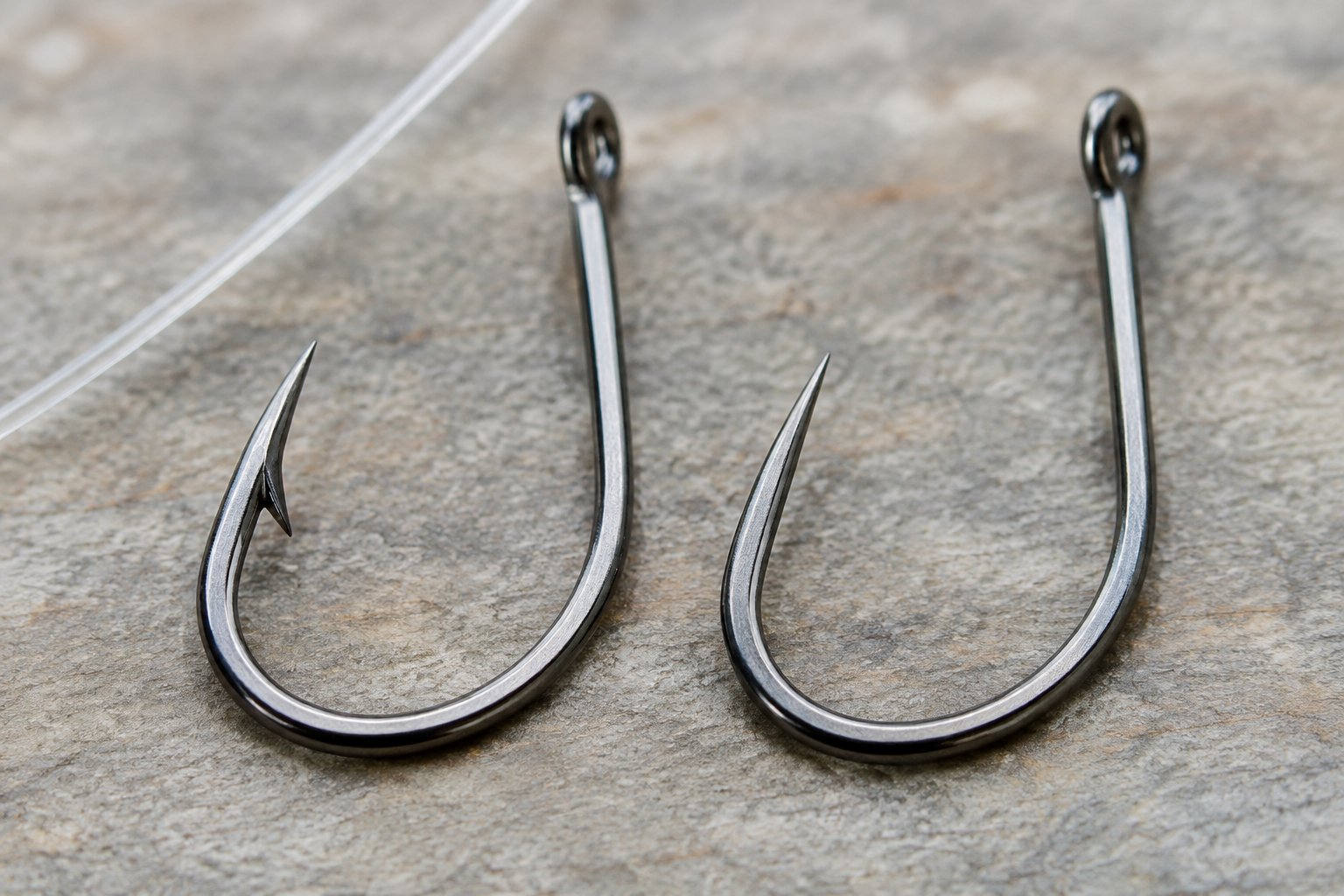
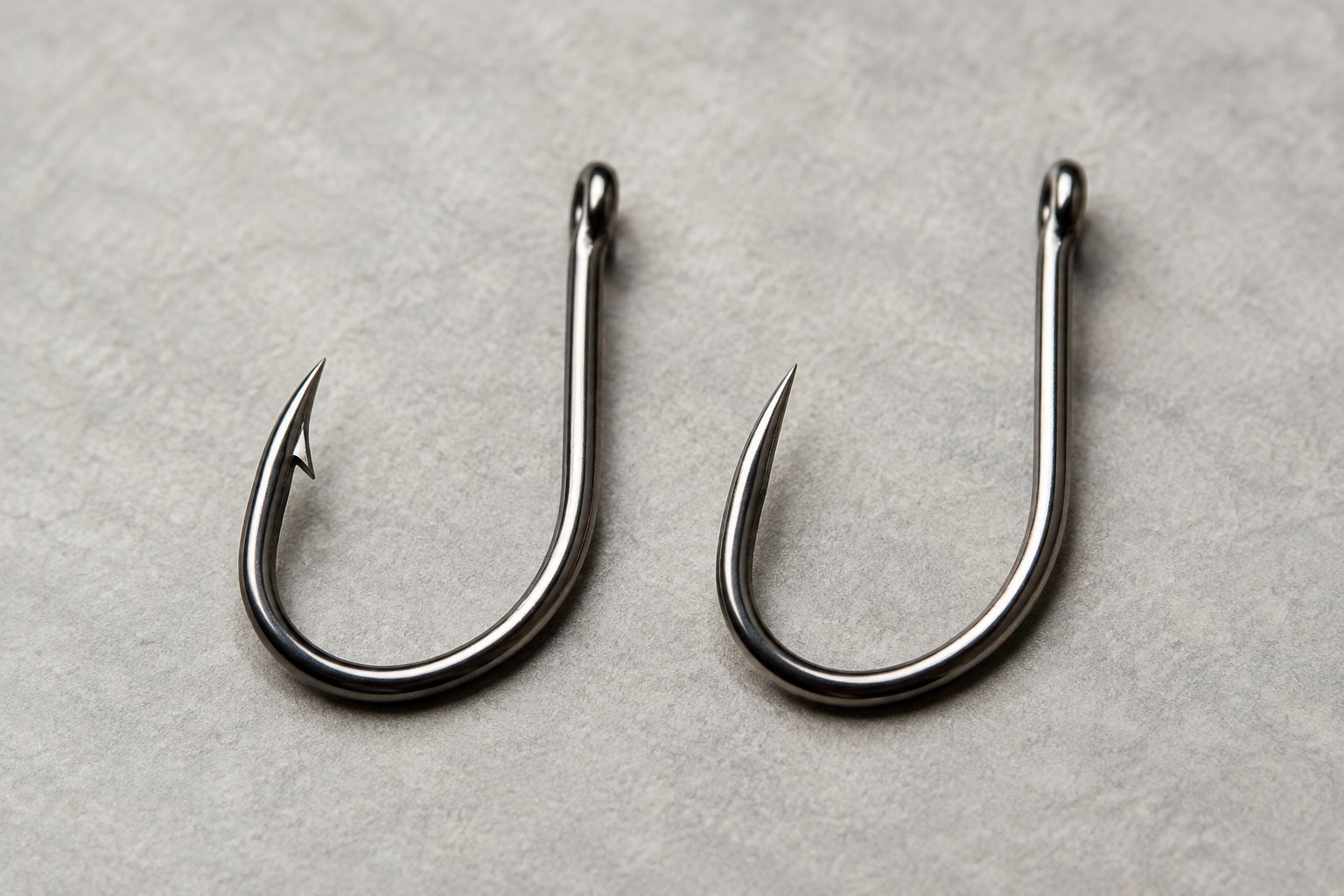
A hook barb is a small backward spike near the point that locks the hook in place once it goes in. Barbed hooks hold through slack and head shakes, while barbless hooks rely on line tension and slide out with far less effort.
How Does a Barbed Hook Hold a Fish?
The barb works like the tip of an arrow. The point pierces the fish’s mouth, and the barb catches on the far side of the hole so the hook can’t back out the same way it came in.
That grip is why barbed fishing hooks forgive mistakes. If your line goes loose for a second, or a fish jumps and shakes, the barb keeps it buttoned up.
The same grip works against you at release time. To get a barbed hook out, you often have to twist, push, or pull it back through flesh, which widens the hole. Most hooks sold in big-box stores and in beginner packs come barbed, so that’s likely what’s in your tackle box now.
What Makes a Barbless Hook Different?
A barbless hook has a smooth point with nothing to snag on the way out. You can buy barbless fishing hooks or flatten the barb on a regular hook with pliers, and both work the same way.
Here’s what you notice on the water:
- Easier penetration. With no barb to push through, the point slides in with less force.
- Fast removal. Many fish shed the hook in the net, or it pops out with a gentle back-and-down push.
- Safer for you. A barbless hook in your thumb or sleeve backs out cleanly. A barbed one can mean a trip to urgent care.
If you’re still building a basic kit, the options in our guide to fishing hooks for beginners can be pinched barbless before your first cast.
| Feature | Barbed Hooks | Barbless Hooks |
|---|---|---|
| Holds through slack line | Yes | Weak |
| Unhooking speed | Slower | Faster |
| Removal from skin or clothing | Hard, painful | Easy |
| Fish landed (one bait study) | About 22% more | Fewer |
| Bait loss (same study) | No difference | No difference |
| Best fit | Keeping fish, live bait | Kids, quick release |
Will You Lose More Fish Without a Barb?
Yes, you’ll lose some extra fish with barbless hooks, mostly during the fight when your line goes slack. Sharp points and steady pressure close most of that gap, and bait stays on about as well either way.
Hooking a Fish vs. Landing It: Why the Difference Matters
Catch rates have two parts: getting the hook to stick, and getting the fish to your hand. Barbless hooks perform just as well at the first part. The Florida study found the same number of bites turned into hookups with both styles.
The difference showed up after the hookset. More fish came unbuttoned partway through the fight on barbless hooks, which is where that 22% landing gap came from. Results also changed by species, so some fish stay pinned better than others.
For a family trip, a few lost fish rarely ruin the day. A kid who hooks five bluegill and lands three still had a great time.
How Slack Line and Hook Sharpness Affect Retention
Barbless hooks slip out when the line goes loose. Keep the rod tip up and the line tight, and the hook has no room to back out.
Slack happens most when:
- A fish jumps or swims toward you faster than you reel
- A child drops the rod tip to look at the fish
- You stop reeling to grab the net
Sharpness counts too. A dull point sits shallow and falls out more easily. Run your hook point lightly across your thumbnail; if it slides instead of catching, sharpen or swap it. Many experienced fly anglers report almost no lost fish once they stop giving slack.
Does a Barb Keep Live Bait on Longer?
Bait loss did not differ between barbed and barbless hooks in the saltwater bait study. Fish stole bait at about the same rate on both.
Worms and minnows can slide off a barbless hook during casting, though, especially with hard snap casts. Thread worms over the bend so the hook is mostly covered, and lob your cast gently. Our guide on how to hook a minnow covers hooking spots that keep bait on and alive longer.
If bait keeps flying off, a small piece of rubber band or a bait keeper on the shank helps. Weighing fishing lures vs live bait also shows when soft plastics on barbless hooks might be simpler for kids.
Are Barbless Hooks Better for Fish?
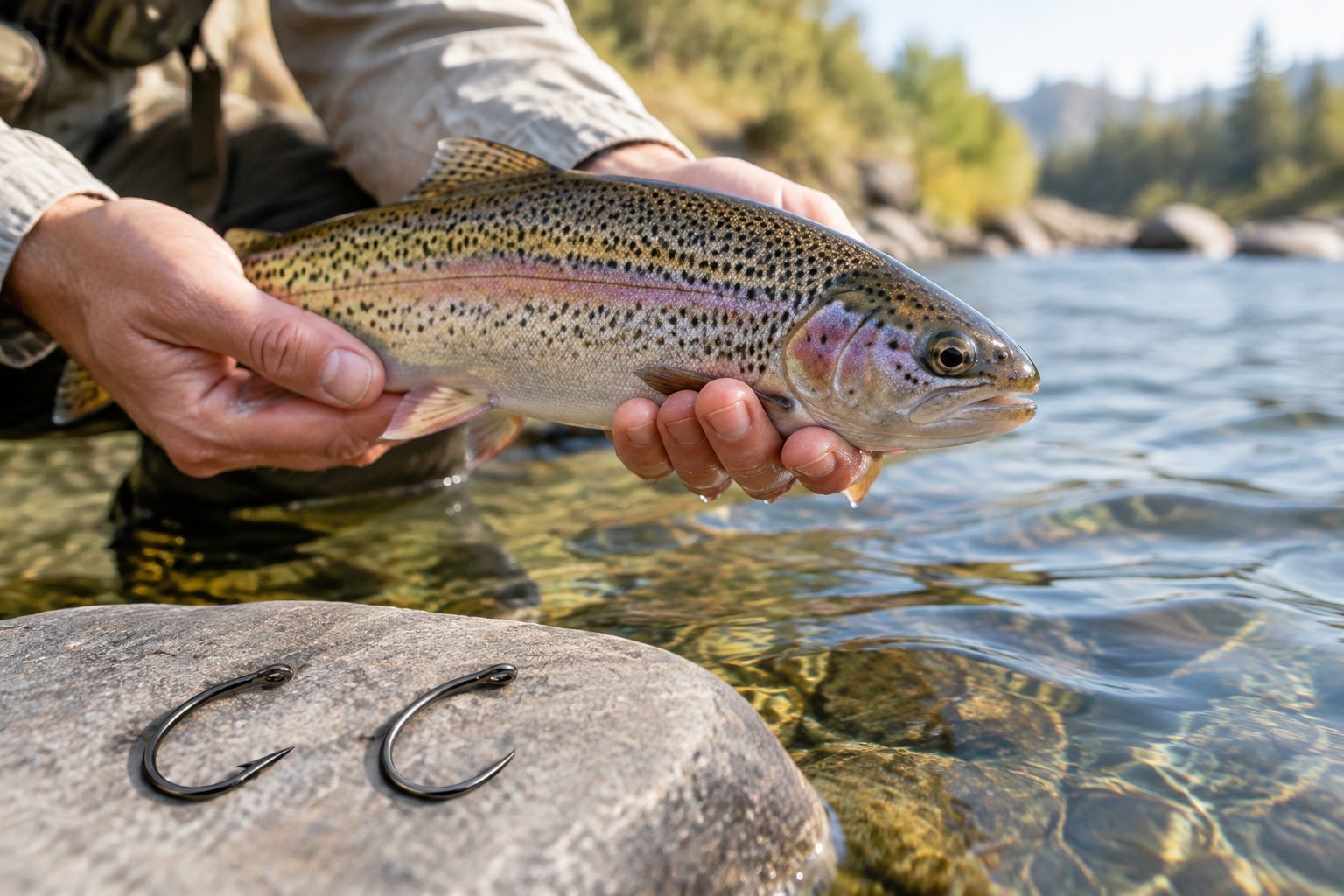
Barbless hooks cause less damage at removal, and that helps released fish. Where the hook lands in the fish and how you handle it afterward weigh just as heavily on fish welfare, so no hook makes release injury-free.
Why Easier Hook Removal Can Reduce Tissue Damage
Hook removal is where barbs do their harm. A barb tears a bigger hole on the way out, and the extra time spent working it free keeps the fish out of the water longer.
Barbless hooks shortened unhooking times in the Florida study and reduced unhooking injuries. Less tearing means smaller wounds and less air exposure, and both help fish recover. Anglers on barbless-only waters also report fewer fish with scarred jaws from past catches.
Practice the moves in our guide on how to unhook a fish so you can do this in seconds.
How Hooking Location and Deep Hooking Affect Survival
Hooking location drives fish mortality more than the barb does. A hook in the lip or jaw corner leaves a small wound. A hook in the gills, throat, or stomach can cause bleeding and death.
In the bait study, bleeding was linked to where the hook landed, and it did not change between barbed and barbless hooks. Deep hooking is most common with live bait when you let a fish swallow it for a long time.
To cut down on deep hooking:
- Set the hook soon after the bobber goes under
- Watch your line closely; don’t prop rods and walk away
- If a fish is hooked deep, cut the line close to the mouth and release it
Why Neither Hook Guarantees a Healthy Release
Barbless hooks give you a head start, but your handling finishes the job. A long fight, dry hands on slimy skin, or a fish flopping on hot pavement can hurt it more than any barb.
Hook size plays a role too. A large, wide-gap hook in a small fish’s mouth can do serious damage even without a barb. Match the hook to the fish you expect, and keep catch-and-release fishing quick: fight fast, unhook fast, and get the fish back in the water.
Which Hook Fits Your Trip and Local Rules?
Your hook type should match two things: whether you plan to keep fish, and what the water you’re fishing requires. Barbless suits most family and release trips, barbed suits keeper trips where it’s legal, and circle hooks help with bait fishing in both cases.
Why Barbless Is a Practical Default for Kids and Quick Release Trips
If you’re fishing with kids, barbless hooks save you time and stress. Little anglers snag shirts, hats, and sometimes fingers. A barbless hook backs right out, and you’re fishing again in a minute.
They also fit short trips before work or on a lunch break. You spend less time wrestling hooks out of panfish and more time casting. Kids enjoy watching a hook slip free and the fish swim off, which makes catch and release fishing feel like part of the fun.
When Barbed Hooks May Be a Reasonable Choice
Barbed hooks make sense when you’re keeping fish to eat. If a crappie or catfish is headed for the frying pan, release damage no longer applies, and the barb helps you land more of them.
They also help when you can’t control slack well, like fishing from a moving boat or in heavy current. Keep pliers and a hook remover close whenever you use barbed hooks.
What Local Rules Say About Barbs, Single Hooks, and Bait
Many trout streams and trophy waters require barbless hooks, single hooks, or artificial lures only. Some delayed-harvest and fly fishing sections ban bait entirely. Rules change by state and even by stretch of river.
Check your state wildlife agency’s regulations before each new spot. If you’re heading out fishing for stocked trout, look for special rules on that water, since some stocked sections switch rules during the season. A flattened barb counts as barbless in most places that require it.
Where Circle Hooks Fit into Simple Bait Fishing
Circle hooks curve inward so the point slides to the corner of the mouth as the fish swims away. That lowers deep hooking, which is the biggest cause of release deaths with bait.
They work well for kids because you don’t need a hard hookset. Your child just reels steadily when the bobber goes down. Government fishery programs in Hawaii promote barbless circle hooks for nearshore fishing and report they catch as well as barbed hooks while coming out more easily. Pair one with a simple float rig; our guide on how to put a bobber on a fishing line gets you set up fast.
How Can You Make Either Hook Easier to Fish and Remove?
A few habits make either hook work better for you and the fish. Prepare hooks at home, keep the line tight during the fight, and have tools ready before the first bite.
Buy Barbless or Flatten the Barb Before You Leave
Fishing with barbless hooks doesn’t mean buying all new gear. Grab flat-jaw pliers and squeeze the barb flat. Press straight down; twisting can snap the point.
Do this at your kitchen table the night before. It takes about five minutes for a full pack. Check that the barb lies flush by sliding the point across a cotton rag; it shouldn’t catch. Then tie them on with the steps in our guide on how to put a hook on a fishing pole.
Keep Steady Pressure Without Overplaying the Fish
Keep the rod tip up and the line tight from hookset to hand. Coach kids to reel slowly and steadily, without stopping and without cranking hard.
Don’t drag out the fight. A tired fish recovers more slowly. For panfish and small bass, a fight should last well under a minute. Set your drag so line slips before it breaks, then bring the fish in with smooth pressure.
Prepare for Quick Unhooking and Careful Fish Release
Good fish handling starts before the cast. Keep these within reach:
- Needle-nose pliers or forceps
- A hook remover tool for deep hooks
- A rubber net, which is gentler on fish slime
- A wet rag or water to wet your hands
A tool from our list of the best fishing hook remover options makes deep hooks much easier. Keep the fish in or just above the water, grab the hook shank, and back it out the way it went in. Limit air exposure to a quick photo, then hold the fish upright in the water until it swims off.
Keep Kids Clear of Hooks During Casting and Handling
Most hook injuries on family trips happen during casting and unhooking. Before each cast, have your child look behind them and call out “casting.” Give everyone a few steps of space.
When a fish comes in, you take over the hook. Let kids hold the rod or the net while you unhook, then let them help release the fish. Sunglasses and hats protect eyes and heads from a wild cast.
Choose for Easy Family Fishing and Responsible Releases
Barbless hooks are the easy choice for kids, quick trips, and catch and release, because they come out fast and keep everyone safer. You’ll lose a few more fish on slack line, and steady pressure fixes most of that.
Barbed hooks fit keeper trips where local rules allow them. Whichever you pick, set the hook early, keep fights short, and unhook fish gently in the water. If you’re planning your next outing, our tips on how to go fishing help you get out the door with less hassle.
Get your gear ready and explore the related beginner-friendly guides before your next trip.