
Wax worms are one of the easiest ways to start catching fish through the ice, especially if you have only an hour before work or a short window with your kids. For ice fishing with wax worms, thread one waxie onto a small teardrop jig, lower it to just above the fish, and use small twitches with long pauses; this simple rig catches bluegill, crappie, and perch all winter. State agencies like Iowa’s DNR call a wax worm on a small teardrop jig “a great combination” for bluegill and crappie.
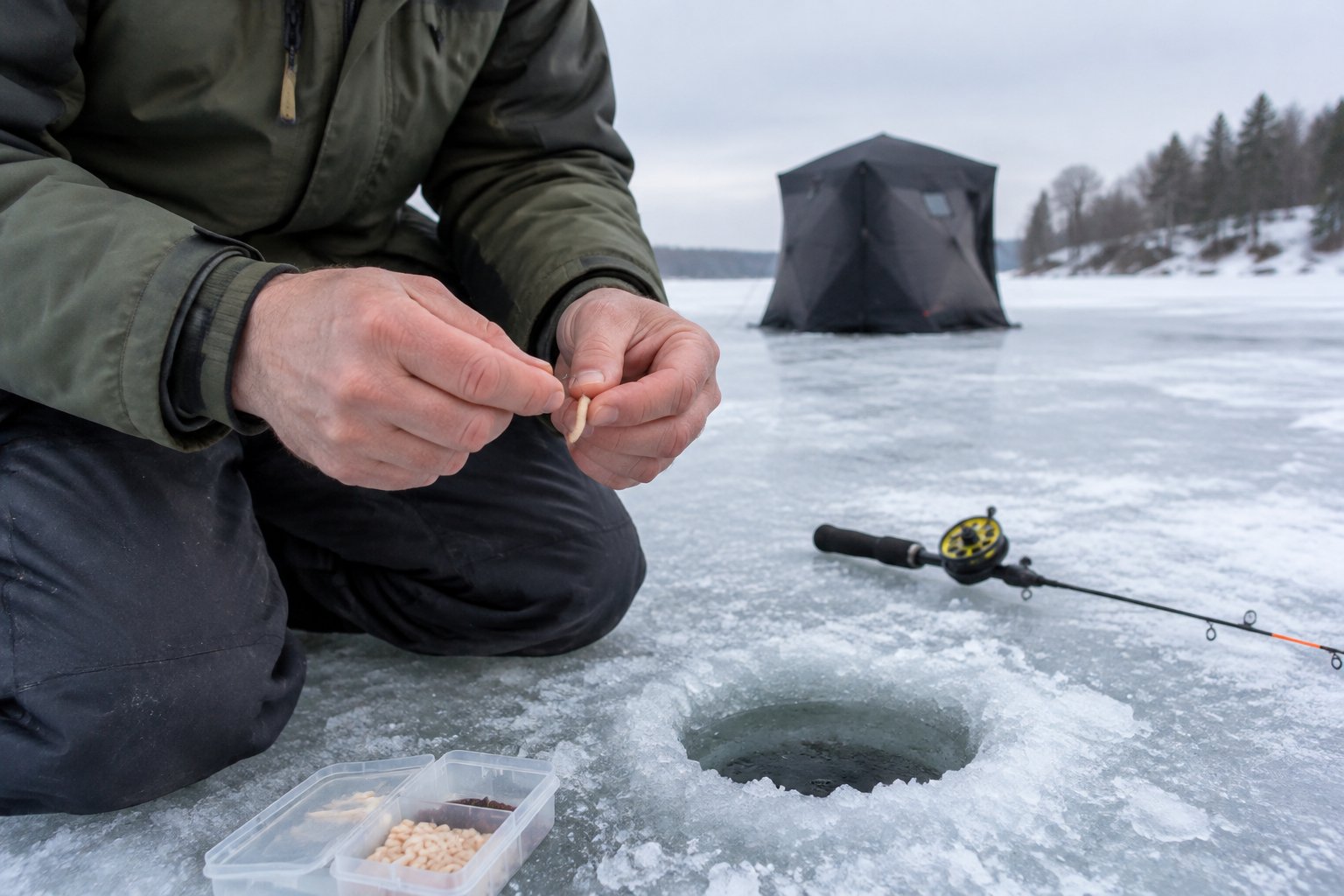
Wax worms are soft, cream-colored bee moth larvae, about 1/2 to 1 inch long. Among all the live ice fishing bait options, they are cheap, easy to find at bait shops and gas stations, and easy for a beginner or a child to put on a hook. Once you know how to hook them, read bites, and tell when to switch baits, you can catch fish on short trips without a pile of gear.
How Do You Hook a Wax Worm on a Small Jig?
You hook a wax worm by matching the hooking style to the way your jig hangs. Horizontal jigs get a threaded worm, and vertical teardrops or spoon trebles get a worm hooked crossways through the middle.
Start with a Simple Rod, Light Line, and Small Jig
Your whole setup can be one short ice rod, a small reel, light line, and a pack of tiny jigs. Short jig rods let you sit close to the hole and feel light bites. Wisconsin’s DNR notes that many perch anglers use short jig poles with spools that hold 50 to 60 feet of line.
Light line helps a lot in winter. Cold weather makes heavy monofilament stiff and curly, which kills the natural fall of a tiny jig. Thin line lets your bait flutter and settle the way a fish expects.
For jigs, pick small teardrops in bright colors like chartreuse, pink, or glow. Tungsten jigs sink faster than lead jigs of the same size, so you get back to the fish quicker. A plain #8 or #10 hook also works if you add a tiny split shot above it.
If you are still building a kit, the ice fishing gear basics fit in one small bucket. Learning how to put a lure on a fishing line with a simple improved clinch knot covers almost every tie you need.
Thread a Wax Worm onto a Horizontal Jig
Horizontal jigs hang level in the water, and threading is the standard way to bait them:
- Pinch the wax worm gently between your thumb and finger.
- Push the hook point into the tail end (the end without the brown head).
- Slide the worm up the hook shank, following the curve of the hook.
- If the worm is longer than the hook, let the point come out partway through the body, or push the worm all the way up onto the shank.
A threaded wax worm stays on well and looks like a small bug drifting level in the water. Leave the hook point exposed so it can grab the fish’s lip on the hookset.
Some days fish want more meat. You can add a second worm crossways after threading the first. Anglers call this a “T-bone” rig. It gives bigger bluegill and crappie a fuller target.
Hook Bait Crossways on Vertical Jigs or Tip a Spoon
Vertical jigs, like most teardrop jigs, hang straight up and down. You can thread a worm on these, too, but hooking it crossways through the middle often works better. Both ends of the worm wiggle, and picky fish will bite it when they ignore a threaded worm. Expect to lose more bait this way, since the soft body tears easily.
Spoons with treble hooks give you two choices:
- One worm: Hook a single waxie crossways so it catches at least two points of the treble.
- “Chandelier” style: Put one wax worm on each of the three points. All three dangle and move as you jig, which draws in bigger fish.
Another trick is folding the worm: hook it once near one end, fold it over the hook, and hook it again halfway down the body. This makes a compact bait that small fish struggle to pull off.
How Do You Present the Bait and Detect Bites?
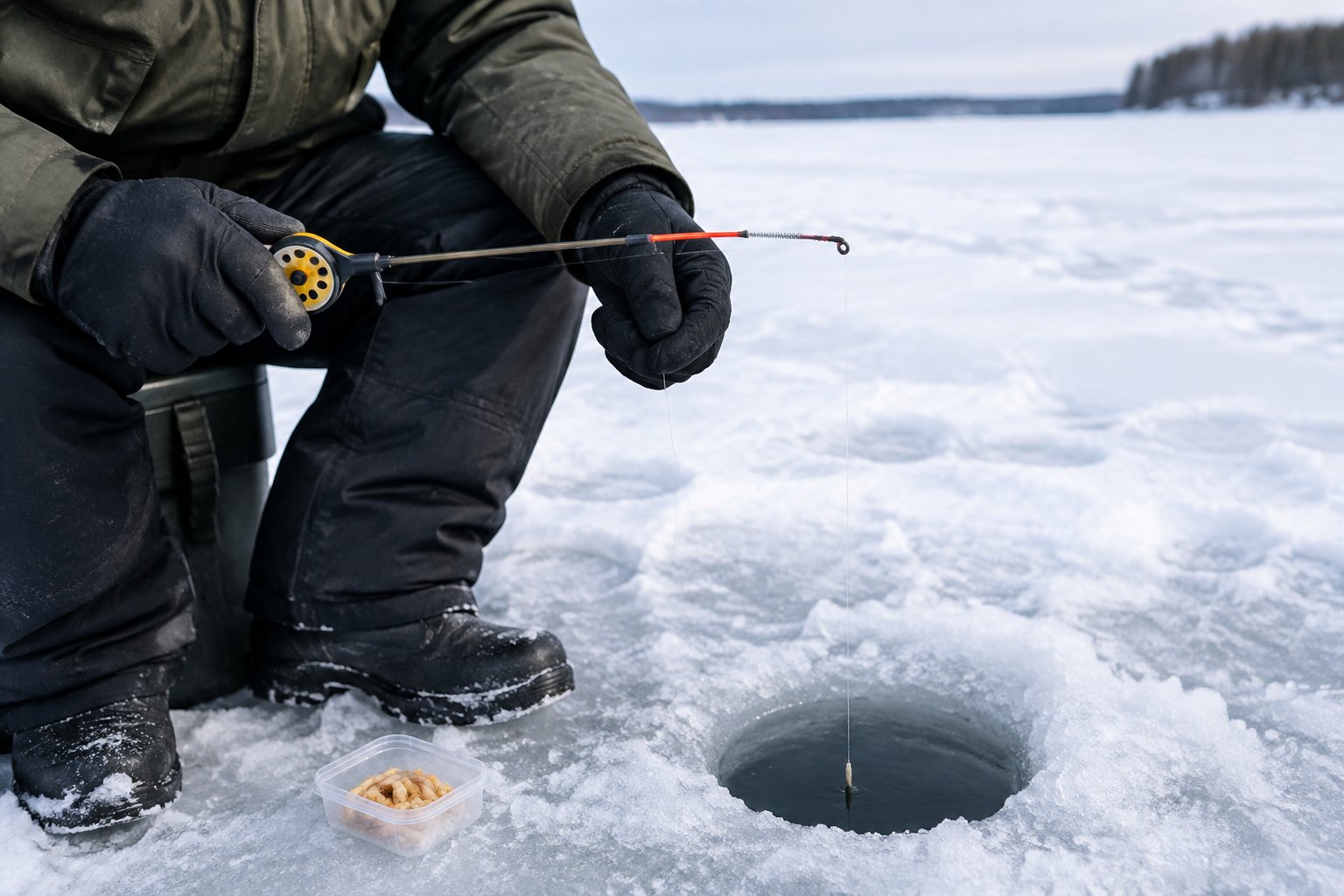
Good bait presentation comes down to holding your wax worm just above the fish and keeping it calm. Winter fish move slowly, so gentle twitches, long pauses, and a soft hookset catch more panfish, crappie, and perch than hard jigging.
Find the Fish’s Depth and Keep the Bait Just Above Them
Fish look up to feed, so set your bait a little above where they hold. A flasher or sonar shows this right away. Without one, drop your jig to the bottom, reel up about one foot, and start there.
Crappie often hold higher in the water, sometimes halfway between the bottom and the ice. Perch and bluegill sit closer to the bottom. New York’s DEC suggests working sunfish baits from a few feet under the ice down to just off the bottom until fish show up.
Once you catch a fish, note the depth. A small bobber stop on your line marks the spot so you can drop back to it fast.
Fish move up and down during the day. If the bite stops, try a foot deeper on bright days and a foot shallower on cloudy ones before you drill a new hole.
Use Small Twitches and Pauses Instead of Constant Jigging
Cold fish want an easy meal, and small movements look natural to them. Use this rhythm:
- Lift the rod tip an inch or two.
- Let the jig fall back on a tight line.
- Hold it still for 5 to 10 seconds.
- Shake the rod tip very lightly so the worm quivers in place.
- Repeat.
Many bites come during the pause. If you are using a jig fishing for crappie style from open water, slow it down even more on the ice. When a fish rises toward your bait on the flasher, stop moving or give only a tiny shake. Pulling the bait away from a curious fish is one of the most common beginner mistakes.
Watch for Light Bites and Set the Hook Gently
Winter bites are soft. You will rarely feel a hard thump. Look for these signs instead:
- Your rod tip dips slightly or goes slack.
- The line jumps sideways or stops falling.
- A small float sinks or lies flat.
- On a flasher, the fish mark and your jig mark merge.
A spring bobber on the rod tip or a tiny foam float makes these bites easy to see, which helps kids a lot. Trim a float so only the very top sticks out of the water. Fish feel less resistance and hold the bait longer.
When you see a bite, lift the rod with a short, firm wrist snap. A big swing tears the hook out of soft panfish mouths. Set your drag loose enough that a surprise bass will not snap your light line.
Replace Torn or Drained Bait and Adjust After Missed Bites
A wax worm that is torn, flat, or pale has lost the scent and juice that pull fish in. Check your bait after every fish and every couple of missed bites. A fresh, plump worm costs pennies and gets bit faster.
If you keep missing fish, try these fixes one at a time:
- Switch to a smaller jig or a smaller piece of worm.
- Change from threaded to crossways hooking, or the reverse.
- Try one worm, then two. Some days fish want a single waxie; other days they want a full hook.
- Wait a half second longer before setting the hook.
If fish keep stealing worms without getting hooked, thread the next worm all the way up the shank so the hook point sits closer to the bait.
Which Fish Take Wax Worms, and When Should You Switch Bait?
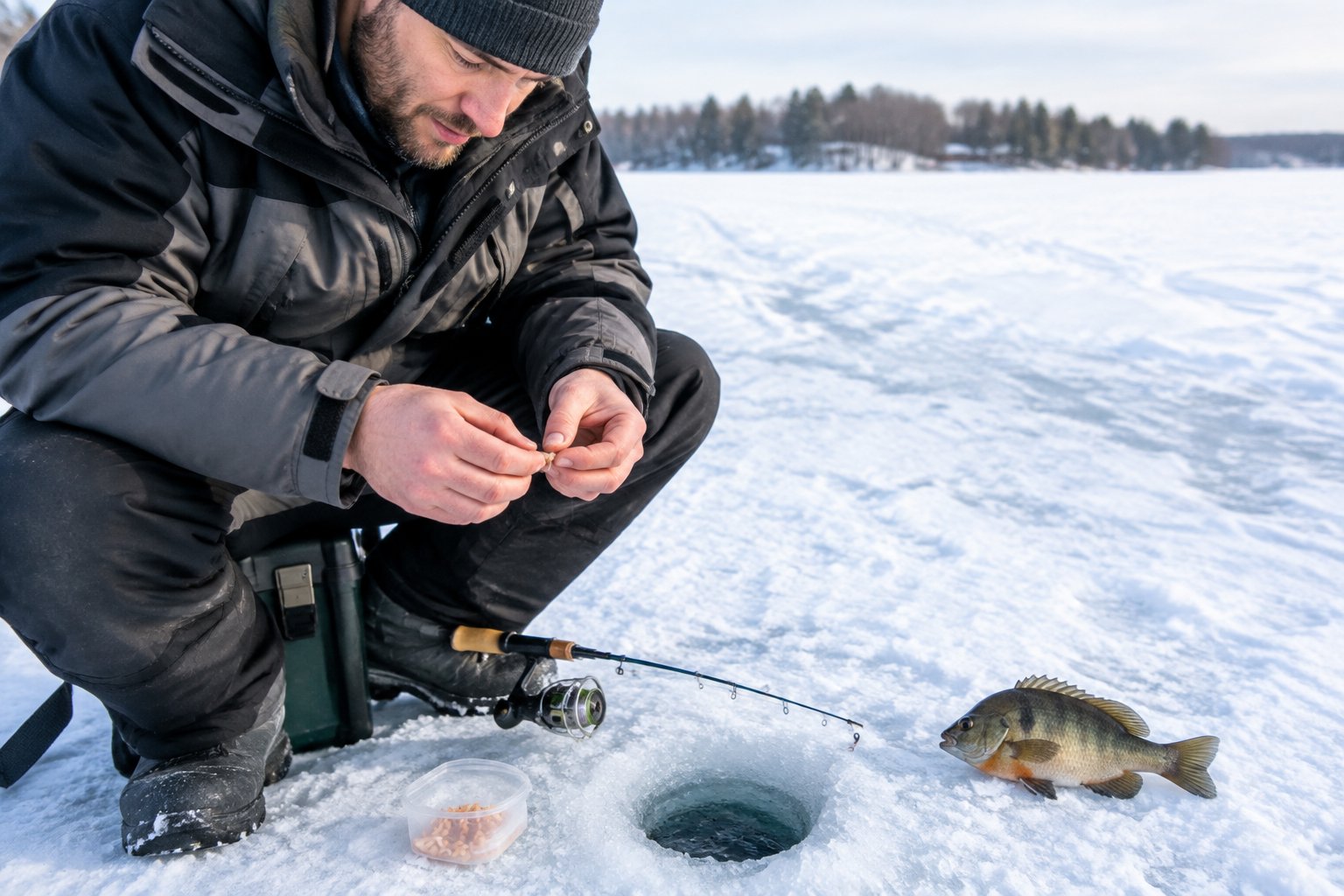
Wax worms shine for panfish like bluegill, crappie, perch, and sunfish, and they catch trout and the odd bass, too. Switch to minnows when you want walleye or northern pike, and carry spikes when fish keep stealing your wax worms.
Start with Bluegill, Crappie, and Perch
Panfish are the easiest freshwater fish to catch through the ice, and wax worms are made for them. Bluegill and green sunfish often stay in shallow weedy areas in winter, where they feed on small insects and larvae. A wax worm looks like the food they already eat.
For ice fishing for bluegill, use the smallest jig you have and a single worm. Crappie take wax worms higher in the water and often bite well near dawn and dusk, which fits an early trip before work. Perch stay near the bottom and bite eagerly, making them a good first fish for kids.
When you go ice fishing for crappie, carry a few small crappie minnows in case they ignore larvae that day.
Try Small Jigs for Trout and Expect Occasional Bass
Stocked trout in ponds and lakes bite wax worms on small jigs. Fish them a bit higher in the water and keep the bait moving with slow lifts. If trout are your main target, compare options in what bait to use for trout before you buy.
Largemouth bass and other small bass also grab panfish jigs tipped with wax worms. Expect a few as a bonus. A bass on light line pulls hard, so a loose drag and patient reeling keep it from breaking off. Kids love these surprise fish.
Choose Minnows When Targeting Walleye or Northern Pike
Big predators want bigger meals. For walleye, use fathead minnows or golden shiners hooked lightly through the back. Some walleye anglers do tip jigging spoons with wax worms, but minnows are the standard pick. For more choices, see the best ice fishing bait for walleye.
Northern pike want suckers or large shiners hung under a tip-up. A wax worm is too small to draw a pike’s attention.
Compare Wax Worms with Spikes, Mealworms, and Earthworms
Wax worms are the bigger, juicier bite. Other worms for ice fishing each have a place:
| Bait | What it is | Best use | Stays on hook? |
|---|---|---|---|
| Wax worms | Bee moth larvae, 1/2 to 1 in | Panfish, trout | Medium |
| Spikes (maggots) | Fly larvae, a little smaller | Panfish when fish steal bait | Very well |
| Mealworms | Beetle larvae, harder shell | Panfish, trout | Well |
| Wigglers | Mayfly larvae (Iowa DNR) | Bluegill, crappie | Medium |
| Earthworms/red wigglers | Small live worms | Perch, trout in small pieces | Medium |
| Nightcrawlers | Large earthworms | Cut into bits for perch | Medium |
Carry wax worms as your main bait and a cup of spikes as backup. Artificial lures and plastic baits work well once you find active fish, and they save rebaiting time.
How Can You Keep a Short Family Trip Safe and Simple?
A safe family trip starts with checking ice thickness before anyone steps out and keeping the outing short and warm. Plan for one to two hours on the ice with kids, pack safety gear first, and let adults handle the hooks.
Check Local Ice Conditions and Pack Essential Safety Gear
Never go out on less than 4 inches of clear, solid ice when walking. Ice does not freeze evenly, so 4 inches near shore does not mean 4 inches everywhere. Call a local bait shop or check your state wildlife agency for current reports.
Stay away from these weak-ice spots:
- Areas near inlets, outlets, or any moving water
- Slushy patches or water sitting on top of the ice
- Large cracks or heaved ice
- Ice that went through a recent warm spell
Pack this safety gear before your rods:
- Ice picks worn around the neck, one set per person
- Spud bar or chisel to test ice as you walk; if water comes through after one hard jab, turn back
- Float suit or life jacket, sized for each child
- 50 to 100 feet of rope
- Whistle and a charged phone in a sealed bag
Tell someone where you are going and when you will be back. If you are new to this, ice fishing for beginners covers the first steps in more detail.
Keep Hooks Under Adult Control and Plan Warm-Up Breaks
Small hooks and cold fingers are a tricky mix. Bait every hook yourself and unhook every fish for young kids. Keep jigs in a closed box when not in use, and hook each one to the rod’s keeper when walking.
Give each child a short rod with a bright spring bobber or float so they can watch for bites. Fish shallow weedy areas where bluegill bite often, since action keeps kids happy.
Plan warm-up breaks every 30 to 45 minutes. Pack hand warmers, dry gloves, a thermos of hot cocoa, and snacks. Dress kids in layers with waterproof boots. Leave while they still want to stay, and they will ask to come back.
How Do You Keep Wax Worms Usable on the Ice?
Keep wax worms warm enough to stay soft and cool enough to stay sleepy. On the ice, that means a closed container in an inside pocket close to your body.
Buy Healthy Bait and Protect It from Freezing or Overheating
Buy wax worms that are plump, cream colored, and moving slowly. Skip any that look black or shriveled, since dark worms are dead. Buy only what you will use in a week or two.
At home, keep wax worms between 50 and 60 degrees. A cool basement, garage shelf, or the butter door of the refrigerator works. The main fridge compartment is too cold and kills them. Keep them dry, and pick out dead ones every few days.
On the ice, live bait freezes fast. Carry a small bait puck or cup in a jacket pocket. Take out a few worms at a time and close the lid. Minnows belong in an insulated ice fishing bait bucket in your sled, off the bare ice. Never set wax worms on a heater, which cooks them.
Follow Local Bait Rules and Pack Out Leftovers
Bait laws vary by state and lake, so read your state’s fishing rules before each season. Many states limit moving minnows between lakes to stop disease and invasive species.
Never dump leftover wax worms or other live bait on the ice or into the water. Take leftovers home or toss them in the trash. Pack out every bait cup, line scrap, and hand warmer wrapper.
Start with One Small Jig and Adjust to the Bites
Your first rig can be one short rod, light line, a small teardrop jig, and a cup of wax worms. Hook the worm to suit your jig: threaded on horizontal jigs, crossways on teardrops and spoons.
Hold the bait just above the fish, twitch it lightly, and pause. Watch your rod tip or float for soft bites, and set the hook with a short wrist snap. Swap in fresh wax worms often, switch to spikes when fish steal bait, and use minnows for walleye or pike.
Check the ice first, keep kids warm, and plan trips that fit before work or after school. Get your gear ready and explore the related beginner-friendly guides before your next trip.


