
Most winter walleye bites come on two things: a small rattling spoon tipped with a minnow head, or a plain live minnow hanging still below it. For beginners, the VMC Rattle Spoon is the best ice fishing bait for walleye because one compact, heavy lure handles the attracting and the hooking, and its brass bead sound chamber and UV finish call fish in from a distance. Pair it with a legal natural-bait backup, and you’re set for a short trip after work or a morning on the ice with your kids.
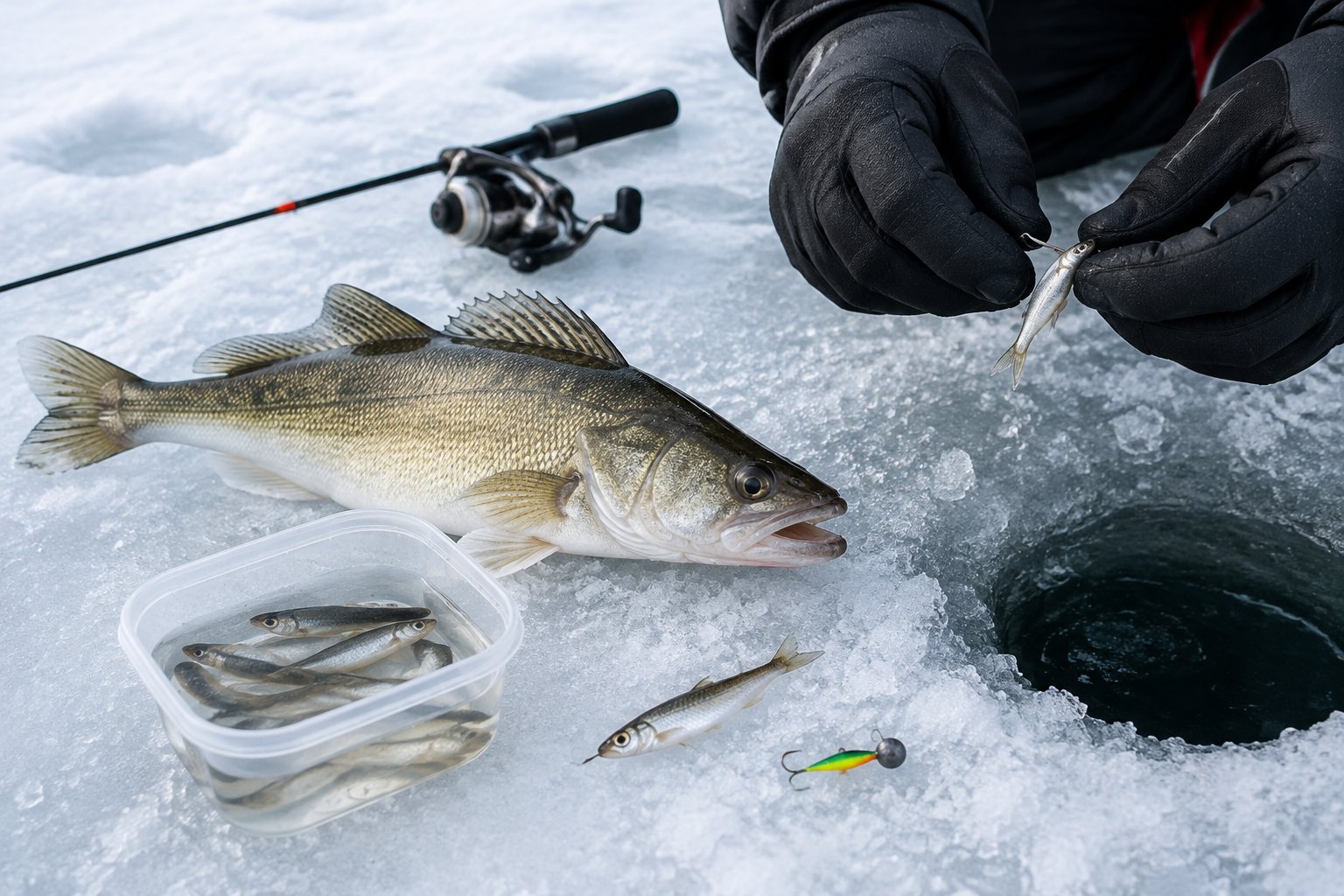
The catch is that bait laws change from lake to lake. A live minnow that’s legal on one water can be banned 20 miles away. The picks below are sorted so you always have a lure that works when natural bait is off the table.
Quick picks:
- Best for beginners: VMC Rattle Spoon, tipped with a minnow head
- Best for active fish: Rapala Jigging Rap in the 2-inch or 2¾-inch size
- Best natural bait: live fathead minnows on a deadstick, where legal
- Best when live bait is banned: Berkley Gulp! Alive! Minnow
1) VMC Rattle Spoon: Best Overall for Beginners
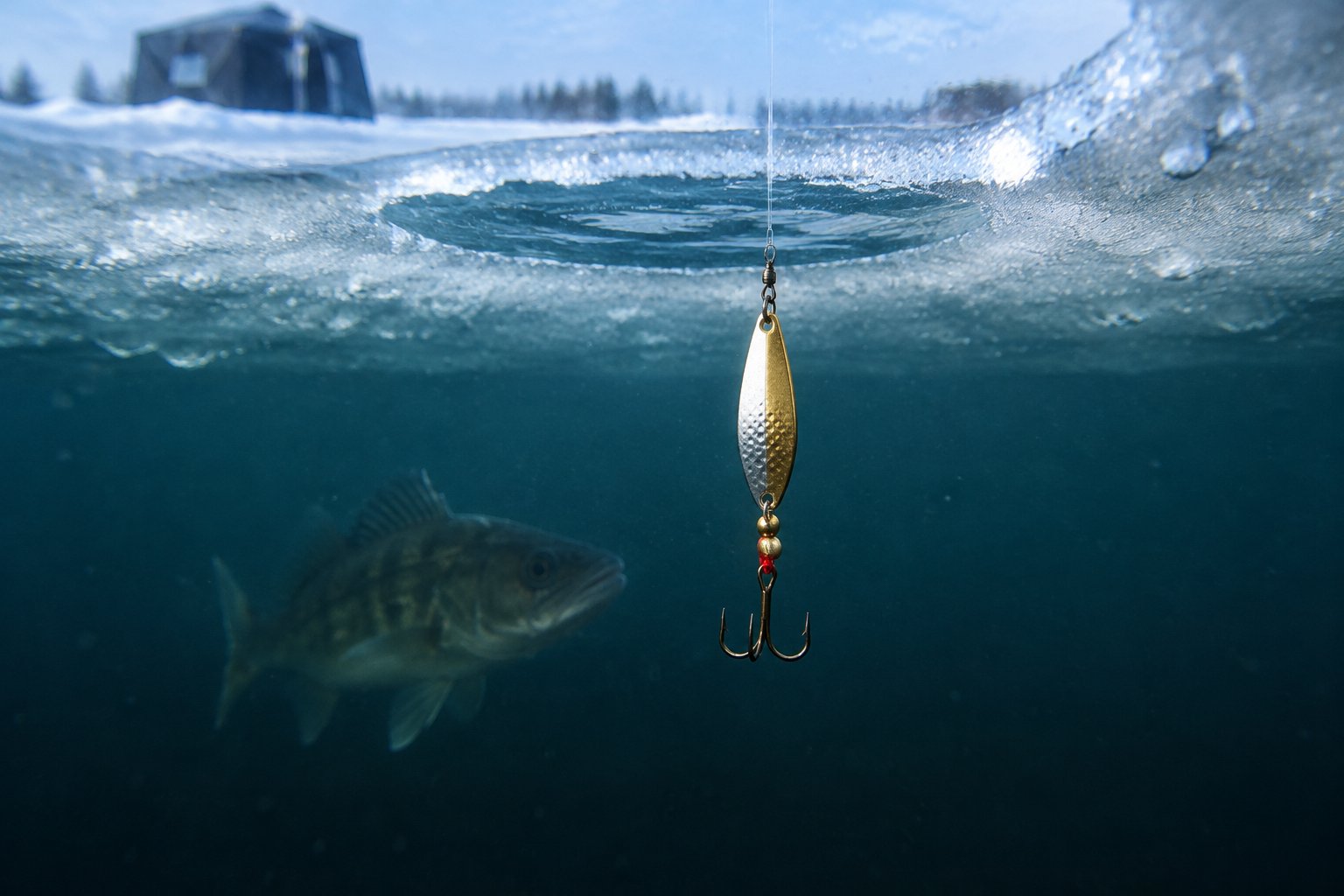
One lure, one simple motion, and you’re fishing the right way. The VMC Rattle Spoon sinks fast because it’s compact and heavy. A brass bead sound chamber makes noise on every lift, and the UV finish glows for up to 15 minutes after you charge it.
The 1½-inch size covers most walleye situations. Tip the treble with a minnow head. Then follow this pattern:
- Lift the spoon about 6 inches and let it flutter back into the mud.
- When a fish shows up on your flasher, jig just a couple of inches and pause.
- If it won’t bite, slowly raise the spoon away from it to trigger a chase.
Pros: easy to learn, gets down quickly, works in deep water
Cons: you need minnow heads or a scented plastic for the best results
2) Rapala Jigging Rap: Best for Aggressive Walleye
Snap your rod tip and this classic darts sideways, then swims in a circle like a dying baitfish. That wide swing draws walleye from far off when they’re feeding.
Pick from three sizes:
- W5 (2-inch): a good all-around size
- W7 (2¾-inch): better for bigger lakes and bigger fish
- W9 (3½-inch): for trophy hunting
You can fish it bare or with a minnow head on the belly treble. Choose glow colors after dark.
Watch your electronics. If a fish rushes in and then flees when the lure darts, tone it down to small 1-inch bounces. Fans of the best jerkbait choices for open water will feel right at home with the snap-and-pause rhythm.
Pros: strong attractor, needs no live bait
Cons: too aggressive for neutral fish unless you slow it down
3) Live Fathead Minnows: Best for a Simple Deadstick Setup
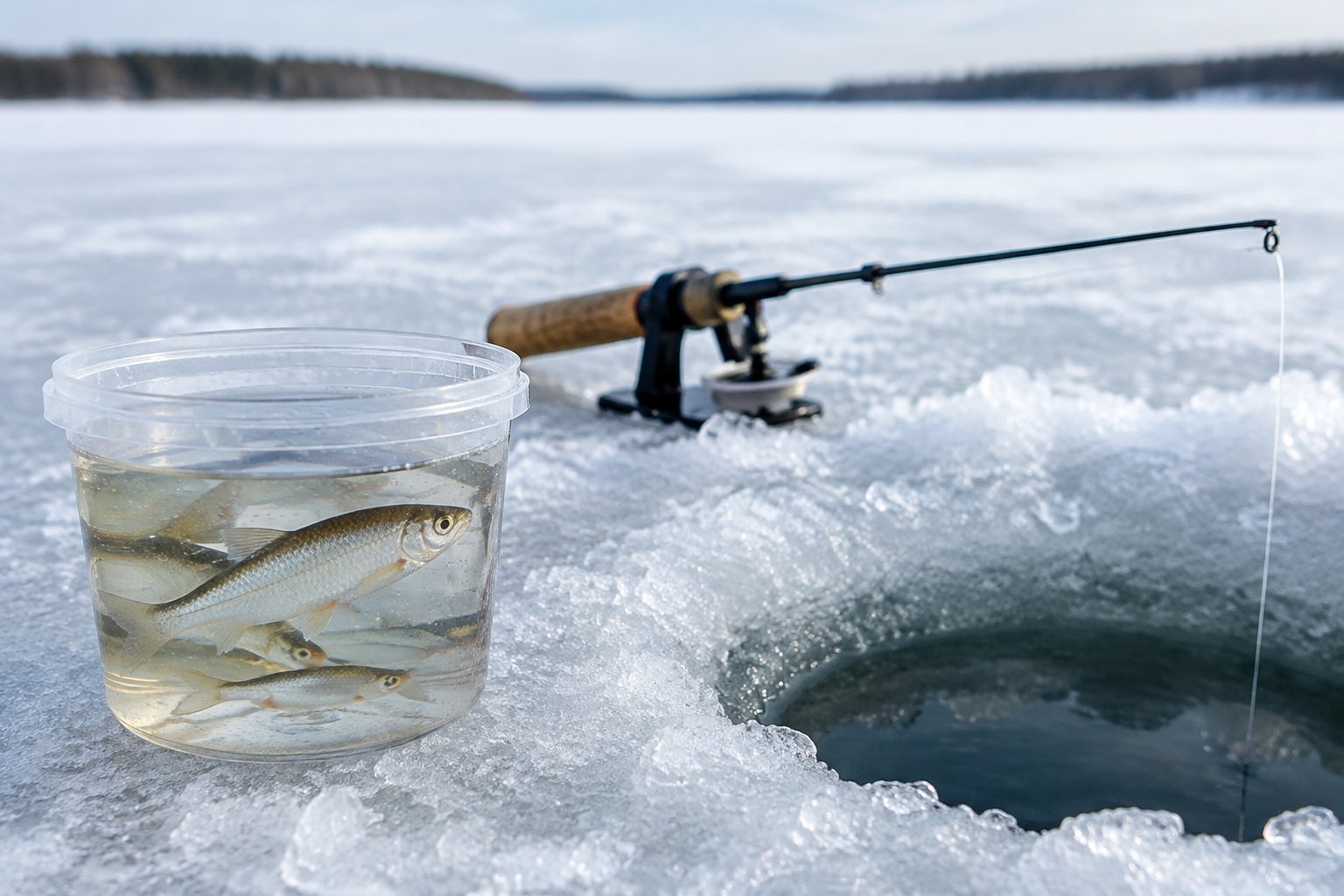
When walleye ignore every jigged lure, a live minnow sitting still under a bobber still gets bit. A deadstick rod also lets you jig one hole while the other works for you, where two lines are legal.
Rigging takes about five minutes:
- Slide a slip bobber stop onto your line.
- Tie on an octopus live-bait hook.
- Set the stop so the hook sits about a foot off the bottom.
- Pinch one or two split shot a foot above the hook.
- Hook a 3-inch fathead or golden shiner through the back, missing the spine.
If you’re new to rigging, learning how to hook a minnow keeps it lively much longer. When the float goes under, set the hook.
Pros: wins over finicky fish, kid-friendly to watch
Cons: needs a bait bucket and water care; banned on some waters
4) Northland Buck-Shot Rattle Spoon: Best for Added Sound
The Buck-Shot earns its spot when you want noise to do the work. It carries a built-in rattle chamber, so each lift and drop sends out a clicking sound that helps fish find your bait in stained water or low light.
Fish it much like the VMC: tip it with a minnow head, lift, let it fall, and pause. Keep a second rattle spoon in a different color so you can switch fast when the bite slows.
For a busy angler, this lure trades well with the VMC in your box. If one draws looks but no bites, the other gives you a slightly different sound and fall without changing your whole setup.
Pros: loud, simple to fish, easy to tip with bait
Cons: the noise can spook pressured fish in clear, shallow water
5) Acme Kastmaster: Best Compact Metal Lure
Solid brass with a flat, thin profile, the Kastmaster flashes hard and drops fast. That makes it handy in wind or current, where lighter lures drift off your target.
Use short lifts of a few inches with long pauses. The lure flutters and wobbles as it falls, and walleye often grab it on the drop. Tip one hook point with a small piece of minnow for scent if your rules allow it.
It also does double duty. The same lure works for perch and through open water in spring, so it’s a smart buy if you want gear that pays off all year. It pairs well with the other best lures for spinning reels you may already own.
Pros: durable, versatile, sinks quickly
Cons: no rattle, so it relies on flash alone
6) Frozen Emerald Shiners: Best Natural Bait Without Live-Bait Care
Frozen shiners give you real fish scent with zero bucket work. They keep in a freezer between trips, so you can grab a pack on your way out the door after work.
Use them two ways:
- On a jigging spoon: pinch off the head and thread it onto a treble.
- On a deadstick: hook a whole shiner on a small hook, set a foot off the bottom.
Frozen baitfish turn soft as they thaw, so hook them through the lips or the eye sockets to keep them on. Bring only what you’ll use in one outing; refreezing makes them mushy.
Some states treat dead or preserved baitfish differently from live ones, which is why frozen bait is legal on certain waters where live minnows are not.
Pros: no aerator, stores for weeks, natural scent
Cons: no swimming action; falls apart faster than live bait
7) Rapala Rippin’ Rap: Best for a Vibration-First Presentation
This lipless rattlebait buzzes hard when you rip it upward. Walleye feel that vibration through their lateral line, so it pulls fish from a wide area on big flats.
Rip the rod tip up about a foot, then let the bait fall on a semi-slack line. Most strikes come on the fall or the pause right after it. Once a fish shows on your screen, switch to short shakes in place.
Because it’s so loud, the Rippin’ Rap fits best early in the day or when fish are active. Hand the rod to an older child and let them rip it; the strong pull makes it easy to tell when the bait is working.
Pros: big search tool, no bait needed
Cons: less useful on sluggish midwinter fish
8) Clam Tikka Mino: Best Glide Bait Alternative
Glide baits like the Tikka Mino swing out to the side and glide back on each pump of the rod. That wide, swimming path looks like a baitfish, and it gives you a change of pace from spoons.
Pump the rod 12 to 18 inches, then let the line go slack so the bait glides. Pause and watch for a fish to rise. If you’ve used swimbaits for walleye in open water, the idea is the same: show a realistic profile and let it move on its own.
This bait shines when walleye follow a Jigging Rap but won’t commit. Swap over and give them something new to look at.
Pros: lifelike action, covers water side to side
Cons: takes practice to get a smooth glide
9) Salmo Chubby Darter: Best for a Slower Swimming Action
When fish are moving slow, the Chubby Darter gives you a calmer swim. Lift the rod and it darts in a gentle arc before settling, with less wild motion than a Jigging Rap.
Work it with small lifts and long pauses. The slower action keeps the bait in front of a fish longer, which helps on cold, bright days when walleye hang near the bottom and barely move.
It’s a good second lure for a beginner. If your Jigging Rap scares fish off on the flasher, tie on the Chubby Darter and keep the same depth and hole.
Pros: gentle action for picky fish, no bait required
Cons: draws fewer fish from far away
10) Berkley Gulp! Alive! Minnow: Best Packaged Minnow Alternative
Gulp! Alive! minnows sit in a jar of scented liquid, giving you a soft bait that smells like food without live-bait care. That makes them a strong pick where live minnows are banned or hard to find.
Thread one onto a jig head, or use it in place of a minnow head on a spoon. The soft body holds up to more bites than real bait, so you spend less time rebaiting with cold fingers.
Keep the lid sealed so the liquid doesn’t spill in your bag. Kids like these too, since there’s nothing squirming to handle.
Always confirm that scented soft plastics are allowed on your water. They count as artificial lures in many places, but a few waters have special rules.
Pros: easy to store, kid-friendly, durable
Cons: less natural movement than a live minnow
Check Bait Rules and Local Availability Before Buying
Your state fishing regulations decide which of these baits you can use, so read them before you spend money. Here’s how the ten picks compare:
| Bait | Type | Live-bait rules apply? | Ease for beginners | Best use |
|---|---|---|---|---|
| VMC Rattle Spoon | Lure | Only if tipped | Very easy | All-around jigging |
| Rapala Jigging Rap | Lure | Only if tipped | Moderate | Active fish |
| Live fathead minnows | Live bait | Yes | Easy | Deadstick |
| Northland Buck-Shot Rattle Spoon | Lure | Only if tipped | Very easy | Stained water |
| Acme Kastmaster | Lure | Only if tipped | Easy | Wind, deep water |
| Frozen emerald shiners | Dead bait | Yes, separate rules | Easy | Tipping, deadstick |
| Rapala Rippin’ Rap | Lure | No | Easy | Searching flats |
| Clam Tikka Mino | Lure | No | Moderate | Following fish |
| Salmo Chubby Darter | Lure | No | Easy | Slow fish |
| Berkley Gulp! Alive! Minnow | Soft plastic | Check locally | Very easy | Live-bait bans |
Are Live Minnows Allowed on Your Specific Water?
Check the special rules for each lake, not just the statewide page. Many states ban live baitfish on certain waters to stop the spread of invasive species and fish diseases.
Some lakes allow only artificial lures. Others limit which minnow species you can use. Look for your lake by name in the regulations, and check for any notices posted at the access point.
Do Dead, Frozen, or Preserved Baitfish Have Separate Restrictions?
Yes, many states write separate rules for dead, frozen, and salted baitfish. On some waters, dead bait is legal while live bait is not. On others, the rule runs the other way, or certain species are banned in any form.
Read the label on frozen packs, too. Shiners caught in another region might not be legal where you fish.
What Purchase, Transport, and Disposal Rules Apply?
Common rules include buying from a licensed bait dealer and keeping a receipt. Some states also limit moving bait or lake water between waters.
Disposal rules are strict in many places:
- Never dump leftover minnows or bait water into the lake.
- Toss unwanted bait in the trash.
- Drain your bucket on land, away from the water.
A good ice fishing bait bucket with a lid and aerator makes legal transport easier.
Can You Get Legal Bait Locally Before Your Trip?
Call the bait shop nearest your lake before you leave. Ask what minnows they have and whether those minnows are legal on your water. Shops near popular lakes know the local rules and stock what’s allowed.
Bait shops can run low on busy weekends. If you fish before work, buy the night before. Keep lures and Gulp! in your truck as a backup, so an empty minnow tank never ends your trip. A broader look at freshwater live bait options can help you plan a backup.
Choose Bait for Your Time, Budget, and Experience
Lures save you the most time, while live bait pays off when fish get picky and you can spare a few extra minutes. Match your choice to how long you’ll fish and who’s coming with you.
What Can You Keep Ready for a Short After-Work Trip?
Build a small box that lives in your vehicle. That way, you can stop at the lake with no shop run.
- One VMC Rattle Spoon and one Jigging Rap
- A sealed jar of Gulp! Alive! minnows
- A few spare snaps and hooks
- A pack of frozen shiners in a cooler, if it’s cold enough to keep them frozen
With this kit, you drill a hole, drop a spoon, and start fishing within minutes. The prime walleye window near sunset often lines up with the end of a workday, so a ready box lets you hit it.
When Is Caring for Live Bait Worth the Extra Time?
Live minnows are worth the work on long outings and on days when fish won’t chase lures. If you plan to fish for several hours, a deadstick with a lively fathead puts fish on the ice when jigging fails.
The care is simple but steady. Keep the water cold, add an aerator, and change out some water if the minnows start gasping. A short guide to ice fishing bait basics covers keeping minnows alive in freezing weather.
For a one-hour trip, skip it. The time spent buying and caring for minnows eats into your fishing.
Which Options Keep Bait Handling Simple When Fishing With Kids?
Choose baits that don’t wiggle, stab, or freeze little fingers. Gulp! minnows and rattle spoons top the list. Kids can tip a spoon with a soft bait, drop it, and lift it without help.
A deadstick bobber also works well, because kids love watching for the float to sink. You handle the minnow; they handle the watching. If your family also chases panfish, the same setup carries over to ice fishing for crappie on lighter gear.
Keep trebles covered when not in use, and bring a pair of pliers for unhooking.
What Should Beginners Check About Size, Hooks, and Required Tackle?
Start with walleye-sized baits: a 1½-inch spoon, a 2-inch Jigging Rap, or a 3-inch minnow. Bigger lures catch bigger fish but get fewer bites from average walleye.
Check these tackle basics:
- Rod: a medium or medium-light ice rod, about 28 to 32 inches
- Line: 6- to 8-pound test, light enough for the cold
- Hooks: octopus hooks for live bait; sharp trebles on lures
- Electronics: a flasher helps a lot but isn’t required to start
Picking the right fishing line for beginners prevents tangles and missed fish. If you need everything at once, a best beginner fishing kit can cover the open-water side before you add ice gear.
Final Verdict: Start With One Lure and One Legal Backup
Buy one rattle spoon and one natural or scented backup that’s legal on your lake. That two-bait plan catches fish whether walleye are chasing or sulking.
What Is the Best First Purchase for a Beginner?
Get the VMC Rattle Spoon in the 1½-inch size. It sinks fast, makes noise, glows, and only asks you to lift, drop, and pause.
Buy two colors, one bright and one glow, so you can switch as light changes. Tip it with a minnow head or a piece of Gulp! and you have a complete walleye setup for under the cost of a full tackle kit.
What Should You Bring for Reluctant Walleye?
Bring a deadstick with a live fathead minnow, where live bait is legal. Set it a foot off the bottom next to your jigging hole. Fish that come in for your spoon but won’t bite will often turn and grab the minnow.
If live bait is banned, swap in a frozen shiner or the Salmo Chubby Darter. Both slow things down for fish that won’t chase.
What Is the Simplest Choice When Natural Bait Is Restricted?
Use the Berkley Gulp! Alive! Minnow on a rattle spoon or jig head, as long as scented plastics are allowed. It gives you scent and a minnow shape without any live-bait rules to worry about.
Pair it with a Rapala Jigging Rap to draw fish in, and you’ll have two strong options on artificial-only lakes. Before your trip, confirm your lake’s rules and pack both lures in your after-work box.
Check the current price and customer reviews for the VMC Rattle Spoon before your next fishing trip.
