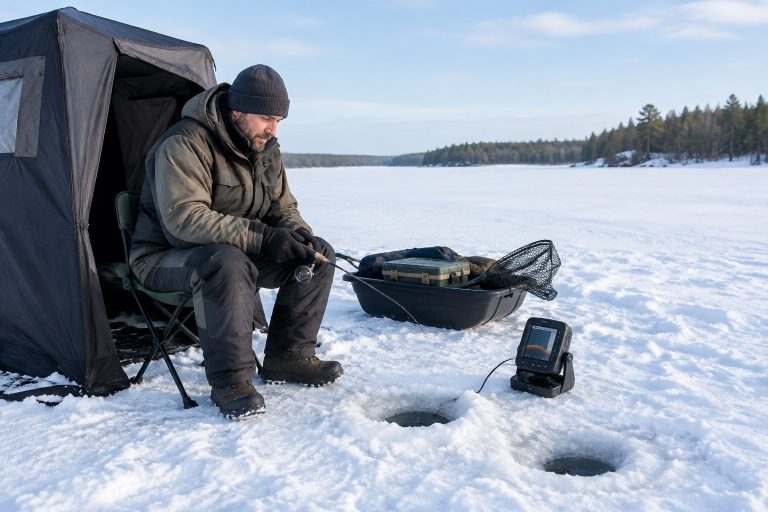
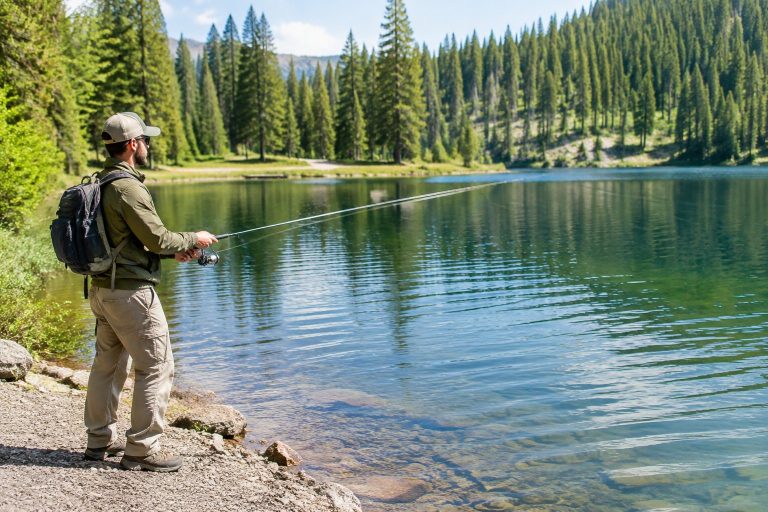
For fall fishing for catfish, start with fresh cut bait on a simple slip rig near a feeding flat that connects to deeper water, then fish farther down the drop-off as the water cools. You get a practical starting point for a short bank trip, with tackle that’s manageable when you’re learning or helping your kids fish.
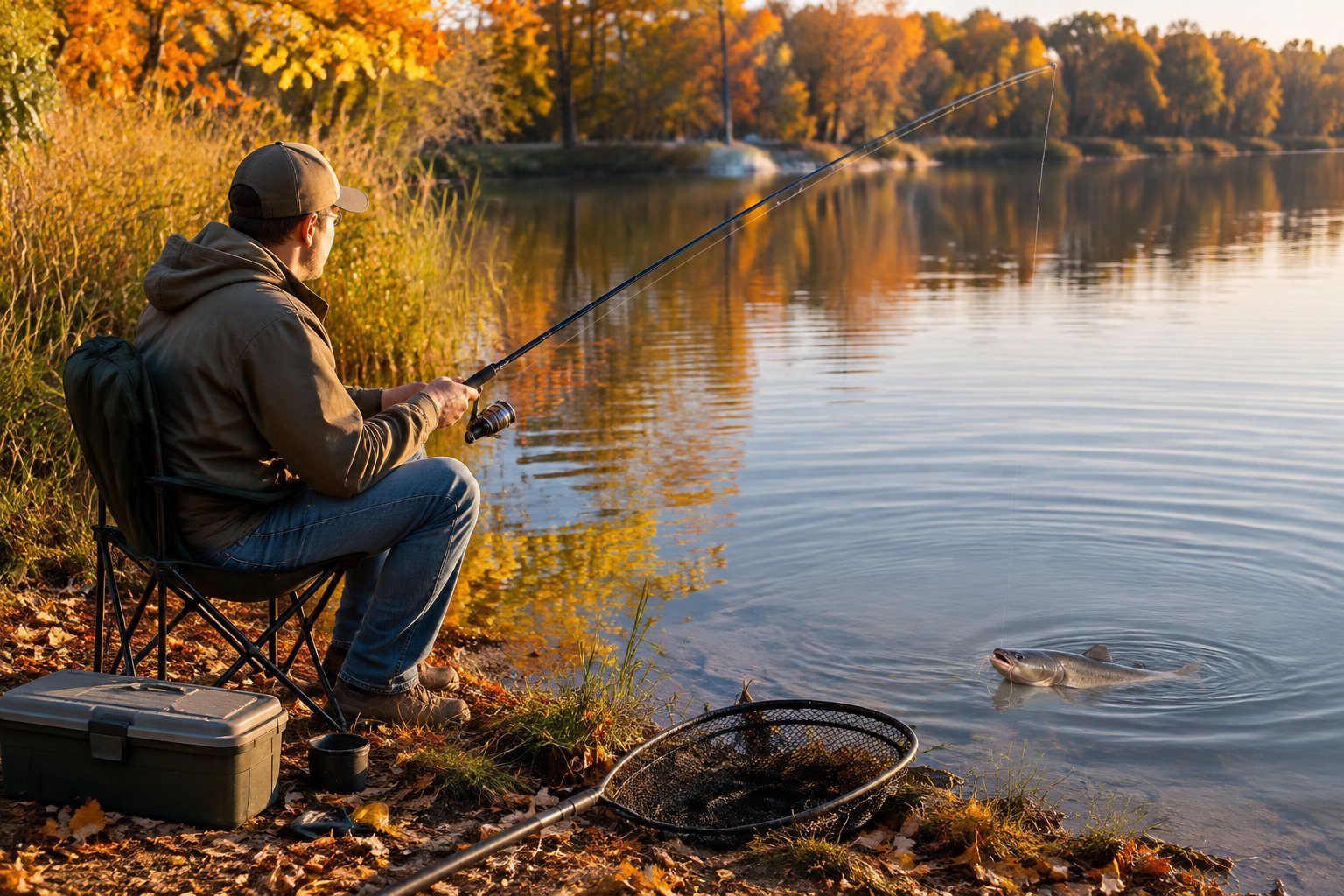
You don’t need a full weekend to put that approach to work. With bait packed ahead and a nearby shoreline offering several depths, you have enough options for a productive 30- to 60-minute session before work or after school.
Where Do Catfish Go as Fall Water Cools?
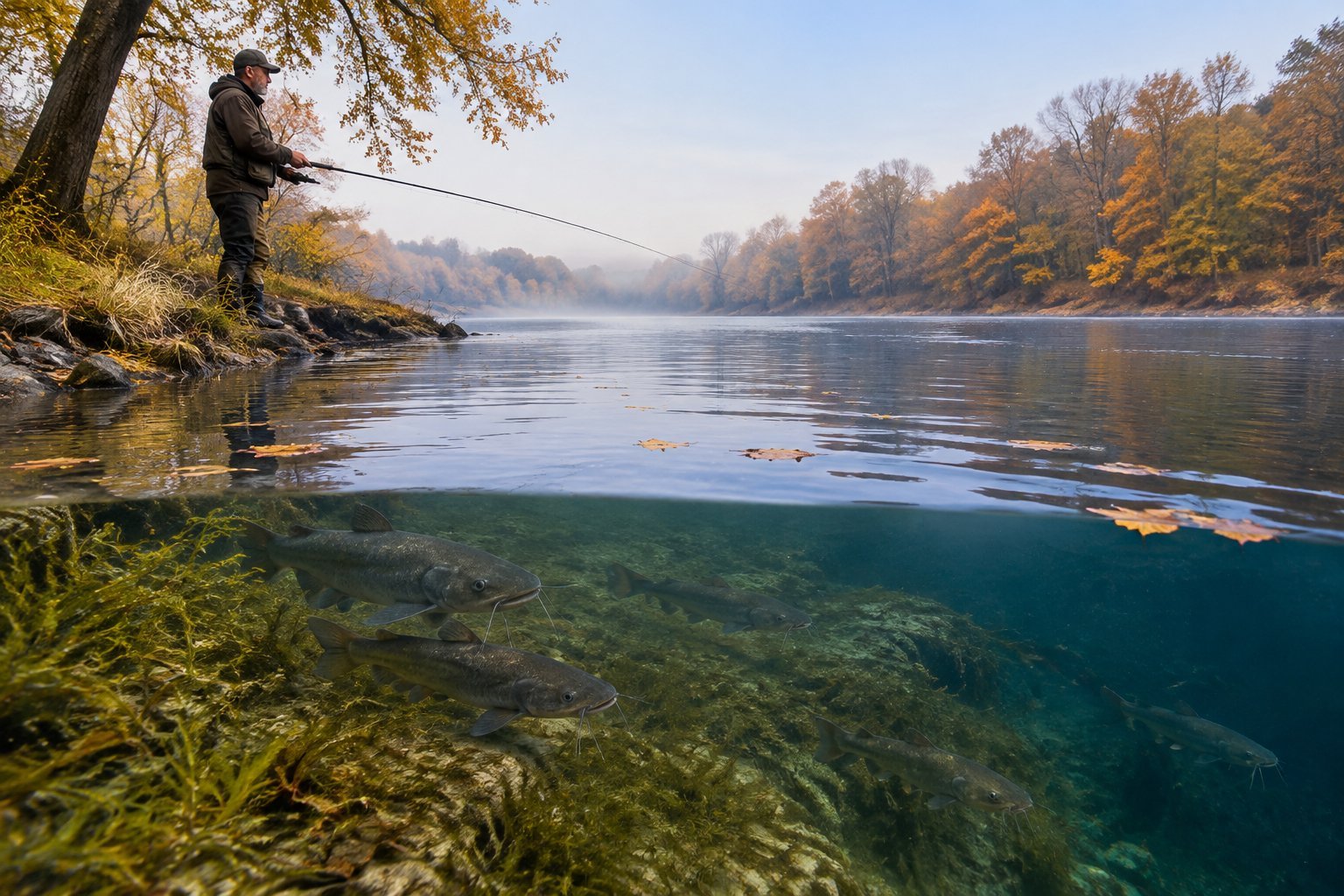
You’ll find fall catfish along the route between shallow feeding areas and deeper, more stable water. Use water temperature and nearby forage to choose your starting depth, with local conditions taking priority over the calendar.
Early Fall: Check Feeding Flats and Windblown Banks
Start on shallow flats while cooling remains gradual, especially where you see shad flickering or small panfish along vegetation. You’re looking for feeding activity within casting distance of an escape route into deeper water.
Give a windblown bank attention when waves push forage toward shore and your footing remains safe. Cast along the outside edge of the flat as well as across it, keeping track of which distance produces bites.
Cooling Water: Follow Creek Channels and Depth Breaks
After a sharp cold front, shift your attention to creek channels and the first substantial drop beyond the flat. For fall channel catfish, a break in roughly 6 to 15 feet of water is a useful starting zone in many fisheries.
Use a lake map to locate a channel swing near shore, then cast across its upper edge and base. If you’re using one rod, test those depths on successive casts so you know where each bite occurred.
Late Fall: Look for Deeper Water Near Feeding Areas
When water drops below about 50°F, look toward deeper holes and basin edges connected to feeding areas. Treat that temperature as a transition cue; your local depth, current, and forage still determine where fish hold.
In a reservoir with substantial depth, investigate holes around 25 to 40 feet if you have safe access. From the bank, prioritize a steep shoreline or point that puts deeper water within reach, and revisit the adjacent shallows during a warm afternoon.
Which Bank Spots Are Best for a Short Trip?
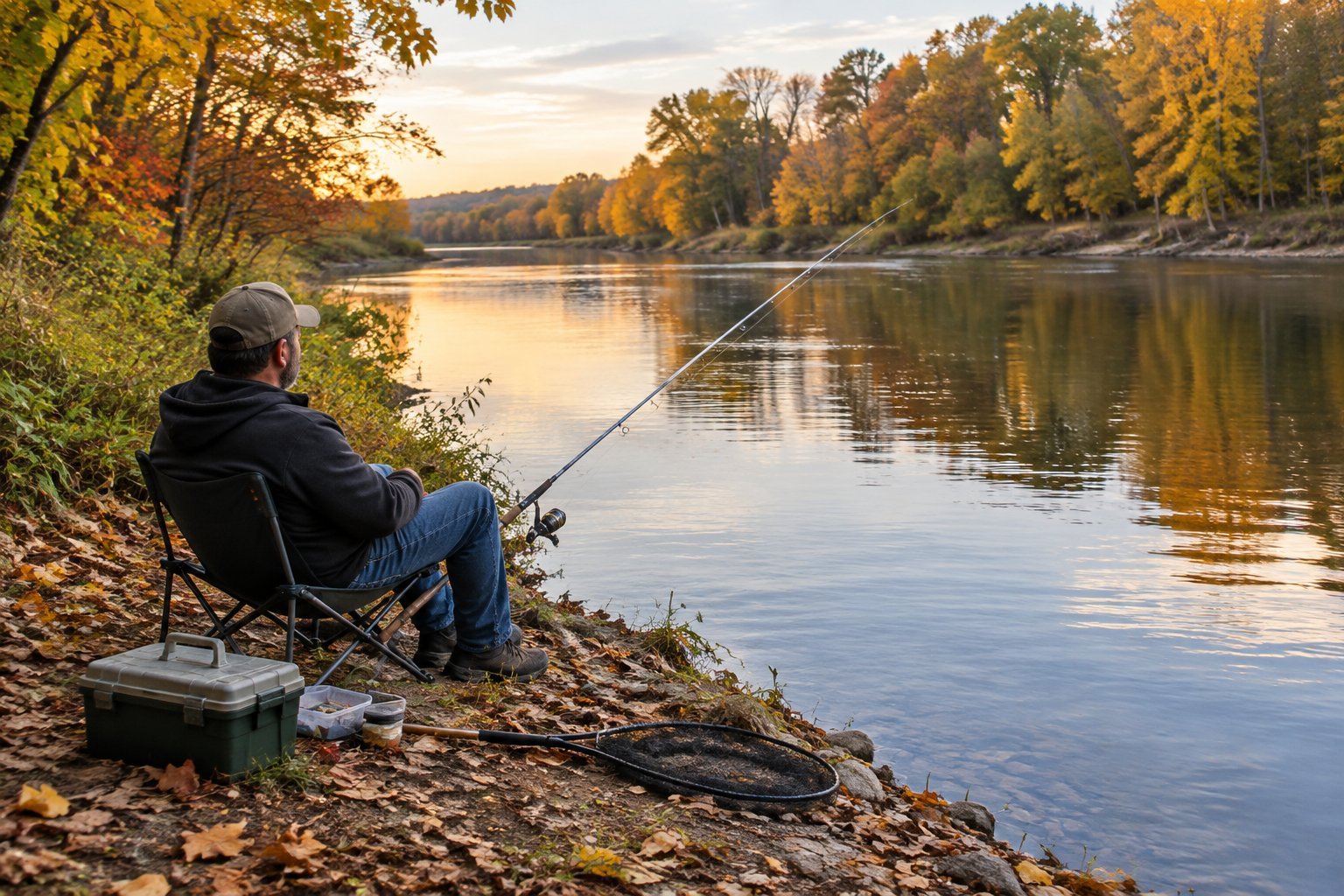
Choose a bank spot where you can reach a depth change without a long walk or difficult climb. To catch catfish during a short session, give yourself several casting angles from one safe position.
Accessible Riprap and Shorelines Near Deeper Water
Look for riprap beside a public fishing area where you can stand on level ground. Submerged rocks shelter crawdads and attract minnows, giving you a concentrated feeding area near shore.
Cast toward the outer edge of the rocks to reduce time spent retrieving snagged rigs. Check your line after contact with stone, and retie when you feel roughness near the hook or sinker.
Pond Drop-Offs and Remaining Weed Edges
For fall pond fishing, start where the remaining vegetation ends beside deeper water. A modest depth change deserves attention in a small pond, especially near its dam or original drainage channel.
Keep your bait along the outside weed edge where fish have room to find it. If every retrieve brings back dead vegetation, shorten your cast or suspend the bait above the decaying material with a float.
River Current Breaks and the Edges of Woody Cover
On a river, target the slower side of a current seam or a protected pocket behind shoreline cover. You want moving water nearby to deliver food while your bait stays in a fishable position.
For flathead catfish, work the outside edge of substantial wood with tackle capable of controlling a hooked fish. Choose legal river fishing bait that matches local forage, and keep beginners away from steep banks and unstable log piles.
What Bait Should You Use in Fall?
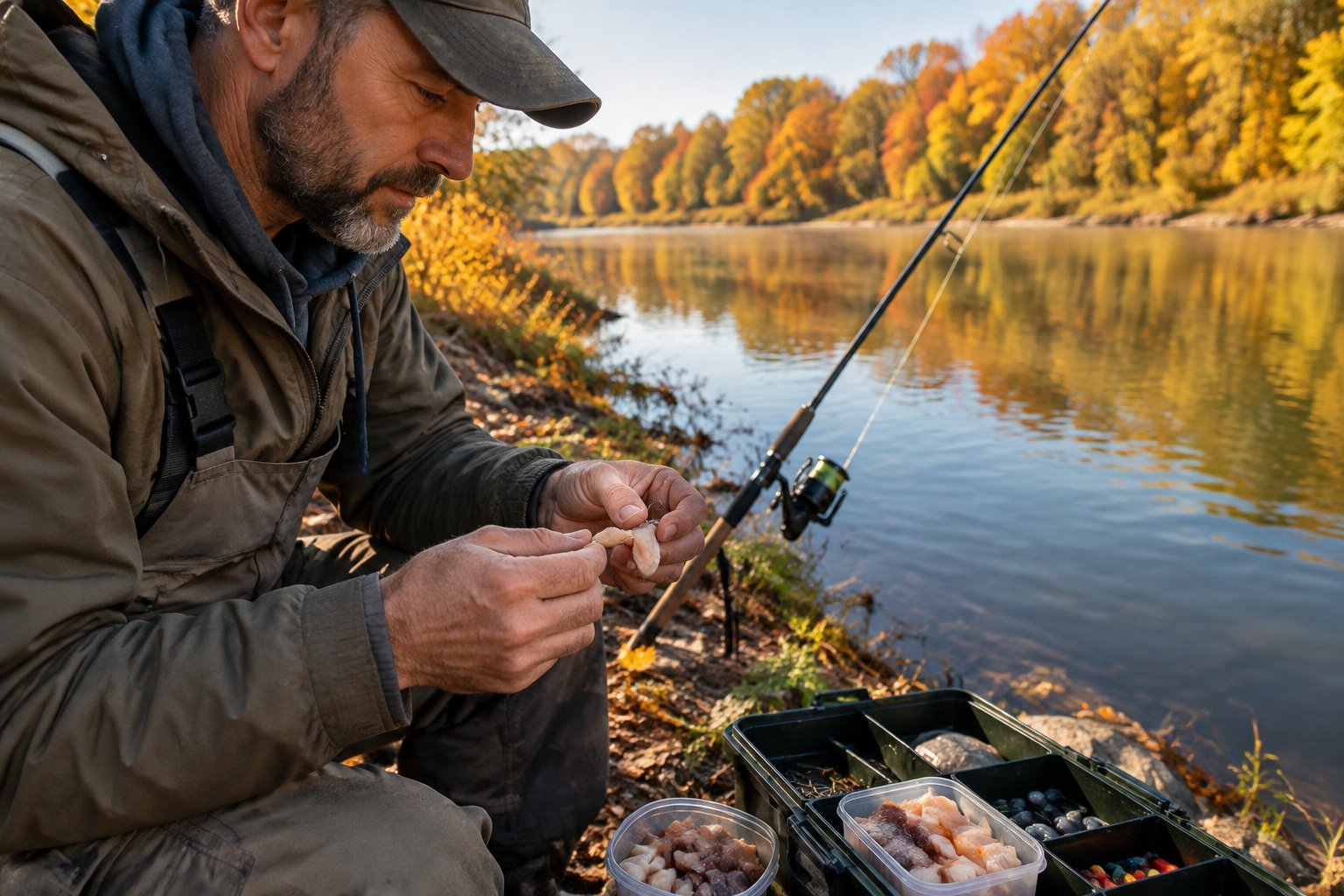
Make fresh cut bait your first choice for channel and blue catfish, and use legal live fish when you’re targeting flatheads. Pack a small amount of suitable bait so preparation stays manageable.
Fresh Cut Bait for Channel and Blue Catfish
Start with fresh shad or another locally legal forage fish, such as bluegill or sucker. Keep your bait chilled in a separate container, and cut only what you need for the next few casts.
For channel catfish, try a strip about 2 to 3 inches long and roughly ½ inch thick. Pass the hook through a firm section of skin so the bait survives the cast while leaving the point exposed.
Live Bait for Flatheads and Larger Fish
Choose lively baitfish when you’re live-bait fishing for catfish, especially flatheads. Where permitted, your choices include live bluegill, green sunfish, sucker minnows, and shiners.
Use an aerated container and avoid crowding your bait. For a short family outing, smaller legal baitfish are easier to cast and manage; targeting trophy catfish calls for stronger tackle and a clear landing area.
When Chicken Livers and Stink Bait Make Sense
Try chicken livers or stink bait when you’re targeting channel catfish in relatively mild early-fall water. Prepared bait offers convenience, while liver requires gentle casting or a bait holder to stay attached.
As temperatures fall, give fresh cut bait priority if these options stop producing. Carry one backup bait so you have a useful alternative without filling your bag with containers that need attention.
How to Adjust Bait Size as Water Cools
Below roughly 60°F, test smaller portions when channel-catfish bites become tentative. Start with a narrow strip of cut bait, a legal 3- to 4-inch bluegill, or a sucker minnow no longer than about 5 inches.
Watch how much bait remains after a missed bite. If fish repeatedly tug loose ends, trim the dangling portion and check that the hook gap stays open.
What Simple Gear and Rigs Do You Need?
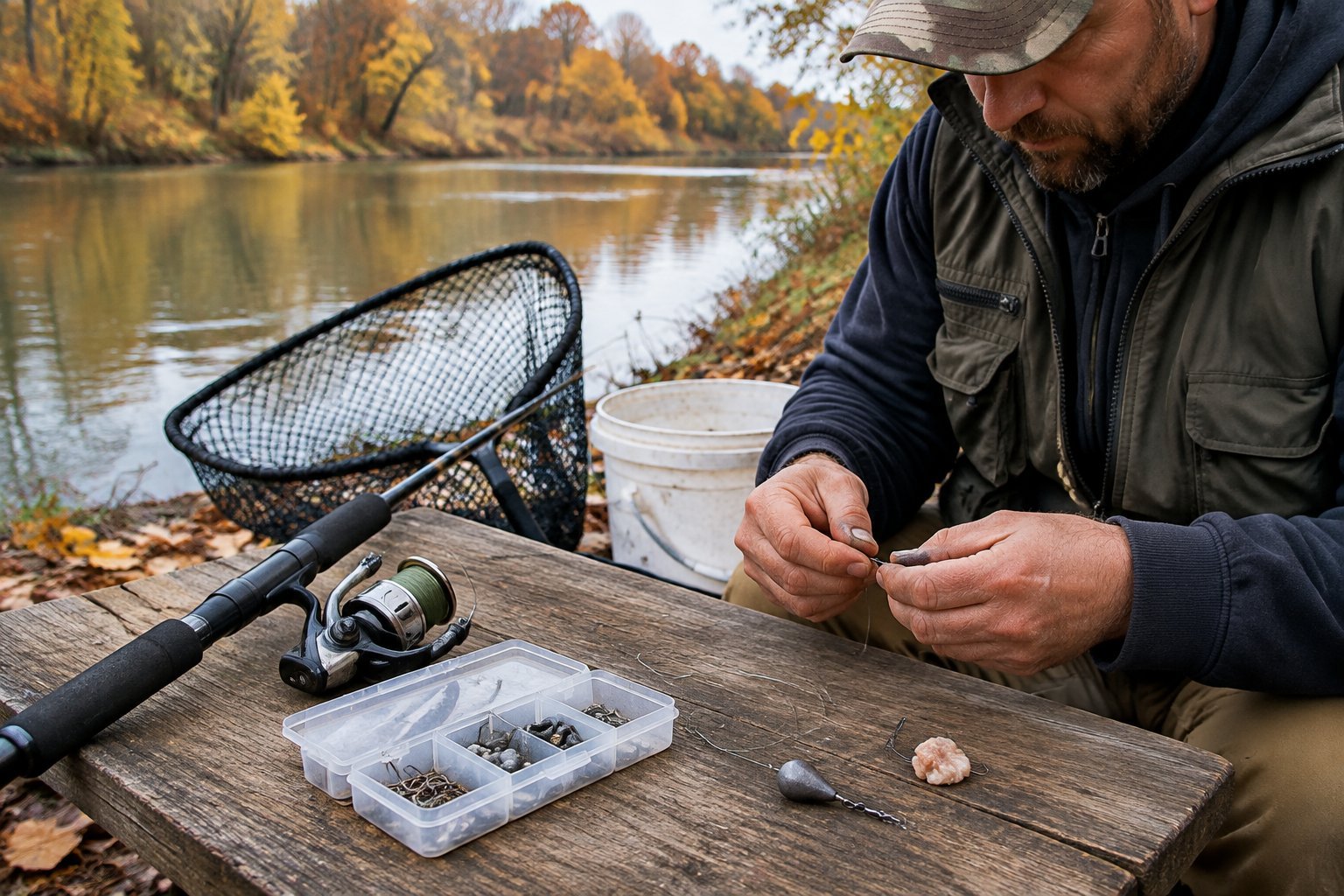
For ordinary channel-catfish bank fishing, use a manageable spinning outfit with an egg sinker slip rig. Add a slip float when rocks, weeds, or suspended fish call for bait above the bottom.
Choose a Manageable Rod, Reel, and Landing Kit
A roughly 7-foot medium-heavy rod with a compatible spinning reel gives you a practical starting outfit. For modest channel catfish in open water, consider 15- to 20-pound monofilament within the rod and reel ratings; increase tackle strength around heavy cover or larger fish.
Pack a landing net, long-nose pliers, line cutters, and a secure rod holder. Keep your beginner fishing tools together so you can reach them while controlling a fish.
Build an Egg Sinker Slip Rig for Bank Fishing
Use this basic catfish rig for bank fishing when you want bait near the bottom. Your sliprig needs an egg sinker, a protective bead, a swivel, a leader, and a hook.
- Thread the egg sinker onto your main line.
- Add a bead, then tie the main line to a barrel swivel.
- Attach an 18- to 24-inch monofilament leader to the swivel’s other eye.
- Tie your hook to the leader and check every knot.
Start with a ½- to 1-ounce sinker in calm water and adjust until your bait stays positioned. In stronger current, use enough weight to hold while staying within your rod’s casting rating.
Use a Slip Float to Keep Bait Above Snags
Build your float setup by threading on a bobber stop, a bead, and a slip float before adding the weight and hook arrangement. Choose a float buoyant enough to support your sinker and bait without sinking under their combined weight.
Set the stop so your bait rides several inches above bottom. If it catches as the float drifts toward shore, shorten the fishing depth slightly and repeat the same path.
Match Your Hook to the Bait and Learn the Hookset
Choose a hook with enough gap to remain exposed around the bait; a 2/0 to 5/0 circle hook is a useful starting range for modest cut-bait portions. Because sizing varies by manufacturer, inspect the baited hook before casting.
With circle hooks, keep the rod secure and reel steadily when sustained pressure loads the rod. With a conventional octopus hook, reel out slack and use a controlled hookset; when choosing fishing hooks as a beginner, check the point shape because “octopus” also appears on some circle-hook labels.
How Do You Adjust When Bites Slow Down?
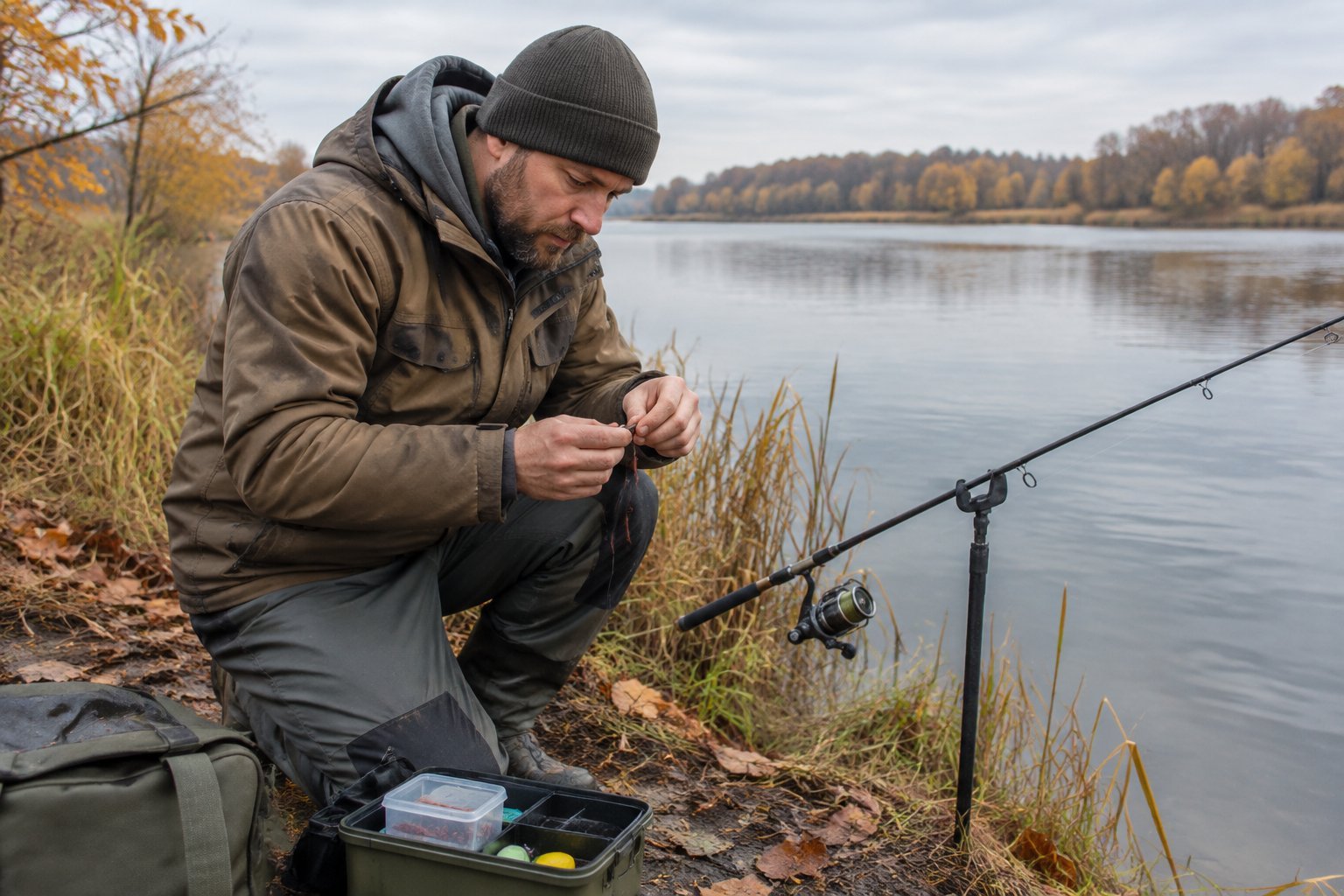
Change your bait’s depth or location first when fall catfishing slows. Keep the remaining setup consistent long enough to identify what improves your results.
Change Depth or Move Before Changing Everything
Give a promising depth about 15 to 20 minutes during a short session, then cast to another part of the break. Check your bait when you retrieve it, replacing pieces that are damaged or buried in debris.
If you finish testing the reachable depths without activity, move to your planned backup spot. Record the bite depth and water temperature on your phone so your next quick trip starts with a useful clue.
Try a Bait-Tipped Tube Jig for Scattered Channel Cats
Use a stout-hooked tube jig tipped with a small piece of cut bait when you want to search open bottom. Start around ¼ to ½ ounce in shallow, calm water, increasing weight when depth or current prevents bottom contact.
Cast across the edge, let the jig settle, then drag it a short distance and pause. Keep the movement slow and deliberate, and avoid pulling this exposed-hook setup through dense wood.
Optional Boat Tactic: Slow Drift Fishing
If you already have a suitable boat and safe conditions, try slow drift fishing across a flat or along a channel edge. Control your movement with a trolling motor or drift sock so the bait maintains gentle bottom contact.
Use a Santee Cooper rig with a sliding sinker on the main line and a small float pegged on the leader above the hook. Test the baited rig beside the boat to confirm the float lifts the bait, then shorten your drift or adjust weight if you keep snagging.
How Can You Fit a Safe Trip Into a Busy Day?
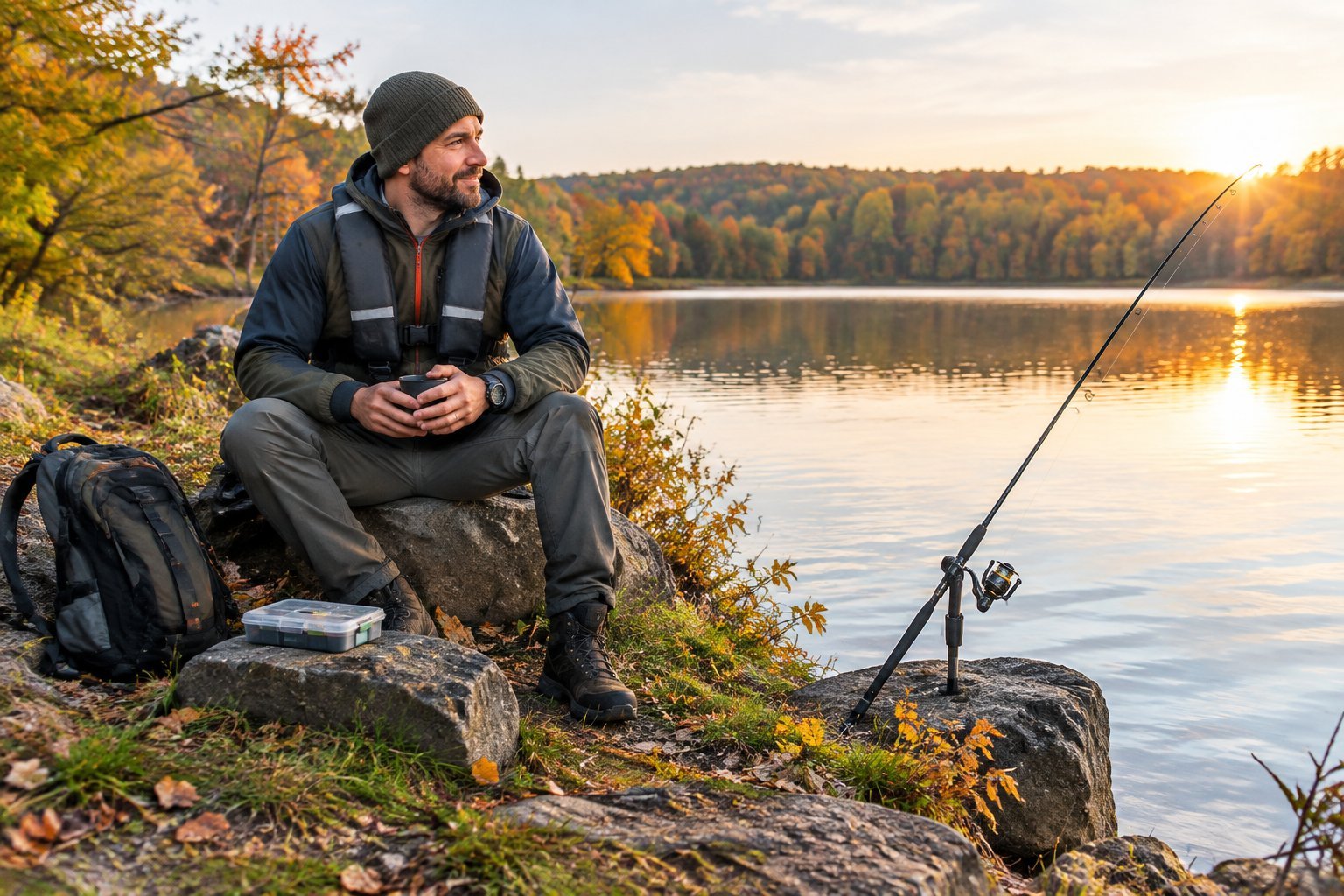
Plan your fall catfishing trip around a nearby legal access point, a daylight window, and gear packed before departure. When you’re bringing kids, choose level footing and an easy route back to your vehicle.
Choose a Daylight Window Around Work or School
You have worthwhile daylight options for channel and blue catfish, including a lunch break or an after-school visit. During colder weather, try a sunny afternoon where shallow feeding water sits close to a deeper holding area.
When weighing morning versus evening fishing, include parking hours and available daylight in your decision. Set a firm departure time and leave enough light for packing up safely.
Pack Ahead for a 30- to 60-Minute Bank Session
Keep your gear for fishing before work compact enough to carry in one trip. Pre-tie a spare leader and store it with your terminal tackle, leaving bait chilled until departure.
Use a short departure checklist:
- Rod and reel with fresh, undamaged line
- Bait, hooks, sinkers, and spare leader
- Net, pliers, cutters, and rod holder
- License, drinking water, and weather-appropriate clothing
- Properly fitted life jackets where needed
For a 30-minute visit, select one accessible spot with several casting depths. With an hour available, allow time for a nearby backup location.
Keep Kids Comfortable and Handle Catfish Safely
Dress your kids in warm layers and footwear with reliable traction. Use properly fitted life jackets near deep water or steep banks, and keep everyone clear of the casting area.
Land catfish with a net, then support the body with wet hands while controlling movement. Keep your hands clear of the sharp dorsal and pectoral spines, use pliers for hook removal, and cut the leader close to the hook if a deeply hooked fish cannot be unhooked safely.
Check Bait Rules, Access Restrictions, and Harvest Limits
Before leaving, check your state’s current rules for live bait, baitfish collection, and transport between waters. Confirm whether bluegills or other sunfish are legal bait at your destination, including any requirements for using them whole or cut.
Check access hours, rod limits, and catfish harvest restrictions for that specific water. Empty bait containers as directed by local regulations, and dispose of unused bait properly.
Get your gear ready and explore the related beginner-friendly guides before your next trip.