You should choose the Okuma Celilo Ultralight Spinning Rod for simple crappie trips if you want a graphite rod that suits light-line fishing with small jigs. Among fishing rods for crappie, it gives you a straightforward starting point for casting from an open bank or fishing beside a dock.
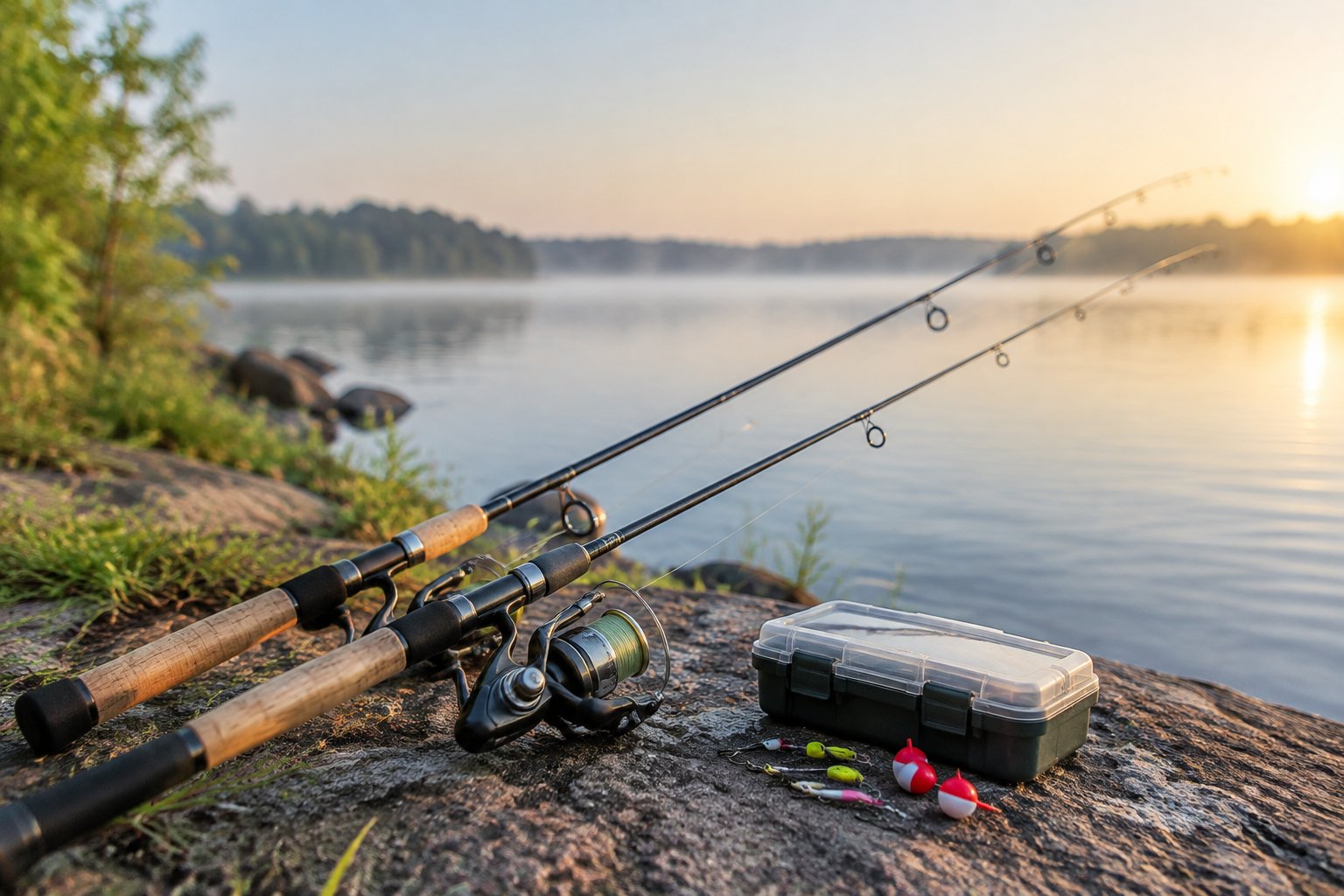
You’ll get more use from a rod that matches your nearest fishing spot and travels easily with your other gear. For a quick after-work stop or a child’s first outing, a manageable setup helps you spend your available time fishing.
Quick picks:
- Best everyday choice: Okuma Celilo Ultralight Spinning Rod for light jigs.
- Family option: Ugly Stik Elite Spinning Rod for shared fishing trips.
- Entry-level choice: Berkley Cherrywood HD Spinning Rod for occasional outings.
- Fixed-line option: Shakespeare Wonderpole for close-range bait fishing.
1. Okuma Celilo Ultralight Spinning Rod: Best Overall for Simple Crappie Trips
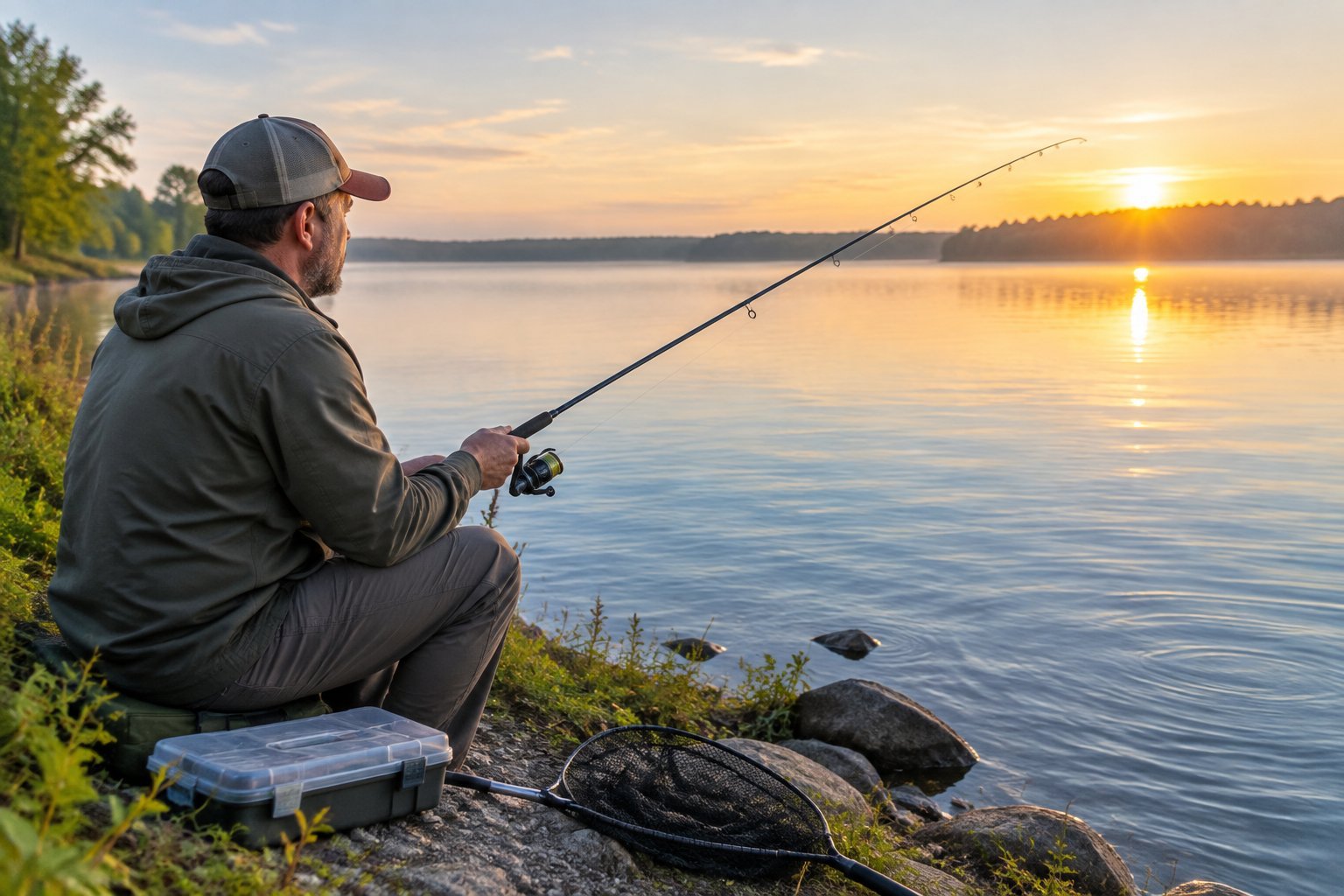
You get a versatile starting point with the Celilo when your trips involve small jigs and light line. Its graphite construction makes it a sensible choice for presentations where you watch the line and feel for subtle contact.
Choose your length around your casting room. A shorter version is easier to manage beneath branches; a longer version helps you cast across open water. Check the exact model’s printed lure and line ratings before ordering.
- Practical advantage: You can use one spinning setup for casting jigs and fishing a light float.
- Trade-off: You need careful handling around car doors and heavy tackle.
An ultralight spinning rod makes the most sense when your terminal tackle falls within its rating.
2. Ugly Stik Elite Spinning Rod: A Practical Option for Family Fishing
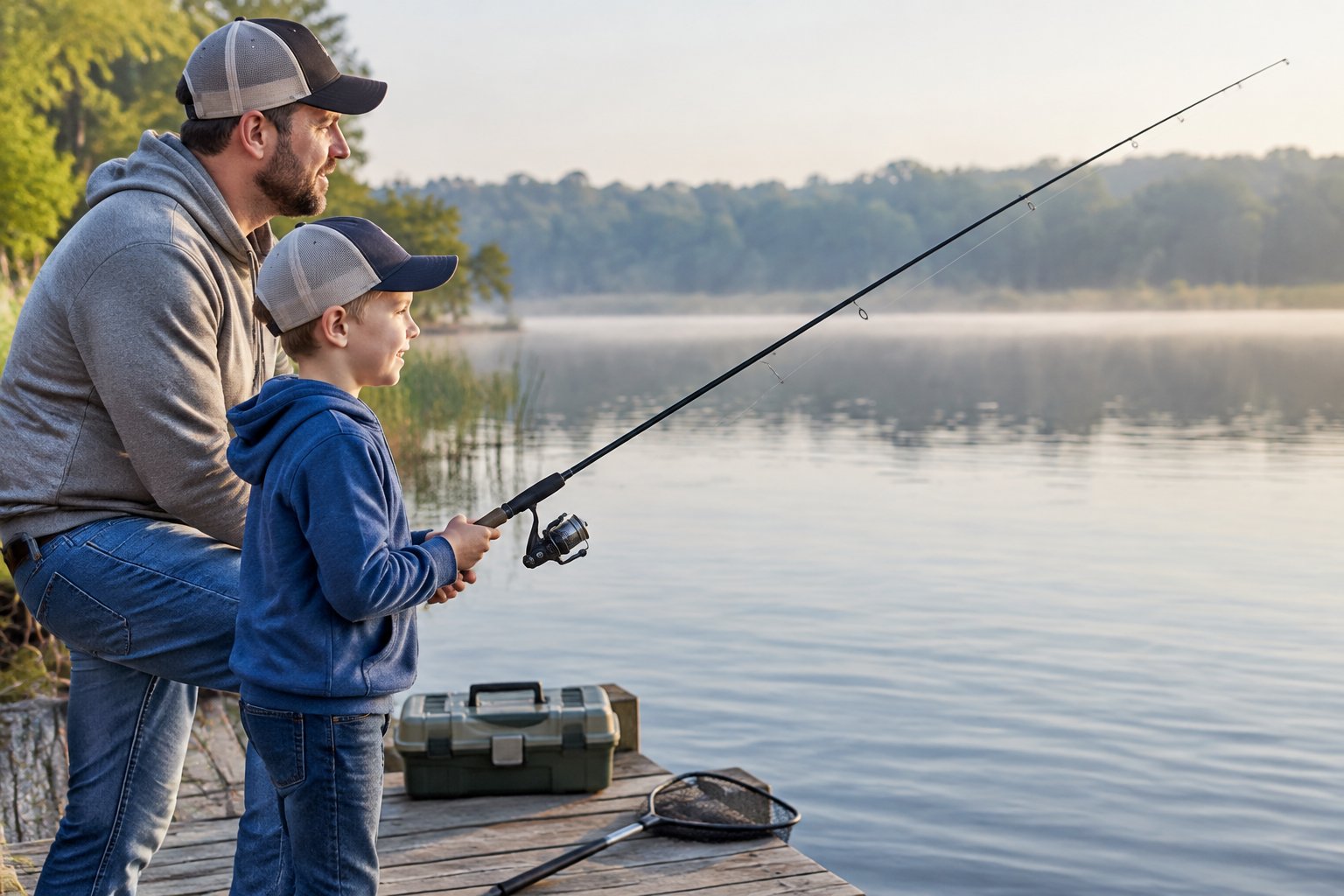
For shared family outings, you get a practical option in the Ugly Stik Elite’s graphite-and-fiberglass construction. You should still choose a light or ultralight model whose ratings match your crappie tackle.
Pay attention to how the handle fits your child’s hands. A rod that feels comfortable to you might require two-handed support from a younger angler, especially after adding a reel.
- Practical advantage: You get a useful crossover choice for crappie and other small freshwater fish.
- Trade-off: You still need a model light enough to cast your smallest offerings.
When you’re fishing with kids, start with short casts and keep the hook under adult control until everyone has room.
3. Daiwa Presso Ultralight Spinning Rod: For Casting Small Jigs
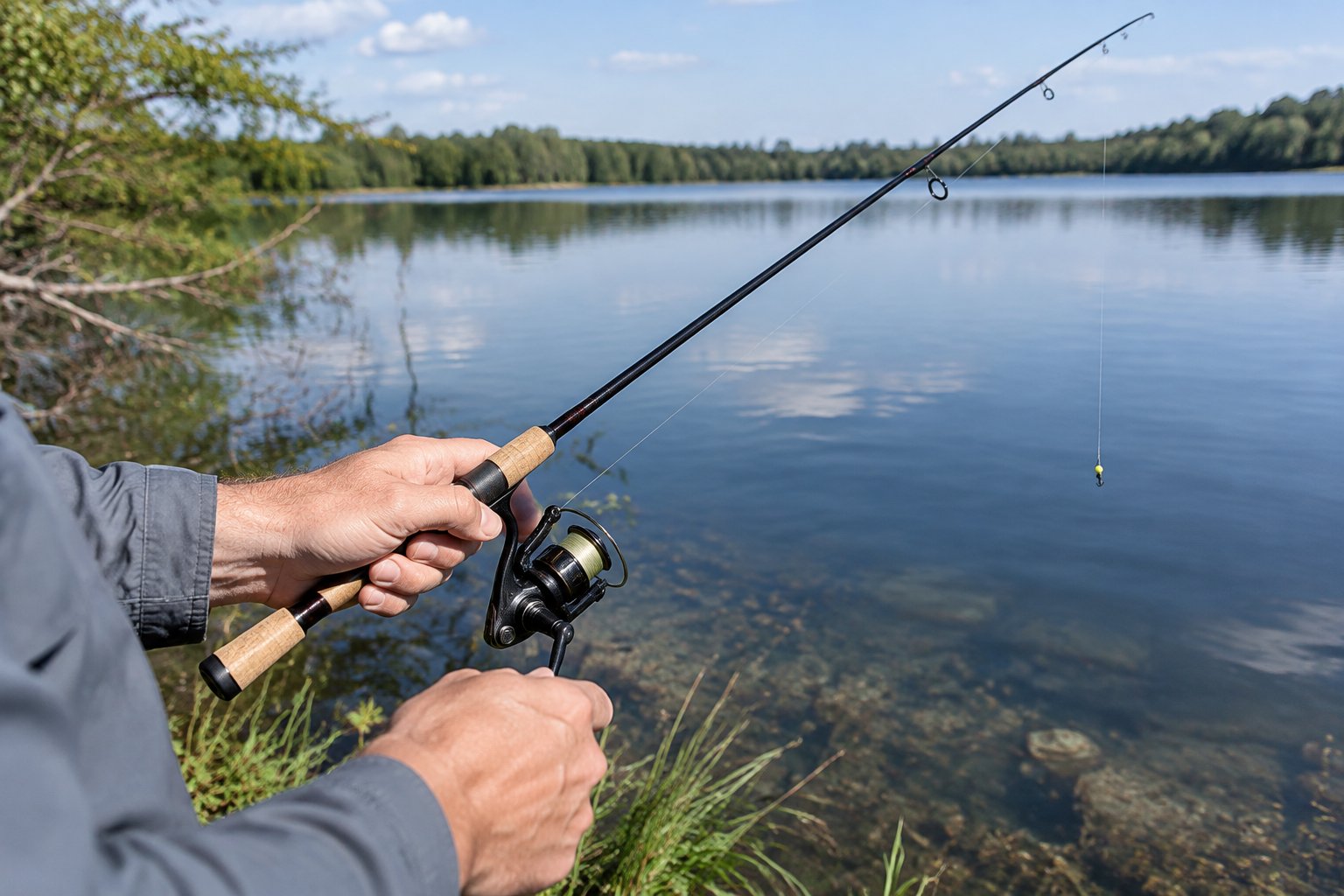
Choose the Daiwa Presso when your main interest is casting small jigs on an ultralight spinning setup. You’ll benefit most when the complete lure, including its plastic body, sits comfortably within your chosen model’s casting range.
Line management deserves attention with light tackle. Fill your spool to the reel manufacturer’s recommendation, close the bail by hand, and remove loose loops before your next cast.
- Practical advantage: You get a focused option for light-lure presentations.
- Trade-off: Wind makes very light jigs harder to place accurately.
Keep your selection of crappie lures compact: a few jigheads and compatible soft plastics are enough for an uncomplicated trip.
4. St. Croix Panfish Series Spinning Rod: A Premium Panfish Option
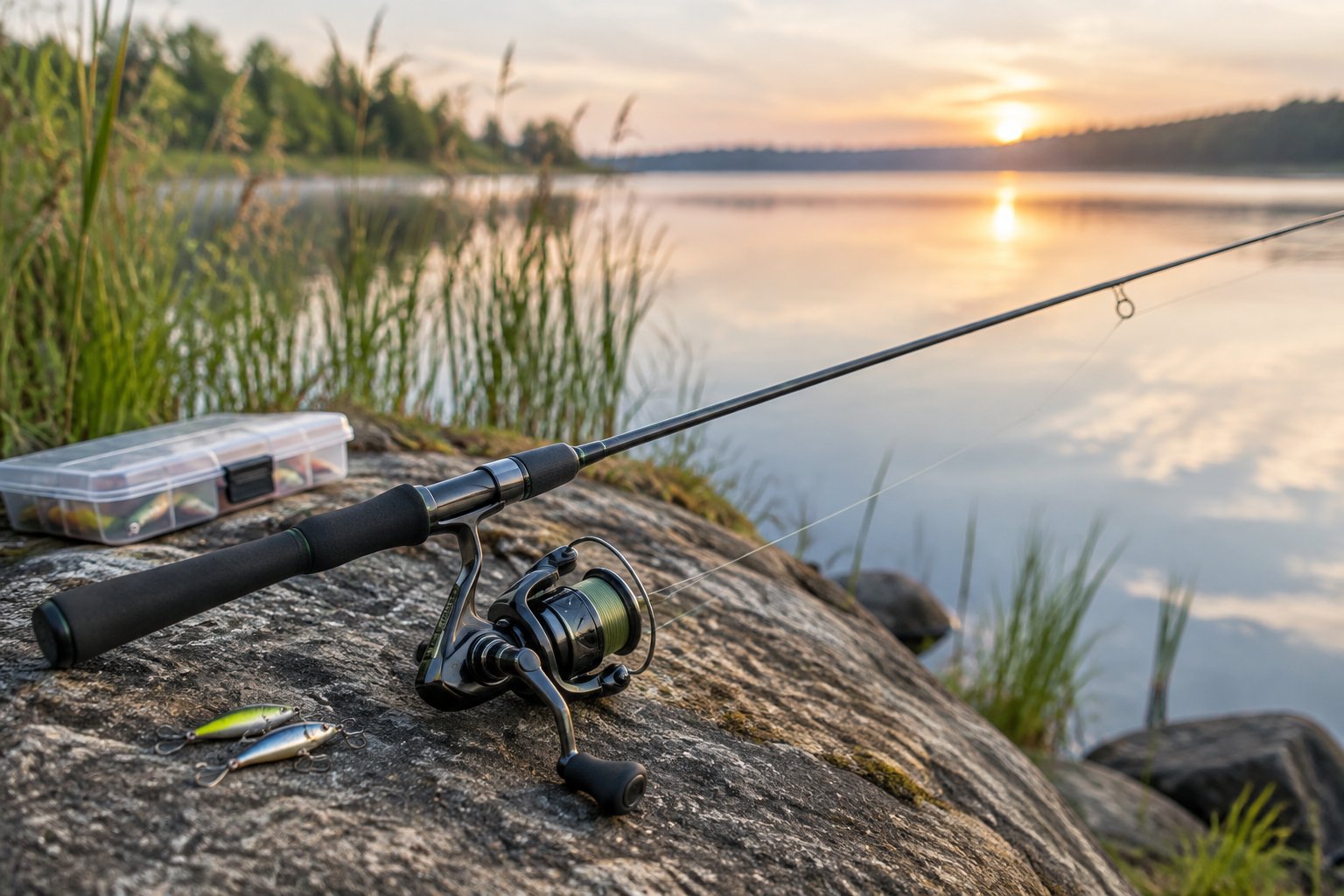
You should consider the St. Croix Panfish Series when you fish frequently enough to justify a premium panfish-focused rod. Choose the individual model around your presentation, because rods within a series differ in length and ratings.
Before spending more, handle the assembled outfit if possible. Check whether you can hold it comfortably with the tip extended and whether the reel seat feels secure in your grip.
- Practical advantage: You get a dedicated panfish option for regular outings.
- Trade-off: Your purchase deserves closer attention to fit and model selection.
Pair it with one of the small spinning reels suited to lightweight fishing so the assembled outfit stays manageable.
5. ACC Crappie Stix GS66M: For Everyday Bank and Boat Fishing
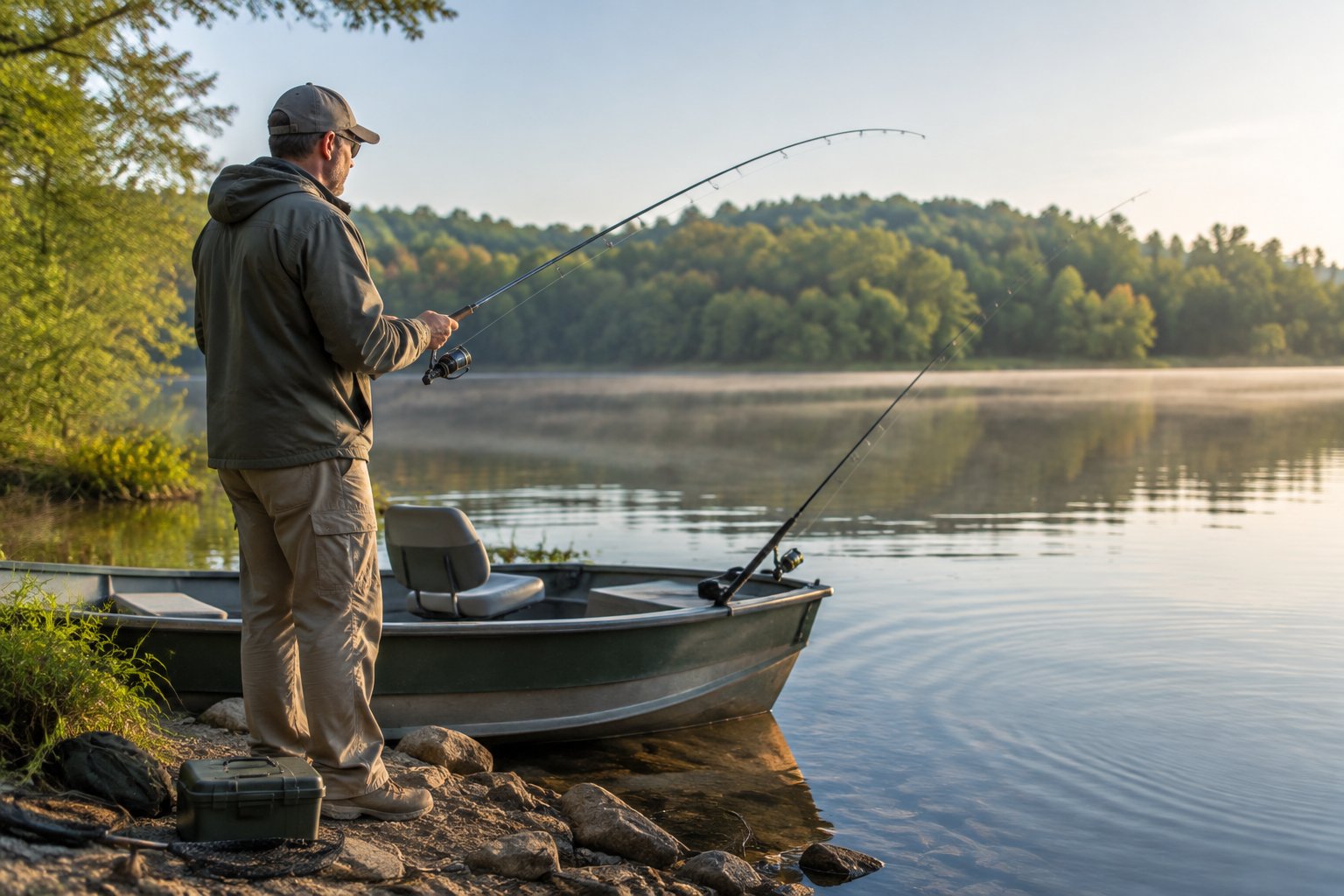
Put the ACC Crappie Stix GS66M on your shortlist when you want a crappie-focused spinning rod for bank and boat use. Match its listed specifications to your normal jig weight before deciding whether it fits your fishing.
Think through your retrieve as well as your cast. From a bank, you need room to bring the fish past shoreline vegetation. From a boat, you need enough clearance to guide it toward a landing net.
- Practical advantage: You have a candidate for trips that alternate between shore and boat.
- Trade-off: You should check its lure rating carefully if tiny jigs dominate your tackle box.
Keep a net accessible so you can land fish without lifting them by the rod.
6. Berkley Cherrywood HD Spinning Rod: A Simple Entry-Level Option
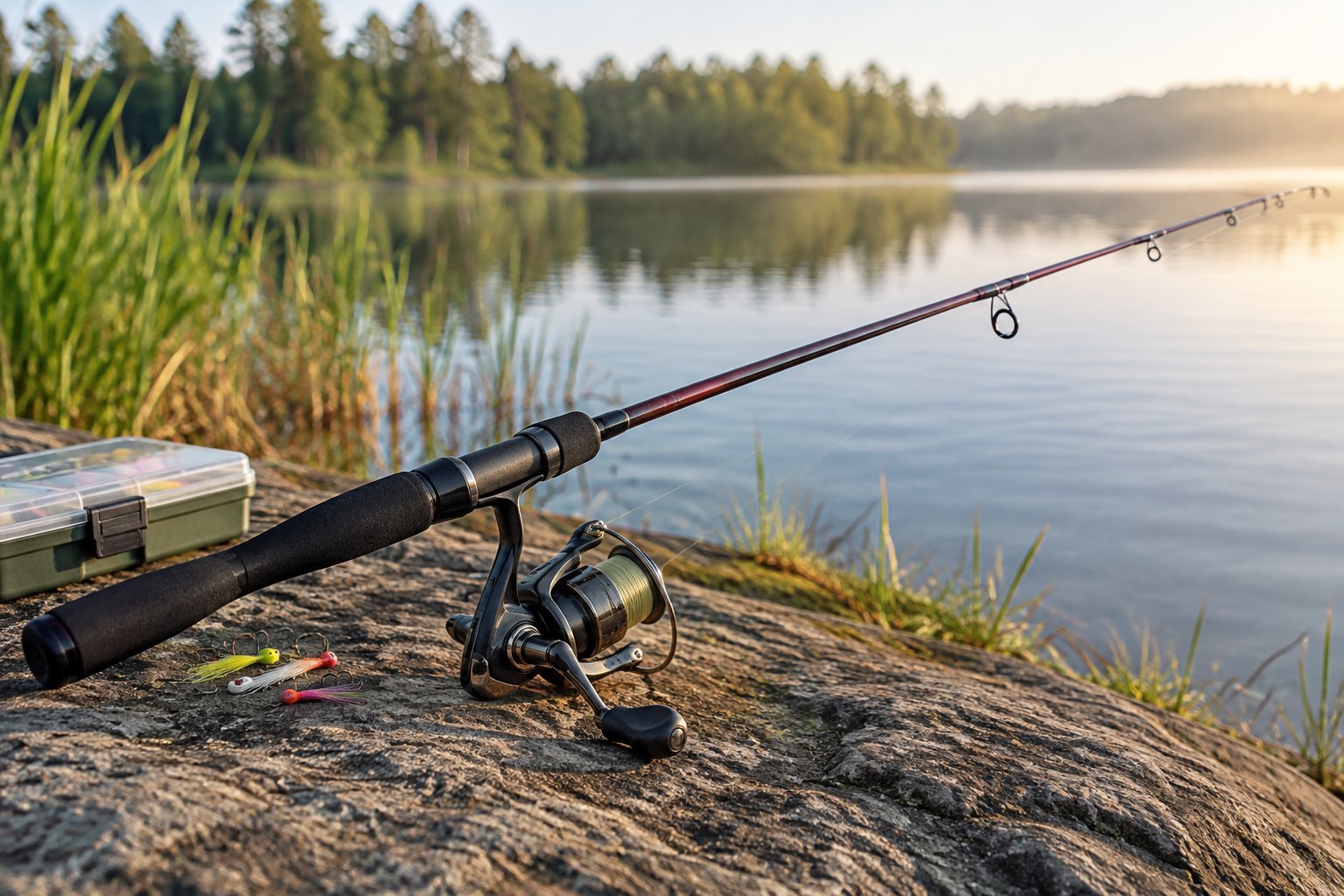
You can start with the Berkley Cherrywood HD when you want an entry-level spinning rod for occasional crappie trips. Select a version rated for your small hooks or jigs, since the series includes different configurations.
Its hybrid construction gives you another option alongside graphite-focused rods. Your priority should be a comfortable assembled outfit with a smoothly operating reel and correctly matched line.
- Practical advantage: You can build a straightforward starter setup.
- Trade-off: You need to compare the exact configuration, since a familiar series name doesn’t establish suitability.
When comparing affordable spinning reels, check drag adjustment and line capacity before adding accessories.
7. B’n’M SharpShooter Six: For Anglers Learning Dock Shooting
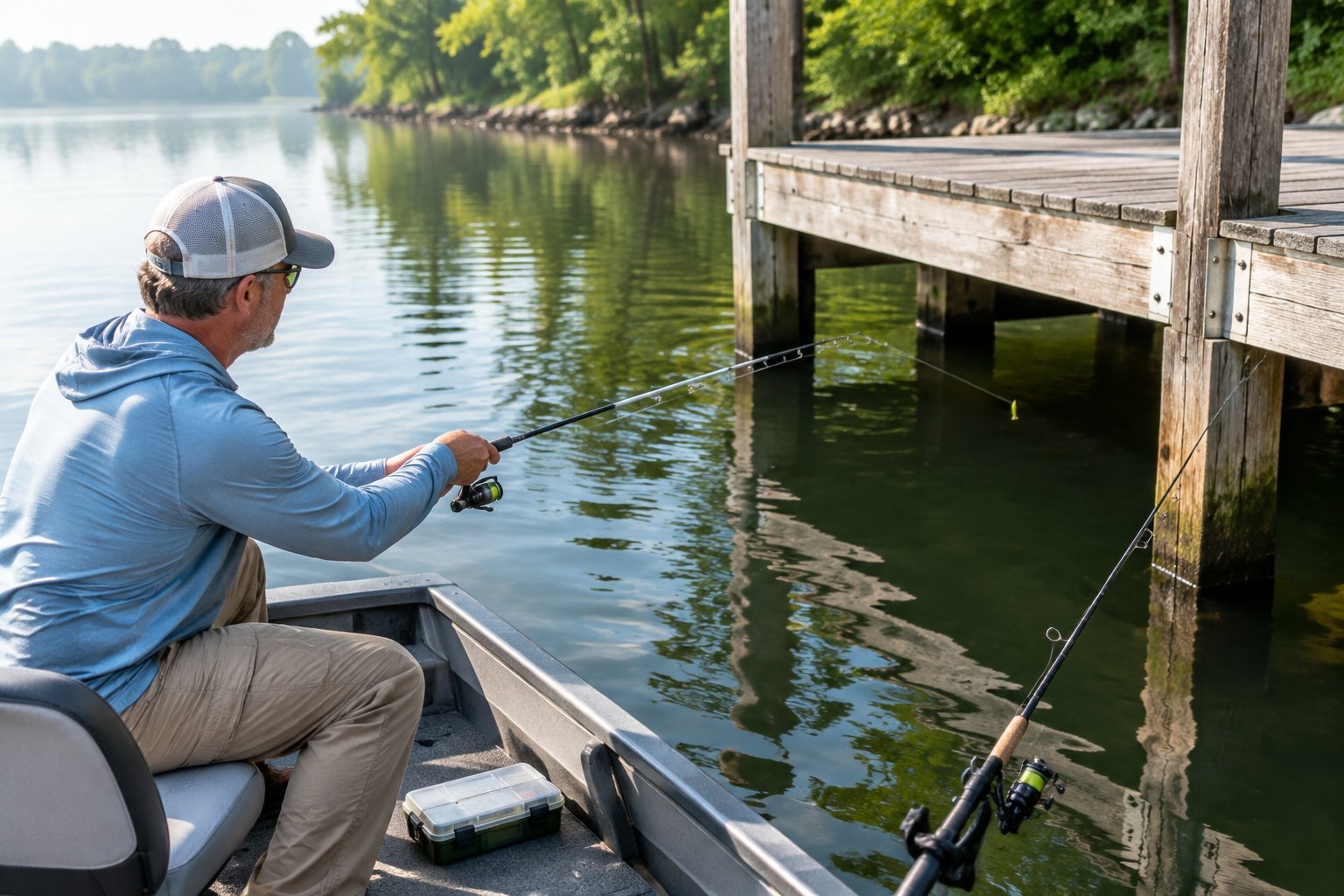
You should consider the B’n’M SharpShooter Six when reaching beneath docks becomes a regular part of your fishing. Dock shooting uses a loaded rod tip to propel a jig into low openings.
Learn the movement in an open area with a hookless practice weight before working near pilings. Keep everyone outside the release path, and follow the manufacturer’s handling guidance.
- Practical advantage: You get a technique-focused choice for low-clearance presentations.
- Trade-off: You need practice before you gain useful placement accuracy.
Start with an accessible dock edge. Work farther underneath only after you control the release consistently, and respect posted access restrictions.
8. Lew’s Wally Marshall Speed Shooter Spinning Rod: For Tight Dock Presentations
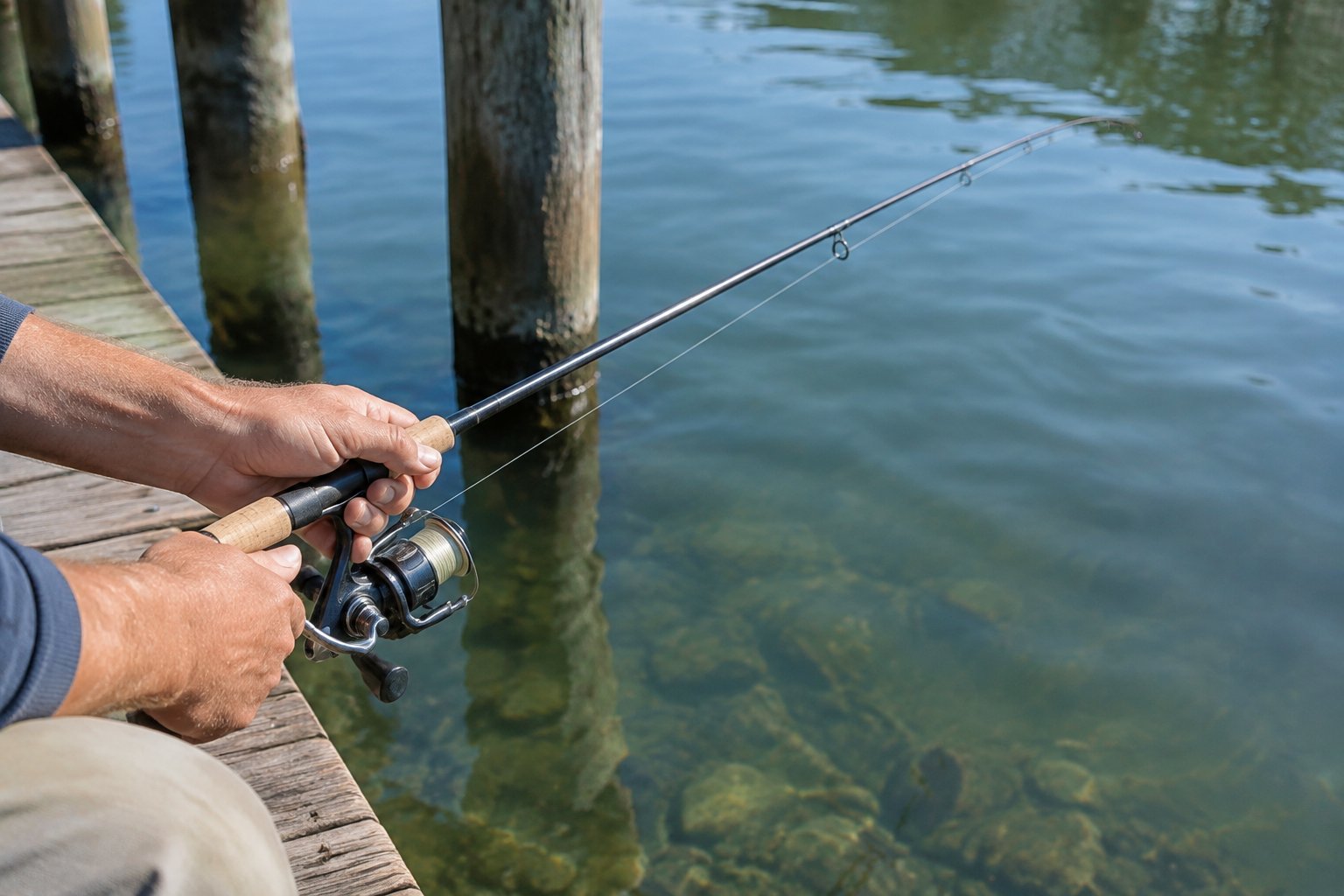
For repeated casts into tight dock openings, you have another specialized option in the Lew’s Wally Marshall Speed Shooter. Your decision should center on how its selected length and handle fit your shooting motion.
Compare it with the SharpShooter Six using the same reel and line size where practical. Check grip clearance and whether the butt catches your clothing as you position the rod.
- Practical advantage: You can dedicate an outfit to dock presentations.
- Trade-off: You gain less from that specialization if most trips involve open-bank float fishing.
Leave room between your rod tip and dock hardware. A controlled, low-powered release gives you a safer starting point while learning.
9. B’n’M Buck’s Graphite Jig Pole: For Vertical Jigging From a Boat
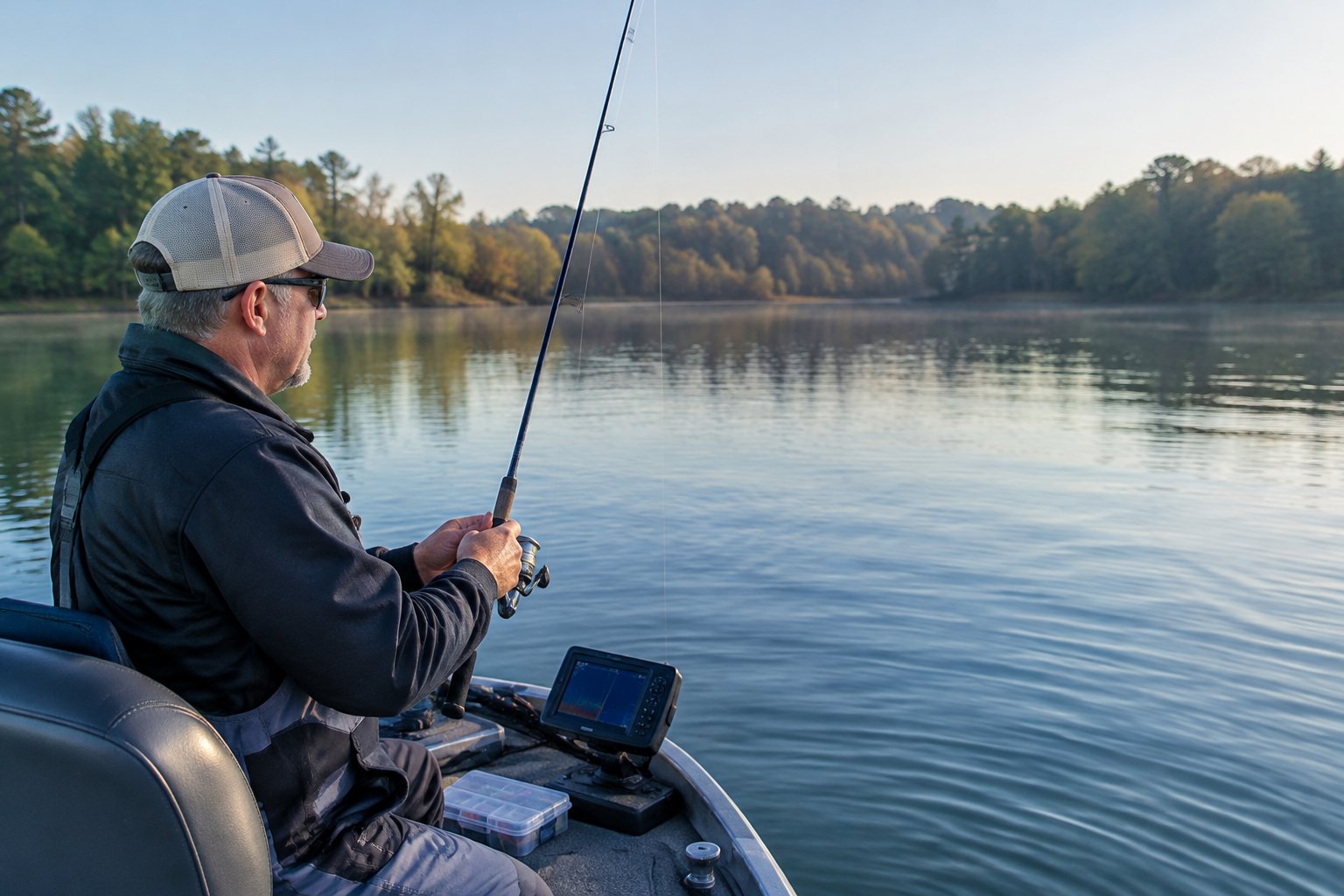
Choose B’n’M Buck’s Graphite Jig Pole when you want to lower a jig beside cover and hold it at a controlled depth. You’ll use its reach to position the bait while keeping the boat away from the target.
Select a length you can handle comfortably with your arm extended. Extra reach also requires storage space and a clear path when moving around the boat.
- Practical advantage: You can place a bait vertically beside brush or pilings.
- Trade-off: A long jig pole takes more planning during transport and landing.
Bring the fish toward your net with steady pressure. Keep the rod at a moderate angle throughout the landing.
10. Shakespeare Wonderpole: For Simple Fixed-Line Bait Fishing
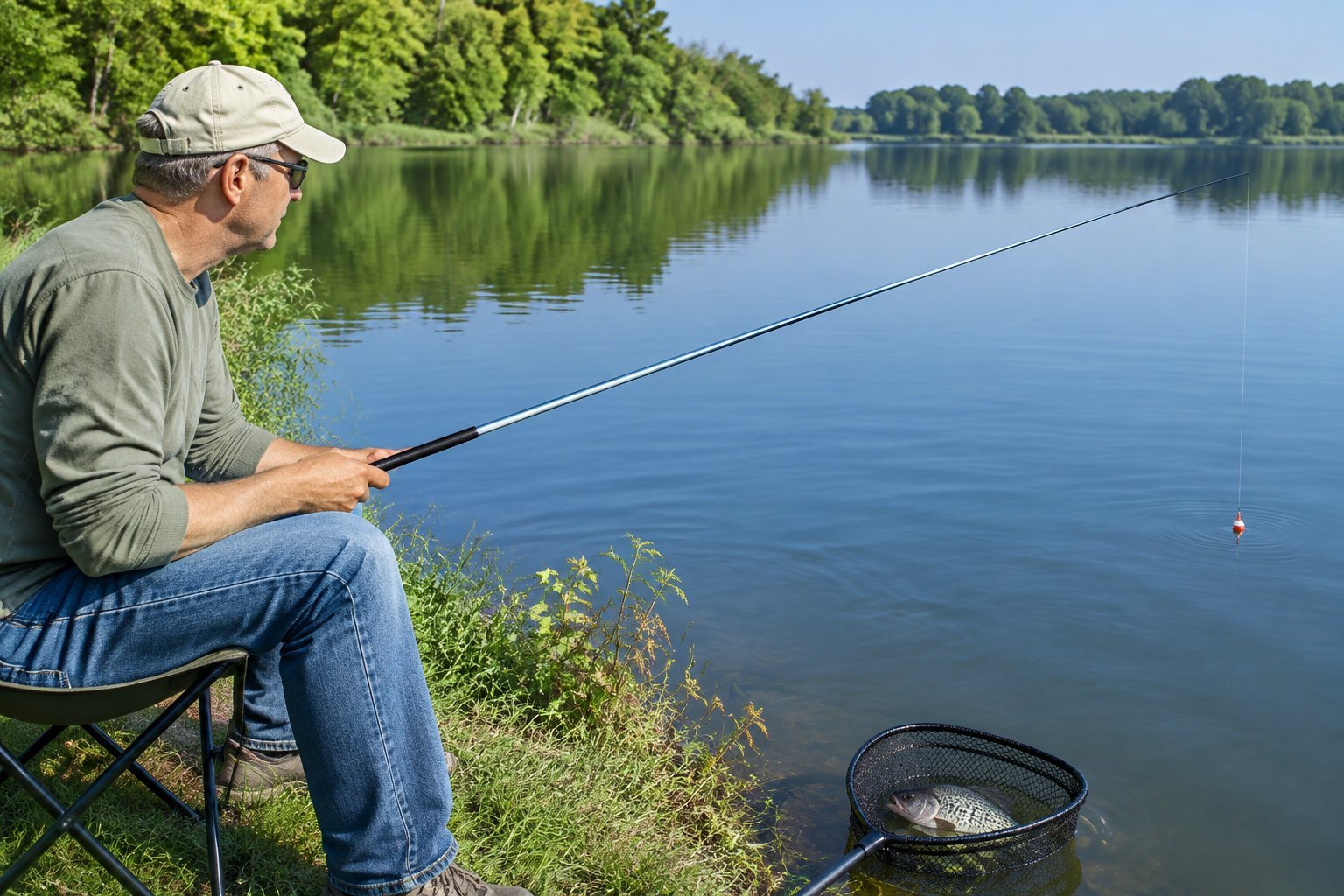
You get a straightforward fixed-line option with the Shakespeare Wonderpole when fish are within reach of a dock or open shoreline. You lower or swing your bait into position without operating a spinning reel.
Set your line length so you can reach the hook safely when bringing the rig back. Check your landing position before baiting up, especially on a raised dock.
- Practical advantage: You have fewer controls to manage during close-range float fishing.
- Trade-off: Your reach is limited by the pole and attached line.
For a child, test the pole’s leverage with adult support first. A long pole requires space even when the rig is simple.
How to Choose a Crappie Rod for Your Fishing Spot
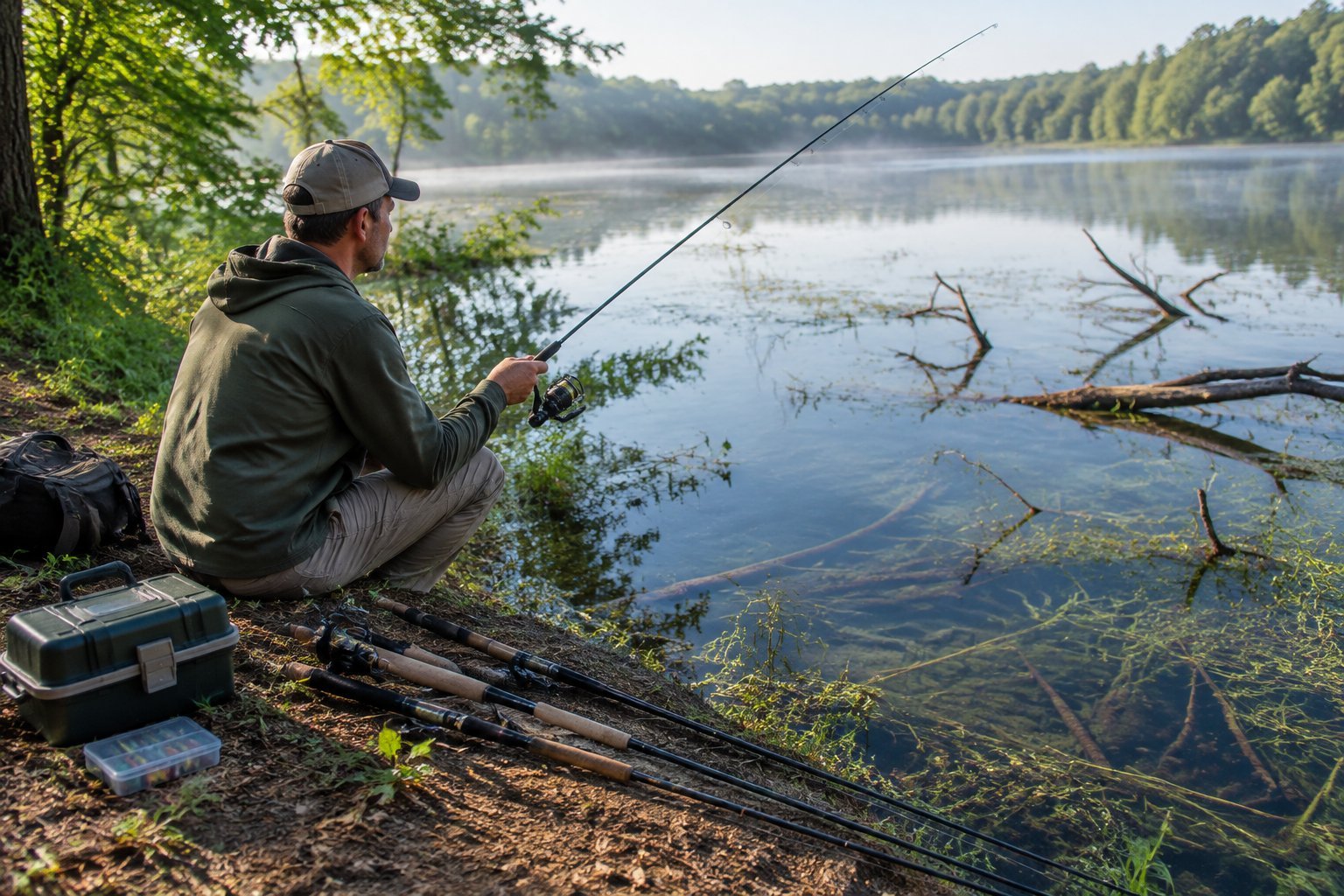
Choose your rod around the space available for presenting the bait and landing the fish. Use the comparison below to narrow your options by fishing method; check the exact model’s specifications before purchasing.
| Your rod option | Setup type | Best-matched task | Main consideration |
|---|---|---|---|
| Okuma Celilo Ultralight | Spinning | Light jigs | Match lure rating |
| Ugly Stik Elite | Spinning | Shared family use | Choose light power |
| Daiwa Presso Ultralight | Spinning | Small-jig casting | Manage light line |
| St. Croix Panfish Series | Spinning | Frequent panfish trips | Check assembled balance |
| ACC Crappie Stix GS66M | Spinning | Bank and boat use | Verify model ratings |
| Berkley Cherrywood HD | Spinning | Entry-level outings | Select suitable configuration |
| B’n’M SharpShooter Six | Dock-shooting rod | Low dock openings | Practice release |
| Lew’s Wally Marshall Speed Shooter | Dock-shooting rod | Tight presentations | Check handle clearance |
| B’n’M Buck’s Graphite Jig Pole | Jig pole | Vertical placement | Plan storage space |
| Shakespeare Wonderpole | Fixed-line pole | Nearby bait fishing | Check reachable water |
What Rod Length Works Around Docks, Bank Cover, and Boats?
Start around 5 to 6 feet when you have restricted casting room, or around 6 to 7 feet for a general-purpose spinning setup. Treat those as shopping ranges, then check whether you can complete a cast without striking branches or railings.
For vertical presentations, a longer pole helps you reach beyond the boat. During fall crappie fishing, choose reach according to the cover and depth you’re targeting; the season alone doesn’t determine rod length.
What Is the Difference Between Rod Action and Power?
Read power as resistance to bending and action as where the rod bends under load. An ultralight-power rod bends under less load than a medium-power rod; a fast-action rod concentrates more of its initial bend toward the tip.
Use the printed lure rating to judge casting suitability. Action labels alone won’t tell you whether your rod handles a 1/32-ounce jig, and power labels vary between manufacturers.
When Should You Choose a Spinning Rod, Jig Pole, or Fixed-Line Pole?
Choose a spinning rod when you need to cast across open water or change presentations during a short trip. A jig pole suits controlled vertical placement, while a fixed-line pole suits bait fishing within a limited reach.
Consider where you expect to find fish using basic crappie fishing tactics. If your accessible water lies beyond pole reach, casting capability should guide your purchase.
Which Handle and Transport Features Matter for Kids and Quick Trips?
Prioritize a secure grip and an assembled outfit your child can hold without constant support. Check whether the handle interferes with an elbow or catches a jacket during a cast.
For your own commute, measure the available storage space before choosing between one-piece, multi-piece, and telescoping designs. Transport hooks in a covered keeper or tackle box, and keep rod tips clear of doors and loose cargo.
Simple Crappie Setups That Save Time
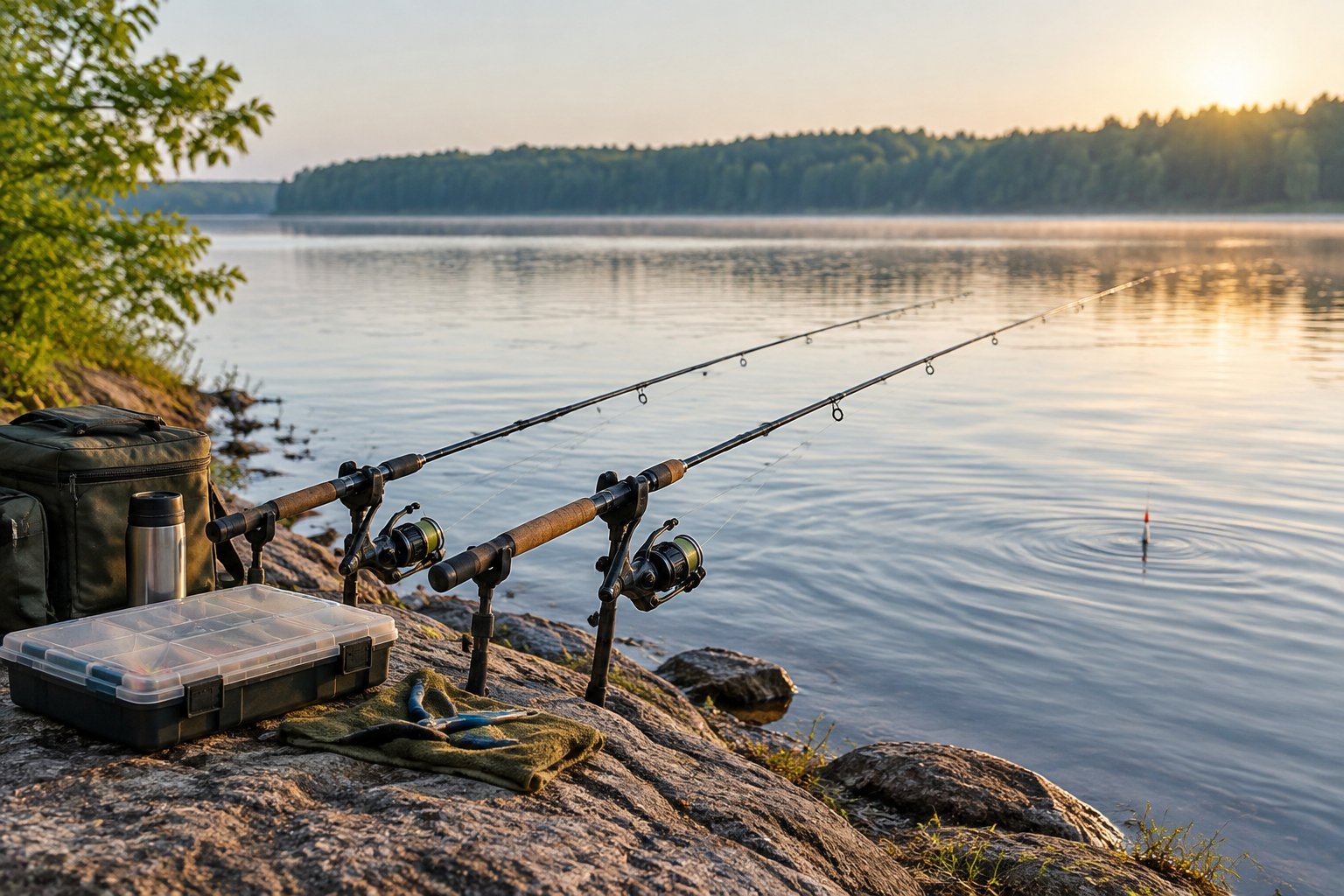
Prepare one basic rig before leaving so you can spend your short trip fishing. Keep a small replacement kit with matching terminal tackle, and make adjustments at the water only when conditions require them.
What Do You Need for a Minnow-and-Bobber Setup?
Start with a small float, a suitable hook, and enough split shot to settle the bait beneath the float. Add fresh line within your rod’s rating; 4- to 6-pound monofilament is a practical starting range for many light crappie outfits.
Choose minnows for crappie fishing that suit your hook size and local regulations. Keep them cool and supplied with oxygen, adjust your float to suspend the bait near fish, and follow local rules for unused bait disposal.
How Do You Match a Small Jig and Line to the Rod’s Ratings?
Compare the complete lure’s weight with the range printed on your rod. Include the soft plastic and any added weight when checking the load; a jighead’s stamped weight describes only part of some presentations.
Start with a 1/32- or 1/16-ounce jig only when your rod supports that weight. If casting becomes difficult in wind, choose a heavier compatible jig or a more sheltered position while staying within the rod’s rating.
How Can You Keep Gear Ready for an After-Work Trip?
Pack a compact box with replacement jigheads, a few plastics, spare hooks, split shot, and floats. Add pliers and line clippers, then store your landing net where you can reach it without unloading the vehicle.
Keep live bait out of a hot parked car, and inspect the first few feet of line before fishing. You can also use Be The Hero’s 10 step process to go fishing more often to build a repeatable routine around work and family commitments.
What Safety Habits Matter Around Docks and Children?
Put properly fitted life jackets on children near the water, supervise them closely, and establish a clear casting area. Check behind you before every cast, including when teaching an underhand presentation.
Choose beginner-friendly fishing hooks that match your bait and keep unused hooks enclosed. Follow posted dock rules, carry the required license, and keep long rods well away from overhead power lines.
Which Crappie Rod Should You Choose?
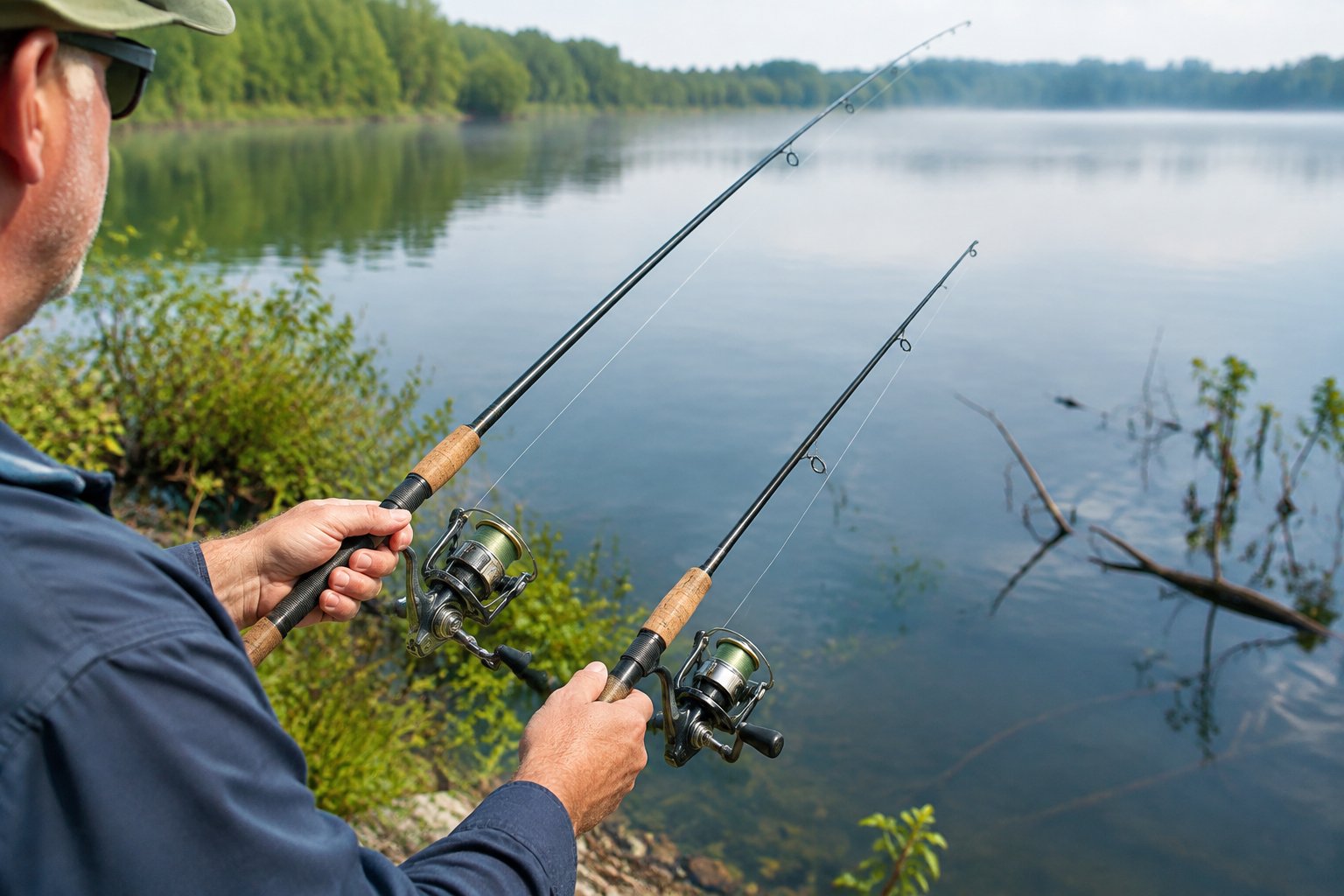
Choose the rod you can use at your closest practical fishing spot with minimal setup. Let your first purchase support repeatable trips, then add specialized equipment after you identify a recurring need.
Which Choice Makes the Most Sense for a Beginner’s Quick Trip?
Start with the Okuma Celilo Ultralight if you expect to cast small jigs from accessible banks or docks. Choose a length that fits your transport space and match it with line inside the printed rating.
Keep your initial tackle selection small enough to check before leaving home. Once you have a reliable rig, use your next outings to learn a nearby spot’s depth and snag locations.
Which Setup Is Easiest When Fishing With Kids?
Choose the Shakespeare Wonderpole for supervised, close-range float fishing where you can safely reach and land fish. Choose a suitably light Ugly Stik Elite spinning model when your child needs casting range and is ready to manage a reel.
Let your child hold the assembled outfit before committing. For a smaller child, a properly fitted youth fishing rod deserves consideration even when you already own an adult outfit.
When Is a Specialized Dock or Boat Rod Worth Buying?
Add a dock-shooting rod when low-clearance casts account for a substantial part of your fishing. Choose between the SharpShooter Six and Speed Shooter by checking your grip and preferred working length.
Add Buck’s Graphite Jig Pole when you regularly position baits vertically from a boat. Before purchasing, confirm that you have room to transport it and land fish safely.
Check the current price and customer reviews for the Okuma Celilo Ultralight Spinning Rod before your next fishing trip.