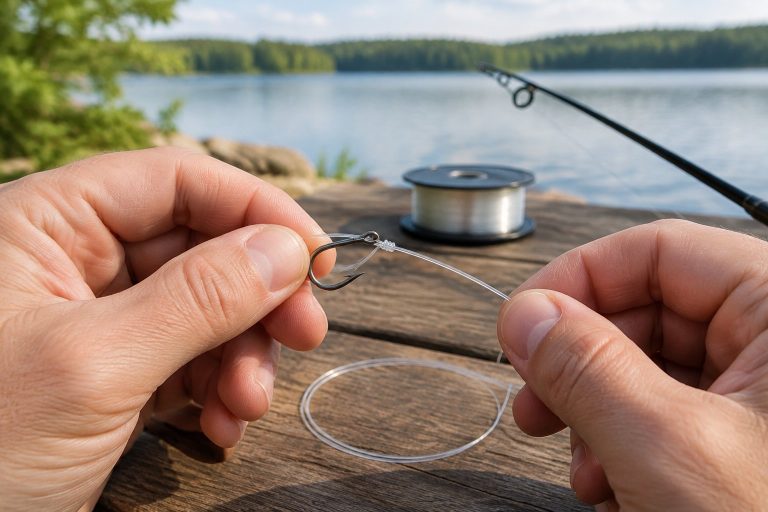
Fishing line clippers make quick work of trimming tag ends, changing lures, and cutting tangled line. The best fishing line clippers combine sharp, corrosion-resistant blades with a compact shape that stays accessible when conditions are wet or windy.
A good nipper should cut braid, monofilament, and fluorocarbon cleanly while remaining attached to a vest, belt, or tackle bag. Buyers should also check the tether design, grip, blade material, cutting capacity, and whether the tool needs freshwater rinsing after saltwater use. The following picks cover retractable, clip-on, scissor-style, and fly-fishing designs.
Best for a retractable tether: Boomerang SNIP Fishing Line Cutter
Best for multiple cutting options: Line Cutterz Hybrid Line Snipper
Best for a non-slip grip: BUBBA Tool Tether/Nipper Combo
Best for protected blades: Rapala Retractable Line Scissor
Best for fly-fishing tippet: Loon Outdoors ROGUE NIPPERS
Boomerang SNIP Fishing Line Cutter

Readers who want a lightweight, easy-to-find cutter should buy the Boomerang SNIP for its sharp serrated blades and automatic retracting tether.
Pros
- Cuts braid, mono, and fluorocarbon cleanly
- Built-in 36-inch retractable tether
- Corrosion-resistant stainless steel cutters
Cons
- Requires rinsing and occasional rust prevention
- Cutting capacity is specified up to 50-pound line
- Small body may be less comfortable for larger hands
The SNIP clips to a belt loop, vest, or other attachment point, then returns to its original position after use. Its serrated 420 stainless steel blades handle common fishing lines with little effort, and the ambidextrous design works from either hand.
The integrated tether is the standout feature. It keeps the cutter close without leaving a loose lanyard dangling from fishing gear. The tool is especially practical for anglers who frequently trim braid or fluorocarbon while standing in a kayak or moving around a boat.
Stainless steel is not maintenance-free in saltwater. Boomerang recommends freshwater rinsing, drying, and occasional anti-rust treatment to help prevent spotting on the blades and screws.
Line Cutterz Hybrid Line Snipper

The Line Cutterz is a strong choice for anglers who want both a ceramic cutting slot and small serrated scissors in one compact tool.
Pros
- Ceramic slot cuts braid, mono, and fluorocarbon
- Scissors trim close to knots
- Steel clip and hook holder provide flexible attachment options
Cons
- Cutting action can vary between individual units
- Plastic housing is less substantial than metal-bodied nippers
- No tether is included
The fixed ceramic slot is designed to cut line without exposing a large blade, while the micro scissors offer more control around knots and lure connections. The manufacturer rates the slot for braid up to 100 pounds, giving it more stated capacity than several compact alternatives.
Its steel clip works on hat bills, belts, and straps, and the hook holder can help pull knots tight. The combination is useful for kayak anglers and bank fishermen who need several functions in a small package.
Some users report that the ceramic cutter requires more pressure than expected. Buyers who add a separate lanyard can improve security, though that adds another piece to manage.
BUBBA Tool Tether/Nipper Combo

The BUBBA combo suits anglers who prioritize leverage, a secure wet-weather grip, and an included tether.
Pros
- Mechanical design increases cutting leverage
- Non-slip grip helps with wet hands
- Includes a 36-inch Dyneema tether and carabiner
Cons
- Locking mechanism can interfere with blade closure
- Heavier and bulkier than minimalist nippers
- Cutting performance may depend on keeping the mechanism fully open
The aluminum-bodied clipper has a substantial feel and a textured grip that is useful when hands are wet or cold. Its mechanical design helps produce clean cuts through mono, fluorocarbon, and braid, including heavier lines.
The included tether keeps the tool within reach and uses a swivel line to reduce twisting. The carabiner makes attachment straightforward on a vest or belt loop.
A rotating lock can prevent the jaws from closing completely if it shifts during use or if the tether pulls at an awkward angle. Anglers should check that the mechanism is clear before squeezing, particularly when working quickly.
Rapala Retractable Line Scissor

The Rapala is a sensible pick for anglers who want protected blades and a compact scissor-style cutter for braid and monofilament.
Pros
- Cutting area stays hidden when stored
- Stainless steel blades handle multiple line types
- Lightweight design fits pockets and tackle boxes
Cons
- Does not include a retractable tether
- Grip may feel awkward for some users
- Braided line may need slight tension for the cleanest cut
The blades remain inside the body until the handles are squeezed, reducing the chance of accidental pokes in a pocket or gear bag. That design also makes the tool comfortable to carry loose, although a separate lanyard may be helpful on a vest or boat.
The scissors cut mono and fluorocarbon readily and can handle braid when the line is held under light tension. The retracting points are particularly useful for ice fishing, kayak fishing, and other situations where exposed sharp tips are inconvenient.
The compact construction saves space, though the handle geometry may not suit every hand. It is best used as a dedicated line trimmer rather than a general-purpose tool.
Loon Outdoors ROGUE NIPPERS

The Loon ROGUE NIPPERS are a good fit for fly anglers who need comfortable, precise tippet trimming and a built-in fly-eye cleaner.
Pros
- Surgical-quality stainless steel construction
- Comfortable protective grip
- Includes a straight cutter and fly-eye cleaner
Cons
- Less suited to thick braid
- No included tether or zinger
- Sharpness can decline with heavier use
The soft grip makes repeated trimming comfortable, and the matte black finish helps the nippers blend into a vest or pack. Their straight cutting surface is well suited to tippet and other light lines used in fly fishing.
The fly-eye cleaner adds practical value when adhesive or debris blocks a small hook eye. The nippers are compact enough to remain attached to a vest, though anglers will need to supply a lanyard, zinger, or clip separately.
Reports on sharpness are mixed. They perform well with light line and tippet, while thicker braid may require more pressure or a different cutter.
Buying Guide
The best fishing line clippers should make clean cuts quickly, stay attached to fishing gear, and resist corrosion after repeated exposure to water. The right design depends on line type, fishing environment, and how much reach or versatility an angler needs.
Blade Material and Cutting Ability
Stainless steel is common and offers a useful balance of sharpness, durability, and corrosion resistance. Ceramic blades resist rust especially well, though they can feel less familiar and may require a specific cutting angle.
| Line type | Useful feature |
|---|---|
| Monofilament | Sharp, fine-edged blades |
| Fluorocarbon | Strong jaws and precise alignment |
| Braided line | Serrations or a specialized ceramic slot |
| Light fly-fishing tippet | Small straight nippers |
Manufacturers often list a maximum line rating, but real cutting performance also depends on blade sharpness, line tension, and proper alignment. A cutter intended for heavy braid is preferable when an angler regularly uses thick braided line.
Tether and Attachment
A retractable tether keeps the tool near its attachment point and reduces the chance of dropping it overboard. A fixed lanyard provides more reach but can snag on clothing or fishing equipment.
Useful attachment options include:
- Carabiners for belts, vests, and bags
- Steel clips for hat brims and straps
- Swivel connectors to reduce twisting
- Retractable zingers for controlled reach
Corrosion Resistance and Care
Saltwater anglers should prioritize stainless steel, ceramic, or clearly rust-resistant finishes. Even corrosion-resistant materials benefit from freshwater rinsing, wiping, and thorough air-drying after use.
A small amount of appropriate anti-rust treatment on metal joints and screws can help prevent spotting. Blades should be kept free of grit, since debris can stop jaws from closing evenly.
Grip, Size, and Safety
A textured or rubberized grip is helpful when hands are wet, cold, or covered with sunscreen. Compact nippers fit easily in a vest pocket, while larger tools usually provide more leverage.
Protected or retracting blades reduce accidental punctures during storage. Buyers should also check whether a locking mechanism can obstruct the cutting action and whether the tool can be operated comfortably with either hand.
What to Expect to Spend
Basic nippers can handle light mono and tippet, while more specialized tools add ceramic cutters, mechanical leverage, retractable tethers, or multiple cutting surfaces. The most useful value comes from matching the tool to the line being used rather than paying for features that will remain unused.