Fishing coolers with wheels make it easier to move bait, drinks, and a day’s catch across beaches, boat ramps, docks, and uneven ground. The most useful models combine large, grippy wheels with insulation that can protect ice for several days and a lid sturdy enough to double as a seat or work surface.
The best fishing cooler with wheels should match the terrain, load size, and trip length, while remaining manageable when full. Buyers should check wheel clearance, handle leverage, drain design, lid strength, insulation thickness, and interior dimensions before choosing. The following picks cover heavy-duty hauling, lightweight transport, organized tackle storage, and large-capacity fishing trips.
Best for beach and rough terrain: Igloo Trailmate Journey 70-Quart Wheeled Cooler
Best for maximum capacity: Coleman Marine Rolling Cooler
Best lightweight premium cooler: Coleman Pro 55-Quart Wheeled Cooler
Best balance of weight and insulation: RTIC 52-Quart Ultra-Light Wheeled Cooler
Best for tackle organization: MATEIN Rolling Tackle Box with Cooler
Igloo Trailmate Journey 70-Quart Wheeled Cooler
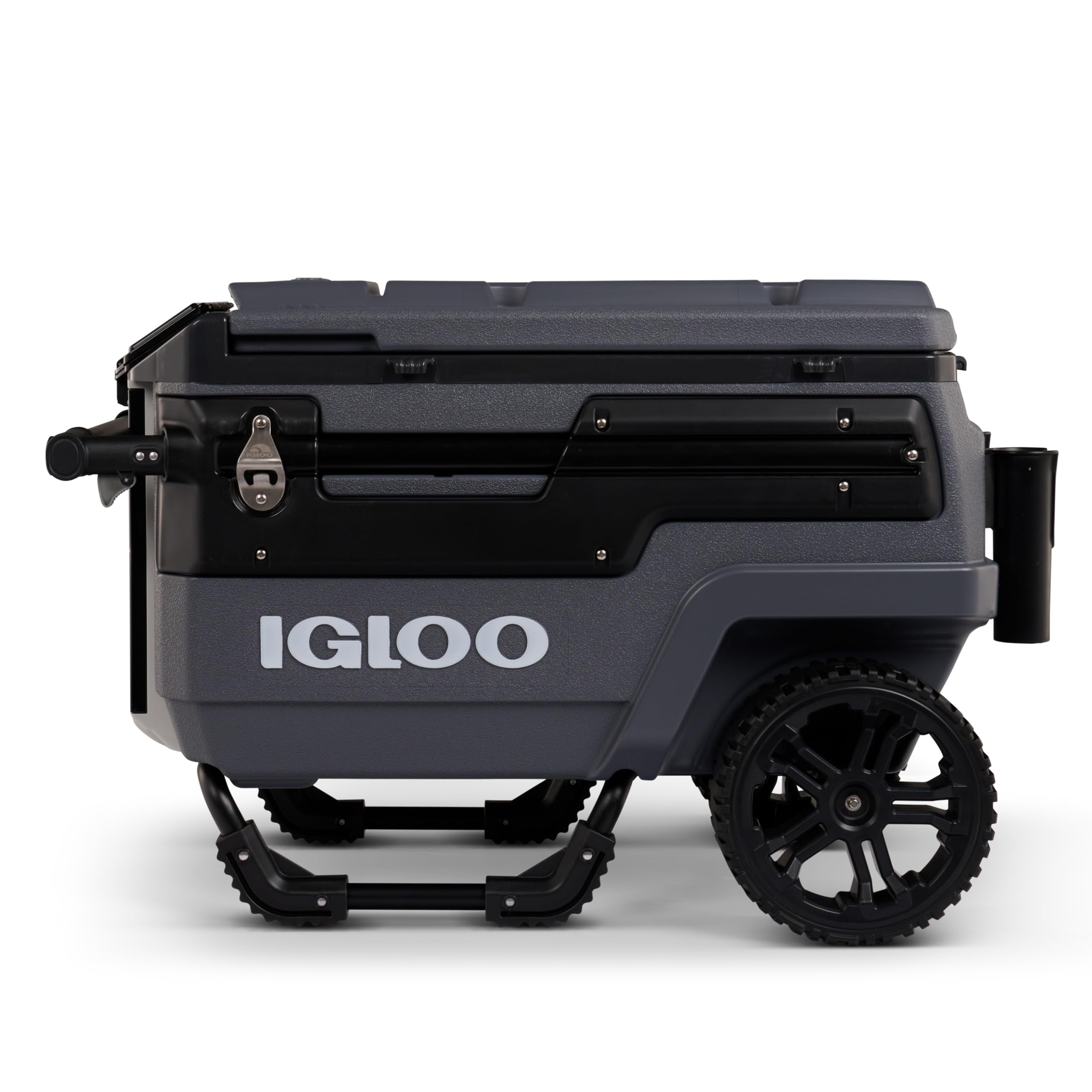
Readers should buy the Igloo Trailmate Journey for beach fishing, large groups, and rough paths where generous ground clearance matters more than compact storage.
Pros
- Large interior fits up to 112 cans
- Ten-inch, never-flat wheels handle sand and uneven ground
- Telescoping steel handle offers strong pulling leverage
Cons
- Heavy at nearly 35 pounds before loading
- Tall body may not fit beneath some truck-bed covers
- Bungee cords or rope for the tie-down hooks are not included
The Trailmate’s oversized wheels are its defining feature. They roll more confidently over loose sand, gravel, and grass than the small casters found on many rolling coolers, while the elevated body helps protect the load from hot ground and splashes.
Its 70-quart capacity suits full-day parties, family fishing trips, or anglers carrying food alongside bait and drinks. The foam insulation can preserve ice for multiple days when the cooler is pre-chilled, packed densely, and opened sparingly. The lid and body provide a substantial platform, though the product data does not specify a seated weight rating.
The tradeoff is size. The cooler is easier to pull than carry, yet its dimensions and weight require a vehicle with adequate cargo space. Tie-down points add flexibility for hauling chairs or towels, making it a particularly practical choice for beach access.
Coleman Marine Rolling Cooler
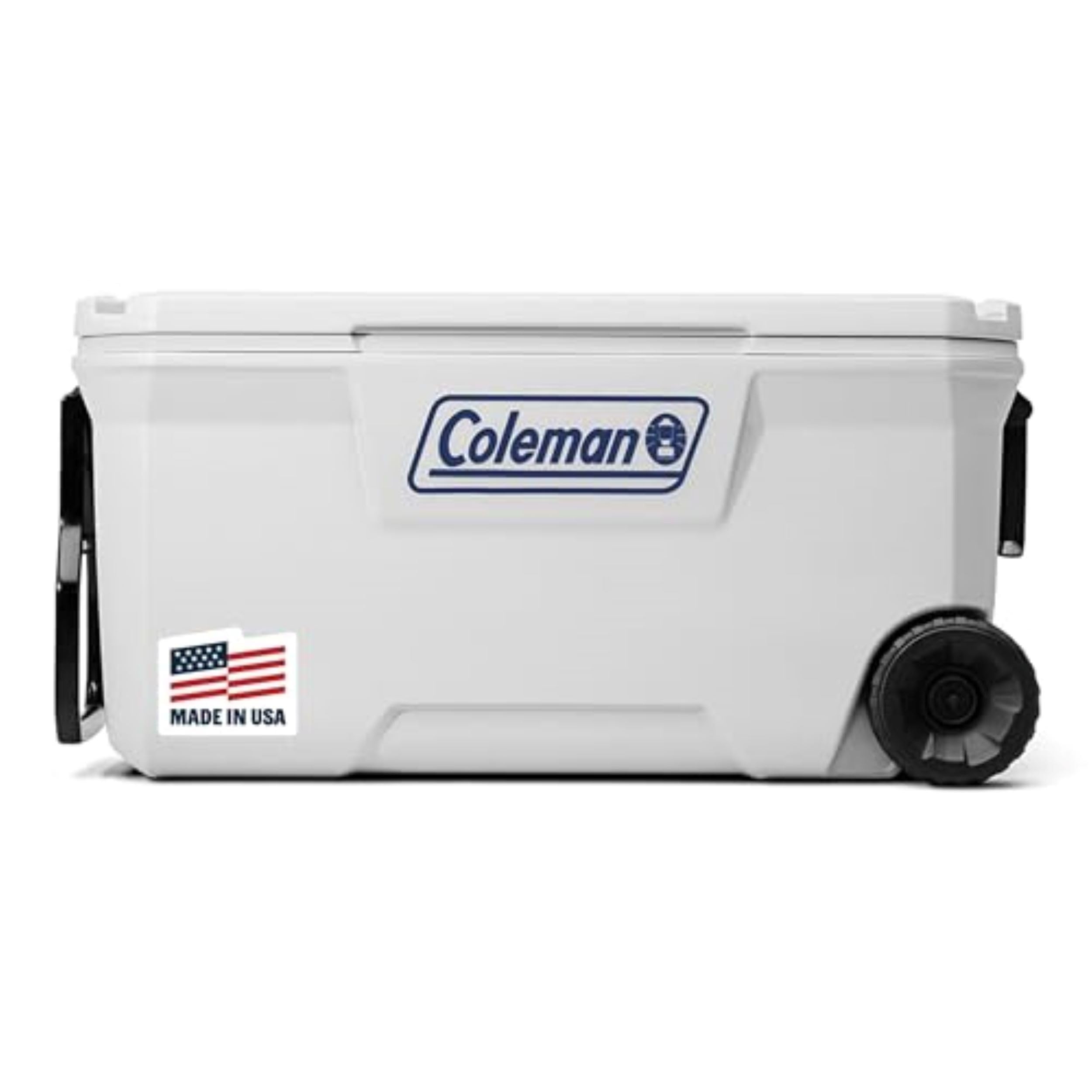
Readers should choose the Coleman Marine when maximum capacity, sun protection, and a seat-ready lid matter more than premium wheel size or compact dimensions.
Pros
- Fully insulated lid and body
- UV-resistant exterior and rust-resistant hardware
- Lid supports up to 250 pounds and includes cup holders
Cons
- Six-inch wheels are less suited to deep sand
- Large 100-quart version takes substantial storage space
- Two-wheel design requires tilting to move
This Coleman is built for long outings, with a spacious 100-quart configuration that can hold up to 160 cans without ice. Its UV-resistant finish is useful for boats, docks, and sunny campsites, while the antimicrobial liner helps resist lingering odors and mildew between trips.
The lid functions as a seat and includes molded cup holders, a built-in ruler, and a recessed lip for easier opening. Those details are genuinely useful around a fishing camp, especially when the cooler serves as both cold storage and temporary seating.
The six-inch wheels move well across pavement and firm paths. Deep sand calls for more effort than it would with a high-clearance all-terrain model. A channel drain also makes emptying meltwater straightforward.
Coleman Pro 55-Quart Wheeled Cooler
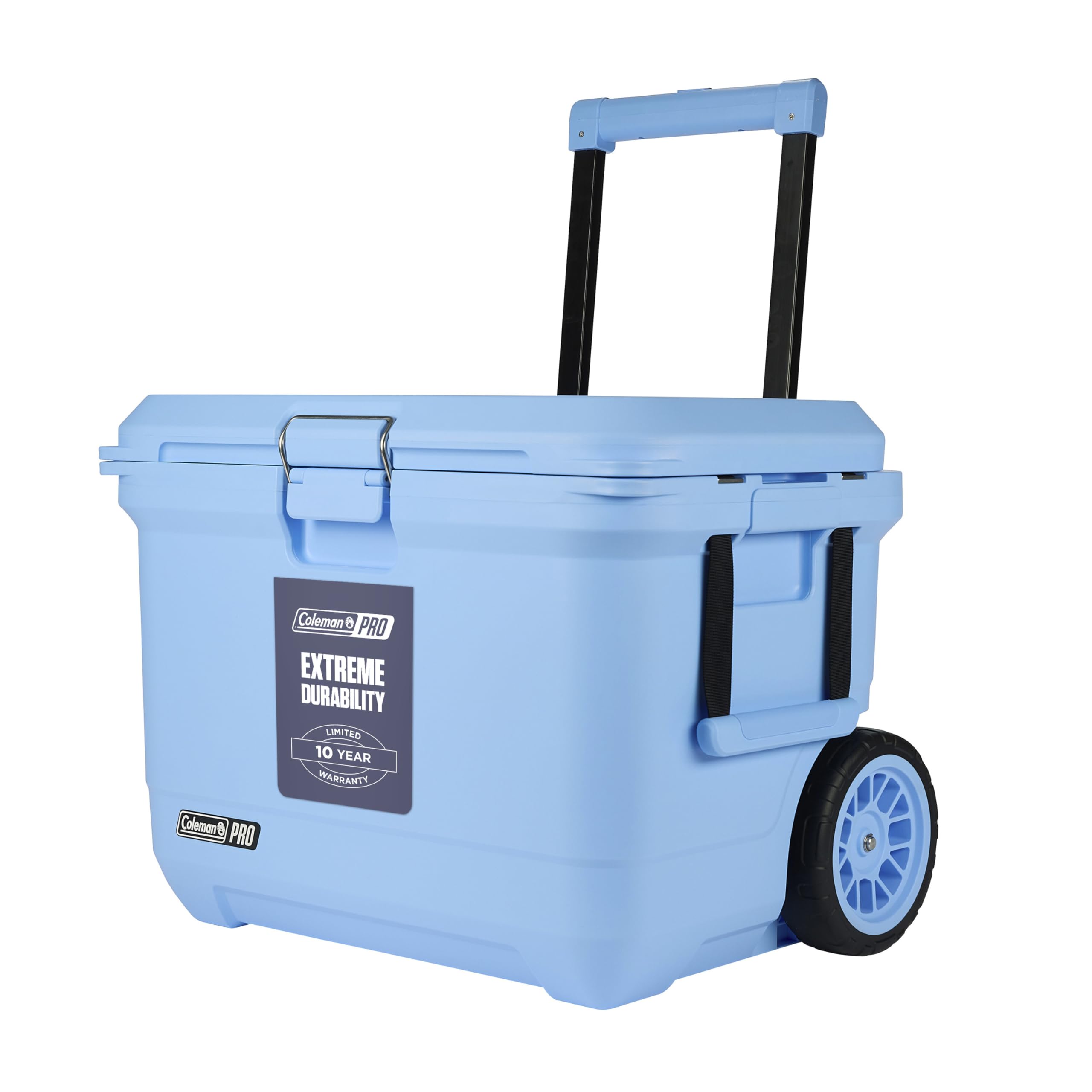
Readers should buy the Coleman Pro for a lighter alternative to many thick-walled coolers that still offers strong insulation, durable wheels, and a seat-worthy lid.
Pros
- Holds up to 92 cans
- Extra-thick insulated walls and lid
- Stainless-steel latch and attached oversized drain plug
Cons
- Smaller capacity than the largest fishing coolers
- Tie-down strap can feel awkward when loaded
- Manufacturer warranty details differ across the listing information
The Coleman Pro balances portability and cold retention well. Its walls are up to two inches thick, yet the cooler is designed to weigh less than similarly sized rotomolded models. That difference is noticeable when lifting it into a vehicle or maneuvering it around a campsite.
Large wheels and an extendable handle make full-load transport comfortable on firm ground, beaches, and sidelines. The one-hand steel latch creates a tight closure, and the attached drain plug prevents the common problem of losing a small removable cap.
The lid is designed to support a seated user, while nonslip feet help keep the cooler steady in a truck bed or on a boat. It is a strong choice for anglers who need a durable cooler without moving up to an oversized 70- or 100-quart model.
RTIC 52-Quart Ultra-Light Wheeled Cooler
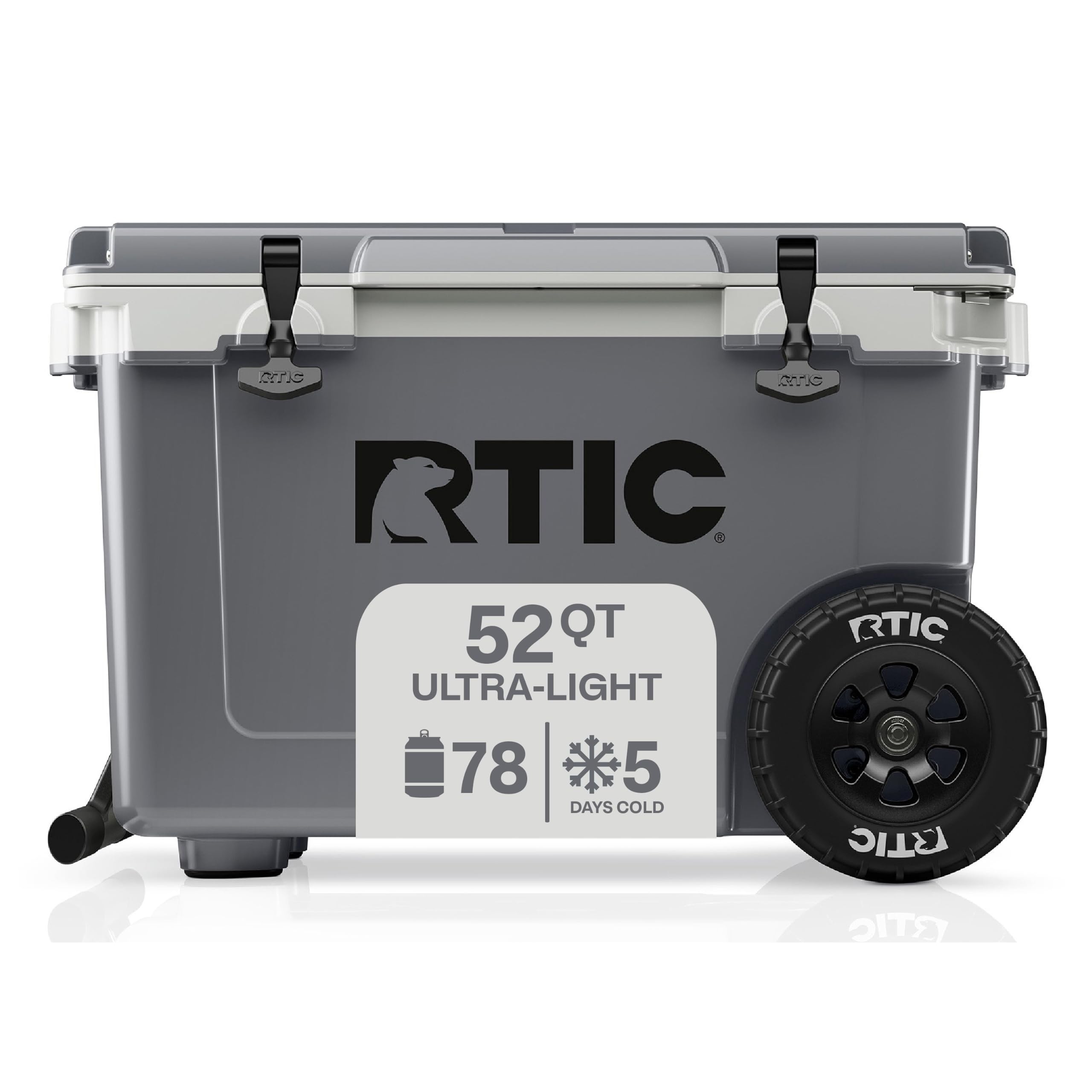
Readers should choose the RTIC Ultra-Light for a relatively easy-to-lift cooler with thick insulation, all-terrain wheels, and a lid that can serve as a bench or tabletop.
Pros
- More than 30 percent lighter than comparable rotomolded coolers
- Puncture-resistant all-terrain wheels
- Two-and-a-half-inch closed-cell foam insulation
Cons
- Capacity is limited compared with extra-large models
- Cargo-net storage is less protected than a sealed compartment
- Full-load weight still becomes substantial
The RTIC’s 52-quart capacity provides room for food, drinks, and ice without the bulk of a large party cooler. Its thick foam insulation is designed for multi-day cooling, and user feedback commonly describes cold contents lasting through long travel days and overnight trips.
The aluminum handle has a silicone grip and a no-slam design, which makes towing more controlled near docks or crowded campsites. The same lid can work as a seat, step, or tabletop, although users should keep the surface clear of loose tackle.
The wheels are a good fit for rough paths, grass, and beach approaches. At about 29 pounds in the listed specifications, it remains easier to lift than many heavy-duty alternatives, though anglers should still use the handle whenever the cooler is full.
MATEIN Rolling Tackle Box with Cooler
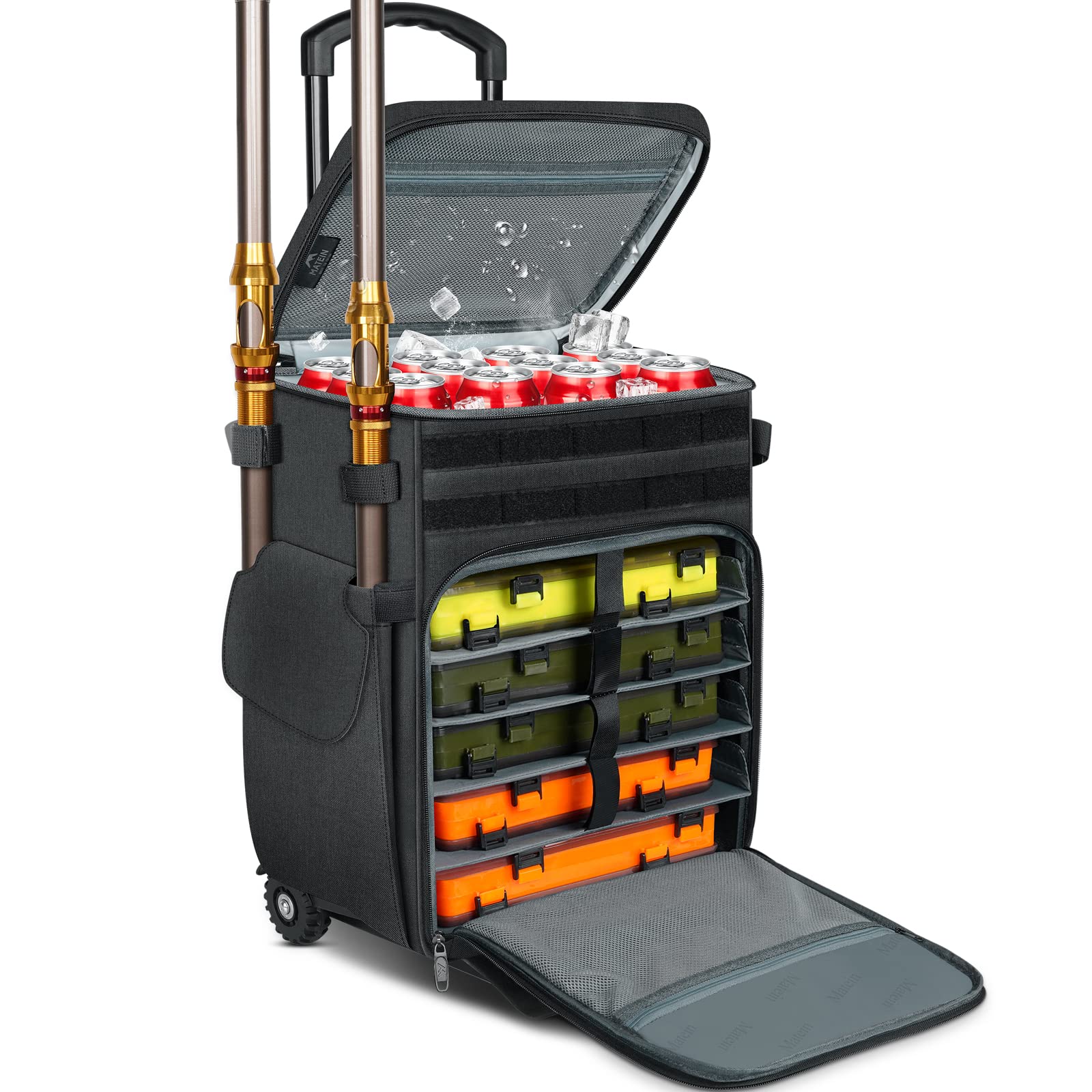
Readers should buy the MATEIN when organized tackle and portable bait storage are more important than long-term ice retention or a hard seat lid.
Pros
- Insulated compartment holds up to 12 cans
- Multiple compartments and two rod-holder pockets
- Detachable cart and backpack straps provide two carry modes
Cons
- Tackle trays are not included
- Fabric construction is not suited to sitting
- Two small wheels are less capable on loose sand
This rolling tackle bag fills a different role from a hard fishing cooler. Its insulated 6.6-liter compartment can carry drinks, bait, or a small lunch, while the main storage area is arranged for up to five medium tackle boxes. Hook-and-loop dividers help keep contents from shifting.
The waterproof nylon exterior and coated bottom provide useful protection against damp ground and splashes. Two rod pockets and exterior attachment points keep frequently used tools accessible, reducing the need to open the main compartment repeatedly.
The detachable cart is convenient for paved paths, piers, and packed trails. Its smaller wheels and soft-sided design make it less appropriate for deep sand, large catches, or anglers who need a sturdy lid to sit on. It works best as a compact tackle-and-refreshment carrier.
Buying Guide
A wheeled fishing cooler should be judged as transport equipment as much as cold storage. The right choice depends on whether an angler crosses loose sand, carries bait and catch together, or needs a dependable seat at the water.
Match the Cooler to the Terrain
| Terrain | Features to prioritize |
|---|---|
| Deep sand | Large, wide, puncture-resistant wheels and high ground clearance |
| Docks and boat ramps | Stable wheels, strong handle, secure lid, and corrosion-resistant hardware |
| Grass and gravel | All-terrain tread, durable axle, and balanced body |
| Paved paths | Smooth wheels, compact dimensions, and easy steering |
| Vehicle-to-water transport | Moderate weight, comfortable handle, and tie-down points |
Large wheels reduce sinking and make pulling easier across sand. A long, rigid handle also improves leverage, especially when the cooler is filled with ice.
Choose Capacity Carefully
A larger cooler carries more food and drinks, yet it becomes difficult to lift and can consume valuable vehicle space. Anglers should estimate the load before buying and leave room for ice rather than filling the entire interior with cans or containers.
| Typical use | Practical capacity |
|---|---|
| Solo fishing or short trips | About 20 to 40 quarts |
| Two anglers or a full day | About 40 to 60 quarts |
| Group trips or catch storage | About 60 to 100 quarts |
Internal dimensions matter more than the advertised quart figure when storing long bait containers, food bins, or fish. A wide opening also makes cleaning and loading easier.
Check Ice Retention and Drainage
Thick closed-cell foam generally improves cold retention, though packing method and weather have a major effect. Pre-chilling the cooler, using block ice, filling empty spaces, and limiting lid openings can extend cooling time.
A drain should empty meltwater without requiring the cooler to be fully tipped. An attached plug is preferable because it stays with the cooler, while a leak-resistant channel helps prevent water from escaping into a vehicle.
Look for a Useful Lid
A rigid, stable lid can serve as a seat, table, measuring surface, or temporary workbench. Buyers should verify the stated weight rating rather than assuming every hard lid is safe to sit on.
A gasket or tight latch helps keep warm air and water out. Recessed handles, cup holders, nonslip feet, and built-in storage can add convenience, yet they should not replace the core requirements of a secure seal and sturdy construction.
Consider Weight and Maintenance
A cooler that is easy to roll may still be difficult to lift when full. Lightweight construction helps with vehicle loading, while strong wheels and a balanced design reduce pulling effort on the ground.
After fishing, the cooler should be drained, rinsed, and dried with the lid open. Saltwater exposure requires particular attention to hinges, latches, axles, and drain hardware. Anglers who regularly fish in saltwater should favor corrosion-resistant components and avoid storing the cooler wet.