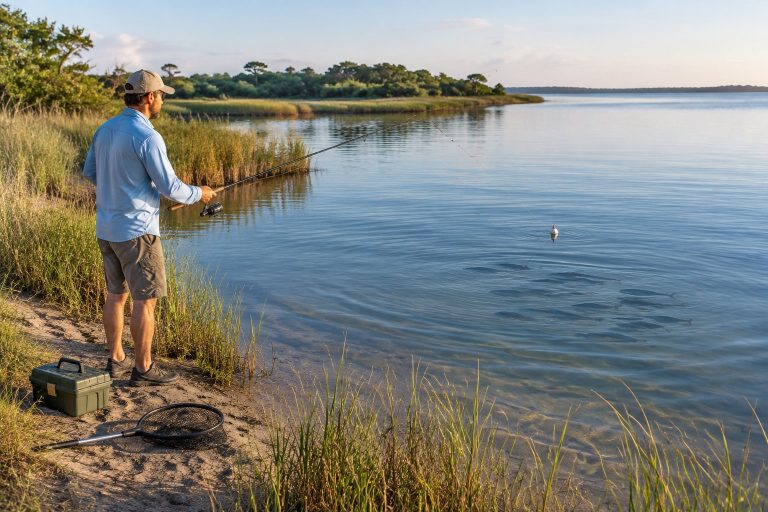
Red worms are one of the easiest baits you can use for bluegill, sunfish, and perch. For a quick panfish trip, fishing with red worms works best on a small size 8 or 10 hook under a small fixed bobber, with the worm set 18 to 24 inches deep near weeds, docks, or shade. These worms are small and lively, so they fit a panfish mouth and wiggle hard on the hook.
That setup costs only a few dollars. It fits a lunch break, an after-work stop, or an hour at the pond with your kids. Once you know how to hook the worm, read the bobber, and fix stolen bait, you can start catching fish within a few casts.
Are Red Worms a Good Choice for Your Trip?
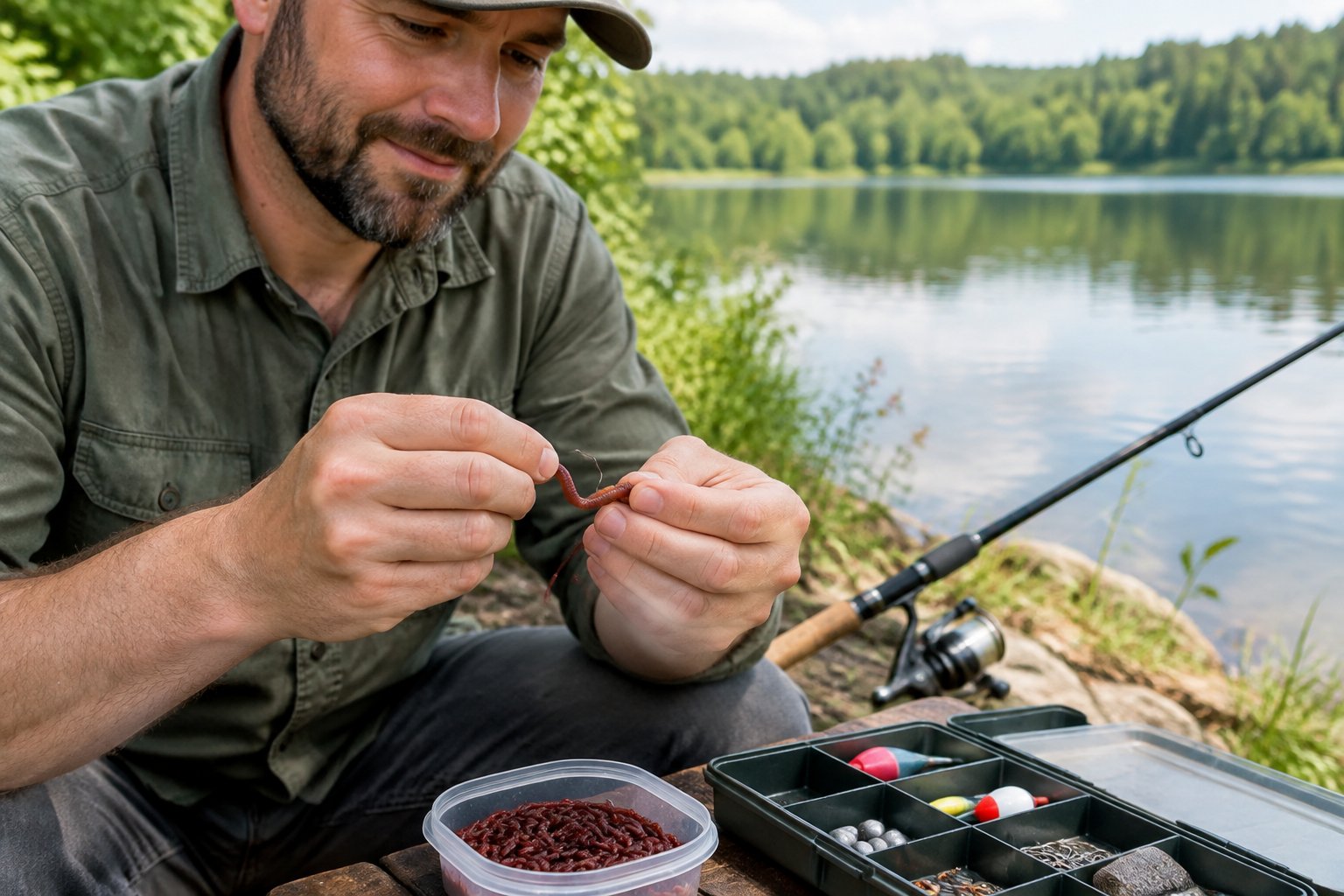
Red worms are a great choice when you want panfish, small trout, and steady action from the bank. They run about 1 to 4 inches long, so they match small mouths far better than big worms do. Bigger fish will still eat them, though you may need to hook several at once.
How Do Red Wigglers Differ from Nightcrawlers?
Most bait shops sell red worms as red wigglers. These are the same small, skinny worms people raise for compost bins. Nightcrawlers are much larger, often 6 to 8 inches, and thicker through the body.
| Feature | Red Wigglers | Nightcrawlers |
|---|---|---|
| Length | About 1 to 4 inches | About 6 to 8 inches |
| Body | Thin and very active | Thick and heavy |
| Best hook size | 8 to 12 | 2 to 6 |
| Best targets | Bluegill, sunfish, perch, small trout | Bass, catfish, walleye |
| Storage | Easy to keep, handle warmer temps | Need cooler storage |
The big win with red wigglers is size. A whole red worm fits on a small hook with little left to steal. A full crawler on a panfish hook leaves a long tail that bluegill nibble away. If you want to chase bass or catfish, nightcrawler fishing makes more sense.
Which Fish Will Take a Red Worm?
Almost every freshwater fish will eat a worm. Red worms shine for these:
- Bluegill and sunfish: The top target. They bite all day in warm months.
- Redear sunfish: They feed near the bottom, so set your worm a bit deeper. More tips sit in this guide to fishing for redear sunfish.
- Yellow perch and crappie: Both take small worms under a bobber.
- Stocked and wild trout: Brook trout in small streams love red wigglers.
- Catfish and carp: Bunch 3 to 5 worms on one hook for these bigger fish.
What Do You Need for a Simple Bobber Rig?
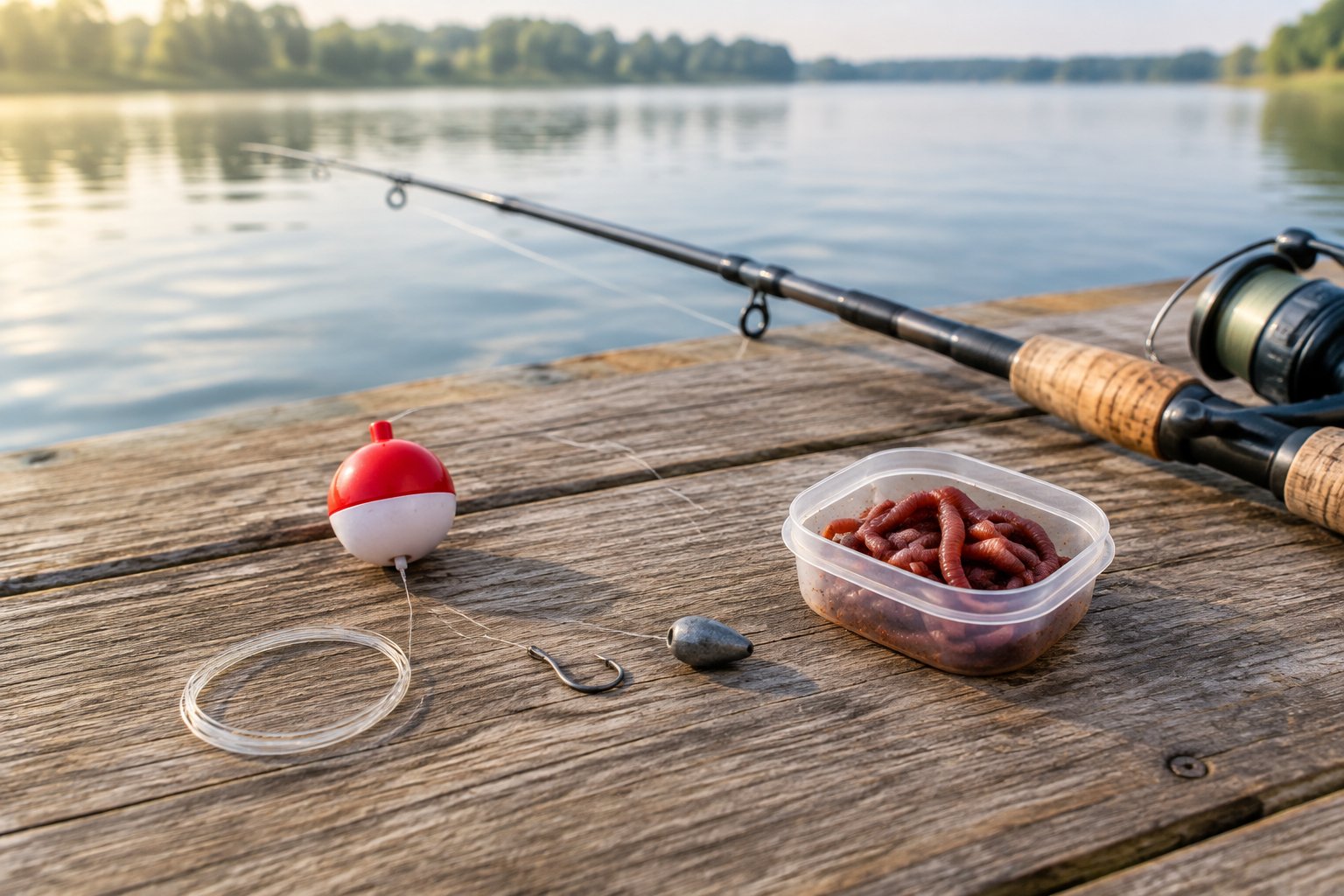
You need a light rod, 4- to 8-pound line, a small hook, one split shot, and a small bobber. Worm fishing for panfish rewards light gear because these fish bite softly and fight hard for their size.
Choose a Beginner-Friendly Rod, Reel, and Line
Pick a light or medium-light spinning or spincast combo around 5 to 6 feet long. Spincast reels with a push button are easiest for kids. Spinning reels cast lighter rigs better once you learn the bail.
Spool on 4- to 8-pound monofilament. Lighter line lets your small rig cast farther and sink more naturally. If your reel already has line, check it for fraying and tight coils before you replace it. For a full list of rod and reel options, see this ultralight setup for small ponds.
Match a Small Hook, Split Shot, and Bobber
Small parts catch more panfish. Use these:
- Hook: Size 8 or 10 for bluegill, size 6 for bigger perch or crappie. Baitholder hooks have tiny barbs on the shank that grip the worm. Long-shank Aberdeen hooks are easier to remove from small fish.
- Split shot: One small lead-free shot, pinched 6 to 12 inches above the hook.
- Bobber: A round or oval float about 1 inch across. Use the smallest bobber that floats your bait and weight.
A big bobber hides light bites because the fish has to pull hard to sink it. Kid-sized floats in bright colors are easy to watch; here are some of the best fishing bobbers for kids.
Tie the hook on first with an improved clinch knot. Then add the shot, then clip on the bobber. If the clip style is new to you, learn how to put a bobber on a fishing line before you head out.
Set the Bait Depth for Shallow Pond Panfish
Start with the bobber 18 to 24 inches above the hook. That depth puts the worm above the weeds and mud in most pond edges.
Look at how the bobber sits. About one-third of it should show above the water, standing upright.
- Bobber lies flat: Your shot or worm is on the bottom. Move the bobber closer to the hook.
- Bobber sinks on its own: Too much weight. Remove the shot or use a slightly bigger float.
- Water deeper than your rod: Switch to a slip bobber fishing rig so you can still cast easily.
Change depth in 6- to 12-inch steps. Big jumps make it hard to tell where fish are holding.
How Do You Hook and Present a Red Worm?
Hook the red worm two or three times, leave a short tail, and cast it softly next to cover. A good hook set on panfish is a smooth lift of the rod, which keeps a small hook in a small mouth.
Hook the Worm Securely While Leaving It Free to Move
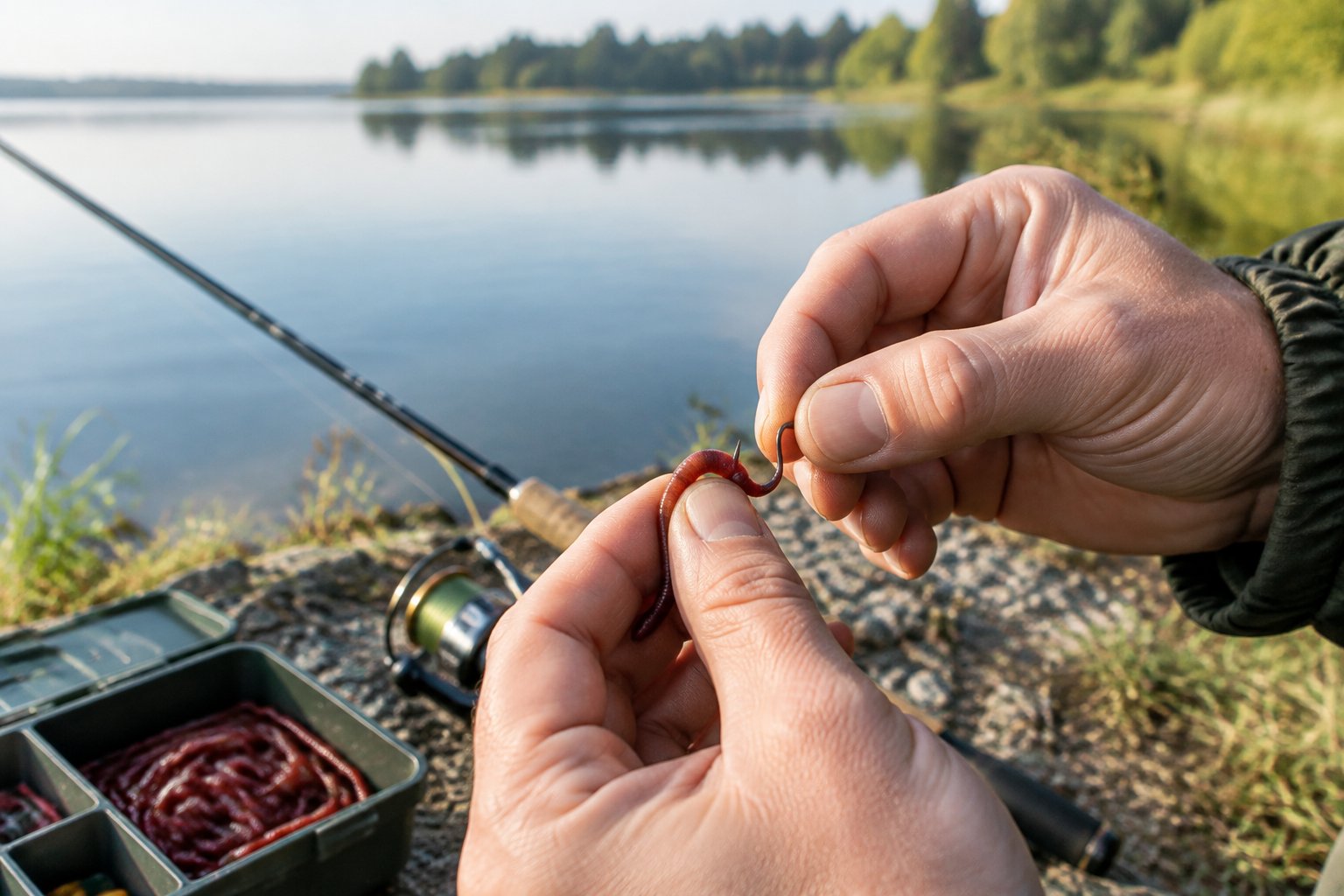
Red wigglers are short, so you can use the whole worm. Follow these steps:
- Wet your hands so the worm stays firm and slimy.
- Push the hook point in near the head end.
- Slide the worm up the shank toward the eye.
- Bring the point out, then pierce the body one or two more times.
- Leave about half an inch to 1 inch of tail free to wiggle.
- Keep the hook point exposed so it can catch the fish.
Give it a quick tug in the air. If the worm slides, rehook it now. A tightly balled worm hides the point and leads to missed fish.
Make a Gentle Cast Near Fish-Holding Cover
Look behind you before every cast, especially with kids nearby. Use a smooth lob. A hard snap throws the worm off and tangles the line around the bobber.
Cast beside cover, not into it. Panfish hold close to:
- Weed edges and lily pad openings
- Dock posts and shaded banks
- Fallen trees and brush
- Inlets where water flows in
Start close to shore. New anglers often cast past the fish. After the cast, reel up slack until the line is straight but not tight. This same approach works well at small water like office park ponds on a lunch break.
Watch the Bobber and Set the Hook Without a Hard Jerk
A bite shows up in several ways. The bobber may twitch, slide sideways, lie down, or pop up higher when a fish lifts the shot. A single twitch from a wave means little. Repeated taps or a steady pull means a fish has the worm.
When the bobber goes under or moves off, reel in loose line and sweep the rod up smoothly. A violent jerk rips the small hook out or flings the rig back at you. For more on reading floats, check out how to fish with a bobber.
What Should You Change When Fish Will Not Stay Hooked?
Shrink your bait and hook first, then change depth or spot. Most problems with worms for fishing panfish come from bait that is too big or a rig sitting in the wrong place.
Fix Stolen Bait and Missed Bites
If your worm vanishes bite by bite, small bluegill are pecking the tail. Try these fixes in order:
- Use less worm. Pinch the red worm in half and thread the piece fully onto the hook.
- Drop a hook size. Go from a size 8 to a 10.
- Shorten the tail. Leave only a tiny end hanging.
- Wait a moment longer. Let the bobber go fully under before you lift.
If the worm comes off during the cast, hook it through more points and cast more gently. If worms slide down and bunch near the hook eye, they have gone soft. Swap in a fresh, firm one. Check your hook point after every snag, since a dull point lets fish steal bait before it sets.
Adjust Depth or Move When the Bobber Stays Still
A still bobber tells you fish are at another depth or in another spot. Give each spot about five good casts. Then move the bobber 6 to 12 inches deeper and try again.
Still nothing? Walk 20 or 30 feet and cast to the next piece of cover. Panfish travel in groups, so one bite often means more fish nearby. On short trips, moving fast pays off; this guide on how to catch fish quickly in 30 minutes has more ideas for tight schedules.
Bright midday sun pushes panfish into shade and deeper water. Early morning and evening put them shallow again.
How Can You Keep a Short Fishing Trip Simple and Safe?
Keep your red wigglers cool and damp, check local rules, and handle hooks with care. A few habits keep the trip easy for you and your kids.
Keep Worms Cool and Their Bedding Damp
Red wigglers handle warmer temps better than nightcrawlers, so they are easy to keep. Still, store the cup in shade or a small cooler, never on a hot dashboard. Keep the bedding damp like a wrung-out sponge. Soaked bedding turns worms soft, and dry bedding kills them. Take out only a few at a time.
Check Bait Rules and Handle Hooks and Fish Safely
Some waters ban live bait, so check your state rules before you go. Never dump leftover worms on the ground at the water. Throw them in the trash or take them home.
For safety:
- Carry forceps or needle-nose pliers for hooks.
- Teach kids to check behind them before casting.
- Wet your hands before you hold a fish.
- Hold panfish by smoothing the top fin down so the spines don’t poke you.
If a fish swallows the hook deeply, cut the line close and let it go. Learn how to unhook a fish cleanly so release is quick.
Start with One Simple Rig and a Nearby Pond
Red worms give you a small, lively bait that fits panfish mouths and keeps bites coming. Pair them with light line, a size 8 or 10 hook, one split shot, and a small bobber set 18 to 24 inches deep.
Hook the worm two or three times with a short tail, cast beside cover, and lift the rod smoothly when the bobber goes down. If bait keeps disappearing, use a smaller piece and a smaller hook. If nothing bites, adjust depth or move. This kind of worm fishing works before work, after work, or on a weekend morning with your kids.
Get your gear ready and explore the related beginner-friendly guides before your next trip.