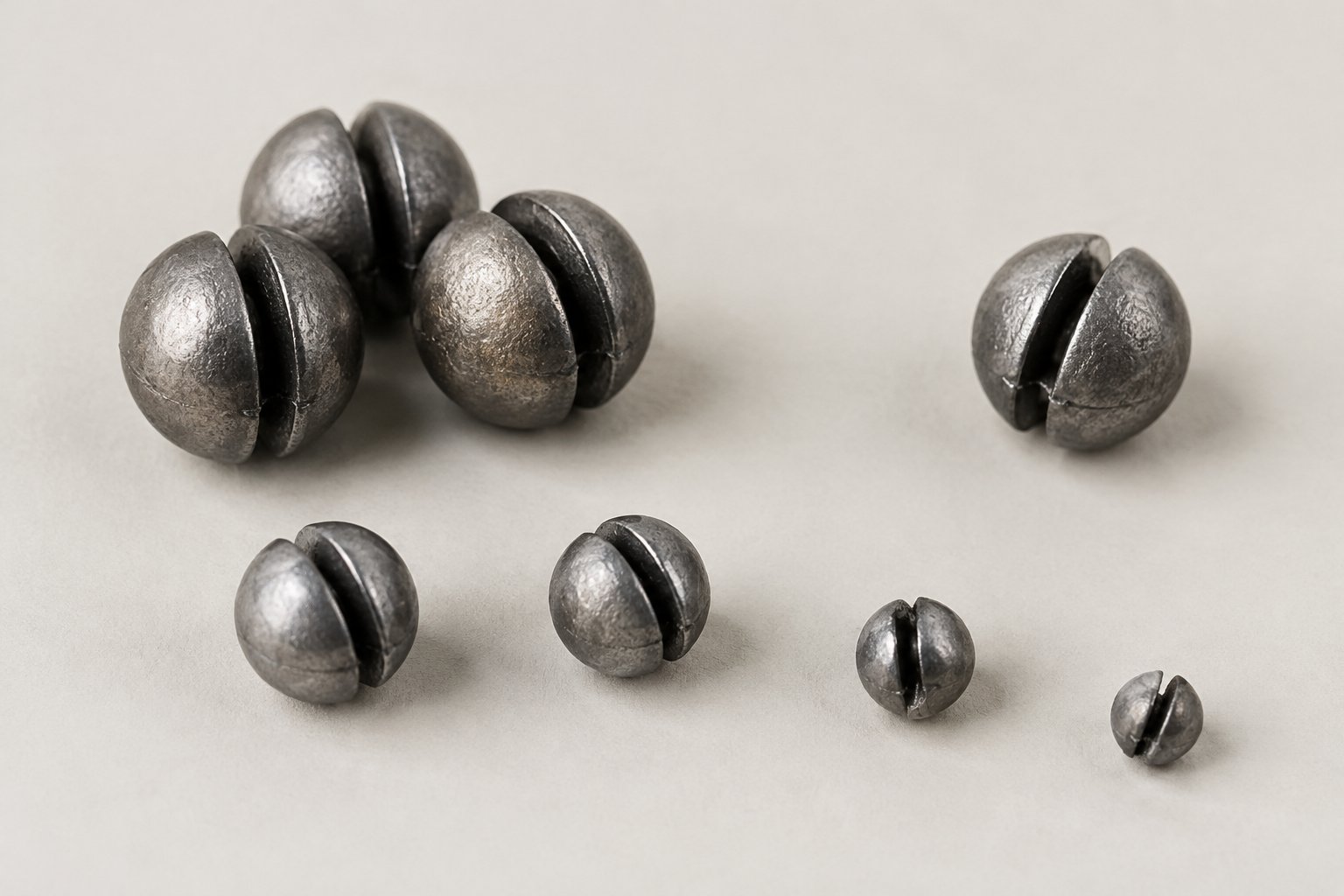
Split shot sinkers are small pinch-on weights that pull your bait down to where fish are feeding. For most beginners and family pond trips, removable split shot in a mixed pack is the best choice, because you can open it by hand, slide it, and reuse it without cutting your line. Start with one small shot about 12 to 18 inches above the hook, and add more only if your bait won’t sink.
A few safety habits matter from the start. Crimp with pliers, keep loose weights away from little kids, and check whether your state limits lead before you buy. Get those right and your split shot will work for you on every short trip.
What Does Split Shot Do on Your Fishing Line?
Split shot adds a small amount of weight to your line so your bait sinks and stays at the depth you choose. Because each piece is tiny, you can stack or spread them to fine-tune how fast your bait falls and how it moves in the water.
How Small Weights Control Bait Depth and Drift
A split-shot sinker is a small round weight with a slot cut through the middle. You set your line in the slot and pinch it closed, and it grips the line. No knots are needed.
Here is what that weight does for you:
- Sinks the bait. A worm with no weight floats slowly near the top. One shot pulls it down where fish wait.
- Balances a bobber. The right amount of shot makes your bobber sit upright, so you can see light bites.
- Controls drift. In a creek or windy pond, a little weight keeps your bait from sweeping away too fast.
Light line handles split shot best. If you are still picking line, the basics of fishing line for beginners will help you match weight to line strength.
Standard vs. Removable Split Shot: What Changes?
Standard split shot is a plain ball with a slot. It is cheap and holds well, but once you crimp it, getting it off takes care.
Removable split shot has two small “ears” on the back. Pinch the ears and the slot opens, so you can move or remove the weight in seconds. Kentucky’s wildlife agency lists removable split shot in its starter tackle box for this reason.
| Feature | Standard Split Shot | Removable Split Shot |
|---|---|---|
| Opening | Pry with thumbnail or pliers | Pinch the ears |
| Easy to move | Harder | Yes |
| Reuse | Possible | Easy |
| Best for | Set-and-leave rigs | Beginners and kids |
If you plan to fish with a bobber and change depth often, removable shot saves you time on every adjustment.
How Do You Choose the Right Size and Material?
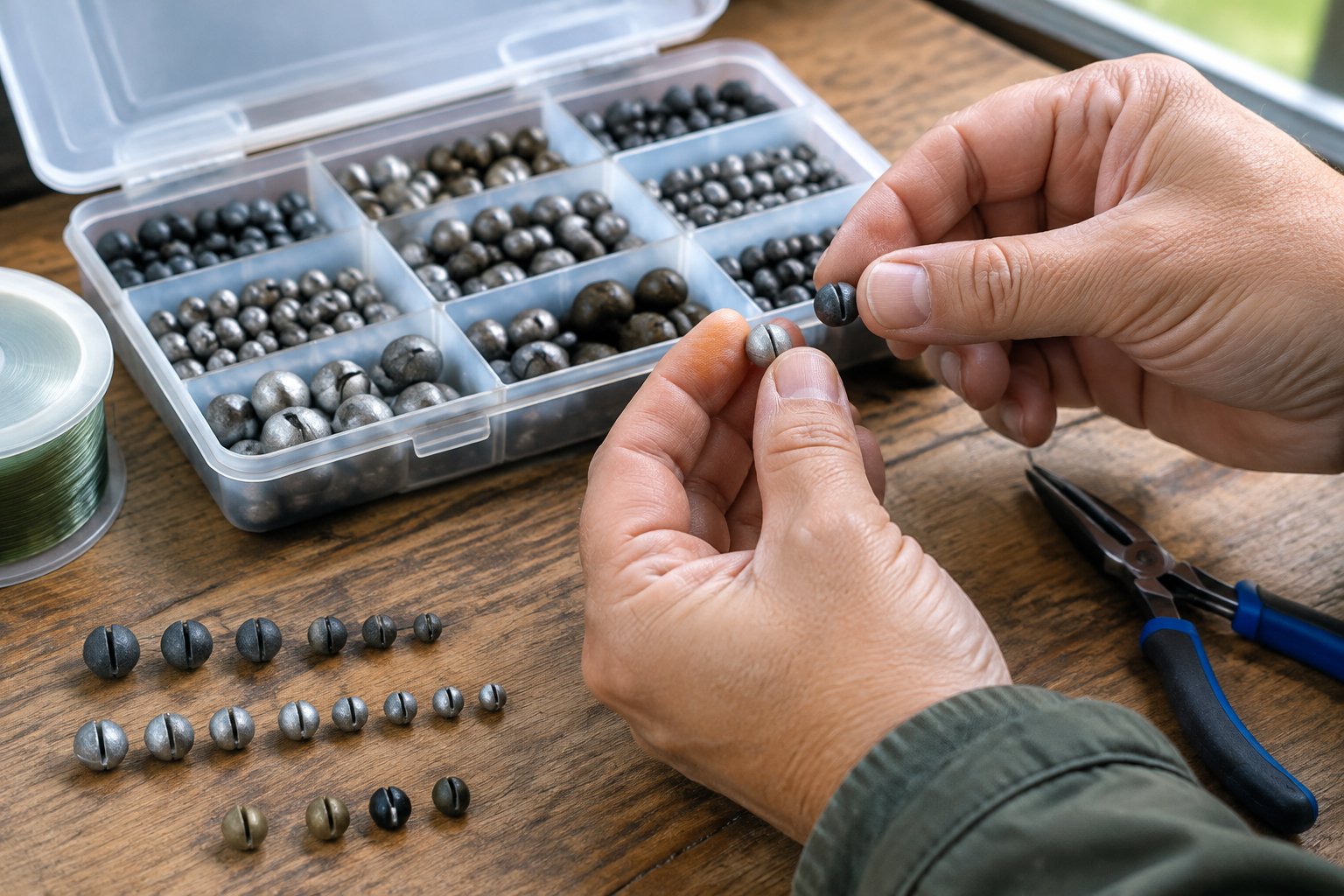
Pick the lightest shot that gets your bait down, read the weight printed on the pack, and check your state rules before choosing lead. Non-lead shot costs more but suits family fishing and protected waters.
Start With the Lightest Weight That Gets Your Bait Down
Light weight looks more natural to fish. It also lets a bobber show soft bites.
Use this simple method at the water:
- Pinch on one small shot.
- Cast and watch. If the bobber leans over or the bait drifts high, add one more shot.
- Stop when the bobber stands up and just a small part shows above the water.
Several small shots spread along the line sink more gently than one big shot. They also make less splash in calm, clear ponds. For a matching rod and reel, an ultralight setup for small ponds pairs well with small shot.
Why Size Labels and Actual Weights Vary by Manufacturer
Split shot sizes confuse almost everyone at first. Some guides call BB the biggest size. In Bullet Weights’ own chart, BB is one of the lightest. Here is that one maker’s table:
| Size | Weight (oz) | Weight (g) |
|---|---|---|
| B | .015 | 0.43 |
| BB | .020 | 0.57 |
| 3/0 | .025 | 0.71 |
| 7 | .040 | 1.13 |
| 6 | .050 | 1.42 |
| 5 | .080 | 2.27 |
| 4 | .085 | 2.41 |
| 3 | .105 | 2.98 |
In this chart, a size 3 weighs seven times as much as a B. Also note that a 3/0 split shot has nothing to do with a 3/0 hook. When you switch brands, read the ounces or grams on the packet and skip the size name.
Lead vs. Non-Lead Options for Family Fishing
Lead is cheap and soft, so it pinches easily. It is also toxic. Lead tackle killed 49% of the adult loons the Loon Preservation Committee collected dead in New Hampshire from 1989 to 2011.
Your non-lead choices:
- Tungsten: denser than lead, so a smaller piece gives the same weight. It is harder to pinch and costs about two to three times as much.
- Tin, steel, or bismuth: safer to handle and sold in common sizes.
When kids help rig, non-lead shot is the easier pick for peace of mind.
Check Local Sinker Restrictions Before You Buy
Some states and some waters limit or ban lead sinkers, often where loons and other waterfowl gather. Rules can cover weight size, specific lakes, or wildlife refuges.
Look up your state fish and wildlife agency’s regulations before you stock up. If lead is restricted where you fish, buy tin or tungsten so your tackle box is legal everywhere you go.
How Do You Attach, Position, and Remove Split Shot Safely?
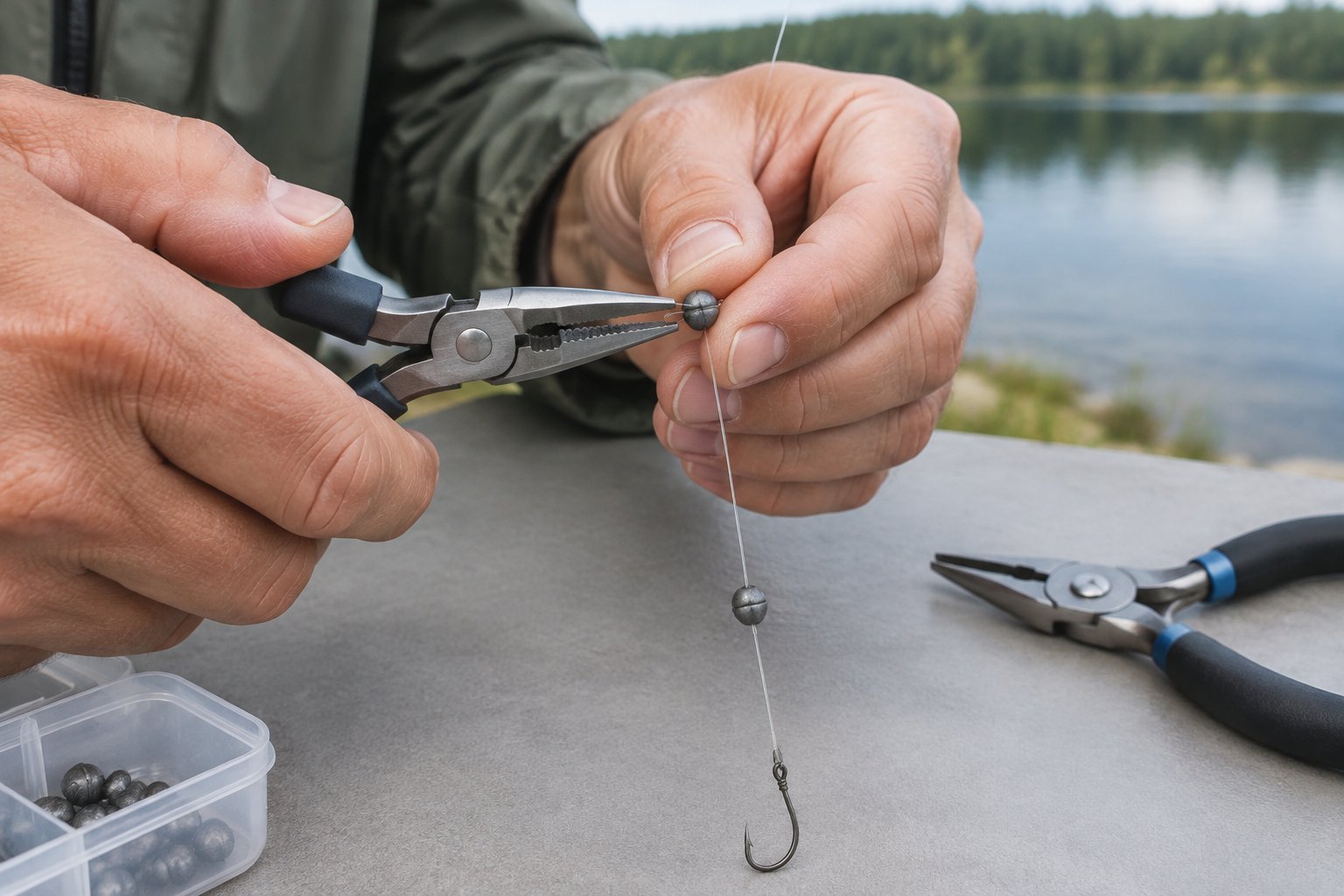
Crimp split shot gently with pliers, place it 6 to 18 inches above the hook, and open it fully before you slide or remove it. Wash your hands afterward, and keep loose shot out of small hands.
Use Fishing Pliers to Crimp Gently, Never Your Teeth
The EPA warns anglers never to bite down on split shot. Biting can chip teeth, and with lead shot it puts metal in your mouth.
Follow these steps:
- Open the slot with your thumbnail or the pliers’ tip.
- Lay the line deep in the slot.
- Squeeze with pliers just until the shot stops sliding.
- Tug the line. If the shot moves, give one more light squeeze.
Too much pressure flattens the line and makes a weak spot that snaps on a fish. Before you add weight, make sure your hook is tied on well; tips on how to put a hook on a fishing pole cover that first step.
How Far Above the Hook Should You Place the Weight?
Place your first shot about 12 to 18 inches above the hook for most pond fishing. That gap lets a worm wiggle and sink slowly behind the weight.
- 6 to 12 inches: windy days or when you need the bait down fast.
- 12 to 18 inches: a good default for bobber and worm rigs.
- 18 inches or more: clear, calm water and cautious fish.
Keep shot away from the knot. A crimp right on the knot weakens it.
Open Removable Shot Before Moving or Removing It
Dragging a closed shot along the line scrapes and kinks it. Pinch the ears so the slot opens all the way, then slide or lift it off.
For standard shot, pry the slot open with your thumbnail or the pliers’ tip. If it sticks, work it gently instead of yanking. Afterward, run your fingers along the line. If you feel a flat spot, cut that section off and retie. Braid lets shot slip, so many anglers add a short mono or fluoro leader using a knot made for braided fishing line.
Keep Small Weights Away From Young Children and Wash Hands After Handling
Split shot is small enough to swallow. Treat it like any other choking hazard.
- Store shot in a closed container, up high when you’re at home.
- Do the crimping yourself for kids under about age 6, and let older kids help under your eye.
- Pick up any dropped shot right away.
- Wash hands with soap and water after handling, and before snacks. Wipes help at a pond with no sink.
Which Simple Setups Work for a Quick Pond Trip?
A bobber, hook, worm, and one or two split shot will catch bluegill and other panfish at almost any pond. When fish sit near the bottom, drop the bobber and fish a light weight on the bottom.
A Bobber, Hook, and Worm Setup for Beginners and Kids
This is the classic starter rig, and it works. Kids love watching the bobber dip.
- Tie on a small hook, about size 6 or 8 for bluegill.
- Pinch one small shot 12 to 18 inches above the hook.
- Clip a bobber 2 to 4 feet above the hook. See how to put a bobber on a fishing line if the clip is new to you.
- Thread on a piece of worm and cast near weeds or a dock.
When the bobber goes under, reel and lift. For deeper water, a slip bobber fishing rig lets you fish 6 to 10 feet down and still cast easily.
A Light Bottom-Fishing Setup Without a Bobber
When fish stop biting up high, they are often near the bottom. Remove the bobber and add one or two shot 12 inches above the hook.
Cast, let the bait settle, and reel in slack until the line is snug. Watch your rod tip for taps. This works well with nightcrawlers, and good river fishing bait like worms and minnows works the same way in slow creeks.
Adjust Weight and Spacing as Depth or Current Changes
Change one thing at a time so you know what helped.
- Deeper water: slide the bobber higher first, then add a shot if needed.
- Wind or current: add a second shot a few inches above the first.
- No bites in clear water: use smaller shot spread farther apart.
Spacing shot keeps the rig from tangling on the cast. Stacking three or four in one spot gets weight down fast but twists more often.
How Do You Fix Common Split-Shot Problems?
Most split-shot trouble comes from too much weight, too much squeeze, or shot in the wrong spot. Each problem has a quick fix you can make at the water.
When Your Bobber Sinks or Your Bait Stays Too High
A bobber that sinks on its own means too much weight. Remove the top shot or swap one for a smaller size.
A bobber lying flat on its side means too little weight. Add one small shot until it stands up.
If the bait seems to stay high in current, move the shot closer to the hook, about 8 to 10 inches. That pulls the bait down faster without adding more metal.
What to Do When Shot Slips or Damages the Line
Shot slides when the crimp is too light or the line is slick braid. Give it a firm but small squeeze. On braid, add a short mono leader and pinch the shot there.
Line damage shows up as a flat, shiny, or kinked spot. Cut above it and retie. Line breaks at those spots, often on your best fish. Removable split shot causes fewer nicks because you open it before every move.
Reduce Snags and Tangles, and Pack Out Used Weights
Snags happen when shot drags in rocks or brush. Try these fixes:
- Use less weight so the bait sits above the snags.
- Switch to a bobber to hold the bait off the bottom.
- Spread shot apart to cut down on twists during the cast.
When you break off, collect any loose line or shot you can reach. Strip shot off your line before you pack up so it can’t crush the line between trips. Put used weights back in the tin. Lost lead harms birds, so packing it out is the right habit to teach kids.
Keep a Simple Rig Ready for Your Next Short Trip
A pre-rigged rod with removable split shot lets you go from car to cast in minutes. Before you leave, tie on the hook, pinch one shot 12 to 18 inches up, and clip on a bobber. Then pack a small kit:
- A mixed tin of split shot sinkers, non-lead if kids are along
- Fishing pliers for crimping
- Spare hooks and a few bobbers
- Hand wipes and a closed container for loose weights
This quick kit fits a lunch break at one of the office park ponds near work or an after-school trip with your kids. It pairs well with other gear for busy people fishing before work, too.
Remember the key steps: crimp with pliers and never your teeth, read the weight on the pack, check your state’s lead rules, and wash up after.
Get your gear ready and explore the related beginner-friendly guides before your next trip.