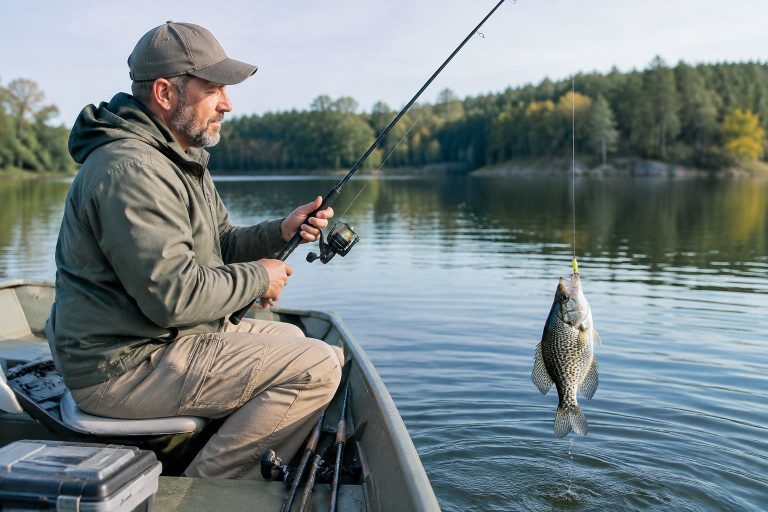
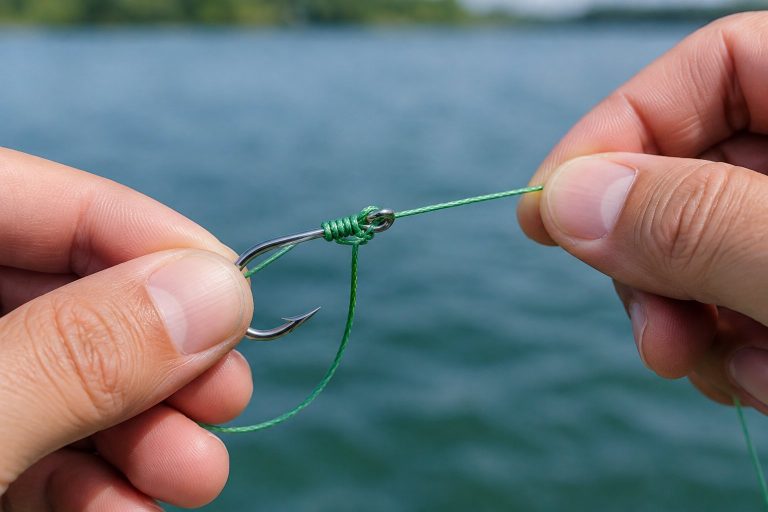
You can unhook most fish in under a minute with wet hands, a gentle grip, and a pair of pliers. To unhook a fish safely, keep it wet and supported, grip the hook shank with pliers, and back the hook out the same way it went in; if the hook is deep in the throat or gills, cut the line close to the mouth and leave the hook in. Those few moves protect the fish’s slime coat, keep your fingers away from spines and teeth, and give a released fish its best shot at swimming off strong.
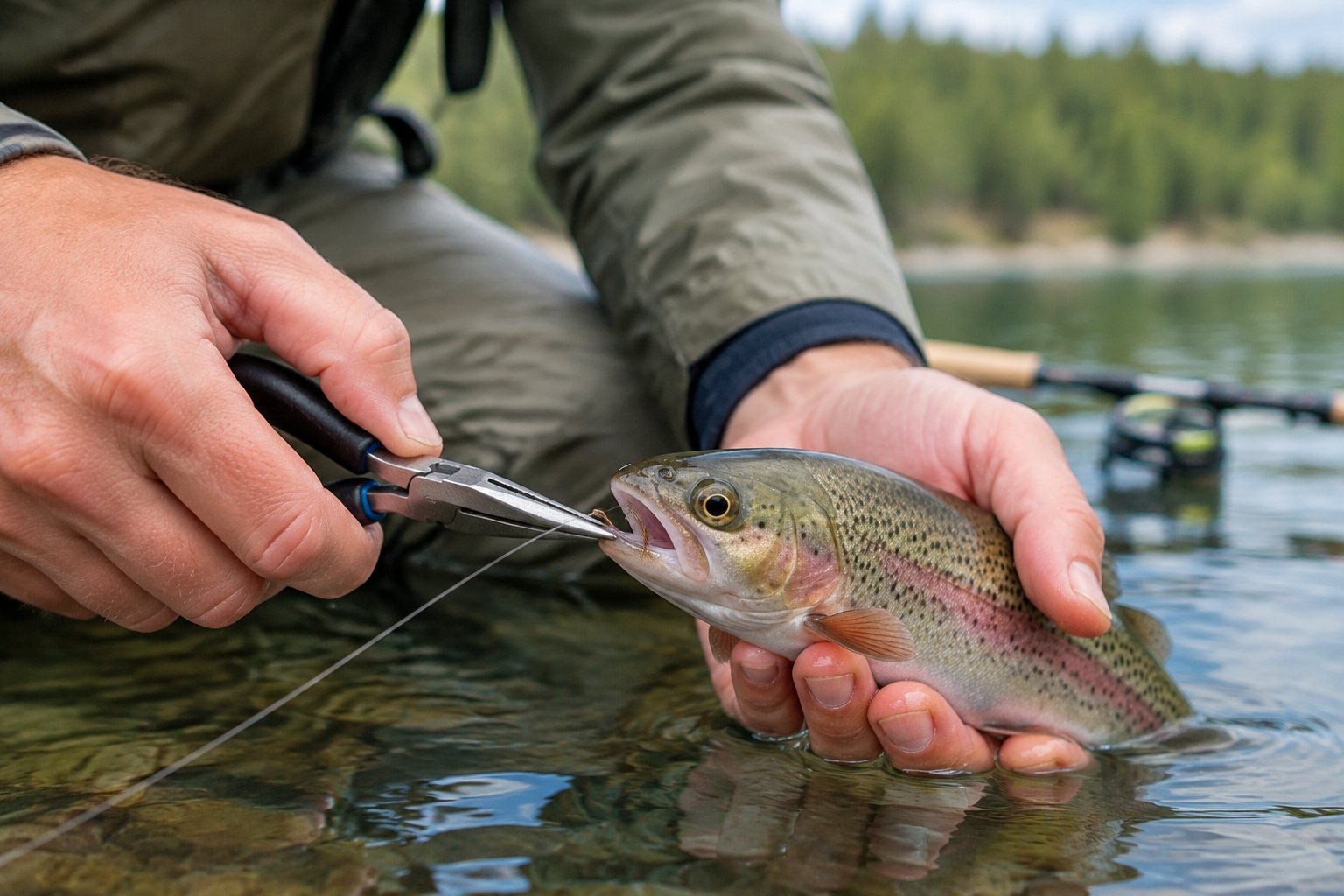
If you practice catch and release on a quick after-work trip or a Saturday at the pond with your kids, this is the skill that makes the whole outing feel calm. Once you know how to unhook a fish without fumbling, you’ll spend less time wrestling a flopping bluegill and more time casting.
Remove a Shallow Mouth Hook Step by Step
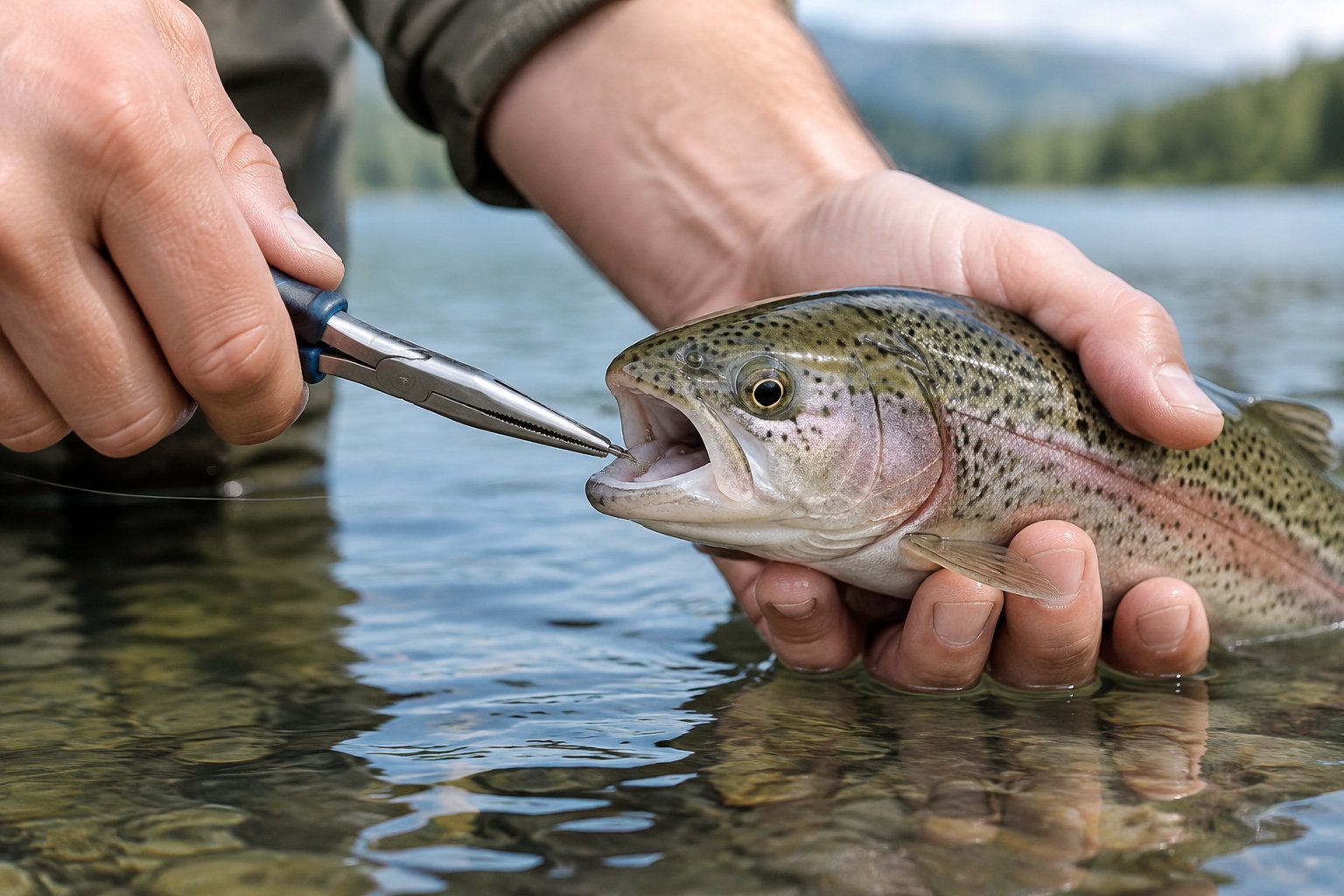
A hook in the lip or front of the mouth comes out cleanly when you keep the fish wet, hold it the right way for its species, and reverse the hook with a tool. Good catch-and-release fishing also means an adult takes over the sharp part when kids are along.
Wet Your Hands and Keep the Fish Supported in the Water
Dip your hands in the lake before you touch the fish. Fish wear a layer of slime that guards them against disease, and dry hands strip it off like a towel.
Keep the fish in the water or right at the surface whenever you can. A landing net with soft, knotless mesh works well because the fish rests in it while you work.
When you do lift a fish:
- Cradle the belly with one hand near the water’s surface.
- Hold it gently. Squeezing hard can hurt its organs.
- Never grab a fish by the gills or touch its eyes.
- Keep it low over the water, so a slip means a splash and not a fall onto rocks or a dock.
A fish that is thrashing often settles down if you hold it upside down in the water for a moment. That calm few seconds is your window to work the hook.
Check the Species Before Choosing a Grip
Different fish bite, poke, and cut in different ways, so your grip should match the fish in your hand.
| Fish | Watch out for | How to hold it |
|---|---|---|
| Sunfish and bluegill | Spiny dorsal fin | Slide your palm over the head and back to fold the fin flat |
| Yellow perch | Sharp gill plates and spines | Same palm-over-the-back grip; larger perch can be held by the lip |
| Walleye | Sharp teeth and gill plates | Body grip only; skip the lip hold |
| Small bass | Few hazards | Body grip like a sunfish |
| Larger bass | Weight on the jaw | Thumb and finger on the lower jaw, then support the body |
| Trout | Small teeth, no fin spines | Wet hands around the body behind the head |
| Pike and pickerel | Very sharp teeth | Keep fingers out of the mouth; use long tools |
| Catfish and bullhead | Stiff dorsal and pectoral spines | Make a V with thumb and finger over the head, spines straight out |
Panfish are the fish beginners land most, and if you plan to catch perch with kids, teach the palm-down grip first. Catfish spines can hurt, so practice that V-grip before you catch catfish from the bank.
Grip the Hook and Reverse Its Entry Path Without Yanking
Look at the hook before you pull. You want to see where the point went in and which way the bend curves.
Then follow these steps:
- Grab the shank of the hook (the straight part) with your pliers.
- Push the hook slightly back toward the bend, the same direction it entered.
- Turn your wrist so the point slides back out of the hole it made.
- Keep the motion smooth and steady.
Yanking tears lips and leaves a bigger wound. If the barb catches, push a little more, rotate, and try again. A good pair of fishing pliers with a long, thin nose gives you reach into a bluegill’s tiny mouth without putting your fingers near the point.
Try to get the fish back in the water within about 15 to 30 seconds of lifting it.
Let an Adult Handle Hooks When Fishing with Kids
Kids love holding the fish. The hook is the adult’s job.
A good split of chores looks like this:
- Your child: wets their hands, holds the fish low over the water with your help, and does the release.
- You: hold the pliers, remove the hook, and keep the line under control so a swinging lure doesn’t fly loose.
Watch for treble hooks and spinning lures, since one wiggle from the fish can drive a loose point into a small hand. If anyone gets hooked, stop and get proper medical help.
As kids get older, let them practice the plier grip on lip-hooked fish while you hold the fish steady.
Which Tools Make Hook Removal Easier?
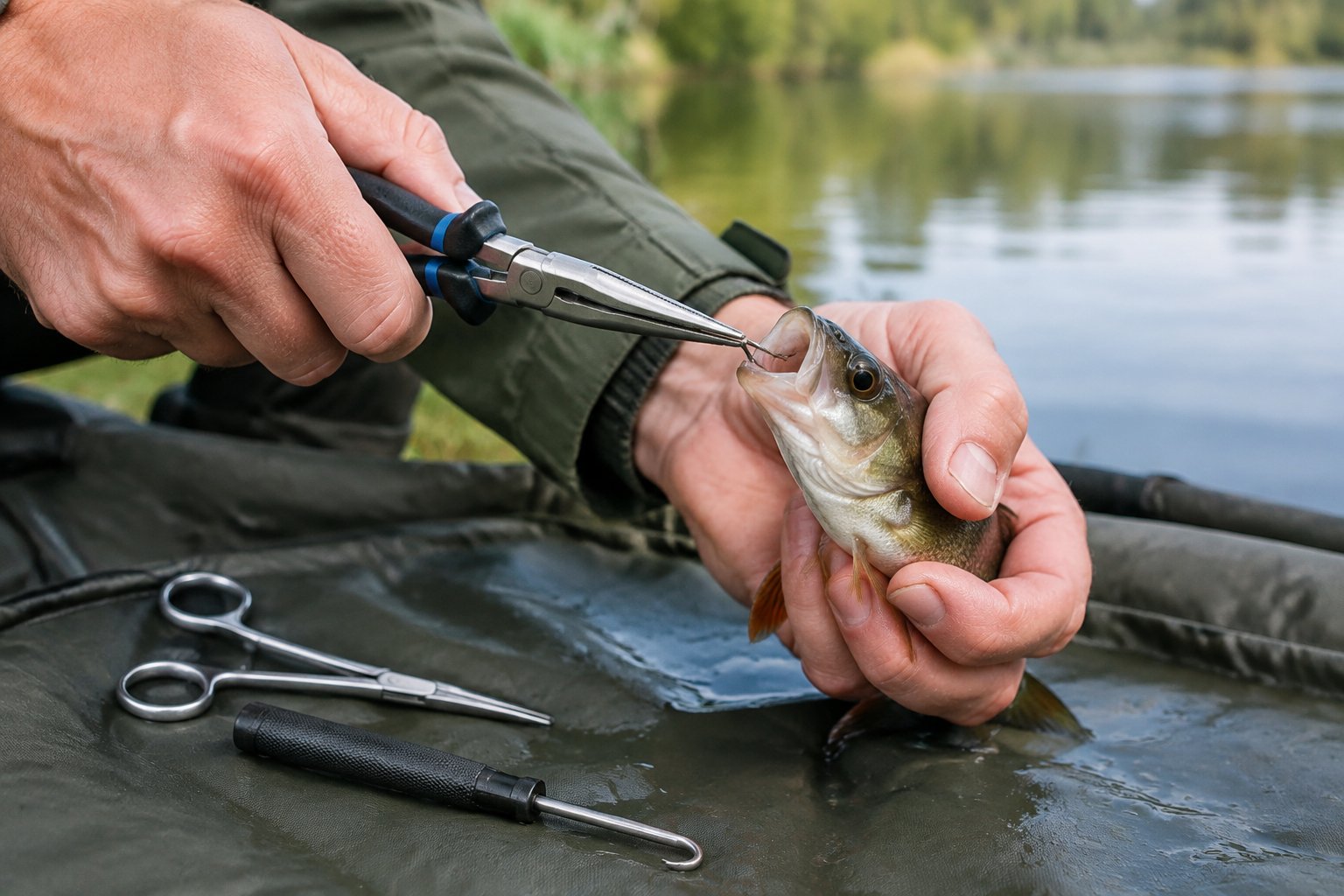
Needle-nose pliers handle most beginner catches, with a hemostat, a disgorger, and hook cutters filling in for small mouths and tangled lures. Carry them where you can grab them one-handed.
Choose Needle-Nose Pliers or a Hemostat for Accessible Hooks
Needle-nose pliers are the one tool every tackle box needs. They give you leverage on bigger hooks, reach past teeth, and can flatten barbs too.
A hemostat (a locking clamp, sometimes called forceps) is smaller and lighter. It shines on:
- Small hooks in panfish and trout
- Flies and tiny jigs
- Quick lunch-break trips when you want something that clips to your shirt
The locking feature helps a lot. Once you clamp the hook, the tool holds it while you turn your wrist.
For pike or other toothy fish, choose longer pliers so your hand stays well clear of the jaw.
Use a Disgorger Only When You Can Reach the Hook Safely
A disgorger is a slim tool with a slot or notch at the tip. You slide it down the line until the notch sits on the hook, then push gently toward the fish to pop the hook free.
It works best on small to medium hooks in the lip or the front of the mouth. These hook removers cost very little and fit in any pocket.
Use one only when you can see the hook. Pushing a disgorger down a throat you can’t see risks tearing tissue near the gills.
Keep Hook Cutters Ready for Tangled Treble Hooks
Treble hooks have three points, and on a crankbait you may have two or three of them. That means one point can be in the fish, one in the net, and one headed for your thumb.
Hook cutters (or pliers with a cutting edge) let you snip a stuck point and free the fish fast. Cut the trapped point, remove the pieces, and replace the hook later at home.
Keep line clippers handy as well. They make a clean cut close to the hook when you need to leave one in. A fishing tool lanyard keeps clippers and a hemostat on your chest, so you never dig through a bag with a fish in your hand.
When Should You Stop and Cut the Line?
Cut the line when you can’t see the hook clearly or when removing it would mean tearing tissue. A fish has a better chance with a hook left in than with a wound from digging.
Recognize Deeply Swallowed Hooks and Gill Injuries
You have a deeply hooked fish when:
- The line runs down the throat and you can’t see the hook.
- The hook sits past the back of the tongue.
- Blood flows from under the gill cover.
Blood from the gills is a serious sign. Gills are soft and full of blood vessels, so any extra poking makes things worse. Bluegills on a worm swallow hooks this way all the time, especially when the bobber sits too long before you set the hook.
Leave Inaccessible Hooks Rather Than Digging or Cutting Tissue
When a hook is out of reach, snip the line as close to the mouth as you can and let the fish go. Don’t cut flesh around the hook, and don’t twist pliers blindly down the throat.
The old idea that hooks rust out quickly is mostly a myth. Even so, fish can live with a hook in them, and some shake the hook loose on their own. Fish take punctures from spiny prey all the time.
A short tag of line helps less than you’d think. Cut close to the mouth so the line can’t snag on weeds.
Check Local Rules Before Keeping an Injured Fish
If a fish is bleeding hard and it’s legal to keep, keeping it is the kinder choice. Check your state’s catch limits and size rules first, since every state sets its own.
If the fish is under the size limit or out of season, you must release it. Cut the line, return it gently, and let it go.
Keep a copy of your state regulations on your phone. You’ll make the call in seconds on the water.
How Do You Release the Fish Carefully?
A good release means putting the fish into the water upright and holding it until it swims away under its own power. Most catch-and-release fishing losses happen in the final minute, when the fish has been out of water too long or dropped from too high.
Minimize Air Exposure and Return the Fish to Its Original Water
Every second in the air adds stress. Keep photos fast: have the phone ready before you lift the fish, snap a couple of shots, and lower it back.
Some quick rules for the release:
- Release the fish in the same water you caught it from.
- Lower it into the water. Never toss or drop it.
- Skip fishing on very hot days or in very low water if you plan to release. Warm water holds less oxygen, and fish recover slowly.
Planning shorter, cooler-hour outings (like early morning before work) helps. Fish handle catch and release better in cool water, and so do you. If you’re still building a routine, a simple plan for how to go fishing on a busy schedule makes those early trips easier.
Support Recovery Without Moving the Fish Backward
Hold the fish upright under the surface with one hand under the belly and a light hold near the tail. Watch its gills. When they open and close steadily, it’s breathing.
In a stream, face the fish’s head into a gentle current so fresh water flows over the gills. In still water, ease it slowly forward. Never pull a fish backward, because water pushes against its gills the wrong way.
When it kicks its tail and pulls away, let go. In fast current, move the fish to a calmer spot first so a weak fish isn’t swept downstream.
Make the Next Catch Easier to Unhook
The easiest hook to remove is one that lands in the lip. Your hook choice and your setup decide where the hook ends up before the fish ever bites.
Consider Barbless Hooks and Fewer Hook Points
Barbless hooks slide out in a second and leave a smaller hole. You don’t need to buy new ones. Pinch the barb flat against the hook with needle-nose pliers.
Fewer points help too:
- Swap the treble hook on a lure for a single hook.
- Or snip two points off a treble with cutters.
- Use artificial lures when you can, since fish tend to grab them in the lip.
These swaps are a big win for kids, who are more likely to get stuck by an extra point. Check that barbless and single hooks are legal where you fish; some waters require them.
Choose Non-Offset Circle Hooks for Suitable Bait Setups
Circle hooks curve back toward the shank. When a fish swallows the bait and swims off, the hook slides to the corner of the mouth and catches there.
A non-offset circle hook (point lined up with the shank) hooks the jaw corner most consistently. Some saltwater rules require this style for bait.
The trick is how you set it. Don’t jerk. Reel steadily as the line tightens, and the hook does the work. Circle hooks pair well with worms, cut bait, and live bait; learning how to hook a minnow the right way helps them turn and catch properly.
With regular J-hooks, set the hook sooner and size up if fish keep swallowing it. If you’re unsure where to start, a primer on fishing hooks for beginners explains sizes and styles in plain terms.
Pack a Ready-to-Reach Kit for Quick Family Trips
A small kit keeps unhooking fast, which keeps the fish healthy and your trip moving. Pack:
- Needle-nose pliers
- A hemostat or disgorger for small mouths
- Line clippers or hook cutters
- A landing net with rubber or knotless mesh
- A small towel to dry your hands after the release
- A few spare single or circle hooks
Keep it in one pouch or on a lanyard so you can grab it with one hand. A pre-built beginner fishing tool kit covers most of this list in one purchase.
When the gear is ready, a 30-minute stop at the pond after work doesn’t get eaten up by searching for tools.
Keep Hook Removal Calm, Brief, and Gentle
Learning how to unhook a fish comes down to a short routine: wet your hands, keep the fish in or near the water, hold it the right way for its species, and back the hook out with pliers. When the hook is deep or the gills are bleeding, cut the line close to the mouth and let the fish go, or keep it if your state’s rules allow.
With kids, you handle the hook and they handle the release. Barbless and circle hooks cut down on tough unhooking jobs before they start.
Get your gear ready and explore the related beginner-friendly guides before your next trip.