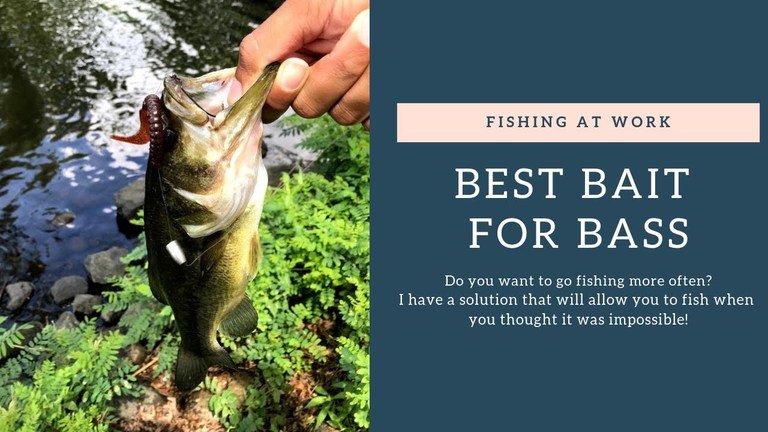
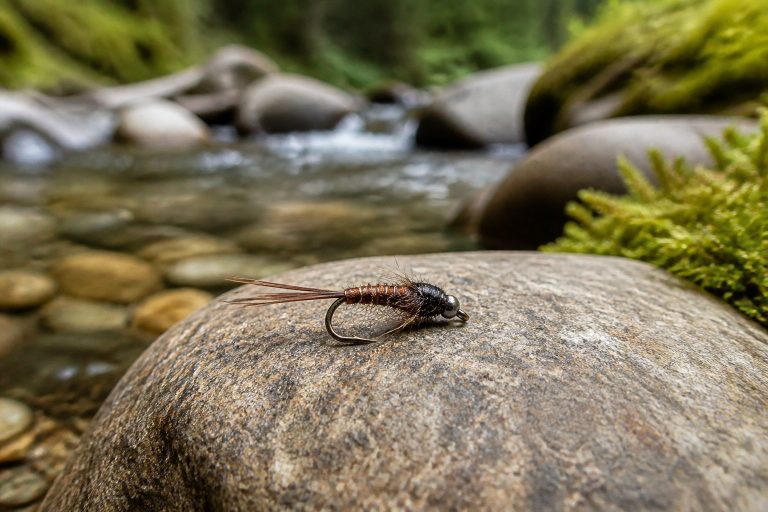
To catch perch on a short trip, use a light spinning rod with a small hook, a bobber, and a piece of worm bait, then fish near weeds or other cover where perch feed. This simple setup is easy to cast from shore and lets you adjust the bait depth until you find fish.
A few minutes of preparation helps you spend more time fishing: bring bait ready to hook, choose an accessible bank or dock, and set a small goal such as keeping the bobber in the water for 30 minutes. Perch are a useful first target for kids because the tackle is simple and bites are easy to watch for.
How to Set Up a Simple Bobber Rig
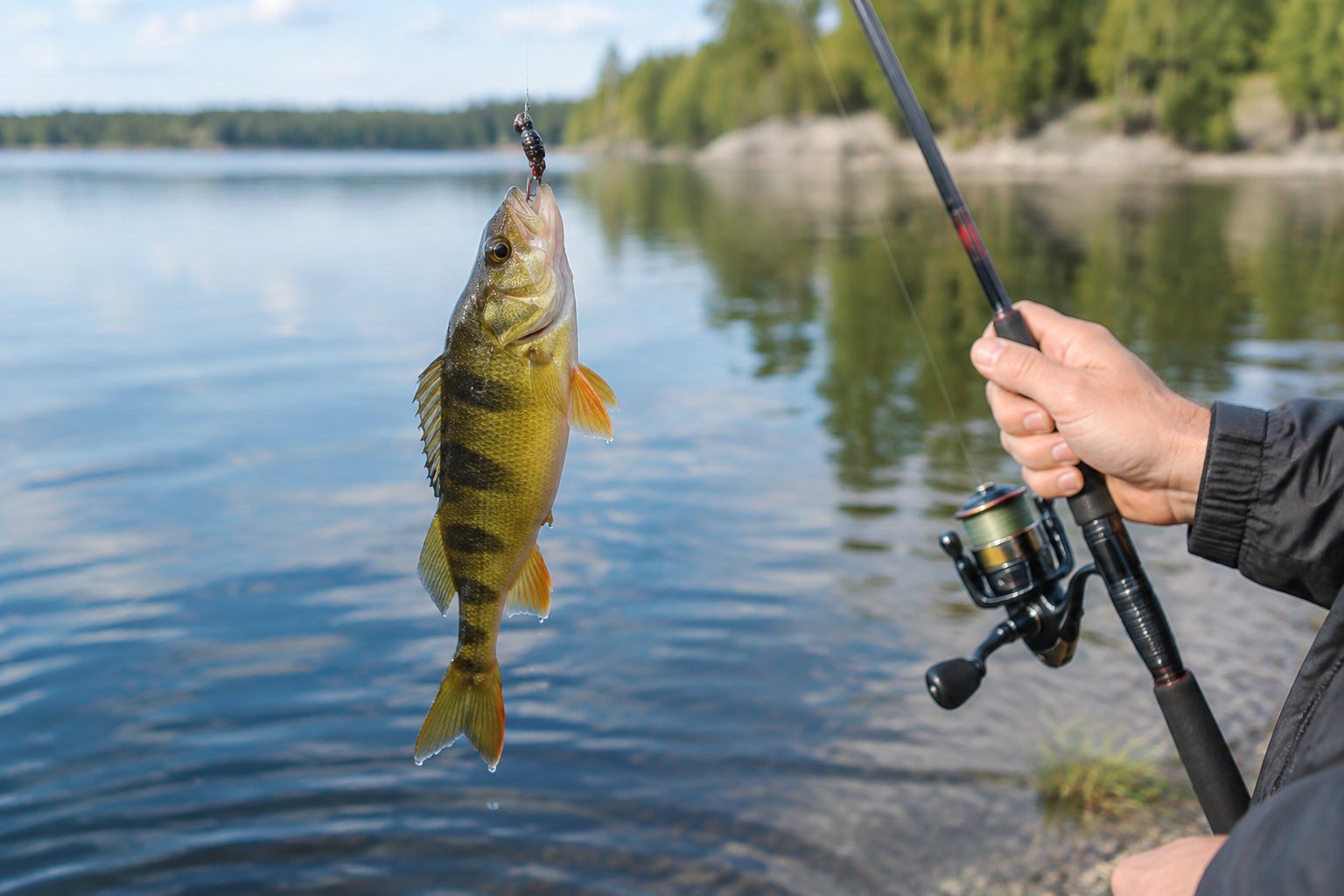
A light spinning setup and an adjustable slip bobber make a straightforward perch rig for short bank sessions. Set the bait near the bottom, where perch commonly feed, then adjust the depth if you get no bites.
Choose a Light Spinning Setup
Pair a light fishing rod with a spinning reel and light line. The sensitive setup helps you notice a perch’s gentle taps, and it makes small hooks and baits easier to cast. If you need a refresher, see how to set up a spinning reel.
Tie on a small hook and add a split shot a short distance above it to help the bait sink. A small piece of worm is easy to manage; leave enough exposed to move naturally. Use a slip bobber when you want to change depth quickly without rebuilding the rig.
Adjust the Bobber to Keep Bait Near the Bottom
Start with the bait suspended just above the bottom. Set the bobber stop so the hook and bait reach the depth you want, then cast beside weed edges, rocks, or dock supports.
Watch the bobber for a dip, sideways movement, or a pause in its drift. Perch bites can be light, so lift the rod smoothly when the bobber moves and reel steadily. If you get no action after several casts, change the depth or move a short distance along the shoreline.
Where to Find Perch
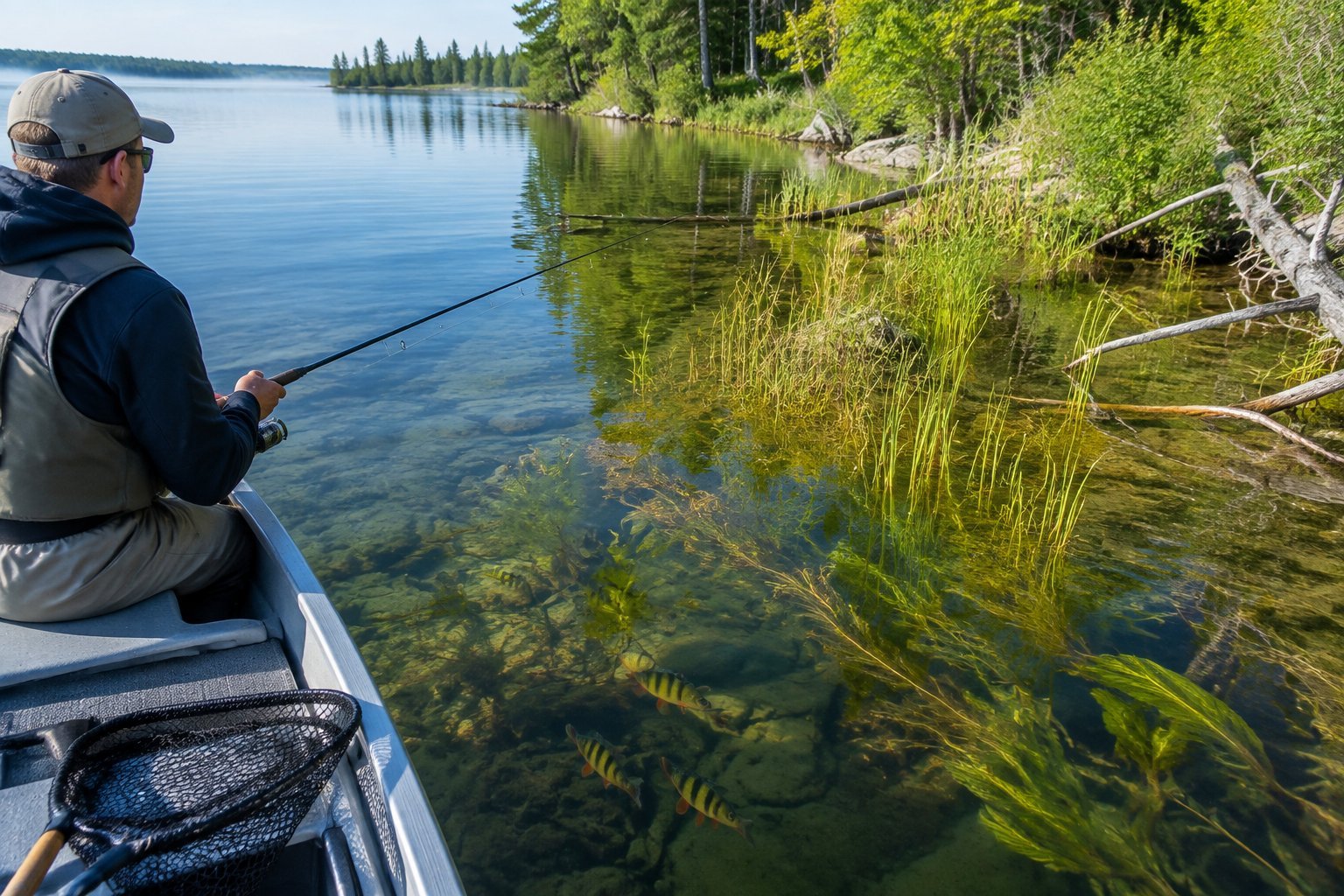
Look for perch near cover and changes in depth, especially weed beds, rock piles, and drop-offs. Yellow perch (Perca flavescens) and European perch use similar kinds of structure, though the species and local conditions differ.
Look for Weed Beds, Rocks, and Drop-Offs
Weed edges give perch access to food and shelter. Cast along the outside edge of vegetation, beside submerged rocks, or where a shallow flat slopes into deeper water. A visible change in bottom or shoreline shape can help you choose a productive casting lane.
To find where to catch yellow perch from shore, start with cover you can reach easily and fan casts across it. If you catch one, work the same area again; perch may gather in schools, and a second cast can reach nearby fish. Larger fish, sometimes called jumbo perch, may hold in deeper water close to that cover.
Follow Seasonal Movements and Feeding Times
Perch shift locations as water conditions and food sources change. In spring, check shallow areas; in warmer weather, try deeper water or shaded structure. In fall, perch may move back toward shallower feeding areas, while winter anglers can find them beneath the ice where local conditions allow.
Early morning and late afternoon are useful times to try, though local weather and water conditions affect activity. If you have a short window, arrive near one of those low-light periods and begin at a weed edge or drop-off.
Start From Shore, a Pond Bank, or a Dock
A boat is not required to catch perch. A pond bank, public shoreline, pier, or dock gives you access to cover and depth changes, and you can move a few steps if the first spot stays quiet. For more ideas on choosing an accessible location, read this guide to shore fishing.
Keep casts controlled around other anglers and people using the dock. If the shoreline is crowded or overgrown, choose a clear area where you can handle the rod and fish safely.
What Bait and Lures Work Best?
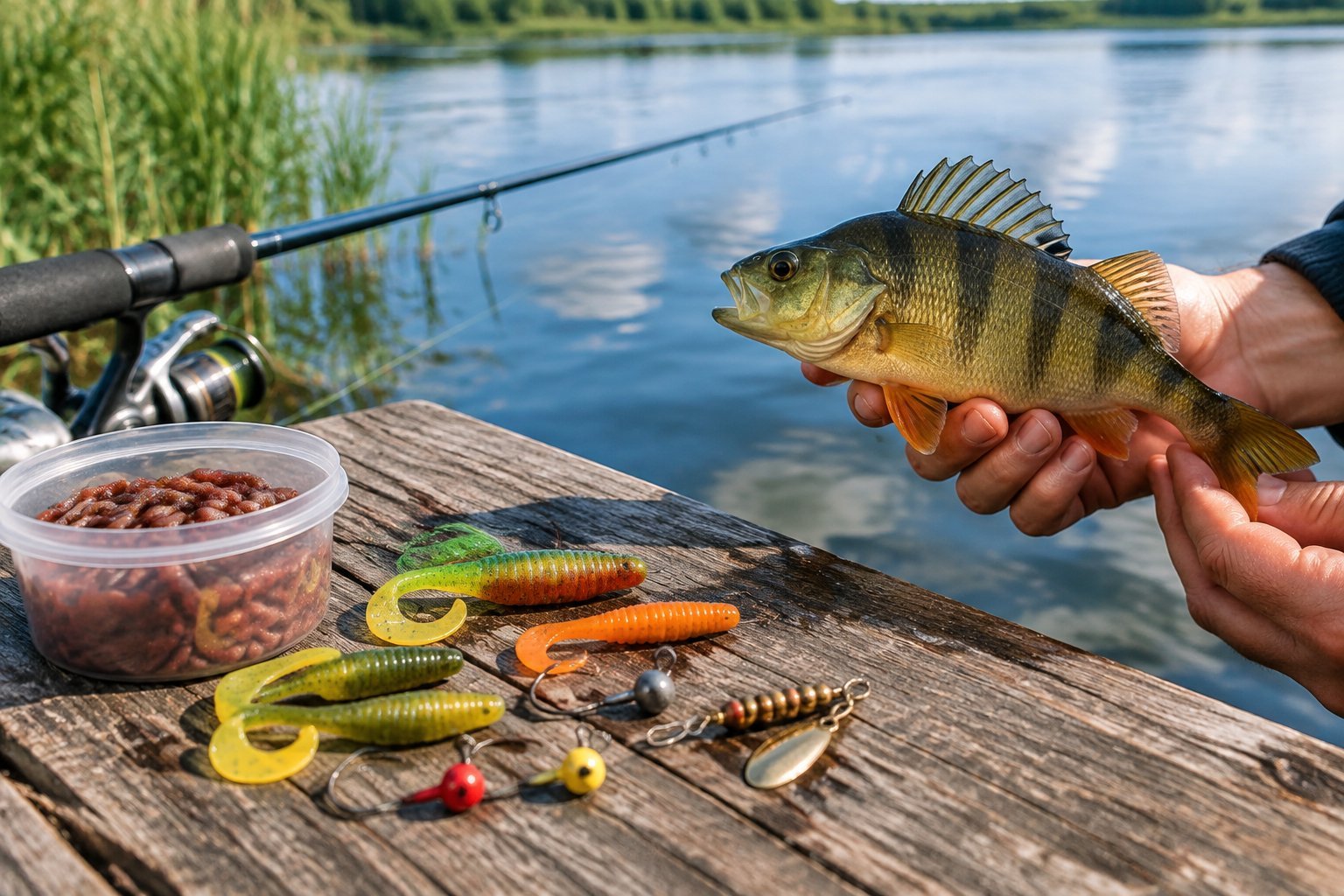
Worm pieces and small minnows are reliable starting points for perch, while small jigs and spinners help you search when you want to cover water. Start with an easy-to-handle bait, then switch based on what you have and how actively fish are feeding.
Try Worms, Minnows, and Other Live Bait
The best bait for perch on a quick trip is a small piece of worm on a simple hook. Nightcrawlers work well when cut into manageable pieces; red worms are small enough to use whole. Keep bait cool and accessible so you can rebait quickly.
Small minnows are another useful choice, especially when you are targeting larger perch. Hook a minnow securely and check local rules about bait use before fishing. Waxworms, maggots, and mealworms suit small hooks and cold-weather fishing; a small piece of crayfish can also attract perch.
If you are deciding between natural bait and artificials, this guide to fishing lures versus live bait explains the basic trade-offs.
Choose Small Jigs, Spinners, or Spoons
Small jigs let you fish near the bottom or suspend a soft plastic under a bobber. Pair a compact soft plastic jig with a light jig head, cast near cover, and retrieve with short lifts and pauses. If you feel a tap, pause briefly, then lift the rod with a controlled motion.
Small spinners provide flash and vibration as you retrieve them past weed edges. Spoons and small crankbaits are other options for searching open lanes beside cover. Choose a lure small enough for a perch to take, and retrieve slowly enough to keep it near the depth where fish are holding.
Which Fishing Method Fits Your Spot?
Still fishing with a bobber is an easy fit for a bank or dock, while drifting and trolling help you search more water from a boat. In deeper water, vertical jigging gives you control over the lure’s position; ice fishing uses a similar targeted approach through a hole.
Use Still Fishing for a Relaxed Bank Session
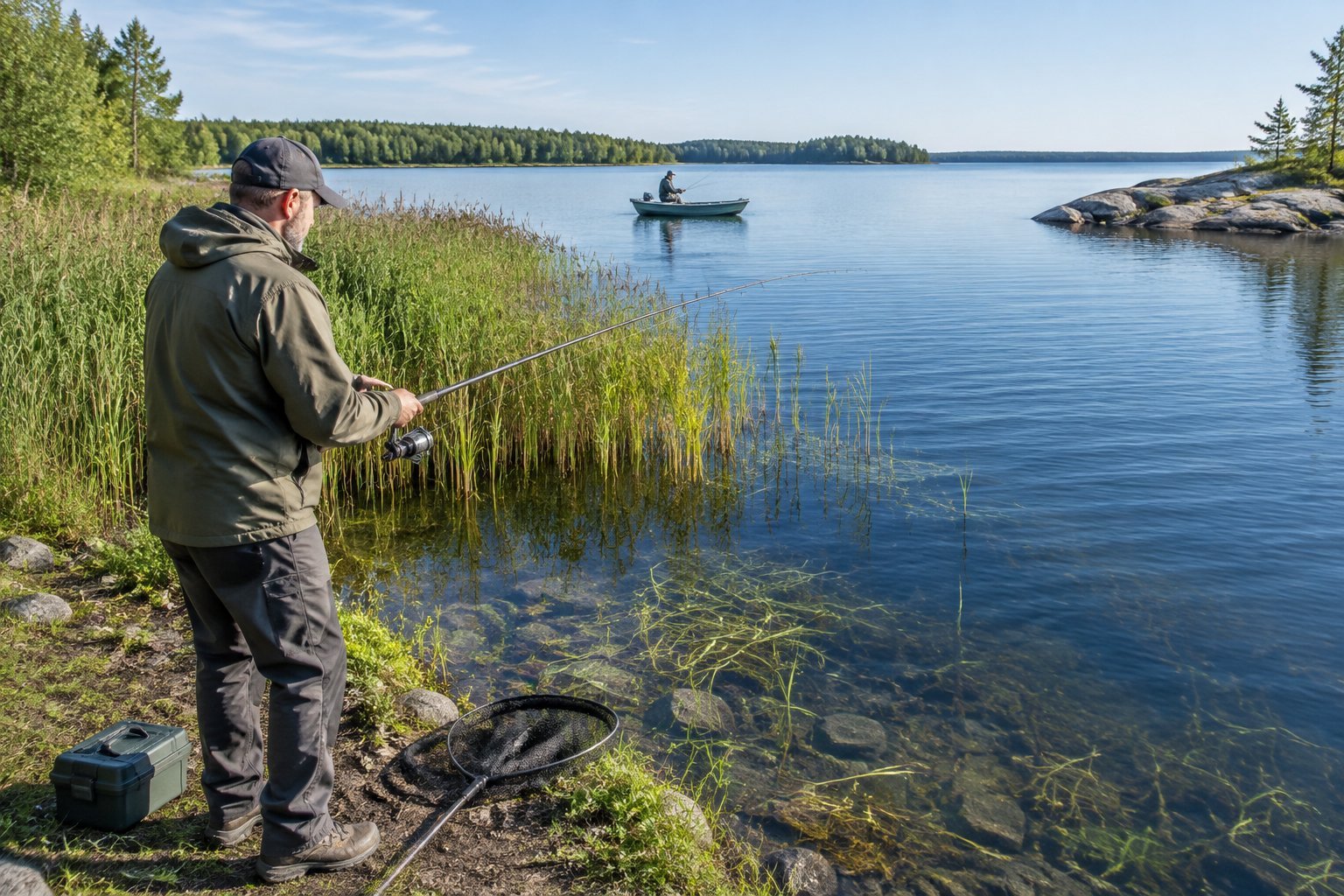
With still fishing, cast a baited bobber rig near cover and let it sit while you watch for movement. This method suits a short after-work session because you can fish one reachable spot without much gear. Move the bobber stop to test a different depth if bites do not come.
A short fluorocarbon leader can connect your main line to the hook when you want a clear, abrasion-resistant section near the bait. Keep the hook and sinker small so the bait can move naturally.
Try Drifting or Trolling to Search More Water
From a boat, drifting lets the wind carry your bait across a stretch of water, while slow trolling covers water at a controlled pace. Both methods help you locate a school; once you get a bite, mark the spot or circle back through the same area.
A fish finder can help identify depth changes and fish beneath the boat. Use it as a guide, then test the depth with your bait or lure. Check local regulations before trolling, since rules vary by location and method.
Use Vertical Jigging or Ice Fishing in Deeper Water
Vertical jigging lets you lower a small jig to a chosen depth and work it with gentle lifts. It suits boat fishing over deeper structure, especially when you can hold position above a likely school. Lower the lure slowly, pause between lifts, and watch your line for a subtle tick.
Ice fishing applies the same idea through a hole in safe ice. Use a short rod and small jig, and check current local ice-safety guidance before going onto frozen water. A fish finder can help locate fish, but confirm ice conditions independently before stepping out.
How to Make a Short Trip Easy for Kids
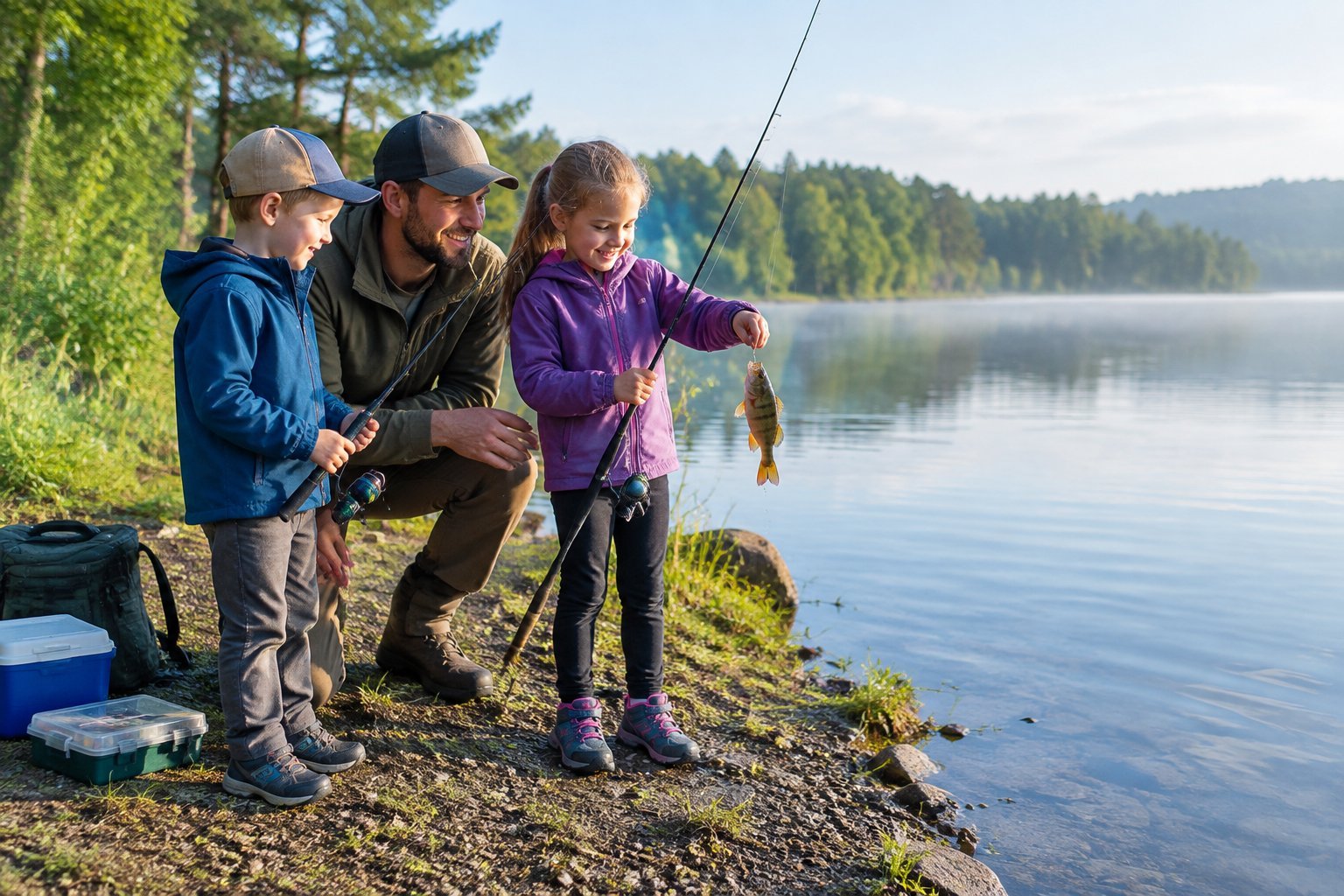
For kid-friendly perch fishing, keep the rig simple, bring bait ready to use, and make the outing short enough to stay enjoyable. Perch and other panfish offer a practical introduction to watching a bobber, waiting for a bite, and handling a catch with care.
Keep the Tackle Simple and the Bait Ready
A light rod, spinning reel, small hook, split shot, and bobber are enough for a basic perch setup. Pack bait in a container that is easy to reach, pre-tie a spare rig, and keep extra hooks and sinkers together so a snag or lost hook does not end the trip.
Show kids how to hold the rod, keep the line clear, and watch the bobber. If the setup is sized for small panfish, children can focus on casting and noticing bites. This guide to fishing with kids offers more family-friendly preparation ideas.
Set a Manageable Goal and Handle Fish Safely
Pick a simple goal, such as making a few casts or fishing until a snack break. A short outing still gives kids time to practice, and a bite is a bonus rather than the only measure of a good trip.
Help children handle fish gently and keep fingers away from the perch’s sharp dorsal spines. Wet your hands before touching a fish, use pliers to remove a difficult hook, and return the fish to the water promptly if you plan to release it.
Check Local Rules Before You Go
Check the state and local fishing rules before heading out. Requirements for a fishing license, legal bait, seasons, size limits, and daily harvest limits vary by location; confirm the rules that apply to the water you plan to fish.
Keep the license or required documentation accessible, and review the rules with older kids so they know why limits and protected areas matter. For a simple reminder on how to catch perch responsibly, follow the posted regulations and release fish carefully when needed.
Frequently Asked Questions
These quick answers cover common perch questions for a short freshwater trip. Use them as a starting point, then adjust your depth, bait, and location based on the water you are fishing.
What is the best bait to catch perch?
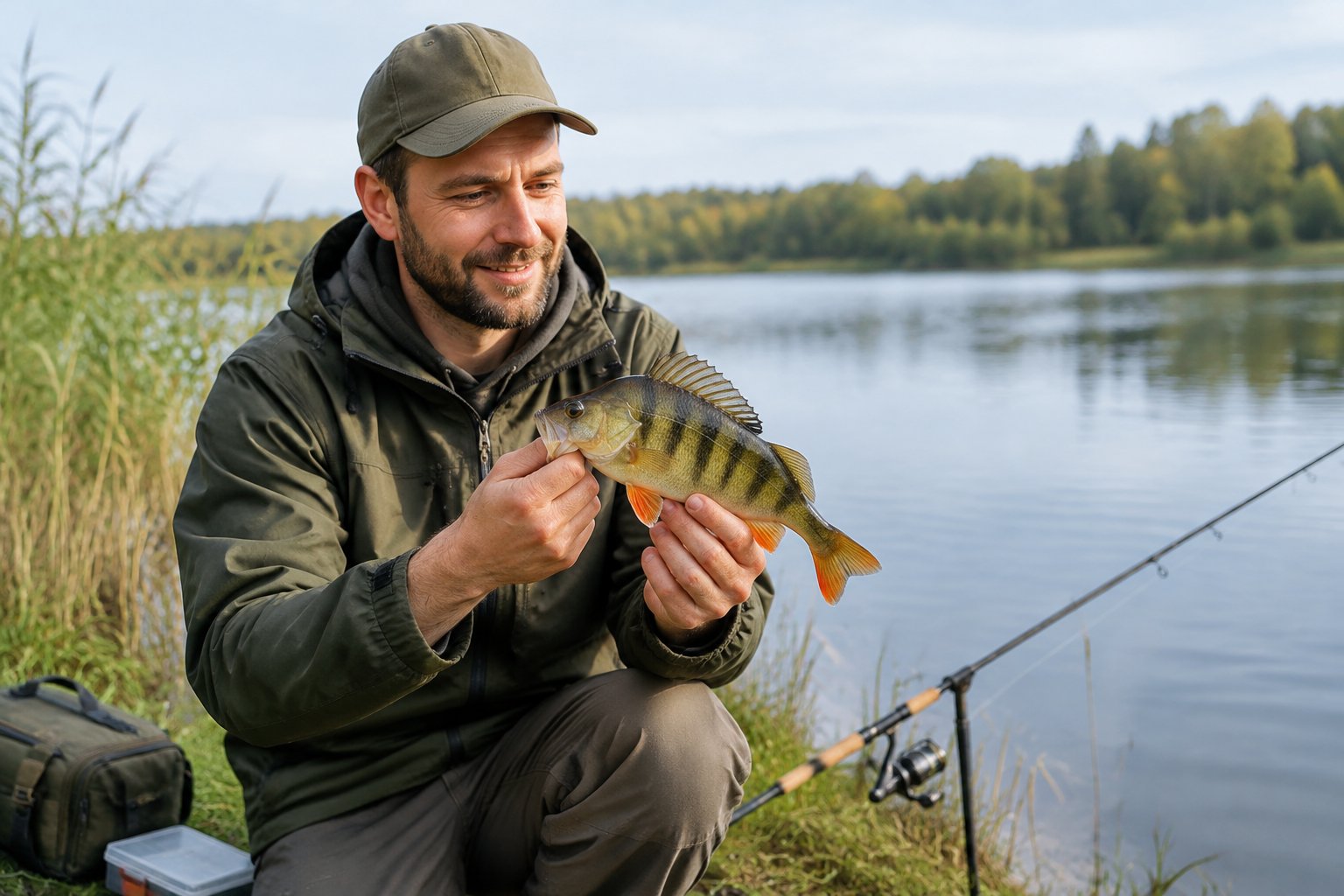
A small piece of worm is a dependable starting bait for perch because it fits a simple hook-and-bobber setup. Small minnows, waxworms, and maggots are useful alternatives, depending on local rules and conditions.
How do you catch perch from shore?
Fish a bobber rig beside weed edges, rocks, docks, or a drop-off that you can reach from shore. Keep the bait near the bottom, watch for a light bobber movement, and change depth or position if you do not get bites.
How do you fish for perch in a lake?
Start near cover and depth changes, then present a small bait or lure at the depth where perch are holding. Use a bobber for a stationary bank session, or drift and jig from a boat to search more water.
Can you catch perch with lures?
Yes, perch take small jigs, spinners, crankbaits, and spoons. Choose a compact lure, work it slowly near cover, and pause between movements so fish have time to strike.
What is the best month to catch perch?
Spring is a strong time to try, when perch move into shallower areas, though productive months vary by region and water conditions. Check local reports and regulations, then fish early or late in the day when you can.
Get your gear ready and explore the related beginner-friendly guides before your next trip.