Cold water slows bass down, but it does not shut them off. The best plan for bass fishing in cold weather is to fish the deepest water you can reach from the bank with a slow bottom bait like a Ned rig or a small jig, and to carry a suspending jerkbait for fish holding higher. Once the water drops into the 40s, bass get sluggish and stack up near depth, so a short, focused trip to the right spot beats a long day of fast casting.
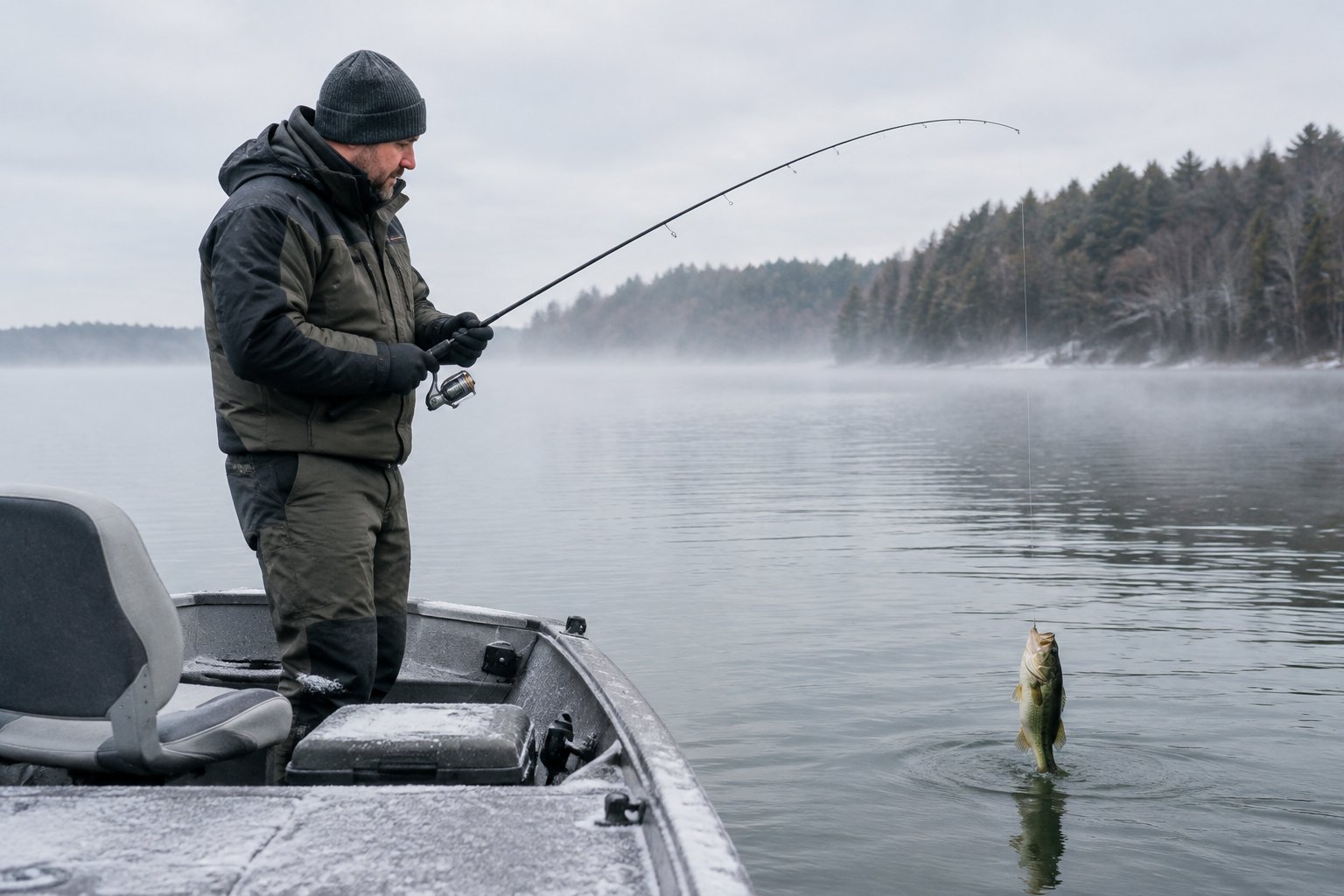
You can still catch fish before work, at lunch, or with your kid on a mild afternoon. You will know where winter bass sit, which few lures to pack, how slowly to work them, and when to call it a day safely.
Where Do Bass Hold as Water Cools?
Bass move toward the deepest, most stable water nearby as temperatures fall, and they park close to edges where they can rise or drop without swimming far. Your job from shore is to find the spot where deep water, cover, and a little warmth come together within casting range.
How Does Water Temperature Change Bass Activity?
Bass are cold-blooded, so water temperature sets their metabolism. In 45 to 50°F water, they turn lethargic and will not chase a lure very far. Most of the fish in big lakes slide out past 15 feet in that range.
Below 50°F, think of a bass as a fish on a strict energy budget. It eats less often, holds still longer, and only strikes food that comes close and looks easy.
A cheap stick thermometer helps. Surface readings are most accurate in water under 5 feet deep, so treat them as a starting point when the fish sit deeper.
Find Nearby Depth Changes, Creek Channels, and Cover
Winter bass habitat comes down to edges. In reservoirs, look for creek channels, channel swings that push close to a bank, and steep points. These spots let bass move up to feed and back down to rest.
From shore, the best targets include:
- Drop-offs within casting range, where a shallow flat breaks into deeper water
- Rocky areas and riprap near deeper water
- Brush piles and submerged trees that sit on or near a depth change
- Bluff walls and other vertical structure, where bass change depth by inches
Small ponds have less to work with. There, bass hold tight to the bottom in the deepest hole, often near the dam. Studying topographic maps to find bass before you leave home shows you where the channels and steep banks run.
When Can Bass Stay Shallow in Winter?
A run of sunny, calm days pulls some bass shallow. Rocks warm fast and hold heat, so shallow rock piles and riprap near deep water turn into thermal refuges in the afternoon.
Wind matters too. The windblown side of a pond runs 4 to 5 degrees cooler than the calm side in cold weather. Fish the protected bank first, especially where sun hits dark bottom or rock.
The best shallow window on these days runs from early to mid-afternoon, after the sun has had hours to warm the water.
Locate Fish from the Bank Without Expensive Electronics
You do not need a fish finder or forward-facing sonar to find deep water. Cast a jig, count as it sinks, and note when the line goes slack. A count of two at your feet and a count of eight at 30 yards out tells you exactly where the bank drops.
Fan your casts around each spot and repeat the count. The longest counts mark your deep zone.
Winter bass school up. Once you catch one, make a dozen more casts to that exact spot before moving.
Which Lures Belong in a Small Cold-Water Tackle Box?
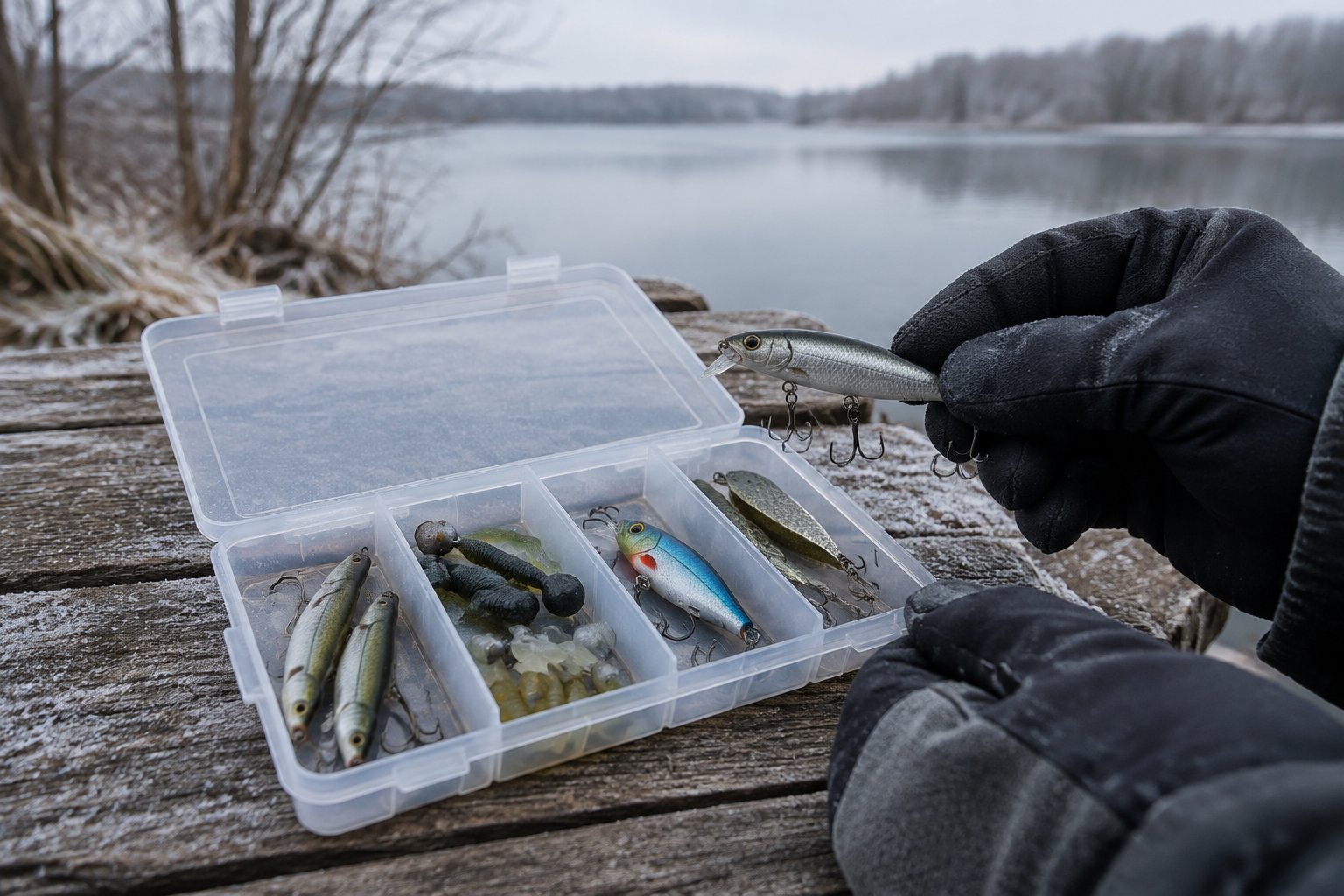
A small box with a Ned rig, a compact jig, a suspending jerkbait, and a blade bait covers almost every cold-water situation you will face from shore. Add a drop shot for picky fish and keep one spinnerbait or lipless crankbait for warm afternoons.
Start with a Ned Rig or Compact Jig for Bank Fishing
The Ned rig is the easiest cold-water bait for beginners. It is a short soft plastic, about 3 inches long, on a mushroom-style jighead. In cold water, a 1/8-ounce head or lighter sinks slowly and looks natural.
On a pause, the Ned rig’s tail stands up off the bottom, so bass keep seeing it. Pick the right head weight with these Ned rig jig head tips.
A compact finesse jig with a craw trailer is your second bottom bait. It looks like a crawfish, a key winter food, and slides through rocks and brush better than a Ned rig. Football jigs work well on rocky bottoms, and a hair jig gives a subtle look in clear water.
Use Suspending Jerkbaits for Fish Holding Above Bottom
A suspending jerkbait looks like a dying baitfish, which is an easy winter meal. It hangs still in the water after you twitch it, giving a slow bass time to decide.
Use it when fish sit off the bottom, near bluff walls, or over brush. Silent models suit clear, cold water where bass act shy. Many of the best fall bass fishing lures carry right into winter, and the jerkbait leads that list.
Choose Blade Baits and Jigging Spoons for Reachable Depth
Blade baits and jigging spoons are small, heavy metal lures. They sink fast and flash like shad, which turn weak and die off as water gets cold.
From the bank, they shine where deep water sits close: dam walls, steep rock banks, docks, and piers. Lift the rod a foot or two and let the lure flutter back down on a semi-slack line. Once the water falls into the 40s, these baits earn a spot in your box.
Try a Drop Shot Rig or Small Swimbait When Fish Need Another Look
The drop shot keeps a bait in one place longer than anything else. Tie the hook inline, then add a weight 6 to 18 inches below it. Keep the weight at 1/4 ounce or lighter.
Tip it with a finesse worm or small minnow plastic. Shake it in place for up to a minute, then move it a couple of feet and repeat.
A small swimbait on a light head works as a slow-roll option when bass follow but won’t commit. Reel it just fast enough to keep the tail kicking.
When Do Spinnerbaits and Lipless Crankbaits Make Sense?
Save these for warm, sunny afternoons when bass push onto shallow rocks. Once water nears 50°F, spinnerbaits and lipless crankbaits start to work in less than 10 feet of water.
Slow-roll a spinnerbait with a Colorado blade just above the bottom. Rip a lipless crankbait free from cover, then let it fall. Water clarity guides color: natural shad colors in clear water, chartreuse or red in stained water. More detail on how to use crankbaits helps you choose depth and retrieve.
How Slowly Should You Work Your Lure?
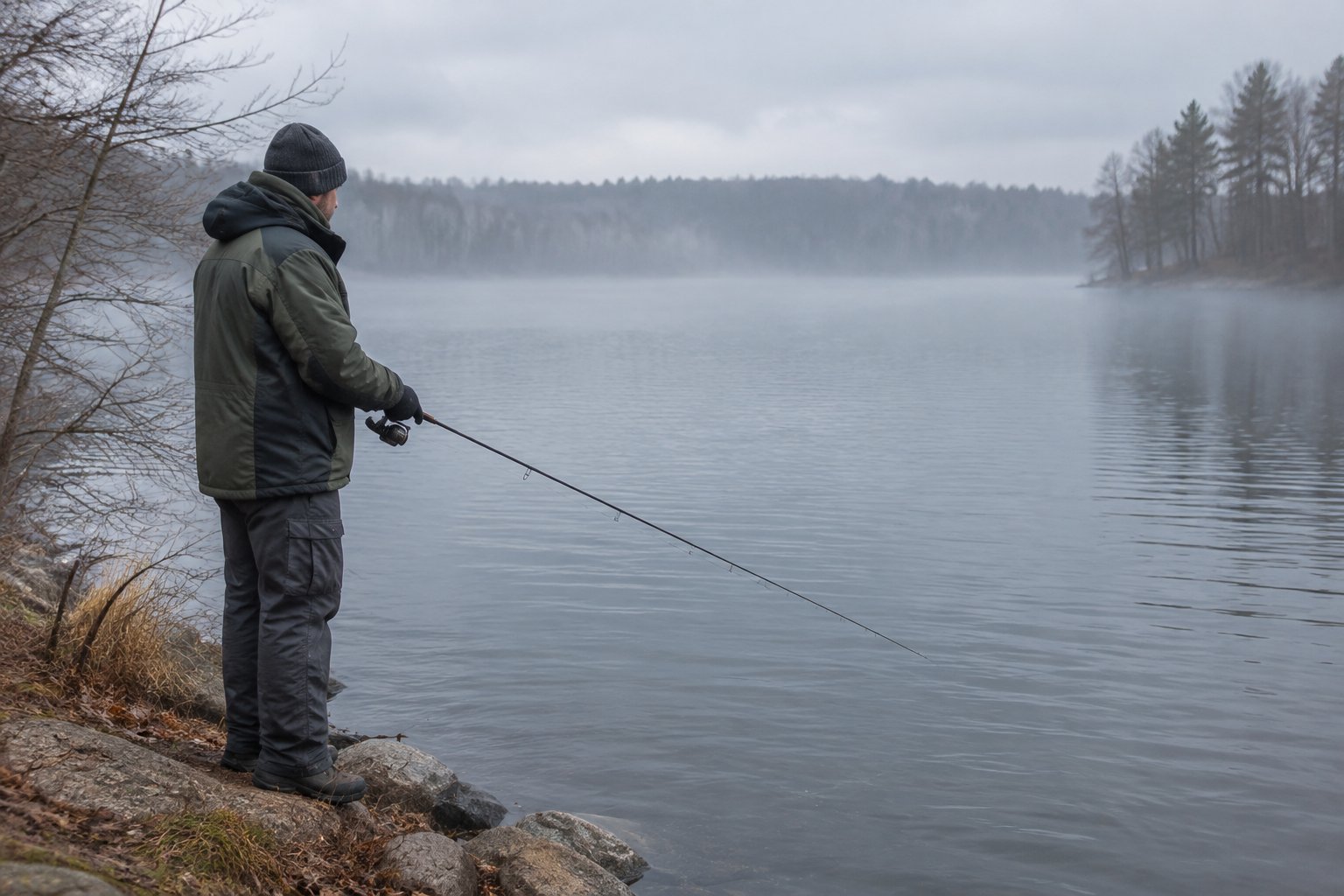
Work your lure about half as fast as feels right, then slow down again. Bottom baits need long drags and pauses, jerkbaits need long stops, and metal baits need short lifts.
Drag Bottom Baits and Add Deliberate Pauses
Cast your Ned rig or jig, let it hit bottom, and wait a few seconds. Then drag it with the rod tip a few inches at a time.
On sand or mud, drag and pause. On rocks, let the jighead tap the stones lightly; that clicking sound draws bass that never saw the bait.
Dead-sticking also catches fish. Leave the bait still for 10 to 20 seconds before each move. Most winter bites come during the pause.
Adjust Jerkbait Pauses to the Fish’s Response
Start with two sharp twitches and a 5-second pause. If nothing bites, stretch the pause to 10 seconds, then 20.
Some days, bass want the jerkbait to sit still for 20 to 30 seconds. When you get a bite, count how long you paused and repeat that count on every cast.
Twitch with slack in the line so the bait darts sideways. Hard, fast jerks pull it away from fish too quickly.
Use Small Lifts Instead of Aggressive Jigging
With blade baits and spoons, small lifts catch more fish. Raise the rod tip 6 to 18 inches, then lower it with the bait so it flutters down.
Most strikes come on the fall. Watch your line as the bait drops, and set the hook if it jumps or stops early.
Vertical jigging off a dock or steep bank keeps the lure in the strike zone. Big, ripping strokes push it out of reach of a cold bass.
Recognize Light Bites and Change One Thing at a Time
Winter bites feel faint. Watch for a tick, extra weight, line moving sideways, or a bait that feels “mushy.” Set the hook on anything odd.
When fish stop biting, change one thing only. Slow down first. Then try a lighter weight, a new color, or a different depth. If you change everything at once, you never learn what worked.
Make a 30- to 45-Minute Bank Session Count
A short trip works in winter because bass bunch up in a few spots. Pick one good bank, bring a simple setup, and fish it with a plan.
Pick a Nearby Pond or Bank with Safe Access to Deeper Water
Choose water you can reach in 10 minutes or less. Look for a bank that drops into deeper water within a long cast, such as a dam, a steep rocky shore, or a pier.
Footing matters as much as depth. Pick flat, dry ground over a steep, muddy slope. A pond you already know saves time because you remember where it gets deep.
Match Your Lunch Break or After-Work Trip to Conditions
Afternoon is your best winter window because water warms through the day. A lunch trip on a sunny day lines up well, and these ways to catch bass during your lunch break fit cold months too.
After work, daylight runs short. Check sunset time and plan to be packed up before dark. Calm, sunny days after a few mild ones beat a cold, windy day after a front. The best time to fish for bass shifts later in the day once water drops below 50°F.
Carry One Rod and Two Complementary Presentations
Bring one medium-light spinning rod with 6- to 8-pound line. Pre-tie a Ned rig or compact jig, and keep a suspending jerkbait clipped in a small box.
The bottom bait covers fish on the floor. The jerkbait covers fish holding higher. That pair answers the main question of where fish sit without a pile of gear. A light ultralight setup for small ponds handles both baits well.
Work Two or Three Spots Before Your Time Runs Out
Give each spot about 10 to 15 minutes. Start at the deepest, calmest bank and fan casts in a half circle.
If nothing bites, switch baits once, then move. A simple timeline:
- Minutes 0–15: Bottom bait on the deepest drop.
- Minutes 15–30: Jerkbait along the same edge, then a second spot.
- Minutes 30–45: Return to any spot with a bite, or try sunny rocks.
More ideas on catching fish quickly in 30 minutes fit this plan.
Keep a Child’s First Cold-Weather Trip Short and Comfortable
Plan 20 to 30 minutes for a young child and pick the warmest part of a sunny day. Bring hand warmers, a snack, and a hot drink.
Let your kid hold the rod while you cast the Ned rig. Teach them to feel for a tap. If they get cold or bored, head home happy. A good short trip makes them want to come back, and that is how you become their fishing hero.
What Makes a Cold-Weather Trip Safe?
A safe cold-weather trip starts with staying dry and keeping firm footing near the water. Cold water drains body heat fast, so small mistakes carry bigger risks in winter.
Dress for Cold Water with Layers and Waterproof Gloves
Layer up. Wear a snug base layer, a fleece mid-layer, and a wind- or waterproof shell. Skip cotton because it stays wet.
Waterproof gloves keep your hands working when you handle wet line and fish. Fingerless wool gloves let you tie knots. Add a warm hat that covers your ears, waterproof boots, and wool socks. Pack an extra pair of dry gloves.
Avoid Icy Banks and Wear a Properly Fitted Life Jacket
Frost, ice, and wet rock make banks slick. Test each step and stay back from the edge when you can.
Wear a life jacket that fits snugly if you fish from steep banks, docks, or any boat or kayak. Kids should wear one any time they are near cold water. Fish with a buddy when possible, and tell someone where you are going.
Know When Wind, Darkness, or Cold Hands Mean It Is Time to Leave
Head home when wind picks up, light fades, or your hands go numb. Numb fingers lose grip and make you clumsy on slick ground.
Shivering is your body’s warning sign. Leave when it starts. Watch kids closely, since they chill faster than adults. For more cold-season planning, read our full guide to winter fishing.
Keep Open-Water Advice Separate from Ice Fishing
Everything here applies to open-water bank fishing. Ice fishing for bass uses different gear, tactics, and safety rules.
Never walk onto ice to reach a better spot, even if it looks solid. Ice thickness changes across a single pond. If your local water freezes over, follow ice-specific safety guidance from your state wildlife agency before heading out.
Find Accessible Fish and Keep Your Next Trip Simple
Winter bass gather near the deepest water you can reach, and they bite best on slow, natural baits during the warmest part of the day. Find a calm bank that drops off close to shore, tie on a Ned rig or compact jig, and keep a suspending jerkbait ready for fish holding higher.
Use a slow retrieve with long pauses, and change one thing at a time when the bite stops. Give each spot 10 to 15 minutes, stay dry, and leave when wind, darkness, or cold hands tell you to.
Keep these steps handy for your next outing:
- Fish the calm, sunny side of the water first.
- Count your lure down to find depth.
- Pause longer than feels comfortable.
- Wear a life jacket near steep or icy banks, and stay off the ice.
Get your gear ready and explore the related beginner-friendly guides before your next trip.