Carp fishing with worms gives you a simple natural bait that can draw carp with its scent and movement. For a straightforward setup, thread a worm or a small worm bundle onto a hair rig, then place it over a modest patch of bait. Worms also attract other fish, so they suit a mixed-species session or a short trip when you want plenty of chances for a bite.
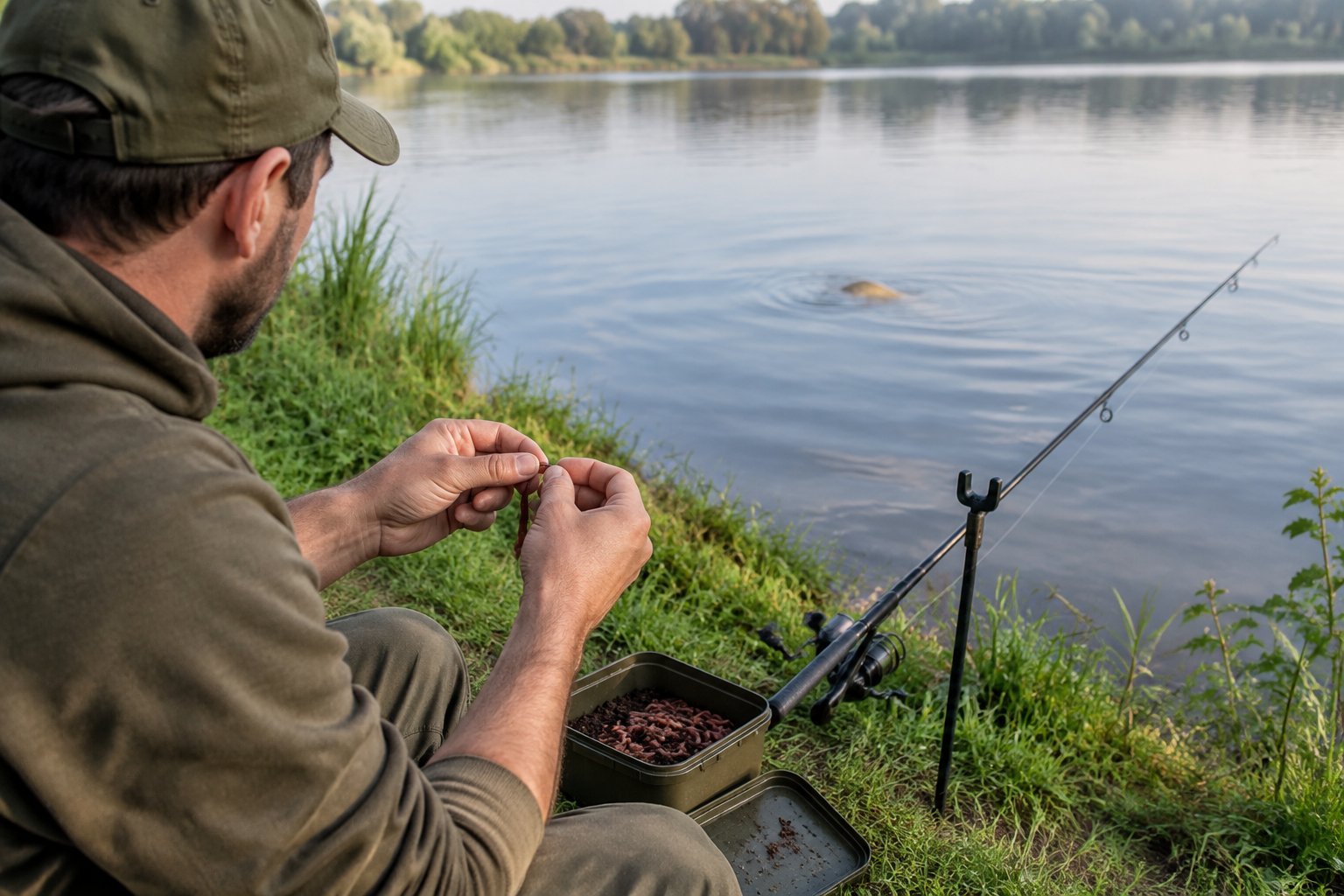
You can keep the approach beginner-friendly: use live worms, a simple rig, and a small amount of feed. That gives you a practical way to try for carp without bringing a complicated bait program to the bank.
When Are Worms a Good Choice for Carp?
Worms are a useful carp bait when you want a natural, moving hook bait and are comfortable with other fish showing interest. A smaller feed of worms can help you test a swim without committing to a large amount of carp bait.
Why Worms Can Attract Carp
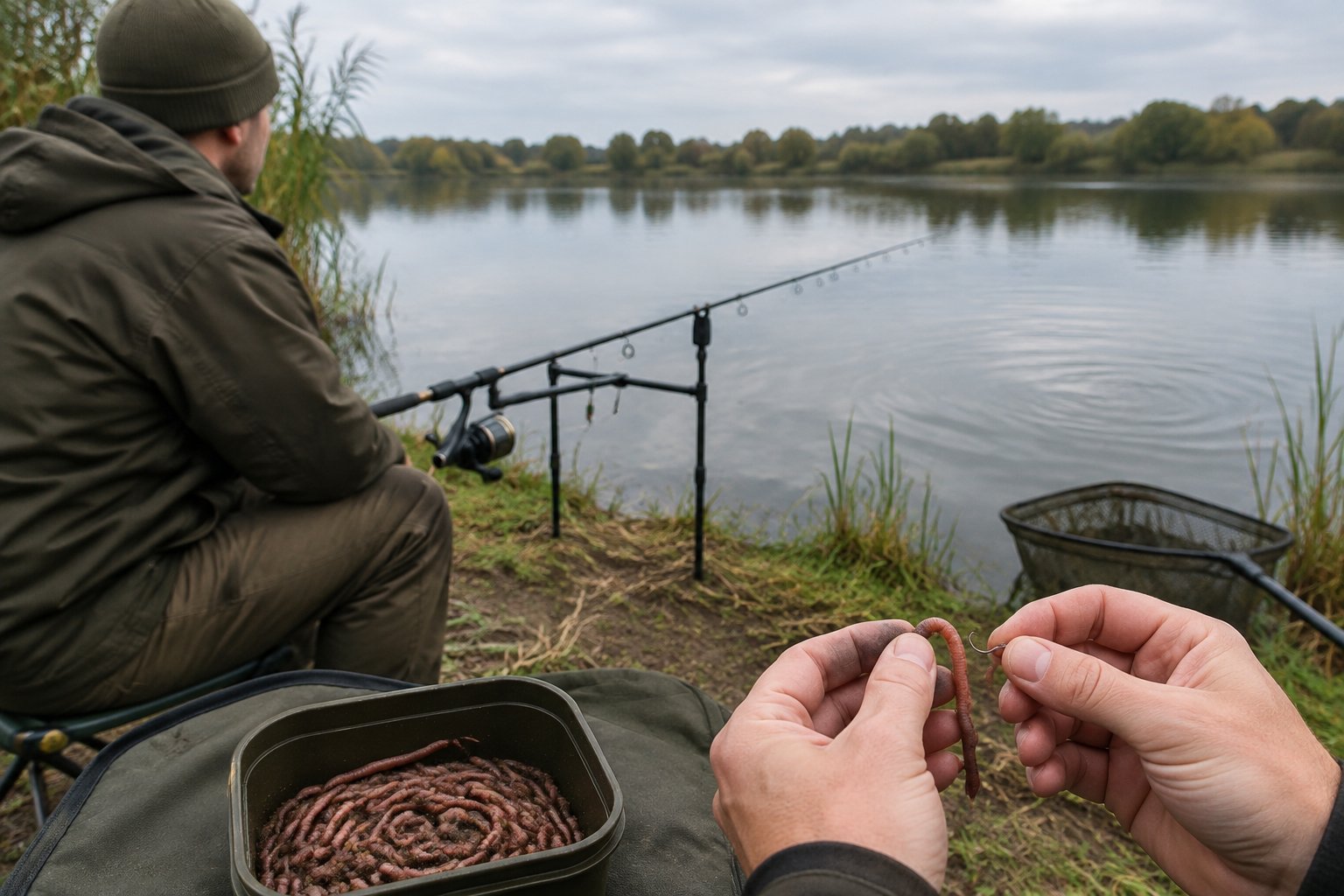
Worms offer scent, movement, and a familiar natural-food profile. A lively worm on the hook gives a carp a visible, moving target, while chopped worms release juices into the surrounding bait.
Try a worm when carp are feeding cautiously or ignoring your usual hook bait. Start with a small amount of feed and place your hook bait close to it, so a feeding fish can find the worm without searching a wide area.
When to Try Them Through the Year
You can use worms throughout the year, with autumn and winter offering useful opportunities to present natural food when carp are feeding less actively. In colder conditions, use a small amount and give the swim time to develop before adding more.
Worms also work in warmer months, especially when you want a lively bait or a change from familiar carp baits. Keep the quantity controlled because active fish of several species may gather around a worm feed.
When Other Fish May Take the Bait
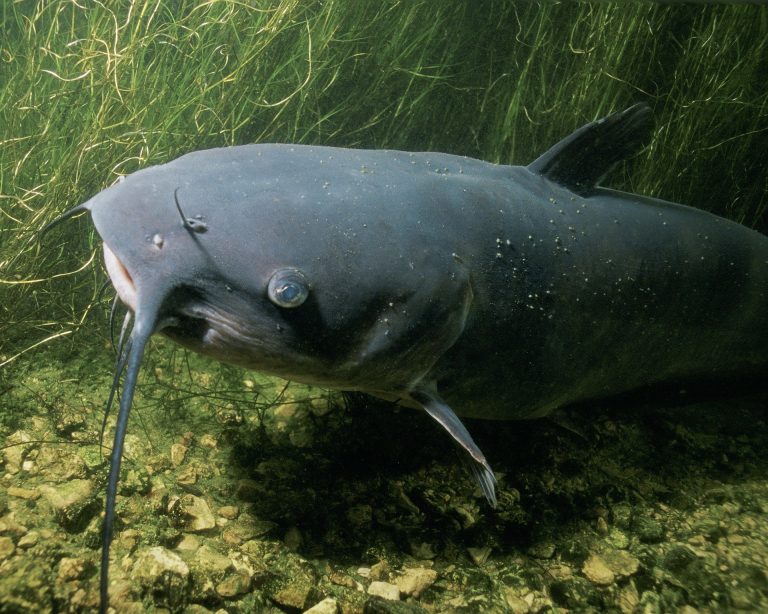
Worms attract many freshwater species, so nuisance fish such as small panfish, bream, or catfish may reach your hook bait before a carp does. That activity can suit a family fishing trip where any bite is welcome.
If you are targeting carp selectively, use a larger worm bundle and keep the feed patch small. Check your bait regularly; repeated taps or a stripped hook bait signal that smaller fish are working the swim.
Which Worms and Bait Mixes Work Best?
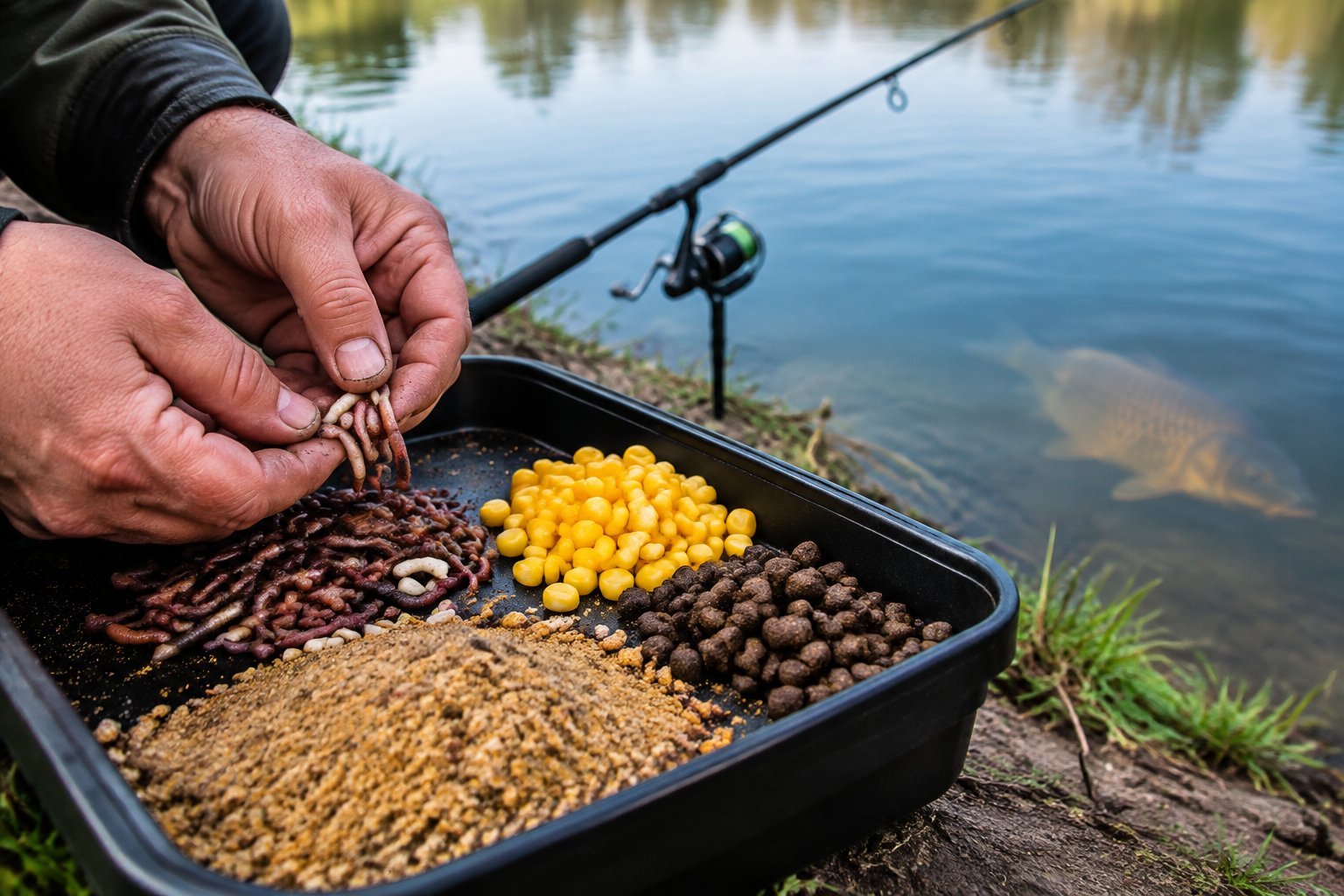
Dendrobaena are a practical choice for small hook baits and chopped feed, while lobworms provide a larger single bait. Pair either with a modest mix of chopped worms, bloodworm, or casters when you want to add natural attraction.
Choosing Dendrobaena or Lobworms
Dendrobaena are smaller, making them convenient to thread in multiples or chop into a groundbait mix. Use one or several on a hair, depending on their size and the hook bait profile you want.
Lobworms are larger and make a substantial single hook bait. Use one whole, or cut it into pieces for a compact presentation. Keep the worm lively and secure it carefully so it stays on through the cast.
Using Chopped Worms to Release Amino Acids
Chopped worms release juices and amino acids into the water, adding scent to a small feed patch. Cut only the amount you plan to use soon before casting, since chopped worms lose their fresh condition quickly.
Mix the pieces into a little groundbait or soil to help carry them to the bottom. Keep some pieces large enough to remain visible and tempting among the finer feed.
Mixing Worms with Bloodworm and Casters
Bloodworm and casters complement chopped worms with additional natural bait and texture. Begin with a small amount of each, then add more only if fish are feeding confidently and nuisance fish are manageable.
For a short session, a handful of chopped worms with a little groundbait is easier to prepare and carry than a large mix. Keep the ingredients separate until you are ready to fish, then combine only what you need.
How Should You Hook and Present Worms?
A simple hair rig presents a worm bundle beside the hook, while a worm kebab keeps several pieces together for casting. Choose a presentation that holds the bait securely and stays balanced on the bottom.
Building a Simple Hair Rig
Tie a standard hair rig and leave enough hair length for the worm to sit clear of the hook bend. Thread a worm onto a baiting needle, pull it onto the hair, then secure it with a bait stop.
A small bundle can give the hook bait more movement and presence. Check that the hook point remains clear and that the bait does not bunch against the hook, which can interfere with a clean pickup.
Making a Worm Kebab with a Rubber Caster
A worm kebab is a line of worm pieces threaded onto the hair. Slide a rubber caster onto the hair first, add several worm pieces, then cap them with another rubber caster and a bait stop.
The rubber casters help hold the soft pieces in place during the cast. Keep the bundle compact, and trim the ends of the worms if you want fresh juices to seep into the water.
When to Use a Blowback Rig
A blowback rig is useful when you want the bait to move freely along the hair as a carp picks it up. Add the worm bundle to the hair and confirm the rig resets cleanly after each cast.
For a first attempt at fishing with worms, a basic hair rig is easier to assemble and check. Try the blowback rig when you are comfortable tying it and want to refine the bait’s movement.
How Can You Keep the Approach Simple?
Keep your worm bait fresh, fish a small patch, and adjust the hook bait when smaller fish keep stripping it. A compact setup saves preparation time and makes it easier to change tactics during a quick trip.
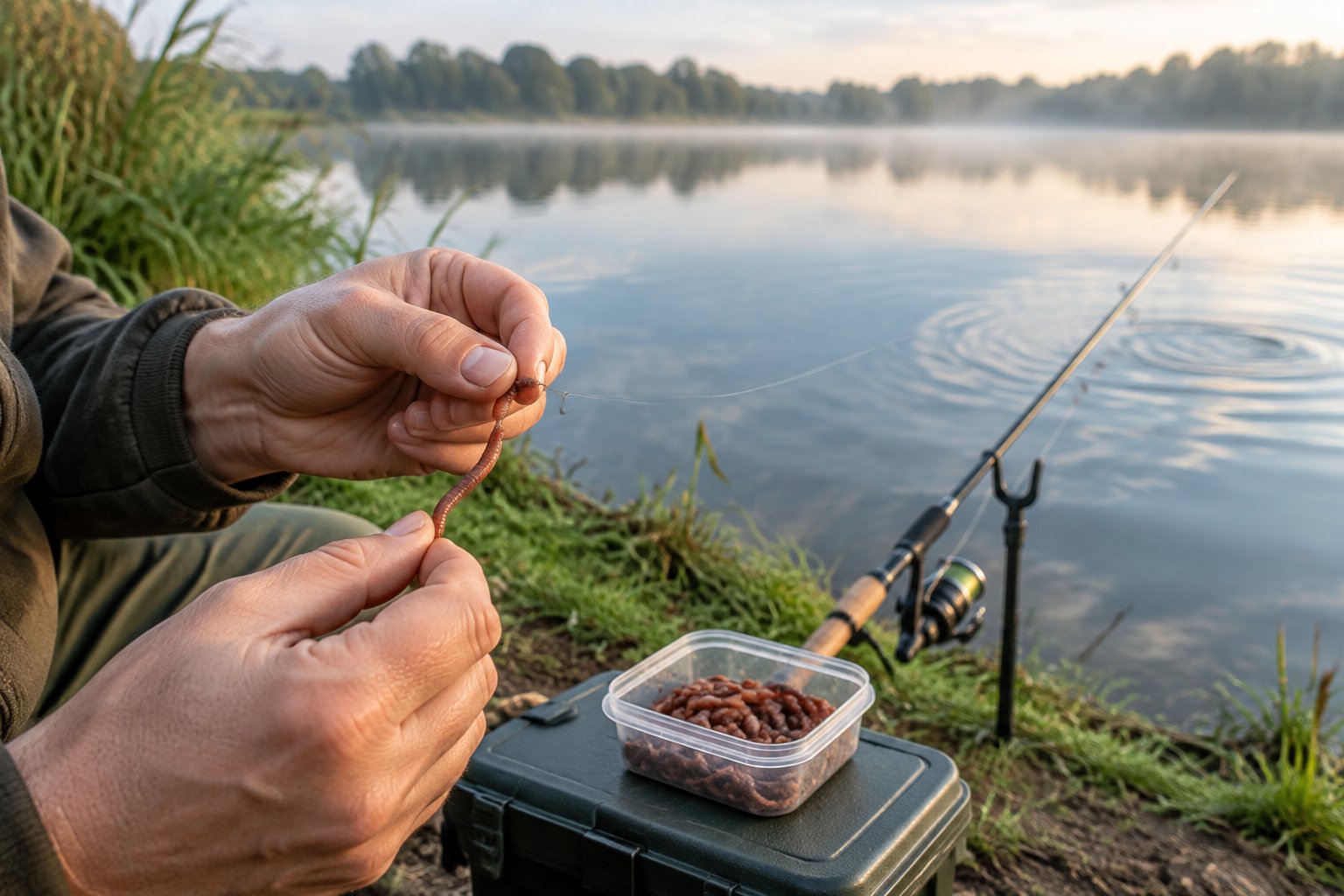
Storing Worms for a Short Fishing Trip
Carry worms in a ventilated container with their bedding, and keep them shaded and cool during the trip. Direct sun and heat can quickly damage the bait, so store the container in a shaded spot and open it only when needed.
Remove dead or damaged worms before fishing. A small bait tub is enough for a short session, and it keeps the rest of your gear clean.
Choosing a Spot and Keeping Baiting Manageable
Choose a spot where you can cast accurately and keep your bait patch compact. A clear patch of bottom makes it easier to present the rig and check that your hook bait has landed as intended.
Start with a small amount of carp bait mixed with chopped worms. Wait for signs of feeding before adding more, and keep the amount you carry suited to the length of your trip.
Adjusting the Bait if Smaller Fish Keep Striking
If nuisance fish strip the worms quickly, use a larger whole worm or a bigger bundle on the hair. Check the bait after each run of taps so you can tell whether the hook bait is still intact.
You can also reduce chopped worm in the feed and leave a larger piece on the hair. If small fish continue to dominate, switch to a more durable carp bait that better fits your target.
Frequently Asked Questions
Worms can catch carp on a simple hair rig, though other species may take the bait too. Your best first adjustment is to match the worm size and feed amount to the fish activity in your swim.
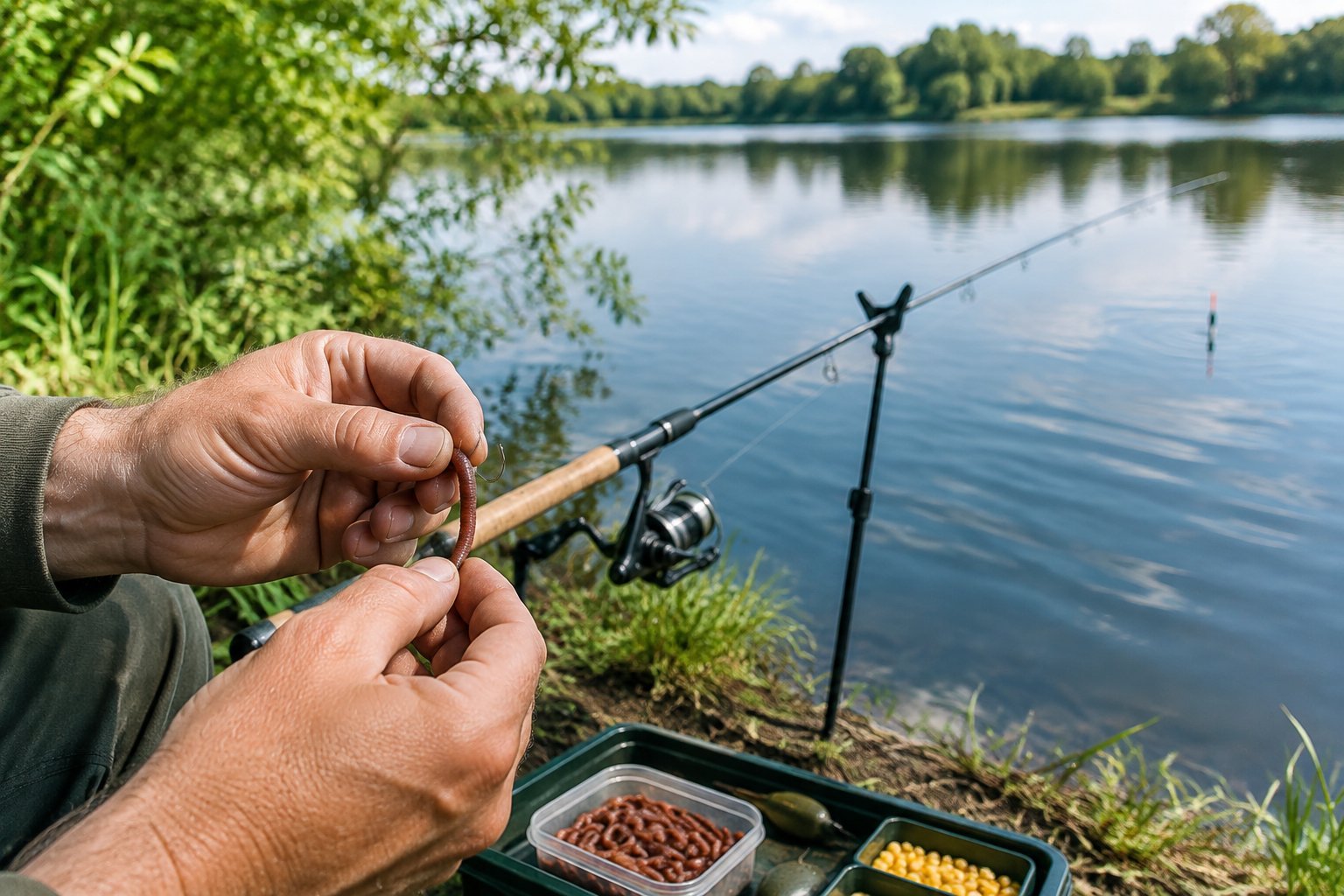
Can I fish for carp with worms?
Yes, you can catch carp with worms on a hook or hair rig. Present a lively worm near a small amount of feed, and check it regularly if smaller fish are active.
Will carp bite nightcrawlers?
Yes, carp will take nightcrawlers, which are large enough to use as a single hook bait. Thread the worm securely or use a hair rig so it stays in place during the cast.
What is the best carp rig for fishing with worms?
A basic hair rig is a practical choice because it presents the worm beside the hook and is straightforward to set up. A blowback rig also works when you want the bait to slide along the hair during pickup.
Will grass carp eat worms?
Grass carp may take worms, though their feeding can vary with the venue and available food. Present a small worm bait and watch how fish respond before adding more feed.
How can I keep nuisance fish off worm bait?
Use a larger whole worm or a bigger bundle to make the hook bait less vulnerable to small fish. Keep chopped worms out of the feed mix if nuisance fish are stripping the bait quickly, and switch to a more durable carp bait if needed.
Get your gear ready and explore the related beginner-friendly guides before your next trip.