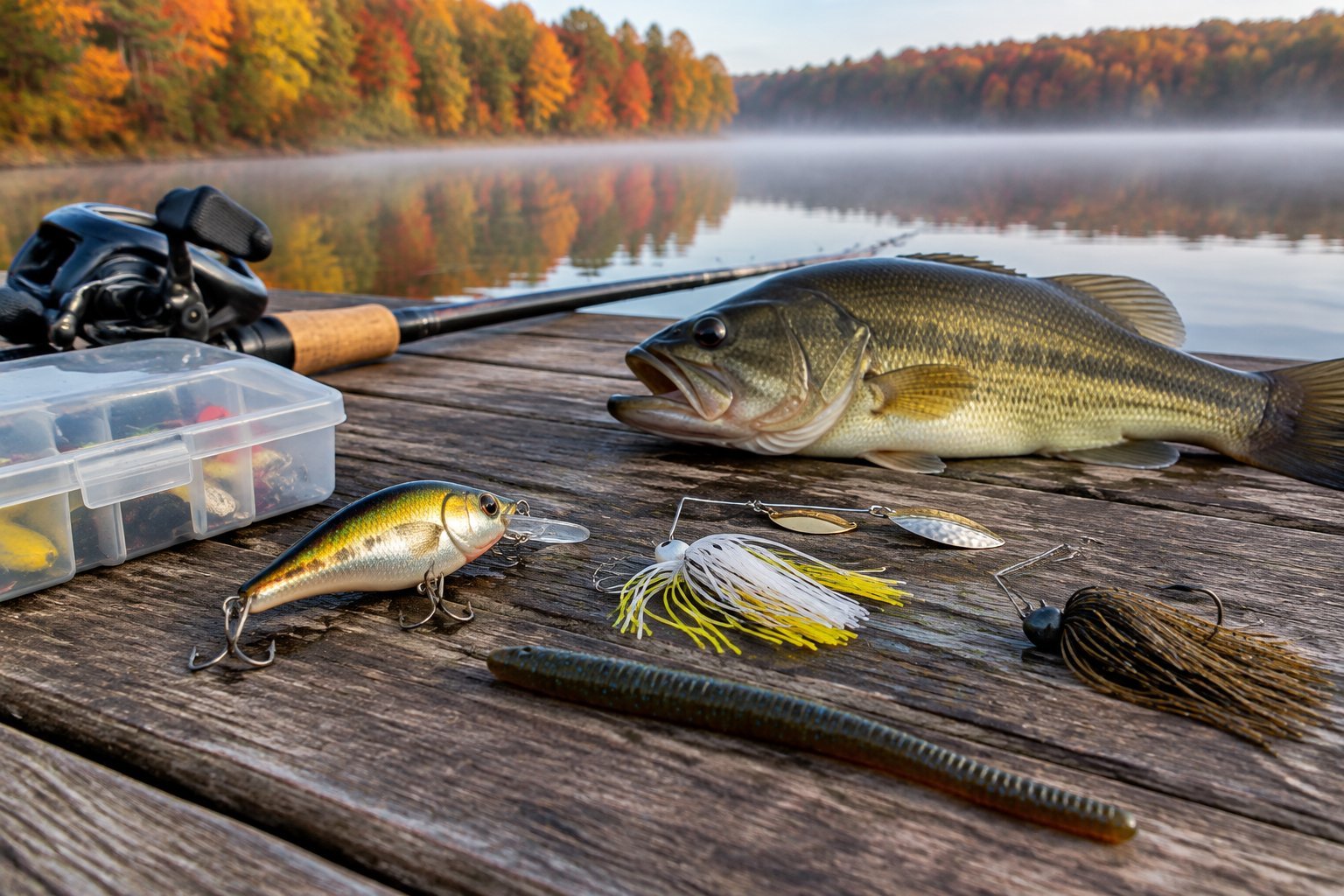
Fall bass fishing often rewards a lure that lets you cover water quickly while matching the baitfish bass are chasing. The Strike King KVD Finesse Spinnerbait is the best overall choice for beginners because its steady retrieve is easy to learn and helps you search shallow water efficiently. For a short outing before work or with kids, keep the retrieve simple and fish likely spots such as weed edges, docks, and points.
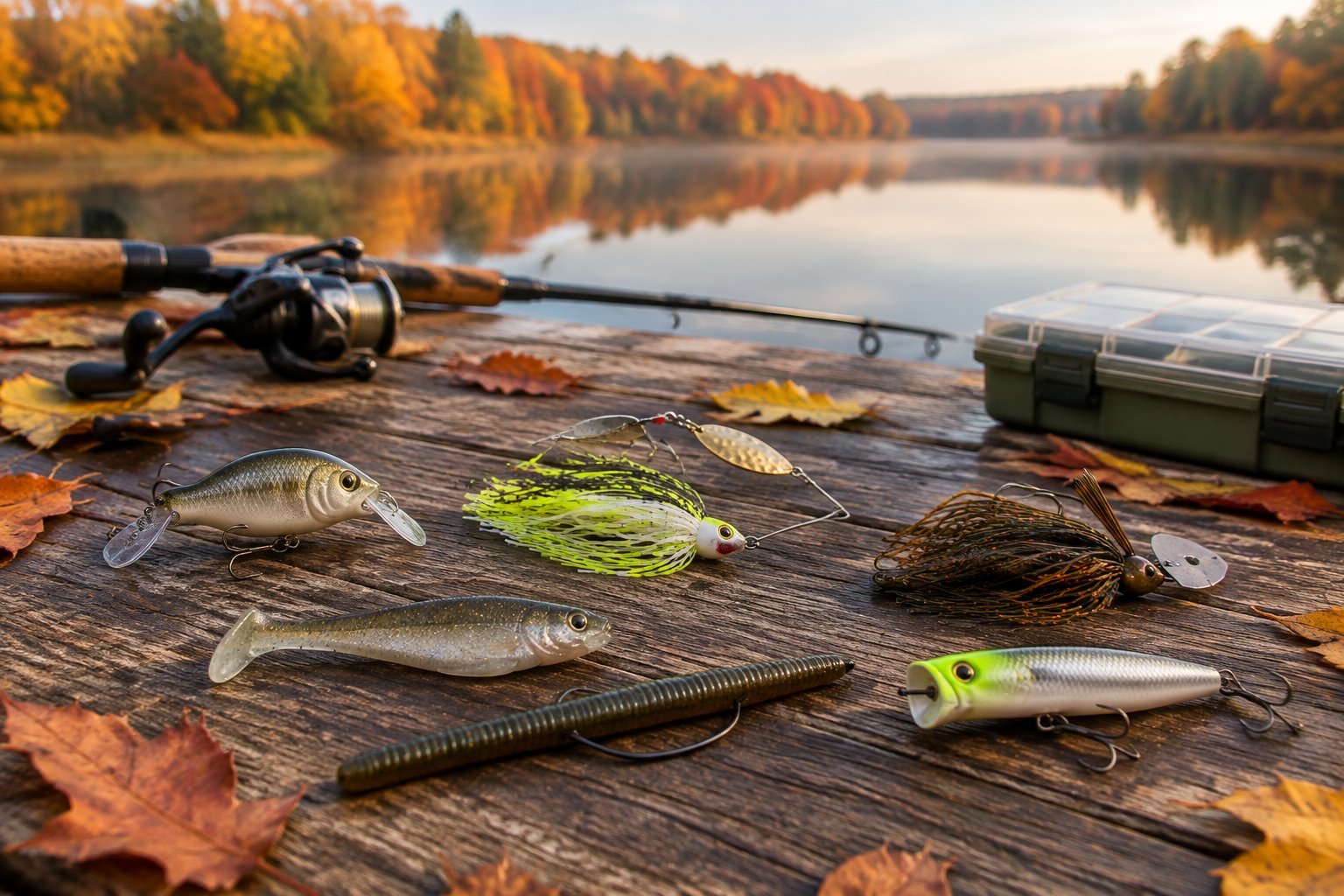
1. Strike King KVD Finesse Spinnerbait (Best Overall for Beginners)
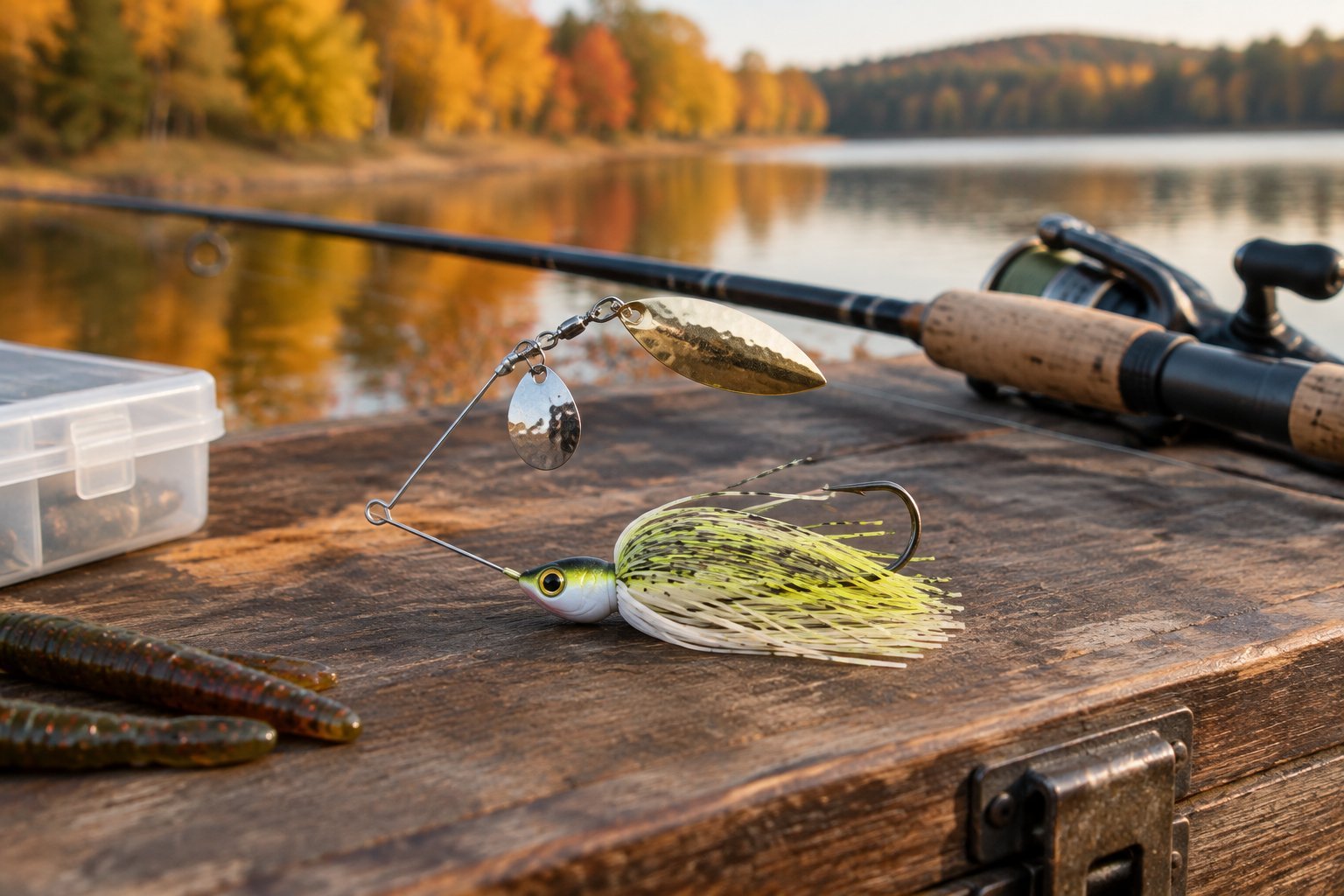
Choose the Strike King KVD Finesse Spinnerbait when you want a beginner-friendly search bait for shallow fall bass. Cast past likely cover, let it settle briefly, and reel at a steady pace so the blades work consistently.
A spinnerbait helps you cover banks, grass edges, and laydowns without needing a complicated cadence. In clearer water, try a natural baitfish color; in stained water, a brighter or darker profile can stand out. Keep the hook clear of your fingers when handling it, and use pliers to remove it from a fish.
2. Strike King KVD 1.5 Squarebill Crankbait
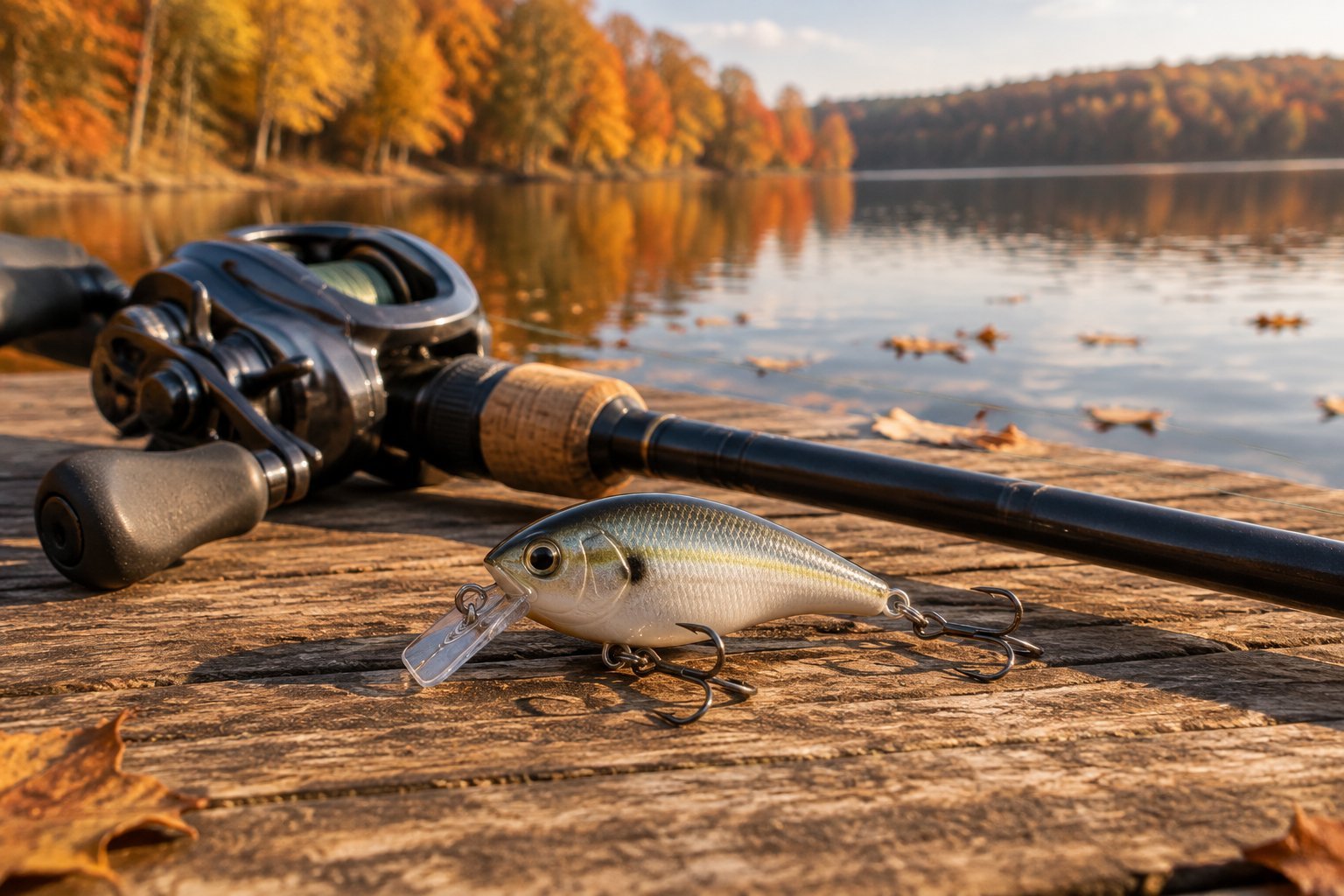
The Strike King KVD 1.5 Squarebill Crankbait is a practical choice for working shallow cover and hard banks. Its compact, diving profile suits a retrieve that you can keep steady while the lure travels beside rocks, stumps, or dock edges.
Cast beyond the target and crank it down, then continue reeling through the strike zone. If the lure taps cover, a brief pause gives you a simple change of pace. Choose a color that resembles local forage in clear water, and use more visible contrast when the water is stained.
3. Rapala DT-6 Crankbait
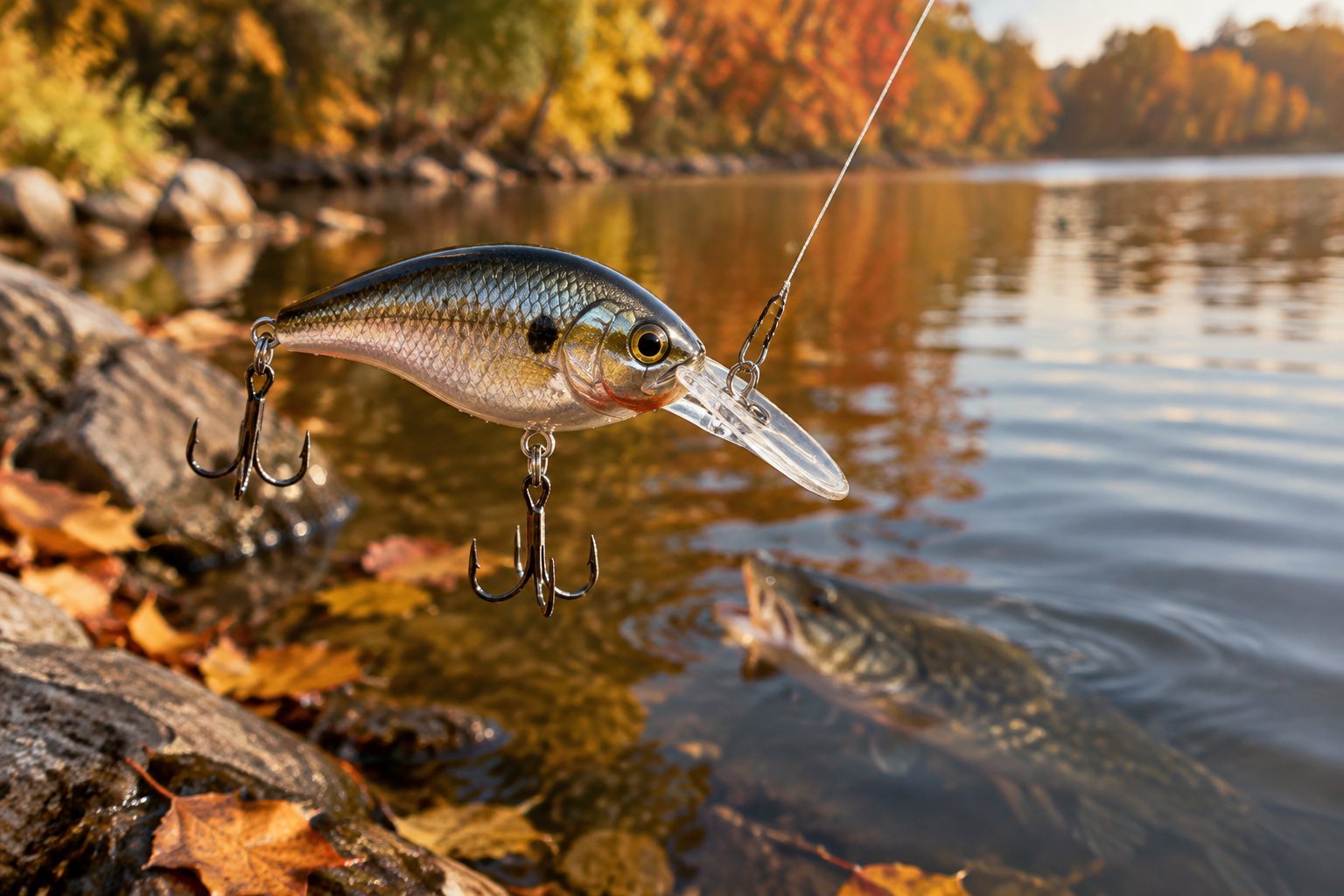
Reach a little deeper along a point or outside weed edge with the Rapala DT-6 Crankbait. It gives you a crankbait option when bass are holding below the shallow band covered by a squarebill.
Make long casts and reel at a pace that keeps the lure working near the depth where you see baitfish or bass activity. If you are fishing from shore, angle casts along the bank so the lure spends more time near the drop-off. A baitfish pattern is a straightforward starting color when bass are feeding on small fish.
4. Bill Lewis Rat-L-Trap
The Bill Lewis Rat-L-Trap is a lipless crankbait for covering open water and grass edges with a steady retrieve. Its vibrating, rattling presentation gives you a fast way to search when fall bass are chasing baitfish across a flat.
Cast over the area and retrieve at a consistent speed; vary the pace if you see fish following without striking. Around submerged vegetation, let the lure sink briefly, then reel it above the grass. Keep a firm grip on the rod and watch for trebles when removing the lure from weeds or fish.
5. Z-Man ChatterBait JackHammer
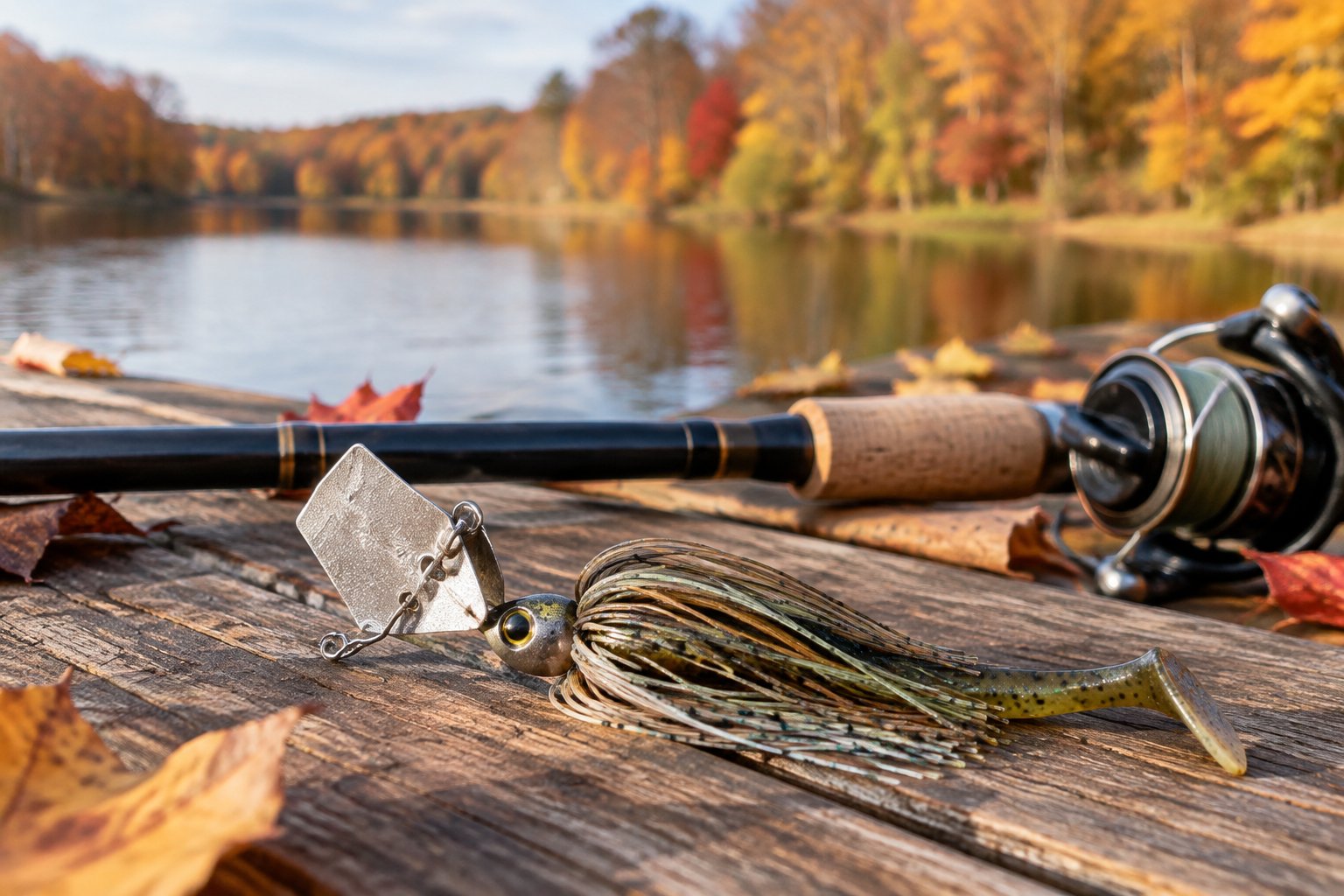
Use the Z-Man ChatterBait JackHammer to combine a vibrating retrieve with a baitfish-style profile around grass and other shallow cover. It fits a quick search pattern when you want to work several likely areas with one setup.
Reel steadily so the blade starts moving, then adjust your speed to keep the lure above vegetation. A soft-plastic trailer adds bulk and can help the bait resemble a larger forage fish. For color, follow the water: natural tones suit clearer conditions, while stronger contrast helps the lure show in stained water.
6. Zoom Super Fluke
A Zoom Super Fluke gives you a soft-plastic baitfish imitation for bass following shad or other small forage. Its weightless presentation works well when you want to slow down around visible bait activity or fish cruising near the surface.
Rig it weedless on an appropriate hook, cast near the activity, and use short rod twitches with pauses. The pauses let the bait glide and settle between movements. This retrieve takes a little more attention than a straight crank, so keep your rod tip controlled and watch the line during each pause.
7. Yamamoto Senko
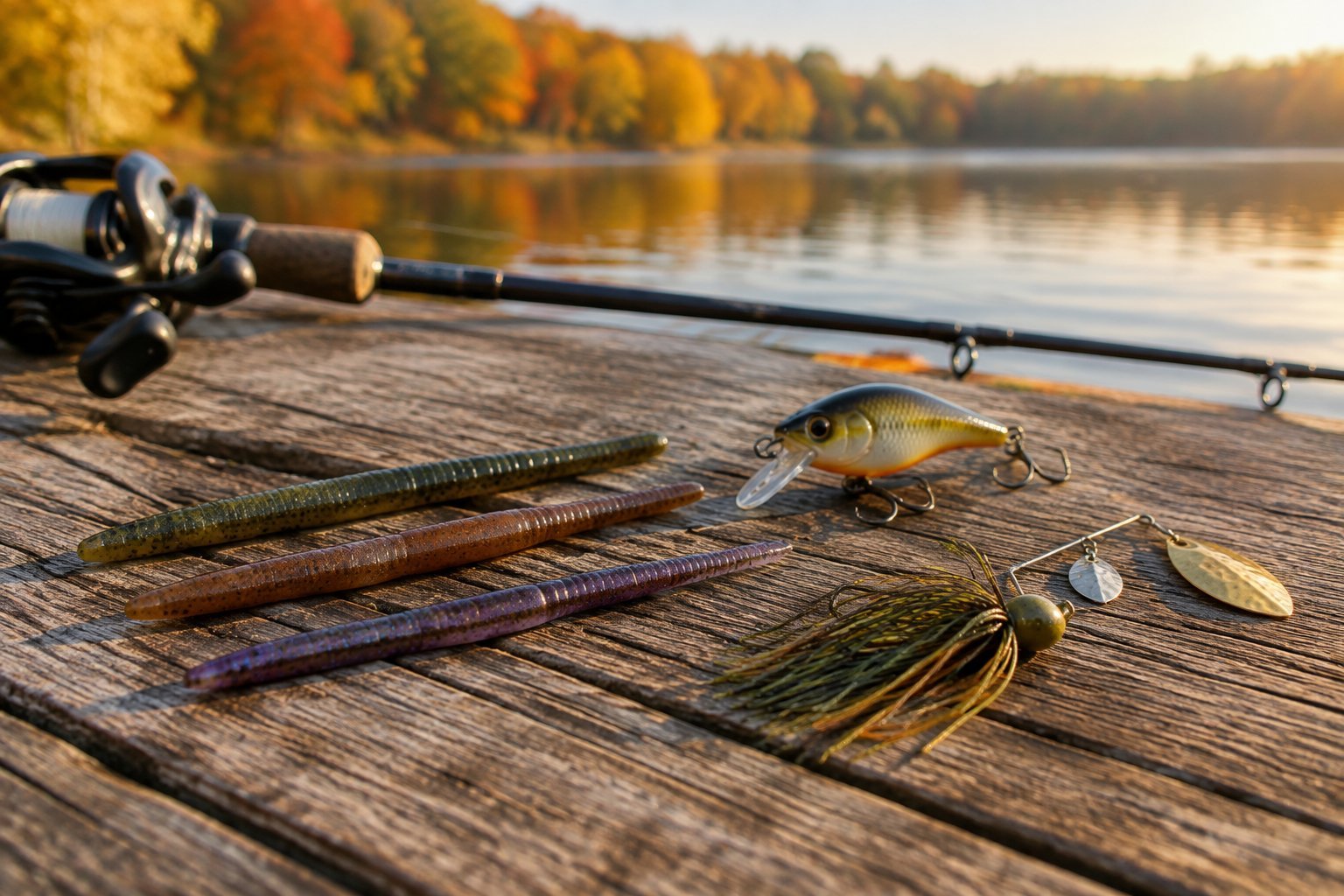
The Yamamoto Senko is a useful choice when you want a simple, slower presentation around docks, shade, or shoreline cover. Its weightless fall gives you a way to fish a specific target after faster lures pass through the area.
Rig it wacky style or Texas style, then cast beside the cover and let it sink on a controlled line. Watch for a twitch or a line that moves before the bait reaches the bottom. If you are fishing with a beginner or child, this pause-and-watch method gives them a clear cue to focus on.
8. Lucky Craft Pointer 100 Jerkbait
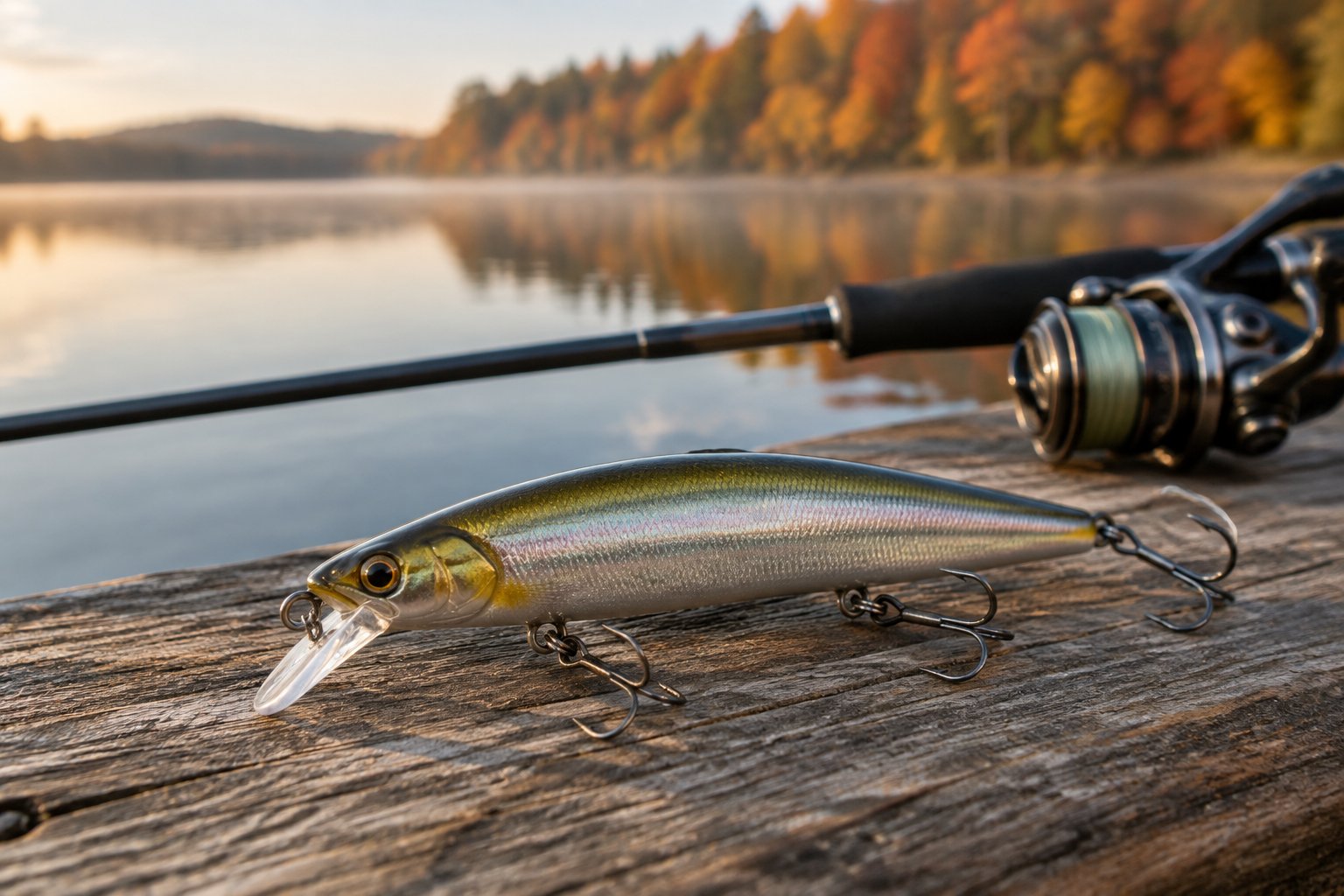
Choose the Lucky Craft Pointer 100 Jerkbait when bass are feeding on baitfish in clear or lightly stained water. Its twitch-pause retrieve lets you adjust the presentation to the fish’s activity without changing lures.
Make a cast, give the rod a couple of short twitches, and pause. Start with brief pauses, then lengthen them if bass follow without committing. Jerkbaits have exposed treble hooks, so keep the lure secured while changing it and use pliers when handling a fish.
9. Booyah Pad Crasher
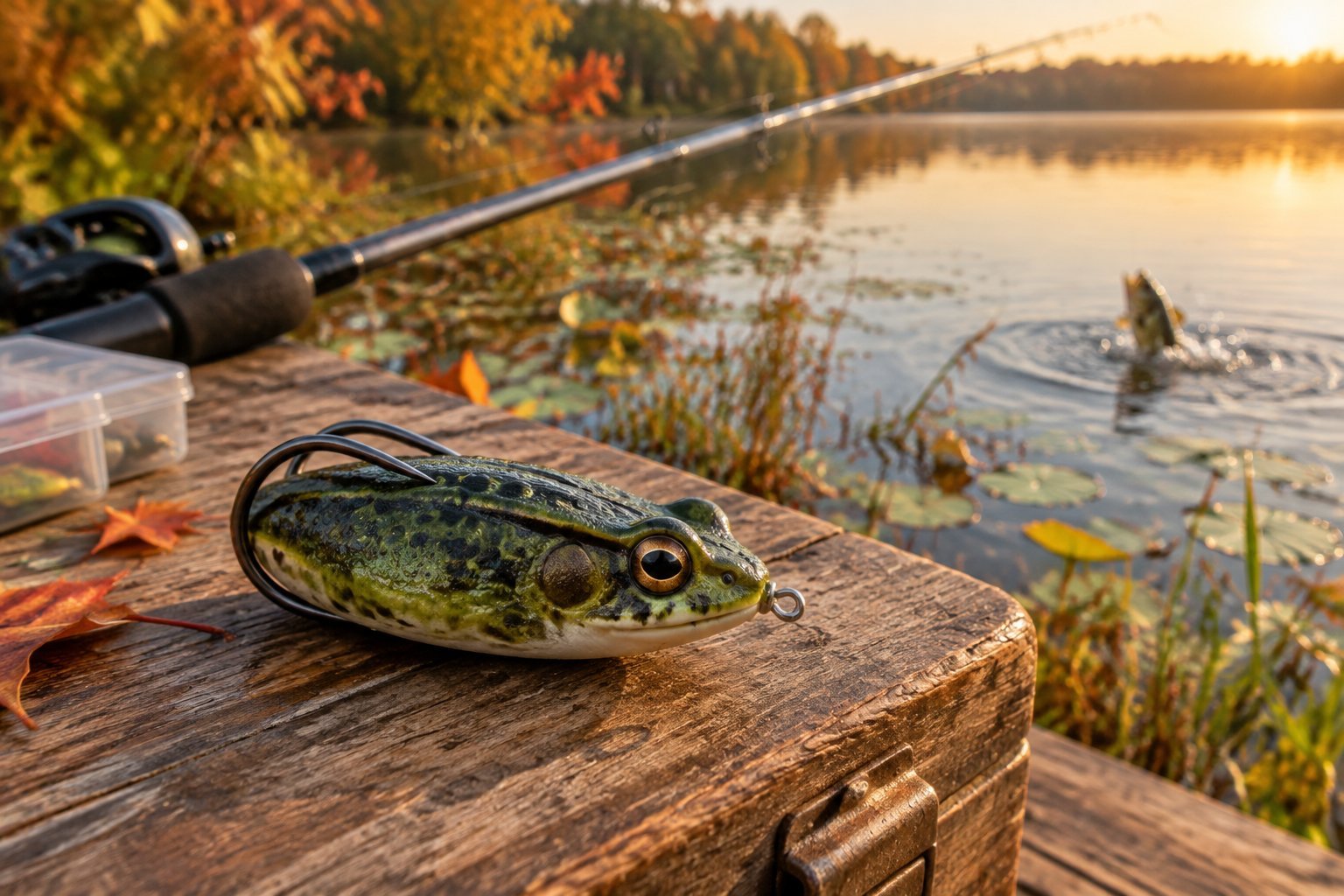
The Booyah Pad Crasher is built for fishing over surface vegetation where a standard treble-hook lure can snag. Its frog profile gives you a topwater option along matted plants and grassy edges.
Cast onto or beside the cover and work the lure with short pulls, leaving pauses near openings. When a bass strikes, keep your line tight and set the hook with a decisive sweep. Use this lure where the vegetation gives it room to move, and switch to a more open-water presentation if the cover blocks your retrieve.
10. Rebel Pop-R
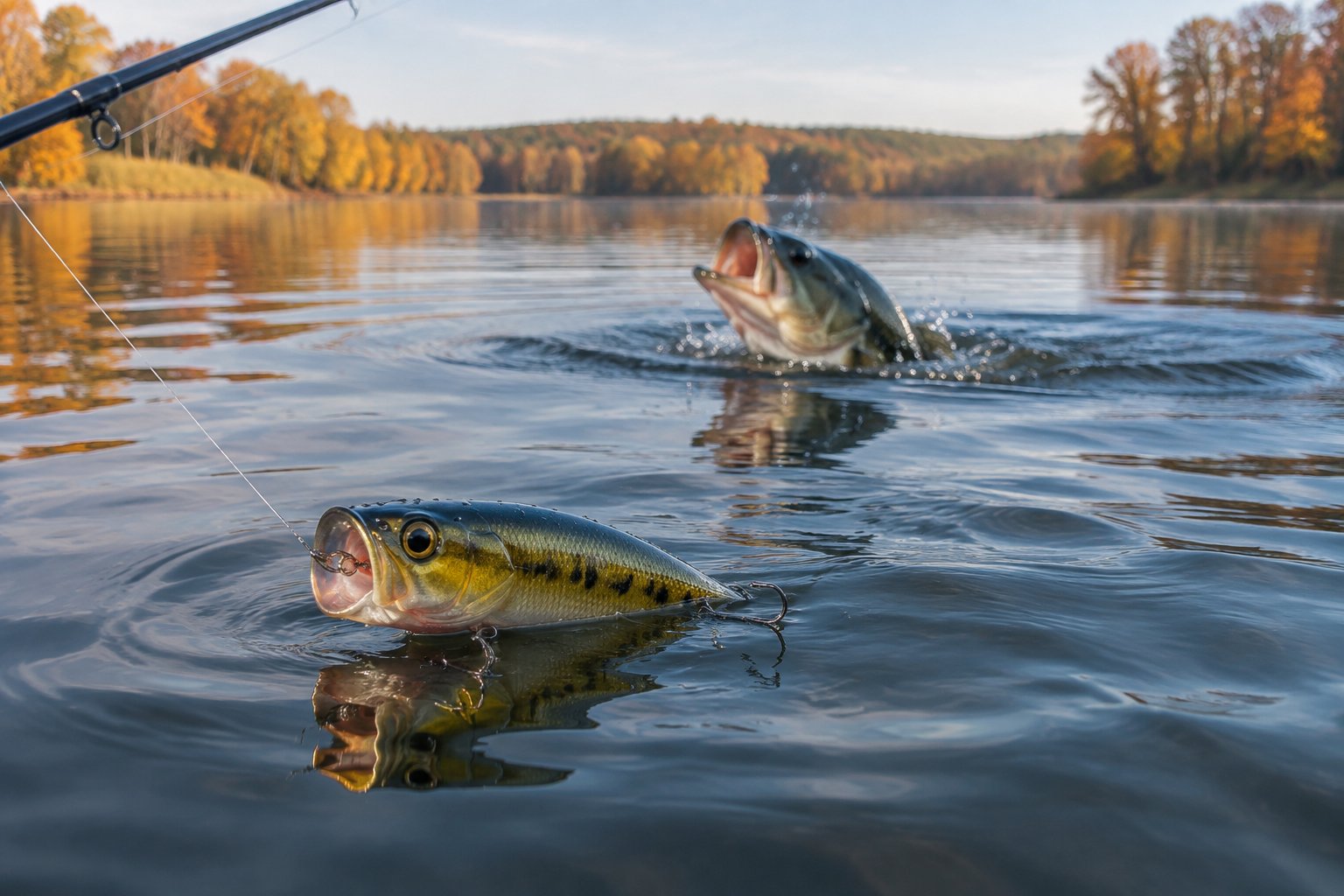
The Rebel Pop-R is a topwater popper for bass feeding near the surface in calm pockets and along shallow banks. A short pop followed by a pause creates an easy cadence you can adjust by changing the pause length.
Cast near visible baitfish or an edge of cover, twitch the rod tip, then wait for the rings to settle before moving the lure again. If bass are missing the bait, give them more time to take it before setting the hook. Its exposed trebles call for careful handling at the water’s edge.
How to Choose a Fall Bass Lure for a Quick Trip
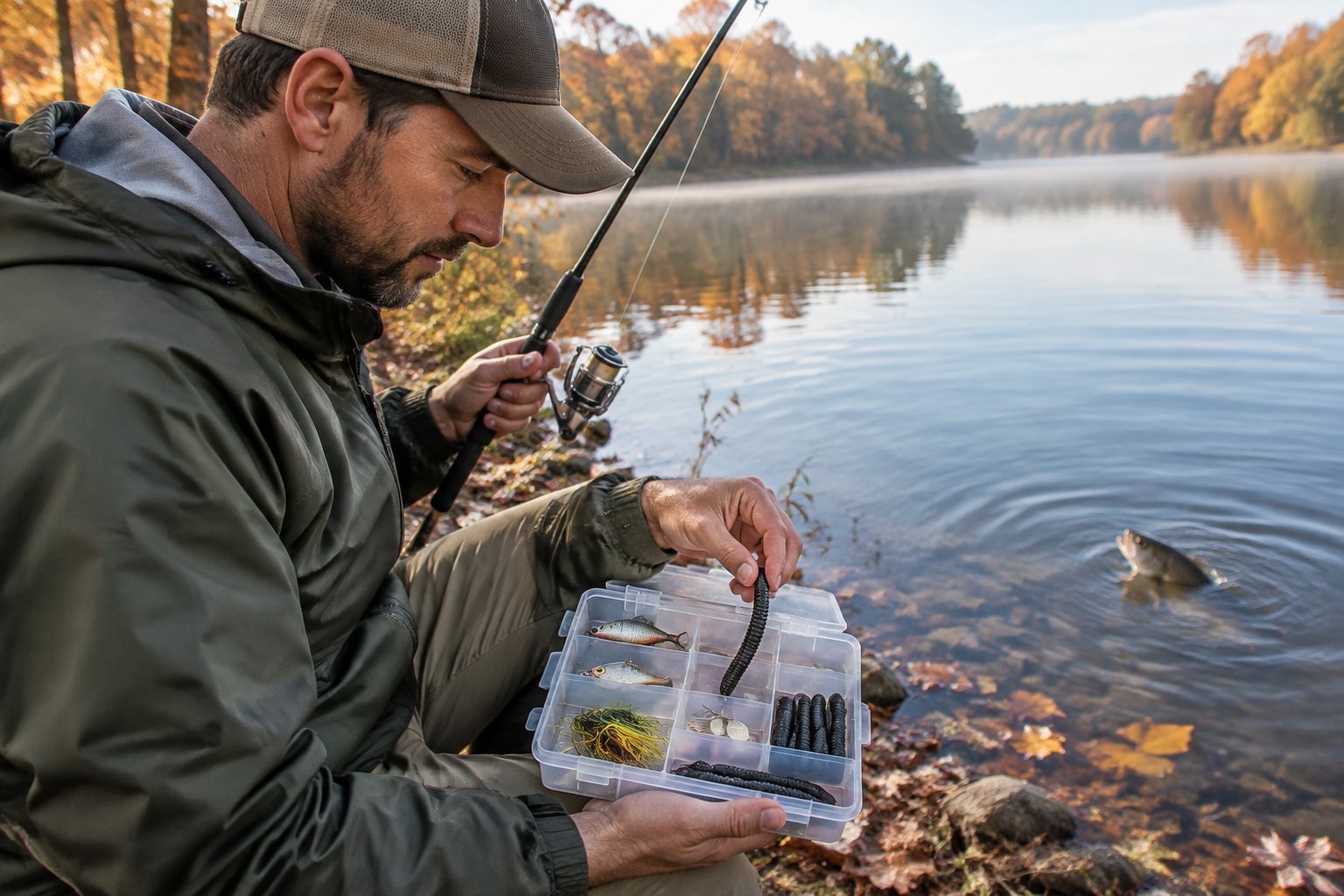
For a short fall outing, match your lure to water clarity, visible forage, and the retrieve you can manage consistently. A spinnerbait is a dependable first search bait for a beginner; a soft plastic or topwater lets you slow down when fish are close to cover or feeding at the surface.
| Lure | Best use | Retrieve | Water condition |
|---|---|---|---|
| Strike King KVD Finesse Spinnerbait | Shallow search | Steady reel | Clear to stained |
| Strike King KVD 1.5 Squarebill Crankbait | Shallow hard cover | Steady crank, brief pauses | Clear to stained |
| Rapala DT-6 Crankbait | Points and deeper edges | Steady crank | Clear to stained |
| Bill Lewis Rat-L-Trap | Flats and grass edges | Steady retrieve, pace changes | Stained or open water |
| Z-Man ChatterBait JackHammer | Grass and shallow cover | Steady vibration | Clear to stained |
| Zoom Super Fluke | Baitfish activity | Twitches and pauses | Clear to lightly stained |
| Yamamoto Senko | Docks and shoreline cover | Controlled fall | Clear to stained |
| Lucky Craft Pointer 100 Jerkbait | Baitfish in open water | Twitch and pause | Clear to lightly stained |
| Booyah Pad Crasher | Surface vegetation | Short pulls and pauses | Vegetated water |
| Rebel Pop-R | Calm surface pockets | Pop and pause | Calm, clear to stained |
How does water clarity affect lure color and choice?
In clear water, start with natural colors that resemble local baitfish, such as shad or small bluegill. A realistic profile helps keep the presentation familiar when bass can see the lure clearly.
In stained water, choose stronger contrast so the lure remains visible. A spinnerbait, vibrating bladed jig, or lipless crankbait also creates movement and vibration that helps bass locate it. If you cannot see the bottom, begin with a noticeable color and adjust after watching how fish respond.
How can you match a lure to the baitfish bass are chasing?
Look for small fish flickering at the surface, baitfish gathered near a point, or bass pushing forage toward the bank. A jerkbait, Fluke, spinnerbait, or crankbait gives you a fish-shaped profile to try around that activity.
Use a compact baitfish presentation when the forage looks small. If you see larger bait or aggressive surface feeding, choose a lure with a fuller profile and cover the area with a controlled retrieve. Local forage varies by lake, so observe the water before tying on a color.
Which retrieve is easiest to adjust when you have little time?
A steady retrieve is the easiest to start with because you can change speed without learning a complicated rod cadence. Spinnerbaits and crankbaits suit this approach, and a brief pause adds variety without interrupting the cast-and-reel rhythm.
If you see a fish follow the lure, slow down or pause near the target. For a jerkbait, use short twitches and pauses; for a Senko, let the bait fall and watch your line. Make one adjustment at a time so you can tell which change draws a response.
What is the simplest lure choice for a quick bank-fishing trip?
A spinnerbait is a straightforward first choice from shore because you can cast along the bank and retrieve it steadily past grass, rocks, or docks. It also lets you cover water efficiently when your fishing window is brief.
If the bank has thick surface vegetation, use a weedless frog. If bass are chasing small fish near the surface, try a Fluke or popper. Bring a small selection you can rig and change quickly, and keep casts parallel to the shoreline where possible.
Frequently Asked Questions
What is the best lure for bass fishing in fall?
A spinnerbait is a strong all-around fall choice for beginners because you can retrieve it steadily while covering shallow water. Use it around banks, grass edges, and other visible cover where bass may be chasing baitfish.
What are the best early fall bass lures?
Early fall bass lures include spinnerbaits, squarebill crankbaits, lipless crankbaits, and soft-plastic baitfish imitations. Start with a search bait when fish are active, then slow down with a Senko or Fluke around a specific target.
What is the best fall bass lure for beginners?
The Strike King KVD Finesse Spinnerbait is the best beginner pick in this roundup because a steady retrieve is easy to learn. It also helps you search several shallow targets during a short trip.
Which fall bass lure works best from shore?
A spinnerbait works well from shore because you can cast along the bank and retrieve it past shoreline cover. Choose a weedless frog for thick surface vegetation or a Senko when you want to fish a dock or other single target slowly.
How should I retrieve a fall bass lure?
Start with a steady retrieve for spinnerbaits and crankbaits, then adjust your speed or add a pause when fish follow without striking. For a jerkbait, use short twitches and pauses; for a soft plastic, let it fall while watching your line for movement.