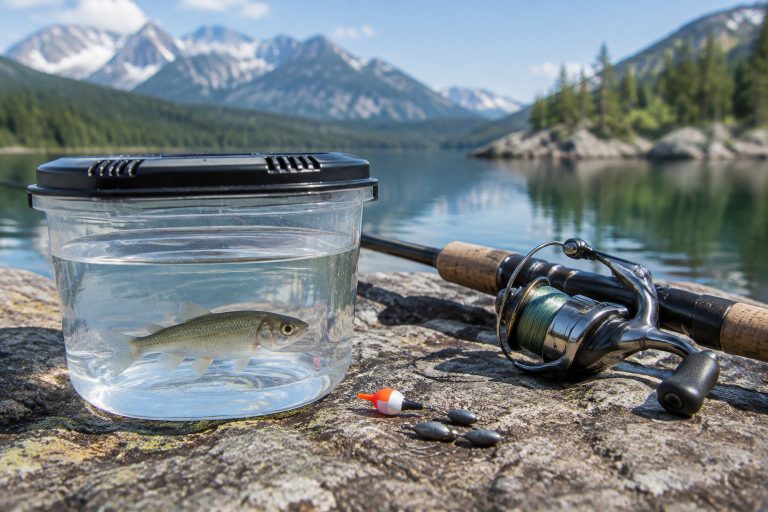
You can catch crappie through the ice with a light rod, a small jig tipped with a waxworm or plastic, and a short plan built around dawn or dusk. For most beginners and parents, the best approach to ice fishing for crappie is to fish a small, convenient lake, find fish suspended over the deepest basin or along weed edges, and hold a tiny jig or live minnow just above them for a 60- to 90-minute session. Crappie school up in winter, so once you find one fish, more are close by.
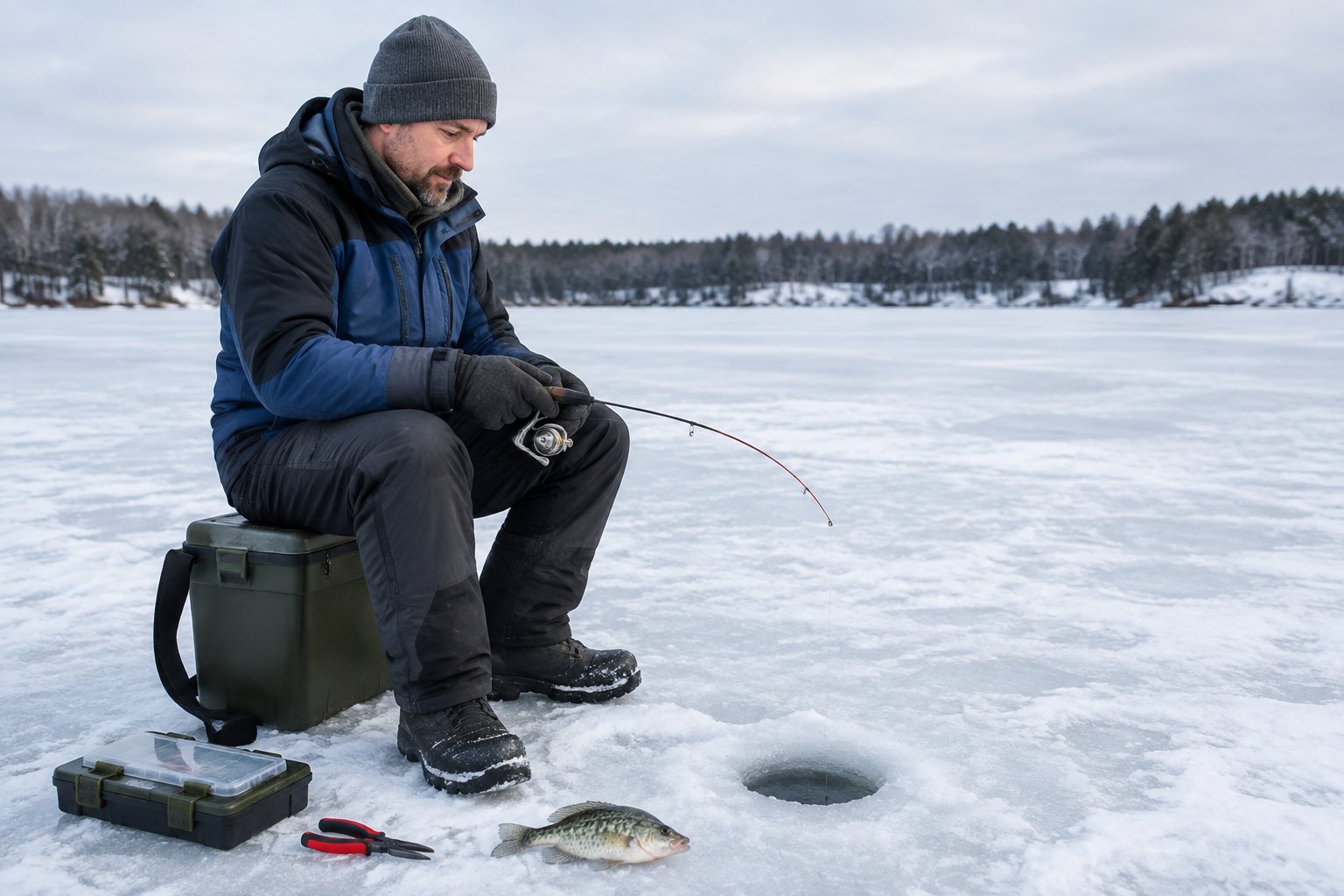
You don’t need a big shelter or a sled full of gear to make it work. With safe ice, a few simple rigs, and the basics from a solid crappie fishing guide, you can fit a trip in before work, after school, or on a short weekend morning and still bring home a few fish.
Where Do Crappie Hold Under the Ice?
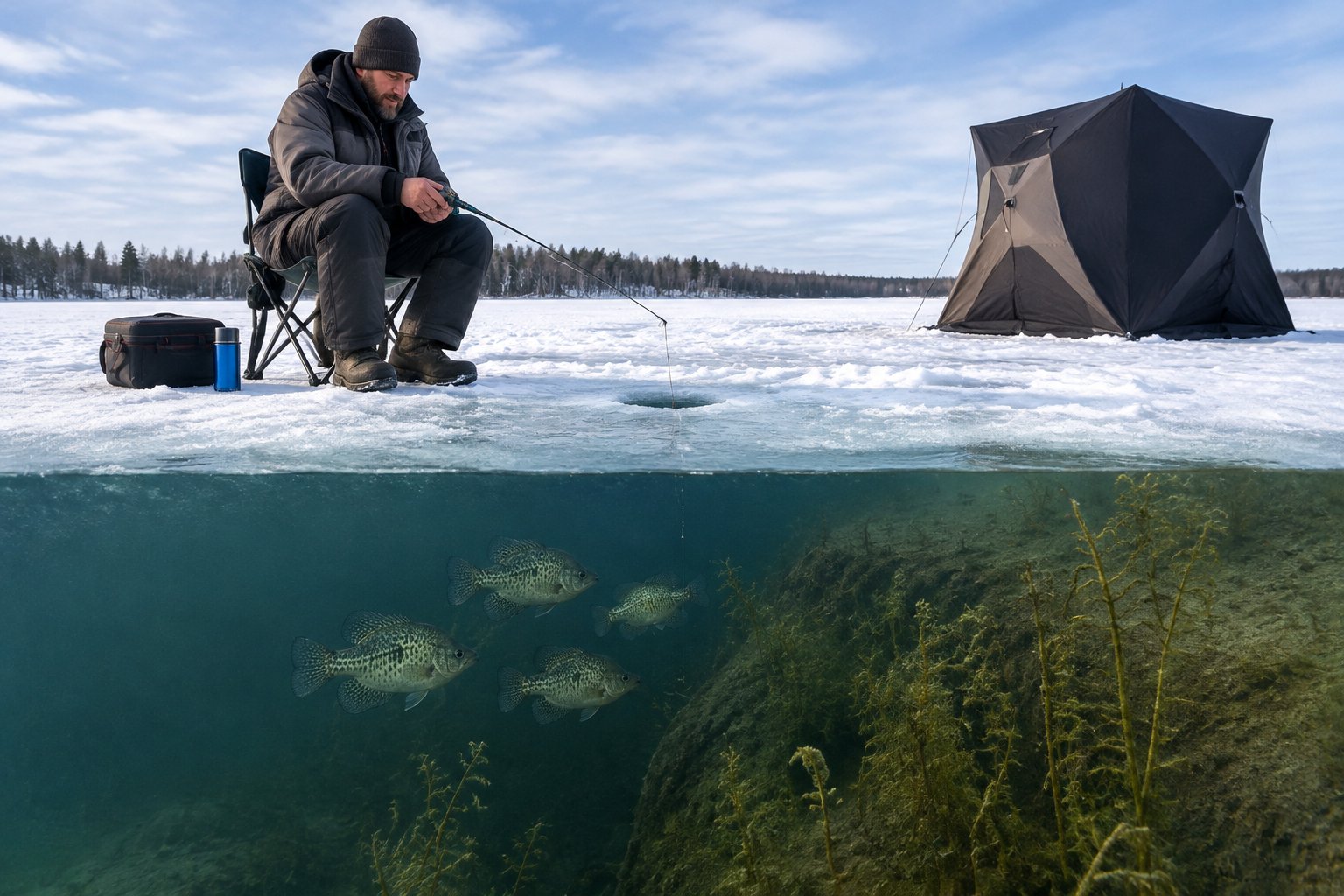
Winter crappie hold in green weeds at early ice, then slide out to the deeper basin as weeds die and oxygen drops. They also suspend off the bottom more than most fish, so you’ll find them by checking the middle of the water column first.
Choose a Lake With Crappie and Convenient Access
Your lake choice decides most of your success before you drill a hole. Small lakes with one main deep “hole” or basin are much easier to break down than huge reservoirs, because the fish have fewer places to go.
Do your homework from home:
- Check survey and stocking reports. Minnesota’s LakeFinder tool shows survey results and depth contours in one spot, and many states offer something similar.
- Look at maps. A small lake with a basin of 15 to 30 feet is a great starting target.
- Confirm access. Some lakes have public ramps, some are walk-in only, and some are private. Know where you can park before you load the kids.
Both black crappie and white crappie bite through the ice, though black crappie are more common in northern natural lakes. If you’re new to the species, a quick look at what a crappie fish is helps you tell them apart from bluegill on the ice.
Find Weed Edges at Early Ice and Basin Edges in Midwinter
Crappie behavior follows the weeds and the oxygen. At first ice, fish stay close to where they spent late fall, so spots that produced during fall crappie fishing are smart places to start.
- Early ice: Look for green weed beds and the deep edge where the weeds stop. Crappie hang just outside that edge.
- Midwinter: Once weeds turn brown and lay flat, move to the basin. Fish the edges of the deep hole first: inside turns, points, and narrow necks that funnel roaming fish.
- Late ice: Crappie often slide back toward shallower weed edges as melt starts.
Good basin spots on many lakes sit in 10 to 30 feet of water and are at least 5 feet deeper than the flats around them.
Check Suspended Fish Before Fishing the Bottom
Crappie schools often float several feet off the bottom, and some sit just under the ice. If you drop straight to the bottom every time, you’ll pass right over them.
Lower your bait slowly and pause every few feet on the way down. On a flasher, crappie show as solid marks stacked off the bottom. These schools move at about walking speed, so a hole full of fish can go empty in a minute. When that happens, drill holes in a line or an “X” across the basin and hop between them.
How Do You Check Ice Conditions and Access Safely?
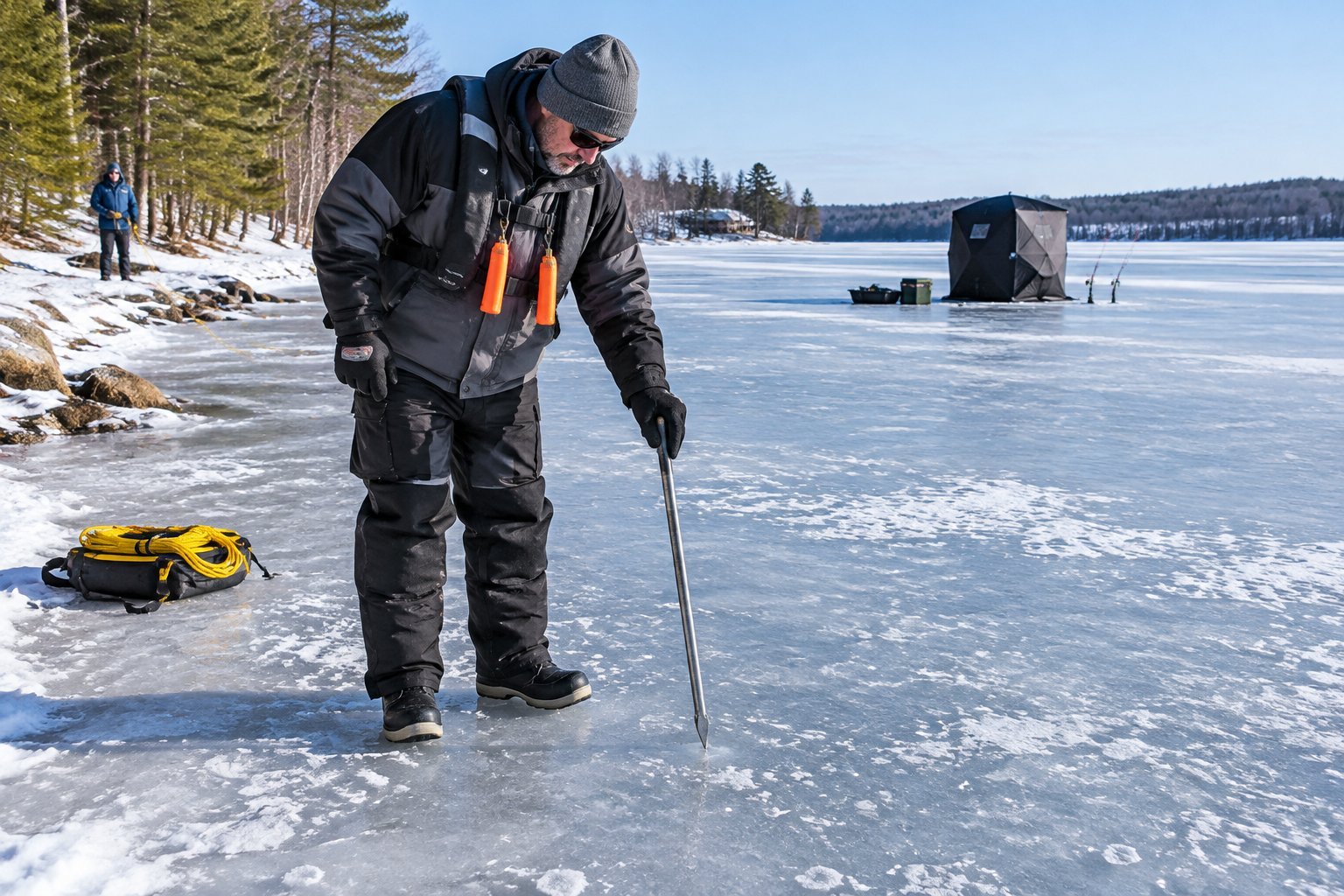
Safe ice starts with local reports and ends with you testing every few steps. A common guideline is at least 4 inches of clear, solid ice for walking, with more needed for any vehicle.
Verify Local Conditions and Check Ice Along Your Route
No ice is 100% safe, and conditions change fast with wind, rain, current, and warm days. Before you go, check local ice reports from bait shops, state agencies, or lake associations.
Once you’re out there:
- Test as you walk. Strike the ice with a spud bar every few steps. If it breaks through in one hit, turn back.
- Read the ice. Clear ice is stronger than white, snowy, or gray ice.
- Avoid trouble spots. Stay away from inlets, outlets, pressure cracks, and areas near cattails, where rotting plants give off heat that weakens ice.
- Drill a test hole near shore and measure before going farther.
Ice thickness guidelines:
| Ice Thickness | Safe For |
|---|---|
| 4 inches | Walking |
| 6 inches | Snowmobile or ATV |
| 8 to 10 inches | Small car |
| 12+ inches | Medium truck |
Pack Essential Safety Gear and Set Boundaries for Kids
Safety gear is the first part of your ice fishing equipment, not an extra. Pack these every trip:
- Ice picks worn around your neck
- A spud bar
- A throw rope
- Ice cleats for slick, glare ice
- A float coat or flotation suit (a boat cushion works in a pinch)
- A charged phone in a waterproof bag
With kids, set clear rules before you step on the ice. Pick a boundary, such as “stay between the bucket and the shelter,” and keep them within arm’s reach near holes. Bring a partner whenever you can. The basics in this ice fishing for beginners primer cover more first-trip safety habits.
If someone goes through, turn back toward the ice you came from, get horizontal, kick your feet up, and pull yourself out with the picks. Get to a warm vehicle or shelter right away and strip off wet layers.
Check Fishing Rules and Avoid Unnecessary Deep-Water Releases
Check your state’s daily limits, size rules, and the number of lines you can use through the ice. Some lakes carry special crappie limits, so read the rules for your specific water.
Crappie pulled from deep water, around 25 feet or more, often suffer from pressure changes and struggle to swim back down. If you’re catching fish that deep, plan to keep the ones you catch up to your limit and move shallower once you have enough. Reel deep fish up slowly to give them a better chance.
What Simple Gear, Rigs, and Bait Do You Need?
A light ice rod, a small reel spooled with 2- to 4-pound line, and two rigs (a jig and a slip bobber) cover nearly every crappie situation. Add waxworms, a few soft plastics, and a dozen crappie minnows, and you’re ready.
Choose a Sensitive Rod, Small Reel, and Light Line
Pick a light or ultra-light ice fishing rod, about 24 to 30 inches long, with a fast, sensitive tip. Crappie have thin, papery mouths, so a soft rod that bends easily helps keep hooks from tearing out. The same ideas apply when you pick fishing rods for crappie in open water.
Ice fishing reels for crappie should be small and smooth. A tiny spinning reel works great for beginners.
For line, you have two easy choices:
- 2- to 4-pound monofilament or fluorocarbon straight to the jig. Simple and kid-friendly.
- Light braided line with a fluorocarbon leader of 2 to 4 pounds. The braid has no stretch, so you feel more bites.
Add a spring bobber to your rod tip. It’s a thin wire that bends with the weight of your jig and shows bites your hands might miss.
Rig a Small Jig With Plastic or Waxworms
This is your main rig. Tie a 1/32- or 1/64-ounce jig to your line, then tip it with one or two waxworms or a small soft plastic about an inch long.
Tips that help:
- Center your knot on horizontal jigs so the bait sits level, like a small minnow.
- Add a small barrel swivel a couple feet up to stop line twist.
- Rebait often. Fresh scent draws more bites from slow fish.
The same jigging basics carry over from jig fishing for crappie in summer, just scaled down.
Set a Slip Bobber With a Live Minnow
When fish won’t chase a jig, a live minnow under a slip bobber is the most reliable rig there is, and it’s the best choice for kids.
- Slide a bobber stop and bead onto your line.
- Add a small foam slip bobber.
- Tie on a size 6 or 8 hook.
- Pinch a small split shot about 12 inches above the hook.
- Hook a crappie minnow lightly through the back, behind the top fin.
- Set the bobber stop so the minnow hangs about a foot above the fish you marked.
Lively bait gets bit. These pointers on keeping minnows for crappie fishing help your bucket last the whole trip.
When to Choose Tungsten, Lead, or a Small Spoon
| Bait | Best Use |
|---|---|
| Tungsten jigs | Deep water (20+ feet), wind, getting down fast to a moving school |
| Lead jigs | Shallow weed edges and slow-falling bait for picky fish |
| Small spoons | Calling fish in from a distance or firing up a slow school |
Tungsten is heavier for its size, so a tiny jig sinks fast. Lead falls slower, which sometimes triggers more bites. A small spoon tipped with a minnow head works when crappie ignore tiny jigs.
How Do You Turn Located Fish Into Bites?
Crappie bite best when your bait sits just above them and moves slowly upward. Pair that with a gentle hookset and quick changes when fish won’t commit.
Use Sonar to Find Fish or Search Depths Without Electronics
A flasher or fish finder speeds up crappie ice fishing more than any other tool. Drop the sonar in each hole and don’t fish until you see marks. Crappie show as solid marks off the bottom. Rock the transducer side to side to see a bit more water. Forward-facing tools like LiveScope show fish around you, though a basic flasher handles the job for most families. You’ll find more options on our ice fishing gear page.
No electronics? Count down. Lower your jig a few feet, jig for a minute, then drop another few feet. Once you catch one, mark the depth on your line with a tiny bobber stop so you can return to it.
Hold the Bait Above Fish and Start With Gentle Jigging
Crappie look up to feed. Keep your bait 1 to 2 feet above the top of the school.
Start with small lifts of a few inches, then pause. Most bites come on the pause. If a fish rises but stops short, lift the bait slowly away from it. A meal that looks like it’s escaping often gets eaten. Pull fish off the top of the school when you can, because dropping through the pack spooks the rest.
Recognize an Up Bite and Set the Hook Gently
Many crappie bites push the bait up. Your spring bobber straightens or your line goes slack instead of pulling down. React right away, since crappie spit baits in under a second.
Skip the hard jerk. Lift the rod smoothly and start reeling. A big hookset tears the thin mouth and loses fish.
Change Depth, Downsize, or Move When Fish Will Not Bite
When marks ignore you, try one change at a time:
- Change depth: Raise your bait another foot.
- Downsize: Switch to a smaller jig and thinner plastic.
- Go bigger: A spoon sometimes wakes up a lazy school.
- Deadstick: Set a minnow under a slip bobber and leave it still.
- Move: If a hole stays empty for 5 minutes, hop to the next one.
How Can You Plan a Short, Family-Friendly Trip?
Short trips timed to low light catch the most crappie and keep kids happy. Plan for about 90 minutes of fishing, set up before the bite starts, and head home while everyone is still having fun.
Pick a Convenient Daylight or Low-Light Fishing Window
Crappie feed hardest at dawn and dusk. An after-work trip that starts an hour before sunset fits most schedules, and you’ll often see fish turn on as the sun drops behind the trees. Midday trips work too, especially at first and last ice.
Ice fishing at night can be excellent, since crappie are low-light feeders. If you try it, bring headlamps and a lantern, mark your path, and go only on ice you’ve walked in daylight. Our page on when crappie start biting covers more timing patterns.
Follow a 60- to 90-Minute Plan After Reaching Your Fishing Spot
Use this simple plan once you arrive:
- Minutes 0 to 15: Test ice, then drill 4 to 6 holes over the basin edge or weed line.
- Minutes 15 to 30: Check each hole with sonar or a quick jig drop. Skip empty ones.
- Minutes 30 to 75: Fish the best holes. Run a jig rod and set a minnow rig nearby.
- Minutes 75 to 90: Clean up, count fish, and pack out.
Pre-tie rigs at home the night before. Ideas from how to catch fish quickly in 30 minutes work great for squeezing in a session.
Keep Kids Warm, Give Them Simple Jobs, and Leave Before They Tire
Dress kids in layers with waterproof boots, two pairs of gloves, and a warm hat. Pack hand warmers, hot cocoa, and snacks. A small pop-up shelter blocks wind and makes a big difference.
Give each child a job: watching the bobber, scooping slush, or holding the bait cup. Short, busy trips keep winter crappie fishing fun. More tips on fishing with kids help you plan for younger anglers. Leave on a high note, even mid-bite.
Make Your Next Trip Simple and Repeatable
Your best crappie trips come from repeating a plan that already works. Stick to a small lake you know, check ice reports, and fish weed edges early and basin edges in midwinter. Hold a small jig or live minnow just above suspended fish, and set the hook with a slow lift.
Keep a simple log of what you learn each time:
- Date, time, and weather
- Depth where fish held
- Bait that worked
- Which holes produced
After two or three trips, that log turns your next outing into a short, confident session. Keep a pre-tied jig rod and minnow rig in the truck so you can head out when you have an hour. Get your gear ready and explore the related beginner-friendly guides before your next trip.