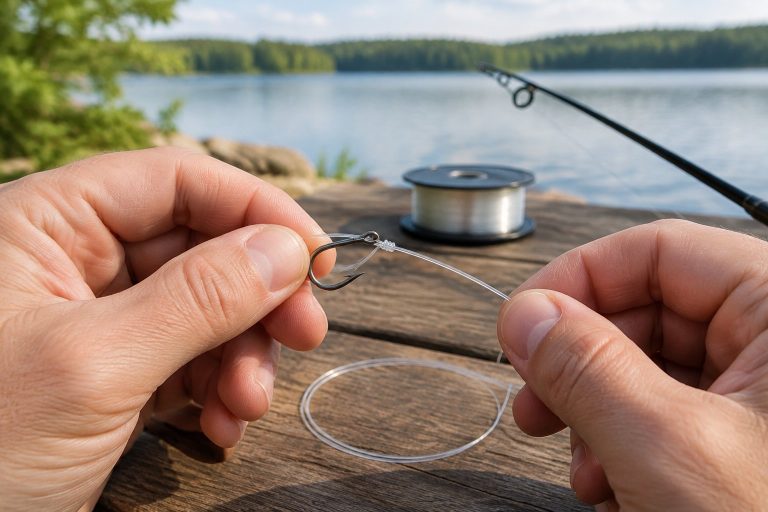
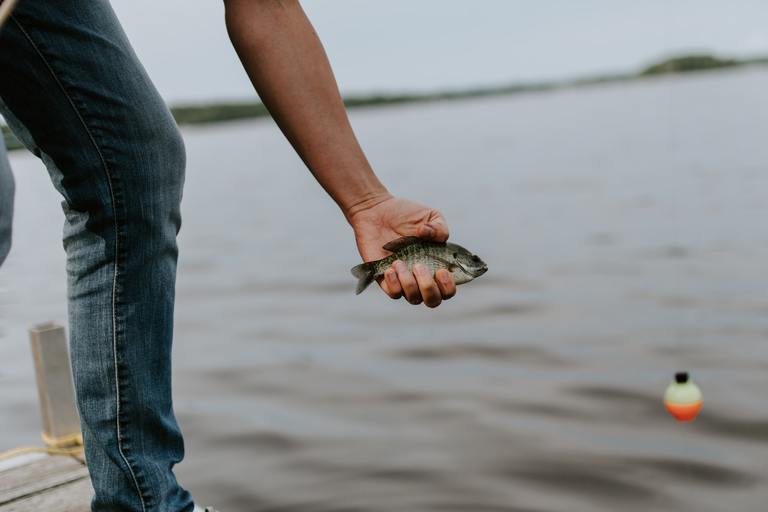
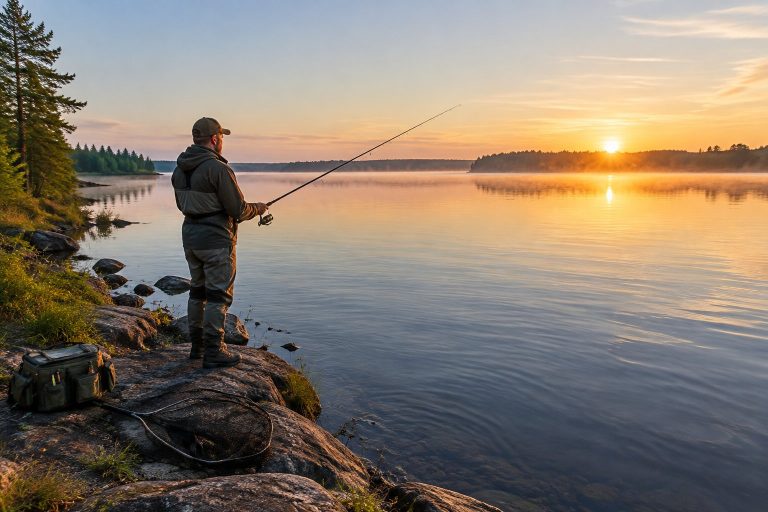
For trout fishing in the fall, focus on current seams, riffles, and the deeper edges of pools, then keep a compact spinning setup ready for a short bank session. Cooling water shifts trout toward feeding lanes, while clear autumn streams reward quiet movement and careful casting. You can make an after-work outing count by choosing one likely stretch and fishing it methodically.
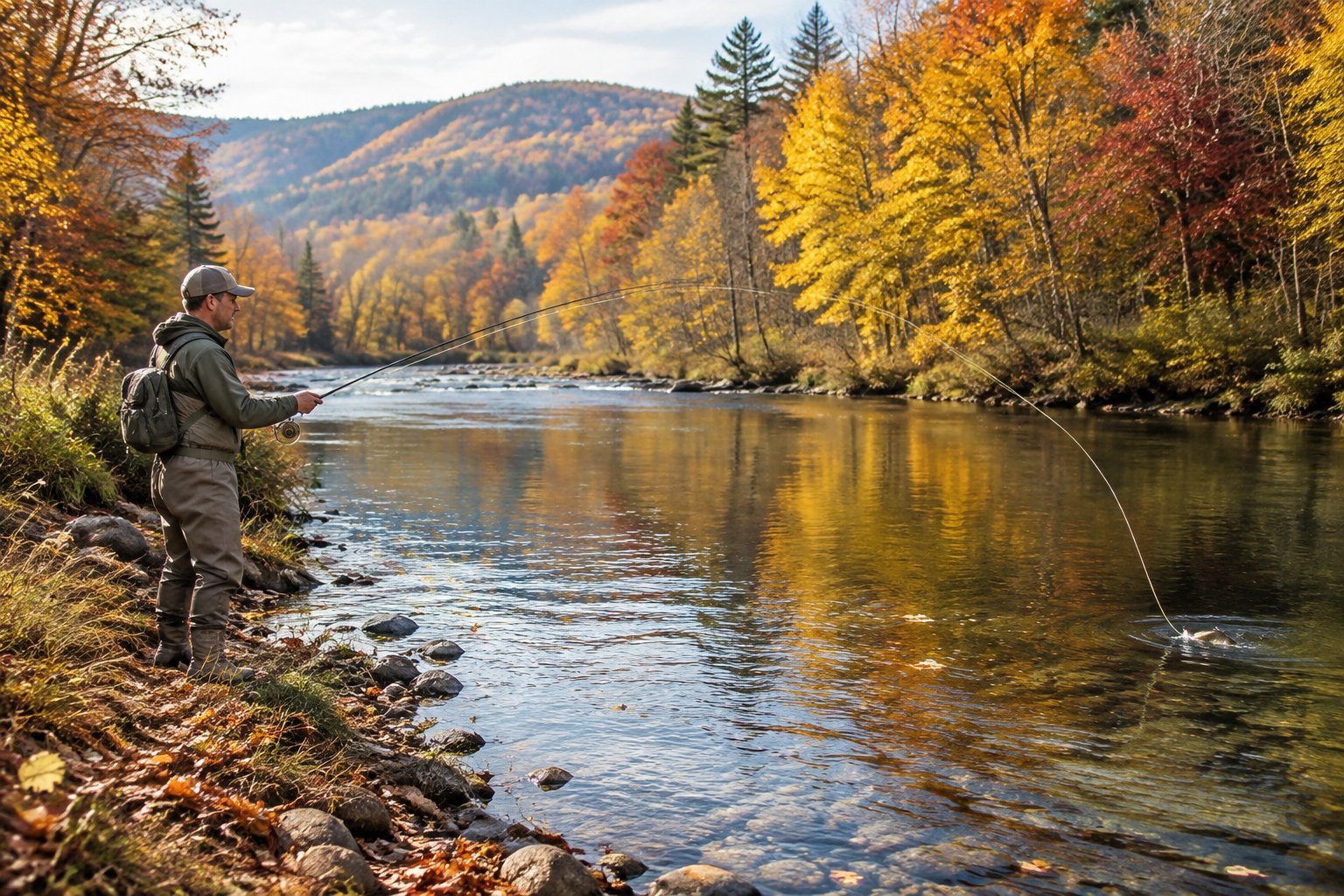
A few basic trout fishing tips help you adapt as the season changes: watch where current slows, choose a simple bait or lure, and check local rules before you fish. If you’re new to the sport, trout fishing for beginners can help you get comfortable with the basics.
Where Do Trout Move as Fall Progresses?
As fall progresses, look for trout along current seams, at riffle edges, and in deeper pools where they can hold near food and shelter. Small streams and tributaries can also draw fish, especially around suitable spawning habitat. Low, clear water calls for a quiet approach because wild trout can be spooky.
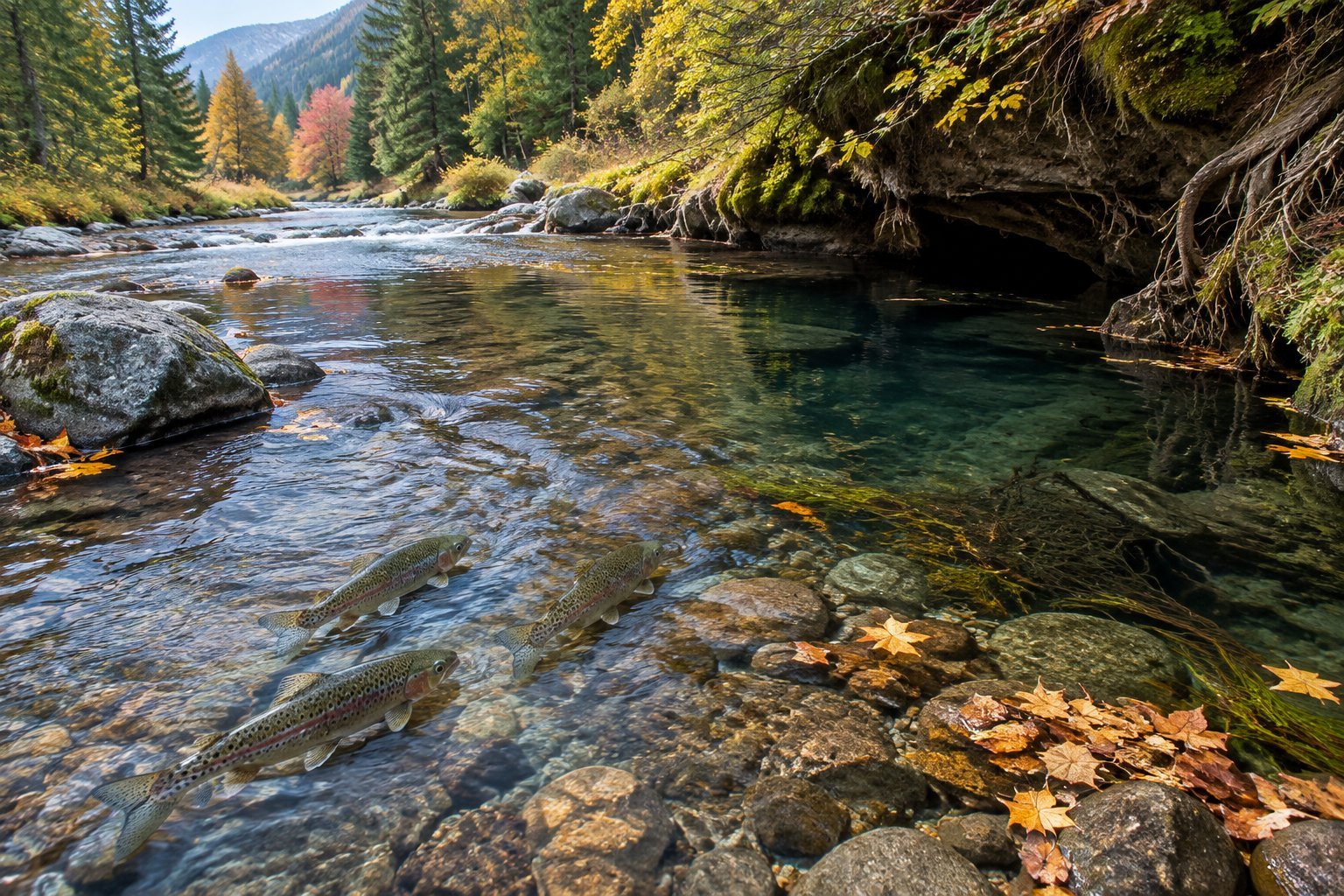
Look for Current Seams, Riffles, and Deeper Pools
A current seam forms where faster water meets slower water. Trout can hold in the softer flow while watching for food carried past, so cast along the edge and let your bait or lure travel naturally through the lane.
Riffles provide moving water and feeding opportunities, while their tails and nearby pools offer slower places to rest. Check the transition where shallow, broken water drops into a deeper run. A boulder, undercut bank, or shaded pocket can create a small holding spot within that stretch.
As water cools, try the deeper side of a pool and the slower edges beside stronger current. Keep casts controlled and cover a likely lie from the nearest water outward. That helps you avoid sending line across fish you have not reached yet.
Check Small Streams, Tributaries, and Tailwaters
Small streams and headwater streams can hold trout in compact pockets, making them practical choices for a brief outing. Look for plunge pools, shaded bends, and tributary mouths where cooler water joins a larger flow. Tailwaters below dams can also offer fishable water when nearby streams change with seasonal weather.
Spawning season brings extra care around tributaries and gravel runs. Fish may move through these areas, so check for clean gravel beds before wading or casting. Leave visible spawning habitat undisturbed and choose another stretch if a route through the water would cross it.
Adjust for Clear Water and Spooky Trout
Autumn water can run clear, which makes trout easier to spot and easier to alarm. Walk softly along the bank, keep your shadow off the water, and wear muted colors that blend with the surroundings. Approach from downstream when the bank allows it, then cast upstream or across the current so your line reaches the fish naturally.
Keep a little distance from the edge of a pool before your first cast. If a trout darts away, pause and give the water time to settle before fishing the spot again. Light, low-visibility line can help in clear water; choose a strength suited to the fish and cover where you are fishing.
How Do Weather and Water Temperature Affect the Bite?
Water temperature and light conditions help you choose a productive fishing window as autumn advances. Start with the warmest part of a cooling day, then adjust for rain, wind, and cloud cover. A fall hatch can bring trout to the surface, though subsurface fishing remains a useful option between rises.
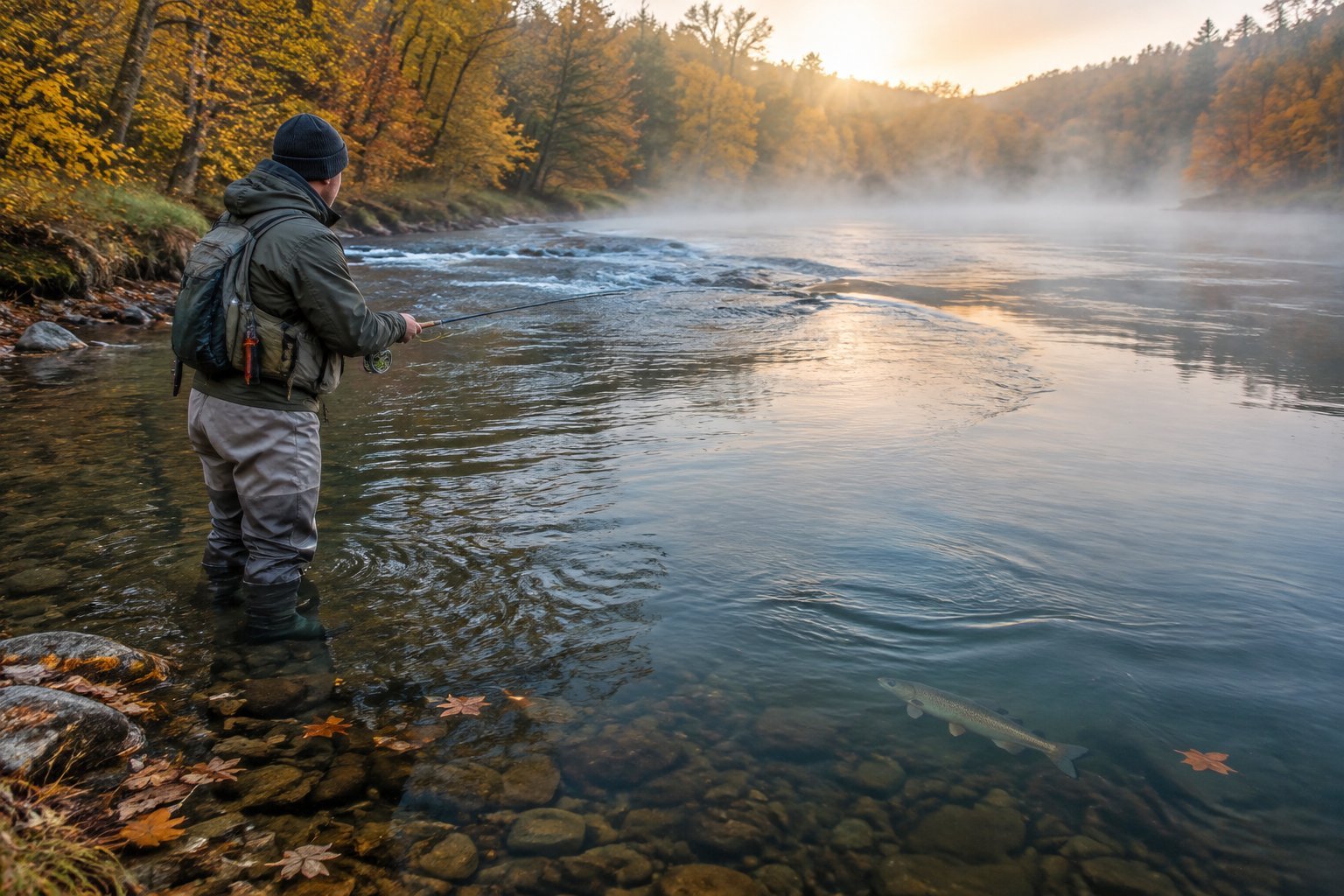
Fish the Warmest Part of a Cooling Day
When nights turn colder, trout activity can pick up during the warmer hours of the day. For a short outing, start around midday or early afternoon and watch how the fish respond. A pocket thermometer gives you a useful reading, but you can also note whether the water feels colder or steadier than on your previous visit.
Early fall can bring active feeding across more of the day. As temperatures drop, focus on the hours when sunlight has had time to warm the surroundings. Keep your first few casts near slower edges and pool tails, then move to deeper water if the fish stay down.
Use Rain, Cloud Cover, and Wind to Choose Your Window
Cloud cover reduces glare and can make trout less wary in shallow water. Light rain can also create a useful feeding window, especially when it adds a little color or flow to a clear stream. For more planning advice, see these practical pointers for fishing in the rain.
Wind can make casting and line control harder, so choose a sheltered bank when gusts interfere with your presentation. After rain, check water clarity and flow before entering the stream. Rising or discolored water calls for caution; fish a safe bank position and keep casts out of strong current.
Watch for a Fall Hatch Without Waiting on One
Blue-winged olives and midges are common fall hatch possibilities, and october caddis may appear in some waters. Look for repeated rises in one lane, small insects on the surface, or fish feeding just below it. Those clues can guide fly selection when you see them.
If the surface stays quiet, keep fishing subsurface with a nymph or small lure. A short trip does not need to wait for a hatch: choose a seam or pool edge and let your presentation drift through the feeding zone. Change depth or location before cycling through a large number of patterns.
What Simple Gear and Baits Work for Fall Trout?
A light spinning rod with a small lure or legal bait gives you a straightforward setup for fall trout fishing from the bank. Fly fishing works well when you have a clear lane for casting, and a small selection of dry flies, nymphs, and streamers covers common conditions. Keep the kit compact so you can move between nearby spots.
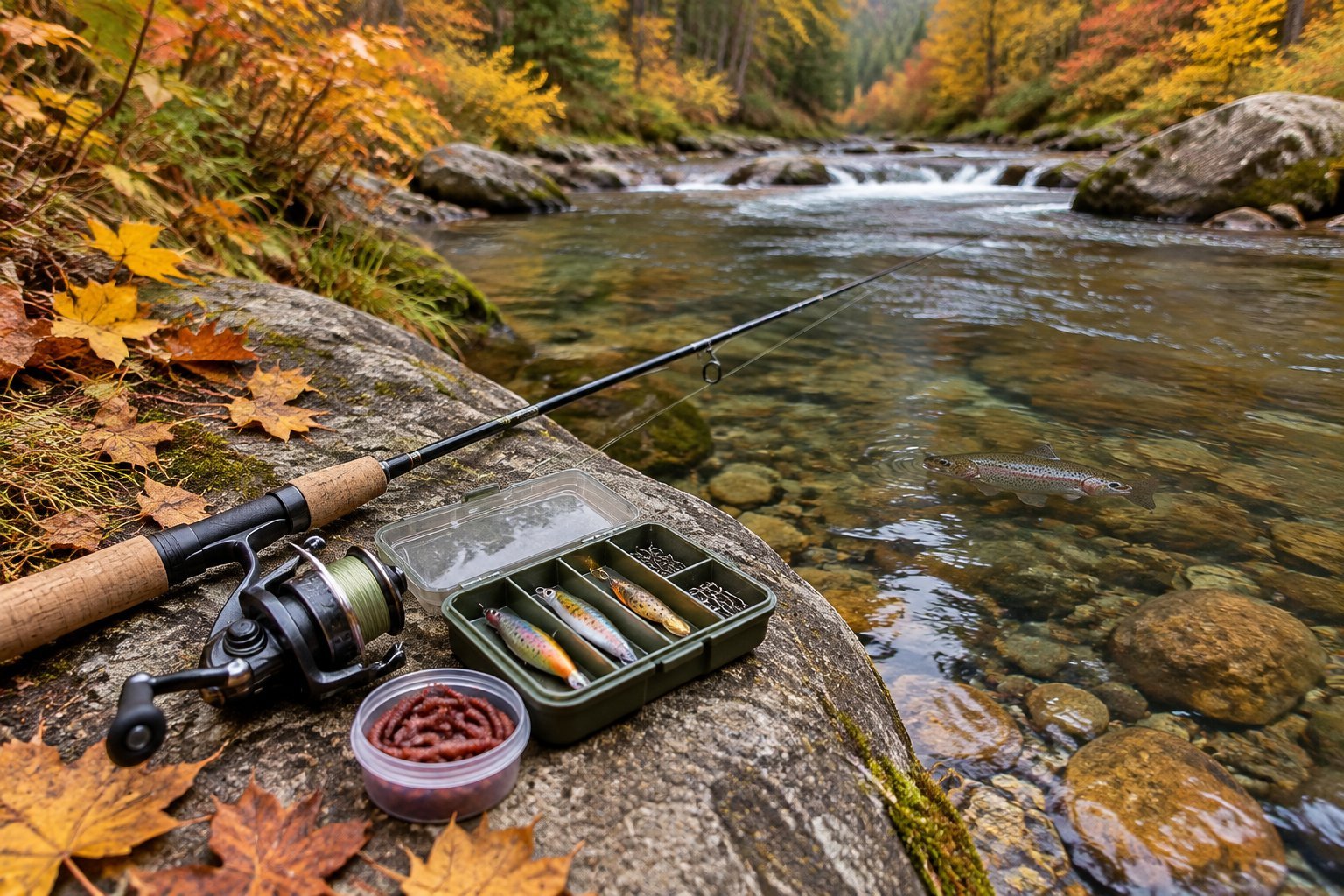
Start with a Spinning Rod, Small Lures, or Live Bait
A light spinning rod is easy to use for short casts along a bank. Try a small spoon, spinner, trout magnet, or minnow-style lure such as an X-Rap when local rules allow it. Cast upstream or across the current and retrieve slowly enough to keep the lure in a likely holding lane.
Live bait can be a simple choice for beginners. Minnows, crayfish, and fish eggs are used for trout in some waters, though bait rules differ by location. Check your state’s regulations for permitted bait, hook requirements, and seasonal restrictions before you rig up. For more options, see what bait to use for trout.
Choose a Few Flies for Surface and Subsurface Fishing
For fall fly fishing, carry a small, practical fly selection. A floating fly such as a dry fly can work when trout rise, while nymphs cover feeding below the surface and streamers imitate larger prey. Hoppers, ants, and grasshoppers can remain useful during warmer spells when terrestrial insects are active.
A pheasant tail or prince nymph is a familiar subsurface choice; a woolly bugger gives you a streamer option. Match fly size and color to what you see in the water, then present it with a natural drift. A 7x tippet suits delicate presentations for small flies and wary fish, while heavier tippet helps when fish or nearby cover call for more control. Explore pheasant tail nymph fly fishing for more on that pattern.
Match Your Presentation to the Depth and Current
In shallow riffles, use a light lure or unweighted bait and keep it moving naturally with the flow. In deeper pools, add enough weight to reach the fish without dragging continuously along the bottom. A sink tip can help a streamer descend in deeper water, while euro nymphing provides close-range control in suitable runs.
Change one element at a time. If you see fish but get no response, adjust the depth or drift first, then change the fly or lure. For clear water, cast from farther back and avoid letting your line land across the fish’s feeding lane.
How Can You Fish Responsibly During Spawning Season?
During trout spawning season, protect gravel beds and follow local rules before targeting fish. Trout spawning behavior varies by species and water, so avoid disturbing redds and release fish carefully when required. A little care around gravel and holding water helps keep a short outing low-impact.
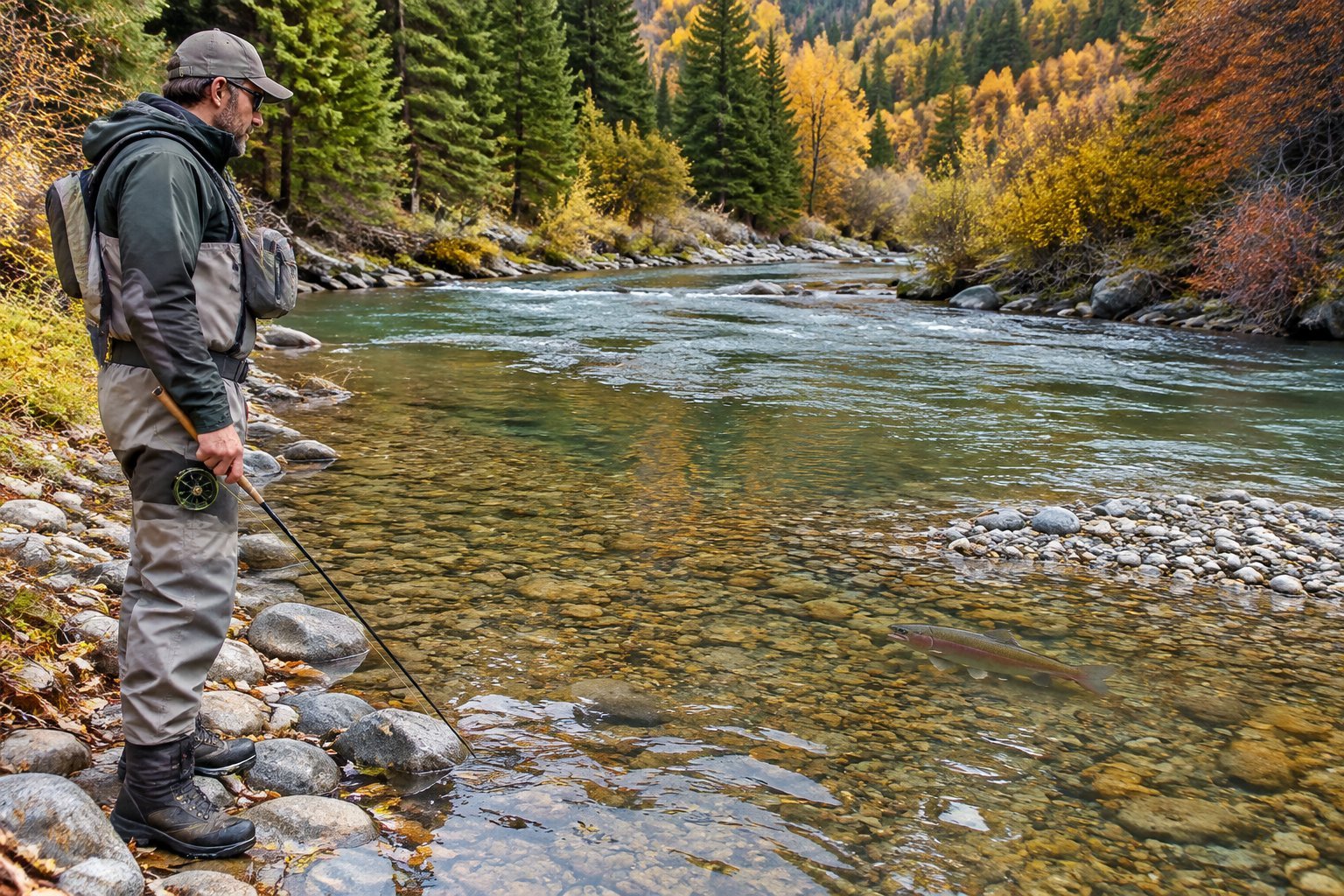
Recognize Redds and Avoid Wading Through Gravel Beds
A redd is a shallow patch of clean gravel that a trout has cleared for spawning. It may look lighter than the surrounding streambed, with disturbed stones and a visible depression. Avoid walking through these areas, standing over them, or dragging gear across the gravel.
Watch the streambed from the bank before wading. If you cannot identify a safe path around suspected redds, fish from shore or move to another stretch. Keep your casts clear of spawning fish and the gravel beds they use.
Know Which Trout May Spawn in Fall
Brown trout spawn in fall, and brook trout also spawn during the autumn in many waters. Rainbow trout spawning timing varies by population and location, so check local fishery guidance before fishing. The presence of a particular species does not tell you whether the stretch is open or appropriate to fish during spawning season.
Avoid targeting trout actively guarding or using redds. If you are unsure what you are seeing, choose a different area and leave the gravel undisturbed. For more on species-specific tactics, read about fly fishing brown trout.
Check Local Rules and Release Fish Carefully
Regulations vary by state and waterbody. Before fishing, confirm open seasons, harvest limits, bait and hook rules, and any special catch-and-release restrictions. Rainbow trout fishing rules can differ from those for brown trout or brook trout within the same region.
When releasing a fish, wet your hands, keep it in the water as much as possible, and handle it gently. Use a barbless hook when required or when it helps you release fish with less handling. If the fish is deeply hooked or visibly stressed, follow local fish-handling guidance and keep it out of the current only as long as needed.
What Is a Simple Plan for a Short Bank-Fishing Trip?
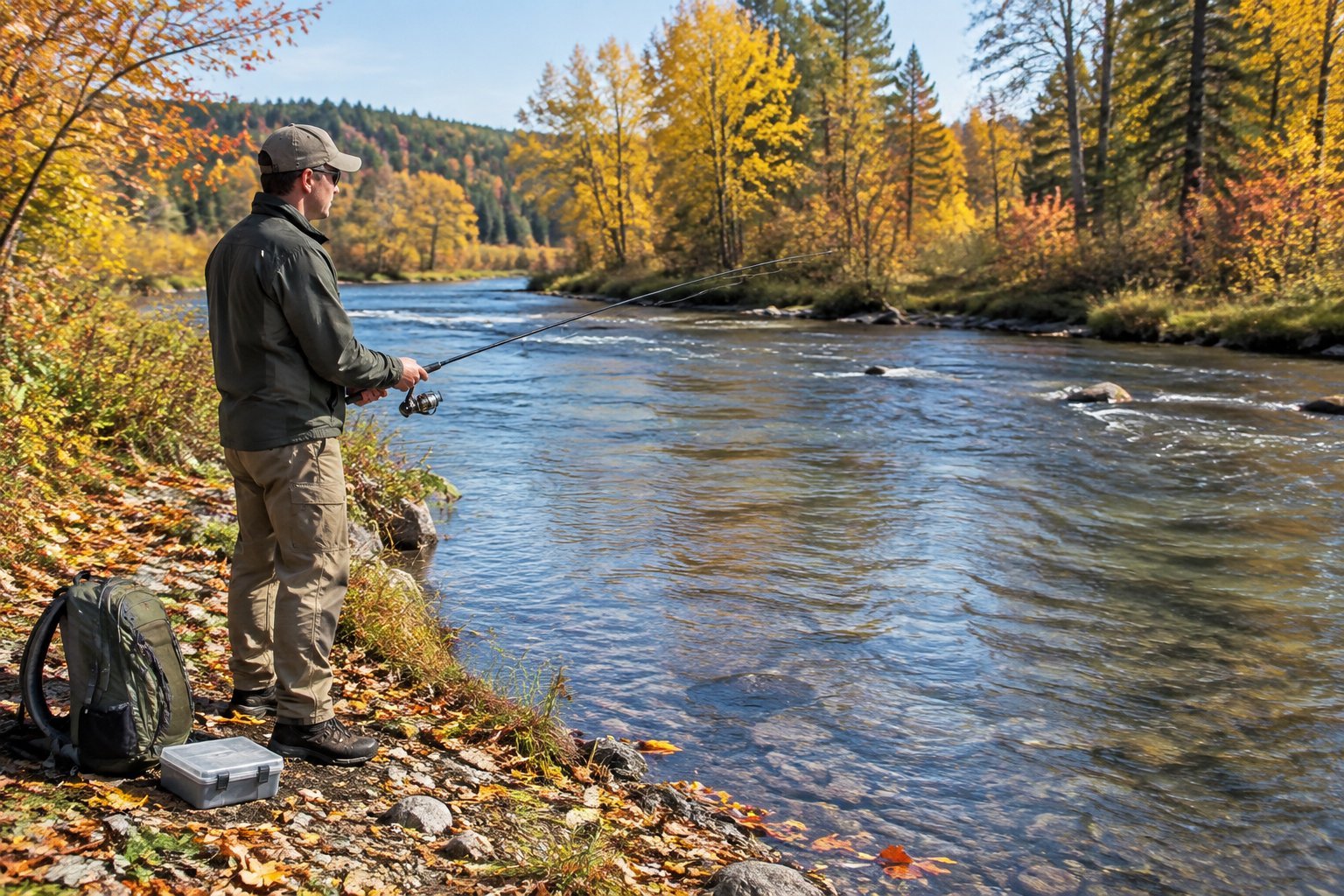
A simple short-trip plan is to read the water from the bank, fish one or two likely spots carefully, and carry only the gear you need. This approach fits an after-work outing or a family fishing stop without requiring a long hike or complicated setup. Choose an accessible stretch with safe footing and legal access before you leave.
Spend a Few Minutes Reading the Water
Pause at the bank before you cast. Look for riffle tails, current seams, shaded edges, deeper pockets, and signs of rising fish. Check for redds or unsafe footing, then select a spot where you can reach the water without stepping through sensitive gravel.
Start with a presentation that fits what you see. Use a small lure or bait for a straightforward drift, or choose a dry fly if trout are rising. Give the first likely lane a few careful casts before shifting your angle.
Fish One or Two Likely Spots Before Moving
Work one productive-looking stretch thoroughly. Fan casts across the seam or pool edge, changing your distance and angle to cover the water without crossing the same fish repeatedly. If you get a follow or a bite, repeat the successful presentation with a small adjustment to depth or retrieve.
When a spot shows no signs of activity, move a short distance to the next likely holding area. Fishing one or two spots deliberately keeps a quick outing focused and reduces time spent walking back and forth. For a timed outing, use this guide to catch fish quickly in 30 minutes.
Pack a Small Kit for an After-Work or Family Outing
Keep a compact kit in your vehicle or day pack so you can head out with less preparation. Bring your rod, a small tackle box or fly wallet, water, a warm layer, and basic tools for removing hooks. Add a headlamp if you expect to fish near dusk, and carry a phone for maps and emergency contact.
For an outing with kids, choose a safe bank with room to cast and keep the setup simple. Check that every angler has the right license for the water, and bring snacks if the trip overlaps a meal. Get your gear ready and explore the related beginner-friendly guides before your next trip.