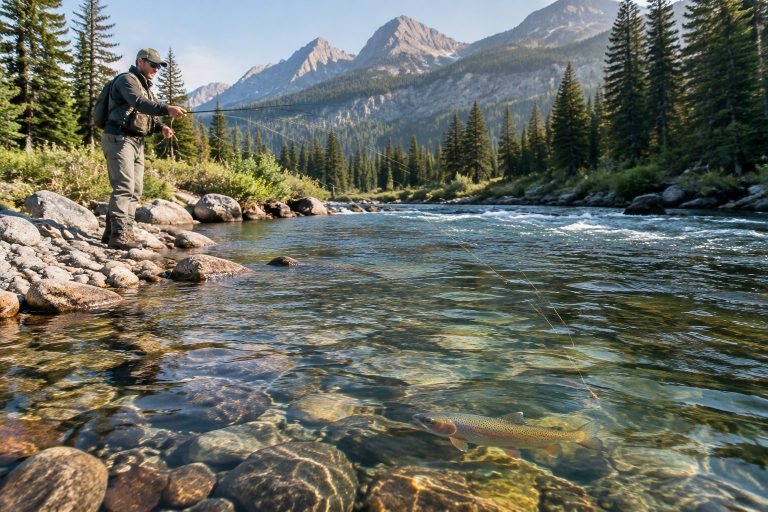
You can catch walleye from shore by casting a jig with a soft plastic near a drop-off, rocky point, weed line, or river current seam, especially at dawn, dusk, or after dark. A spinning rod and a small selection of jigs, plastics, and live bait are enough to make a focused trip productive without a boat or a large tackle kit.
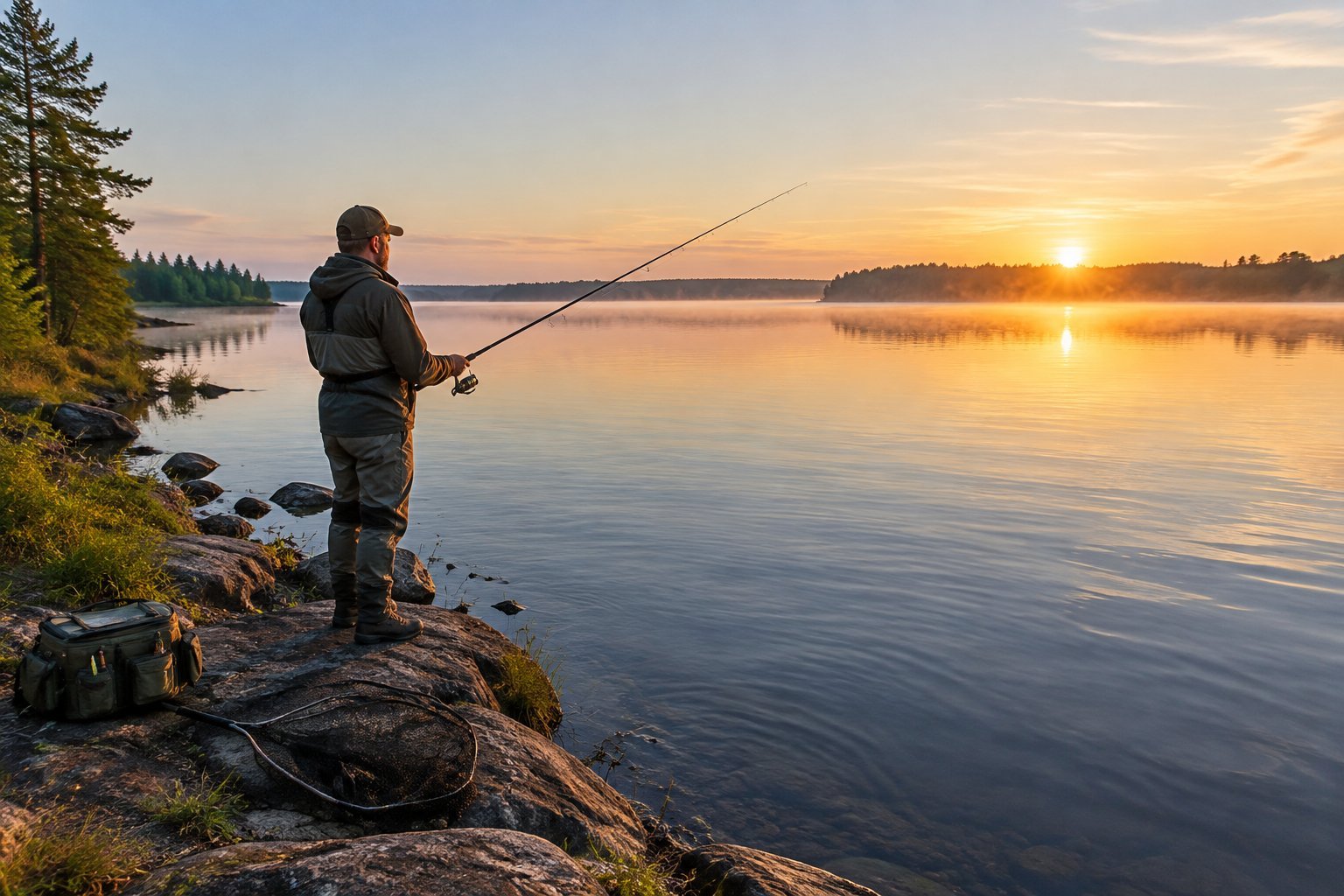
When your free time fits between work and family plans, choose water you can reach quickly and bring one versatile setup. Start with a few casts along the shoreline structure, then adjust your depth or bait based on what the water shows you.
Where Should You Look for Walleye From Shore?
Look for walleye where shallow feeding areas meet deeper water, hard structure, or moving water. Drop-offs, rocky points, weed lines, spillways, and current seams give you reachable places to search for baitfish and feeding fish.
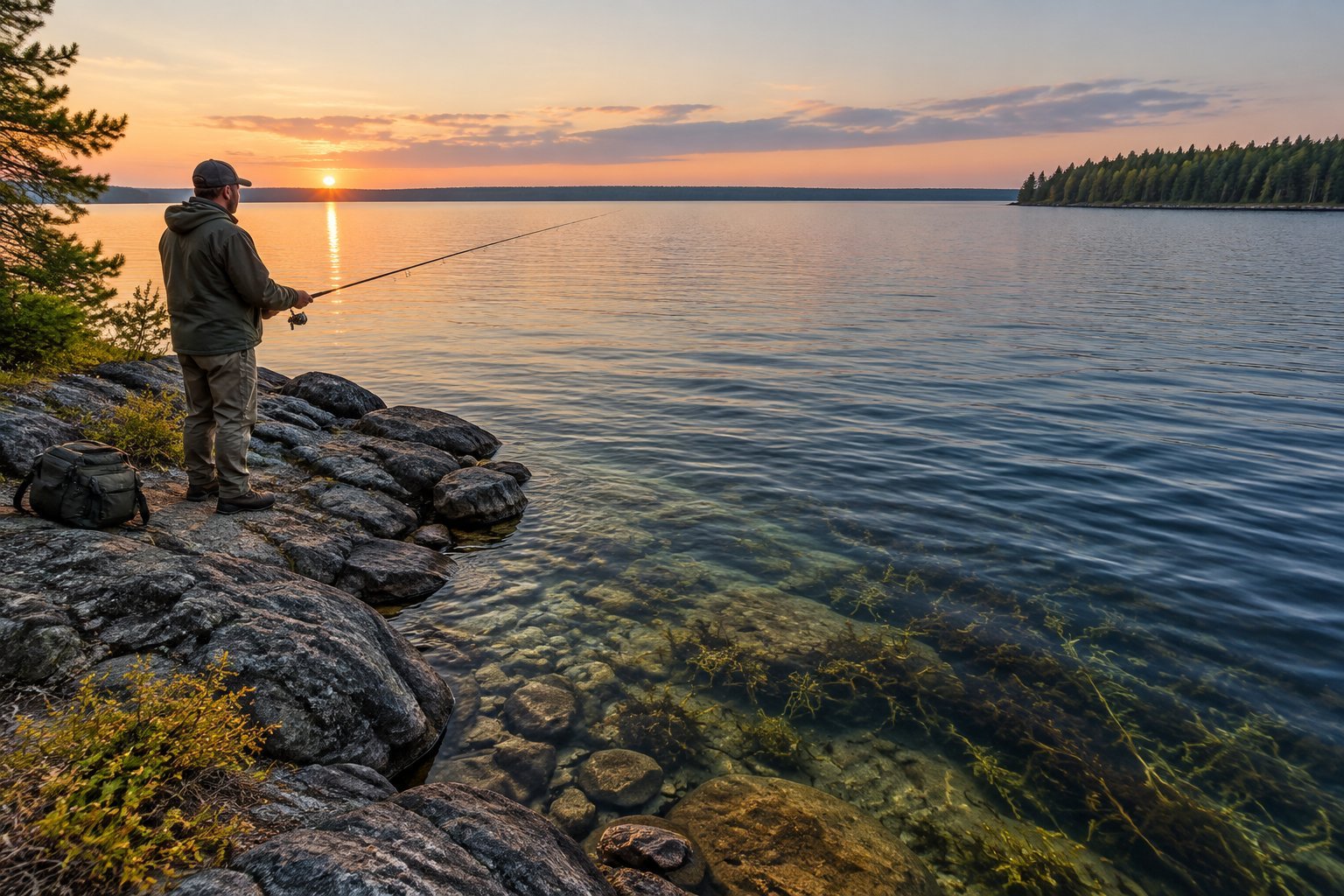
Lake and Reservoir Edges: Drop-Offs, Points, and Weed Lines
On lakes and reservoirs, start at a point that reaches toward deeper water or a shoreline with a noticeable depth change. Walleye can move along these edges to feed, so cast across the drop-off and then parallel to it to cover more of the travel route.
Rocky shorelines and riprap banks offer firm structure and places where baitfish gather. Weed lines are another useful target, especially where weeds end near open water. Work the edge with a slow jig retrieve or a minnow-style lure, keeping your casts close to the structure before trying farther out.
A public pier, causeway, or accessible bank near a creek mouth can make the search easier. Check local access rules and fishing regulations before you go, and choose a spot with room to cast safely.
River Spots: Spillways, Riprap, and Current Seams
In rivers, look near spillways, bridge areas, and riprap where current creates a mix of fast and slow water. Walleye can hold in calmer water beside stronger flow, then move into the current to feed.
A current seam is the visible boundary between faster and slower water. Cast so your lure reaches the edge and moves naturally along it. If you fish near a dam or spillway, stay behind posted barriers and away from unstable banks or strong currents.
Riprap along riverbanks and dams provides structure within casting distance. Use a jig that lets you feel the bottom without dragging it through rocks too aggressively; a slow lift and drop helps you notice bites while reducing snags.
How to Read Moving Water and Find Baitfish
Watch the surface before you cast. Foam lines, small eddies, and ripples behind rocks can show where current slows, while dimpling or fleeing baitfish can point you toward active feeding water.
Shad and minnows gather where current carries food or where structure offers shelter. Cast around those areas, then vary your angle so the lure crosses the current seam. If the water looks empty, move along the bank and try the next visible change in depth, flow, or cover.
When Is the Best Time to Fish From Shore?
Dawn, dusk, and nighttime give you strong shore-fishing windows because walleye often move shallow to feed in lower light. Seasonal movement and wind can also bring baitfish within casting range.
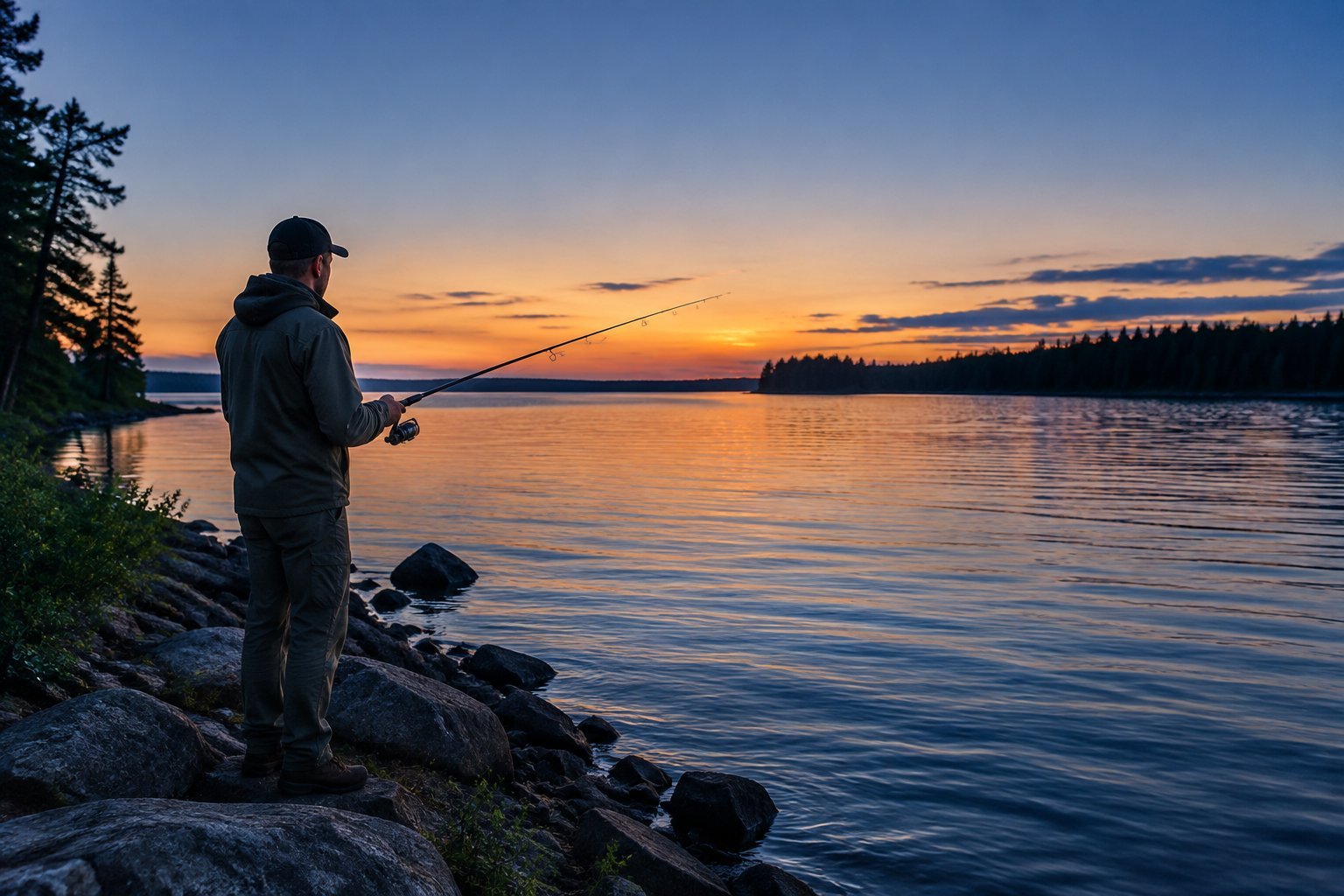
Dawn, Dusk, and Night Fishing Windows
The best time of day to fish for walleye from shore is often near sunrise or sunset, when low light supports shallow feeding. Arrive early enough to set up before the light fades, then cast along edges that connect shallow water to a deeper route.
Night fishing can extend that window, particularly around rocky banks, piers, or current. Use a lure you can track by feel, keep your footing secure, and carry a headlamp for tying knots and moving around. Avoid shining a bright light across the water while you fish.
Walleye behavior shifts with light, water conditions, and season, so a quiet shoreline may still produce during an overcast period or near moving water. For more help choosing a fishing window that fits your schedule, see these morning vs. evening fishing tips for busy anglers.
Seasonal Moves and Wind-Driven Feeding
In spring and fall, walleye may move closer to shore as they follow baitfish and seasonal feeding opportunities. During warmer periods, look for access to deeper water, weed edges, or moving water that attracts forage.
Wind can push baitfish toward a bank and disturb the water’s surface, giving walleye cover as they feed. Try the windward shoreline when conditions are safe, especially near points or rocky edges. If waves make casting or footing difficult, choose a sheltered bank where you can fish steadily.
What Gear and Simple Setups Should You Bring?
A basic spinning setup, a few jig rigs, and one live-bait option cover most beginner shore-fishing situations. Keep the tackle compact so you can walk the bank and change presentations without carrying a heavy load.
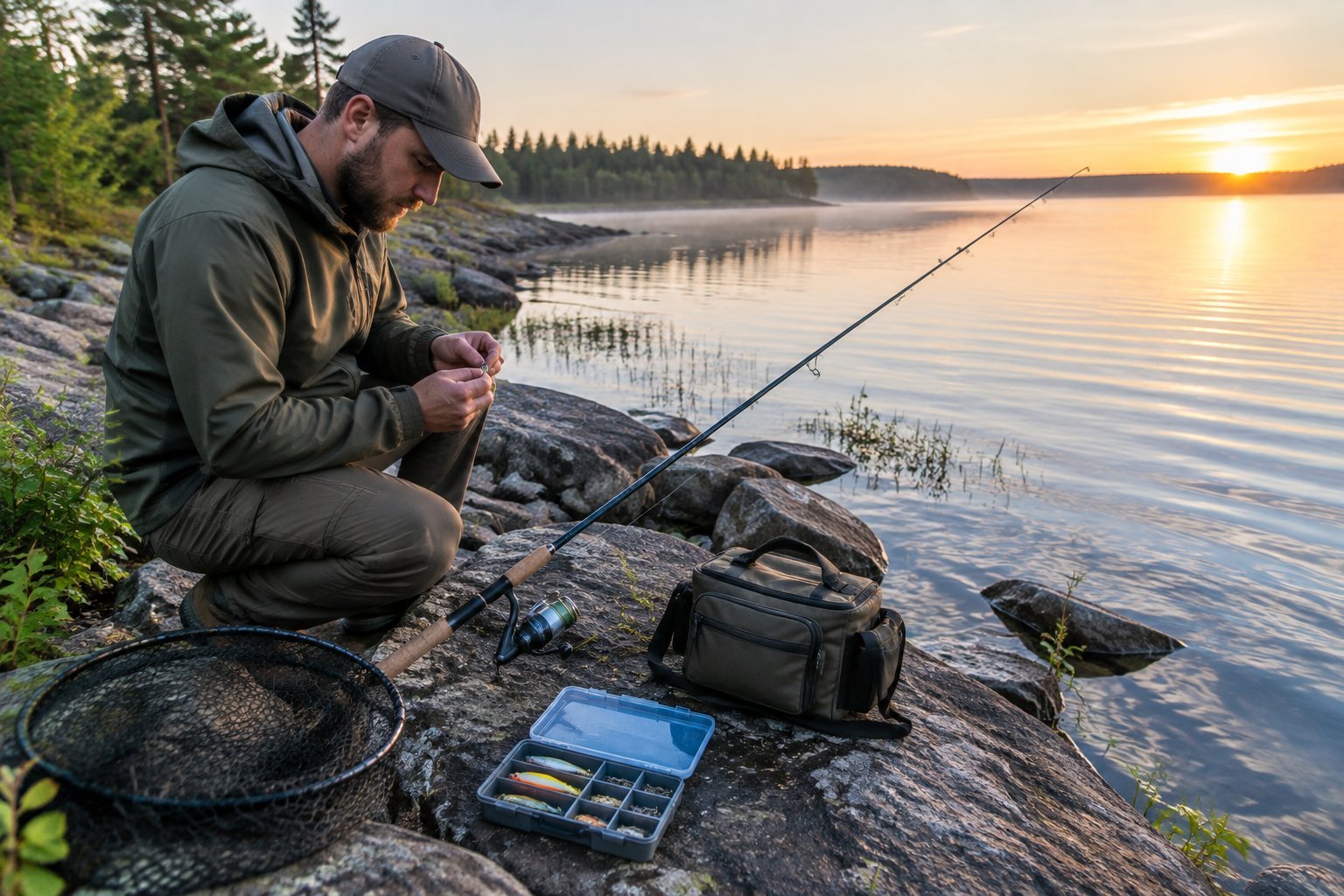
A Beginner-Friendly Spinning Rod and Reel
A medium or medium-light spinning rod paired with a spinning reel gives you a flexible setup for casting jigs, plastics, and bait rigs. Choose a length you can control comfortably around trees and crowded access points, and set the drag so a fish can pull line without breaking it.
Braided line offers sensitivity for detecting subtle contact, while a fluorocarbon leader adds a less visible section near the lure and helps around rocks. If you are new to line connections, use a knot you can tie confidently and check it before each trip.
Pack pliers, a small net, spare hooks or jig heads, and a headlamp for low-light fishing. Keep your kit organized in a compact fishing box so you can find tackle quickly.
Jig Rigs, Grubs, and Soft Plastics
A jig rig tipped with a soft plastic grub or swimbait is a practical first choice for walleye shore fishing. Cast past the target, let the jig sink, then retrieve it slowly with short lifts and pauses. Keep enough contact to sense rocks or bottom changes without letting the lure sit and snag.
Use a lighter jig in shallow or calm water and a heavier one when current or depth makes it hard to feel the lure. Snap jigging adds a sharper lift to the presentation, while a steady swim can suit a soft plastic that imitates a small baitfish. Vertical jigging works best when you can fish directly below a dock or another safe access point.
Try a small assortment of colors that match the water: natural shades in clear conditions and brighter colors when visibility is reduced. If you want more lure ideas, this guide to swimbaits for walleye explains how to choose and work them.
Slip Bobber Fishing With Live Bait
A slip bobber setup lets you suspend live bait at a chosen depth while keeping the cast manageable. Use a small hook or jig with a minnow, nightcrawler, or leech, then adjust the bobber stop so the bait sits near the fish’s feeding level.
This approach works well beside weed lines, rocky edges, and drop-offs where you can leave the bait in a productive zone. Let the bobber drift naturally when there is gentle movement, and recast if it drifts into weeds or snags.
A bottom bouncer rig can help keep bait near the bottom in open water, though rocks and shoreline obstacles can catch it. For a simple bank setup, a slip bobber is easier to control around shallow cover.
When to Try Crankbaits, Jerkbaits, or Spinners
Use crankbaits or jerkbaits when walleye are actively chasing baitfish and you want to search a longer stretch of shoreline. Cast parallel to the bank to keep the lure in a consistent depth range, then use a steady retrieve with occasional pauses.
Spinners and a spinner worm harness add flash and vibration, useful when moving water or stained conditions reduce visibility. Keep your retrieve controlled near weeds and rocks to limit snags. For more detail on lure selection, see this walleye crankbait guide.
How Can You Make a Short After-Work Trip Count?
For a short trip, choose a familiar access point with nearby structure and bring one rod plus a compact tackle kit. A plan that focuses on a single productive stretch helps you spend your available time fishing instead of sorting gear.
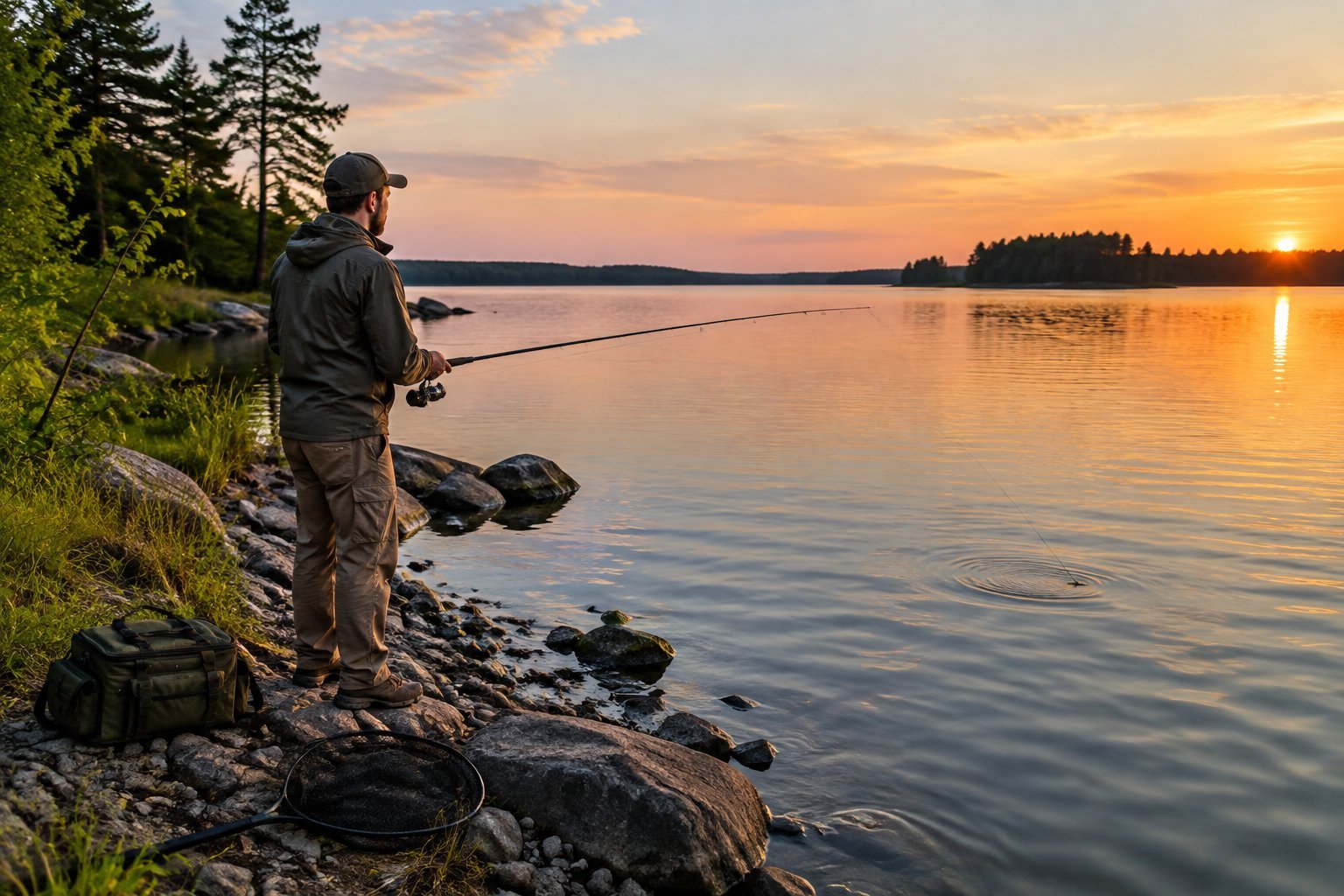
Choose Accessible Water and Pack a Small Tackle Kit
Pick a public shoreline, pier, or riverbank where you can park nearby and reach the water safely. Before leaving, check access hours, local regulations, and current conditions so your fishing window goes toward casting.
Pack your spinning rod, a handful of jig heads, two or three soft plastics, a slip bobber, hooks, and live bait if you plan to use it. Add pliers, a small net, a flashlight, and a bag for any line or litter you need to carry out.
The best bait for walleye depends on the conditions and the presentation you want. A minnow or nightcrawler under a slip bobber is straightforward, while a jig and plastic lets you cover water with fewer stops.
Cover the Shoreline Efficiently and Adjust Your Presentation
Begin with casts across likely structure, then work parallel to the bank to test the same depth over a longer stretch. Make a few deliberate casts at each angle; if you get no signs of fish, move to the next point, weed edge, or current seam.
Change one factor at a time. Slow the retrieve, adjust jig weight, or switch from a moving lure to live bait. If you feel repeated contact with rocks, lift the rod tip and retrieve more gently to reduce snags.
A short trip benefits from a simple routine: fish the most promising edge during the low-light window, keep track of where bites or baitfish appear, and leave enough time to pack up safely.
Use Waders Carefully and Land Fish Safely
Waders can help you reach a casting angle from a gradual, familiar shoreline, but they do not make deep or fast water safe. Check the bottom with each step, avoid steep banks and strong current, and stay out of the water when footing or visibility is poor.
Keep a net within reach before you cast, especially when fishing alone or in low light. Guide the fish toward shallow, stable ground, wet your hands before handling it, and follow local size and possession limits if you plan to keep it.
Frequently Asked Questions
Shore walleye fishing works best when you match your access point, timing, and presentation to the water. These answers cover common questions about bait, rigs, nighttime fishing, and Lake Erie.
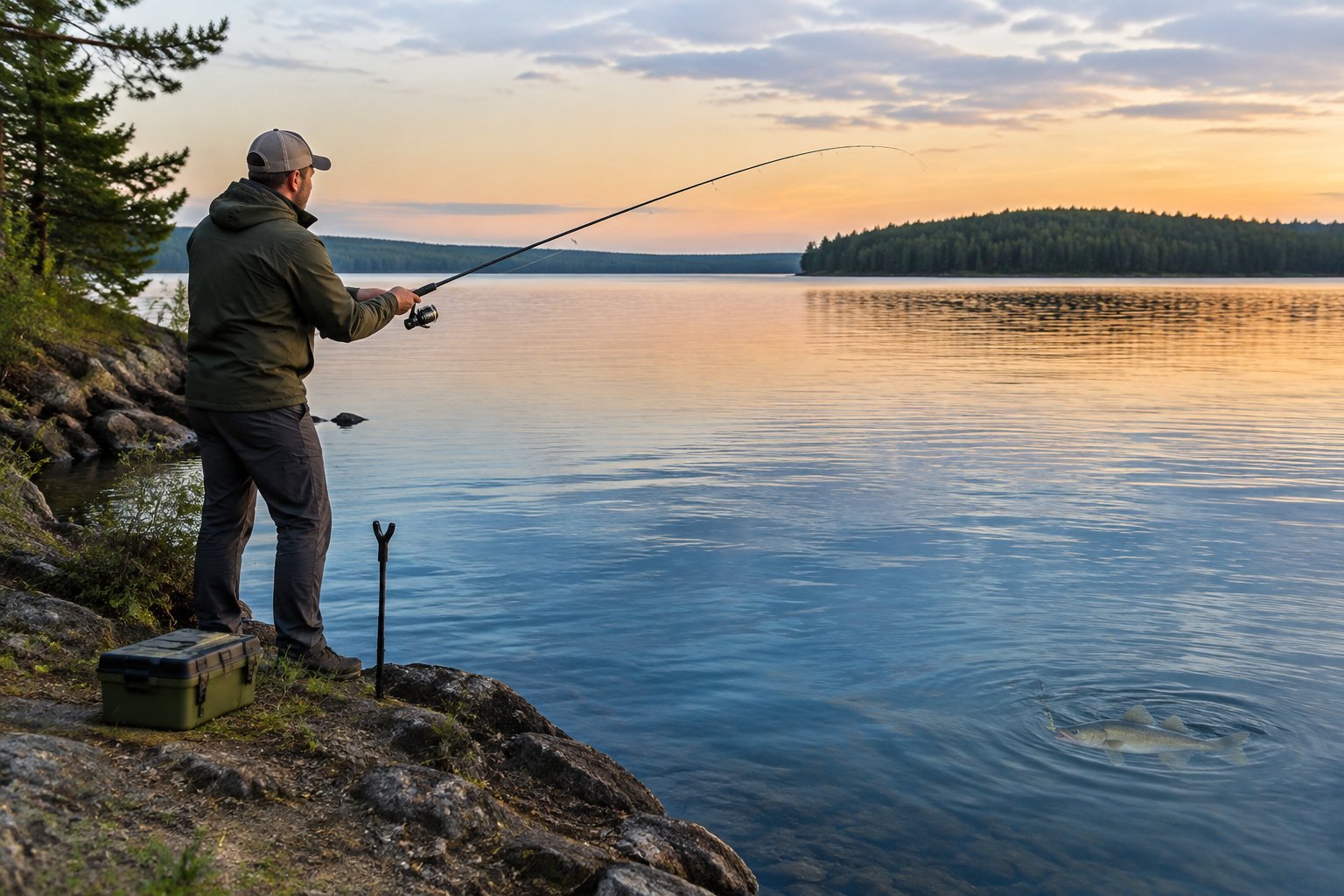
Is it possible to catch walleye from shore?
Yes, you can catch walleye from shore by fishing drop-offs, rocky points, weed edges, and moving water where fish can feed within casting distance. Low-light periods and seasonal movements can bring them closer to accessible banks.
What is the best bait to use for catching walleye from shore?
Minnows, nightcrawlers, and leeches are useful live-bait choices for shore walleye fishing. Pair them with a slip bobber when you want to hold bait at a set depth, or use a jig with a soft plastic when you want to search the shoreline.
What is the best rig for shore fishing walleyes?
A jig rig is a versatile starting point because you can cast it around rocky edges, points, and weed lines. Choose a slip bobber setup when you want to suspend live bait at a specific depth.
How do you catch walleye from shore at night?
Fish a rocky bank, point, or current edge after dark with a jig, shallow-running hardbait, or live bait under a slip bobber. Keep your retrieve controlled, use a headlamp when moving, and remain on safe, familiar ground.
Can you catch walleye from shore on Lake Erie?
Yes, Lake Erie shore access can give you opportunities to catch walleye near piers, rocky points, breakwalls, and other areas where structure or baitfish are present. Check local regulations, access rules, and weather before choosing a location, since conditions along the lake can change quickly.
Get your gear ready and explore the related beginner-friendly guides before your next trip.