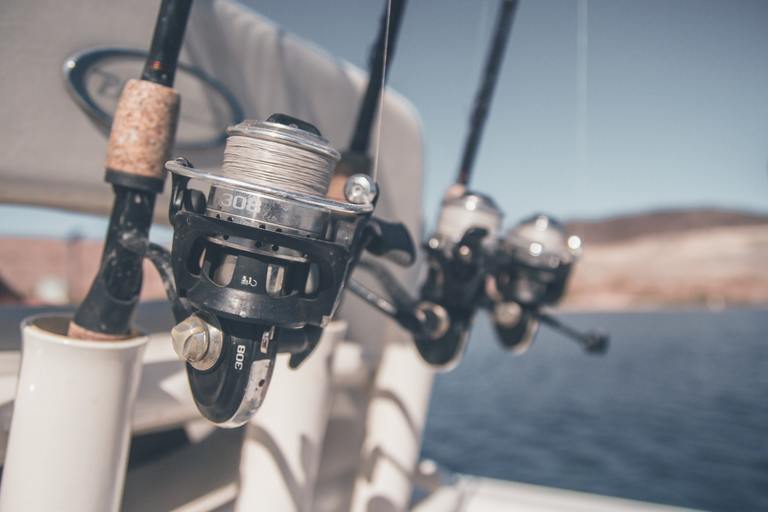
The pheasant tail nymph is one of the most useful flies for trout because its slim profile resembles many mayfly nymphs moving along the streambed. It is inexpensive to carry, easy to fish, and effective in rivers, spring creeks, and stillwaters.
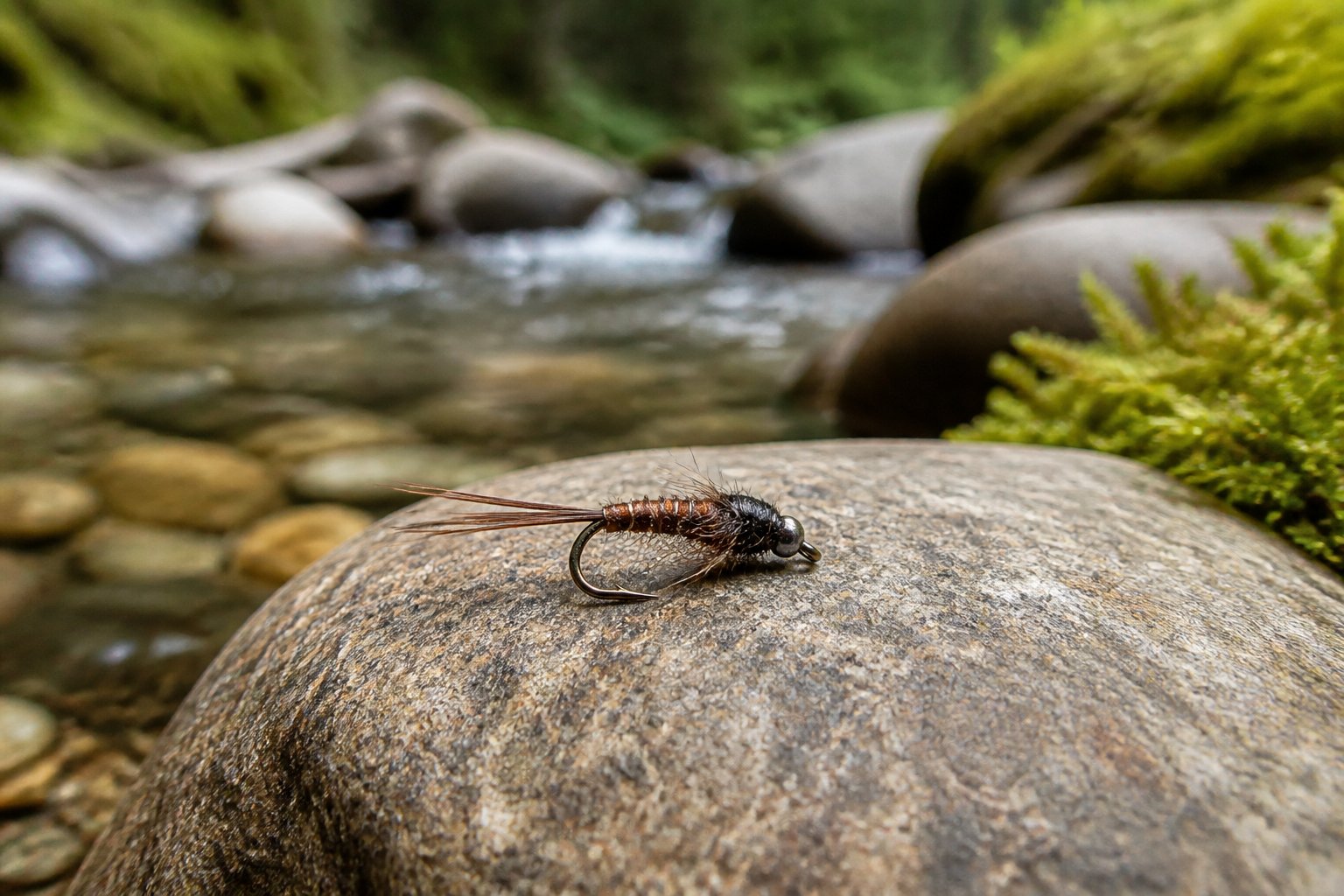
A small selection of weighted and unweighted PTN flies gives beginners a reliable way to reach trout feeding below the surface. With a simple nymph rig, controlled depth, and a drag-free drift, a short after-work session can produce productive fly fishing without a large fly box.
What the Pheasant Tail Nymph Imitates and When to Use It
The pheasant tail nymph imitates slender mayfly nymphs, especially Baetis, blue-winged olives, and smaller PMD nymphs. Its brown fibers, fine body, and dark thorax resemble many aquatic nymphs during the nymph stage.
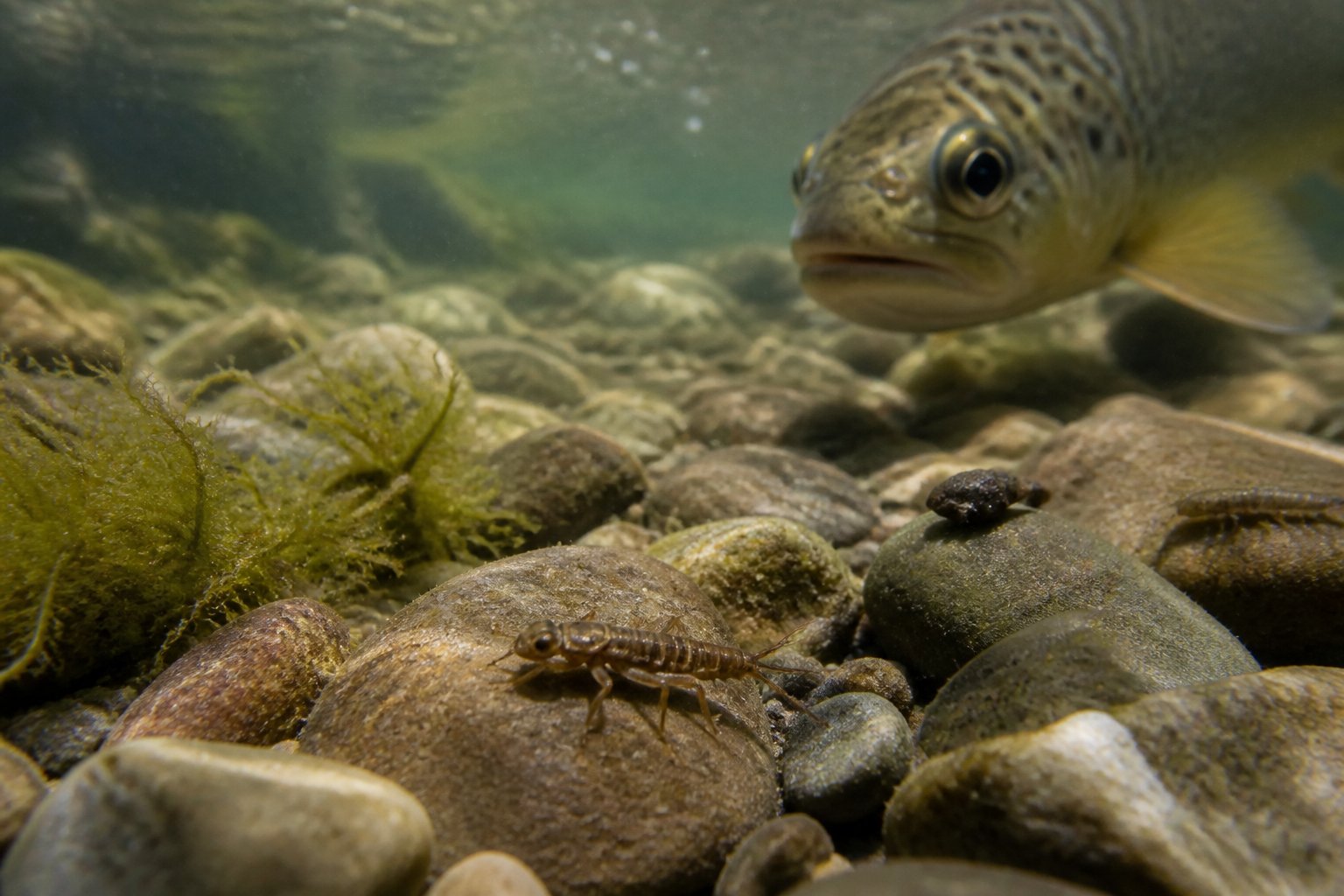
A PTN works when trout are feeding on natural nymphs near the bottom, even when no visible hatch appears. It supports practical matching the hatch because the pattern suggests several mayfly species without requiring an exact imitation.
Why Trout Eat This Slim Mayfly Imitation
The pattern has a narrow silhouette, subtle segmentation, and a dark thorax. Those features match the compact shape of Baetis and other olives that move through current.
A sparse PTN is particularly effective in clear water. Trout see the fly as a small food item while the simple profile avoids excessive flash.
Best Water, Seasons, and Conditions for a PTN
The fly performs well in riffles, runs, pocket water, and the edges of fast water. It also works in stillwaters when trout patrol near weed beds, drop-offs, or submerged structure.
Spring and fall are strong seasons because Baetis and blue-winged olives remain important food sources. During summer, a smaller PTN fishes well in cool mornings, shaded runs, and deeper pools.
Choosing the Right Size and Weight
Carry sizes 14 through 20, with size 16 as a useful starting point for many trout streams. Move to size 18 or 20 when the water is low, clear, or filled with small olives.
Use a beadhead or added weight when the strike zone is deep or current is strong. Choose an unweighted fly for shallow riffles, calm water, or a dry-dropper presentation.
Set Up a Simple Pheasant Tail Nymph Rig
A strike-indicator rig gives beginners the clearest way to control a PTN, while a dry-dropper rig helps cover shallow water with one visible fly. The essential pieces are a floating line, tapered leader, light tippet, and enough weight to place the nymph near the strike zone.
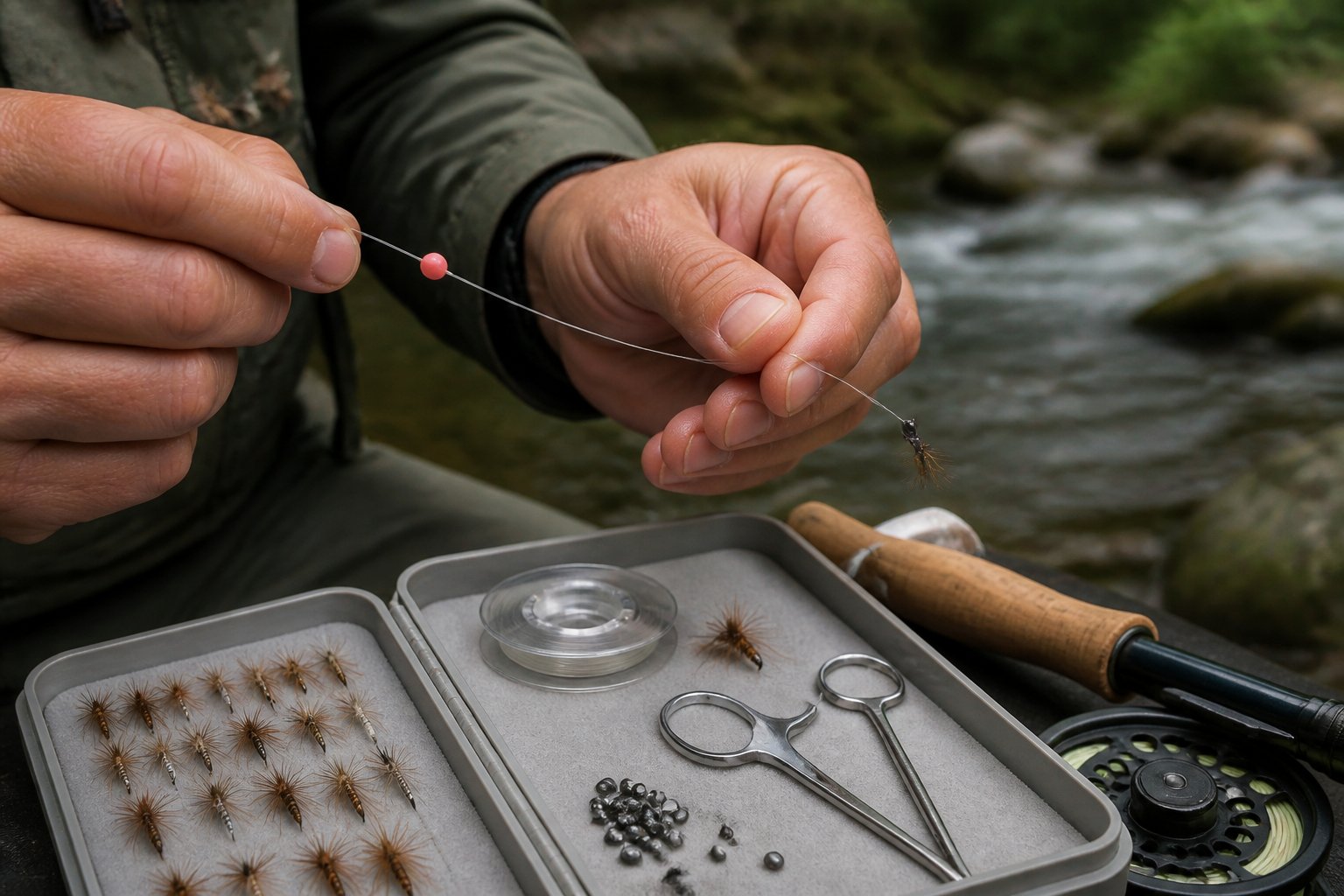
The Easiest Strike-Indicator Setup for Beginners
Attach a 9-foot leader to the fly line and add 18 to 30 inches of 4X or 5X tippet. Place the strike indicator above the tippet connection, then tie on a size 14 to 18 PTN with an improved clinch knot.
Add a small split shot several inches above the fly when the pattern fails to reach the bottom third of the water column. Start with one small shot and adjust after a few casts.
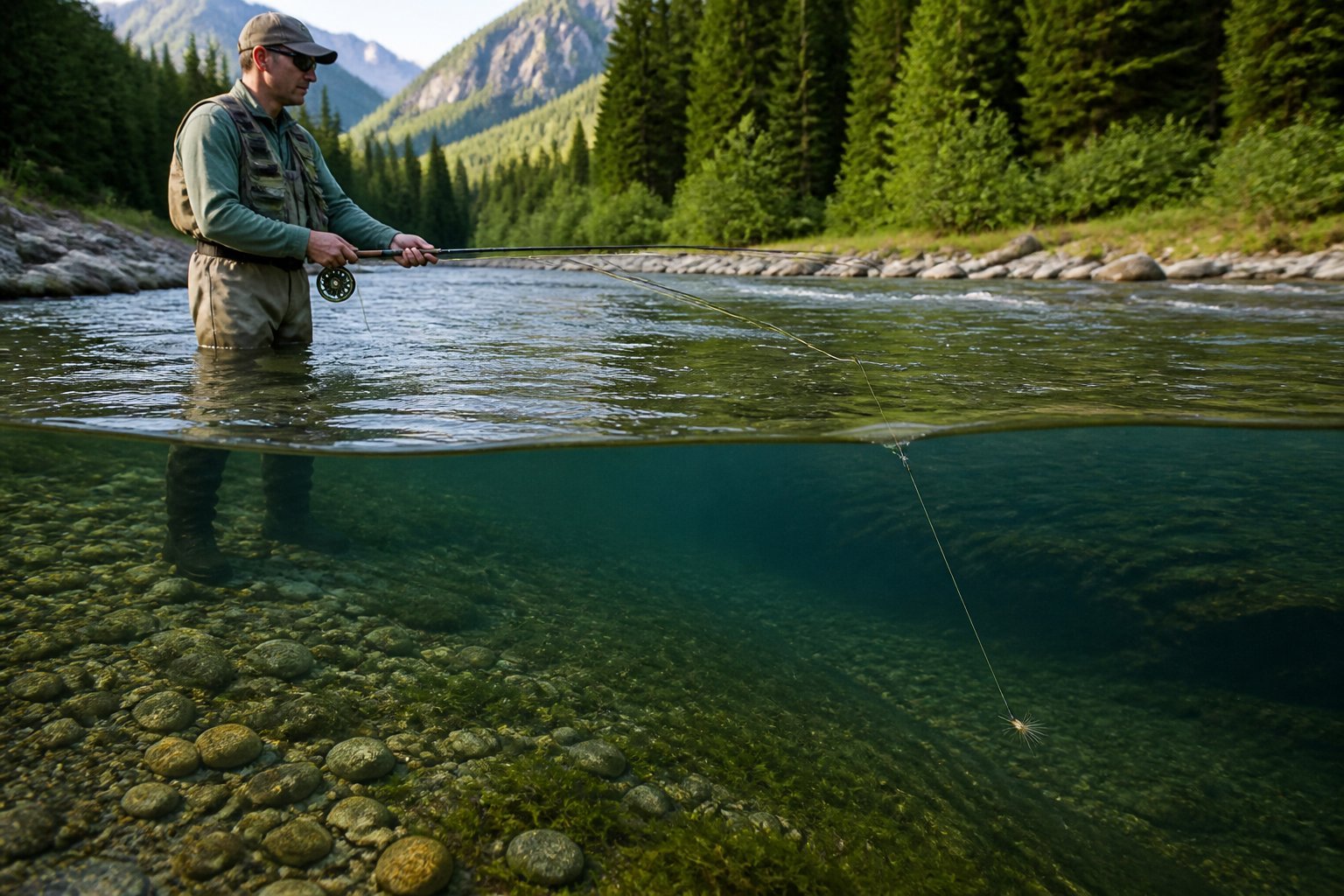
Set the indicator depth at roughly one and a half times the water depth. Increase the distance when the fly drifts above the strike zone, then shorten it when the fly hangs on the bottom.
How to Fish a PTN on a Dry-Dropper Rig
Tie a buoyant dry fly to the leader and attach 18 to 24 inches of tippet from the dry fly’s bend to the PTN. The dry fly acts as both an attractor and a strike indicator.
This setup suits shallow riffles, pocket water, and edges where a heavy nymph would snag. Use a smaller unweighted or lightly weighted PTN so the dry fly remains visible.
When to Use a Two-Fly Dropper Rig
A two-fly dropper rig helps test different depths, sizes, or colors during a short fishing session. Place the heavier or larger nymph on the point and a smaller PTN above it.
Check local regulations before fishing two flies. Keep the rig manageable by spacing the flies about 16 to 24 inches apart, and replace tangled tippet before making another cast.
How to Get the Fly to the Right Depth and Drift
Depth comes from the combined effect of bead weight, split shot, leader length, current speed, and casting angle. The PTN should travel close to the streambed while maintaining enough separation to reduce constant snags.
Tungsten Bead, Brass Bead, or Unweighted PTN?
A tungsten bead reaches depth fastest and suits deep runs or moving water. A brass bead sinks at a moderate rate and provides a versatile choice for everyday trout fishing.
An unweighted PTN lands softly and works in shallow water, stillwaters, and dry-dropper rigs. A beadhead pheasant tail nymph is a practical first choice when the bottom sits more than a few feet below the surface.
How to Achieve a Drag-Free Drift
Cast slightly upstream and mend the line so the current carries the fly at the same speed as nearby bubbles. Keep the rod tip high enough to reduce line contact with the surface.
Follow the indicator or leader with the rod tip and lift into a take with a smooth motion. A sudden pull often moves the fly away before the hook penetrates.
The Induced Take for Emerging Insects
An induced take imitates a nymph rising toward the surface. At the end of a dead drift, lift the rod tip gradually and allow the PTN to rise a few inches before making the next cast.
This technique helps when trout feed on emerging insects. It also works with a lighter fly or wet fly presentation near the edge of the current.
Simple Adjustments for Rivers and Stillwater
In rivers, add weight or increase leader depth when the fly passes too high above the bottom. Shorten the rig and reduce weight when repeated casts stop on rocks.
In stillwaters, allow the fly to sink on a counted-down line and retrieve it with slow, six-inch pulls. Pause between strips so the nymph can settle into the strike zone.
Pheasant Tail Nymph Variations Worth Carrying
A compact fly box should include sparse Sawyer patterns, visible flashback flies, and weighted jig versions. Each variation addresses a specific need, from clear chalk streams to deep pocket water.
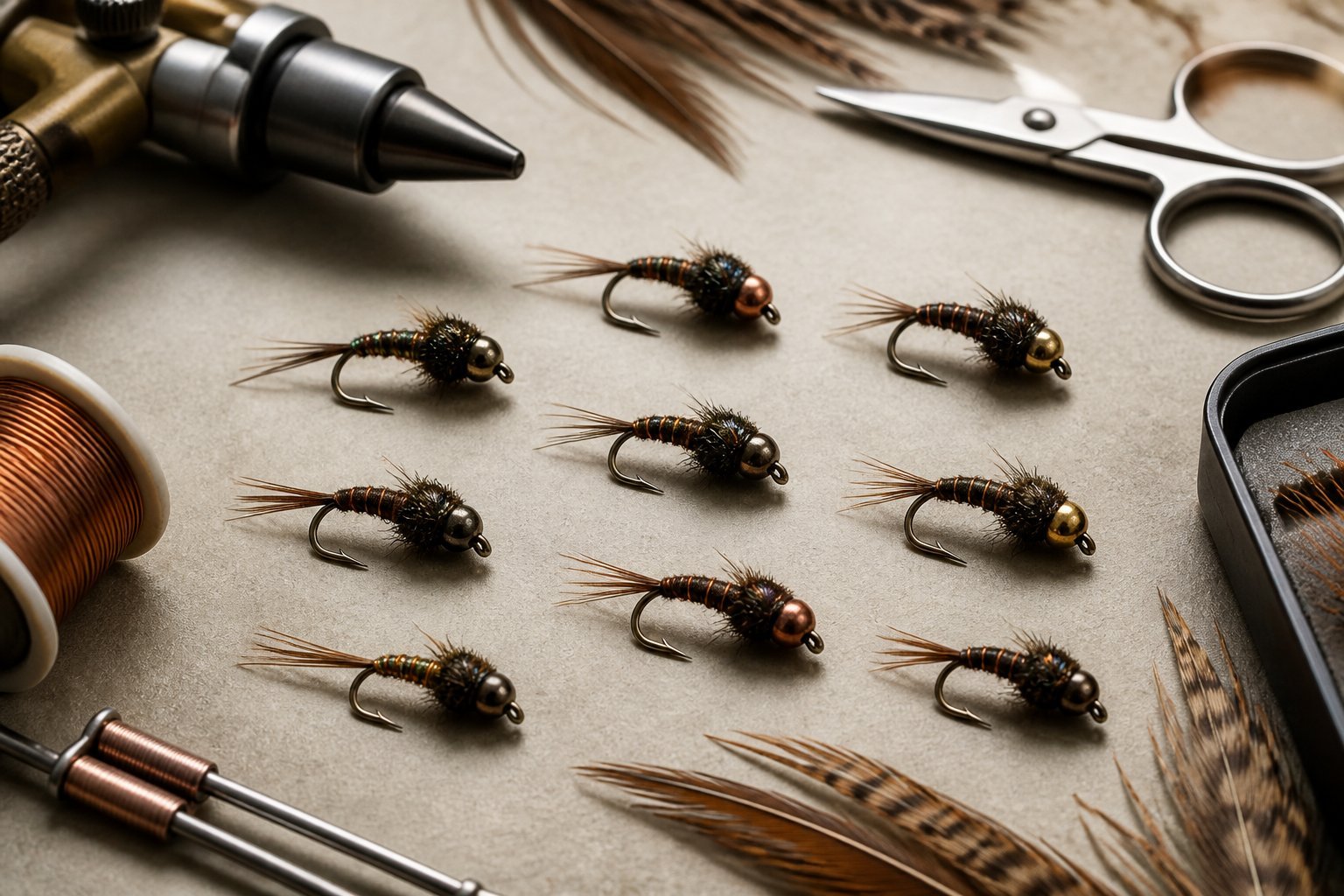
Classic Sawyer’s PTN for Clear, Shallow Water
Frank Sawyer developed the original pattern for the River Avon in Wiltshire, England. The classic version uses pheasant tail fibers and fine copper wire, creating a slim fly associated with chalk streams.
Fish this sparse pattern in clear, shallow water where trout inspect every detail. Its minimal dressing sinks gently and presents a subdued profile.
Flashback and Beadhead Versions for Visibility and Depth
A flashback pheasant tail adds pearl mylar or mirage opal tinsel across the wing case. A small strip of flashabou or tinsel helps the fly remain visible in deeper water and suggests a nymph beginning to emerge.
An opal throat PTN adds a bright trigger below the thorax. Gold wire and a brass bead add segmentation and weight when the fly must reach deeper water quickly.
Jig Nymphs for Euro Nymphing
A Frenchie uses a jig hook, a slotted bead, hot thread, and a pheasant tail or similar body. Its curved hook point rides upward, reducing snags during euro nymphing and Czech nymphing.
Carry sizes 12 through 16 for heavier current and larger trout. Use a lighter jig nymph when fishing short, tight-line drifts through shallow runs.
Beginner Troubleshooting and a Practical PTN Fly Box
Most beginner problems come from poor depth, drag, or missed strike detection. A small fly box with several weights and sizes solves more fishing problems than carrying dozens of unrelated fly patterns.
Why You Are Not Detecting Takes
Set the indicator close to the fly’s expected depth and watch for pauses, dips, sideways movement, or any change in speed. Trout frequently take a PTN without producing a dramatic strike.
Keep slack off the water while preserving a natural drift. If the indicator remains perfectly still in moving water, check for a snag or reset the cast.
Fixing Snags, Drag, and Flies That Will Not Sink
Reduce leader depth, remove split shot, or switch to a lighter fly when the PTN catches bottom repeatedly. Move the indicator farther from the fly and add weight when the nymph drifts above feeding trout.
Mend upstream immediately after the cast to reduce drag. Replace a damaged tippet section and check the knot after each hard snag.
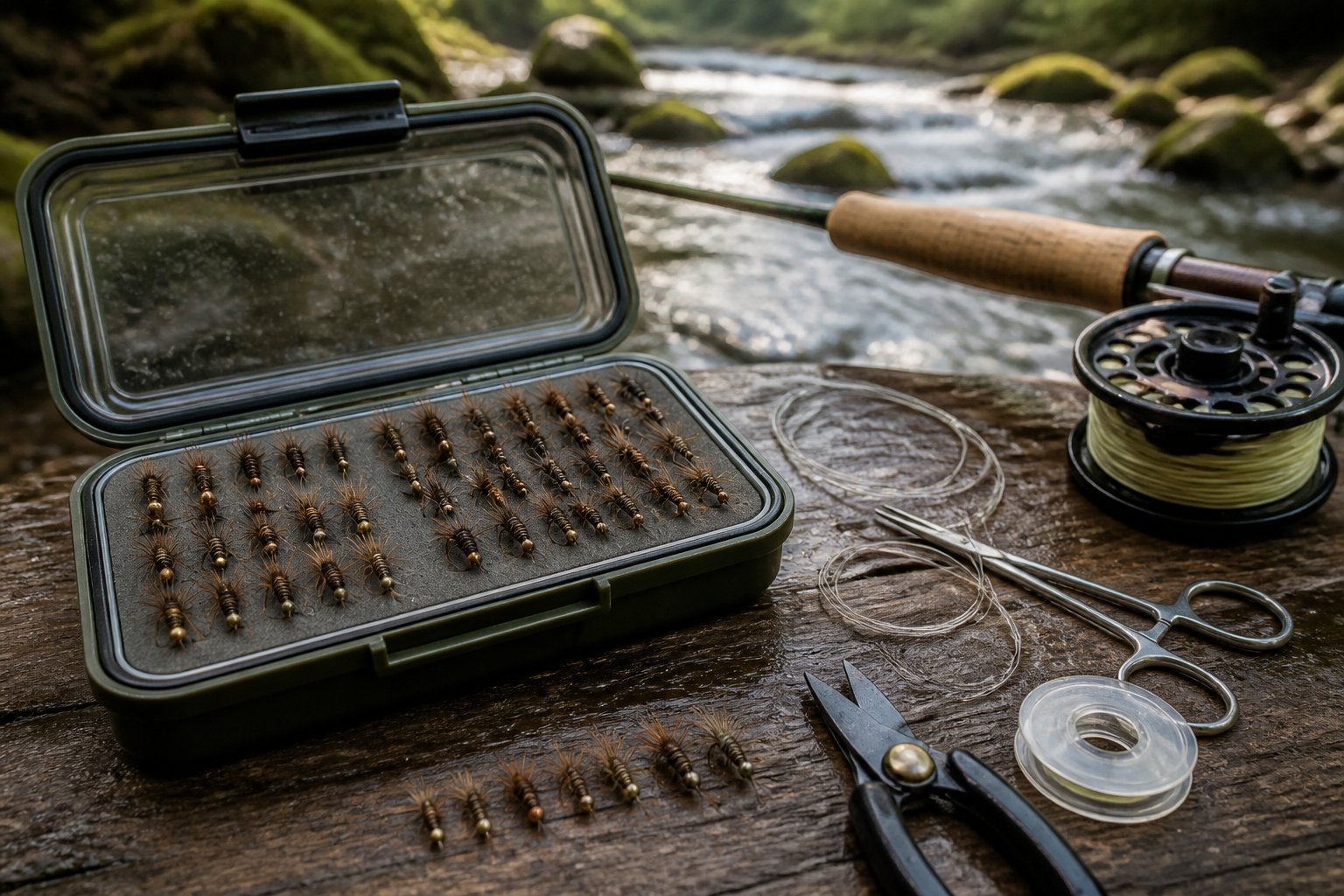
A Small PTN Selection for Quick Trips
A practical starter box includes:
- Six unweighted PTNs in sizes 16 and 18
- Four brass-bead PTNs in sizes 14 and 16
- Four tungsten beadheads in sizes 12 and 14
- Two flashback PTNs in sizes 16 and 18
- Two jig-style Frenchies in sizes 14 and 16
Store flies by size and weight so a busy fly fisherman can select a pattern quickly before work, after work, or during a short family outing.
A Simple Nymph You Can Fish With Confidence
A sparse pheasant tail nymph is a dependable fly pattern for trout and grayling because it needs few materials and presents a slim aquatic profile. The recipe below creates a basic unweighted PTN that works in shallow rivers and as part of a dry-dropper rig.
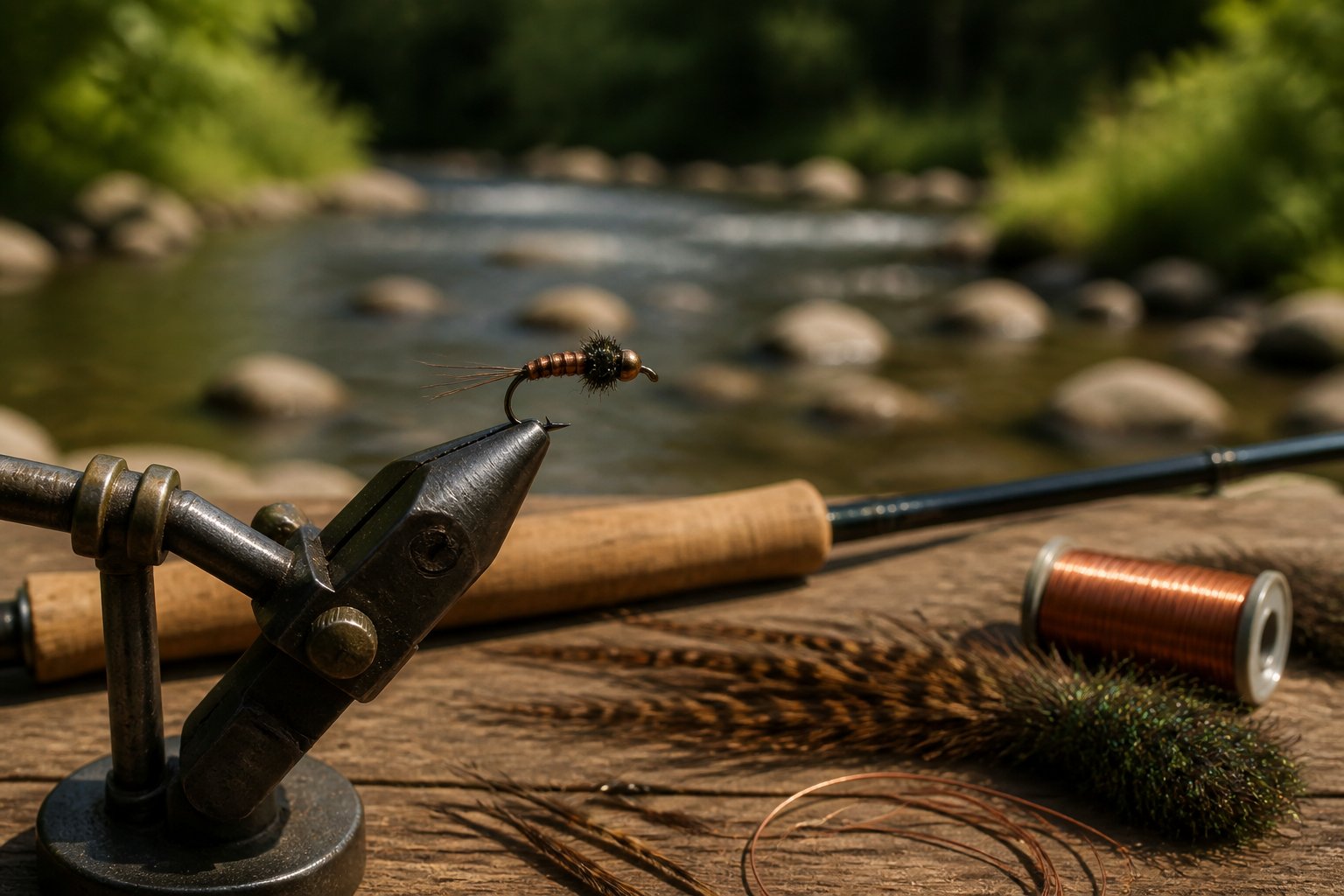
Materials
- One size 14 to 18 nymph hook
- Brown tying thread, 8/0
- Six to eight pheasant tail fibers
- Six to eight inches of fine copper wire
- Two strands of peacock herl
- Head cement or a small amount of UV resin
Method
- Secure the hook in a vise and start the tying thread behind the hook eye.
- Wrap the thread to the bend, then tie in the copper wire and pheasant tail fibers.
- Wind the tying thread forward to create a slim underbody.
- Twist the pheasant tail fibers around the thread and wrap the resulting rope toward the thorax.
- Counter-wrap the copper wire through the body to form ribbing, then secure and trim it.
- Tie in the peacock herl, make a compact thorax, and secure the herl behind the eye.
- Build a neat thread head, whip-finish, and apply a small amount of head cement or UV resin.
- Inspect the hook point and trim loose pheasant tail fibers before placing the fly in the fly box.
Frequently Asked Questions
Is the Pheasant Tail Nymph a good fly for beginners?
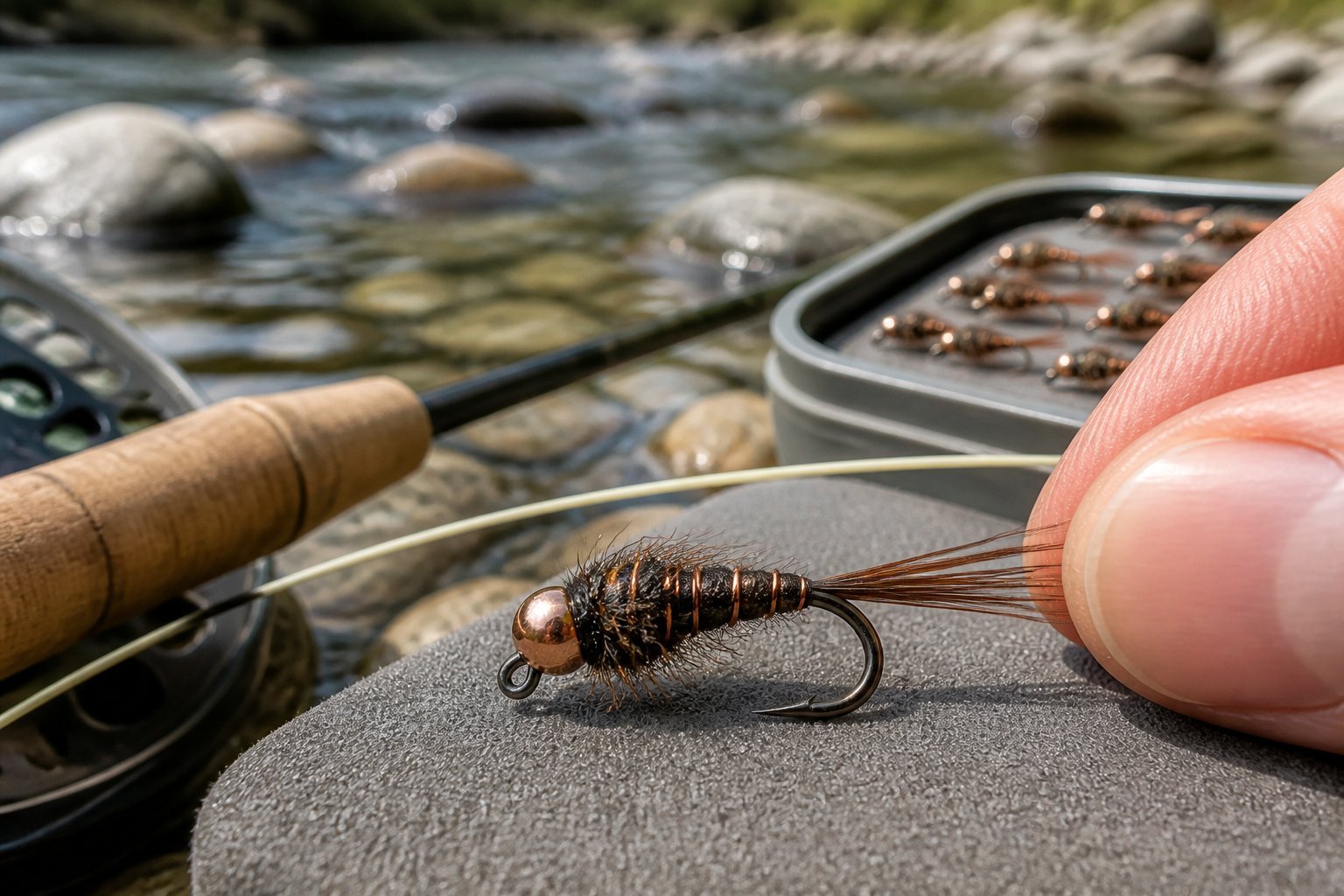
The pheasant tail nymph is an excellent beginner fly because it is easy to cast, easy to tie, and effective across many trout waters. A size 16 brass-bead version provides a useful starting point for a basic nymph rig.
What does a Pheasant Tail Nymph imitate?
A pheasant tail nymph imitates mayfly nymphs, including Baetis, blue-winged olives, and small PMDs. Its slim body also suggests other aquatic nymphs trout encounter near the streambed.
What is the best size Pheasant Tail Nymph for trout?
Size 16 is a strong first choice for trout in many rivers. Sizes 18 and 20 suit clear low water, while sizes 12 and 14 help match larger insects or reach deeper runs.
Should I use a beadhead or unweighted Pheasant Tail Nymph?
A beadhead pheasant tail nymph works best when depth and current require added weight. An unweighted PTN suits shallow water, calm pools, and a dry-dropper rig.
How deep should I fish a Pheasant Tail Nymph?
The fly should travel near the bottom third of the water column, where trout feed on drifting nymphs. Set the indicator at about one and a half times the water depth, then adjust based on snags and drift speed.
Can I fish a Pheasant Tail Nymph under a dry fly?
A pheasant tail nymph fishes effectively under a dry-dropper rig in shallow riffles and pocket water. Use 18 to 24 inches of tippet from the dry fly to the nymph and choose a buoyant dry that remains visible.