If you hold a catfish the right way, you can unhook it, show it to your kids, and let it go without a trip to urgent care. To handle a catfish safely, keep your hand behind the sharp spines on the top fin and the two side fins, support the fish’s belly with a wet hand, and keep it level and close to the water. Those three spines are the real danger, and a small channel cat can push one deep into your palm in a split second.
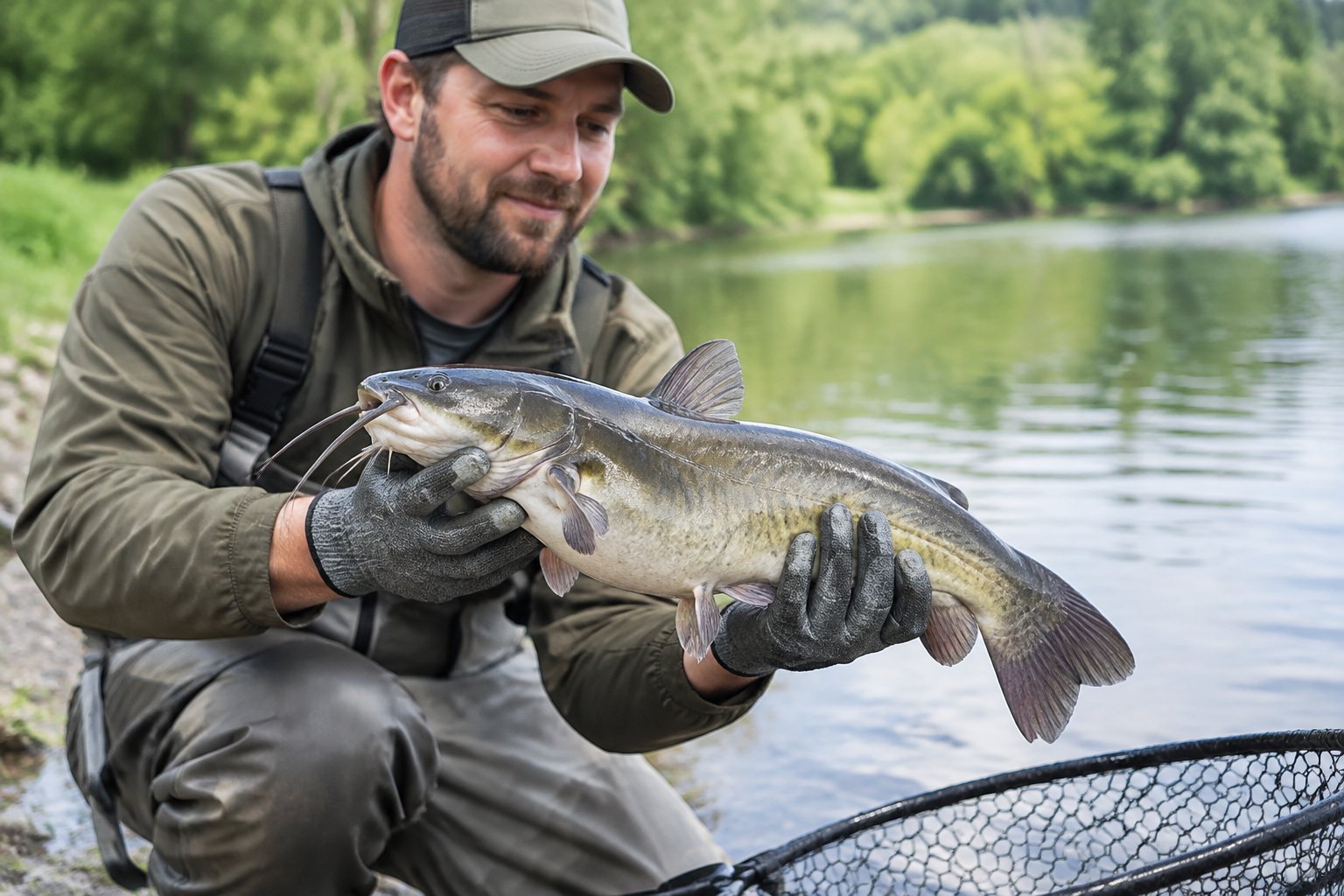
Good handling protects the fish as much as it protects you. A catfish that you hold flat, wet, and briefly swims away stronger than one that gets squeezed, dropped, or hung by its jaw. Once you know where to put your hands, every catch on a quick evening trip becomes calm and routine.
Where Should You Put Your Hands?
Your hands belong behind the spines and under the belly, never in front of the fins. Small fish fit in one hand wrapped behind the fins. Bigger channel catfish and blue catfish need two hands and a level, horizontal hold.
Locate the Fin Spines Before Reaching for the Fish
Before you touch anything, find the three spines. One sits at the front edge of the dorsal fin on the fish’s back. The other two sit at the front edge of each pectoral fin, just behind the head on either side.
When a catfish leaves the water, it locks those spines straight out. That makes them stiff and pointed right where a careless hand would grab. Take two seconds to look, especially when you catch catfish after dark or in a hurry before work.
Keep the fish in the net or on wet grass while you look. A catfish dangling from your line swings and twists, and that’s when most people get poked.
Grip Small Catfish Behind the Spines Without Squeezing
Learning how to hold a catfish starts with small fish, and they deserve extra respect. Their spines are sharper, and people grab them casually.
Follow these steps:
- Slide your hand over the back from the tail end toward the head.
- Rest the web between your thumb and pointer finger against the back edge of the dorsal spine. The spine acts as a backstop for your hand.
- Place your thumb on one side and your fingers on the other, just behind the pectoral spines.
- Close your hand with even, gentle pressure all the way around.
Hold firmly enough that the fish can’t shake its head, but don’t crush the belly. A hard squeeze hurts the fish’s organs and makes it fight harder.
Support Larger Catfish With Two Hands and Keep Them Level
Once a fish is too thick for one hand, switch to two. Place one hand behind the pectoral fins with your fingers flat, and slide the other hand under the belly toward the tail.
Keep the fish horizontal. Big blue catfish hung straight up by the jaw put heavy strain on their jaw and insides. Hold them low over the water or a wet mat so a sudden kick ends with a short, soft drop.
If you fish from the bank with a heavy catfish rig for bank fishing, plan to kneel near the water’s edge for photos and unhooking. A shorter drop protects the fish if it slips.
Which Parts of a Catfish Can Hurt You?
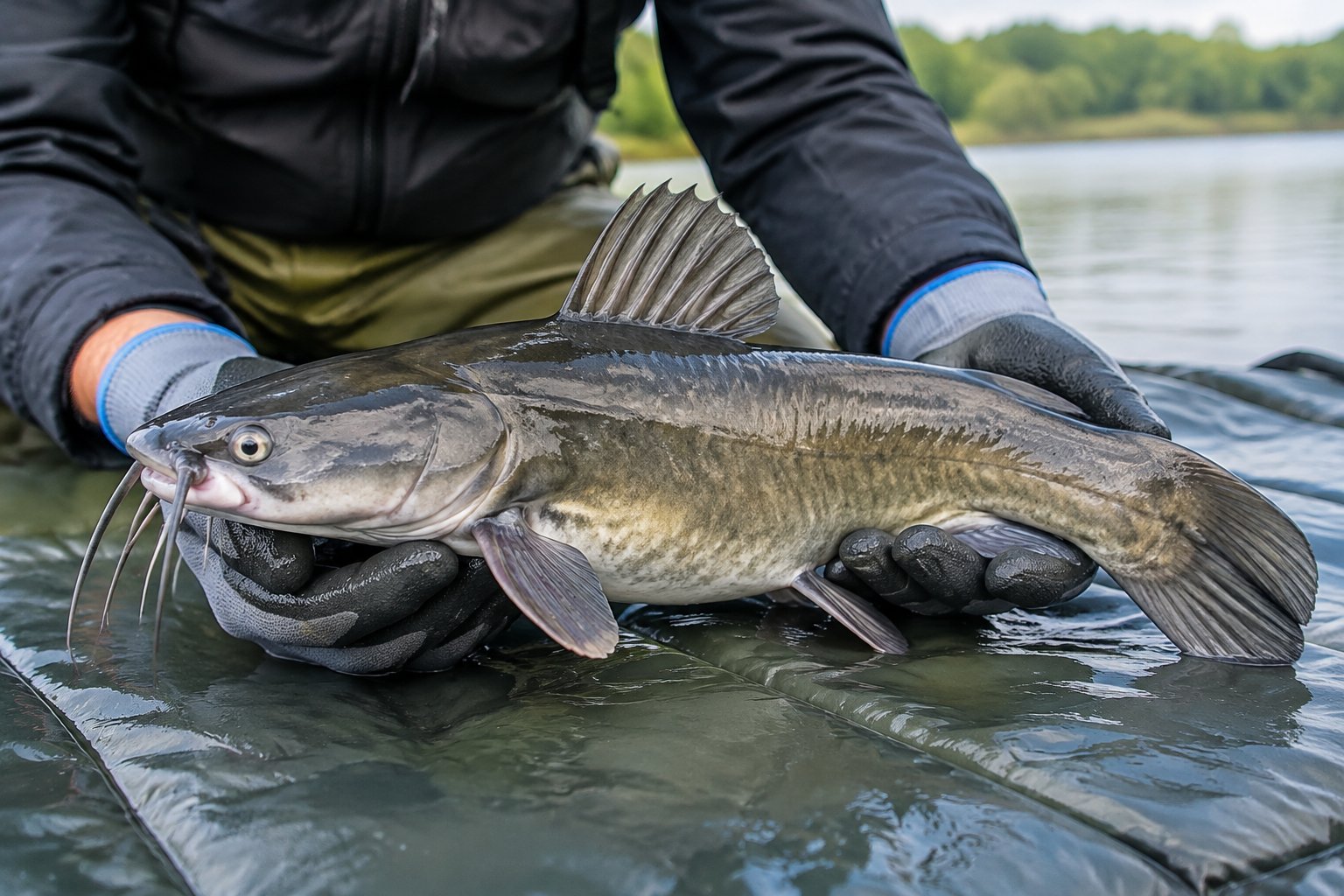
The fin spines cause nearly all catfish injuries, and the whiskers cause none. Basic catfish anatomy tells you where to keep your fingers, and it also explains why a few common grips harm the fish.
Dorsal and Pectoral Spines Can Cause Puncture Injuries
Catfish spines are hard, bony, and sharp, and some have small serrated edges. They carry venom tissue along their surface. A puncture brings sharp, burning pain that can spread up your arm, along with redness and swelling.
Every common North American species can do this:
- Bullheads: pain is usually milder and fades faster.
- Channel catfish: sharp spines that punch deep.
- Blue catfish: large spines and larger wounds.
- Flathead catfish: smaller spines that still hurt.
The venom is present all year. A catfish can also drive a spine through a thin shoe sole if you step on it to stop it flopping, so keep your feet clear.
Catfish Whiskers Do Not Sting
Catfish whiskers, called barbels, are soft feelers. The fish uses them to taste and smell food in muddy water. They carry no venom and no spine.
This matters for kids who flinch at the whiskers. You can tell them the whiskers are safe to look at closely. Then point to the fins and explain that those are the parts to avoid.
Why Mouth Grips and Gill Holds Can Cause Harm
A catfish mouth is lined with rough, sandpaper-like teeth that scrape skin raw. Bass-style lip grabs on a thrashing catfish leave your thumb cut and bring your hand close to the pectoral spines.
Gill holds are worse for the fish. Gills are delicate and bleed easily, and a damaged gill can kill a fish you meant to release. Keep your fingers out of the gill openings entirely. For very large fish, a lip-gripping tool holds the jaw safely while your other hand supports the body.
What Should You Have Ready Before Landing a Catfish?
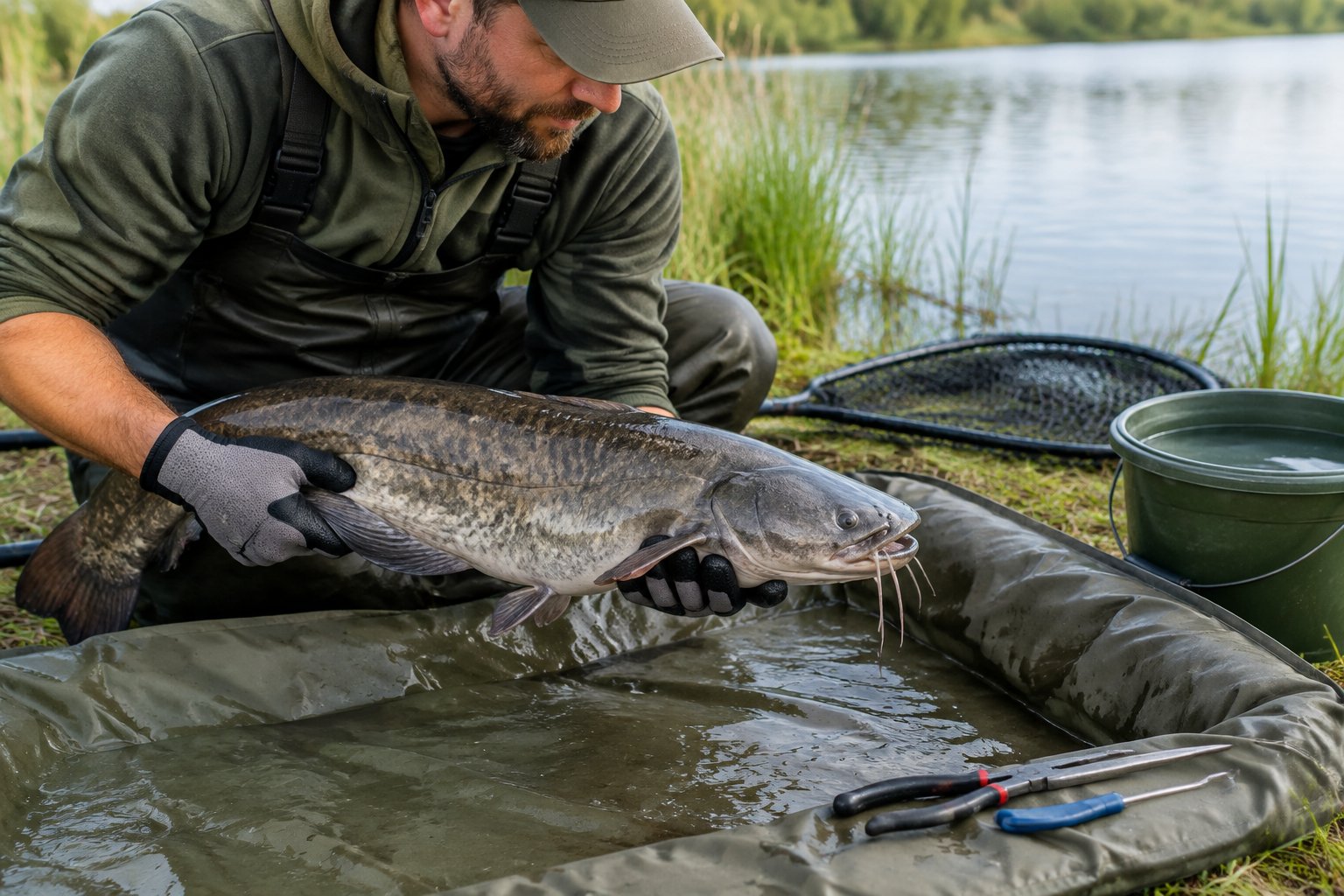
Have a rubber net, long-nose pliers, and a plan for where the kids will stand before the fish reaches shore. Gear in reach means less time with a slippery fish in your hands.
Keep a Fish-Friendly Net and Long-Nose Pliers Within Reach
A rubber-mesh net is the single best tool here. Catfish spines and fins snag in knotted mesh, which leaves you picking a fish free while its spines are locked. Rubber mesh tangles less and protects the fish’s slime coat.
If your kids want to net fish, a smaller net from a guide to the best fishing net for kids suits small channel cats in a pond. Bigger river fish need a full-size net held by an adult.
Lay your long-nose pliers on the bank or clip them to your belt before you cast. Searching a tackle bag with a fish on the ground wastes minutes.
Wet Your Hands and Do Not Treat Gloves as Spine-Proof
Dip your hands in the water before you touch the fish. Dry hands strip the protective slime the catfish needs to fight off infection.
Gloves help with grip and rough teeth. A spine can still go through most fabric and rubber, and thick gloves reduce feel, so you notice a spine later than you should. Even with the best kids fishing gloves, use the same behind-the-spine grip. Wet the gloves too.
Let Adults Handle the Fish While Kids Watch From a Safe Spot
Kids should watch, cheer, and help with the net, while an adult does all the gripping and unhooking. Children should never handle a catfish unsupervised. A small fish kicking in little hands is how spines end up in palms.
Give each child a job: hold the bait bucket, open the pliers, or count to ten for the release. Have them stand an arm’s length back while you work. Good habits from fishing with kids carry over here, because short, clear roles keep everyone calm.
How Do You Unhook and Release a Catfish?
Unhook the fish while it stays supported, cut the line on deep hooks, and lower it gently into the water. Aim to keep it out of the water for less than a minute.
Keep the Fish Supported While Removing the Hook
Keep the fish in the net or on wet grass, or hold it with your behind-the-spine grip. Grab the hook shank with your pliers and back it out the same way it went in. These are the same basics as when you unhook a fish of any species, with extra care around the fins.
Never shake a catfish off the hook by flicking the line. The fish flies in a random direction and can land spines-first on you or a nearby child.
A tool from a list of the best fishing hook remover options reaches deeper into a wide catfish mouth than short pliers. Keep it on a fishing tool lanyard so it hangs ready during a lunch-break trip.
Cut the Line Rather Than Digging Out a Deep Hook
If the hook sits deep in the throat or gut, cut the line as close to the hook as you can. Digging for it tears tissue and keeps the fish out of the water too long.
Many fish shed or work around a hook left behind. Circle hooks catch in the corner of the mouth more often, which makes unhooking quicker on the next fish.
Lower the Fish Into the Water Without Tossing It
Carry the fish level and low to the water’s edge. Set it in, face it into gentle current if there is any, and keep a light hand under its belly.
Let it swim off on its own. A tired fish may sit for a few seconds; hold it upright until it pushes away. Tossing a fish from the bank or a boat can stun or injure it.
What Should You Do After a Fin-Spine Puncture?
Treat any catfish spine puncture as a wound that needs care, and contact a doctor or urgent care clinic. These injuries hurt more than they look, and they carry a real infection risk.
Clean and Cover the Wound and Seek Medical Care
Stop fishing and rinse the wound with clean water. Wash it with soap and apply antiseptic. Cover it with a sterile bandage from your first aid kit.
Many anglers soak the area in hot water they can tolerate without burning, since catfish venom breaks down with heat. Test the temperature with your uninjured hand first, and never use it on a child without medical advice.
Then call a medical provider. They can check for spine fragments and decide whether you need a tetanus booster or antibiotics. Watch for growing redness, warmth, pus, or red streaks over the next few days.
Get Urgent Help for Severe Symptoms or an Embedded Spine
Go to an emergency room or call 911 for any of these:
- A broken spine piece stuck in the skin
- Trouble breathing, dizziness, or swelling away from the wound
- Numbness or pain that keeps getting worse
- A puncture in a child, a joint, or near the eye
Don’t dig out an embedded spine yourself. Barbed edges tear tissue, and fragments left behind cause deep infections. Keep the area still and get to care.
Keep Your Next Family Catch Controlled and Well Supported
Safe catfish handling comes down to a few habits you can repeat on every trip. Find the three spines first, grip behind them, and support the belly with wet hands. Keep big fish level and low.
Have the rubber net and pliers ready before the bite, and let adults do the holding while kids help from a safe spot. Cut deep hooks off, lower fish back gently, and treat any puncture as a reason to see a doctor.
Practice the grip on small fish during a quick after-work session. By the time fall fishing for catfish brings bigger fish to the bank, the hold will feel automatic.
Get your gear ready and explore the related beginner-friendly guides before your next trip.