For fishing for walleye in the fall, start at a drop-off or rocky point near baitfish, then work a jig and minnow slowly along the bottom. That simple approach suits a short trip from shore or a small boat, and you can shift to deeper structure as the water cools.
Fall fish move with changing water temperatures and forage, so you may need to check a few nearby spots before settling in. Focus on a clear starting location, a compact tackle setup, and a short window around dawn, dusk, or a wind-driven feeding opportunity.
Where Do Fall Walleyes Feed?
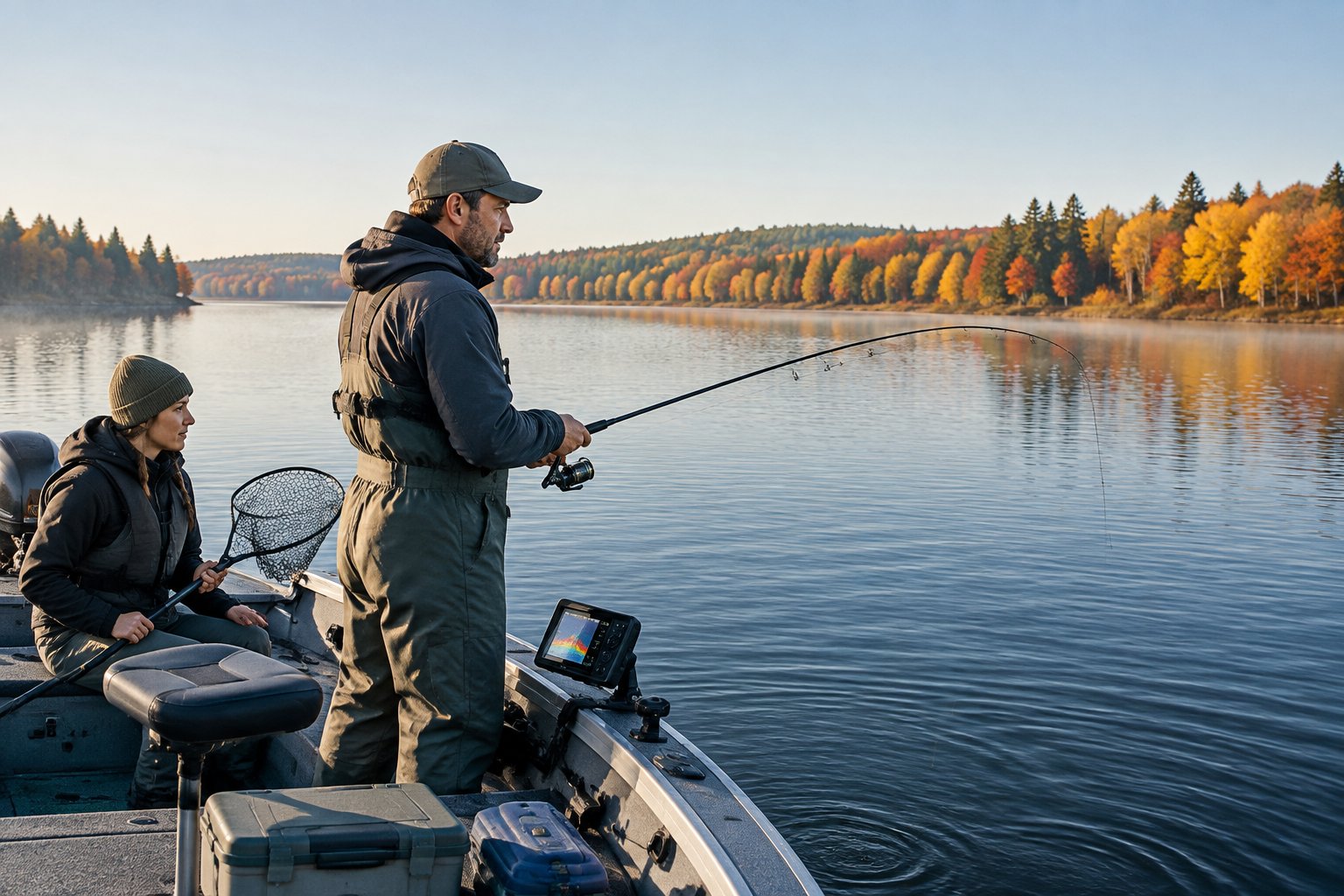
Fall walleyes follow baitfish and use structure that gives them access to both feeding areas and deeper water. Start with nearby drop-offs, rock, and weed edges, then check mid-lake structure or current breaks if the first spot is quiet.
How Do Walleyes Shift Locations as Water Cools?
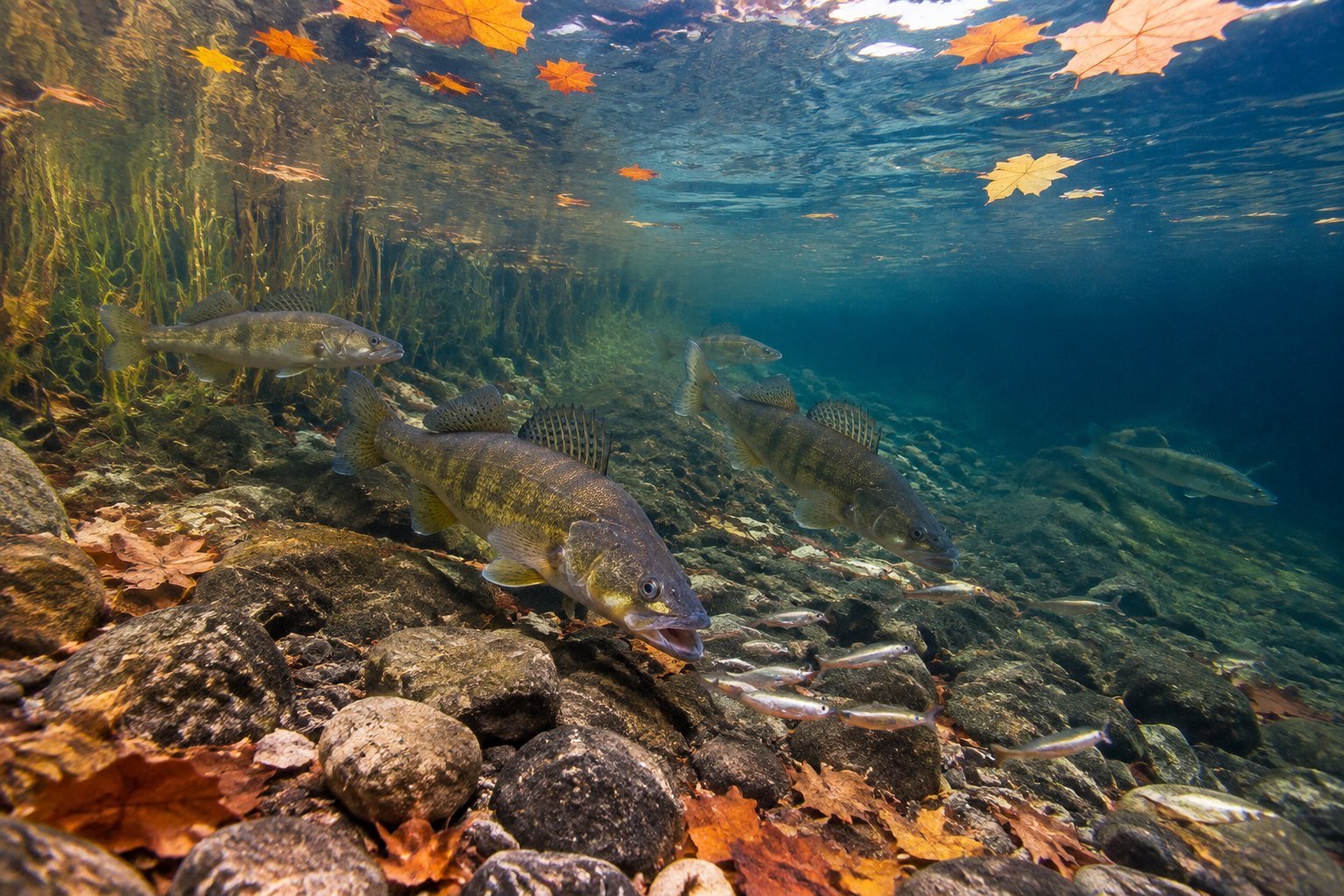
As water cools, fall walleye behavior shifts with baitfish movement and changing lake conditions. Fish can move from summer basins toward drop-offs, rocky points, weed edges, or deeper structure, with different groups using different depths at the same time.
During a warm stretch or turnover, walleyes may be scattered. Cover more water by checking a short list of spots, and vary the depth you fish at each one. Once baitfish gather around a structure or edge, spend more time working that area.
Late in the season, look for fish near deep structure and stable channels. On waters with a cisco spawn, cisco activity can draw walleyes toward the areas where those fish gather.
Which Shoreline and Lake Structures Should You Check First?
Start with a drop-off beside a rocky point or a weed edge that still holds bait. These spots let you fish a shallow feeding area and a nearby route to deeper water without making a long move.
From shore, look for accessible points, rocky banks, and places where the bottom slopes into deeper water. Cast parallel to the shoreline and across the break so your lure spends time along both shallow and deeper edges.
From a small boat, check rock piles and mid-lake humps, then work down the sides into deeper water. Deep humps can hold fish as the season advances. If a spot has no baitfish and produces no signs of activity, move on to the next nearby structure.
How Do Current and Baitfish Help You Find Fish?
Current breaks give walleyes places to hold near moving water while conserving energy. Check the calmer edge beside a current seam, such as the downstream side of a point or a channel edge, and keep your bait close to the bottom.
Look for baitfish on sonar, surface disturbances, or birds working over the water. When bait is present, search the nearby bottom and structure for walleyes. Where cisco gather to spawn, check adjacent breaks and deeper edges for fish feeding around that movement.
When and Under What Conditions Should You Fish?
Plan your trip around cooling water, low-light periods, and wind that pushes bait toward a fishable edge. Water clarity affects how visible your lure is, so adjust lure size, color, and speed to the conditions.
How Does Water Temperature Affect Fall Patterns?
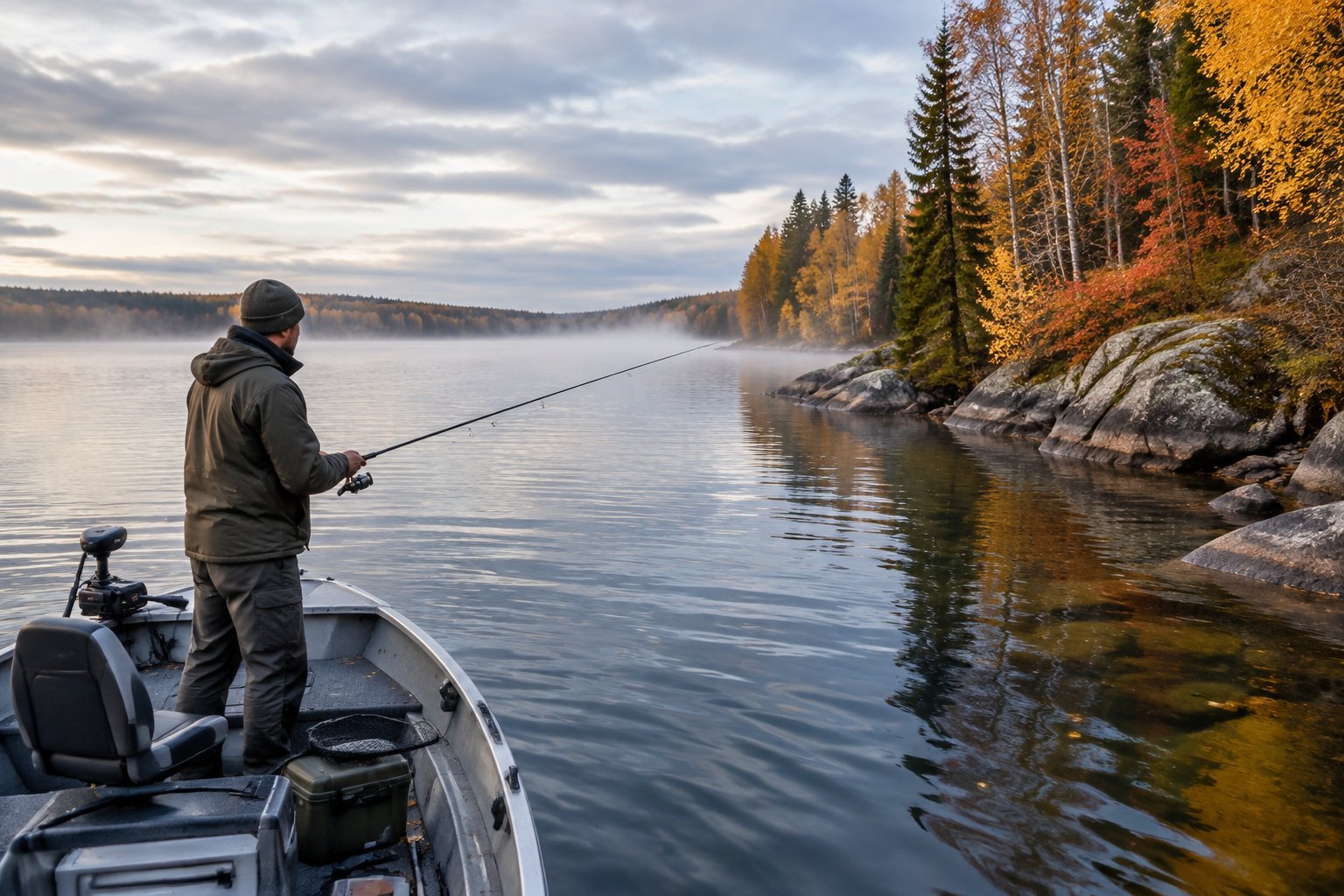
Water temperature helps you judge how far fish have shifted from their late-summer locations. Take a reading if you have a thermometer, and compare it across spots; a large lake can cool unevenly, so one bay may fish differently from the main basin.
As temperatures drop, check deeper edges and structure as well as shallow feeding areas. During turnover, fish can be spread across more of the lake, so cover water and try more than one depth at each stop. Once conditions settle, return to the places where baitfish and structure overlap.
What Times of Day and Wind Conditions Are Most Productive?
Dawn and dusk offer useful low-light windows, especially along shallow rock, points, and weed edges. Overcast skies can extend that opportunity by keeping light levels lower through the day.
Wind pushing toward a point or shoreline can move baitfish into reach and make a protected edge more productive. Fish the windblown side when conditions are safe for your boat or casting position. Check the forecast and choose a sheltered alternative if the wind makes the water rough.
For a short outing, arrive before a low-light period and fish one or two likely spots. A practical guide to the best fishing time of day can help you match a quick session to your schedule.
How Should You Adjust for Water Clarity?
In clear water, try a natural-looking minnow presentation and fish during low light, when walleyes are more comfortable moving shallow. Keep boat noise and shoreline movement low near a promising spot.
In stained water, choose a lure that creates more vibration or contrast, such as a blade bait or a crankbait with a visible profile. Slow your retrieve enough to keep the lure near the depth you’re targeting, and adjust if you stop feeling bottom contact or strikes.
Which Simple Presentations Work From Shore or a Small Boat?
A jig and minnow is a practical first choice for a small boat or shoreline, while jigging raps, blade baits, crankbaits, and live-bait rigs help you cover different depths and fish moods. Start with one presentation, then change after you have worked a spot thoroughly.
How Do You Fish a Jig and Minnow?
Thread a minnow onto a jig, cast toward a drop-off or rock edge, and let the lure reach bottom. Lift it gently, let it settle, and keep contact with the bottom as you retrieve or drift.
From shore, cast across the break and let the jig work down the slope. From a boat, vertical jigging keeps the bait beneath you when you’re over marked fish or a compact piece of structure. If the jig moves too quickly or drifts above the fish, use a heavier head; if it hangs in rocks, shorten the lift and keep the line controlled.
When Should You Try Jigging Raps or Blade Baits?
Try a jigging rap, including a Rapala Jigging Rap, or a shiver minnow when fish are active around a defined piece of deep structure. These lures dart or glide on a lift, then return toward the bottom, so work them with deliberate rod strokes and pause between lifts.
Jigging raps can be cast along a rocky edge or fished vertically from a boat. Blade baits suit cold-water fish and deeper areas where vibration helps you track the lure. Use short lifts and let the bait settle back down; a hard, continuous snap can move it away from fish holding near bottom.
When Are Crankbaits, Stick Baits, or Live-Bait Rigs a Better Fit?
Use crankbaits when you need to cover a broad shoreline or search a basin for scattered fish. Deep-diving crankbaits and trolling crankbaits help reach suspended or deeper fish from a boat, while a shallow-running stick bait can reach walleye along a shoreline during low light.
For a focused presentation, live-bait rigs let you work a minnow or creek chub close to a specific break or rock pile. A bottom bouncer helps keep the bait near bottom as you move through deeper water. Match your pace to the depth and conditions, and follow local rules for the number of lines you may fish.
What Gear and Quick-Trip Plan Keep Fishing Simple?
A basic rod-and-reel setup, a small selection of jigs and minnows, and weather-ready clothing are enough to start fall walleye fishing. A short plan helps you spend limited time fishing instead of searching through gear or making long runs.
What Basic Fall Walleye Gear Is Enough to Get Started?
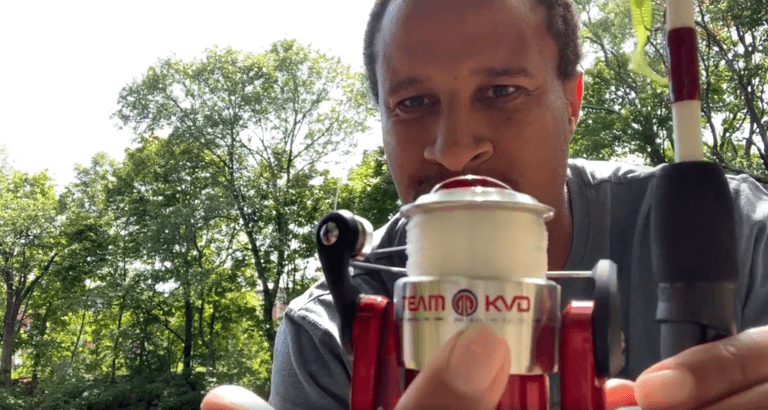
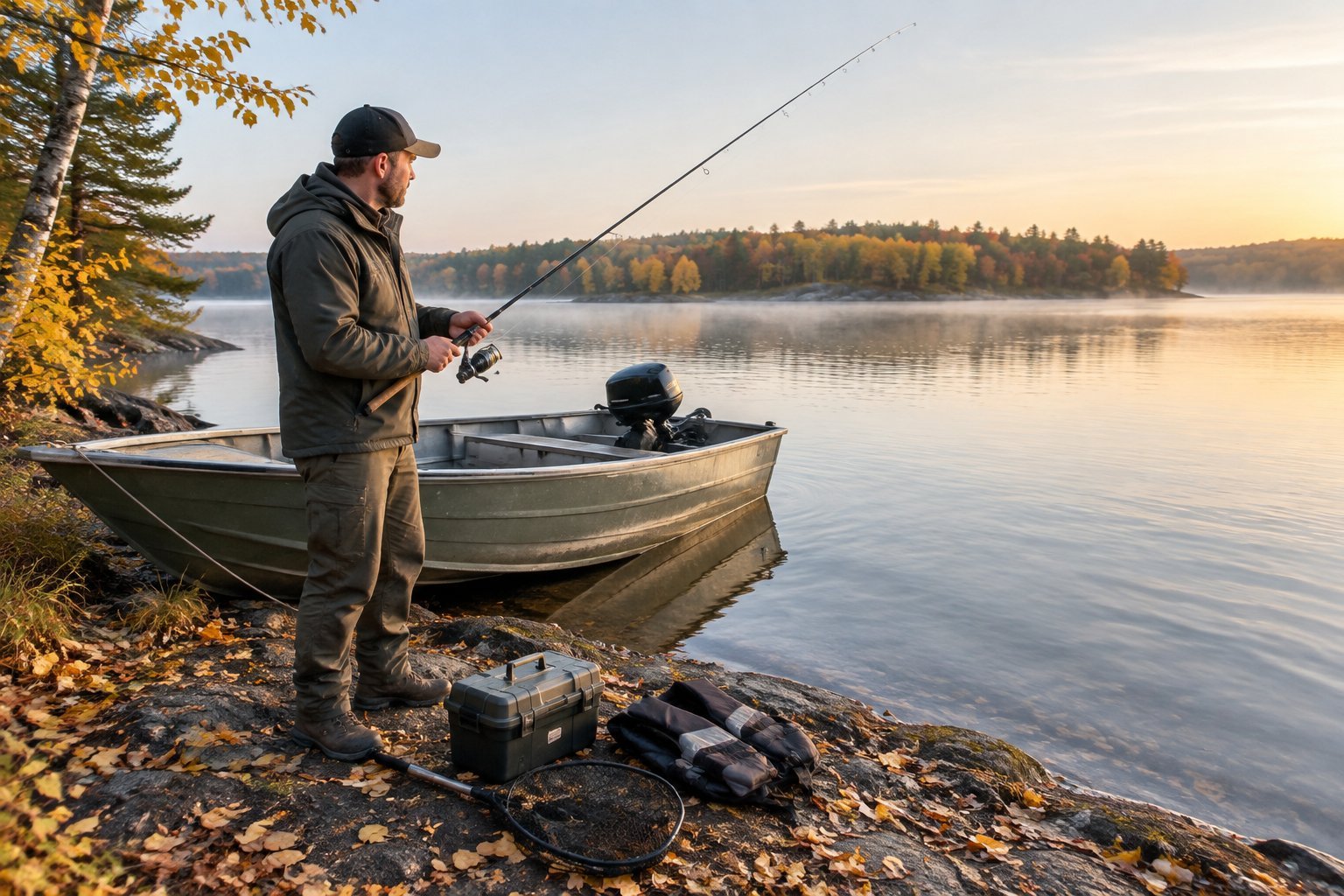
Pack a medium-light or medium spinning rod, a reel with fresh line, several jig heads, and a few live minnows. Add pliers, a landing net, a small tackle box, and a headlamp if you plan to fish near dawn or dusk.
A small boat adds a depth map or sonar if you have one, along with a life jacket for each person. Keep the gear compact so you can change spots quickly. For beginner-friendly essentials beyond walleye-specific tackle, browse this guide to freshwater fishing gear.
Dress in layers and bring rain protection, warm gloves, and a dry change of clothes for kids. Check local regulations for seasons, size limits, and bait rules before you leave.
How Can You Make the Most of a Short Fishing Window?
Choose two or three nearby locations before you go, such as a rocky point, a weed edge, and a drop-off. Start at the spot most likely to hold bait, fish it with one presentation, and move if the area shows no signs of activity.
Set a simple time limit for each stop. If you have 45 minutes, for example, spend about 15 minutes at each of three spots, adjusting the plan when you find bait or get a bite. Keep your rod rigged and your tackle organized so you can use the whole window.
What Should Families and Shore Anglers Keep in Mind?
Choose a safe, accessible bank with room to cast, a clear path to the water, and a nearby place to warm up. For kids, use a simple jig-and-minnow setup and keep the first outing short enough to stay enjoyable. These fishing with kids tips can help you keep the focus on a relaxed trip.
Shore anglers should cast along a drop-off, rocky point, or weed edge and keep the lure moving through the depth range they can reach. A boat gives you access to mid-lake humps and deeper structure, while shore access can make a quick after-work session easier to manage. For more bank-side basics, see this guide to shore fishing.
Frequently Asked Questions
Fall walleye fishing can fit a short trip when you focus on a nearby edge, a clear feeding window, and one simple presentation. These answers cover common choices for location, depth, bait, and shore access.
Is walleye fishing good in the fall?
Yes, fall offers strong opportunities to catch walleye as cooling water and baitfish movement shift fish toward feeding areas. Check a few depths and nearby structures, since conditions and fish locations change through the season.
Where should I fish for walleye in the fall?
Start at drop-offs, rocky points, weed edges, and rock piles near baitfish. If those spots are quiet, check mid-lake humps, deep structure, or current breaks.
What depth do walleyes prefer in the fall?
Fall walleyes use a range of depths, from shallow edges during low light to deeper breaks and humps as conditions cool. Start where structure meets deeper water, then adjust based on baitfish and fish activity.
What is the best bait for walleye in the fall?
A jig and minnow is a reliable starting presentation for fall walleye. Use a jigging rap or blade bait for active fish around structure, or a live-bait rig with a creek chub when you want to work a specific area slowly.
Can you catch walleye from shore in the fall?
Yes, you can catch fall walleye from shore by targeting rocky points, shoreline drop-offs, and weed edges during dawn or dusk. Cast parallel to the bank as well as across the break so your lure covers more of the reachable zone. Get your gear ready and explore the related beginner-friendly guides before your next trip.