
For beginner-friendly bank fishing rod holders, choose the Berkley Spiral Rod Holder for your grassy pond trips: its ground-stake design gives you a straightforward way to support a rod in penetrable soil. You get a place to rest your rod while bait fishing, with less gear to organize before an after-work outing.
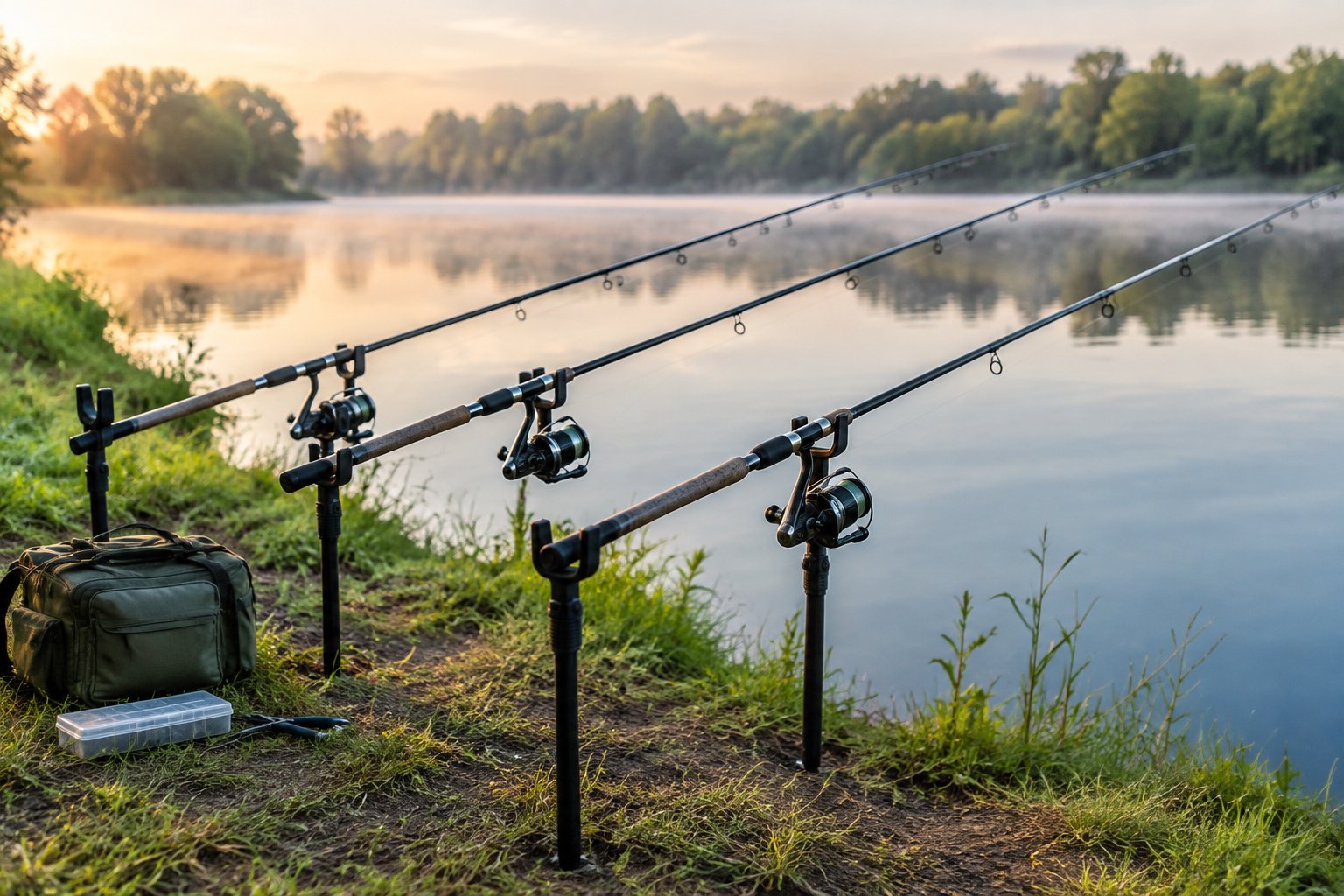
For a short trip with kids, you’ll get more value from a holder that suits your shoreline and releases your rod smoothly. Match the mounting style to your usual fishing spot, then check the fit with your assembled rod before packing.
Quick picks:
- Best beginner choice: Berkley Spiral Rod Holder for grassy banks with penetrable soil.
- For hard surfaces: Daiwa Aluminum Tripod Rod Stand, where you have level footing.
- For sandy shorelines: Fish-N-Mate Sand Spike, with sufficient burial depth and secure handle fit.
1. Berkley Spiral Rod Holder
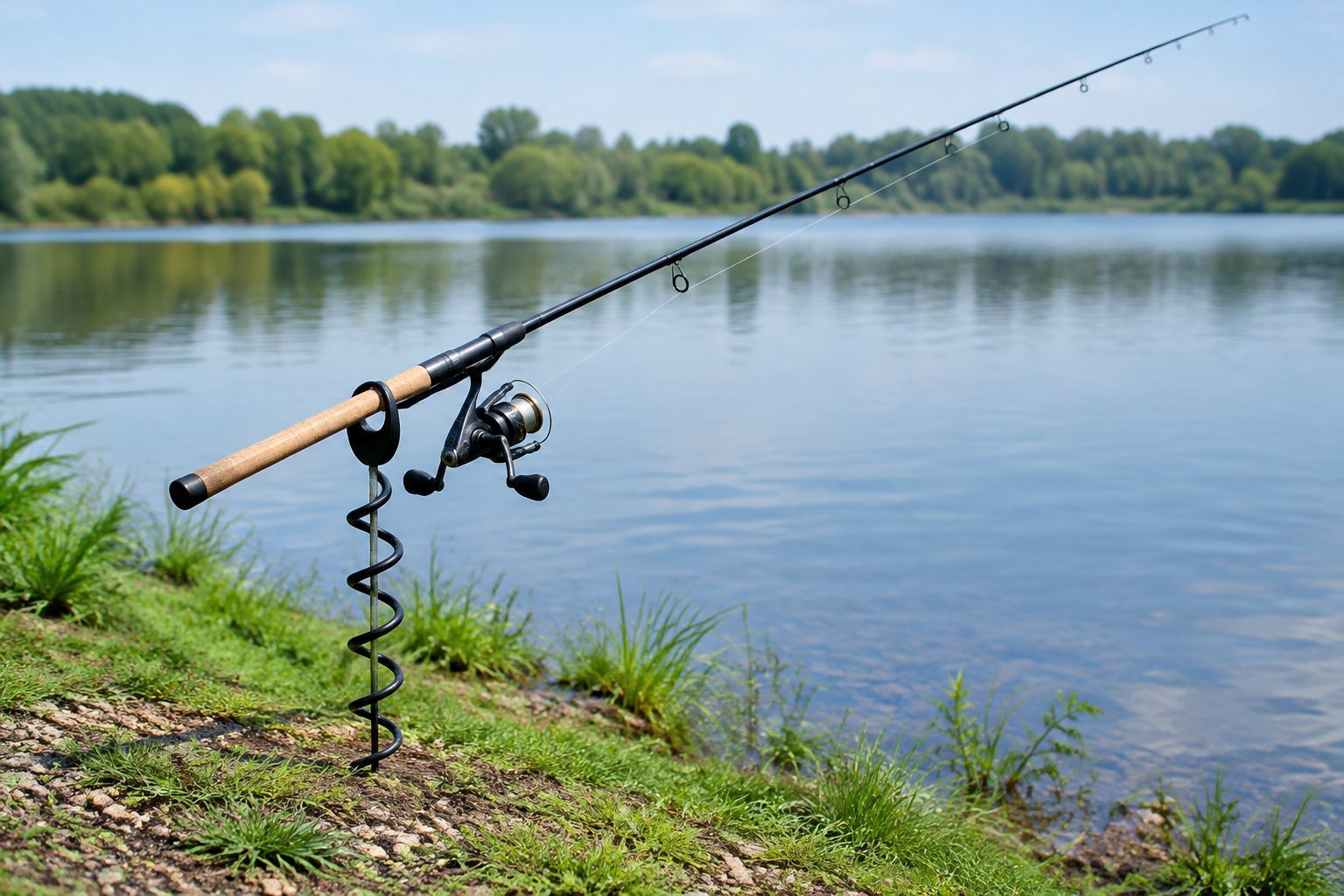
You get a straightforward starting point with the Berkley Spiral Rod Holder when your pond bank accepts a ground stake. Its spiral-style cradle suits a simple bait-fishing setup, where you leave your rod resting between bites.
Before buying, compare the cradle opening with your rod’s butt grip and reel position. A thick handle needs enough clearance for a clean lift when you respond to a bite.
- Practical advantage: You have a simple holder to add to a small bank-fishing kit.
- Buying check: You need penetrable ground and a compatible handle.
Pair it with your ultralight setup for small ponds when you’re targeting panfish close to shore.
2. PLUSINNO Fishing Rod Holders for Bank Fishing
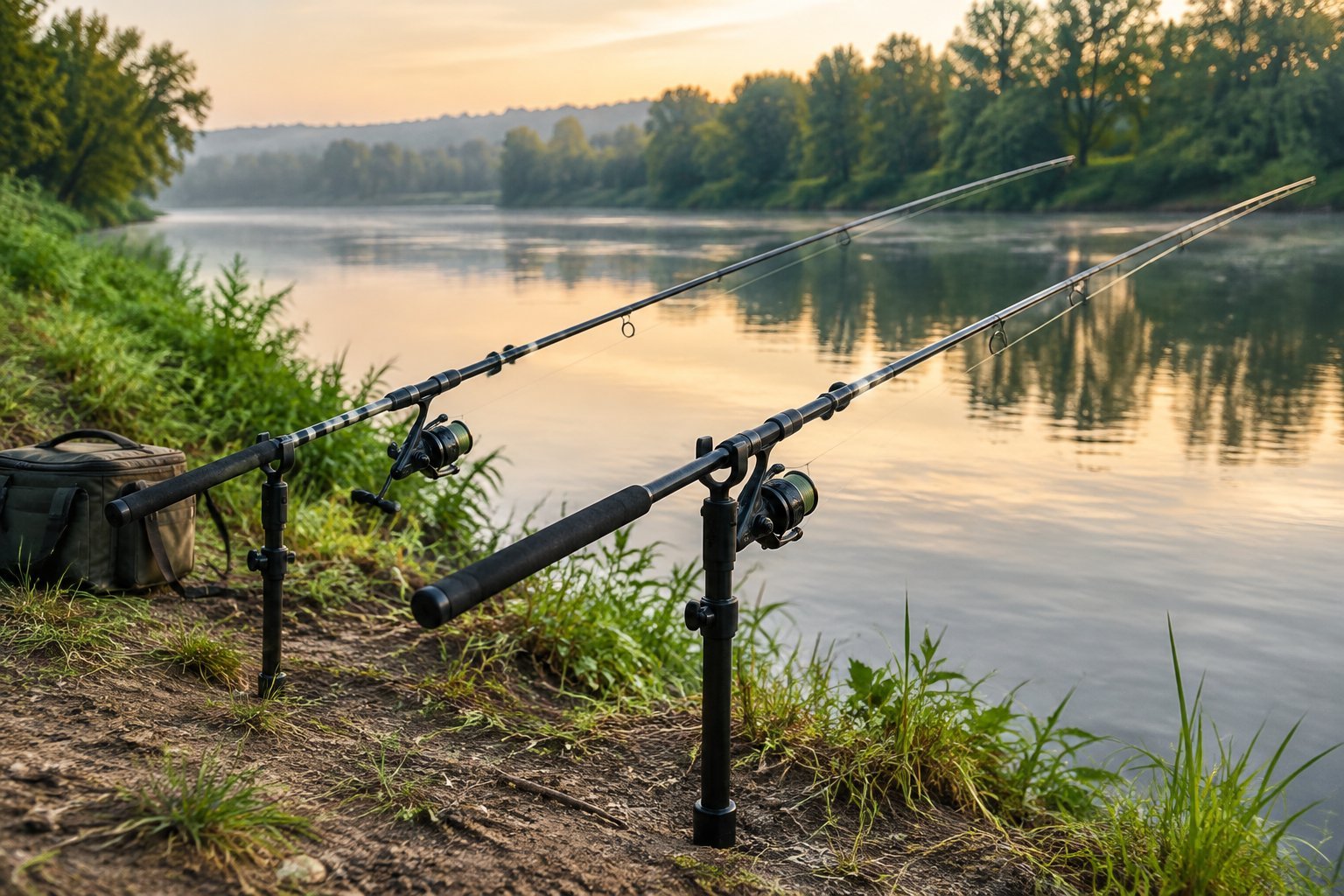
Choose PLUSINNO’s bank-fishing holders when you want an adjustable rod position for a bait setup. Check the exact version before ordering, including its adjustment mechanism and included holder count.
Position your rod so you can see the tip from your seat without reaching across another line. After setting the angle, check that the locking mechanism holds under gentle pressure.
Your key buying detail is the cradle’s working clearance. Make sure your reel stem and grip pass through the opening without catching, especially if you plan to share the holder between adult and children’s rods.
3. Rod Sprocket All-Terrain Rod Holder
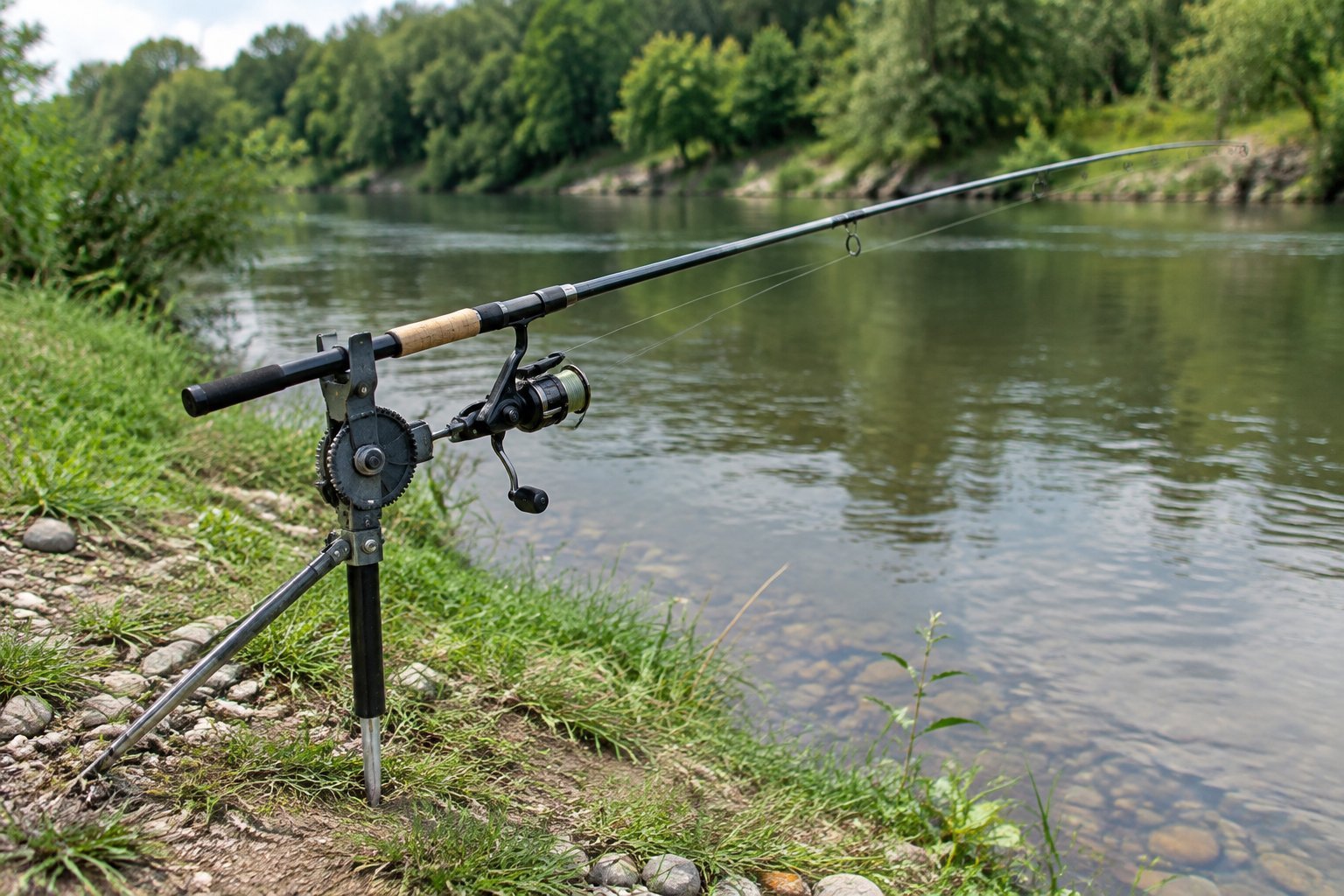
Consider the Rod Sprocket All-Terrain Rod Holder when you move between fishing spots and want to evaluate a more adaptable mounting approach. Match the exact model’s attachment method to the anchor points available at your bank.
Treat “all-terrain” as a prompt to check compatibility carefully. Your purchase decision should account for the complete mounting arrangement, including any required support or accessories.
If you enjoy bridge fishing, check access rules and permitted attachment points before bringing a mounted holder. Keep your equipment inside the designated fishing area and clear of pedestrian routes.
4. South Bend Folding Rod Holder
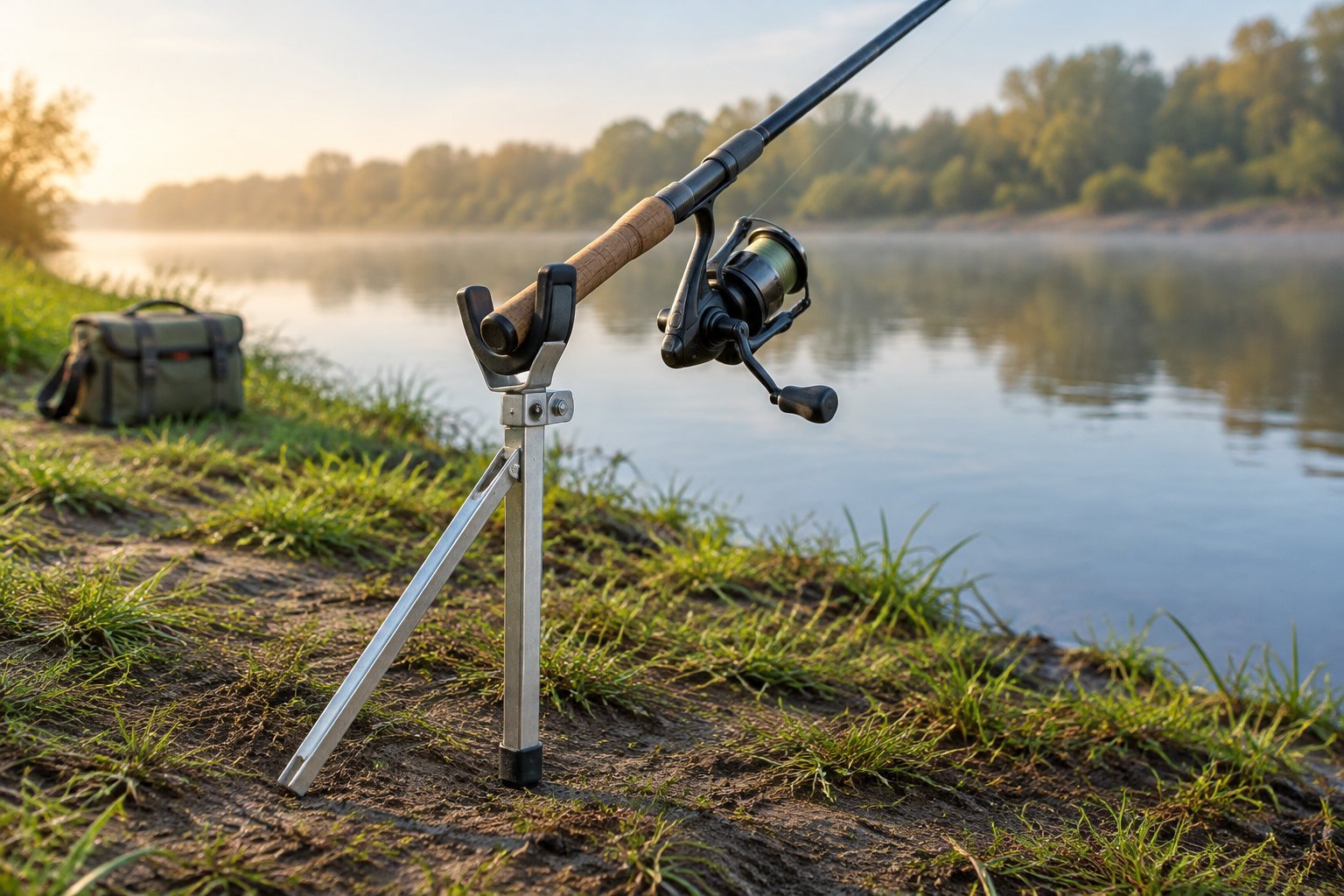
For a compact quick-trip kit, put the South Bend Folding Rod Holder on your shortlist. Its folding format gives you a storage option to compare against rigid stakes that need more uninterrupted bag space.
Check its folded dimensions against your tackle bag, then examine how the support opens and stays in position. You want the holder fully deployed before placing your rod.
A compact holder fits the same planning approach as a backpacking fishing pole: measure the packed gear together. Cover the ground point so it stays clear of soft tackle pouches and spare clothing.
5. Berkley Tube Rod Holder
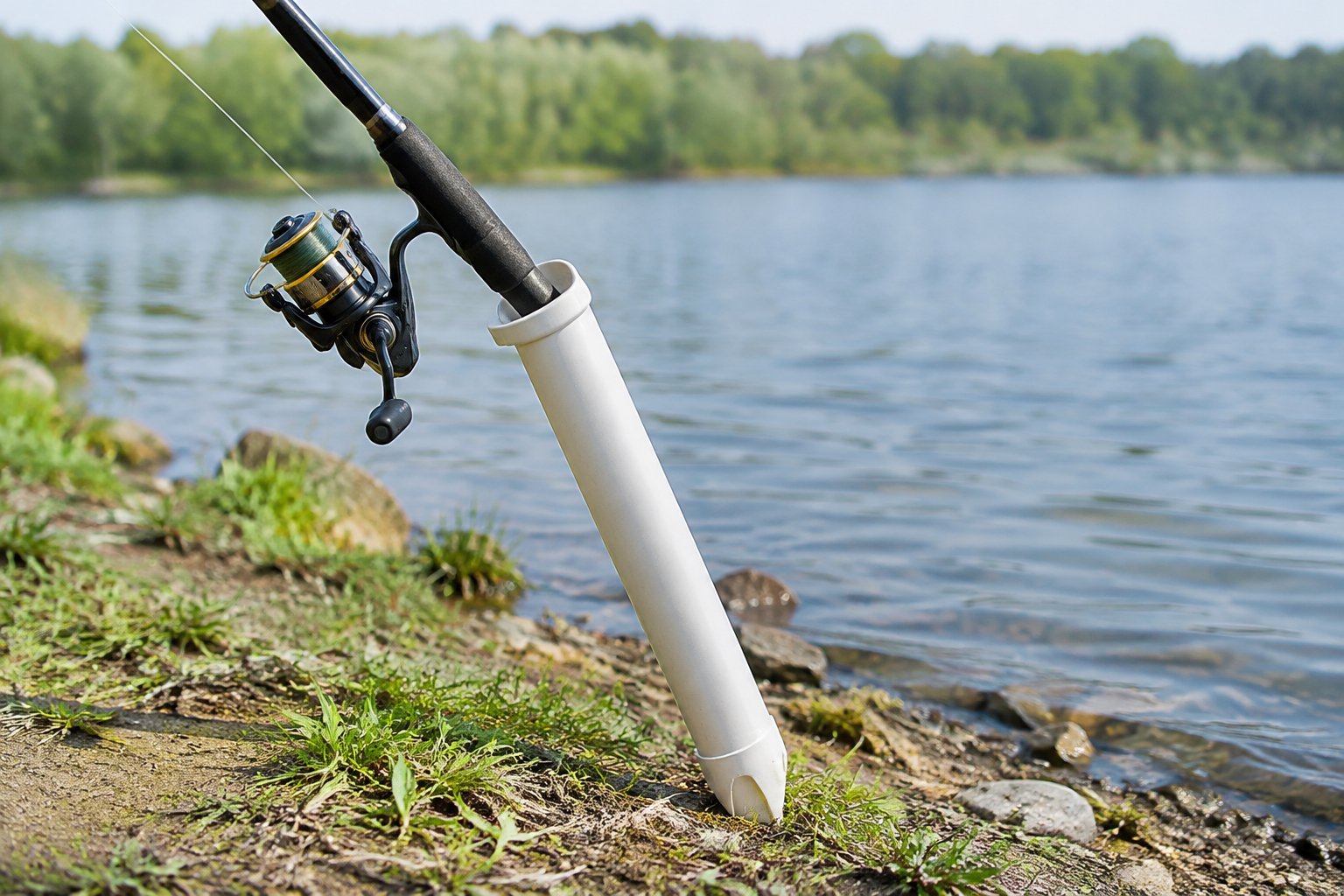
Choose the Berkley Tube Rod Holder if you prefer inserting your rod butt into a sleeve-style support. Before ordering, confirm that you have selected the ground-mount version intended for your shoreline setup.
Your most important measurement is the relationship between the tube opening and your rod handle. Check the butt cap as well as the grip, since an enlarged end cap needs additional clearance.
You also need sufficient lifting room above the holder. Rehearse the removal motion with your assembled rod so your reel clears the tube without forcing your wrist into an awkward angle.
6. Cabela’s Ground Spike Rod Holder
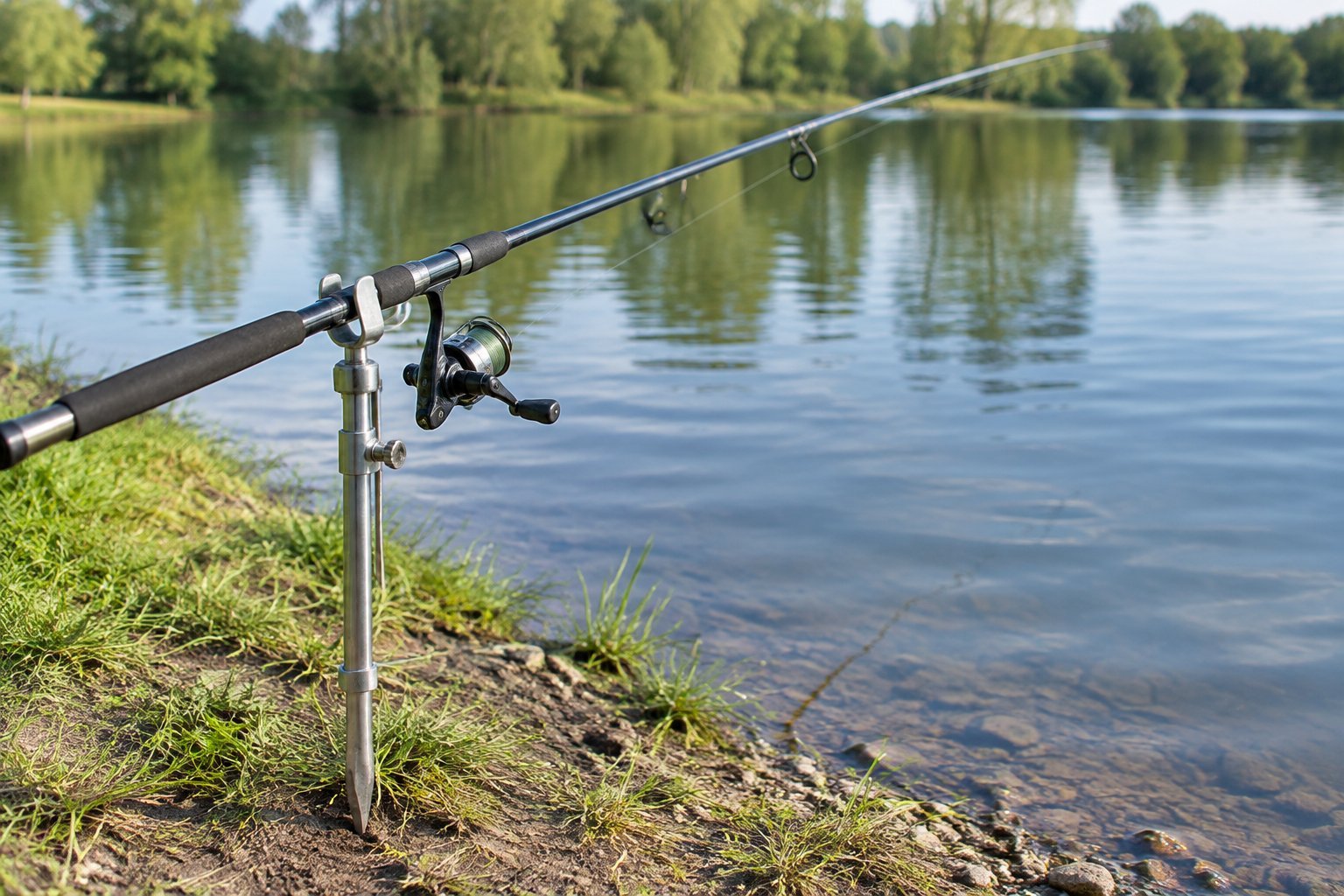
You should consider Cabela’s Ground Spike Rod Holder for an established fishing spot with penetrable soil. Compare the current model’s spike and cradle dimensions with the ground and rod you plan to use.
A ground spike is a practical match for stationary bait fishing. When you’re using river fishing bait, choose a position where you can watch your rod tip and reach the handle from secure footing.
Check how the holder stores alongside your net and tackle bag. Give the exposed point a protective cover during transport, including short walks from the parking area.
7. Eagle Claw Extendable Stick Rod Holder
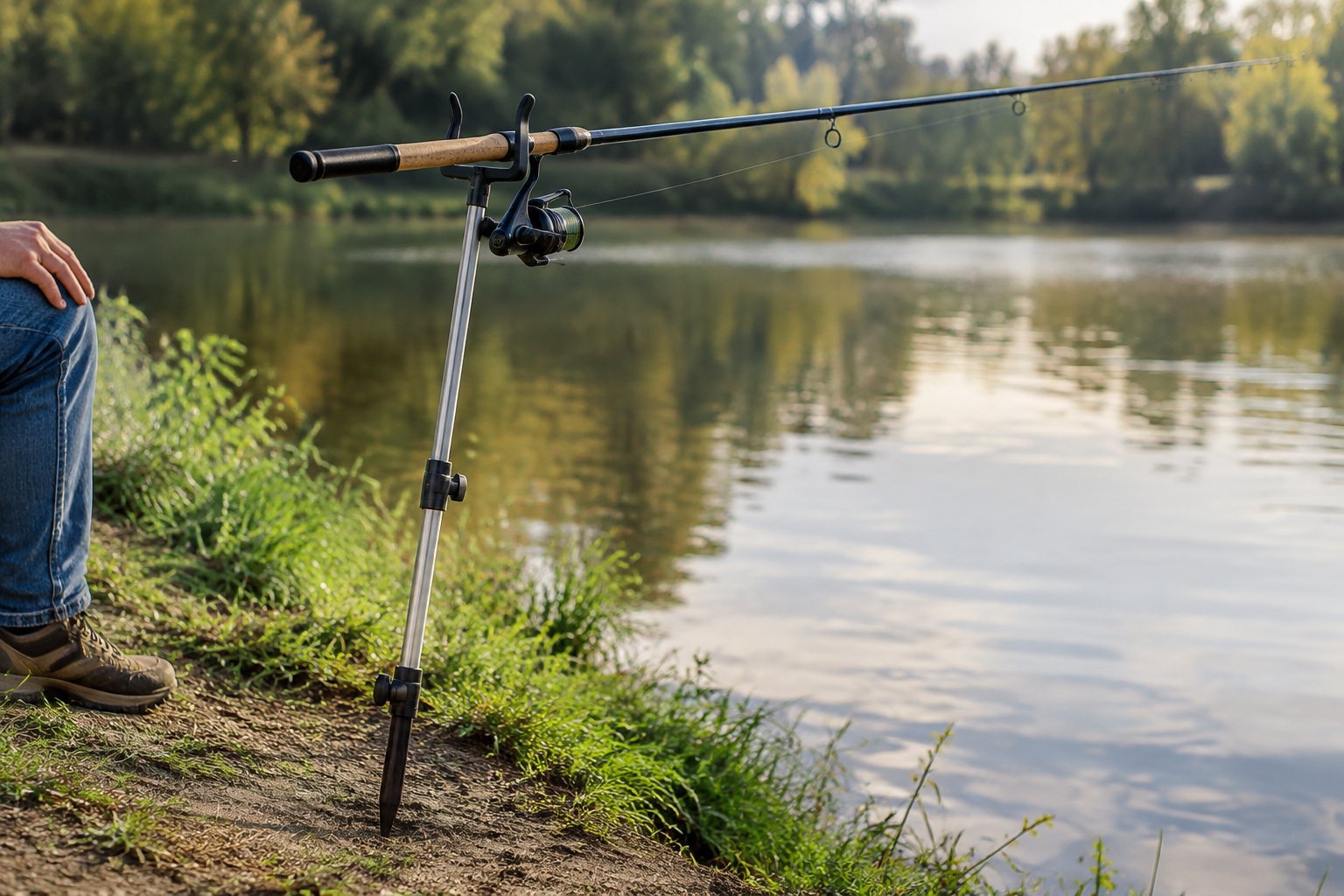
An extendable support gives you height adjustment, making the Eagle Claw Extendable Stick Rod Holder worth considering beside taller bank vegetation. Check its listed adjustment range against the clearance you need.
Use only enough extension to keep your rod and line clear of the immediate bank edge. Additional exposed length increases leverage on the stake, so test the support at your intended working height.
- Useful feature: You can adjust support height to your fishing position.
- Fit check: Confirm whether your setup also needs separate support beneath the rod butt.
Keep your handle accessible from a stable standing or seated position.
8. Daiwa Aluminum Tripod Rod Stand
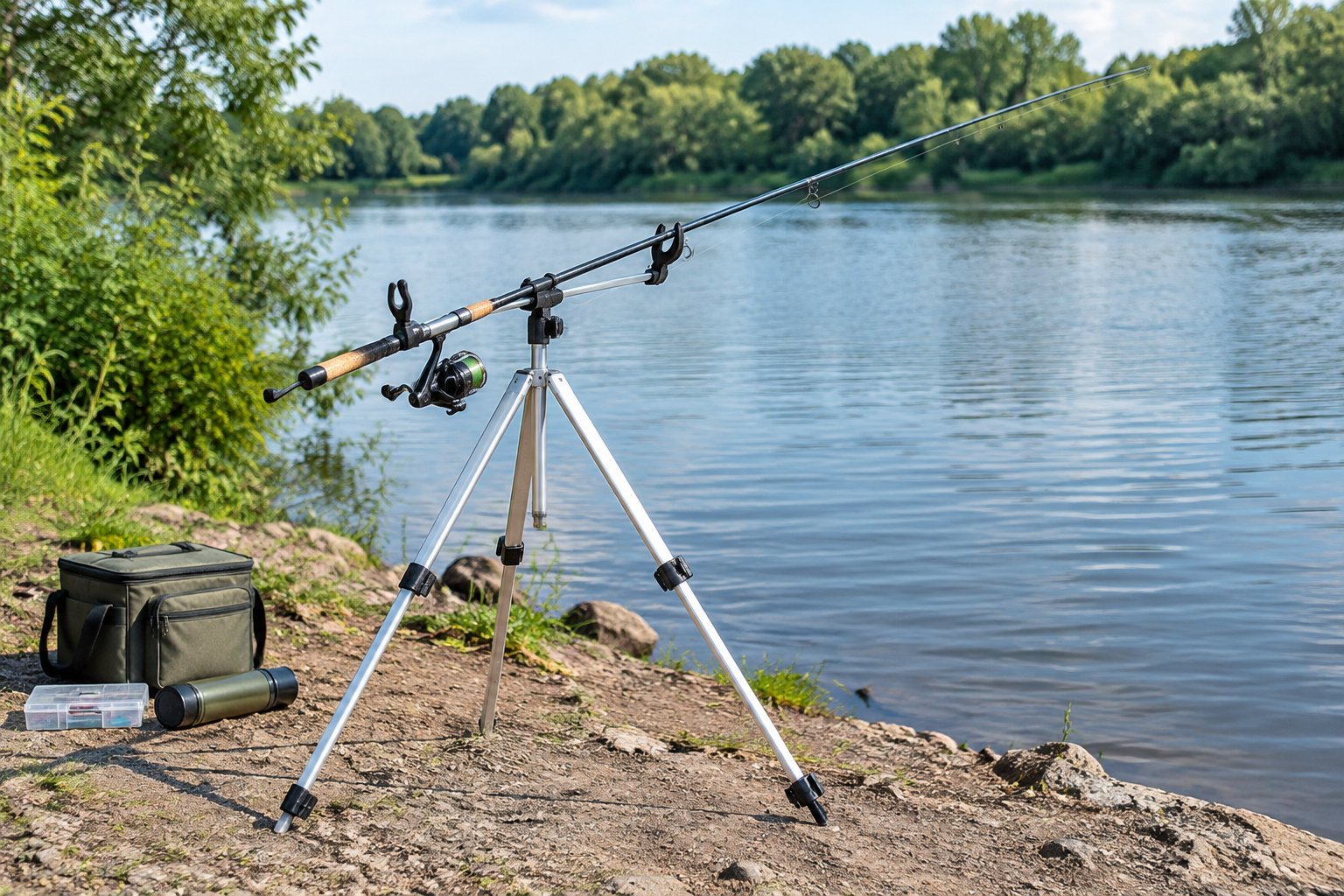
For concrete or another surface that resists stakes, consider the Daiwa Aluminum Tripod Rod Stand. You get a freestanding approach that requires enough space for the deployed legs.
Compare the exact model’s folded length, rod-rest arrangement, and leg adjustment before buying. You need a setup that supports your rod without placing the reel against the frame.
Walk around the footprint before fishing to check your access route. On a narrow bank, account for your landing net and the space needed to step toward a bite. Use ballast only where the manufacturer provides an appropriate attachment or method.
9. Fish-N-Mate Sand Spike
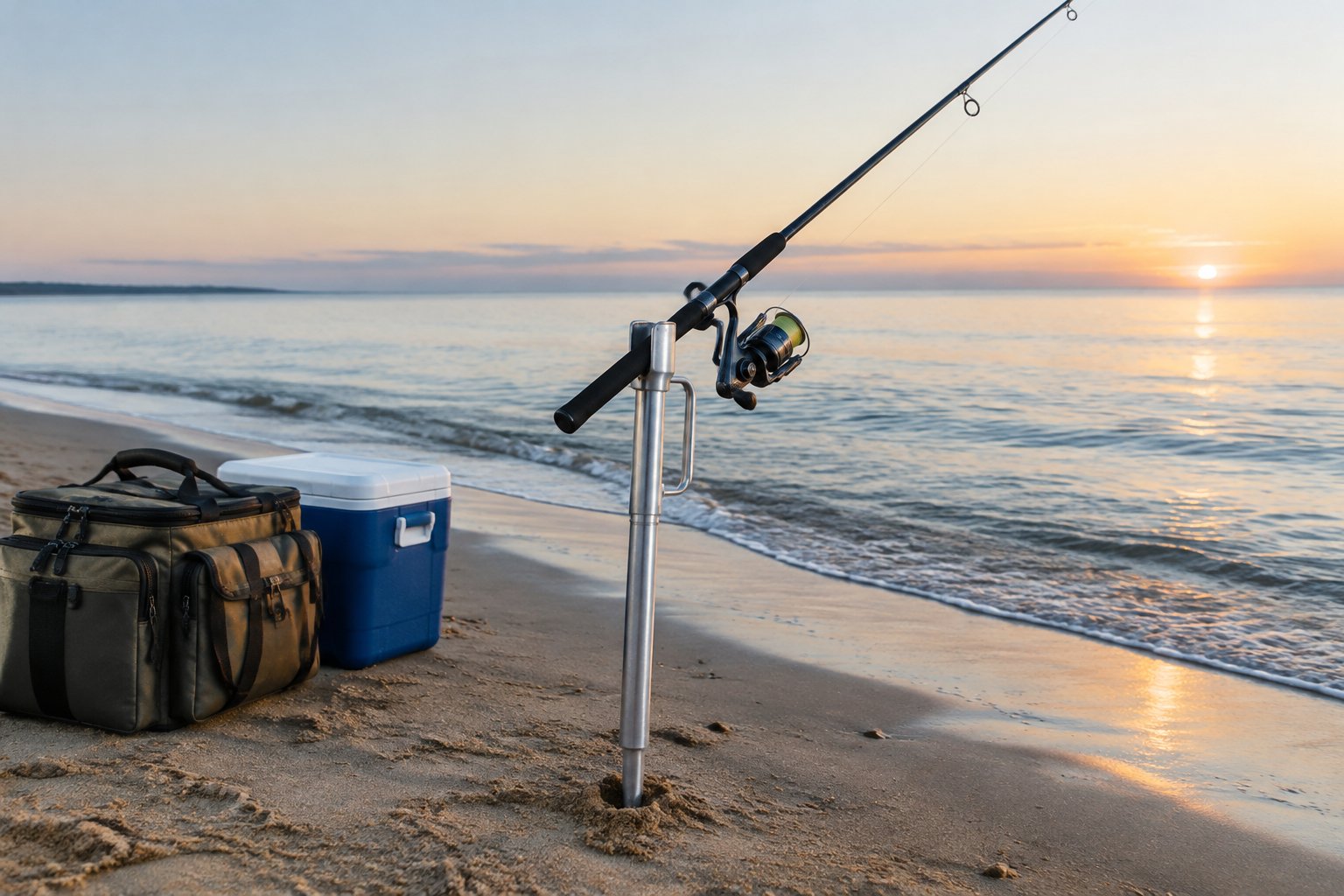
Choose a Fish-N-Mate Sand Spike when you fish a sandy shoreline and need a sleeve-style support. Compare the specific model’s length and tube opening with your rod before ordering.
Your main trade-off is carrying space. A long sand spike needs a secure place alongside your other gear, particularly when your walk includes stairs or a crowded access path.
On arrival, look for firm sand where the spike seats securely. If you use a long rod with a substantial butt grip, check both insertion depth and removal clearance before adding a baited rig.
10. Sea Striker PVC Sand Spike Rod Holder
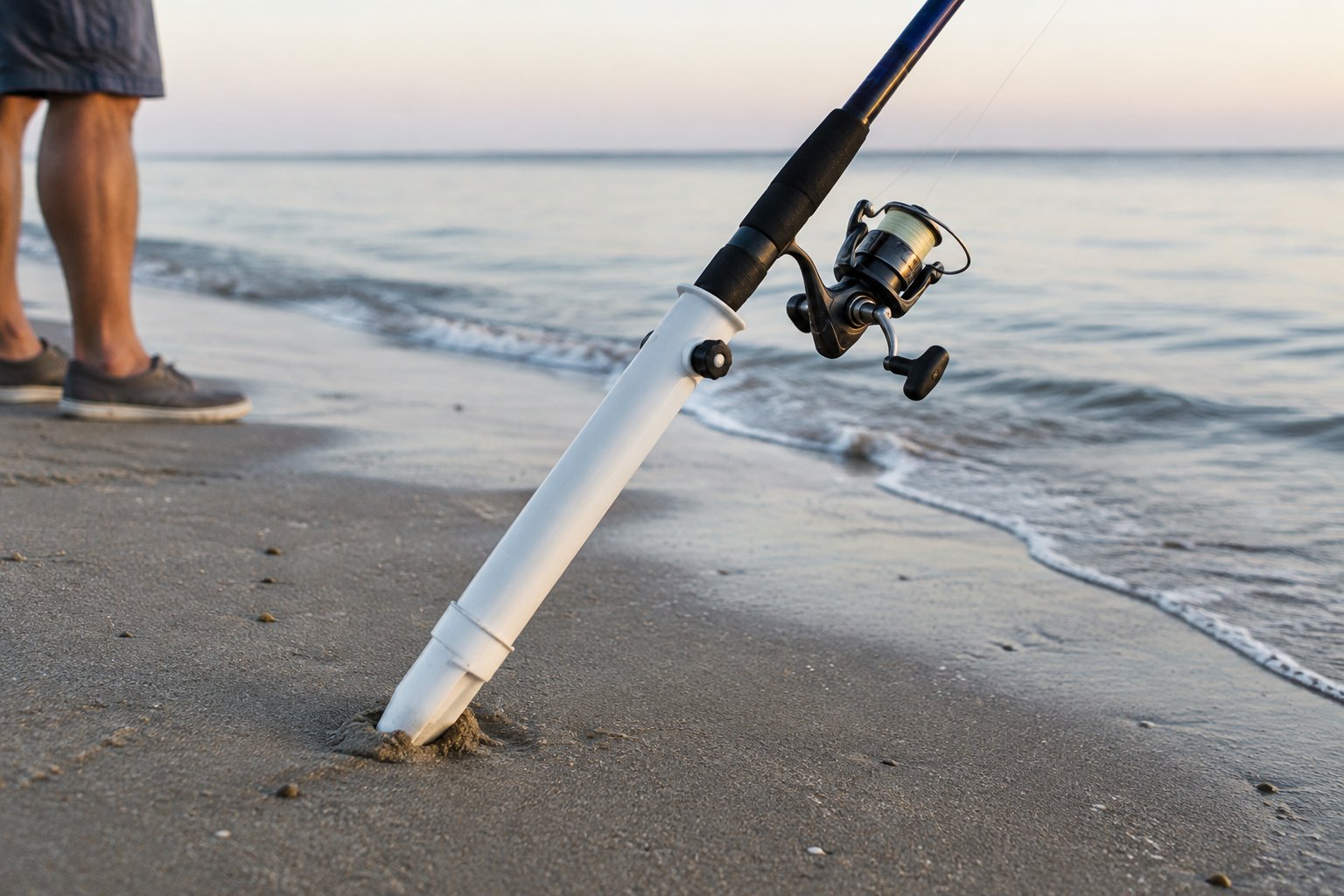
You have another sleeve-style option for sandy banks with the Sea Striker PVC Sand Spike Rod Holder. Check the exact version’s dimensions, since your handle fit and usable burial depth determine whether it suits your setup.
Inspect the tube edge and any hardware before loading your rod. You want smooth contact around the grip and enough clearance to lift the handle without binding.
For freshwater use, reserve this style for shorelines with suitable sand. Pack the spike where it stays secured during transport, and rinse away grit before storing it with your other equipment.
How to Choose a Holder for Your Bank and Fishing Setup
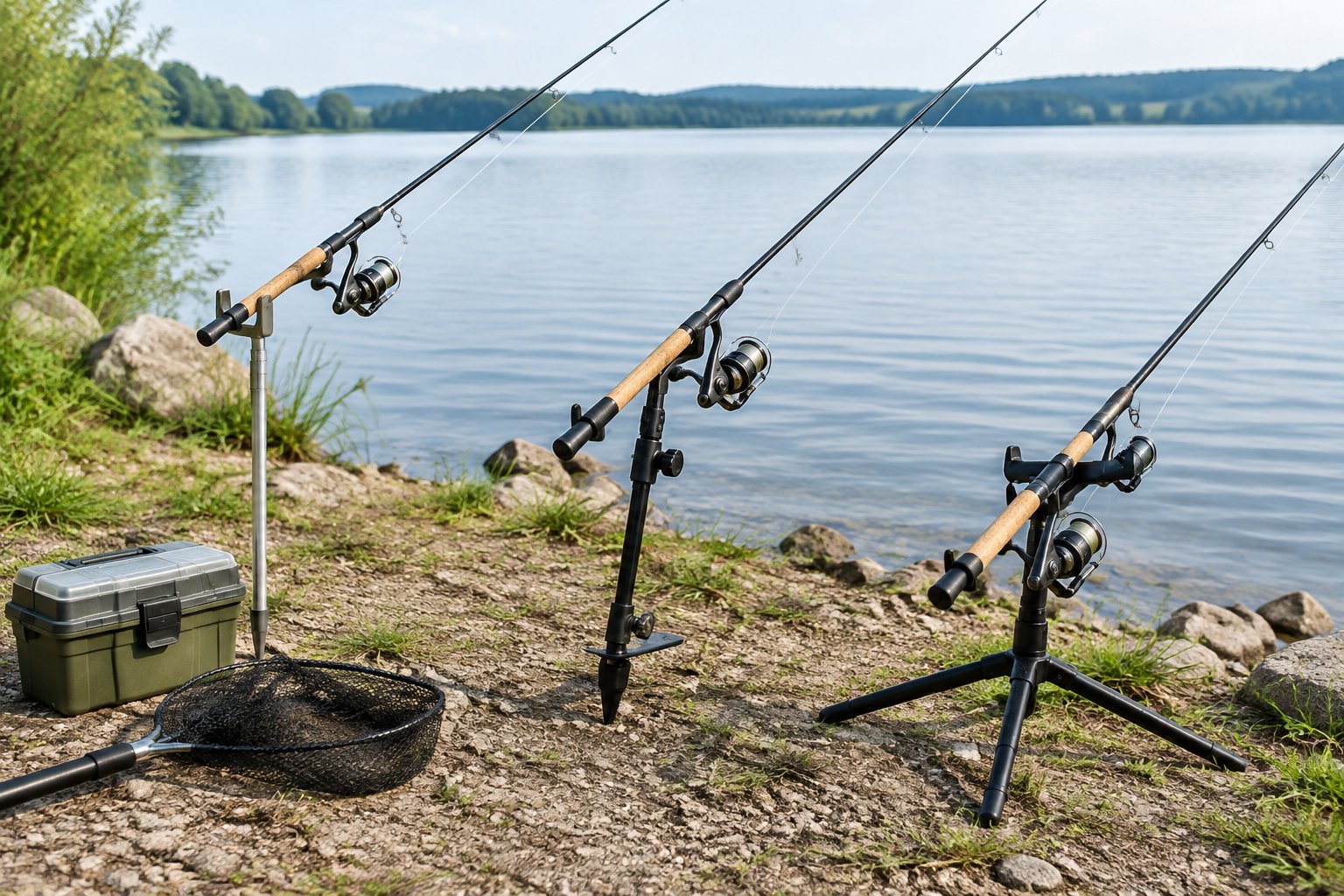
Choose your mounting style first, then compare packed size and rod-handle clearance. Use the table to narrow your shortlist, and check the exact model’s dimensions before purchasing.
| Holder | Bank or mounting check | Portability check | Rod-fit check |
|---|---|---|---|
| Berkley Spiral Rod Holder | Penetrable soil | Exposed stake | Spiral opening |
| PLUSINNO Fishing Rod Holders for Bank Fishing | Stake installation | Adjustment assembly | Cradle clearance |
| Rod Sprocket All-Terrain Rod Holder | Included attachment method | Complete mounting kit | Retention and release |
| South Bend Folding Rod Holder | Ground contact | Folded dimensions | Open support |
| Berkley Tube Rod Holder | Ground-mount version | Tube length | Butt-cap diameter |
| Cabela’s Ground Spike Rod Holder | Penetrable soil | Spike protection | Cradle dimensions |
| Eagle Claw Extendable Stick Rod Holder | Stake purchase | Collapsed length | Butt support |
| Daiwa Aluminum Tripod Rod Stand | Level footprint | Folded frame | Rest spacing |
| Fish-N-Mate Sand Spike | Firm sand | Full spike length | Tube opening |
| Sea Striker PVC Sand Spike Rod Holder | Suitable sand depth | Tube storage | Grip clearance |
Which Holder Styles Work on Soil, Sand, Gravel, and Concrete?
Use stakes in soil that allows secure insertion and sand spikes where you have enough sand depth. On gravel, check what lies beneath the loose surface before choosing your support. For concrete or exposed rock, look for a freestanding setup with stable footing and adequate space.
Will Your Rod Handle Fit and Release Easily?
Measure your butt cap at its widest point, then compare it with the holder’s opening. Test the complete outfit because your reel position affects removal. With a youth fishing rod, check that the short handle reaches the support correctly and remains accessible to you.
What Packs Easily for a Lunch-Break or After-Work Trip?
Choose a holder that fits your existing bag or attaches securely outside it. Keep its point covered and its adjustment parts together so you arrive ready to set up. If you carry a kids’ fishing backpack, reserve its accessible pockets for tackle and place sharp stakes in a protected compartment.
When Is a Freestanding Holder Worth Carrying?
Carry a freestanding holder when your regular spot has hard ground and enough level space. Compare the deployed footprint with the bank’s usable width before committing to a larger stand. Account for the time needed to unfold and secure it during a short outing.
How to Use Bank Rod Holders Safely With Kids
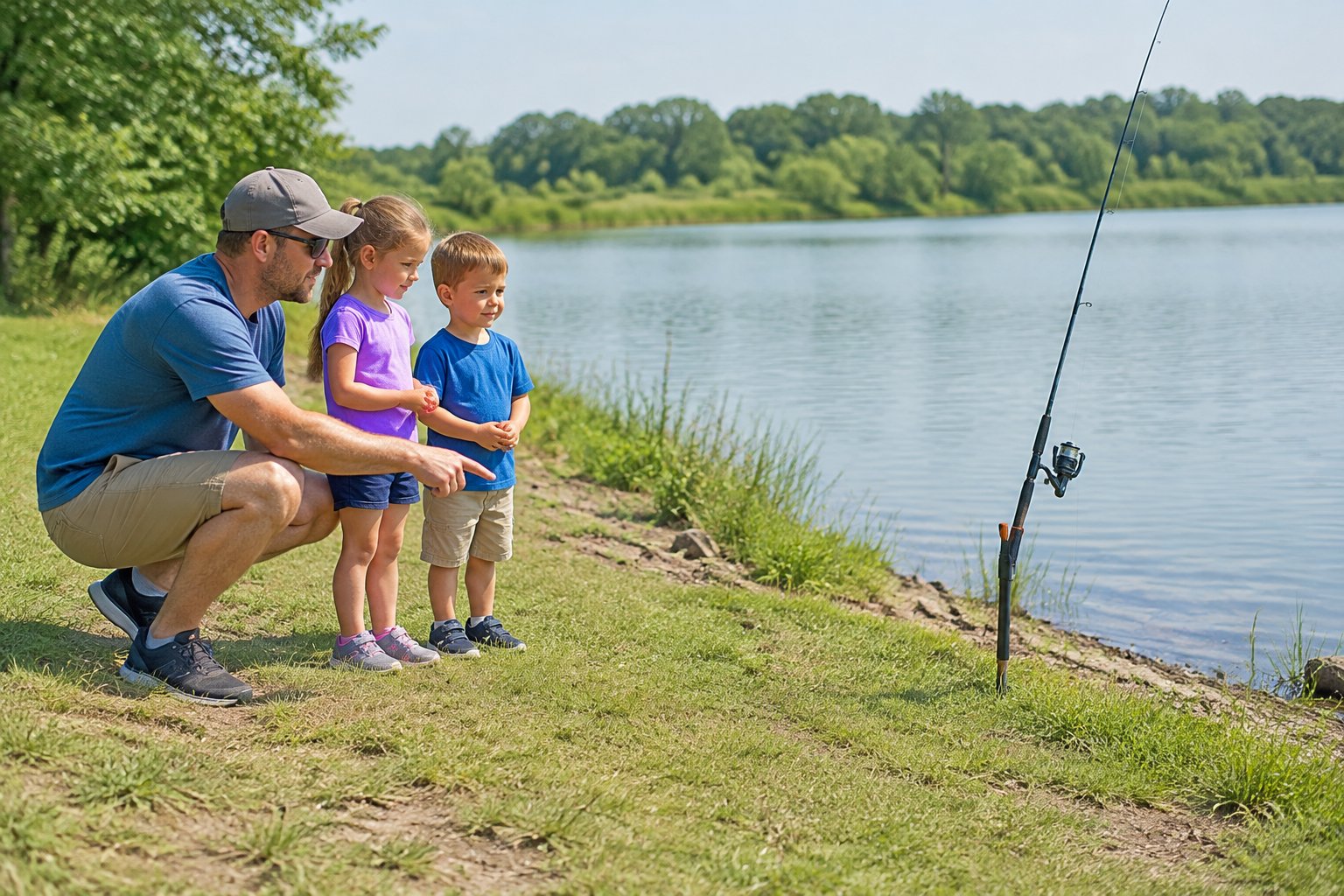
Keep every holder within your immediate supervision and place it where your child has a clear, stable route to the fishing position. Handle the installation yourself, and have children wait away from exposed points and moving tackle.
Where Should You Place Holders to Reduce Trip and Puncture Hazards?
Set your holder beside the fishing position with a clear walking route behind it. Keep stakes away from picnic blankets and paths to the tackle bag. Put unused holders in covered storage, and identify the safe approach before your child begins fishing.
How Do You Check Stability Before Baiting Up?
Install the holder, place your unbaited rod in it, and apply gentle pressure in the expected direction of line pull. Watch for rotation, sinking, or loose adjustment joints. Reposition the support if it shifts, then repeat the check after rain or a change in ground conditions.
How Can You Reduce the Risk of a Fish Pulling a Rod Into the Water?
Set your reel’s drag for the line and target fish, then confirm that line releases under controlled tension. Keep the handle within immediate reach and supervise every baited rod. When fishing a bluegill rig, use a manageable outfit that you can lift quickly without stepping toward an unstable edge.
Why Does a Rod Holder Never Replace Adult Supervision?
You remain responsible for the water’s edge, hooks, and your child’s movements while the rod rests. Keep young children within arm’s reach near the water and use an appropriately fitted, US Coast Guard-approved life jacket. If your attention needs to move elsewhere, retrieve the rig and move your child to a safe location first.
Which Bank Fishing Rod Holder Should You Choose?
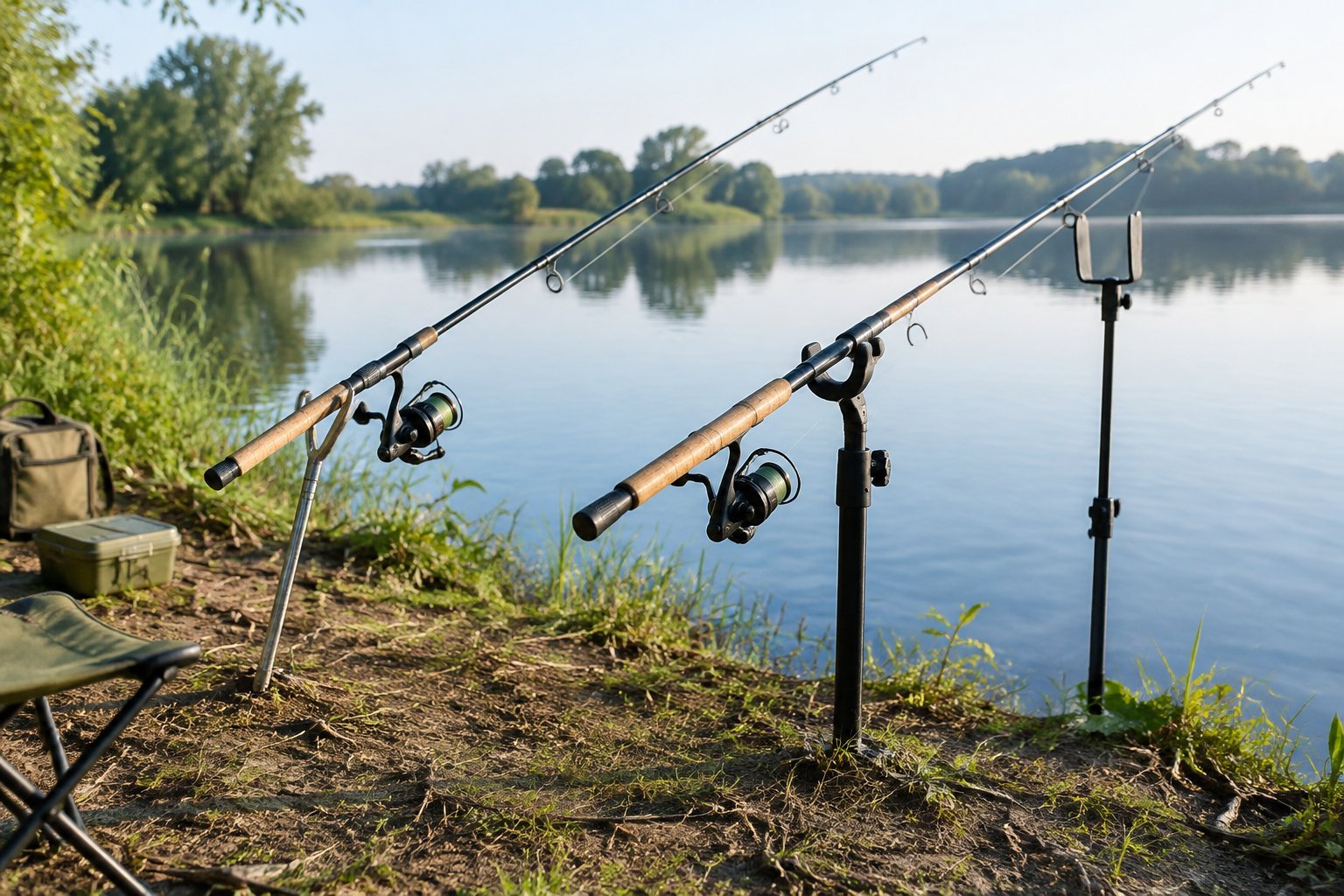
Start with the Berkley Spiral Rod Holder for a basic grassy-bank kit, and change styles when your shoreline calls for a different mounting method. Keep your selection tied to the place you visit most frequently.
What Is the Simplest Choice for a Beginner on a Grassy Pond Bank?
Put the Berkley Spiral Rod Holder first on your shortlist when your bank has penetrable soil. Confirm the handle fit before purchasing and keep your initial kit to one manageable rod. If you’re also choosing fishing rods, settle on the outfit before matching its holder.
Which Setup Makes Sense for a Quick Trip With Kids?
Bring one adult-installed holder for each rod you can actively supervise. Pack a small tackle kit and choose a familiar bank with easy access so you spend less time organizing equipment. At Fishing At Work, you’ll find the same practical emphasis on making short fishing opportunities easier to use.
What Should You Choose for Hard Ground or Loose Sand?
Shortlist the Daiwa Aluminum Tripod Rod Stand for level hard ground with room for its legs. For sand, compare the Fish-N-Mate and Sea Striker options against your required insertion depth and handle diameter. If loose material prevents secure placement, relocate to firmer footing before fishing.
Check the current price and customer reviews for the Berkley Spiral Rod Holder before your next fishing trip.

