Your fishing reel does the work of bringing line back, and the rod only holds the reel and guides the line. So when your rod stops pulling line in, the fix almost always lives in the reel. Check five things in this order: the handle and anti-reverse switch, the bail, the drag, line slipping on the spool, and line jammed under the spool or behind the rotor. Most of these take a minute or two at the water’s edge with no tools.
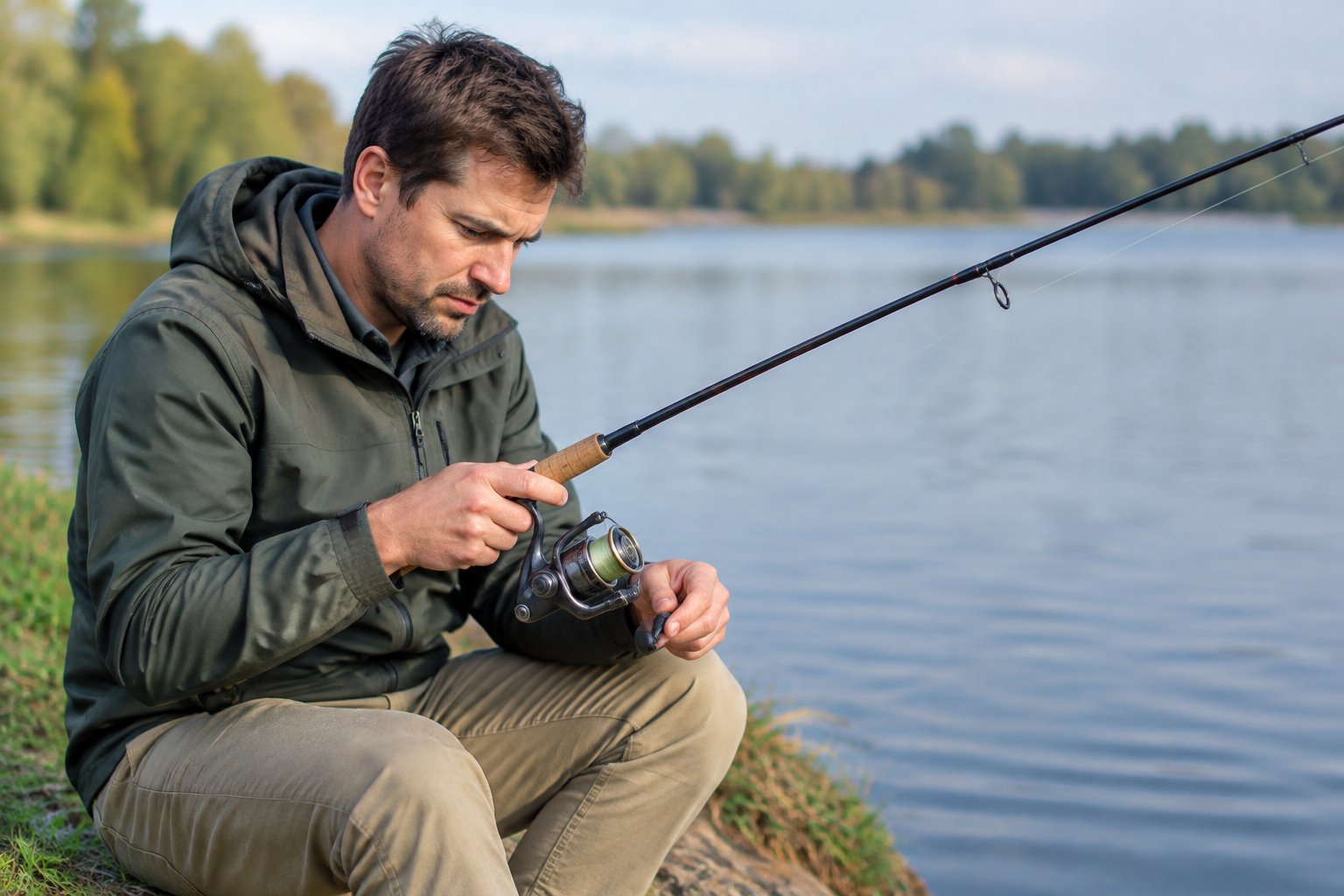
That order saves you time on a short trip before work or with your kids waiting on the bank. Never force a stuck handle or bail. Pushing harder turns a simple fix into a broken part.
What Should You Check First?
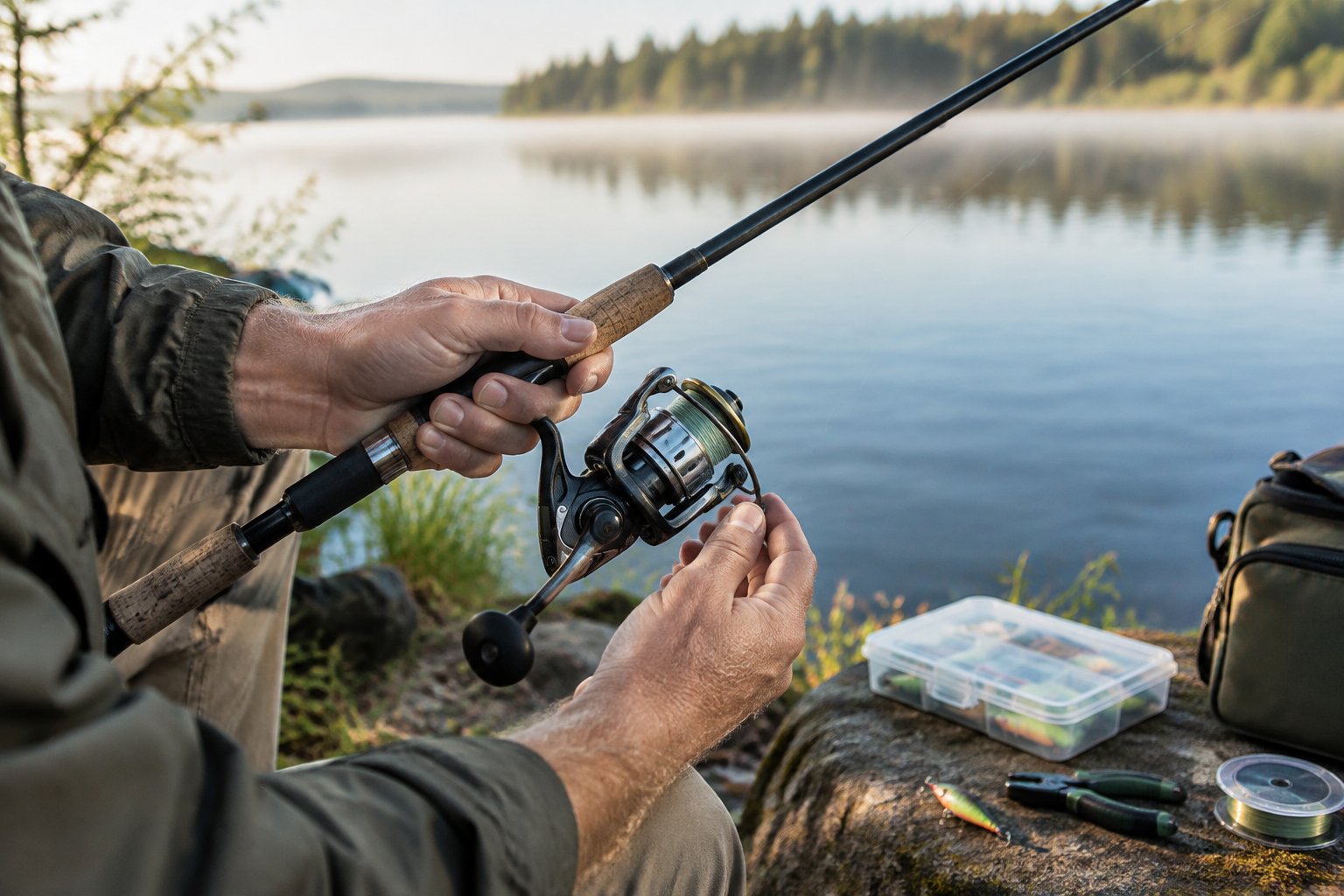
Start with the parts you can see and touch on a spinning reel: whether the handle grabs, whether the bail is closed over the line roller, and whether the drag holds. These three checks solve most cases of a reel that spins but won’t pull line back.
Does the Handle Turn Forward and Engage the Reel?
Turn the handle forward slowly and watch the rotor (the part that spins around the spool). If the rotor turns with the handle, your gears are engaging. If the handle spins freely and nothing moves, stop and look closer.
Find the anti-reverse switch, which sits on the bottom or back of most spinning reels. When it is set to “off,” the handle can spin backward, and you may think you are reeling when you are letting line out. Flip it to “on” and turn the handle again.
If the handle still turns backward with the switch on, the anti-reverse part inside the reel has failed. That is an internal repair, so set the reel aside for service.
Is the Bail Closed With Line on the Roller?
The bail wire is the metal arm that flips over the spool. When it is open, line feeds out. When it is closed, the line rides on the line roller and wraps back onto the spool as you are reeling in.
Look at where your line sits. It should run from the rod guides, over the line roller, and onto the spool. If the line is outside the bail wire, the rotor spins but no line goes on. To fix it:
- Loosen the drag knob and lift the spool off.
- Open the bail.
- Put the spool back and tighten the drag knob.
- Close the bail and check that the line rests on the roller.
If you are new to this, knowing how to set up a spinning reel the right way from the start stops this mistake before your first cast.
Is the Drag Slipping Under Light Pressure?
A loose drag setting lets the spool turn backward while you crank, so line goes out as fast as it comes in. You will hear the clicking sound when you reel against any weight.
Pull the line by hand above the reel. If it slides off with almost no effort, turn the drag knob clockwise a little at a time until it holds against a firm pull. If you want to learn how much is enough, this guide to what drag is in fishing covers the basics.
Is the Line Slipping or Jamming?
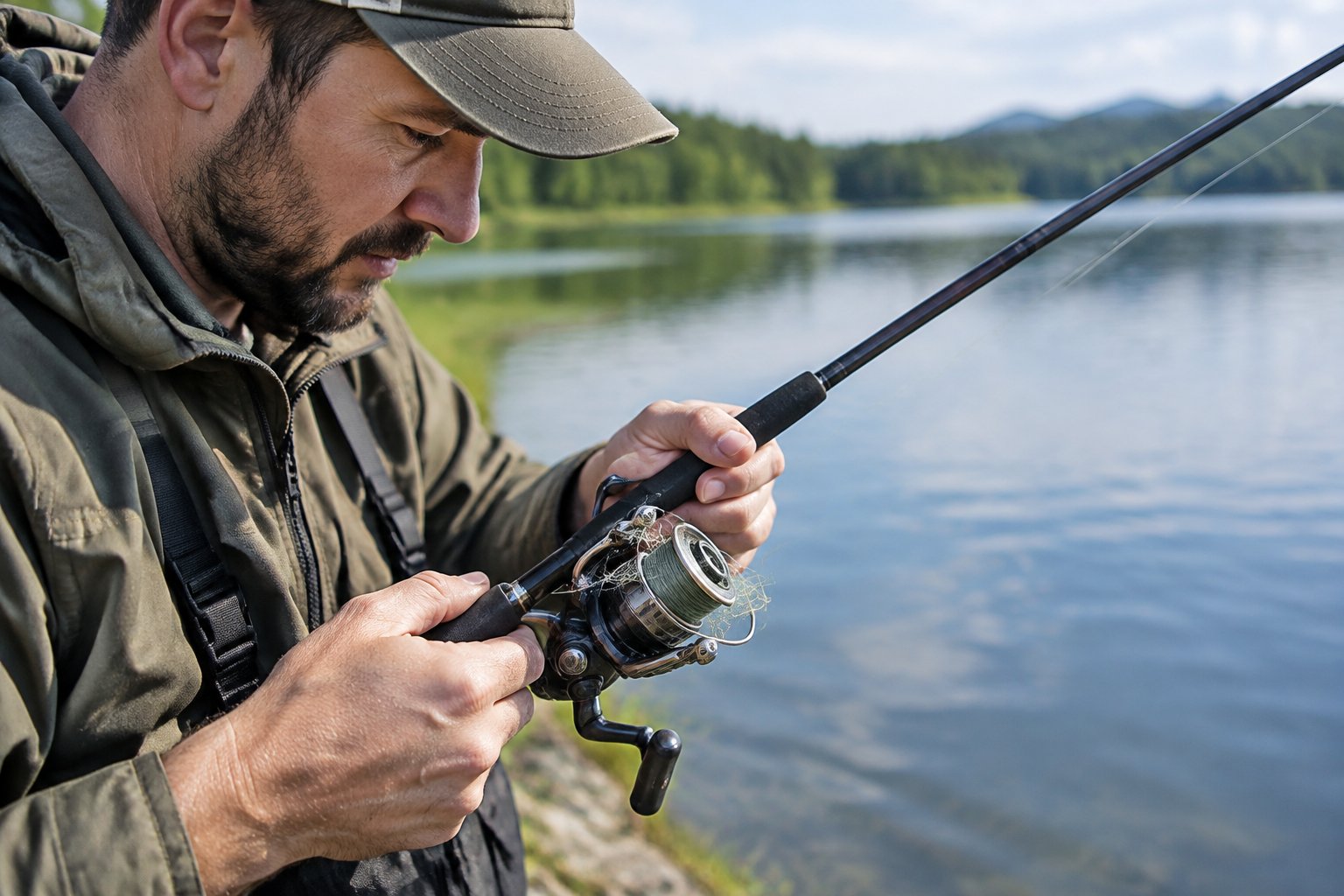
When the handle, bail, and drag all check out, the fishing line itself is the next suspect. Braid can spin loose on a smooth spool, line can wrap under the spool, and line twist can pile up into wind knots that block the retrieve.
How Can You Tell Whether Braid Is Slipping on the Spool?
Braid is slick. If you tied it straight onto a spool that isn’t made for braid, the whole bundle of line can turn around the spool like a loose ring. You’ll see the bail turning and the line roller working, yet no new line builds up.
To test it, hold the spool rim still with your thumb and pull on the line. If line slides off while the spool stays put, the braid is slipping. Two fixes work well:
- Wrap a strip of electrical tape around the bare spool, then tie the braid on top.
- Spool a short backing of monofilament first, then tie your braid to it.
Baitcasters have the same problem, so learning how to spool a baitcaster with braid with backing is worth the extra few minutes.
How Do You Clear Line Wrapped Under the Spool?
Line sometimes slips behind the spool and wraps around the shaft, between the spool and rotor. The reel feels stiff, then stops.
Loosen the drag knob and remove the spool. Unwind the trapped line slowly by hand. Cut it if it is knotted tight, and never yank it out with pliers. Check the line for kinks or scuffs, and cut off any damaged section before you retie.
What Should You Do About Twisted Fishing Line and Wind Knots?
Twisted fishing line coils on itself and forms loose loops on the spool. Those loops turn into wind knots and line tangles that jam the reel.
Pick out small tangles loop by loop. For heavy twist, take off your lure and let line drift in a river current or behind a moving boat, then reel it back under light tension. If the line is old or badly twisted, replace it. A small swivel ahead of spinning lures cuts down on new twist.
What Changes When You Use a Baitcaster or Spincast Reel?
Baitcasters and spincast reels use different parts, so your checks change a bit. Each type has one control that beginners miss most.
Baitcasters: Check Thumb Bar Engagement Before Spool Tension
On a baitcaster, pressing the thumb bar puts the spool in free spool for casting. Turning the handle forward should click the spool back into gear. If the handle turns and the spool keeps spinning freely, the reel hasn’t re-engaged. Turn the handle a full turn, slowly, and listen for the click.
After that, check spool tension. Hold the rod at about 45 degrees, press the thumb bar, and adjust the spool tension knob until your lure drops very slowly. A backlash (bird’s nest) can also lock the spool, so clear it loop by loop. The right line helps too, and this list of the best line for baitcasting reels is a good place to start.
Spincast Reels: Check the Release Button and Line Pickup
Spincast reels hide the spool under a front cover. When you press the button, line releases. Turning the handle should engage the pickup pins that grab line again.
If nothing comes back, unscrew the front cover counterclockwise and look for line tangled behind the spinnerhead. Clear it and cut away damaged line. Also check that you are using the right line: braid and heavy line don’t work well in many spincast reels. Kids’ push-button setups like the ones on this list of best push button fishing reels work best with light monofilament filled to about 1/8 inch below the spool lip.
When Should You Stop Troubleshooting and Get Service?
Stop working on the reel yourself once the problem is inside the body or needs a part you don’t have. At that point, follow your reel maker’s manual or send it to an authorized service center.
A Bent Bail or Failed Spring Needs Model-Specific Parts
If the bail wire won’t close when you turn the handle, or won’t stay open for a cast, look for a bent bail wire or a weak bail spring. Bending the wire back by hand risks snapping it. Replacement bail springs and bail wire assemblies are made for specific reel models, so order parts that match your model number.
Grinding, Seizing, or Slipping Gears Call for Internal Inspection
Grinding sounds point to sand, salt, or worn gears. A handle that locks up or slips under load points to damaged gears or a failed anti-reverse. These repairs mean taking the reel fully apart, and putting it back together wrong causes new problems. Leave this to the manufacturer or a reel repair shop.
Check Rod Guides and Snags Before Blaming the Reel
Sometimes the reel is fine. Run your line through each guide on your fishing rod and look for a cracked guide, a wrapped tip, or line caught around a guide. A snag on rocks or brush can also feel like a dead reel. If you carry a collapsible rod, a telescopic fishing rod stuck section can pinch the line too. Keep a spare spool or a second rod in your fishing tackle for quick trips.
How Can You Prevent Another Interrupted Fishing Trip?
A two-minute check at home keeps your next trip from ending early. These habits work for any spinning reel.
Test Retrieval and Drag Before Leaving Home
Before you load the car, tie on a small weight, crank a few turns, and pull the line by hand. You should feel the reel take line and the drag give smoothly under a hard pull. This takes less time than packing snacks.
Close the Bail by Hand and Retrieve Slack Under Light Tension
After each cast, flip the bail closed with your hand. Cranking it shut with the handle wears the bail spring faster. Then pinch the line lightly between your fingers as you reel up slack, so it wraps snug on the spool. Loose wraps are what dig in and tangle later. If casting still feels awkward, practice how to cast an open face reel in the yard.
Use Suitable Line, Avoid Overfilling, and Clean as Directed
Use the line size printed on your reel. Fill the spool to about 1/8 inch below the lip. Overfilled spools throw loops and line twist. Loosen your drag setting after fishing so the drag washers don’t stick. Rinse the reel after dirty or salty water and clean it as your manual directs.
Fix the Simple Causes and Protect Your Fishing Time
Your fishing reel does the reeling in, so start there. Check the handle and anti-reverse, close the bail with line on the roller, and tighten a loose drag. Then look for slipping braid, line under the spool, and twist. If you find grinding, seizing, or bent parts, stop and get service.
Get your gear ready and explore the related beginner-friendly guides before your next trip.