Fishing footwear for children needs to do more than keep feet dry. Wet docks, boat decks, muddy banks, and rocky shorelines demand dependable traction, quick-draining materials, and enough coverage to reduce scrapes from rocks or stray tackle. Ankle boots offer the strongest weather protection, while water shoes and closed-toe sandals are often more comfortable for swimming and hot-weather activities.
A secure fit matters as much as the outsole: loose footwear can slip off in water, while stiff or narrow shoes can cause blisters. Parents should check the closure, toe coverage, drainage, sole flexibility, and sizing feedback before buying. The picks below cover waterproof fishing boots, lightweight water shoes, and versatile closed-toe sandals.
Best for young anglers needing a durable ankle boot: XTRATUF Kids Ankle Deck Boot
Best for wet docks and fishing trips: HUK Kids Rogue Wave Shoe
Best for barefoot-style comfort and wide toes: SEEKWAY Barefoot Water Shoes for Kids
Best for camp, hiking, and water crossings: Merrell Hydro 2
Best for rainy-day play and garden use: Lezzglt Kids Deck Boots
XTRATUF Kids Ankle Deck Boot
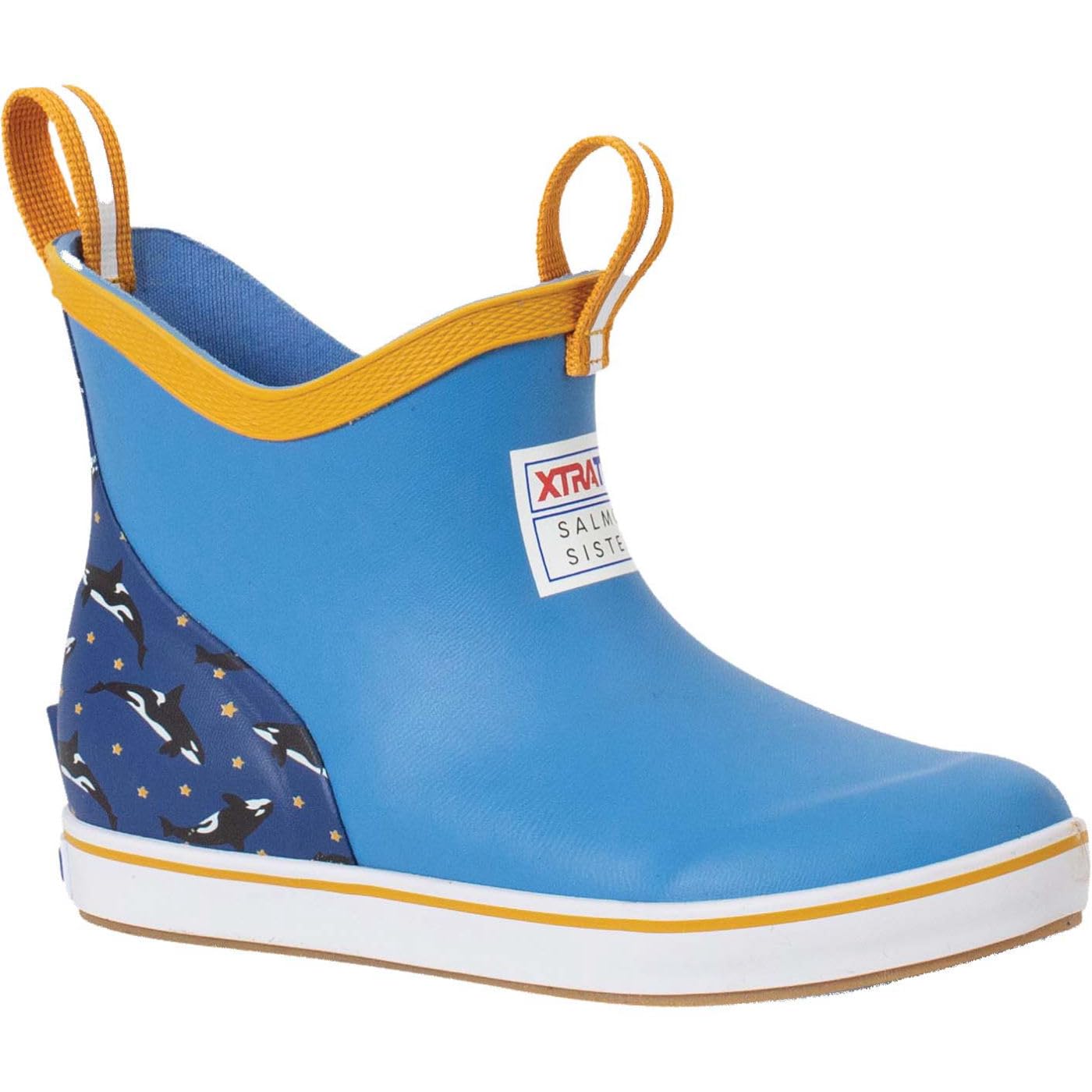
Young anglers should buy this boot when waterproof ankle coverage, a non-marking sole, and easy pull-on access matter most.
Pros
- Waterproof neoprene and rubber construction
- Slip-resistant, non-marking outsole
- Easy pull-on design for children
Cons
- Some children may find the fit roomy
- Less breathable than mesh water shoes
- A few reports mention durability concerns near the insole
The low ankle height is practical for fishing, puddles, mud, and wet grass without the bulk of a tall rain boot. Its rubber sole is designed for wet surfaces, and the pull-on opening helps children get ready without assistance.
Sizing deserves attention because several buyers describe the boots as running slightly large. That extra room may accommodate thicker socks, though it can reduce stability if the boot is too loose. The neoprene upper is comfortable and protective, but it can feel warm during hot-weather use.
HUK Kids Rogue Wave Fishing Boot
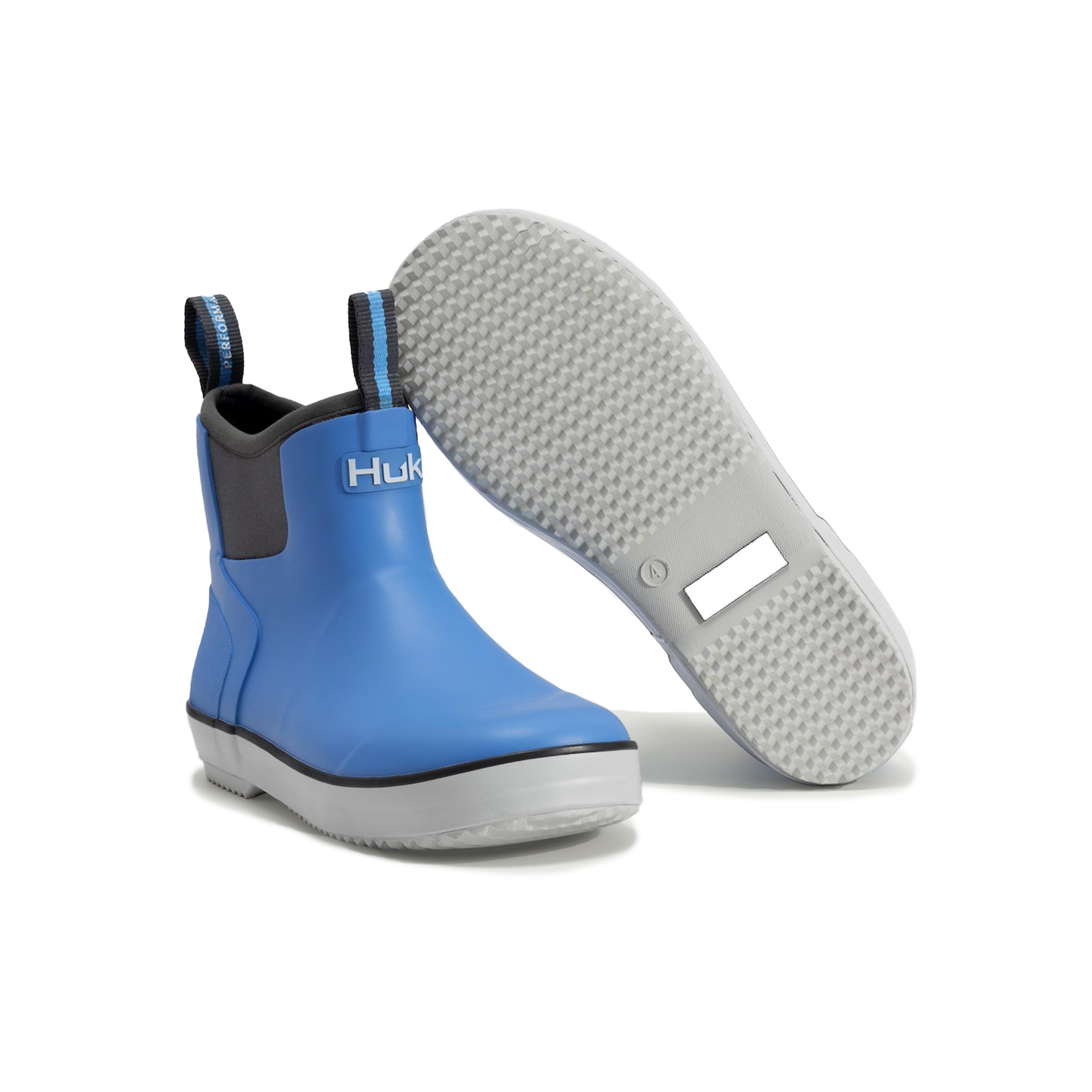
This is a strong choice for children who spend long periods on wet docks or fishing banks and need waterproof construction with substantial cushioning.
Pros
- Waterproof neoprene and rubber upper
- Multidirectional wet-grip tread
- Thick molded EVA footbed
- Reinforced pull straps
Cons
- Heavier and warmer than lightweight water shoes
- Limited ventilation
- Sizing should still be checked before ordering
The Rogue Wave Shoe combines a rubber and neoprene upper with a molded EVA footbed, giving it more structure than a flexible swim shoe. Its tread is designed to grip in multiple directions while allowing water to move away from the sole.
The reinforced webbing straps are especially useful when children are dressing in damp conditions. Buyers generally describe the fit as true to size, though the boot’s more substantial construction may feel excessive for casual beach play. It is better suited to fishing, boating, mud, and repeated exposure to wet ground.
SEEKWAY Barefoot Water Shoes for Kids
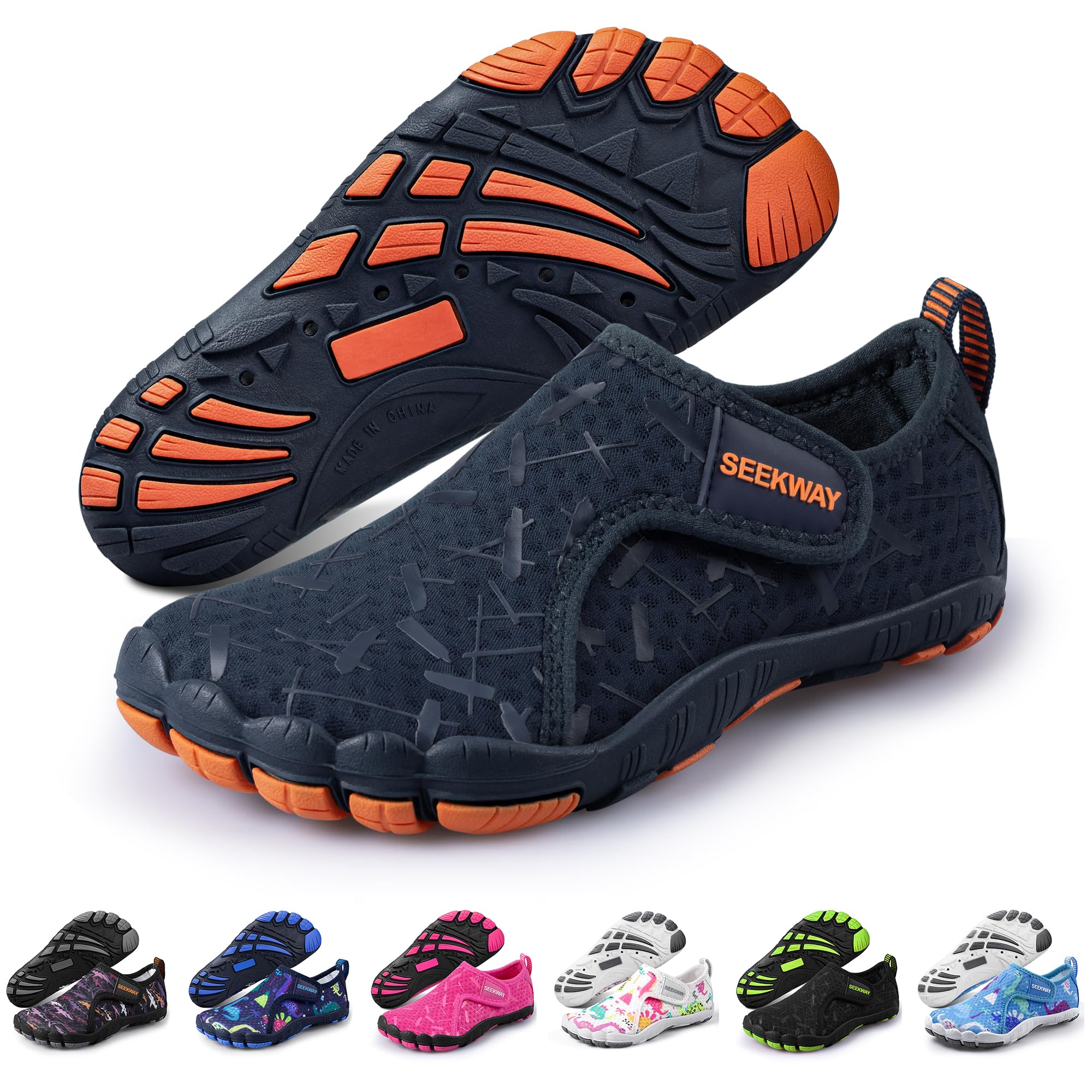
Children who prefer a lightweight, flexible shoe with a roomy toe area should consider this pair for beach trips, shallow-water fishing, and rocky shorelines.
Pros
- Wide toe box
- Flexible, flat outsole
- Quick-draining mesh construction
- Hook-and-loop closure
Cons
- Water resistant rather than fully waterproof
- Less protective than an ankle boot
- Sizing may vary by foot shape
The wide toe box allows the toes to spread more naturally, while the flexible sole bends easily during walking, climbing, and play. Mesh uppers and drainage openings help water escape quickly, making these more comfortable than waterproof boots in hot weather.
The hook-and-loop strap is a practical feature for younger children learning to put on footwear independently. These shoes offer useful coverage against small rocks and rough ground, though the thin, flexible design provides less defense against sharp objects or cold water. Parents should pay close attention to the size chart and the child’s foot width.
Merrell Hydro 2
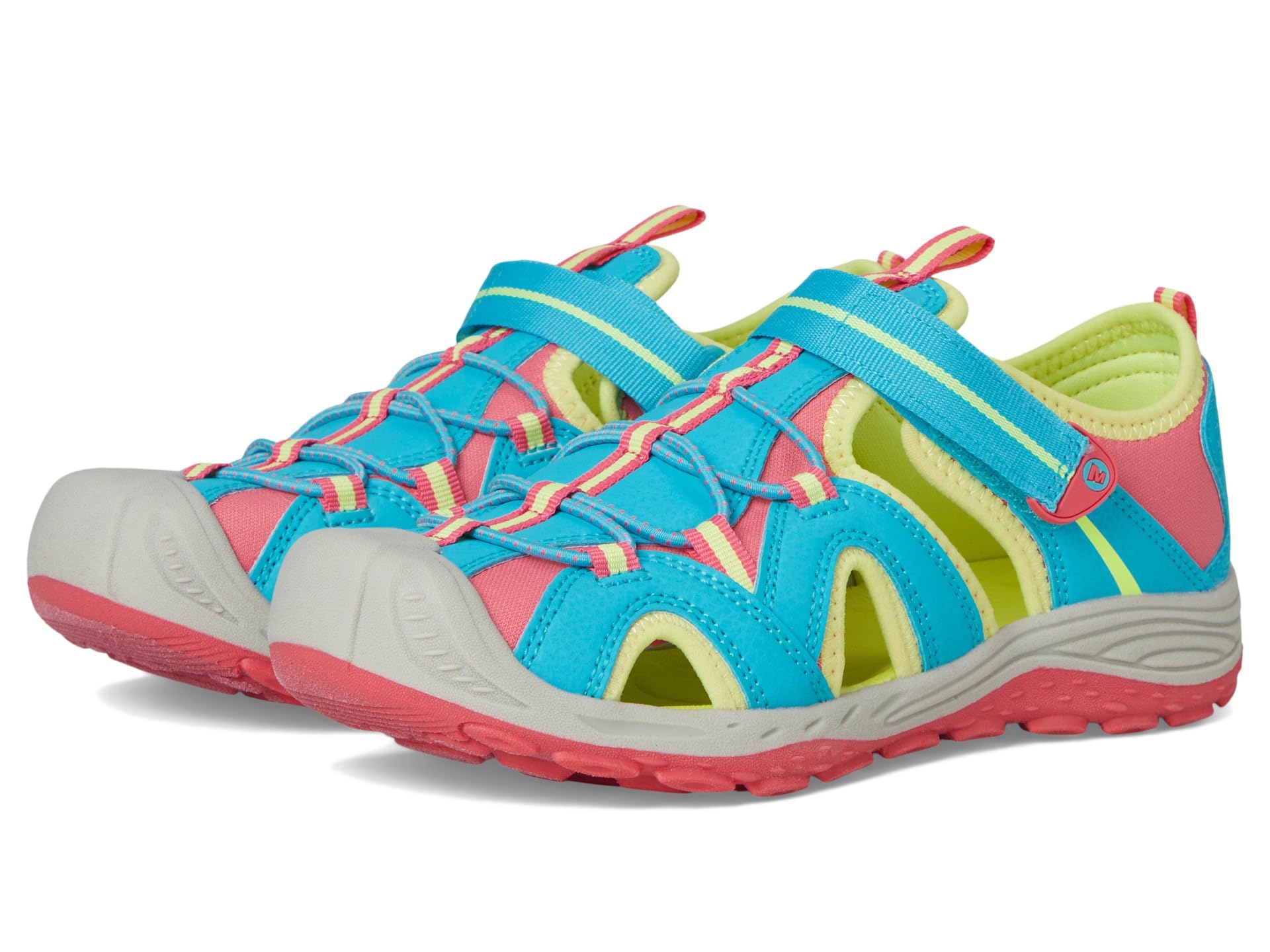
The Hydro 2 is a versatile pick for children who need one shoe for camp, hiking, fishing, boating, and wet-dry transitions.
Pros
- Closed toe with protective bumper
- Quick-drying, water-friendly materials
- Molded EVA footbed
- Flexible non-marking outsole
Cons
- Several buyers report that it runs large
- Not fully waterproof
- Stitching can create rough spots in some pairs
This closed-toe sandal offers more protection than an open sandal while remaining cooler and easier to drain than a rain boot. The toe bumper helps shield against rocks, and the molded footbed adds cushioning for long days outdoors.
The hook-and-loop closure makes adjustment simple, particularly for children who need to manage their own shoes. The Hydro 2 has worked well for wet hikes and stream crossings, though it should not be treated as a sealed boot. Sizing may require going down a size, based on recurring buyer feedback.
Lezzglt Kids Deck Boots
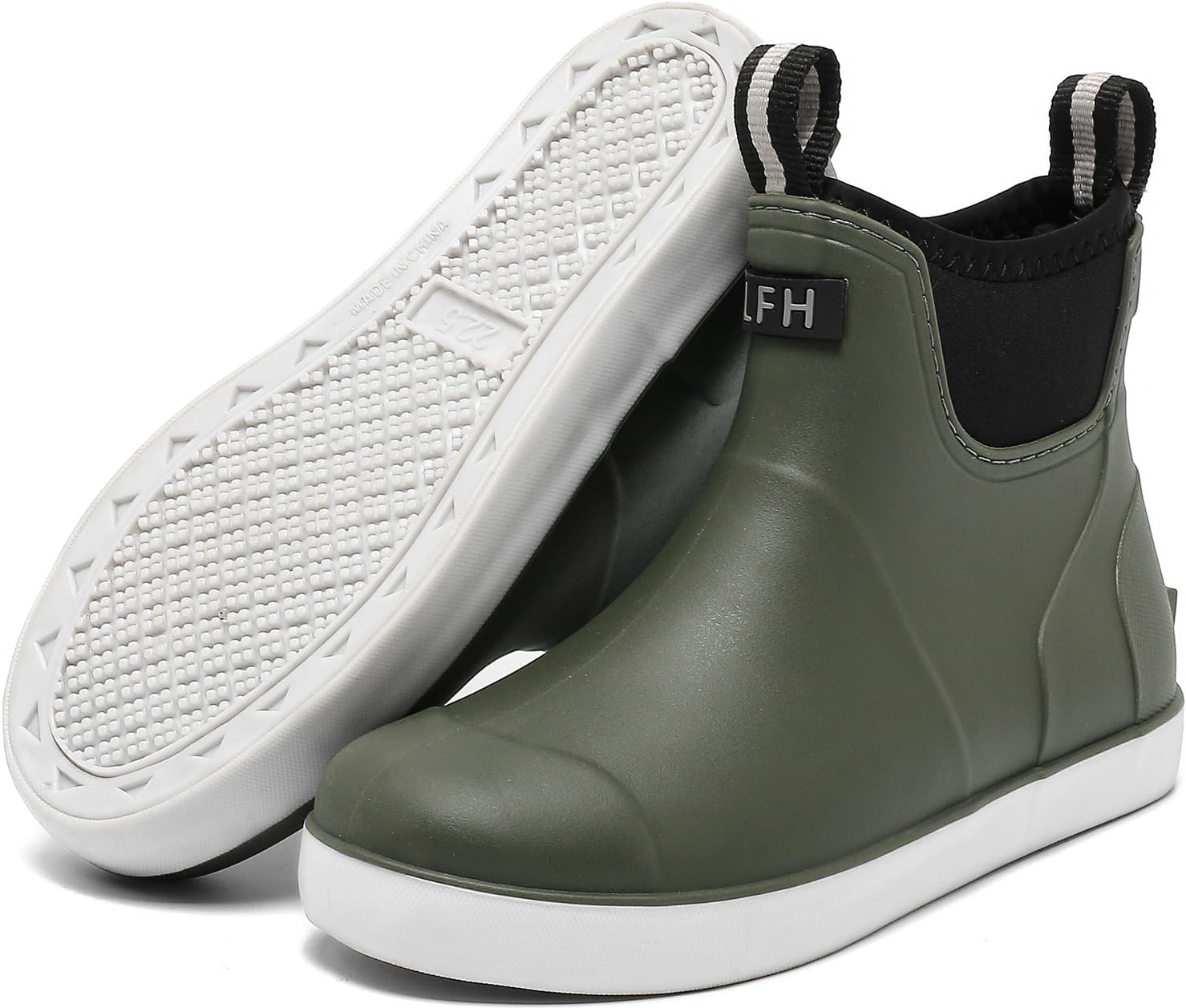
These ankle deck boots are a practical value-oriented option for rainy days, muddy play, gardening, and occasional fishing.
Pros
- Waterproof rubber and neoprene construction
- Multidirectional traction
- Pull loops and wide opening
- Easy to rinse clean
Cons
- Limited underfoot support
- Can feel warm in summer
- Fit and cushioning may vary
The rubber and neoprene construction creates a waterproof barrier for puddles and wet grass, while the textured outsole is intended to improve grip on muddy surfaces. Pull loops and a wide elastic opening make the boots accessible to children dressing themselves.
They are particularly easy to clean after gardening or outdoor play, and the ankle height avoids the bulk of taller rain boots. The tradeoff is modest support underfoot, so children with sensitive knees or legs may need a more structured shoe for extended walks. They are best viewed as simple wet-weather boots rather than technical fishing footwear.
Buying Guide
The best kids fishing shoes balance traction, protection, drainage, and comfort. No single design is ideal for every outing, so the right choice depends on whether the child will stand on a wet dock, wade through shallow water, or hike over hot and rocky ground.
Choose the Right Shoe Type
| Shoe type | Best use | Main tradeoff |
|---|---|---|
| Ankle deck boot | Rain, mud, docks, and cold wet conditions | Warmer and less breathable |
| Closed-toe water shoe | Beaches, streams, boating, and camp | Not always fully waterproof |
| Barefoot-style water shoe | Swimming, hot weather, and flexible movement | Less cushioning and impact protection |
| Closed-toe sandal | Wet-dry activities and hiking | Water resistant rather than sealed |
Prioritize Wet-Surface Traction
A rubber outsole with a clearly textured tread is preferable to a smooth casual sole. Multidirectional lugs can help with starts, stops, and side-to-side movement on wet docks. Non-marking rubber is useful on boats because it reduces the chance of leaving scuff marks.
Parents should still treat any outsole cautiously on algae, slime, or steep surfaces. Tread patterns help shed water, but they cannot eliminate the risk of slipping.
Check Toe Protection
Closed toes protect against rocks, shells, dock hardware, and accidental contact with hooks. A reinforced bumper is especially useful for children who hike, climb, or move quickly near shorelines.
Open sandals may be cooler, though they leave toes more exposed. For fishing, a closed-toe design is generally the safer choice.
Consider Drainage and Drying Time
Mesh uppers, perforations, and drainage channels allow water to leave the shoe quickly. These features suit swimming and warm-weather activities, while neoprene and rubber boots are better when keeping water out matters more than ventilation.
Wet shoes should be rinsed with fresh water after saltwater use and dried completely away from intense heat. This helps reduce odor and prolongs the materials.
Get the Fit Right
Children’s fishing shoes should hold the heel securely without pinching the toes. A little growing room is useful, but excessive space can make a child stumble or cause the foot to slide inside a wet shoe.
Parents should compare the manufacturer’s size chart with the child’s measured foot length. Reviews can reveal recurring fit patterns, though socks, foot width, and individual shape still affect the final fit.
Look for Independent Closures
Pull loops, hook-and-loop straps, and elastic openings help children put on and remove shoes without help. The closure should remain secure during walking and wading, especially when the shoe becomes wet.
For younger children, a simple strap is often easier to manage than laces. Boots with open pull handles are convenient, though they may not provide the same adjustability as a strapped shoe.