Small boats and kayaks leave little room for bulky gear, so the best fishing cooler for small boats has to do more than hold ice. It needs to stay put, survive wet decks, and work hard enough to double as a seat when space is tight.
The best compact fishing cooler is the one that balances ice retention, tie-down points, and a shell sturdy enough to handle daily abuse without becoming a nuisance on board. Size, weight, lid strength, and how easy it is to secure on a deck or in a tank well matter just as much as raw capacity.
Best for live bait and all-day aeration: Engel 30qt Live Bait Cooler Box with 2nd Gen 2-Speed Portable Aerator Pump and 4 x Fishing Rod Holder Attachments. Fishing Bait Station and Minnow Bucket in LBC30-RH in White
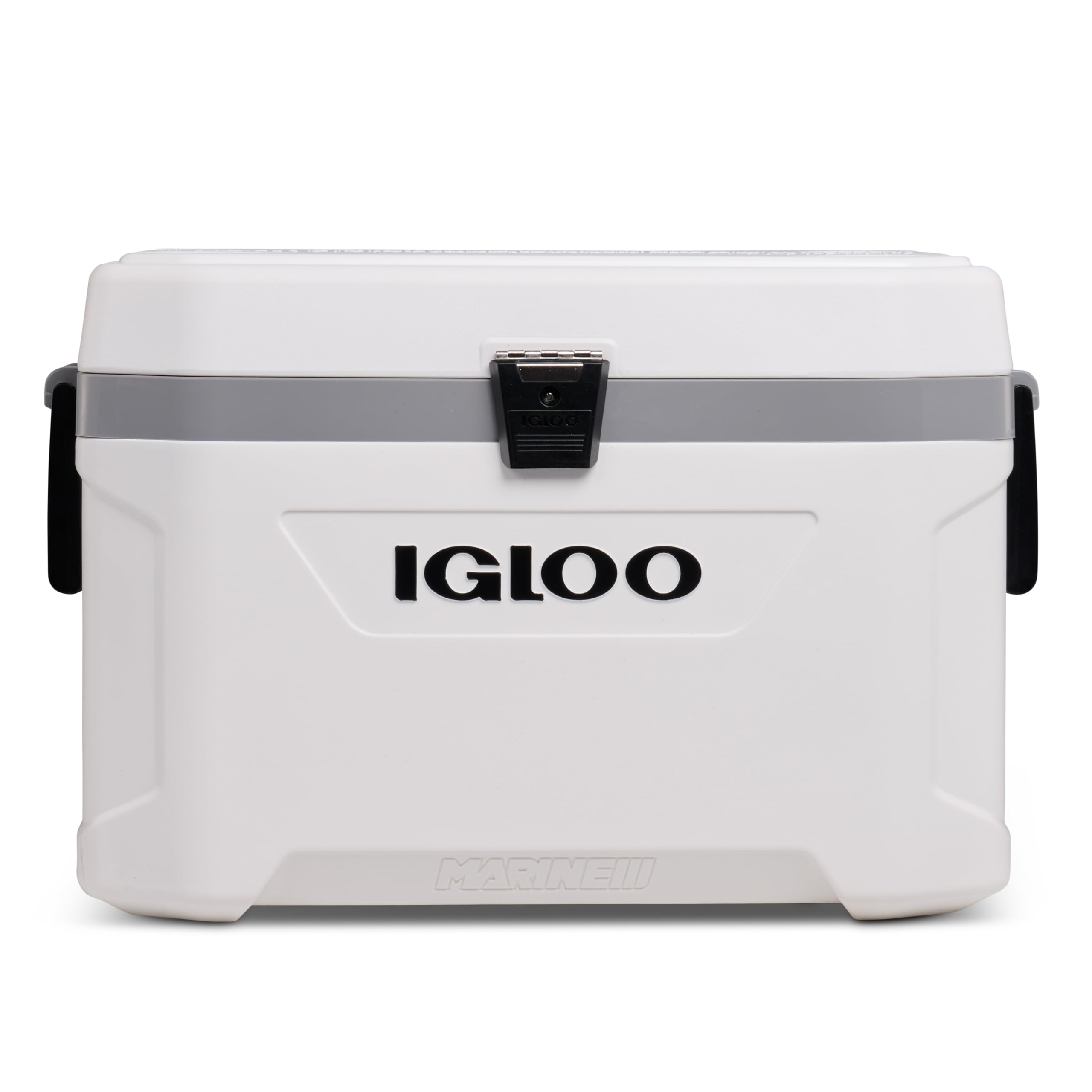
Best for a simple hard cooler with marine-friendly hardware: Igloo Marine Cooler | Insulated Hard Shell Ice Chest |Great for Fishing, Camping, Boating, & More 54Qt
Best for a tough seatable cooler with excellent ice retention: Pelican 20 Quart Elite Cooler Dark Gray/Green
Best for kayaks and tank wells: Pelican ExoChill – Soft Cooler Bag – Fit in Most Tank Wells – Removable Shoulder Strap and Handles On Each Side – More Storage Compartement – Black/Grey 17L Exochill Plus
Best for a lightweight soft cooler that still seals well: RTIC Soft Cooler 20 Can, Insulated Bag Portable Ice Chest Box for Lunch, Beach, Drink, Beverage, Travel, Camping, Picnic, Car, Trips, Floating Cooler Leak-Proof with Zipper
Engel Live Bait Cooler with Aerator

Pros
- Integrated aerator system helps keep bait alive
- Pullout net makes water changes and bait retrieval easier
- Rod holders add real utility on cramped boats Cons
- Aerator depends on external power
- More specialized than a general-purpose cooler
- Hard-shell format takes up fixed deck space
The cooler is aimed squarely at anglers who want bait management to be part of the system, not an afterthought. The pullout net is the kind of upgrade that feels practical the first time water needs to be refreshed without chasing bait around the box.
It also looks and feels like gear that can handle being rinsed, bounced, and strapped down often. The lid-mounted air tube port is a smart touch for a small boat, since it helps preserve internal space and reduces splash mess around the opening.
Igloo Marine Cooler
Pros
- UV protection helps it hold up in direct sun
- Stainless steel hardware is better suited to marine use
- Comfortable handles make it easier to move on and off the boat Cons
- Bulkier than soft coolers
- Not as purpose-built for bait as some alternatives
- Latch design is functional, not fancy
This is a sensible choice for anglers who want a traditional hard cooler that can pull double duty for drinks, food, and catch. The marine-focused details, especially the rust-resistant bits, matter on small boats where gear gets splashed and stored wet.
Its value is in being simple and dependable. It is not trying to be a specialty bait station, and that keeps it appealing for people who want one cooler to handle most trips.
Pelican 20 Quart Elite Cooler

Pros
- Strong latches and heavy-duty shell inspire confidence
- Good ice retention for its size
- Tie-down slots and rubber feet suit small boats well Cons
- Heavier than soft options
- Takes up more space than a similarly sized bag
- More cooler than casual day-trip users may need
This model feels like it was made for gear abuse, with a stout lid and latch system that should appeal to anglers who want something they can lean on, sit on, and secure without worrying much. The insulation setup is a good match for long, hot days when a small deck gets little shade.
It stands out as a compact hard cooler that does the basics very well. The tradeoff is weight, which small-boat owners will notice when loading and unloading from a truck bed or dock.
Pelican ExoChill Soft Cooler Bag

Pros
- Flexible shape fits spots that hard coolers cannot
- Light enough to carry easily
- Handy pockets and attachment points add utility Cons
- Won’t serve as a seat like a hard cooler
- Not built for the same abuse as a rigid box
- Less ideal for long ice retention in extreme heat
This is the easiest cooler in the group to live with on a kayak or small craft with awkward dimensions. The soft-sided design makes placement more forgiving, and that matters when every inch of deck space counts.
It is best used when portability and fit come first. It can keep food and drinks cold for a solid outing, though it is not the right call for anglers who want a seat, a bait station, or maximum insulation.
RTIC Soft Cooler 20 Can

Pros
- Light and easy to move on and off the boat
- Waterproof, leak-resistant construction
- Compact shape works well for short trips and day fishing Cons
- Not usable as a seat
- Zipper takes more effort than a simple latch
- Soft shell is less protective than a hard cooler
This cooler makes sense for anglers who want cold drinks and snacks without carrying a heavy hard-sided box. It is especially practical when the boat already has limited gear storage and the cooler needs to disappear into a corner or float beside the action.
The zipper seal is the defining feature. It helps with insulation and spill control, though it also means a bit more effort each time the lid opens, which matters when hands are wet or occupied with tackle.
Buying Guide
Hard Cooler or Soft Cooler?
Hard coolers make the most sense when the cooler needs to double as a seat, handle rough deck use, or stay secured in one place all day. Soft coolers win when the boat is cramped, weight matters, or the cooler needs to slide into a tank well or under a bench.
What Matters Most on Small Boats
| Feature | Why it matters |
|---|---|
| Tie-down points | Keeps the cooler from sliding when the boat moves |
| Lid strength | Important if someone will sit on it |
| Ice retention | Critical for long hot days and multi-stop trips |
| Weight | Easier to lift in and out of tight boats |
| Footprint | Smaller, smarter dimensions beat oversized capacity |
Size and Capacity
A compact cooler often works better than a large one on a small boat. A 20- to 30-quart hard cooler is usually enough for drinks, lunch, and a modest catch, while soft coolers are better for tight stowage and light loads.
Extra Features Worth Paying For
- Drain plugs for quick cleanup
- Rust-resistant hardware for marine use
- Non-slip feet to help the cooler stay put
- Integrated handles or straps for easier carrying
- Dedicated bait features if live bait is part of the trip
A Practical Rule
If the cooler will ride exposed on deck, prioritize durability and tie-down compatibility. If it will spend most of the day tucked away, prioritize fit, weight, and ease of carrying.