Virginia’s rivers offer some of the most rewarding freshwater fishing in the Mid-Atlantic. From the James and Shenandoah to the New and Appomattox, each river provides unique conditions, diverse fish species, and scenic surroundings. To fish successfully in Virginia’s rivers, anglers need to understand the local waters, follow state regulations, and use the right techniques for each environment.
Whether targeting smallmouth bass in fast-moving currents or catfish in deeper pools, anglers can find year-round opportunities across the state. The Virginia Department of Wildlife Resources manages these waters carefully, ensuring healthy fish populations and accessible public areas for all skill levels.
With the right preparation, gear, and respect for conservation, anyone can enjoy a productive day on Virginia’s rivers. This guide explains how to navigate these waterways, choose the best spots, and make every trip both responsible and rewarding.
Understanding Virginia’s River Fishing Landscape
Virginia’s rivers support a wide range of fish species and fishing styles. From cool mountain streams to broad tidal waters, these rivers provide anglers with year-round opportunities to catch both freshwater and migratory fish.
Major Rivers for Fishing
Several rivers stand out for their size, variety, and accessibility. The New River, one of North America’s oldest, flows north through the Blue Ridge Mountains and is known for smallmouth bass, muskellunge, and walleye.
The James River, stretching about 300 miles, offers both non-tidal and tidal fishing. In its upper reaches, anglers find bass and catfish, while the lower sections near the Chesapeake Bay attract striped bass and shad during spring runs.
The Shenandoah River, with its North and South Forks, supports strong populations of smallmouth bass and catfish. The Rappahannock River provides a mix of freshwater and saltwater species, including perch, crappie, and blue catfish. In the state’s southwest, the Holston River draws trout anglers to its cold, clear waters.
Types of Fishing Environments
Virginia’s rivers fall into three main environments: mountain headwaters, piedmont streams, and tidal rivers.
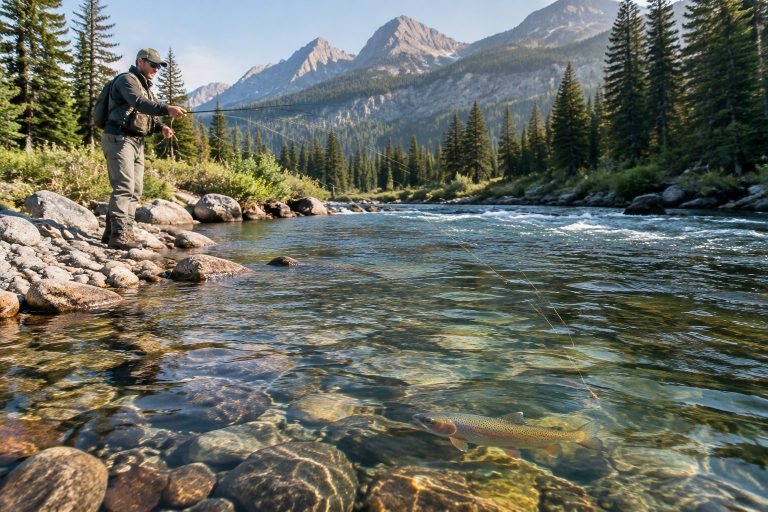
Mountain rivers such as the Jackson or upper New feature cool, fast-moving water and rocky bottoms. These areas favor trout and smallmouth bass fishing, often using fly or light tackle.
In the piedmont region, rivers widen and slow. Anglers here target bass, catfish, and panfish from boats or along accessible banks.
Tidal rivers, including the James and Rappahannock, shift with the ocean’s influence. They support both freshwater and salt-tolerant species. Spring migrations bring shad and striped bass inland, creating seasonal peaks in fishing activity.
| Environment | Common Species | Typical Methods |
|---|---|---|
| Mountain | Trout, Smallmouth Bass | Fly fishing, light spinning |
| Piedmont | Largemouth Bass, Catfish | Casting, bait fishing |
| Tidal | Striped Bass, Shad, Perch | Drift fishing, trolling |
Popular Species in Virginia Rivers
Virginia’s rivers hold a mix of gamefish and panfish. Common sport species include smallmouth bass, largemouth bass, muskellunge, catfish, walleye, and trout.
The New and Shenandoah Rivers are known for large smallmouth bass. The James River supports trophy blue catfish that can exceed 50 pounds. In colder waters, anglers find rainbow and brown trout, especially in the Jackson and Holston Rivers.
Migratory fish like American shad and striped bass move into tidal rivers each spring. These runs attract many anglers to the lower James and Rappahannock. Panfish such as crappie and bluegill provide steady action for beginners and families throughout the warmer months.
Licenses, Regulations, and Conservation
Fishing in Virginia’s rivers requires proper licensing, adherence to state regulations, and respect for conservation rules that protect fish populations and aquatic habitats. These measures ensure fair access for anglers and help maintain healthy waterways across the state.
Fishing License Requirements
Anyone 16 years or older must have a valid fishing license when fishing in Virginia’s inland waters. Licenses are available for residents and nonresidents and can be purchased online through Go Outdoors Virginia, by phone, or from approved license agents.
Residents can choose from several options:
- State Freshwater License: $23 for one year
- County/City License: $16 for local waters only
- Fresh/Saltwater Combination: $39.50
Nonresidents pay higher fees, such as $47 for a freshwater license.
Certain groups are exempt, including residents under 16, residents over 65, tenants fishing on rented land with permission, and landowners fishing on their own property. Active-duty military members on official leave and legally blind persons also qualify for exemptions.
Anglers must carry proof of their license—digital or printed—while fishing and show it upon request by enforcement officers or landowners.
Virginia Department of Wildlife Resources Guidelines
The Virginia Department of Wildlife Resources (DWR) manages fishing regulations, license distribution, and conservation programs. The agency enforces rules to preserve fish populations and maintain safe, ethical angling practices.
DWR requires anglers to follow all posted regulations for specific rivers and public access areas. In National Forest or State Forest lands, additional permits may apply, such as:
- National Forest Permit: $4
- State Forest Use Permit: $16
The DWR also oversees trout-stocked waters, where a trout license is required from October 1 through June 15. Anglers must check whether they are fishing in designated stocked trout areas to avoid violations.
All anglers should review current DWR publications or the official website for updates on local restrictions, catch methods, and permit requirements.
Catch Limits and Seasonal Restrictions
Catch limits and seasons protect fish during spawning and prevent overharvesting. The DWR sets daily limits and size restrictions for each species to maintain balance in river ecosystems.
For example, certain trout waters have catch-and-release only periods, while others allow limited harvests. Bag limits vary by species—such as bass, catfish, or sunfish—and by location.
Some rivers have closed seasons for specific fish, including striped bass and shad, especially in tidal sections of the Chesapeake Bay. Anglers must also follow equipment rules, such as using legal bait and tackle types.
By following these limits and respecting seasonal closures, anglers help sustain Virginia’s river fisheries for future generations.
Top Virginia Rivers for Anglers
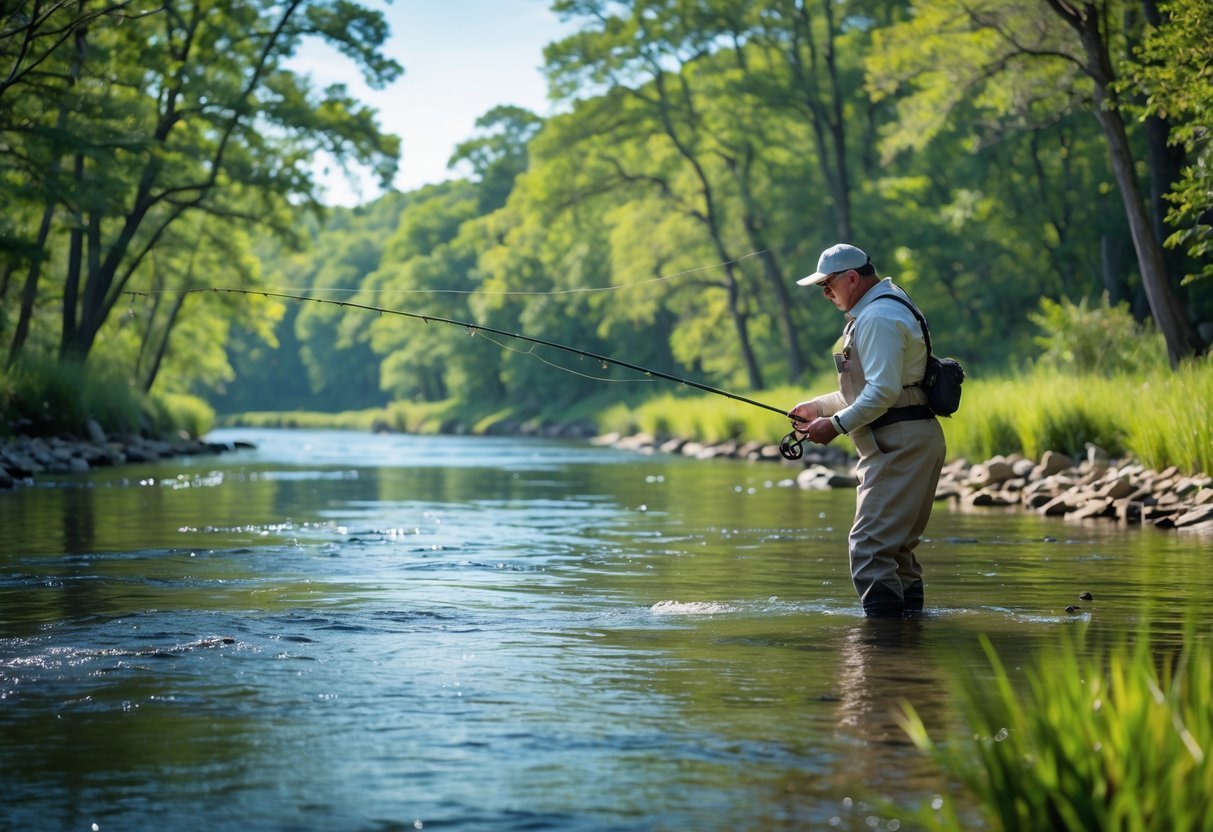
Virginia’s rivers offer diverse fishing opportunities, from mountain-fed trout streams to broad tidal waters filled with bass and catfish. Each river supports different fish species, access points, and conditions that appeal to anglers with varying skill levels and preferences.
Shenandoah River
The Shenandoah River flows through the valley between the Blue Ridge and Allegheny Mountains. It includes the North and South Forks, which meet at Front Royal before joining the Potomac River.
Anglers prize this river for its smallmouth bass population. Catch rates often remain high, and fish over 20 inches are not rare. Other common species include largemouth bass, catfish, walleye, and sunfish.
Public access is available through boat ramps and parks managed by the Virginia Department of Wildlife Resources (DWR). Many anglers prefer float trips using kayaks or canoes to cover long stretches of productive water.
The clear water and moderate current make it ideal for fly fishing or light spinning gear. Fishing is best from late spring through early fall when water levels are stable and temperatures support active feeding.
James River
The James River stretches about 300 miles from the Appalachian Mountains to the Chesapeake Bay. It passes through rural valleys, the city of Richmond, and into tidal waters near the coast.
Upstream, the upper and middle sections provide excellent smallmouth bass and muskellunge fishing. The tidal section supports blue catfish, some exceeding 50 pounds, along with striped bass, shad, and white perch during spring runs.
Below Richmond, the river widens and slows, offering easier access for boats. Anglers use both natural baits and artificial lures, depending on the target species.
A simple table highlights seasonal targets:
| Season | Common Species | Best Techniques |
|---|---|---|
| Spring | Shad, Striped Bass | Jigs, spoons, live bait |
| Summer | Smallmouth, Catfish | Topwater lures, cut bait |
| Fall | Musky, Bass | Crankbaits, trolling |
| Winter | Blue Catfish | Deep drifting, bottom rigs |
New River
The New River, one of North America’s oldest rivers, flows north through Virginia into West Virginia. Its varied habitat supports nearly every major freshwater gamefish in the state.
The smallmouth bass fishery is world-class, with consistent action and trophy potential. Other species include walleye, muskellunge, rock bass, and catfish. Several state record fish have come from this river.
Sections near Claytor Lake and the New River Trail State Park provide easy access for both shore and boat anglers. The river’s rocky structure and steady current demand careful navigation but reward those who plan well.
Fishing remains strong from late spring to early fall, especially when water clarity is good and water temperatures range between 60–75°F.
Rapidan River
The Rapidan River begins in the Blue Ridge Mountains and flows east to join the Rappahannock River. Its upper reaches are known for wild brook trout, making it a favorite for fly anglers seeking native fish.
As the river moves into the piedmont, it widens and supports smallmouth bass, sunfish, and carp. In the lower, tidally influenced sections, anglers encounter largemouth bass, crappie, and catfish.
The removal of older dams has improved fish passage, allowing shad and striped bass to migrate farther upstream during spring.
Waders and bank anglers benefit from clear water and steady flows, especially in early summer. Light tackle or fly fishing gear works best in the upper sections, while heavier setups suit the lower, deeper waters.
Essential Gear and Techniques for River Fishing
Successful river fishing in Virginia depends on using the right equipment, understanding how water currents affect fish, and selecting bait that matches local species. Anglers who prepare with proper gear and sound technique improve their chances of steady catches across changing river conditions.
Recommended Fishing Gear
Anglers should carry gear suited to Virginia’s rivers, which range from calm tidal streams to fast-moving mountain waters. A medium-action spinning rod about 6–7 feet long offers good control for casting and handling smallmouth bass, catfish, and sunfish.
A spinning reel with a smooth drag system and 8–12 lb test line works for most situations. In rocky or snag-prone rivers, braided line provides extra strength.
Essential items include:
- Tackle box with hooks, sinkers, and swivels
- Pliers for hook removal
- Landing net for larger fish
- Polarized sunglasses to reduce glare and spot fish
- Waders or sturdy boots for safe footing
A small waterproof bag keeps licenses, snacks, and tools dry. Lightweight, durable gear helps anglers move easily along the riverbank or wade through shallow areas.
Effective Techniques for Virginia Rivers
River fishing success depends on reading the current. Fish often hold behind rocks, near bends, or along seams where fast and slow water meet. Casting upstream and letting the bait drift naturally with the current looks more realistic to fish.
In deeper pools, anglers can use a bottom rig with split shot weights to keep bait near feeding zones. When fishing near structure, short, controlled casts reduce snags.
During warmer months, early morning and evening hours bring more activity. In colder seasons, fish move to slower, deeper water where the current is weaker. Adjusting casting distance and retrieval speed helps match these seasonal changes.
Choosing Bait and Lures
Live bait often works best in Virginia rivers. Nightcrawlers, minnows, and crayfish attract smallmouth bass and catfish. For artificial options, soft plastic grubs, spinnerbaits, and crankbaits imitate natural prey and cover more water.
In clear rivers, use lighter colors and smaller lures. In murky water, darker or brighter colors stand out better.
Matching bait size to local fish species improves hook-up rates. For example, smaller hooks and worms suit panfish, while larger minnows or chunk bait attract catfish. Keeping bait fresh and properly presented increases the chance of consistent strikes.
Planning Your River Fishing Trip
Anglers in Virginia benefit from diverse rivers that support year-round fishing. Success depends on choosing the right season, knowing where to launch, and deciding whether to go alone or with a guide. Careful planning helps them fish safely and legally while making the most of each river’s conditions.
Best Times and Seasons to Fish
Virginia’s rivers offer good fishing in every season, but timing affects what species bite. Spring brings shad and striped bass runs in rivers like the James and Rappahannock. Summer favors smallmouth bass in the New and Shenandoah Rivers, especially on warm, clear days.
Fall often produces active feeding before winter, making it a strong time for bass and musky. Winter fishing slows but can reward patient anglers targeting trout in cold-water rivers such as the Jackson and South Holston.
Water temperature and flow matter more than the calendar. After rain, rising rivers can stir up baitfish, attracting predators. Checking local fishing reports and state forecasts helps anglers match their timing with fish activity.
| Season | Common Species | Notes |
|---|---|---|
| Spring | Shad, Striped Bass | Peak spawning runs |
| Summer | Smallmouth Bass, Catfish | Best for warm-water action |
| Fall | Musky, Bass | Strong feeding before winter |
| Winter | Trout | Cold, clear water preferred |
Access Points and Boat Launches
Virginia’s rivers have many public access points managed by the Department of Wildlife Resources (DWR) and local parks. Most major rivers, including the James, New, and Shenandoah, feature well-marked boat ramps and parking areas.
Before launching, anglers should review DWR maps for ramp locations and waterway boundaries. Some rivers, like the Jackson below Gathright Dam, have sections with private property rights, so checking land ownership helps avoid violations.
For smaller streams, wading or kayak entry may be easier than trailering a boat. Using lightweight gear and respecting private land signs ensures a smoother trip. Always wear a life jacket and check flow conditions before entering moving water.
Guided Trips and Local Outfitters
Hiring a licensed guide can help visitors learn local techniques and safe routes. Experienced guides on rivers such as the New, Shenandoah, and Rappahannock know seasonal fish patterns and access points that may not appear on maps.
Guides often provide boats, tackle, and safety gear, making them ideal for beginners or travelers without equipment. Local outfitters also rent kayaks, canoes, and fishing gear for self-guided trips.
When choosing a guide or outfitter, anglers should confirm credentials and ask about trip length, cost, and targeted species. Checking reviews and contacting the Virginia DWR or local tourism offices can help locate reputable services.
Combining Fishing with Outdoor Activities
Virginia’s river systems flow through public lands that offer trails, campsites, and wildlife habitats. Anglers can extend a fishing trip into a full outdoor experience by exploring nearby hiking routes, observing native species, and camping close to the water.
Hiking to Remote Fishing Spots
Many of Virginia’s best fishing areas sit beyond easy road access. Trails along the New River, Shenandoah River, and James River lead to quiet pools and deep bends that see fewer anglers. Short hikes often reward visitors with better solitude and less pressured fish.
Before setting out, hikers should check trail maps and river access points from the Virginia Department of Wildlife Resources (DWR). Lightweight gear helps when walking long distances, and waterproof boots make wading easier once at the riverbank.
A simple checklist can help:
| Essential Item | Purpose |
|---|---|
| Compact rod & reel | Easy to carry on trails |
| Small tackle box | Holds lures and hooks |
| Hydration pack | Keeps water accessible |
| Insect repellent | Reduces bites near rivers |
These hikes combine exercise and fishing, allowing anglers to reach stretches of river that remain largely untouched.
Wildlife Viewing Opportunities
Virginia’s rivers support a variety of wildlife that anglers often see while fishing. Great blue herons, osprey, and bald eagles patrol the skies above the Rappahannock and Potomac Rivers. White-tailed deer, beavers, and river otters move quietly along wooded banks.
Early morning and late evening are the best times for observation. Carrying binoculars and a field guide helps identify birds and mammals without disturbing them. Keeping a respectful distance protects both the animals and the viewing experience.
For those interested in photography, the mix of water, forest, and open sky provides steady light and natural framing. Many anglers find that watching wildlife adds calm and focus to their time outdoors.
Camping Along Virginia Rivers
Camping near rivers allows anglers to fish at dawn and dusk, when many species feed most actively. Public campgrounds along the James, Shenandoah, and New Rivers provide access to both tent sites and small cabins.
Campers should follow Leave No Trace practices—pack out trash, use designated fire rings, and avoid washing directly in the river. These steps keep the water clean and preserve fish habitats.
Some campgrounds, such as those in Shenandoah River State Park, offer boat launches and picnic shelters, making them convenient for families or small groups. Staying overnight transforms a short fishing trip into a relaxed weekend surrounded by Virginia’s natural scenery.