Fishing in Florida rivers offers a mix of challenge and reward for anyone who enjoys time on the water. With thousands of miles of freshwater and brackish streams, the state provides a home for bass, catfish, crappie, and even saltwater species like snook and redfish that swim inland. To fish successfully in Florida rivers, an angler needs to understand local conditions, follow state regulations, and use the right gear for each species.
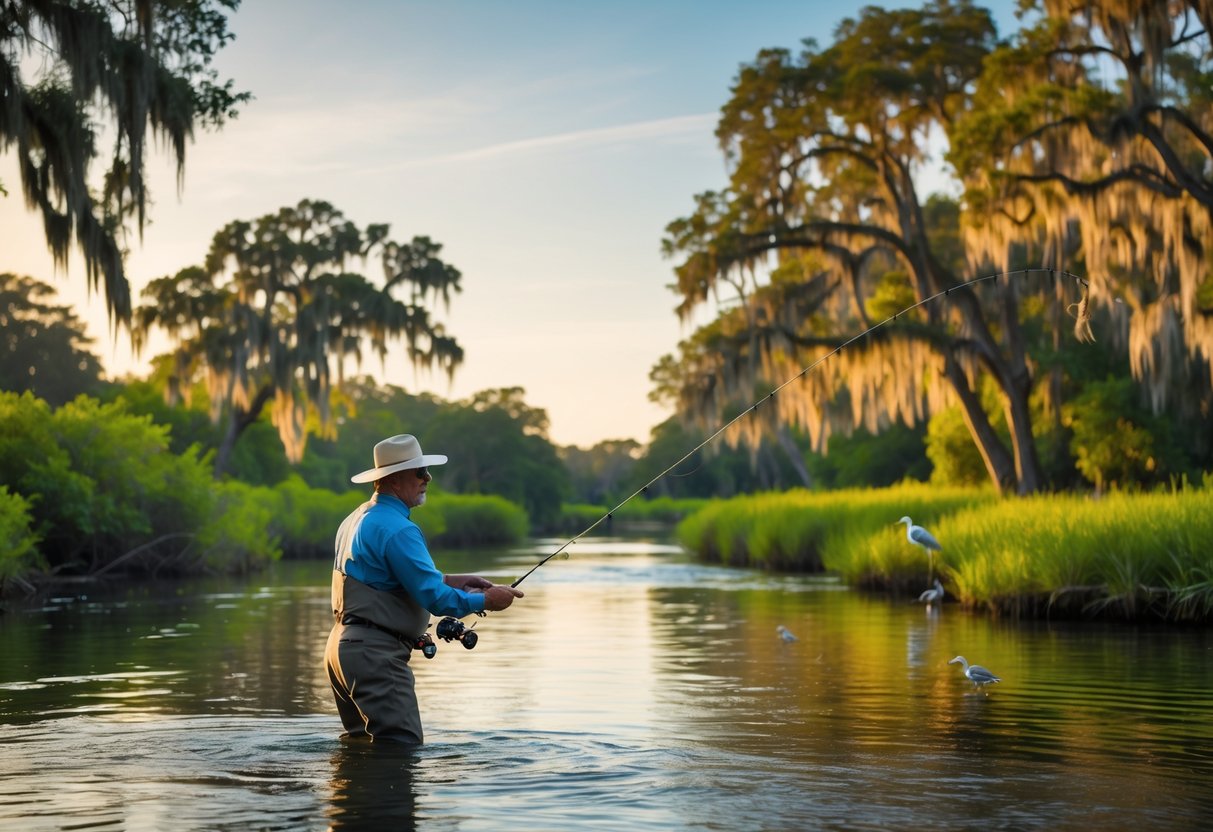
Each river has its own rhythm. The St. Johns flows slow and wide, while the Suwannee and Kissimmee move through wooded areas full of hidden fishing holes. Knowing when and where fish feed—often early morning or late afternoon—can make the difference between an empty line and a full cooler.
This guide explains how to fish Florida’s rivers with confidence. It covers the essential licenses, the best spots, the right bait, and the techniques that work in these waters. By learning the basics and respecting the environment, anyone can turn a simple outing into a productive day on the river.
Understanding Florida River Fishing
Florida’s rivers support both freshwater and saltwater ecosystems that attract anglers year-round. Each environment offers different fish species, gear needs, and fishing methods shaped by water salinity, temperature, and seasonal changes.
Freshwater vs. Saltwater Rivers
Florida’s freshwater rivers, such as the St. Johns, Suwannee, and Peace River, host species like largemouth bass, catfish, crappie, and bluegill. These rivers often have calm currents and vegetation that provide good cover for fish. Anglers commonly use live bait, soft plastics, or spinnerbaits.
Saltwater and brackish rivers near the coast, including the Apalachicola and Crystal River, mix freshwater and seawater. Here, species like snook, redfish, tarpon, and flounder thrive. Fishing these waters often requires salt-resistant gear and awareness of tidal changes.
| River Type | Common Species | License Type |
|---|---|---|
| Freshwater | Largemouth bass, catfish, crappie, bluegill | Freshwater license |
| Saltwater/Brackish | Snook, redfish, tarpon, flounder | Saltwater license |
Anglers who fish both environments can obtain a combination license from the Florida Fish and Wildlife Conservation Commission (FWC).
Popular Fish Species in Florida Rivers
Florida rivers offer diverse fishing opportunities. Largemouth bass remain the most targeted freshwater fish due to their size and availability. Catfish and crappie are also abundant and ideal for beginners. Bluegill provide steady action for light tackle anglers.
In brackish and coastal rivers, snook, red drum, and speckled trout dominate. Tarpon, known as the silver king, appear in warmer months and are prized for their strength. Flounder, mullet, striped bass, and sheepshead are also common near river mouths.
Each species responds differently to bait and water conditions. For example, snook prefer warmer water and live bait, while bass often strike artificial lures during early morning hours.
Seasonal Considerations for River Fishing
Fishing success in Florida rivers changes with the seasons. In spring, spawning activity peaks for bass, crappie, and bluegill. Anglers often find fish in shallow areas with warmer water.
During summer, rising temperatures push many species toward deeper or shaded zones. Early morning and late evening hours provide the best results. Tarpon and snook become more active in coastal rivers.
In fall, cooler weather improves feeding activity for redfish, speckled trout, and catfish. Winter brings slower feeding patterns, but anglers can still target sheepshead and black drum near river mouths.
Monitoring water levels, rainfall, and temperature helps anglers adjust strategies for consistent catches throughout the year.
Essential Licenses and Regulations
Fishing in Florida rivers requires following clear licensing rules and species regulations. Anglers must know which license applies, understand species size and bag limits, and follow any special area or seasonal restrictions to stay compliant with state law.
Fishing License Requirements
Anyone age 16 or older must hold a valid Florida fishing license to fish legally in public waters. This rule applies to both residents and visitors, even if they plan to catch and release.
Some people are exempt. Youth under 16, resident seniors 65 or older, and Florida residents with permanent disabilities can fish without a standard license if they carry proof of eligibility.
Fishing on private ponds fully enclosed within private property also does not require a license. However, if the pond connects to public waters, a license becomes mandatory.
Licenses are available online through GoOutdoorsFlorida.com, by phone, or at county tax collector offices. Anglers can choose short-term, annual, or lifetime options depending on how often they fish.
Saltwater and Freshwater Fishing Licenses
Florida divides fishing licenses into freshwater and saltwater categories. Anglers fishing in rivers that connect to the ocean, such as tidal sections, may need both licenses depending on where and what they fish for.
A freshwater fishing license covers species like bass, crappie, and catfish. A saltwater fishing license applies to marine species such as snook, redfish, or mullet caught in tidal areas.
Some exemptions apply. For example, Florida residents fishing with live or natural bait in their home county, using poles without a reel, do not need a saltwater license if fishing from shore.
It is important to know where the freshwater–saltwater boundary lies. The Florida Fish and Wildlife Conservation Commission (FWC) provides maps showing these boundaries for each river system.
Size and Bag Limits
Florida sets size and bag limits to protect fish populations. These limits vary by species and water body.
The bag limit is the maximum number of fish an angler may keep per day. The size limit defines the minimum or slot length a fish must measure to be legally kept.
For example, largemouth bass in many rivers must be at least 12 inches long, while panfish often have no size limit. Some rivers have special slot limits for species like red drum or snook.
Keeping undersized or excess fish can result in fines or license suspension. Anglers should check the latest FWC regulations before each trip, as limits can change seasonally.
Permit and Special Regulations
Certain species and activities require additional permits beyond a basic fishing license. Examples include the snook permit, spiny lobster permit, and tarpon tag. These permits help manage high-demand or vulnerable species.
Some river areas fall under special management zones or fish management areas. These locations may have unique rules on harvest, gear use, or access hours.
Military members and disabled veterans may qualify for temporary license exemptions during approved events. Free fishing days also allow residents and visitors to fish without a license on specific dates.
Before fishing, anglers should review the FWC’s regional rules for the exact river or waterway they plan to visit. Following these regulations ensures compliance and supports healthy fish populations across Florida’s rivers.
Top Florida Rivers and Prime Locations
Florida’s rivers offer freshwater and brackish environments that support bass, catfish, redfish, and snook. Each river system features unique water conditions, vegetation, and structure that attract different species throughout the year.
St. Johns River
The St. Johns River stretches over 300 miles from Indian River County to Jacksonville. Its slow current and diverse habitat make it one of Florida’s top freshwater fishing destinations.
Anglers often target largemouth bass, crappie, and bluegill near submerged logs and vegetation. The river’s wide bends and connecting lakes, such as Lake George and Lake Monroe, provide consistent action year-round.
Best fishing areas:
- Lake George for trophy bass
- Astor and Palatka for crappie and panfish
- Jacksonville area for seasonal saltwater species like redfish
Early morning and late afternoon are the most productive times due to cooler water temperatures and active feeding.
Suwannee River
The Suwannee River flows from Georgia into the Gulf of Mexico and is known for its clear water and limestone bottom. It supports both freshwater and saltwater species because of its connection to the Gulf.
Common catches include Suwannee bass, catfish, and bream. The Suwannee bass, found only in this region, draws anglers looking for a unique challenge.
Notable spots:
- Branford area for bass and bream
- Lower river near the Gulf for redfish and sea trout
- Fanning Springs for clear-water fishing
Light tackle and natural bait like worms or minnows work well in this river’s moderate current.
Peace River
The Peace River runs through central Florida, beginning near Bartow and flowing into Charlotte Harbor. It offers a mix of freshwater and tidal fishing conditions.
Anglers target largemouth bass, catfish, and gar in its upper stretches. Closer to the estuary, snook and tarpon appear, especially in warmer months.
Key areas:
- Arcadia for freshwater species
- Punta Gorda for saltwater transitions
- Deep bends and shaded banks for bass during midday heat
Canoe and kayak anglers favor this river for its calm flow and accessible shoreline.
Indian River Lagoon
The Indian River Lagoon is a long estuarine system along Florida’s east coast. It supports one of the highest numbers of fish species in North America, including redfish, snook, spotted seatrout, and tarpon.
Its shallow flats and mangrove edges provide ideal conditions for sight fishing. Anglers often use artificial lures or fly gear to target fish moving along the grass beds.
Productive zones:
| Area | Common Species | Best Time |
|---|---|---|
| Mosquito Lagoon | Redfish, Seatrout | Spring–Fall |
| Sebastian Inlet | Snook, Tarpon | Summer |
| Indian River near Titusville | Mixed species | Year-round |
Calm mornings with light wind offer the best visibility for spotting fish in the clear shallows.
Choosing the Right Gear for Florida Rivers
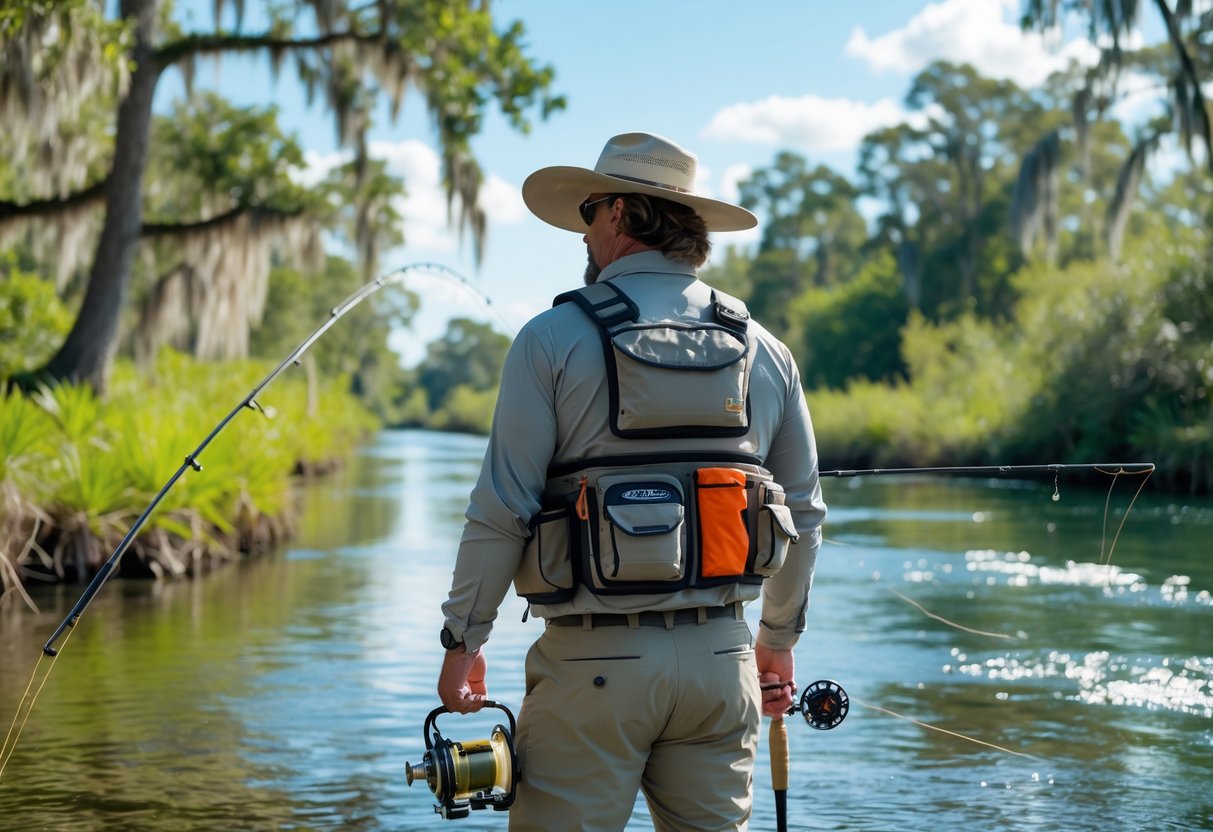
Selecting the right gear helps anglers handle Florida’s river conditions, where water depth, current speed, and fish species vary widely. Durable equipment, proper line strength, and organized tackle make fishing more efficient and enjoyable.
Fishing Rod and Reel Selection
A medium or medium-heavy power spinning rod works well for most Florida rivers. It provides enough strength for bass, catfish, and panfish while maintaining sensitivity for lighter bites. Rods between 6½ and 7 feet offer good casting distance and control in moderate currents.
For reels, a spinning reel with a smooth drag system prevents line breaks when a fish pulls hard. Anglers should look for corrosion-resistant materials like aluminum or stainless steel, which perform better in humid environments.
When fishing in tight areas with overhanging trees, a shorter rod helps with accuracy. In open stretches of river, a longer rod improves casting reach. Matching the reel size to the rod’s power rating ensures balanced performance.
| Rod Power | Best For | Recommended Length |
|---|---|---|
| Light | Panfish, small trout | 5.5–6 ft |
| Medium | Bass, crappie | 6.5–7 ft |
| Medium-Heavy | Catfish, snook | 7–7.5 ft |
Recommended Fishing Line
Line choice depends on water clarity, target species, and cover. Monofilament line around 8–12 lb test suits most freshwater species and offers flexibility for beginners. It stretches slightly, reducing the risk of snapping during sudden pulls.
Fluorocarbon line works well in clear water because it’s nearly invisible underwater. It sinks faster, making it ideal for bottom fishing. For anglers targeting larger or stronger fish, braided line provides high strength with a smaller diameter, often rated 20–30 lb test.
Braided line pairs best with a fluorocarbon leader to reduce visibility. Regularly check for frays or weak spots, especially after snagging or catching larger fish. Keeping multiple spools on hand allows quick adjustments when conditions change.
Tackle and Accessories
A well-stocked tackle box should include hooks, sinkers, swivels, and soft plastic baits. Variety helps adapt to different water conditions and fish behavior. Carrying pliers, line cutters, and extra leaders saves time during setup or repairs.
Compact tackle boxes with removable dividers keep gear organized. Waterproof boxes prevent rust, while lightweight backpacks with rod holders make travel along riverbanks easier.
Useful accessories include:
- Landing net with a telescoping handle for safe fish retrieval
- Polarized sunglasses to reduce glare and spot fish
- Small cooler for bait or drinks
Durable, corrosion-resistant gear ensures reliability through repeated use in Florida’s warm, often humid climate.
Best Bait and Lures for Florida River Fish

Fishing success in Florida’s rivers depends on using bait and lures that match local species and water conditions. Anglers often rely on live or natural bait to attract fish naturally, while artificial lures and jigs provide flexibility and control in different depths and currents.
Live Bait Options
Live bait remains one of the most effective choices for river fishing in Florida. Common options include shrimp, minnows, and worms, which attract both freshwater and saltwater species moving through brackish river zones.
Shrimp work well for redfish, snook, and snapper near coastal rivers. Worms and minnows attract largemouth bass, catfish, and bream in inland waters. Keeping bait lively is key—store them in aerated containers or cool water to maintain movement and scent.
Local bait shops often sell region-specific species like mud minnows or finger mullet, which match the natural prey of river fish. Using local live bait helps anglers blend with the ecosystem and increases strike rates.
| Common Live Bait | Target Fish | Notes |
|---|---|---|
| Shrimp | Redfish, Snook, Snapper | Effective in brackish or tidal rivers |
| Worms | Bass, Catfish, Bream | Easy to find and versatile |
| Minnows | Crappie, Bass, Trout | Use small hooks for best results |
Natural Bait Choices
Natural bait includes fresh or frozen crustaceans, crabs, and cut fish pieces. These baits release scent trails that attract fish even in murky river water. Blue crabs, cut mullet, or squid pieces often draw larger predators like tarpon or snook.
For freshwater stretches, anglers use nightcrawlers, crickets, or grass shrimp. These baits appeal to panfish and bass feeding near structure or vegetation.
When using natural bait, anglers should adjust bait size to match target species. Smaller pieces attract smaller fish, while larger chunks help catch trophy-sized predators. Freshness matters—stale or spoiled bait repels fish.
Artificial Lures and Jigs
Artificial lures and jigs allow anglers to cover more water and mimic prey movement. Popular choices include soft plastics, spinnerbaits, and topwater lures. Soft plastic worms or grubs work well for bass, while jigs tipped with shrimp-like trailers attract redfish and trout.
In deeper or faster-moving rivers, weighted jigs help maintain contact with the bottom. Color selection should match water clarity—bright colors for murky water and natural tones for clear water.
Anglers often vary retrieval speed to find what triggers bites. A slow, steady retrieve mimics injured prey, while quick jerks imitate fleeing baitfish. Artificial lures last longer than live bait, making them cost-effective and reliable for frequent fishing trips.
Effective Fishing Techniques and Strategies
Anglers improve their success in Florida rivers by mastering precise casting, using the right retrieval methods, and adjusting tactics for each fish species. Understanding how water flow, depth, and bait presentation affect fish behavior helps make every cast more productive.
Casting and Retrieval Methods
Effective casting depends on accuracy and control. Short, steady casts work well in narrow or tree-lined rivers, while longer casts help reach deeper pools. Anglers often use sidearm or underhand casts to avoid snags in low-hanging vegetation.
Retrieval speed influences how fish respond. A slow, steady retrieve attracts bottom feeders like catfish, while faster, erratic motions can trigger strikes from aggressive species such as bass or snook. Adjusting retrieval patterns to match water temperature and current improves results.
Using spinning or baitcasting reels allows better lure placement in moving water. Anglers often change lure types—soft plastics, spoons, or crankbaits—based on visibility and current strength. Practicing smooth transitions between casts reduces splash and prevents spooking fish.
Fly Fishing in Florida Rivers
Fly fishing in Florida’s rivers offers a quiet, skill-based approach suited for species like bluegill, bass, and even small tarpon in brackish zones. Anglers rely on lightweight rods (4–6 weight) and floating lines for shallow or calm waters.
The roll cast and sidearm cast are most useful in tight spaces with overhanging trees. These methods keep the line low and prevent tangles. Flies that imitate local insects—such as mayflies or dragonflies—work best in freshwater areas, while streamers mimic baitfish in mixed or coastal rivers.
Timing is important. Early morning and late evening provide better light angles for spotting fish and calmer wind conditions for accurate casting. Wading quietly and observing surface movement help detect feeding zones without disturbing the fish.
Targeting Specific Fish Species
Each river species responds to different techniques and bait. The table below summarizes common targets and effective methods:
| Species | Preferred Technique | Recommended Bait/Lure |
|---|---|---|
| Largemouth Bass | Slow retrieve near structure | Plastic worms, spinnerbaits |
| Snook | Fast, erratic motion in brackish water | Jigs, live shrimp |
| Catfish | Bottom fishing | Cut bait, chicken liver |
| Bluegill | Light tackle or fly fishing | Worms, small poppers |
Anglers who adapt to seasonal changes and water clarity improve their catch rates. For example, bass become more active during spring spawning, while catfish feed more aggressively after rain when the current stirs up food.
Safety and Environmental Considerations
Fishing in Florida rivers requires awareness of wildlife behavior, changing water conditions, and responsible fishing habits. Anglers who stay alert and follow environmental guidelines help protect both themselves and the ecosystems that support healthy fish populations.
Dealing with Alligators and Wildlife
Alligators live in nearly all freshwater rivers and lakes in Florida. Anglers should keep a safe distance of at least 50 feet from any alligator and never feed or provoke them. Feeding wildlife can make animals lose their natural fear of humans, which increases danger for both parties.
When fishing near riverbanks or launching kayaks, they should scan the area for movement or splashes before approaching the water. Early morning and dusk are active times for alligators, so extra caution is needed.
Other wildlife such as snakes, turtles, and wading birds also share these habitats. Keeping gear and bait secured prevents attracting unwanted attention. If an alligator approaches, it is best to move away slowly and avoid sudden motions that might trigger a defensive reaction.
Monitoring Water Levels and Conditions
Water levels in Florida rivers can change quickly due to rainfall, tides, and dam releases. Checking local water gauges or weather alerts before fishing helps anglers plan safe outings. Rising water can hide obstacles, while low water can expose rocks and debris that damage boats or gear.
Strong currents often follow heavy rain or storms. Wearing a personal flotation device (PFD) is recommended, especially when wading or fishing from small boats. Anglers should avoid entering the water when visibility is poor or currents appear swift.
Temperature and clarity also affect fish behavior. Cooler water may slow feeding activity, while murky water can make navigation harder. By staying informed through local forecasts and river condition reports, anglers reduce risks and improve their fishing experience.
Conservation and Ethical Fishing
Responsible fishing supports long-term river health. Anglers should follow catch limits, size rules, and seasonal closures set by the Florida Fish and Wildlife Conservation Commission (FWC). These rules protect breeding populations and ensure sustainable harvests.
Using barbless hooks or practicing catch and release with minimal handling helps fish survive after being caught. Wetting hands before touching fish prevents damage to their protective slime layer.
Discarding fishing line, hooks, or bait containers properly prevents harm to birds and aquatic animals. Choosing lead-free tackle and avoiding overfished areas also reduces environmental impact. Ethical anglers respect wildlife, maintain clean fishing spots, and model conservation practices for others.