To clean a fishing reel after a trip, loosen the drag if your manual says to, wipe off dirt with a soft damp cloth, follow the manual for a gentle freshwater rinse, dry it fully, and oil only the points the maker lists. That quick routine takes about five minutes at the kitchen counter. It keeps grit and salt from wearing down the gears you count on during a short evening trip or a lunch-break cast.
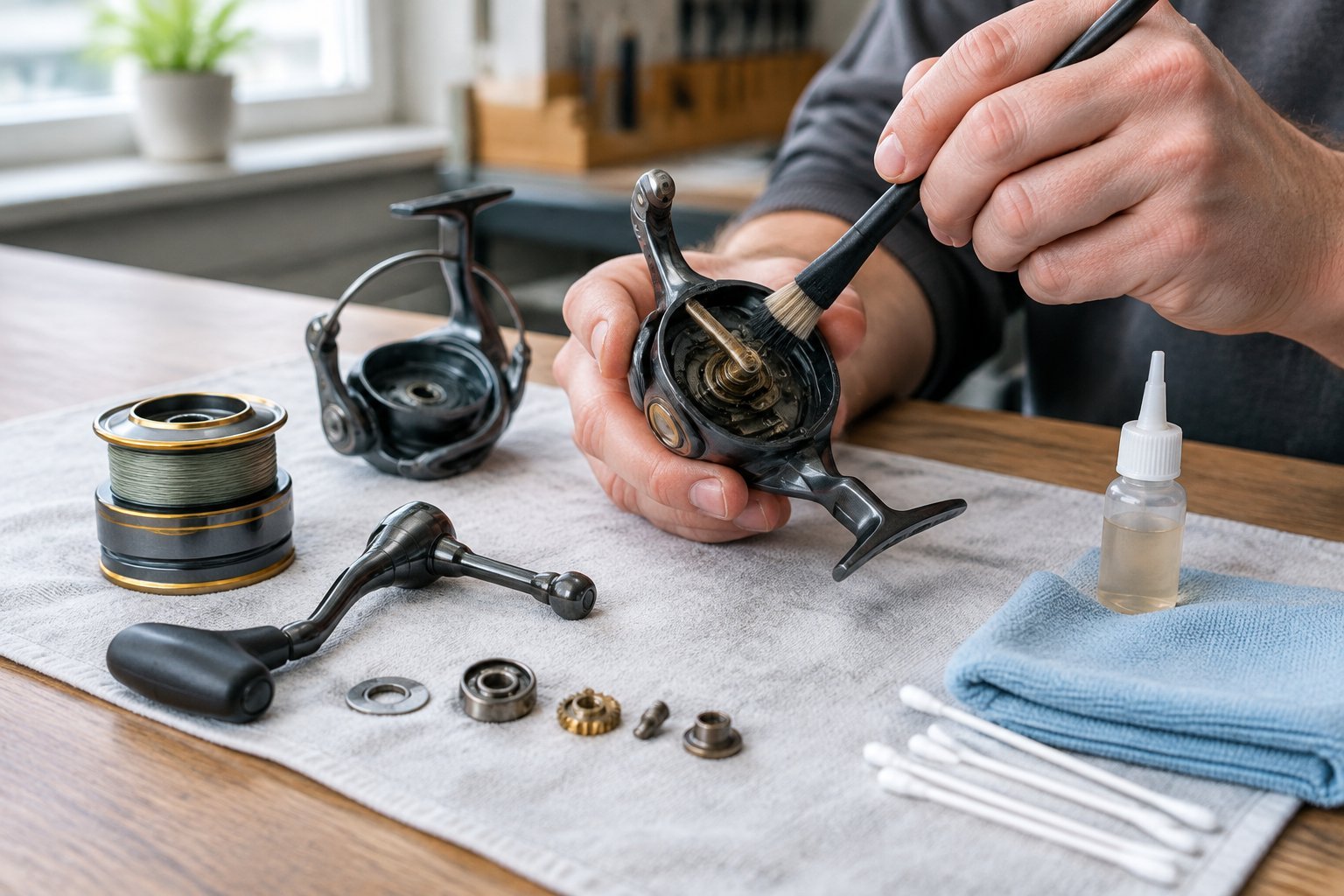
Most reels never need to come apart on your kitchen table. If you know how to clean a fishing reel on the outside and when to leave the inside to the manufacturer, your reel stays smooth for years, and you spend your free time fishing with your kids.
What Is the Quick After-Trip Cleaning Routine?
The quick routine is a wipe, a gentle rinse if the manual allows it, and a full dry. You need a few cheap supplies, and you skip pressure hoses, soaking, and screwdrivers.
Gather a Soft Cloth, Soft Brush, and Reel-Safe Cleaner
Keep a small kit in a zip bag near your rods so cleanup takes minutes:
- Microfiber cloth or old cotton T-shirt for wiping the body, foot, and handle
- Soft toothbrush for grit around the spool and handle joint
- Cotton swabs and toothpicks for tight corners
- Reel-safe cleaner, such as a kit like Ardent Reel Kleen, which is made for any make or model of reel
- Masking tape to hold line on the spool while you work
Good fishing reel maintenance starts with products made for reels. Household degreasers can harm seals and plastic parts.
Wipe Away Dirt and Follow the Manual for Gentle Freshwater Rinsing
Start with a cloth dampened in warm water. Wipe the reel body, the reel foot, the handle knob, and the area under the spool lip, where sand likes to hide.
If your manual approves a rinse, use a light spray or pour water over the reel. Never blast it with a high-pressure hose. A hard jet pushes salt and grit deeper into bearings. Some makers say to tighten the drag before rinsing so water stays out of the drag, and others say to loosen it, so check yours.
Dry Thoroughly Before Lubricating or Storing
Pat the reel with a dry towel, then let it air-dry for a few hours with the spool facing down. Oil doesn’t stick well to a wet reel, and trapped moisture leads to corrosion. A dry reel in the closet also means you can grab the rod and go when a free hour pops up after work.
What Changes for Spinning Reels and Baitcasters?
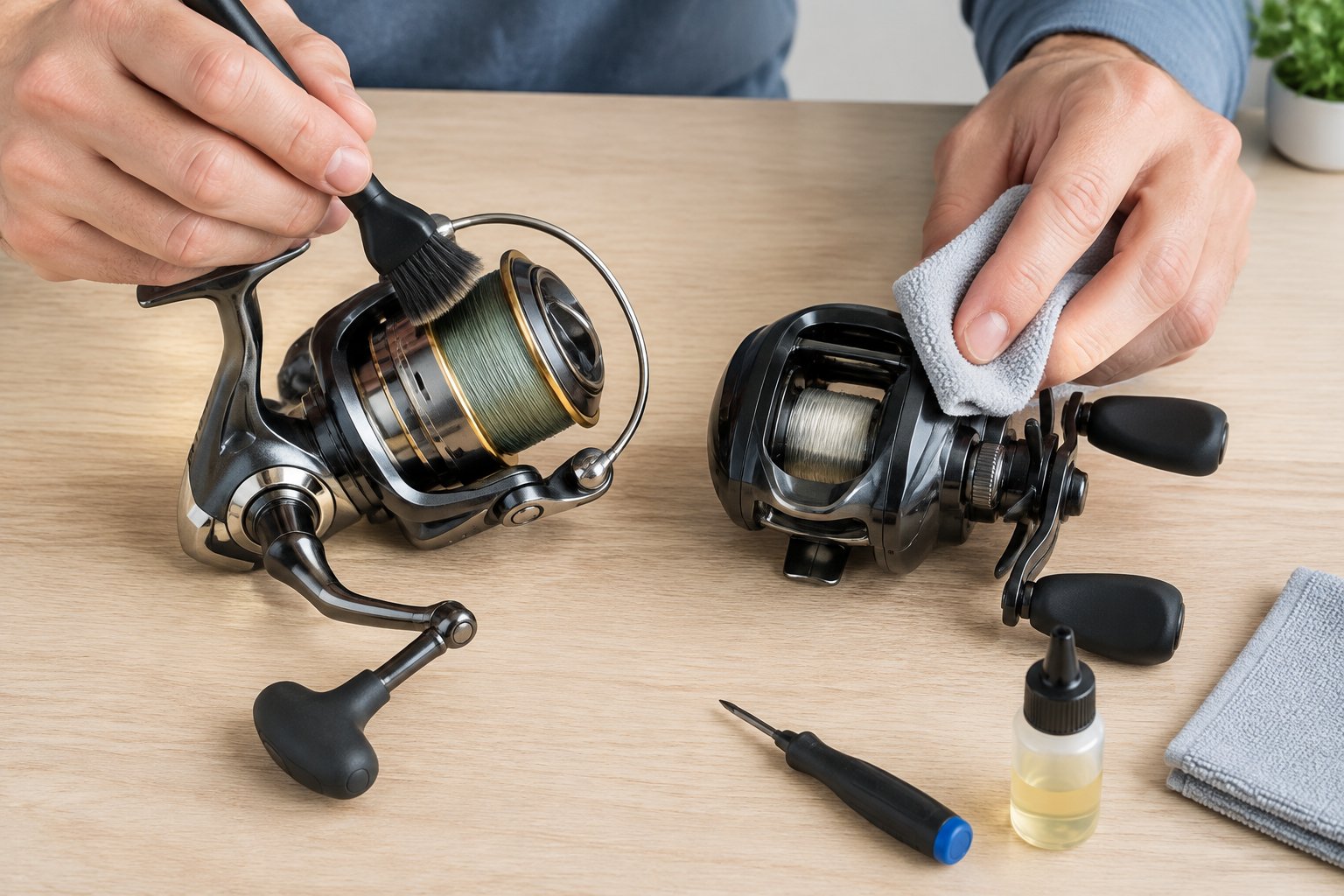
The basic wipe and dry stay the same, but each reel type collects dirt in different spots. Spinning reels gather grit near the bail and line roller, while baitcasters collect it around the line guide and spool edges.
Spinning Reels: Clean Around the Spool, Bail Arm, and Line Roller
For how to clean a spinning reel, focus on three areas:
- Spool: Wipe the outside edge and, if your reel lets the spool slide off, wipe the underside where salt builds up.
- Bail arm: Brush the hinge points where the bail flips open and shut. A sticky bail is often just dirt.
- Line roller: Flick it with your fingernail. It should spin freely. Clean around it with a swab.
The line roller gets friction on every retrieve, so a gritty one can fray line and add twist. If you see more fishing line tangles than usual, check the roller first. When you put the spool back, the same steps from setting up a spinning reel apply.
Baitcasters: Wipe the Spool Area, Line Guide, and Exterior
Baitcaster cleaning centers on the outside and the level-wind line guide that moves back and forth. Wipe the frame, the side plates, and the handle. Run a swab through the line guide and along the worm gear groove you can see under it.
For cleaning a baitcasting reel deeper, many models let you open the palm-side plate with a latch. Wipe the spool housing with a dry cloth only if your manual shows this step. If you plan to respool afterward, the steps for spooling a baitcaster with braid fit right into the same session.
When Should You Remove Parts or Leave Sealed Components Alone?
Remove only what your manual shows you how to remove, such as the spool or a tool-free side plate. Leave sealed parts closed.
Some reels have sealed bodies or drags built to block water. Opening them can break the seal, disturb factory grease, and void a warranty. Abu Garcia warns against pulling internal gears by hand because they fit tightly and are hard to realign. If the steps need tiny screwdrivers and a parts diagram, treat that as a shop job.
Where Should Reel Oil and Grease Go?
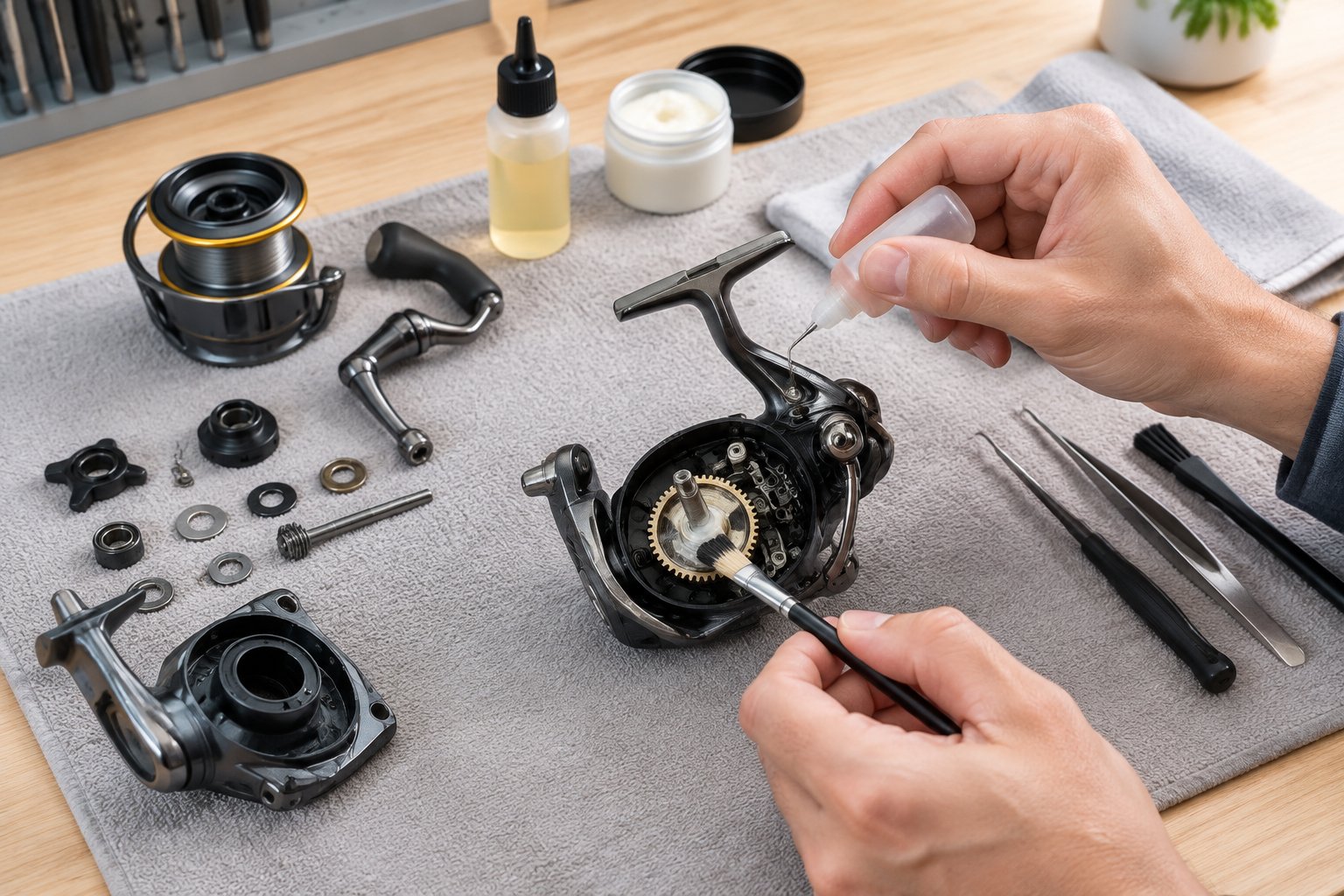
Oil and grease go only where your reel’s manual points, in the small amounts it lists. Thin oil serves fast-spinning parts, thick grease serves gears, and drag washers follow their own rules.
Use the Manufacturer’s Lubrication Points and Quantities
Your manual or the maker’s website shows a diagram of oil and grease points. Shimano, for example, posts separate guides for spinning, baitcasting, and electric reels.
Common spots on spinning reels include one drop on the line roller, one on each bail hinge, and one where the handle meets the body. On baitcasters, makers often list the spool bearings, handle bearing, and level-wind grooves. One drop means one drop.
Reel Oil vs. Reel Grease: Why They Are Not Interchangeable
| Lubricant | Typical parts | Amount |
|---|---|---|
| Reel oil (thin) | Bearings, line roller, handle knobs, bail hinges | One small drop |
| Reel grease (thick) | Main gear, pinion, drive gears | Thin film |
Fishing reel oil lets bearings spin freely. Reel grease clings to gear teeth under load. Grease in a bearing slows it down, and Abu Garcia says not to oil the one-way clutch at all. Oil on gears flings off in a few cranks.
Why Drag Washers Need Model-Specific Care
Drag washers come in felt, carbon fiber, and other materials, and each needs different care. Carbon fiber drag washers on some reels get a special drag grease, while some felt washers use drag oil. Regular reel oil on the wrong washer can cause jerky drag that snaps light line. If your manual skips drag care, leave the washers alone.
Avoid General-Purpose Sprays, Harsh Solvents, and Excess Lubricant
Skip WD-40, 3-in-1, and motor oil. These products can gum up or strip factory lube and attack plastics.
Extra lubricant attracts dirt and slings onto your line. After oiling, turn the handle a few times and wipe off any drips with a clean cloth.
How Often Should You Clean and Store Your Reel?
Clean a freshwater reel when it looks dirty or every few trips, and clean a saltwater reel after every trip. Simple Green suggests at least once every five trips for freshwater use.
Freshwater Trips: Match Cleaning to Dirt and Use
A quick pond trip with clean hands may only need a dry wipe. A muddy bank, sandy beach, or rainy outing calls for the full wipe-and-dry routine that night.
Plan a deeper clean once or twice a season, or any time the reel sounds or feels different. Many anglers do this in late fall, when trips slow down.
Saltwater Trips: Remove Salt Promptly Without Forcing Water Inside
For saltwater reel cleaning, act the same day. Salt dries into crystals that corrode metal. Mercury Marine suggests a wipe with a soapy rag after the gentle freshwater rinse to lift dried salt.
Use soft water flow, then dry fully. Even reels sold as saltwater-resistant need this care. If you’re shopping, the best spinning reels for saltwater fishing still benefit from the same routine.
Between Trips: Store Dry and Set the Drag as Directed
Store reels in a cool, dry spot away from hot car trunks and damp garages. A reel cover keeps dust off. Many makers advise backing off the drag during storage to ease pressure on the washers. Keeping a clean rod ready by the door fits right in with other gear for busy people fishing before work.
What if the Reel Still Feels Gritty or Sticks?
A reel that stays gritty after a wipe and light oiling has a problem inside or a worn part. Start with simple checks and stop before you force anything.
Check for Visible Debris Without Forcing the Handle
Look for line wrapped behind the spool, sand on the line roller, or a bent bail. Pull out loose line with tweezers.
Turn the handle slowly. If it binds, stop. Cranking harder can strip gears. A fishing rod that won’t reel in often has a simple cause, such as a tangle or anti-reverse switch, that you can fix without tools.
When Grinding, Corrosion, or Submersion Calls for Professional Service
Take the reel to a shop if you notice:
- Grinding that changes with crank speed, which points to grit in the gears
- White crust or rust around screws or seams
- A reel that fell in the water and sat there
- A drag that chatters or jerks under load
A reel tech can clean bearings and replace worn parts. Catching problems early costs less than fixing a reel that ran rough for months.
Check Warranty Terms Before Attempting Internal Repairs
Read the warranty before you open the side plate. Some makers void coverage if you remove sealed parts or use the wrong lubricant. Many brands offer service programs, so a call or email may get you a fix at low cost.
Keep Your Reel Ready for the Next Quick Trip
A clean reel comes down to a soft wipe, a gentle rinse if your manual allows it, a full dry, and a drop of the right lube in the right spot. Clean saltwater reels every trip and freshwater reels as dirt builds up. Leave sealed parts and drag washers to the manual or a shop.
Keep your cleaning kit next to your tackle so the job fits between dinner and bedtime. Then your reel is ready the next time you go fishing with your kids.
Get your gear ready and explore the related beginner-friendly guides before your next trip.