Smallmouth bass become easier to target on quick fall trips when you follow the baitfish, fish transition areas, and change your retrieve with the water temperature. For most busy anglers, a suspending jerkbait is the best starting lure for smallmouth bass fall fishing because it covers water quickly and imitates the minnows smallmouth chase as temperatures cool.
You can still catch fall smallmouth fishing from a bank, boat, or kayak. Spend your limited time checking the shallow edge first, then work toward the nearest drop-off, rock, or deeper pool. That route keeps you moving until you find active bronzebacks.
How Fall Changes Smallmouth Location and Feeding
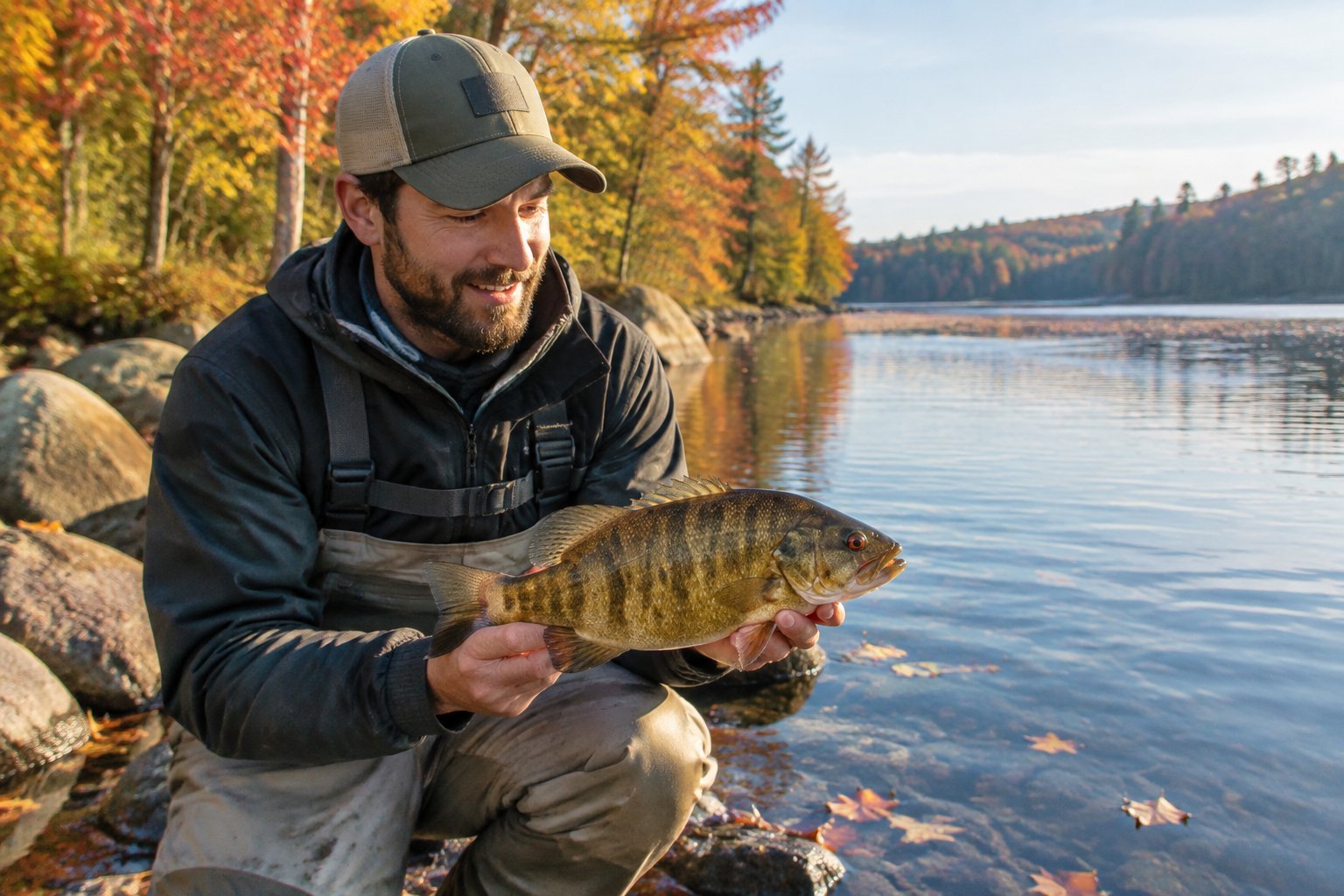
Smallmouth location follows cooling water and available food, so water temperature and baitfish activity give you a faster starting point than repeating summer spots. Early fall fish may roam shallow structure, while colder conditions push them toward deeper transition areas and wintering areas.
Use Water Temperature to Read the Fall Transition
Water temperature gives you a useful seasonal guide:
- Around 60 to 65°F, smallmouth bass behavior remains active, and fish may chase baitfish across points, flats, and rocky shorelines.
- Around 50 to 60°F, fish commonly gather near transition zones and feeding routes.
- Below about 50°F, many fish slow down and favor deep rock, slack water, and wintering areas.
These ranges are starting points, not rigid rules. A sunny afternoon, warm rain, or a sudden cold front can shift fish within the same day. Begin with a moving lure, then slow down when follows turn into refusals.
Follow Baitfish Instead of Fishing Summer Haunts
Fall baitfish schools pull smallmouth away from familiar summer haunts. Minnows, shad, and cisco often gather where phytoplankton concentrates, including windblown banks, shallow flats, and points near deep water.
Watch for nervous water, small surface dimples, or baitfish scattering near cover. On a lake or reservoir, use electronics to check for bait and fish along a depth change. On a river, cast around current seams, pool edges, and gravel flats that lead into deeper water.
When Smallmouth Move Shallow or Hold Deep
Smallmouth move shallow when baitfish push against a bank, wind creates feeding conditions, or a warm spell raises activity. They hold deep when water cools sharply, current becomes uncomfortable, or a nearby wintering area offers food and shelter.
In northern rivers, fish may travel downstream into slow, deep pools. In warmer regions, they often concentrate in slack-water eddies and deep bends. Check the shallow edge first, then probe the closest deep-water option before leaving.
Find Smallmouth Fast in Lakes, Reservoirs, and Rivers
The fastest way to find smallmouth in lakes, reservoirs, and rivers is to fish places that connect feeding water with escape water. Points, shallow flats, drop-offs, and rocky current breaks give bass access to both shallow water and deep water.
Target Points, Flats, and Drop-Offs
Start on a point that reaches from shore toward deep water. Cast across the shallow end, retrieve along the edge, then angle your next casts down the drop-off.
Shallow flats become productive when baitfish move onto them. Give priority to flats beside a channel, a steep bank, or deep rock. A long flat with one isolated boulder can hold more fish than a broad, featureless area.
In reservoirs, check main-lake points and creek-channel edges. In natural lakes, examine island tips and rocky shoals. On a river, focus on the head or tail of a pool where current delivers food.
Search Rock, Gravel, and Isolated Cover
Rock, boulders, gravel, logs, and riprap create feeding lanes and hiding places. Cast close to the cover, then vary your angle so the lure crosses the fish’s likely path.
A sand-to-rock change, gravel-to-mud edge, or shoreline transition can concentrate both crayfish and baitfish. Mark any strike, follow, or snag that reveals bottom composition. Repeating that depth and cover type saves time on your next pass.
When late fall sends fish toward deep rock, slow a tube or drop shot along the bottom. Keep the lure near the structure without dragging it continuously into cracks.
River Holds That Work From the Bank
Bank anglers should begin with the nearest current seam, outside bend, deep pool, or rocky shoreline. Smallmouth use slower water beside current because it provides food without forcing them to fight the full flow.
Cast upstream and across the seam, then let the lure swing through the slower water. Work pool edges, submerged logs, and the downstream side of boulders. If the bank has a shallow gravel flat beside a deep hole, cover the flat first and finish with bottom casts along the drop.
Simple Lures for Each Fall Feeding Pattern
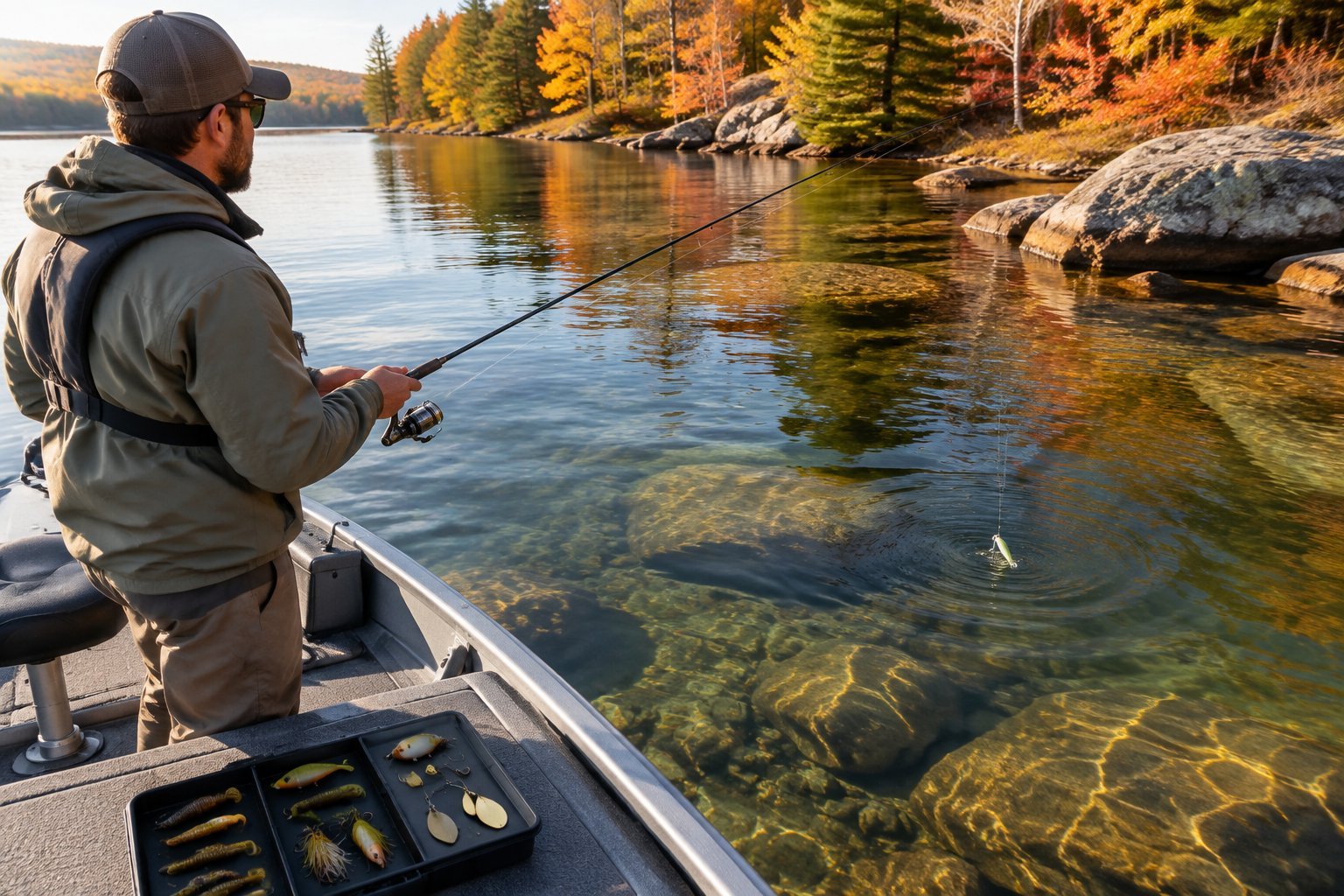
Choose lures by the food smallmouth are eating: jerkbaits, swimbaits, and spinners for baitfish; tubes and other soft plastics for crayfish; and poppers for a visible topwater bite.
Match Baitfish With Jerkbaits, Swimbaits, and Spinners
A suspending jerkbait such as a Husky Jerk is a strong search lure around points, banks, and current seams. Use short rod twitches followed by pauses. Begin with brief pauses in warmer water and extend them as fish become less active.
Swimbaits imitate larger minnows and work along shallow flats or above drop-offs. Keep the retrieve steady, then add a pause when the lure reaches a rock or depth change.
Spinnerbaits and inline spinners cover water with flash and vibration. An in-line spinner such as a Blue Fox Vibrax fits small rivers and bank fishing because it casts well and starts working quickly. Cast across current and let the blade turn as the lure swings downstream.
Crankbaits help you search a specific depth. Choose a shallow runner around rocks and flats, then move to a deeper model when fish show on the drop-off.
Fish Bottom Baits When Smallmouth Key on Crayfish
Use tubes, a Ned rig, a drop shot, or other crayfish imitations when fish hold tight to rocks and stop chasing. Green pumpkin, brown, and muted orange patterns resemble crayfish and bottom-dwelling prey.
Let the lure reach the bottom, lift it a few inches, and allow it to settle. Keep contact light enough to feel rock while reducing snags. A short hop beside a boulder can produce when a fast-moving bait passes untouched.
Use Topwater Only When Fish Are Feeding Up
A topwater bite is worth pursuing when you see baitfish fleeing across a flat or smallmouth breaking near the bank. Poppers work best during a warm spell, low-light period, or brief feeding window.
Cast beyond the activity and let the popper sit. Add a small twitch, then pause long enough for the rings to fade. If surface activity disappears after several casts, switch to a jerkbait or swimbait and keep covering water.
Retrieve Pace and Simple Gear That Prevent Wasted Time
A fast search followed by a slower finesse presentation gives you the best chance to find active fish without spending the whole trip dragging one lure. Adjust pauses, depth, and speed after each follow or missed strike.
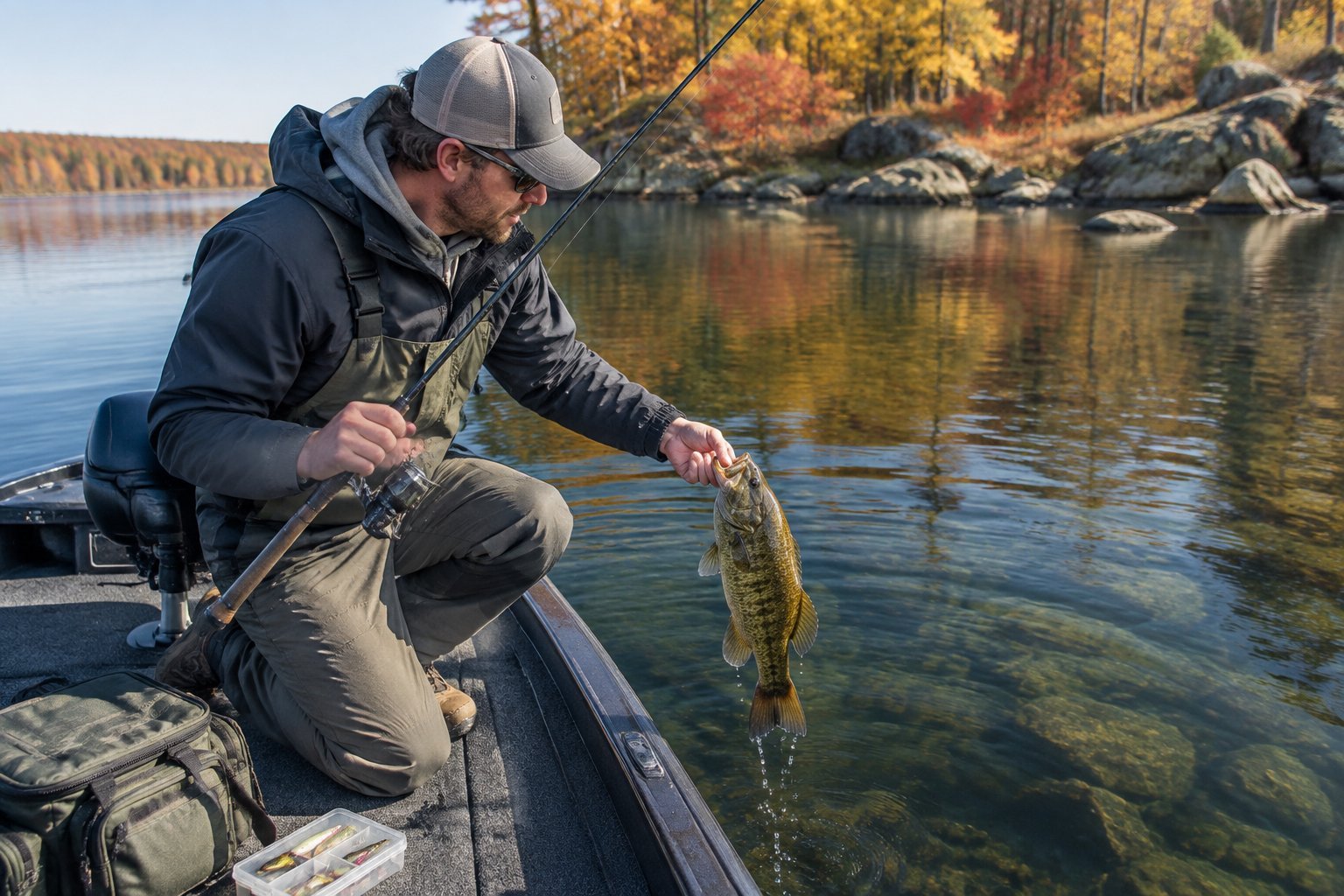
Start Fast, Then Slow Down for Neutral Fish
Begin with a jerkbait, spinner, or swimbait and make casts that cover the bank, point, or current seam. Use a brisk retrieve while the water remains in the upper 50s or 60s.
A follow tells you where a fish lives. Make the next cast past the same area, slow the lure, and add a longer pause. If the fish still refuses, switch to a tube, Ned rig, or drop shot for a finesse presentation close to bottom.
Choose One Spinning Setup for Most Situations
A medium-light or medium spinning rod paired with a smooth spinning reel handles most quick-trip lures. Spool it with 10- to 15-pound braid and add a 6- to 10-pound fluorocarbon leader for casting distance, sensitivity, and abrasion resistance.
Use a slightly heavier fluorocarbon leader around sharp rocks, logs, or stained water. Keep one rod rigged with a jerkbait or spinner and carry a second leader with a small soft plastic when you need to slow down.
A Simple Fly Option for Experienced Fly Anglers
A Clouser Minnow on an intermediate fly line reaches baitfish-feeding smallmouth along drop-offs and rocky banks. Strip it with short, sharp pulls, then pause long enough for the fly to sink.
Fly anglers should match rod weight and leader strength to the size of the fish, current, and cover. A floating line with a popper fits a visible surface bite, while an intermediate line keeps a streamer in the feeding zone.
A Short Bank-Fishing Plan for Busy Adults and Families
A productive 30-minute bank route starts shallow, follows the nearest cover, and finishes at the first deep-water connection. This approach gives you enough casts to locate active fall smallmouth bass without carrying a full tackle box.
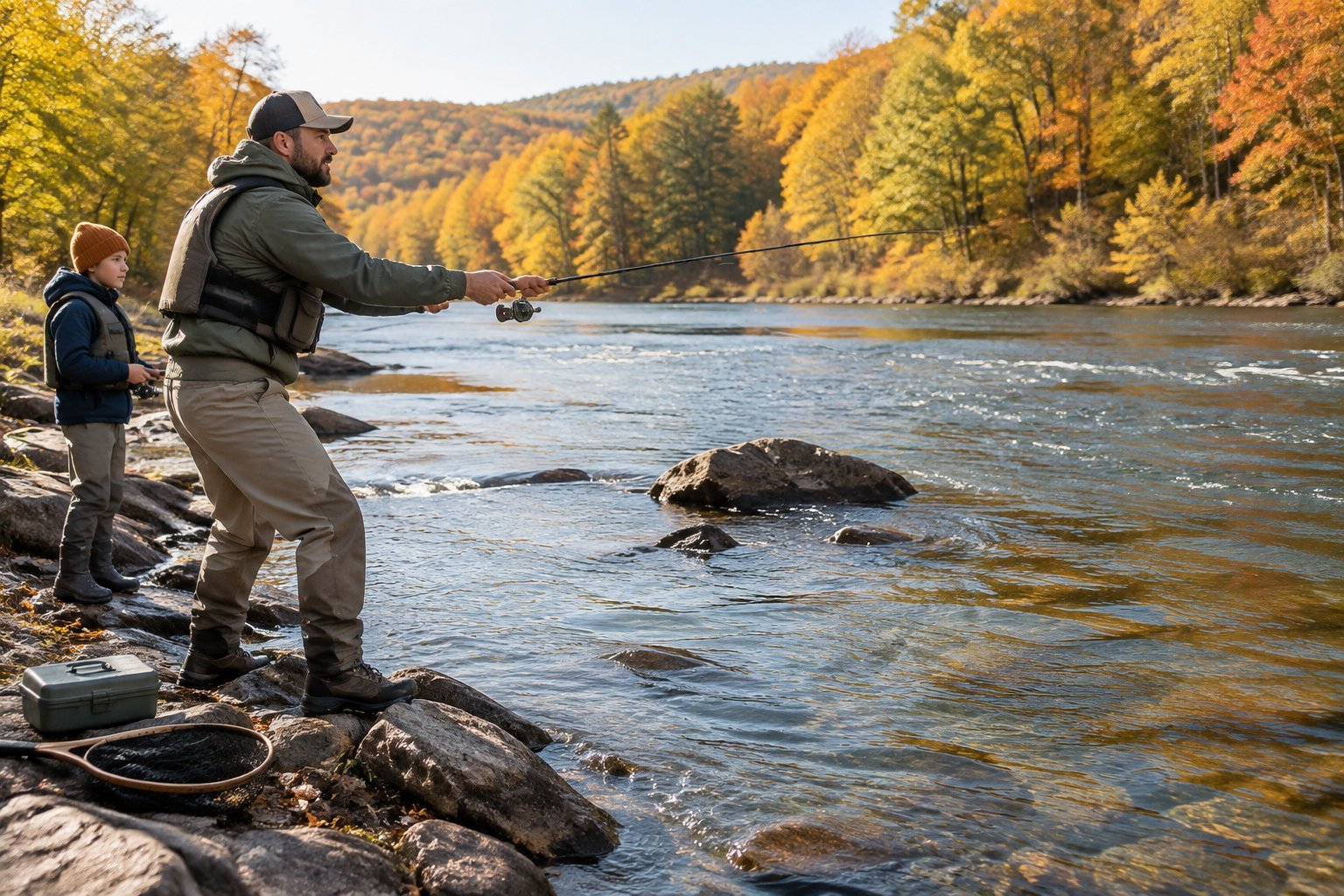
Pick a Productive 30-Minute Window
Choose the warmest part of the day after a cold night, or fish early and late when baitfish move near shore. A mild wind can push food toward one bank and make that shoreline your first stop.
Bring one moving lure, one bottom lure, spare hooks, and a small landing net. You can also review how to catch fish quickly in 30 minutes before planning a short trip.
Work One Shallow-to-Deep Route
Spend the first 10 minutes casting a jerkbait, spinner, or small crankbait along the bank. Cover rocks, gravel, logs, and any point that extends into the water.
Use the next 10 minutes on the shallow flat and its edge. Finish by dragging a Ned rig or tube along the nearest drop-off, deep rock, or pool seam. A single route keeps you fishing instead of walking between unrelated spots.
Keep Kids and New Anglers on the Simplest Bite
Give kids and new anglers a small spinner, compact swimbait, or bobber rig that casts easily and shows clear movement. Keep casts short enough to stay near visible cover, and let them retrieve at a steady pace.
Handle fish with wet hands, support the body, and return each bass promptly. A family trip can stay focused on fun while you learn more about fishing with kids.
Frequently Asked Questions
Can you catch smallmouth bass in the fall?
Yes, you can catch smallmouth bass throughout fall by tracking cooling water and baitfish movement. Start with moving lures around points, flats, rocks, and current seams, then slow down near deeper wintering areas.
What is the best bait for smallmouth bass in the fall?
A suspending jerkbait is the best first bait for most fall conditions because it imitates minnows and covers water quickly. Use a tube, Ned rig, or drop shot when fish hold near bottom and refuse a moving lure.
Do smallmouth bass go deep or shallow in the fall?
Smallmouth use both shallow and deep water in fall, with baitfish and temperature determining the location. Shallow flats and banks produce during active feeding periods, while drop-offs, deep rock, and slow pools become more important as water cools.
How do you catch fall smallmouth bass from the bank?
Fish a shallow-to-deep route that connects rocks, gravel, current seams, and the nearest drop-off. Begin with a spinner or jerkbait to locate fish, then work a tube or Ned rig slowly through the same cover.
What water temperature is best for fall smallmouth fishing?
Water from about 50 to 65°F provides productive fall conditions, with fish behavior changing across that range. The upper part favors moving baitfish presentations, while cooler water calls for longer pauses and bottom contact.
What are the best fall lures for smallmouth bass in rivers?
Jerkbaits, inline spinners, small swimbaits, and crankbaits cover active river fish near current seams and gravel flats. Tubes, Ned rigs, and crayfish imitations work around deep pools, boulders, logs, and slower wintering water.
Get your gear ready and explore the related beginner-friendly guides before your next trip.