Choosing the best kids fishing kayak means prioritizing stability and easy handling over speed. A wide sit-on-top hull helps a child stay balanced, while a lightweight build makes it practical for a parent to carry from the car to the shoreline. Built-in rod holders are useful for casual fishing, though they should not replace close adult supervision.
A stable, properly sized kayak with a manageable weight and a secure cockpit is a better choice for learning than a faster, heavier boat. Parents should also check the child’s weight limit, footrest positions, re-entry design, included paddle, and whether the kayak has space for fishing accessories. These picks cover simple recreational boats and inflatable options for families who value portability.
Best for first-time paddlers: Lifetime Youth Wave Kayak
Best for portable fishing adventures: Retrospec June Nano Kids Inflatable Fishing SUP Kayak
Best for a cushioned seat and included accessories: Pelican Solo Youth Kayak
Best for growing children: Lifetime Dash 66 Youth Kayak
Lifetime Youth Wave Kayak
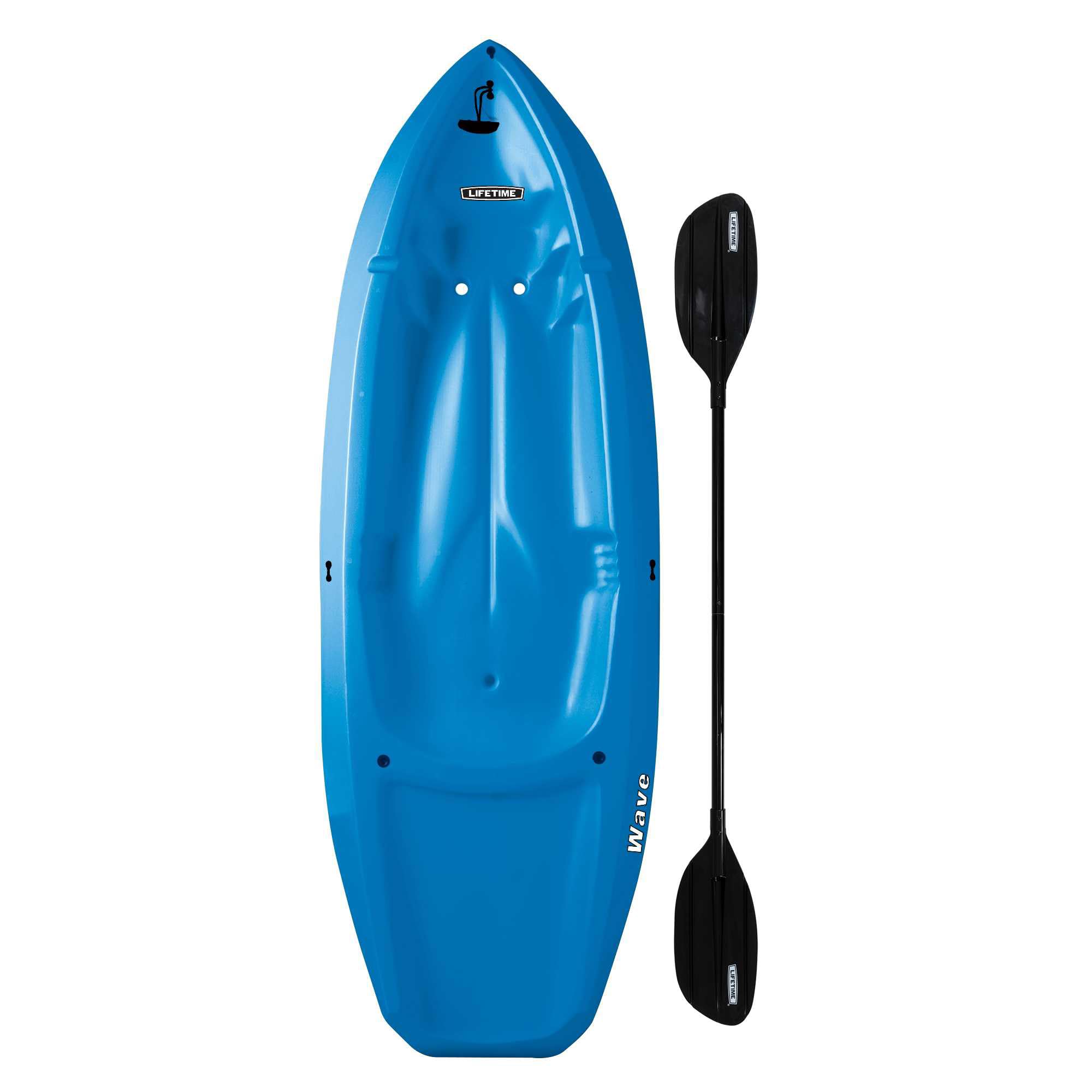
Parents should buy the Lifetime Youth Wave for a young beginner who needs a lightweight, stable kayak with a paddle included.
Pros
- Lightweight 18-pound hard-shell construction
- Wide, stable platform with multiple footrest positions
- Swim-up deck and molded handholds assist re-entry
Cons
- No built-in rod holders
- Limited to one small paddler
- The published capacity varies between product listings
The Wave is easy for a child to manage and easy for an adult to carry. Its broad stance feels reassuring during calm-water practice, while the ergonomic cockpit and adjustable footrests help a young paddler find a balanced position.
The open swim-up stern is especially useful for children who like to swim between paddling sessions. Scupper holes let water drain from the cockpit, and the included paddle means fewer extra purchases. Parents should use it on calm water with a properly fitted personal flotation device and remain within immediate reach.
Retrospec June Nano Kids Inflatable Fishing SUP Kayak
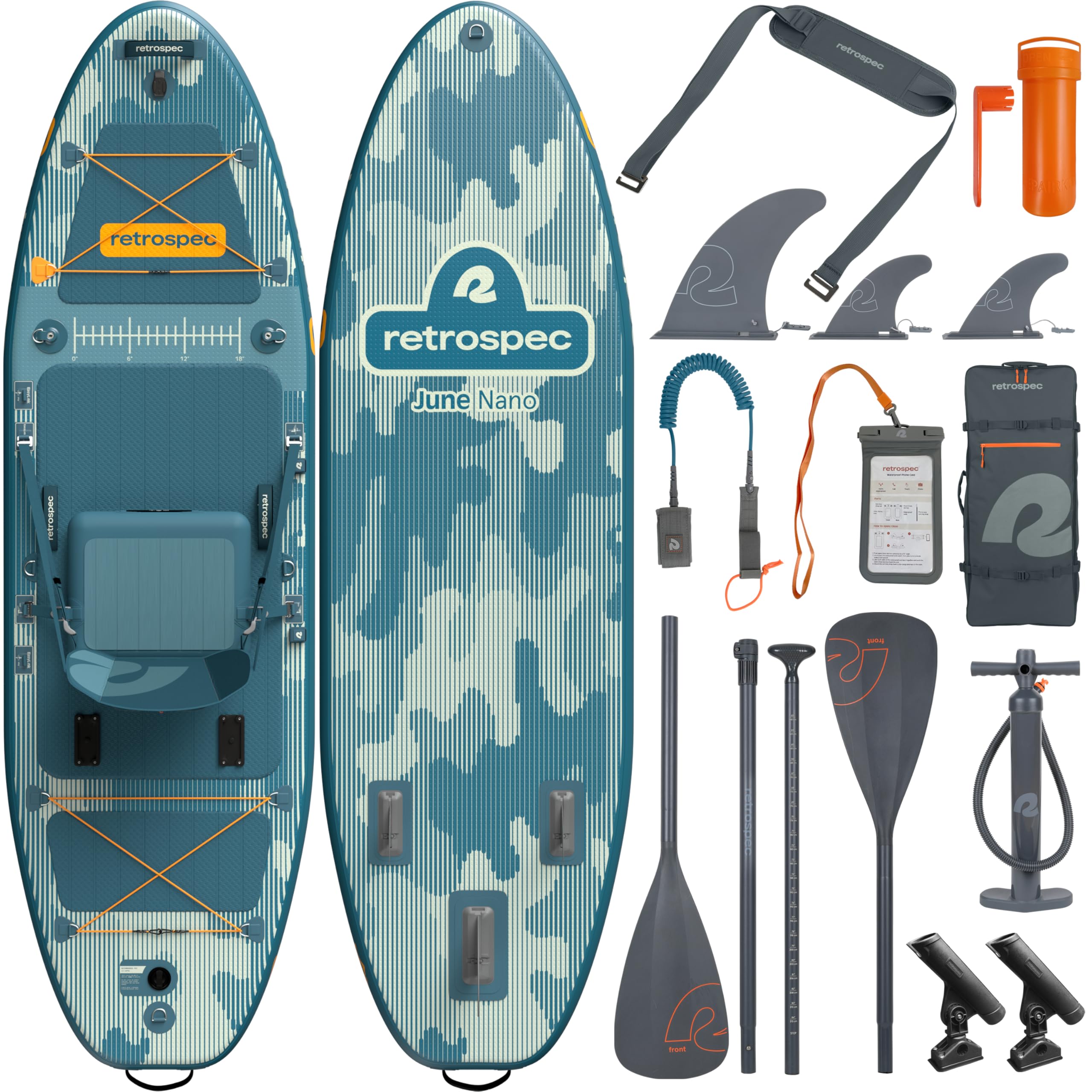
The Retrospec June Nano is the best fit for families who want a portable youth fishing platform with rod holders and both SUP and kayak configurations.
Pros
- Two built-in rod holders and an integrated measuring ruler
- Converts between stand-up paddleboard and seated kayak use
- Packs into a backpack and weighs 18.5 pounds
Cons
- Inflation takes more preparation than a hard-shell kayak
- Requires careful pressure checks and storage
- Its 250-pound capacity does not make it a child-only fit
This inflatable model offers the strongest fishing-specific setup in the group. The wide deck provides room for repositioning, while the nonslip surface is useful when a child is casting or handling a catch. The removable seat gives parents more flexibility as skills develop.
The package includes a pump, convertible paddle, leash, fin, phone case, repair kit, and backpack. Its PVC construction is designed for portability, though parents should inspect the board before each outing and keep sharp hooks away from the inflated chambers.
Pelican Solo Youth Kayak
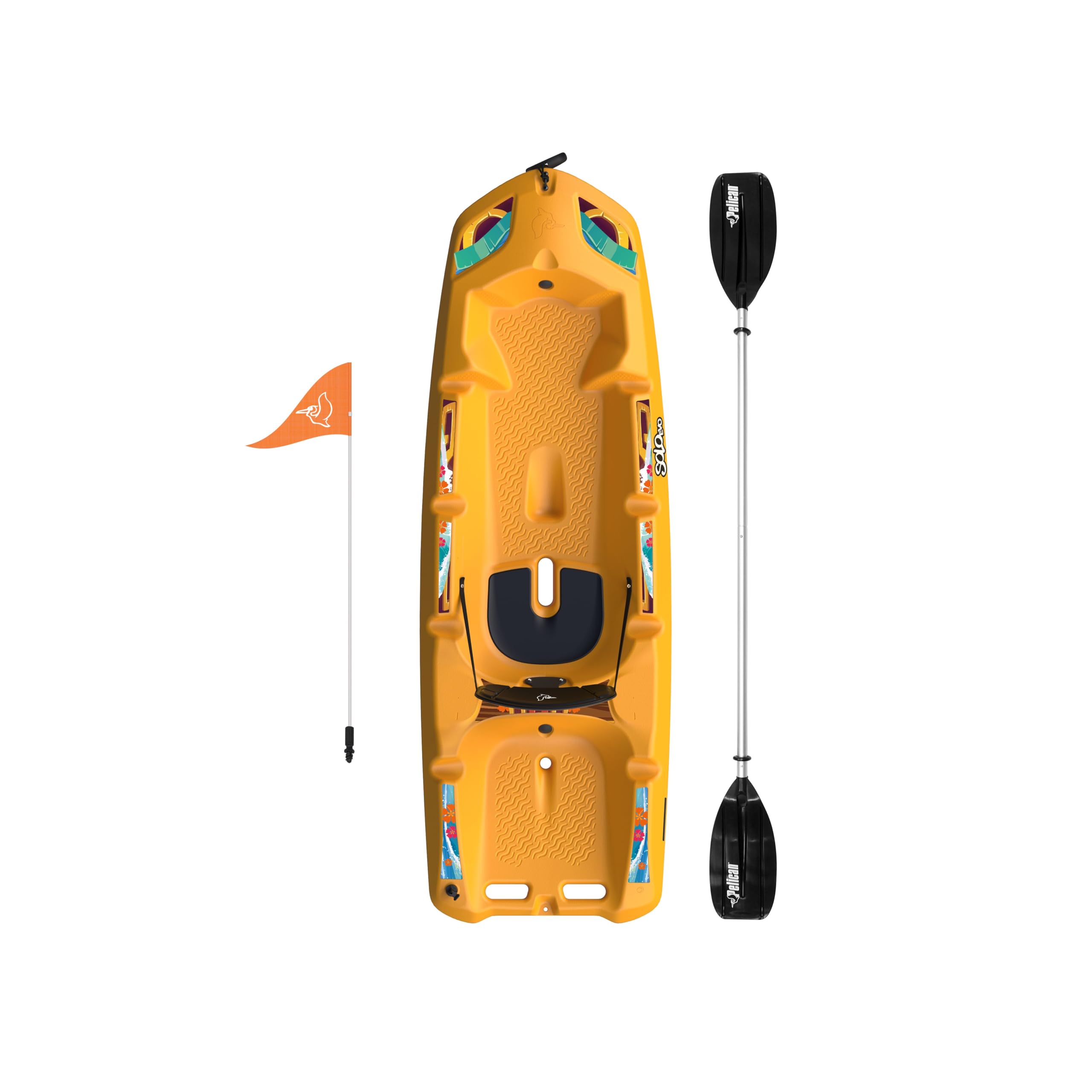
The Pelican Solo is a sensible choice for children who want a compact sit-on-top kayak with a backrest, paddle, and safety flag.
Pros
- Stable twin-tunnel hull
- Included paddle, seat cushion, backrest, and flag
- Open stern makes swimming and re-entry easier
Cons
- No built-in rod holders
- Heavier than the smallest youth kayaks
- Some buyer reports mention missing accessories on delivery
The twin-tunnel hull is designed to soften wave impact and encourage predictable turning. Its 24.5-inch width gives younger paddlers a steady platform, while molded side handles make carrying more comfortable for adults.
The padded seat and backrest add support during longer outings. The open stern can also serve as a secondary sitting area, though the kayak remains intended for a single paddler within its stated capacity. Parents should verify that all listed accessories are in the package before heading to the water.
Lifetime Dash 66 Youth Kayak
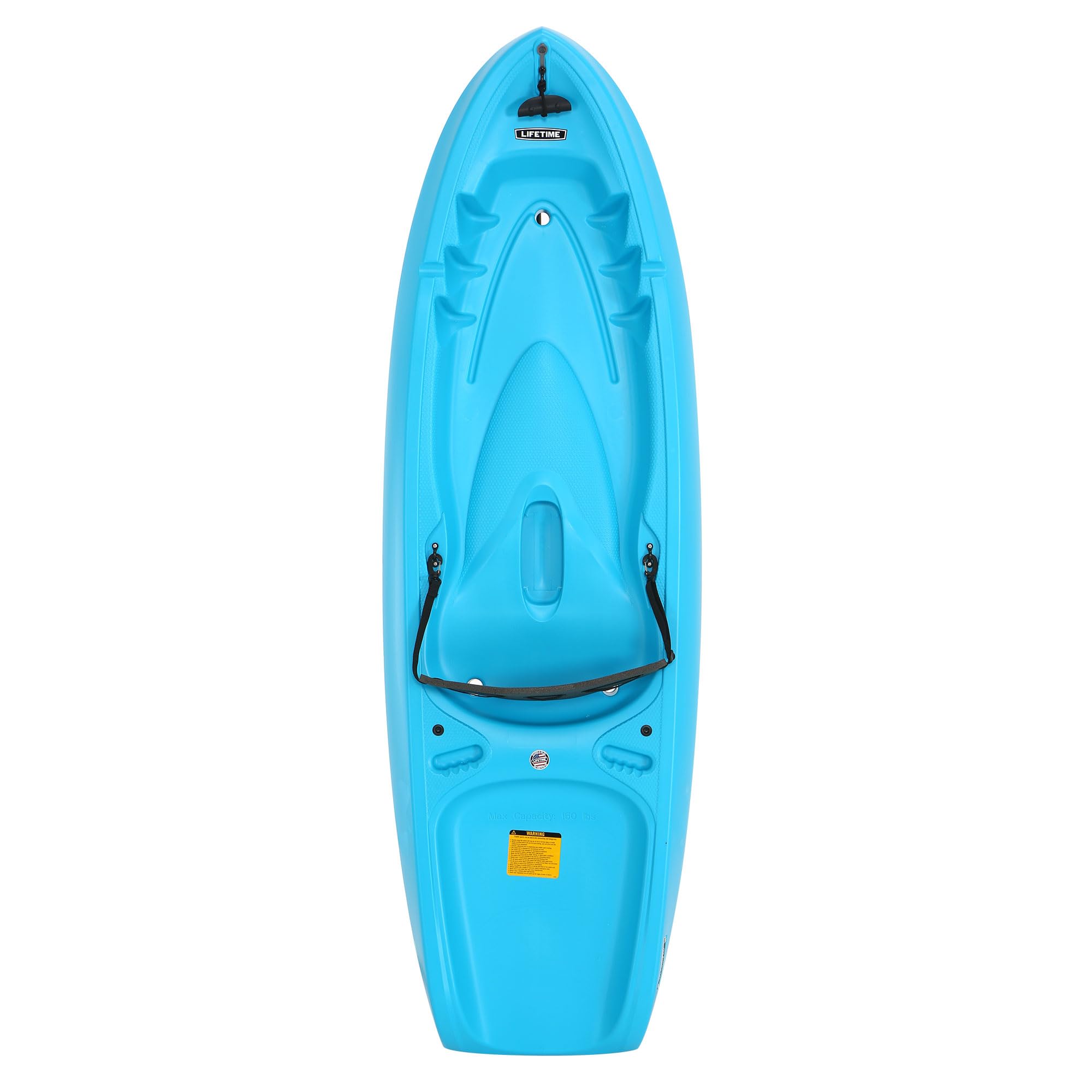
Parents should consider the Lifetime Dash 66 when a child needs more capacity and growing-room than a very small starter kayak provides.
Pros
- Supports paddlers up to 150 pounds
- Multiple footrest positions and a detachable foam seat back
- Swim-up deck with molded re-entry grips
Cons
- Paddle is not included
- Footrest spacing may not suit shorter children
- No built-in rod holders
At 78 inches long, the Dash 66 gives a growing child more room than the six-foot models. The molded center carry handle helps with transport, and the sit-on-top layout keeps the cockpit approachable for beginners.
The adjustable footrests and removable foam backrest allow parents to tailor the fit, though shorter children may find the closest position still too far forward. Because it lacks a paddle and dedicated fishing mounts, it works better as a recreational starter kayak than as a ready-to-fish package.
Buying Guide
Prioritize Stability
A child’s first kayak should resist sudden rocking and provide a predictable platform for paddling. Wider hulls and sit-on-top designs are generally easier for beginners than narrow touring shapes.
| Feature | Why it matters |
|---|---|
| Wide hull | Reduces the sensation of tipping |
| Sit-on-top cockpit | Makes boarding, swimming, and re-entry simpler |
| Flat or tunnel-style bottom | Improves steadiness on calm water |
| Swim-up stern | Helps a child climb back aboard |
No kayak is tip-proof. Children should practice on calm, shallow water while wearing a properly fitted personal flotation device and staying within immediate adult reach.
Match the Kayak to the Child
Check the manufacturer’s weight capacity, then account for clothing, footwear, and any fishing gear. A kayak that is too large can be difficult to control, while one that is too small may be outgrown quickly.
Adjustable footrests help accommodate growth. A supportive backrest can also improve posture, though younger children may need a simpler cockpit that allows easy movement.
Consider Carrying and Storage
Hard-shell kayaks are ready to launch and usually tolerate routine handling well, but they take up more storage space. Inflatable kayaks are easier to pack and transport, though they require inflation, drying, pressure checks, and protection from sharp objects.
Parents should check the unloaded weight as carefully as the child’s capacity. A boat that is technically manageable for a child may still be awkward for an adult carrying it with a paddle, flotation gear, and fishing equipment.
Look for Fishing Features
Rod holders are the most useful built-in fishing feature because they keep a rod secure while a child paddles or handles a catch. Accessory mounts, a nonslip deck, drainage holes, and a ruler can also improve convenience.
Parents should avoid overloading a youth kayak with tackle. A small, secured container and minimal gear help preserve stability and reduce the chance of loose hooks or equipment becoming a hazard.