Most anglers crowd the same rivers and lakes, leaving countless small creeks untouched and full of opportunity. I’ve found that these hidden waters often hold wild fish willing to bite and teach more about precision and patience than any popular fishing spot ever could. Fishing small creeks nobody talks about gives you unpressured fish, quiet solitude, and the kind of hands-on experience that builds real skill.
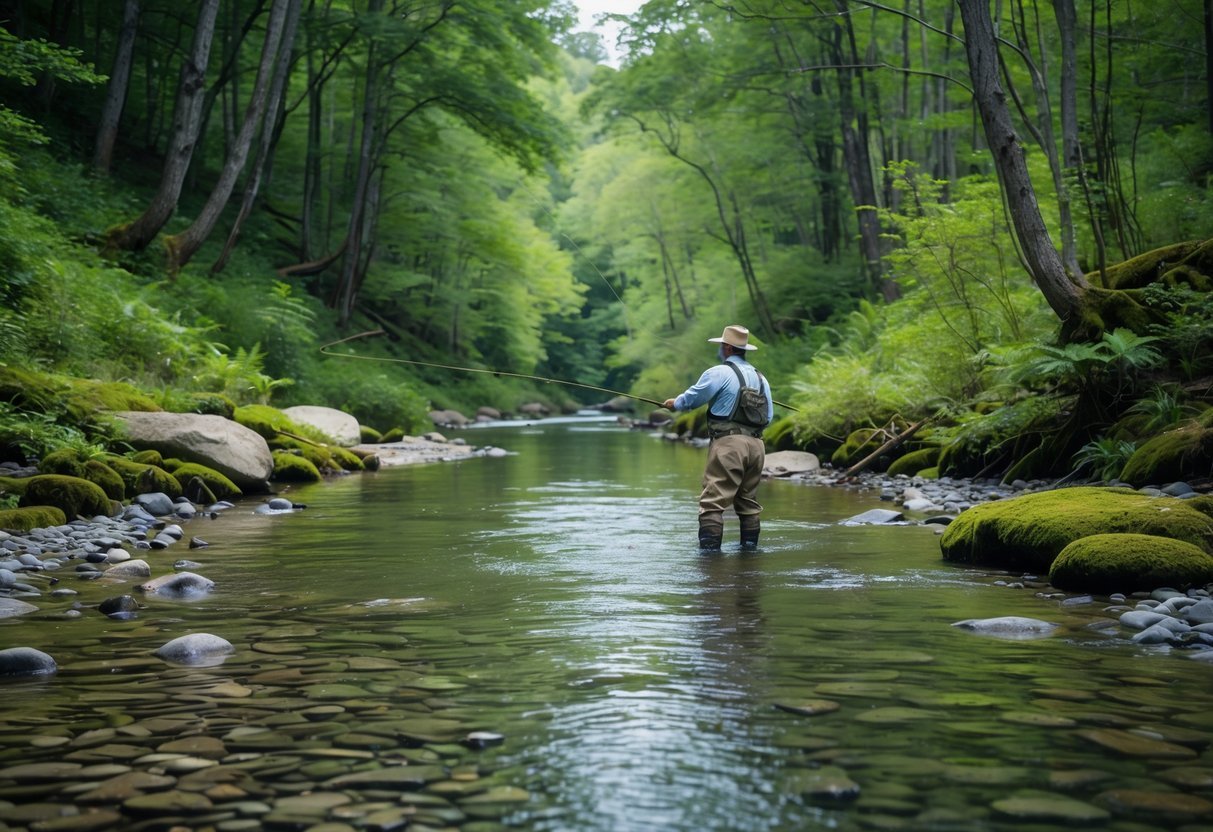
When I head to a small creek, I’m not chasing trophies—I’m chasing discovery. These waters move differently, demand quiet steps, and reward anyone who pays attention to the subtle clues that bigger rivers hide. Every bend, shadow, and riffle can hold life, and the challenge lies in learning how to approach them without spooking a single fish.
In this guide, I’ll share how to find forgotten creeks, what gear actually works in tight spaces, and the techniques that make small-stream fishing both simple and effective. By focusing on these overlooked spots, you’ll see how much they can teach about reading water, adapting to conditions, and connecting with the outdoors in a more personal way.
Why Fish Small Creeks Nobody Talks About?
Fishing quiet, overlooked creeks gives me space to think, learn, and connect directly with the water. These hidden stretches often hold more than small fish—they hold chances to practice better technique, study fish behavior up close, and enjoy time outdoors without interruption.
Less Pressure and More Solitude
Small creeks receive far less fishing pressure than larger rivers or lakes. Most anglers overlook them because they seem too shallow or hard to reach. I find that’s what makes them worthwhile. With fewer people around, fish are less wary, and I can fish in peace without competing for space.
The quiet helps me focus. I can move slowly, test different baits, and enjoy moments when I’m the only one casting into a shaded pool. Local creeks are ideal for spontaneous trips—no long drive, no crowds, and often no cellphone signal.
Key advantages of fishing low‑traffic waters:
| Benefit | Description |
|---|---|
| Less fishing pressure | Fish respond more readily to bait and lures. |
| Greater solitude | Fewer anglers, less noise, and more freedom. |
| Easier access | Many creeks run through public lands or near small towns. |
Improving Your Angling Skills
Creeks teach precision. In tight spaces, I have to adapt my cast, control my line, and read subtle changes in current. Because room is limited, I practice side‑arm casts, roll casts, and careful line management to keep from snagging branches. These skills carry over to bigger waters.
I also learn to observe. Every pocket of calm or ripple hides clues about fish movement. Light rods, small lures, and soft presentations reward accuracy more than strength. Fishing a creek feels like a field classroom where every cast tests timing and awareness.
Each trip improves my problem‑solving too. When the fish ignore one lure, I adjust quickly—changing size, color, or retrieve speed until something works. The narrow setting keeps me honest about technique and teaches patience that pays off elsewhere.
Experiencing Nature Up Close
Small stream fishing puts me right in the environment instead of above it. When I wade a creek, I see insects drifting, minnows flashing, and crayfish darting between rocks. That level of detail helps me understand what fish eat and how they react to changes in water flow.
Because these creeks are often shaded by trees, I can feel the temperature drop as I move through different sections. The scents of wet soil and cedar mix with the sound of running water. It’s simple but real.
I often spot herons, frogs, or deer near the bank. Those encounters remind me why I fish beyond just catching something. Small creeks connect me directly to the natural world in a calm, immediate way that few larger waters can match.
How to Find Hidden Small Creeks
I often locate productive fishing creeks by combining map research, field scouting, and respectful access planning. Finding overlooked water requires patience, observation, and a few reliable tools that reveal small, fishable streams others might miss.
Researching Maps and Satellite Imagery
I start by studying topographic maps and satellite imagery to spot narrow blue lines that indicate running water. These maps help me trace how creeks connect to larger rivers, which often hints at fish movement and seasonal flow.
I use tools such as Google Earth or Gaia GPS to zoom in on terrain changes, ravines, or shaded valleys where small creeks tend to form. Contour lines close together usually mark steep areas that hold cold, oxygen‑rich water—ideal for trout and smallmouth bass.
Public land overlays on digital maps save me time by showing which small creeks fall within national or state forests. I mark coordinates and note access points, bridges, and trailheads for later scouting. Comparing satellite images taken in different seasons also helps; active creeks often appear darker in color or show visible stream channels during wet months.
Reading Land and Water Features
On the ground, I focus on subtle landscape details. Low, vegetated valleys often hide running water even if maps show none. I look for tree lines snaking through open fields—these usually follow moisture and signal a possible fishing creek.
Common signs of an active small creek include:
| Sign | What it Indicates |
|---|---|
| Lush grass or reeds | Constant soil moisture |
| Cut banks | Erosion from moving water |
| Insect activity | Healthy aquatic life |
| Overhanging roots | Shelter for fish |
I also watch for tributaries feeding into a main creek. These smaller branches often hold fish during spawning or feeding times. Listening helps too—running water or frogs calling can reveal a hidden flow even before I see it.
Gaining Access and Navigating Private Lands
Respecting property boundaries keeps me and the sport in good standing. When I find a promising small creek crossing private land, I contact the landowner ahead of time. A polite request or a short conversation often leads to permission, especially if I explain that I practice catch and release.
I also check county parcel maps or local land records to identify ownership before I go. Many landowners appreciate anglers who leave no trace and avoid disturbing livestock or fences.
For public lands, I use trail maps or signage to locate legal entry points. Some creeks run along public easements like bridge crossings or undeveloped parkland. By planning ahead and being courteous, I can explore more small creeks while keeping access open for others.
Essential Gear for Small Creek Fishing
Fishing small creeks demands control, mobility, and attention to detail. I rely on lightweight rods, breathable gear, and a simple pack that lets me move easily along uneven ground and through shallow water. Selecting versatile, reliable equipment keeps my focus on the creek—not on managing bulky or unnecessary gear.
Choosing the Right Fly Rod
In tight spaces, a short and light fly rod gives me the accuracy and finesse I need. I usually choose a 3- to 5-weight rod between 7 and 8 feet long. This length helps me cast cleanly under overhanging trees and around brush without snagging my line.
A medium or medium-fast action rod works best for small waters where delicate presentations are key. It lets me load the line quickly for short casts while still handling the occasional larger fish. I pair it with a floating line that matches the rod’s weight and a compact reel with a smooth drag system. The goal is a balanced setup that feels light in the hand but still precise enough for tight targets.
Selecting Waders and Wet Wading Shoes
I pick my approach based on weather and water conditions. In cooler months or deep creeks, breathable chest waders with a comfortable belt and reinforced knees keep me dry and mobile. I like models made from lightweight material that breathe well, as heavy rubber versions can trap heat and slow movement.
During warm weather, I often switch to wet wading for comfort and simplicity. I wear fast-drying pants and sturdier wet wading shoes that protect my feet from sharp rocks and provide grip on slick surfaces. Boots with felt or rubber soles and good traction help me stay steady in shifting current. I also carry a walking staff when the footing looks tricky.
Packing Smart and Light
I pack only what I need because space and mobility matter more than variety. My basic kit includes:
| Item | Purpose |
|---|---|
| Small box of flies | Match local insects |
| Clippers, forceps, tippet | Handle line changes |
| Water bottle | Stay hydrated |
| Lightweight net | Land fish safely |
| Polarized glasses | Reduce glare |
I keep tools on a lanyard or clip for quick access. A small hip pack or vest carries everything and leaves my hands free to cast or steady myself. Traveling light lets me explore more of the creek and focus on reading the water instead of managing excess gear.
Fly Selection and Rigging for Small Creeks
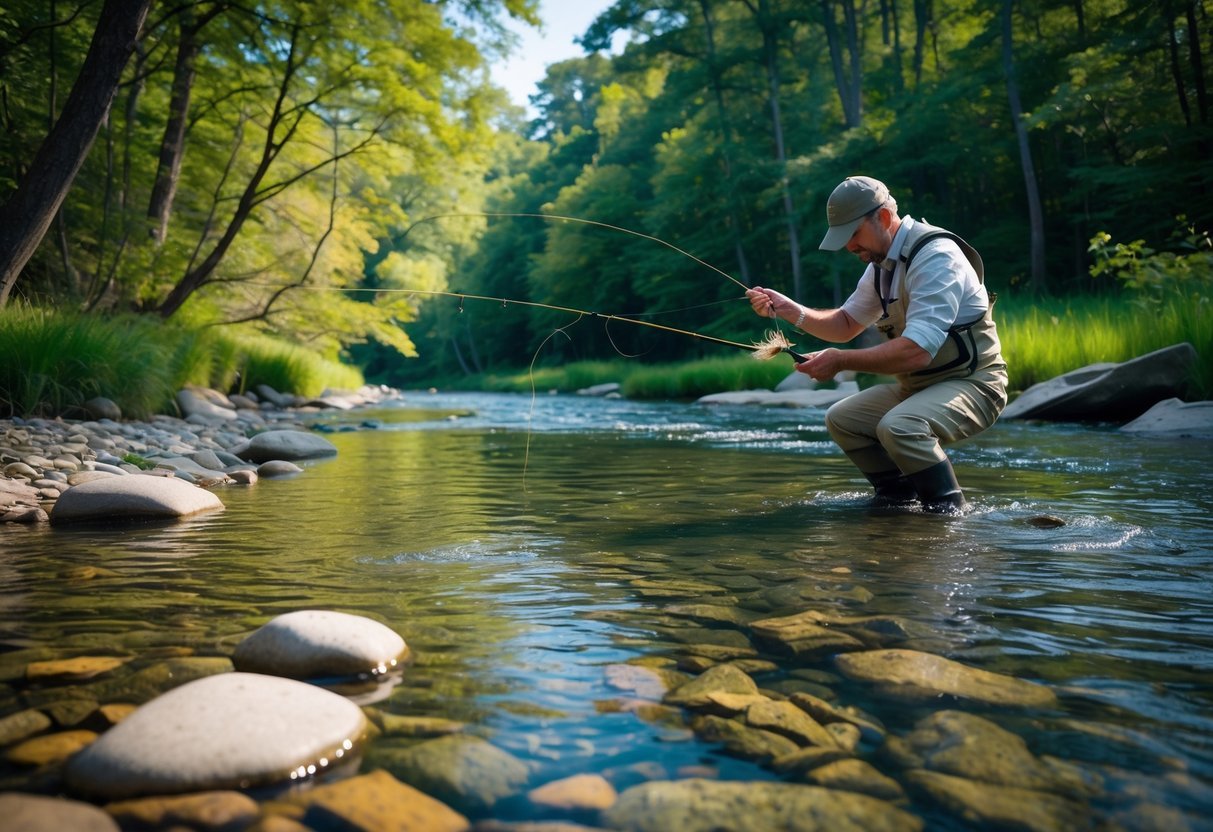
In tight, clear creeks, success depends on subtle choices. I pay close attention to fly size, leader length, and natural presentation, because trout respond quickly to small details.
Best Dry Flies and Nymphs
When I fish small creeks, I rely on simple, visible dry flies that stay afloat in turbulent pocket water. My top dries include the Elk Hair Caddis, Parachute Adams, and small Stimulators in sizes 14–18. These patterns ride high and imitate a range of insects common in narrow streams.
For nymphs, I carry slim, fast-sinking patterns that get down quickly in short drifts. The Pheasant Tail, Zebra Midge, and Hare’s Ear in sizes 16–20 cover most food forms trout feed on below the surface.
I often fish a dry-dropper setup, tying a light nymph to the bend of my dry fly’s hook. This method keeps presentations simple while letting me cover both surface and subsurface feeding lanes without an indicator.
| Fly Type | Recommended Patterns | Typical Sizes | Best Conditions |
|---|---|---|---|
| Dry Fly | Elk Hair Caddis, Adams | #14–18 | Clear water, surface takes |
| Nymph | Pheasant Tail, Zebra Midge | #16–20 | Pocket water, deeper runs |
Matching the Hatch: Mayflies and Caddisflies
I try to identify what insects are active before choosing a fly. In many creeks, the most common hatches come from mayflies and caddisflies. During a mayfly hatch, small Blue-Winged Olives or Pale Morning Duns often work well. For caddis activity, the Elk Hair Caddis is hard to beat, especially in tan or olive.
Matching size matters more than perfect imitation. If I see insects landing and trout rising, I note their size and body color first, then pick the closest pattern I have.
When the hatch is light, I use an attractor like a Royal Wulff or Adams to bring fish up. I change patterns only if trout refuse several good drifts.
Tippet and Leader Considerations
Small creeks demand light, soft presentations. I usually start with a 7½–9 foot leader tapered to 5X or 6X tippet. The shorter leader helps me control casts under overhanging branches, and thin tippet lets the fly drift naturally without drag.
In tight spots, I often shorten my rig further. A 6-foot leader with a 6X tippet works well for bow-and-arrow casts when space is limited. If water is stained, I might step up to 4X for abrasion resistance near rocks or woody debris.
Light tippet and good drift control make more difference than fancy casts. By keeping my rig lean and balanced, I reduce tangles and make casts accurate on the first try.
Techniques and Tactics for Small Stream Fishing
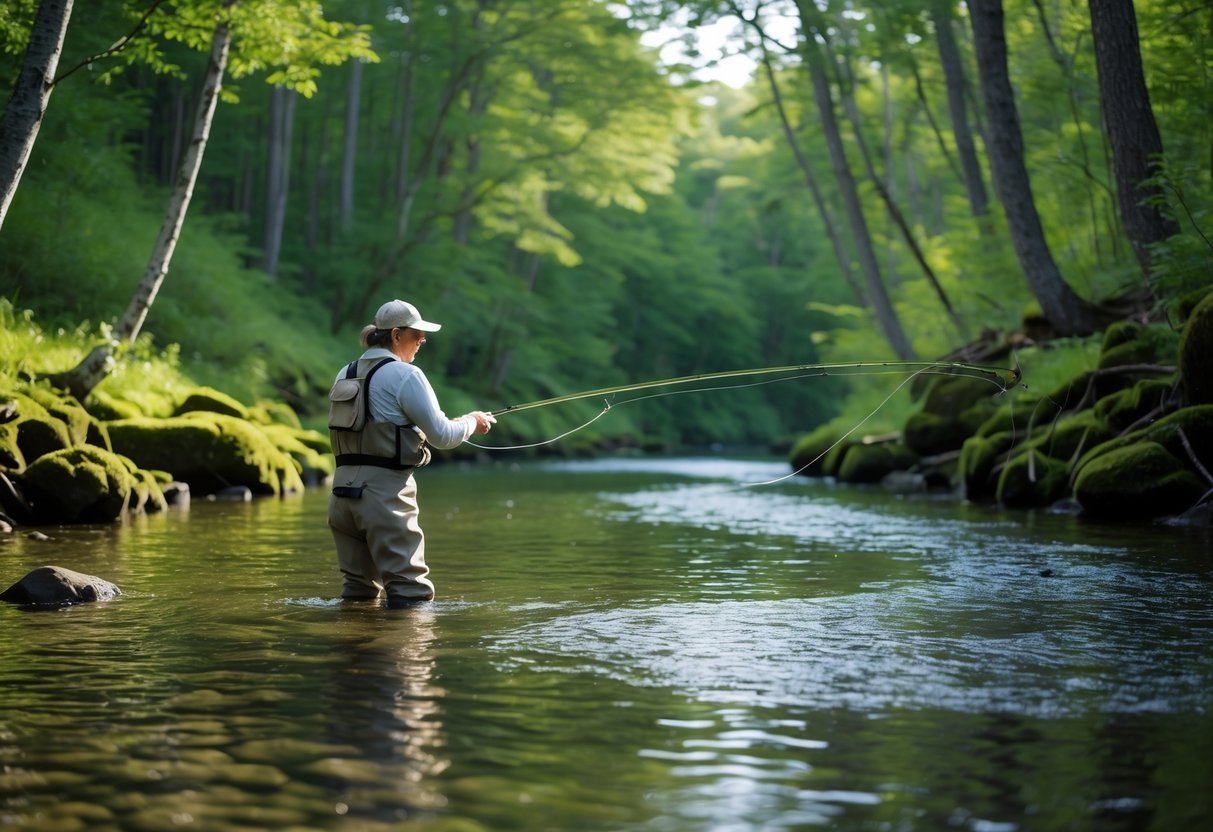
I rely on a mix of control, awareness, and patience when fishing in small creeks. Staying quiet, casting with precision, reading the current, and adjusting to seasonal changes all decide how successful I am. Each skill builds on the other to help me catch fish without disturbing the water or wasting time on unproductive spots.
Approaching Water Quietly
Small creeks often hold clear, shallow water, which makes fish more alert to sound and movement. I move slowly along the bank and keep a low profile to avoid sending shadows across the stream. Good footing matters too—stepping on loose rocks or pushing through brush can scare fish long before I make a cast.
I wear dull or neutral-colored clothing that blends with the surroundings. Using natural cover, like bushes or overhanging branches, helps hide my outline. I also approach from downstream when possible so the current carries sound and scent away from feeding fish.
A quiet entry pays off the most in narrow streams with deep pools or undercut banks. Once I settle in, I pause for a minute or two before casting. That short wait often gives fish time to return to feeding positions.
Casting in Tight Spaces
Trees, tall grass, and brush often limit how much space I have for casting in small streams. Overhead loops are rarely an option. I depend on short, controlled casts like a roll cast or bow-and-arrow cast. These let me deliver a fly or small lure under low branches and into tight corners.
Accuracy is more important than distance. Fish in confined water often sit within a few yards of cover. I shorten my leader slightly when fly fishing to make precise casts and quicker hooksets. A 6-foot ultralight spinning rod or a 7-foot 3-weight fly rod gives me enough control without snagging in nearby vegetation.
When I can’t cast from a standing position, I’ll kneel or squat to reduce my visibility. Casting softly ensures the lure or fly lands gently, preventing ripples that can put fish on alert.
Reading Water and Identifying Fishy Spots
Every small creek has prime feeding areas where fish concentrate. I look for deep pools, current seams, outside bends, and undercut banks. These spots give fish access to food, shade, and protection from strong current.
I read the surface for subtle hints—ripples that converge, foam lines, or small eddies behind rocks. In summer, fish prefer shaded pools or fast oxygenated water, while in cooler months they move to slower, deeper holes.
Quick reference table:
| Water Feature | Why It Attracts Fish |
|---|---|
| Deep holes | Cooler water and protection |
| Outside bends | Fast current brings food |
| Undercut banks | Cover and ambush points |
| Eddies | Resting spot out of strong flow |
I cast to the edges first before targeting the center. That way, I avoid spooking fish holding along the margins.
Adapting to Seasonal Conditions
Stream behavior changes throughout the year, so I adjust my techniques to match. In spring, runoff makes water higher and cloudy. I use brighter lures or weighted flies and fish close to the banks where current slows.
During summer, water levels drop and fish become skittish. I downsize my gear, switch to light lines, and fish early in the morning or late in the day. Dry flies and surface lures often produce well in warm conditions when insects are active.
In fall, cooler temperatures improve oxygen levels. Fish feed heavily before winter, and I focus on deeper pools or runs where several species gather. Winter brings slower fishing, but fish still take small jigs or nymphs presented slowly along the bottom.
By watching how water clarity, flow, and temperature shift through the seasons, I can change my approach and stay effective in any small stream.
Staying Safe and Respectful in Remote Creeks
Fishing in remote creeks requires awareness, preparation, and care for the environment. I focus on staying alert to conditions, carrying the right gear, and minimizing my impact on the surrounding habitat.
Safety Precautions and Wildlife Awareness
I prepare for remote creek trips by checking weather forecasts, stream conditions, and terrain maps before I leave. I pack a small first aid kit, a whistle, and a backup navigation device like a map or GPS app in case I lose signal. Wearing layers helps me adjust to sudden changes in temperature, and quick-drying clothing reduces discomfort if I fall in.
Wildlife encounters can occur anytime. I stay alert for snakes, bears, and insects, especially when walking through brush or approaching the water quietly. I make brief noise when visibility is low to avoid startling large animals. In insect-heavy areas, I use repellent with DEET or wear light-colored clothing to deter bites.
Here’s a short checklist I use before heading out:
| Item | Purpose |
|---|---|
| First aid kit | Treat cuts or stings |
| Whistle | Signal for help |
| Bear spray (if applicable) | Deter wildlife |
| Water and snacks | Prevent dehydration and fatigue |
Planning for these details helps me stay safe while fully enjoying time on the water.
Leave No Trace and Conservation Ethics
When I fish remote creeks, I make sure my actions leave minimal impact. I pack out every piece of trash, including fishing line and food wrappers. I avoid stepping on fragile vegetation and enter the water only when necessary to protect the streambed and aquatic life.
I also respect local regulations and private property boundaries. If I’m unsure about land access, I check maps or contact local authorities before fishing. Using barbless hooks helps me release fish with less harm, and I handle them with wet hands to protect their skin.
To preserve water quality, I clean my gear between trips to prevent the spread of invasive species like didymo or zebra mussels. Even small efforts, such as rinsing waders and boots with tap water, make a noticeable difference in protecting creek ecosystems.