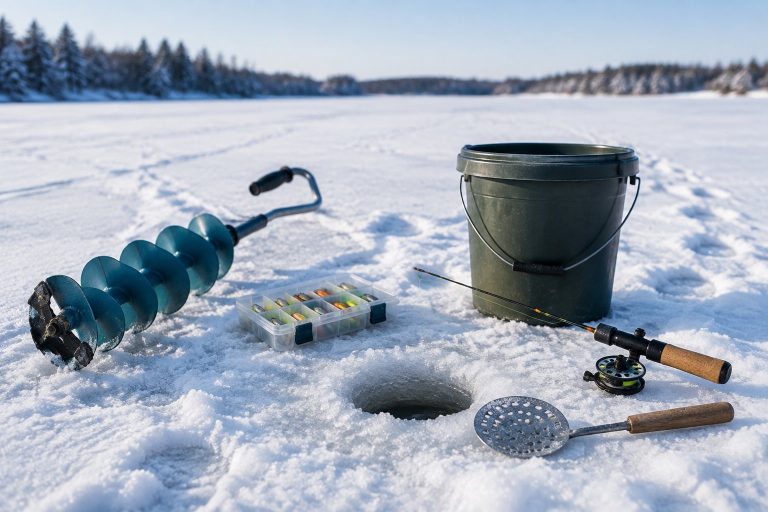
For your first trip fishing for stocked trout, take a light spinning outfit with 4- to 6-pound line and fish a small worm under a float or floating dough bait above the bottom where bait is legal. You get manageable tackle, straightforward bite detection, and a setup that fits a short visit to a stocked pond.
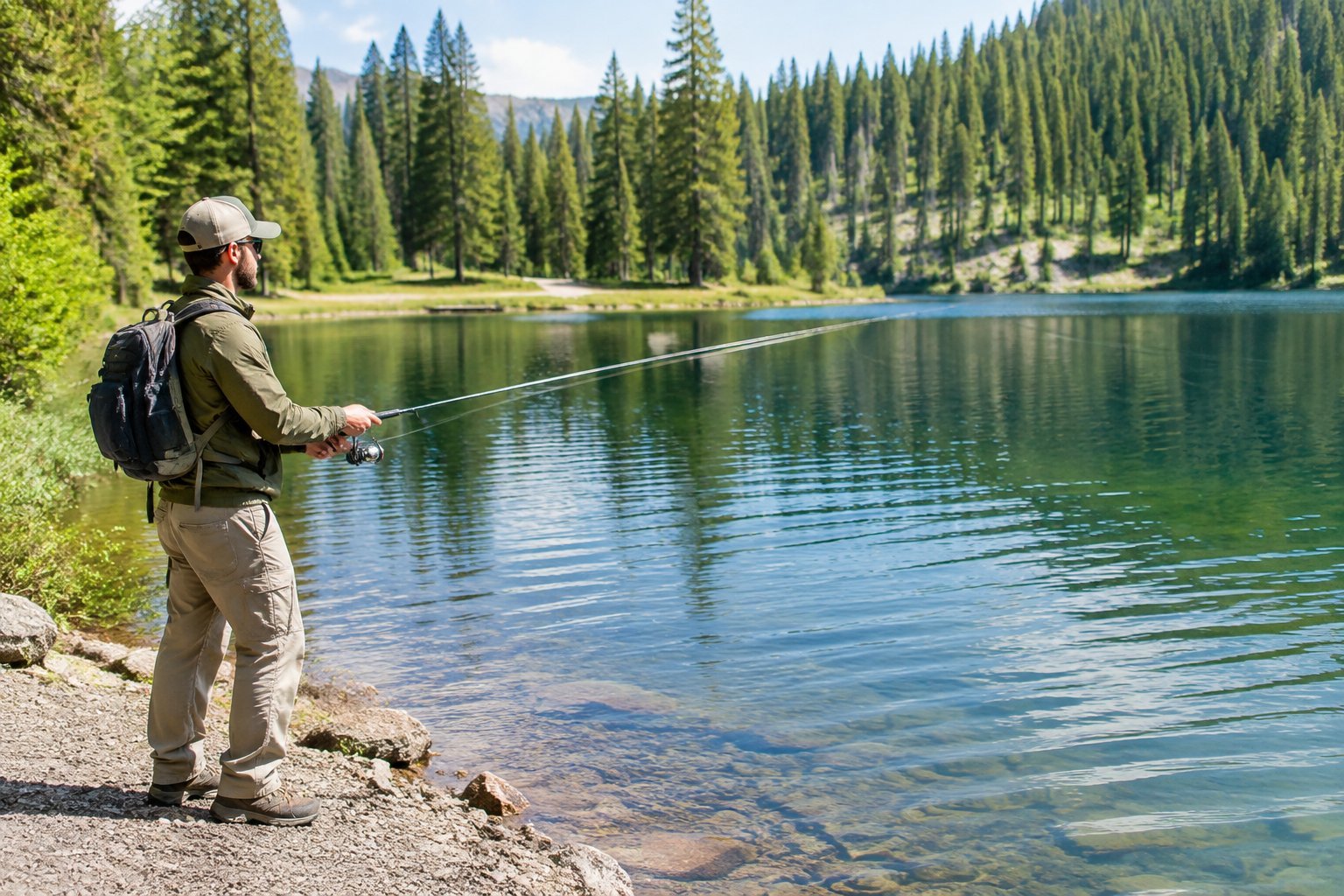
You can fit trout fishing around work or family commitments by choosing public bank access close to home and rigging before you leave. If you’re starting trout fishing as a beginner, make your first goal a controlled cast and a bait presented at a useful depth.
Where and When Can You Find Stocked Trout?
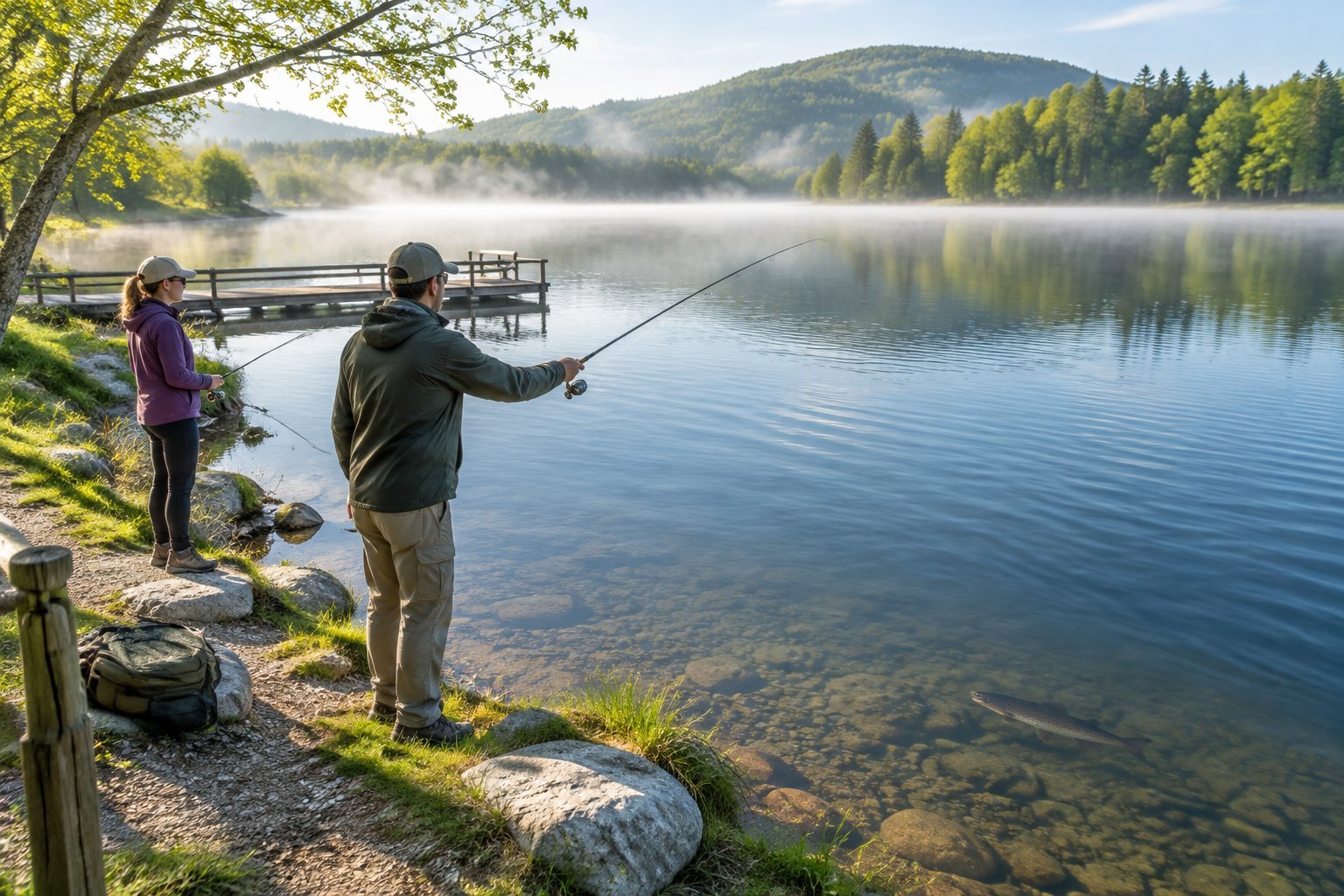
Start your stocked trout fishing search with your state wildlife agency’s recent stocking reports and public-access maps. Give priority to nearby water with safe banks and suitable temperatures.
How Do Newly Stocked Trout Behave?
You’re targeting hatchery-raised fish that are adjusting to unfamiliar water and food. You might find newly stocked trout grouped near a release area, although current and water conditions influence how quickly they spread.
Begin near a documented stocking location, then explore neighboring water. As fish settle in, look for the same food and shelter you would seek when targeting wild trout. Depending on your state’s program, you’ll encounter rainbow trout, brown trout, or brook trout.
Check Stocking Reports, Licenses, and Local Rules
Check the report date and exact waterbody before leaving home. A scheduled stocking is subject to changes from weather, water levels, equipment, and staffing; a completed stocking report gives you a firmer starting point.
Confirm these details for your specific water:
- Your fishing license and any required trout permit.
- Opening dates, closures, and fishing hours.
- Daily limits and minimum or maximum lengths.
- Bait restrictions and hook requirements.
- Public access boundaries and parking rules.
Check children’s license requirements separately. On special-regulation waters, scented soft plastics and dough baits may fall under bait restrictions even when you think of them as artificial products.
Choose Accessible Banks at Ponds, Lakes, and Streams
Choose a stocked pond with an open casting area for your simplest first outing. Look for firm footing, room behind you, and a landing spot within easy reach of the water.
At lakes, work shoreline drop-offs and accessible points. In streams, try deeper pools and slower water beside faster current. Respect private property, and stay clear of spillways, steep banks, and restricted dam areas.
How Do Season and Water Conditions Affect Location?
Plan around water temperature as well as the stocking calendar. During cool weather, search shallow shoreline areas; as surface water warms, explore reachable deeper water and cool inflows where access is legal.
For trout fishing in the fall, check for fresh stockings and adjust your visit to local conditions. A sunny afternoon is useful during cold weather, while an early visit suits warmer days.
Carry a thermometer if you plan to release fish. When water approaches 68°F, choose cooler water or another species to reduce stress on released trout.
What Gear Do You Need for a Quick Bank Trip?
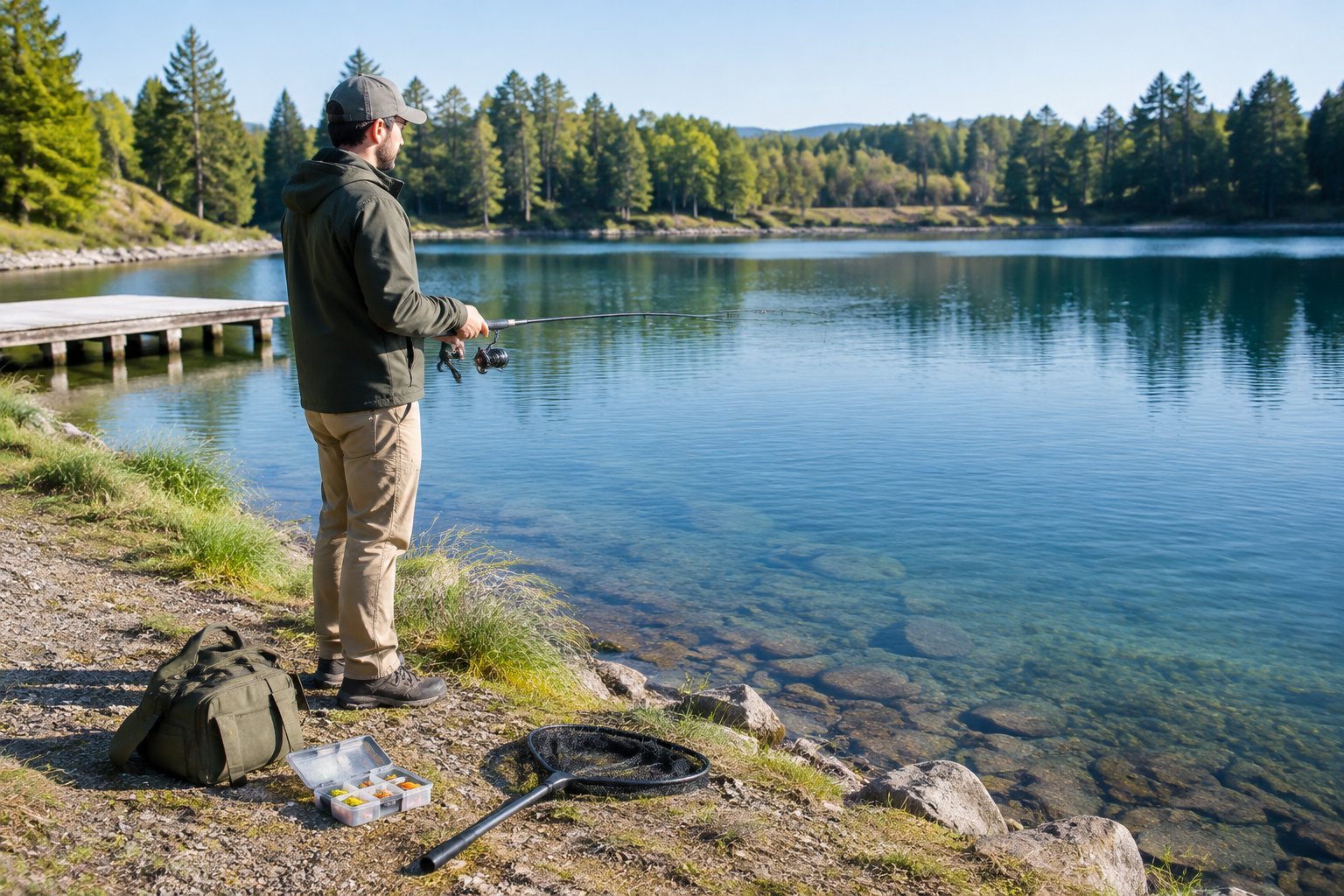
You need one light spinning rod, a small reel, and a compact tackle kit for a short bank trip. Keep your outfit ready between outings so packing takes only a few minutes.
Choose a Light Spinning Rod and Small Reel
Start with a 6- to 7-foot light or ultralight spinning rod and a 1000- to 2000-size reel. Check the rod’s printed lure rating to make sure it handles your small trout offerings.
Choose the shorter end for tight banks with overhead branches. An open pond gives you room to use the longer rod for line control and casting. Set the drag so line pulls out smoothly before your leader reaches its breaking point.
Keep Fishing Line and Leaders Simple
Spool your reel with 4- to 6-pound monofilament line for an easy starting setup. You get manageable casting and enough stretch to cushion sudden runs.
When choosing trout fishing line, match strength to cover and expected fish size. A 4-pound fluorocarbon leader is an optional addition for clear water or a bottom rig. Check the last few feet of fishing line for rough spots after snags, and retie any damaged section.
Pack a Small Tackle Kit Before You Leave
Keep your tackle in one small box so you can find replacements quickly. Bring:
- Small single hooks, approximately sizes 8 through 12.
- Split shot and light sliding sinkers.
- Small swivels, floats, and spare leader material.
- A few spinners or spoons.
- Bait, forceps, line cutters, and a rubber-mesh net.
- A trash bag and any required harvest equipment.
Practice beginner fishing knots at home, including an improved clinch knot for hooks and swivels. Moisten each knot before tightening, then pull firmly to check it.
Which Baits and Rigs Should Beginners Start With?
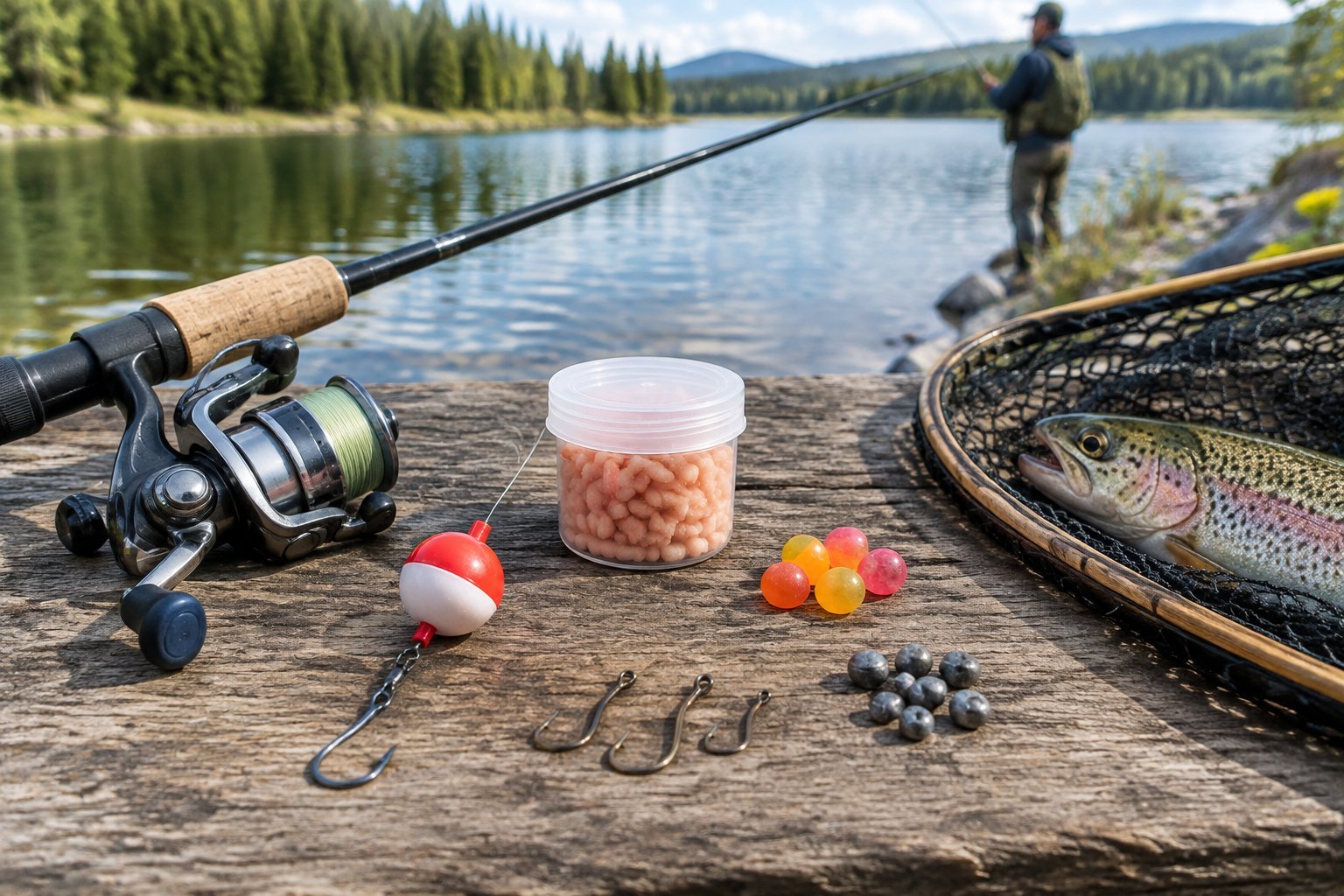
Start with floating PowerBait on a bottom rig for still water, or a small worm under a float for visible bite detection. Before choosing what bait to use for trout, decide whether you intend to keep legal fish or release your catch.
Use Floating PowerBait on a Simple Bottom Rig
Use this setup on bait-legal water when you plan to keep trout within the local limit. Dough bait invites swallowing, so it carries a higher deep-hooking risk than actively fished single-hook lures.
Build your rig in this order:
- Thread a light sliding sinker onto your main line.
- Add a small protective bead, then tie on a swivel.
- Attach an 18- to 24-inch leader.
- Tie on a small single hook and mold floating dough around it.
Test the baited hook in shallow water to confirm it floats. After casting, let the sinker settle and remove excess slack without dragging the rig. Keep your rod attended and respond promptly to a sustained bite.
Try Worms or Salmon Eggs Under a Float
Suspend a small worm piece under a float when you want an easy-to-watch setup. Start roughly 2 to 3 feet deep in a pond, then adjust to fish activity and bottom depth.
Use the smallest float that supports your bait and weight. Thread the worm securely while leaving the hook point exposed. With salmon eggs or trout eggs, use an appropriately small egg hook and handle the bait gently to keep it intact.
Check local definitions before using scented dough or power bait on restricted water. Packaged eggs also count as bait.
Match Hook Size, Weight, and Depth to Your Bait
Choose your hooks for trout by the size of the bait and the hook’s actual gap. Hook sizing varies by pattern and manufacturer, so inspect the hook before buying.
For a small worm piece, start around size 8 or 10; for a single salmon egg, try a fine-wire egg hook around size 10 or 12. Use enough weight to cast and hold your presentation at the intended depth.
If your float continually lies sideways, check its loading. If it repeatedly dips in waves, reduce excess weight or use a slightly more buoyant float.
Which Lures and Flies Are Easy to Fish?
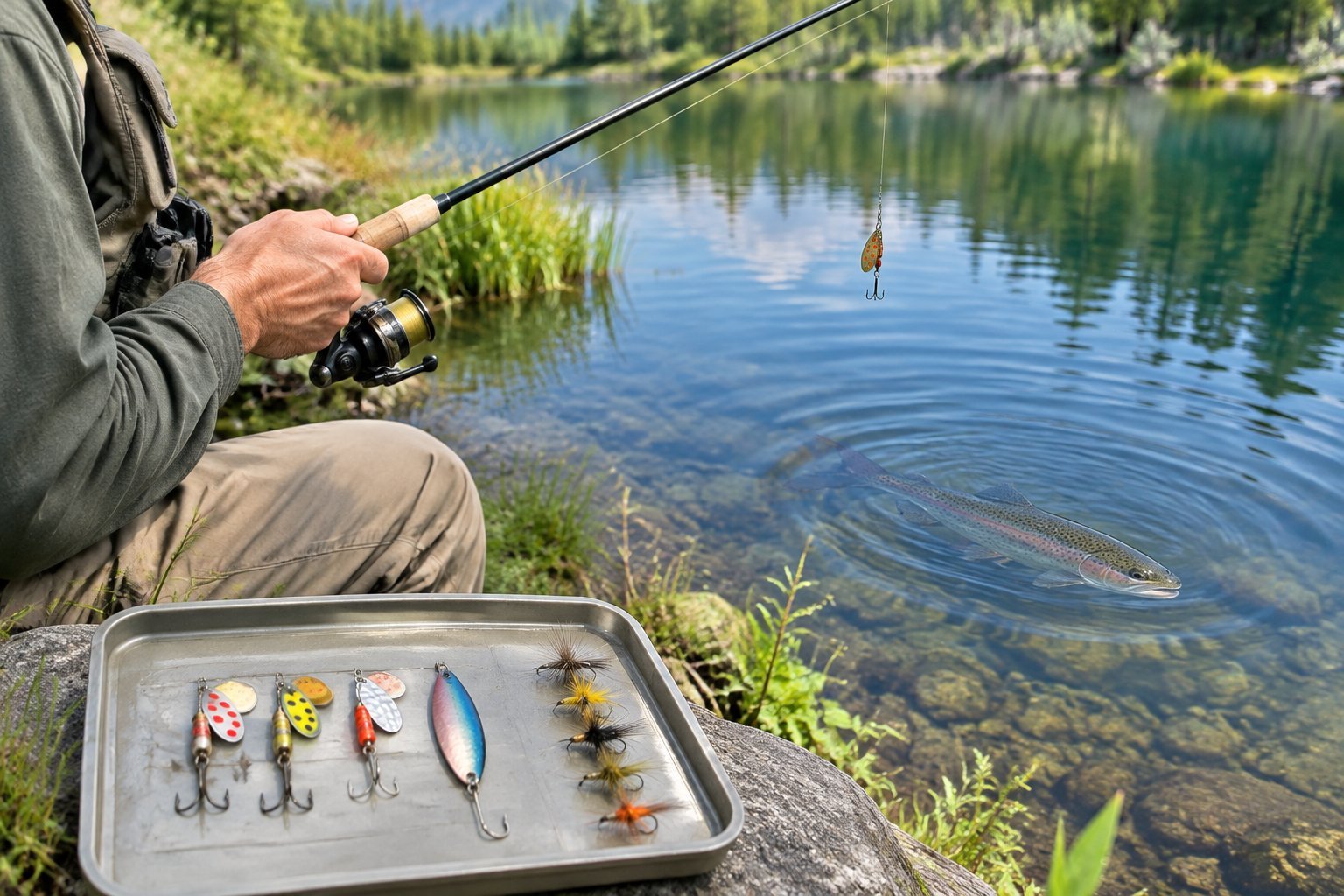
Small spinners and spoons give you an easy way to search for active trout, while a jig under a float lets you work one depth slowly. If you already fly fish, bring a small selection of familiar patterns.
Cover Water With Small Spinners and Spoons
For lures suited to spinning reels, start with trout-sized spinners and spoons around 1/16 to 1/8 ounce. Match their weight to your rod rating and the casting distance you need.
Cast across an open area and retrieve steadily, keeping the lure clear of bottom snags. With a spinner, retrieve fast enough to keep the blade turning. With a spoon, watch its movement near shore and aim for a controlled wobble.
Fan your casts across different angles. After a follow or strike, repeat the same depth and retrieve speed.
Suspend a Small Jig Under a Float
Tie on a small marabou or soft-plastic jig around 1/64 to 1/32 ounce, then position a small float above it. Begin with the jig 2 to 3 feet below the surface where water depth allows.
Cast gently and let the jig settle. Add a short twitch, then pause long enough for the jig to hang beneath the float.
Watch for sideways movement as well as a sinking float. Lift smoothly when you detect a take, keeping your rod movement controlled.
Keep Fly Choices Simple if You Already Fly Fish
Choose familiar fishing flies that you know how to cast and control. For a compact selection of flies for stocked trout, pack a Woolly Bugger and a San Juan worm, plus a small Clouser Minnow if your outfit handles its weight.
Retrieve a Woolly Bugger with short pulls and pauses in still water. Drift a San Juan worm beneath an indicator in moving water, adjusting depth to avoid constant snagging.
Keep weighted flies well away from children and other bank users. Give yourself a clear casting area before making a backcast.
What Should You Change When Trout Will Not Bite?
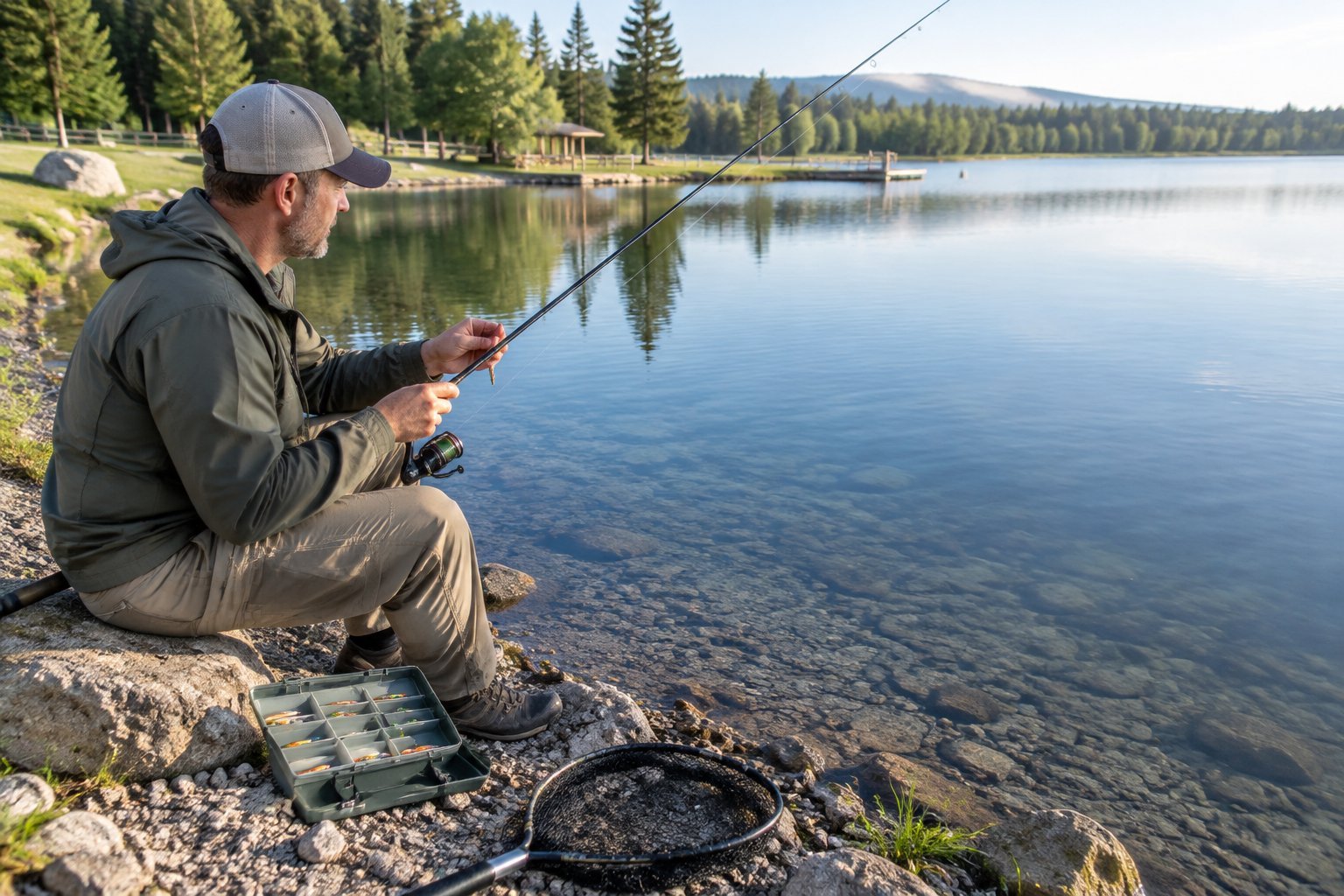
Change presentation depth first, then retrieve speed, and move if you find no signs of fish. Make one adjustment at a time so you can repeat whatever produces a response.
Adjust Depth and Retrieve Before Switching Baits
With a float rig, change depth in roughly 12-inch steps while keeping your bait above snags. With a lure, allow a slightly longer sink before starting the retrieve, then shorten that count if you touch bottom.
Watch fish behavior closely. If trout follow your lure without taking it, try a slower retrieve or a brief pause. After several comparable casts, assess that change before tying on something else.
Move Along the Bank to Find Fish
After about 10 to 15 minutes without a bite or visible activity, try another accessible stretch. Move far enough to reach different water while leaving other anglers room.
Look for an inlet, a depth change, or surface activity. Pause back from the edge before approaching clear, shallow water.
When you get a bite, note the casting direction and depth. Make several more presentations through that area before moving again.
Use Smaller Offerings and Natural Presentations for Pressured Trout
Reduce your bait or lure size when fish inspect presentations without taking them. You’ll also benefit from checking for a fouled hook, damaged line, or a bait spinning unnaturally.
In streams, let your offering drift at the speed of the nearby current. Keep unnecessary slack off the water so it doesn’t pull your bait across the flow.
After stocked trout settle into natural feeding patterns, apply the same careful approach you use for wild trout. Stay back from clear shallows and keep your shadow away from visible fish.
How Can You Make a Short Family Trip Work?
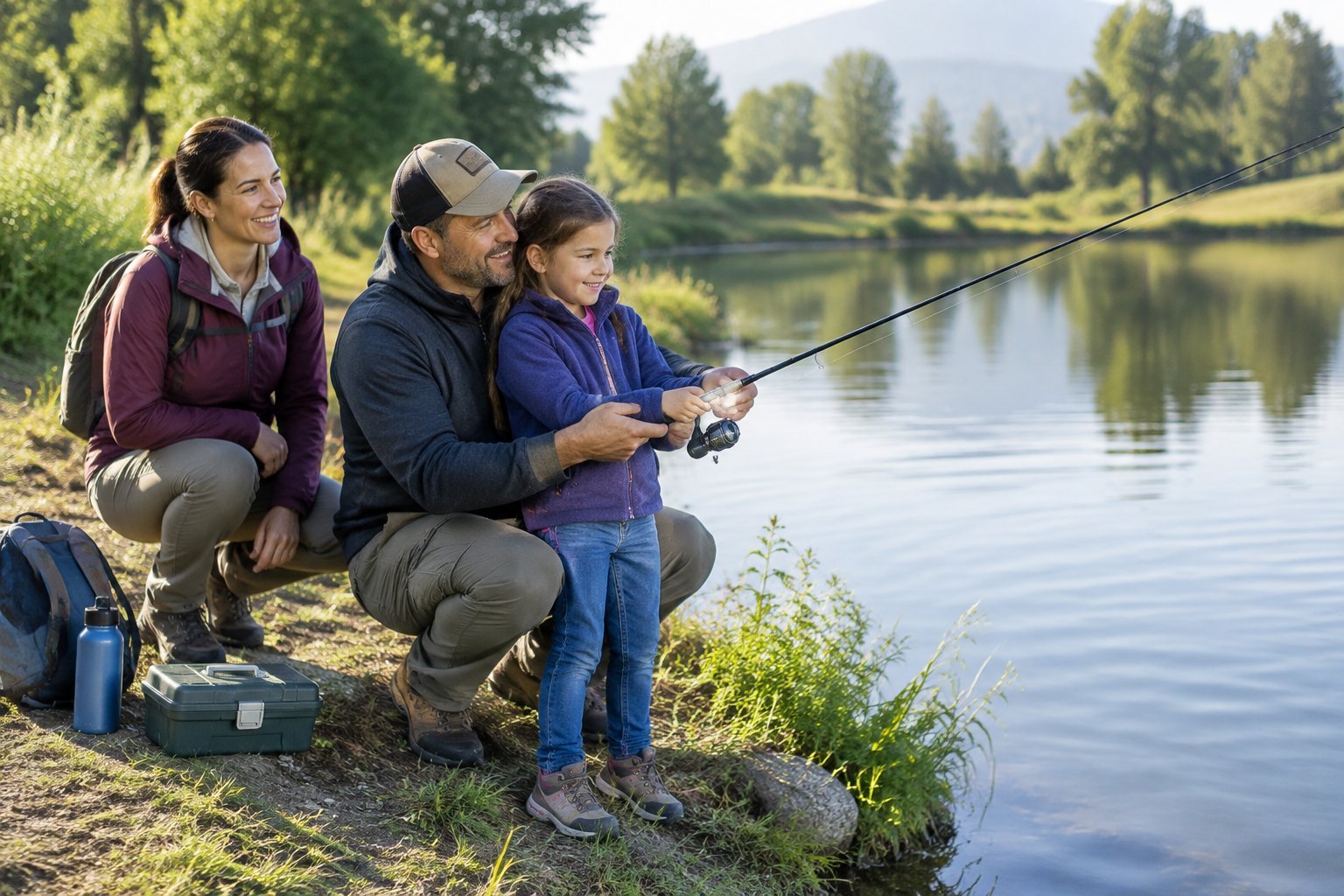
Make stocked trout fishing manageable with a nearby destination, prepared tackle, and a clear stopping time. For a first family outing, choose one technique and keep the walk from parking short.
Follow a Simple 30- to 60-Minute Fishing Plan
Divide your available time before leaving so setup and packing don’t consume the whole visit:
- First 5 to 10 minutes: Check posted rules, inspect the bank, and set up.
- Next 15 to 35 minutes: Fish one method and adjust depth.
- Next 5 to 10 minutes: Try a neighboring spot if needed.
- Last 5 minutes: Pack tackle and collect discarded line.
Use the shorter version for an after-work visit or a young child’s first outing. Keep spare tackle organized so a broken line only requires a quick retie.
Keep Kids Safe and Involved on the Bank
When fishing with kids, choose level ground and keep children within close supervision. Use a properly fitted, Coast Guard-approved life jacket near deep water, docks, or steep edges.
Establish a casting zone and have your child check behind before every cast. Handle hooks yourself until your child demonstrates safe control, and keep unused tackle closed.
Give your child a specific job, such as watching the float or spotting surface rises. Bring drinking water and a snack, and finish early if attention or safe behavior slips.
Land, Release, or Keep Trout Responsibly
Keep a rubber-mesh net and a few beginner fishing tools within reach before you cast. Guide a hooked trout into the net without lifting it by the line.
For release, wet your hands and keep the fish in the water while removing an accessible hook. Avoid touching the gills or squeezing the belly. If the hook is deeply embedded, cut the leader close to the mouth and minimize handling.
If you keep a legal trout, dispatch it promptly using a humane method and place it on ice. Follow local consumption advisories, and take your leftover bait and discarded line home.
Get your gear ready and explore the related beginner-friendly guides before your next trip.