Ice fishing gear for a first trip should keep you warm, steady, and ready to fish without making setup complicated. For beginners and families, the Frabill Ice Hunter Pro 30-Inch Combo is a practical starter pick because it pairs a short ice rod with a reel in one setup.
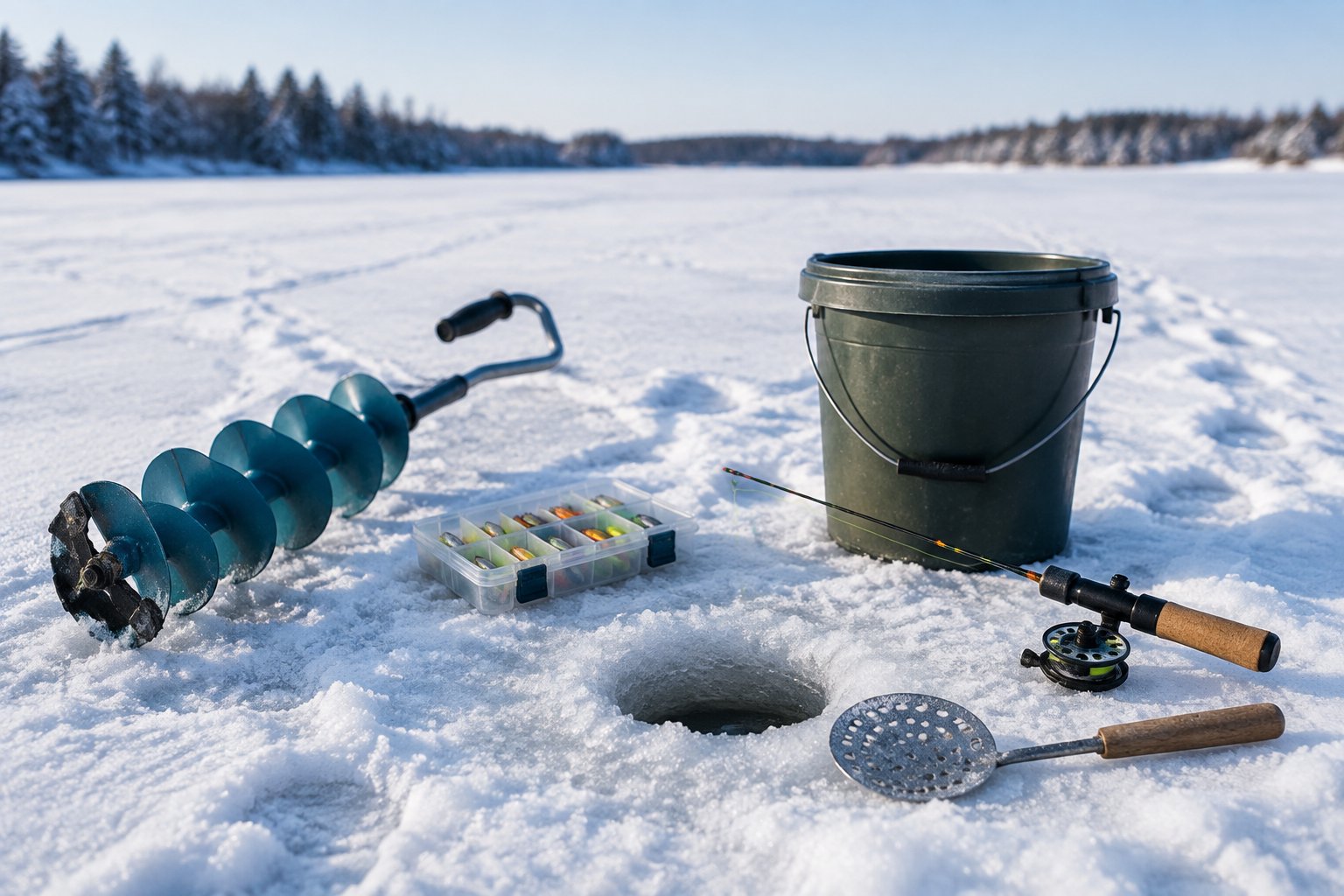
Your essentials are a rod and reel, a way to reach the ice, a scoop, bait or lures, warm clothing, and safety equipment for every person. Start with borrowed or rented gear where possible, then add equipment as you learn what fits your local lake and the time you have.
Quick picks:
- Best starter combo: Frabill Ice Hunter Pro 30-Inch Combo
- Essential ice safety: Rapala Retractable Ice Picks
- Best family shelter: Eskimo Quickfish 2i Insulated Shelter
1. Frabill Ice Hunter Pro 30-Inch Combo (Best Starter Combo)
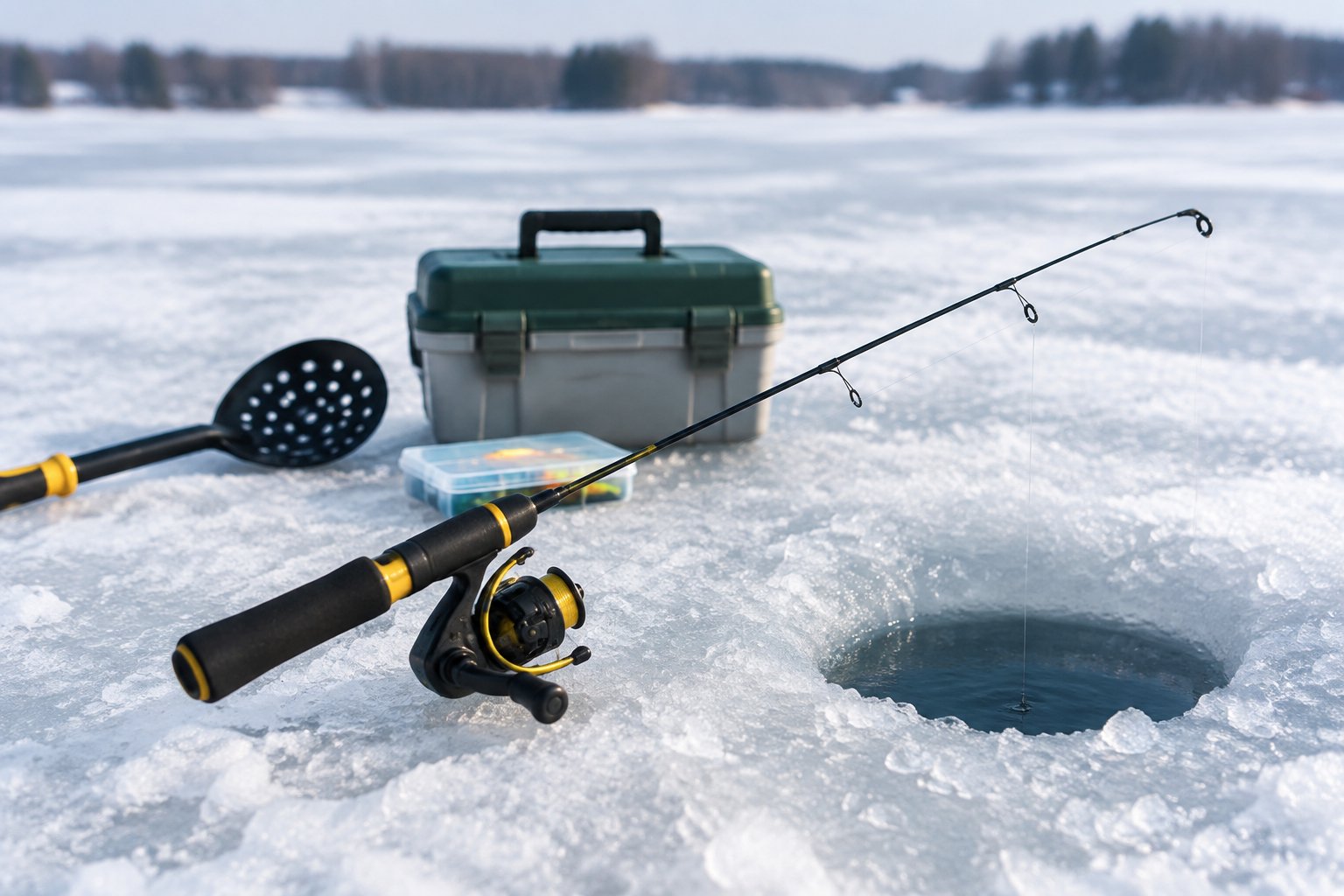
The Frabill Ice Hunter Pro 30-Inch Combo gives a beginner a ready-to-use rod-and-reel setup for fishing through the ice. A 30-inch rod is a manageable starting length when you are seated near a hole or fishing from a shelter.
A combo keeps the basic tackle choice straightforward: pair it with suitable ice-fishing line, a small jig, and bait recommended for your target fish. Check local regulations for bait rules and size limits before you go. If you already own a suitable reel, compare it with other fishing rods before adding another combo to your kit.
For a short first outing, bring one rod per angler and keep a spare jig or hook within reach. That makes it easier to help a child re-rig without pausing the whole trip.
2. Must-Have Safety: Rapala Retractable Ice Picks
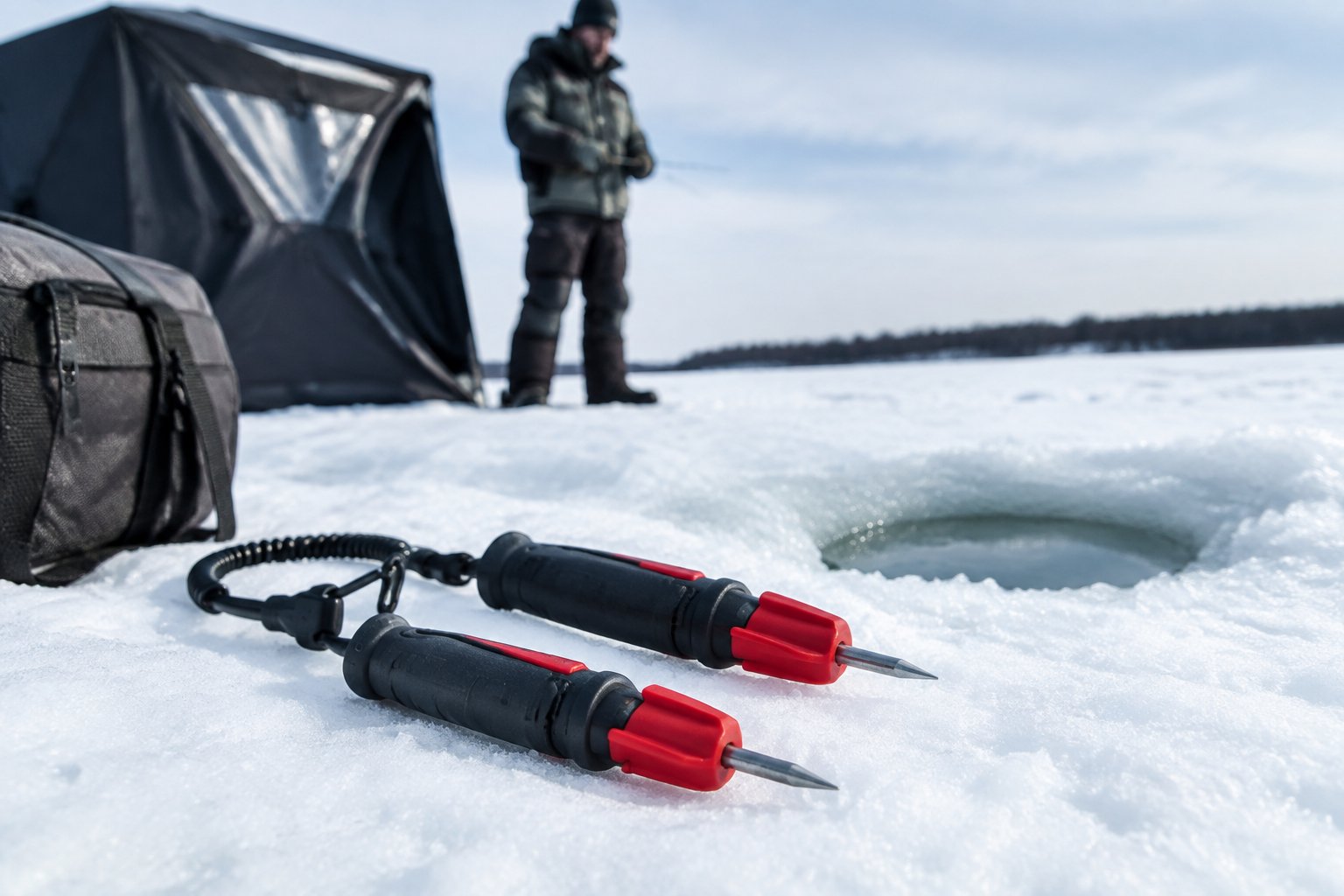
Carry ice picks where you can reach them quickly, and make sure every person in your group has a pair. Retractable picks give you a handhold to help pull yourself toward firmer ice if you break through.
Wear the picks around your neck or secure them to the outside of your clothing so they remain accessible. Before leaving shore, show children how the picks are worn and explain that they are emergency equipment, not toys. Adult supervision and conservative ice decisions remain essential.
Pair the picks with a charged phone in a protected pocket, and tell someone on shore where you plan to fish and when you expect to return.
3. Must-Have Safety: Yaktrax Pro Traction Cleats
Yaktrax Pro Traction Cleats add grip when you walk across slick ice and packed snow. Wear them over footwear that fits securely and provides enough warmth for the day.
Check that the cleats are seated evenly before stepping onto the ice, and take shorter steps on uneven surfaces. Traction helps with footing, but it does not make unsafe ice safe; follow local advisories and avoid areas with changing conditions, current, or open water.
Pack the cleats where you can put them on before reaching slippery shoreline or lake ice. For children, confirm the fit stays secure while walking.
4. Must-Have Safety: Striker Ice Predator Jacket and Bib
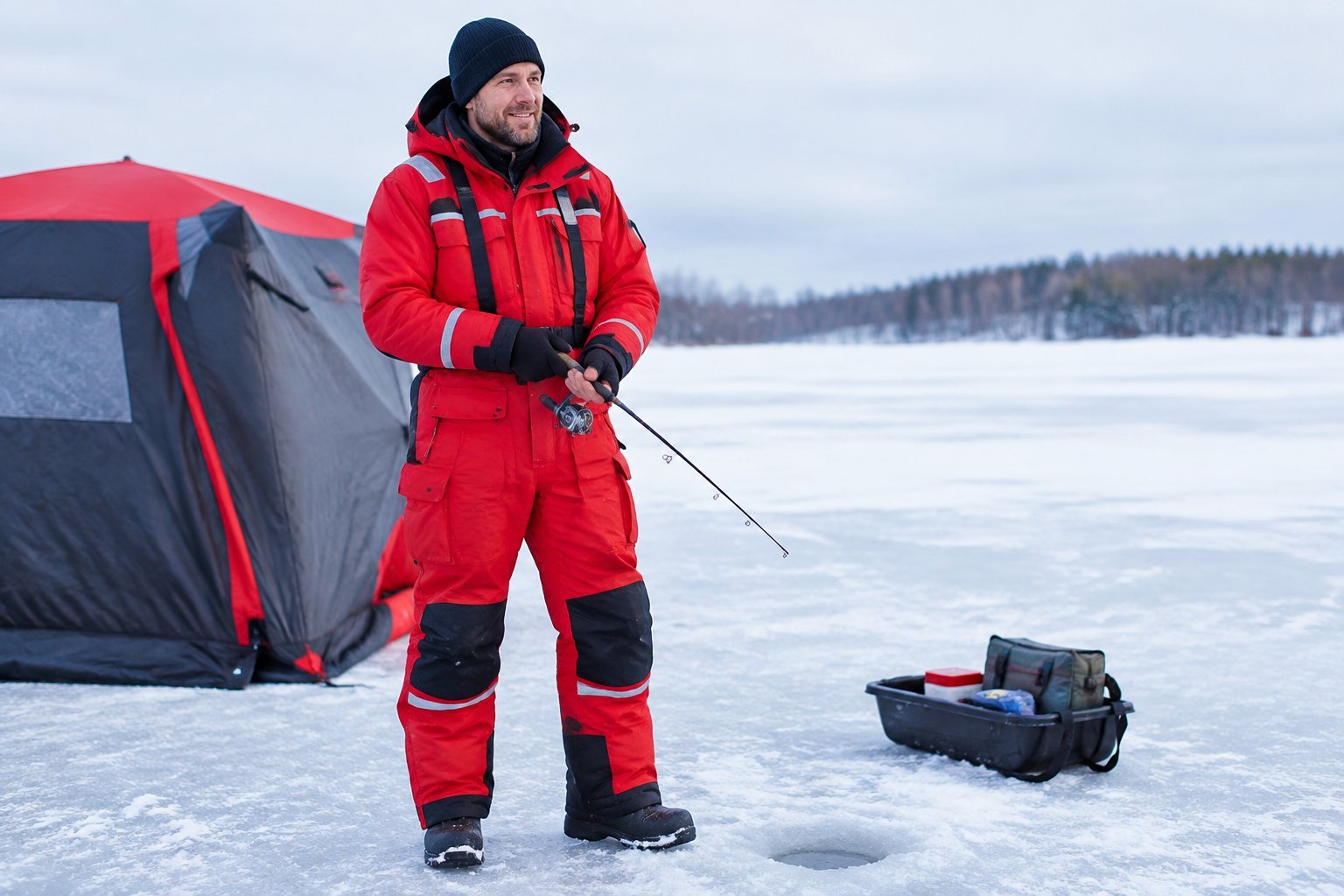
The Striker Ice Predator Jacket and Bib provide a dedicated outer layer for cold-weather ice fishing. A jacket-and-bib combination helps cover your torso and lower body while you sit, kneel, or move around a fishing hole.
Layer a warm base and insulating midlayer underneath, then adjust for wind and activity. Keep spare dry gloves and socks in a waterproof bag, especially when children are along. Check the manufacturer’s sizing and care guidance so the layers fit comfortably over winter clothing.
Treat cold protection as part of your safety plan: set a return time, watch for signs of cold stress, and head back to shelter when a family member becomes chilled.
5. StrikeMaster Lithium 40V Lite 8-Inch Ice Auger
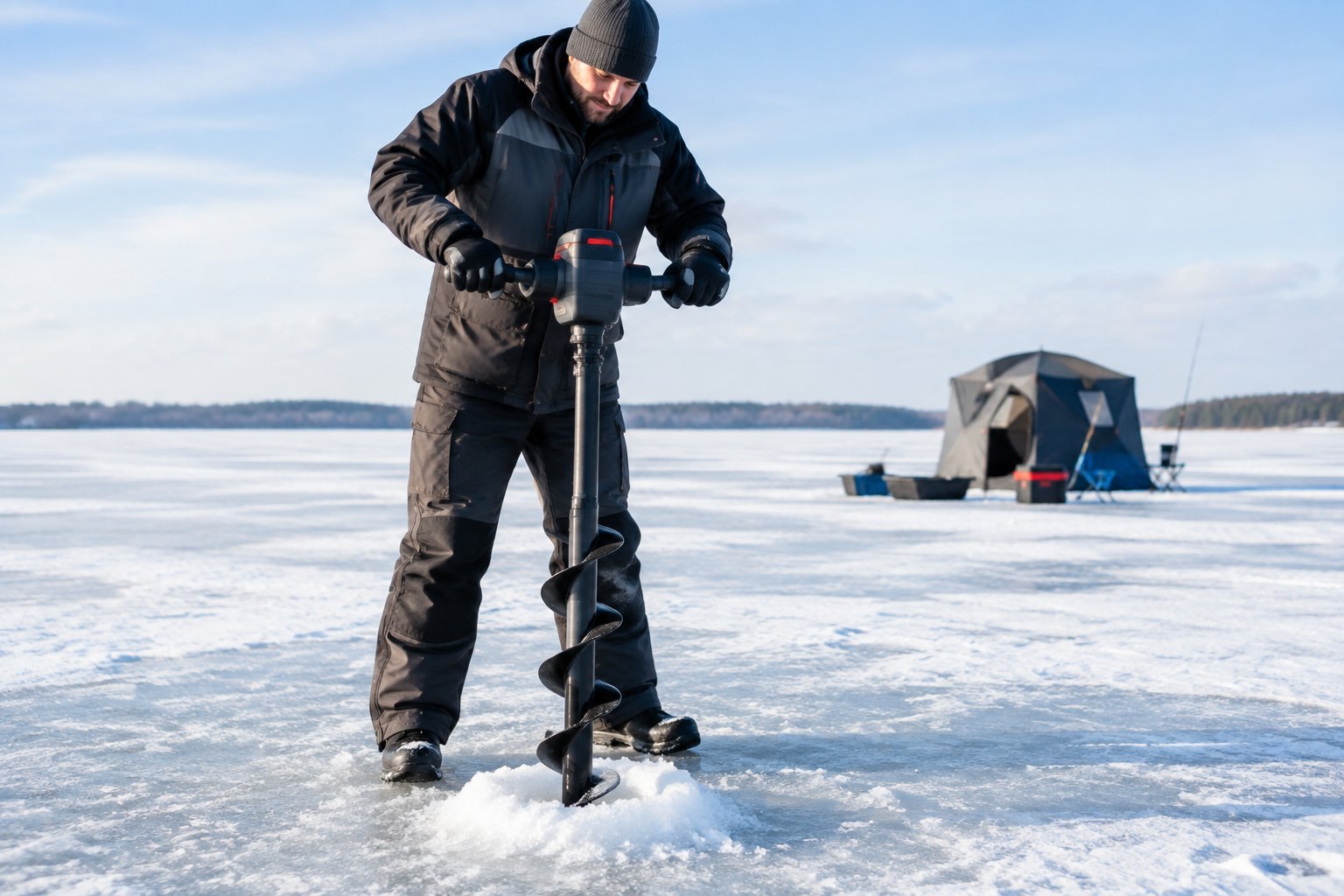
The StrikeMaster Lithium 40V Lite 8-Inch Ice Auger is a powered option for anglers who want to drill their own holes. Its 8-inch cutting diameter suits a range of common ice-fishing setups, while a powered auger reduces the manual effort of making holes.
Review the manufacturer’s instructions for battery charging, operation, and care, and keep hands clear of the cutting area. Carry the auger securely during travel and keep children at a safe distance when it is running.
For a first outing, ask a local outfitter or experienced companion about access to drilled holes before buying an auger. That lets you learn the basics and judge how many holes your trips require.
6. Frabill 1615 Ice Scoop
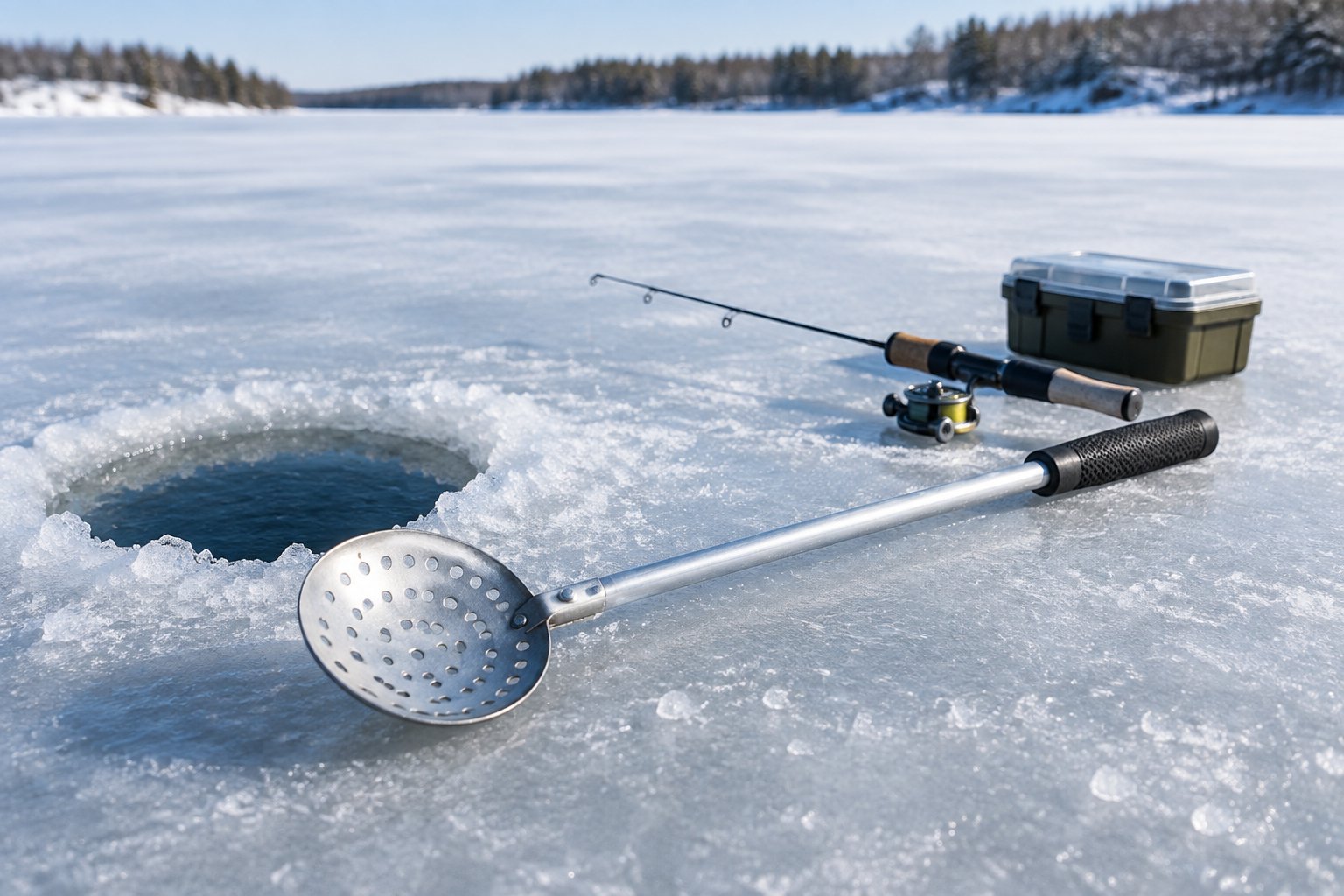
The Frabill 1615 Ice Scoop clears slush from a fishing hole so your line can move freely. After drilling, scoop floating ice and loose slush from the opening, then clear it again as water refreezes.
Keep the scoop beside the hole on a stable patch of snow, where it is easy to reach and less likely to slide into the water. If children are helping, show them how to use it slowly and keep them clear of the auger.
A simple scoop is a small addition with a clear job. Add it to your sled or gear bag before heading out.
7. Frabill Arctic Fire Tip-Up
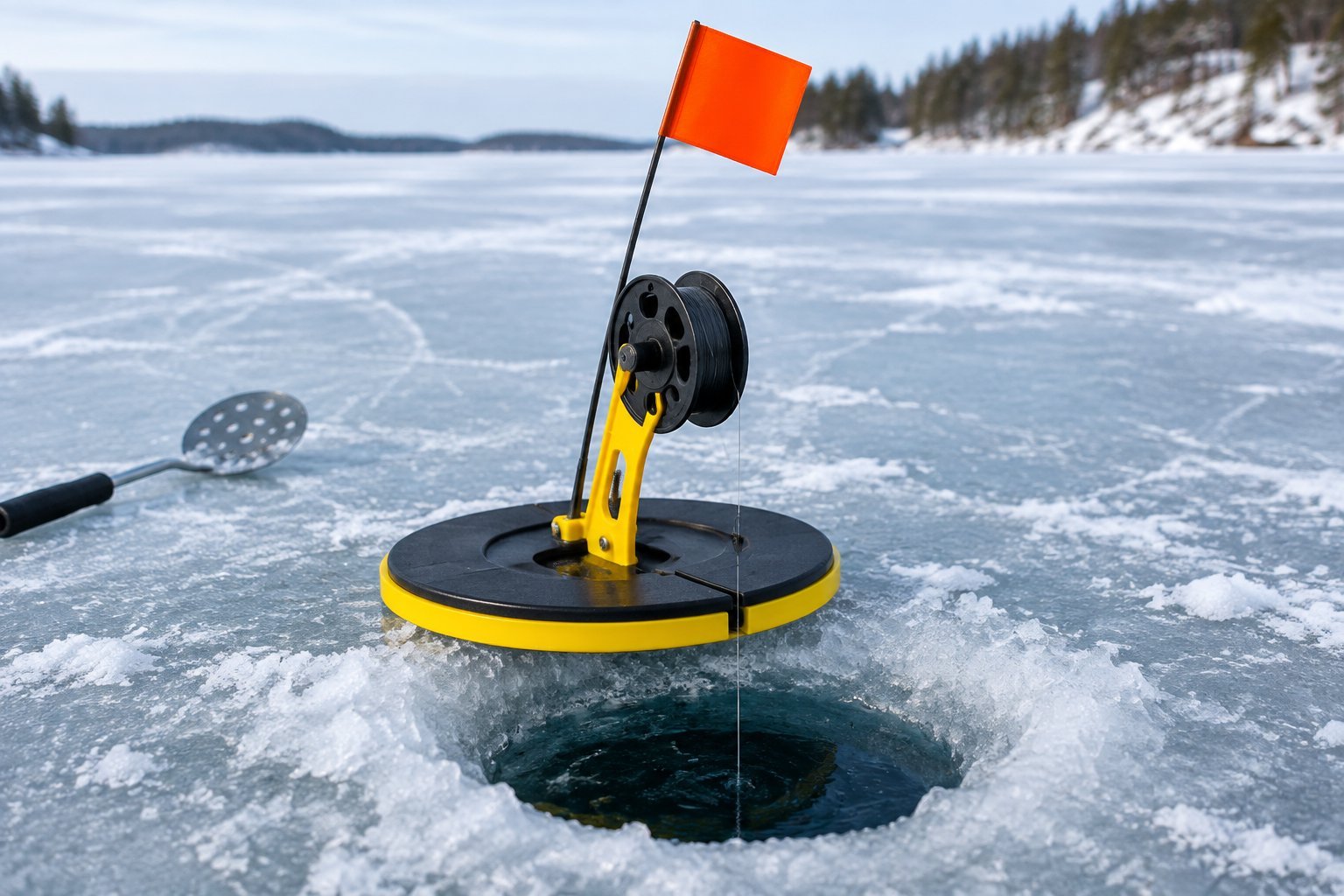
The Frabill Arctic Fire Tip-Up lets you fish a baited line through a separate hole while you stay nearby. Set the line and trigger according to the product instructions, then watch the flag for a strike.
Use tip-ups only where local rules permit them, and check regulations for limits on lines and required supervision. Keep each device in sight and close enough for an adult to respond promptly. A tip-up can give children a clear signal to watch for, while an adult handles the hook and fish.
Bring a small tackle container with spare line components and hooks, and keep bait stored securely in cold-weather conditions.
8. Vexilar FL-8SE Genz Pack Flasher
The Vexilar FL-8SE Genz Pack Flasher gives you a sonar display to help locate fish and track your presentation below the ice. A flasher can show activity in the water column, helping you adjust the depth of a jig.
Read the device manual before the trip and learn the basic display controls at home. For a beginner, focus on one task: watch how your lure appears, then raise or lower it in small increments. Keep the unit protected from snow and follow the manufacturer’s battery and storage guidance.
A flasher adds information, though it is optional for a first outing. You can begin with a rod, bait, and safe access, then decide whether sonar fits your fishing style.
9. Eskimo Quickfish 2i Insulated Shelter
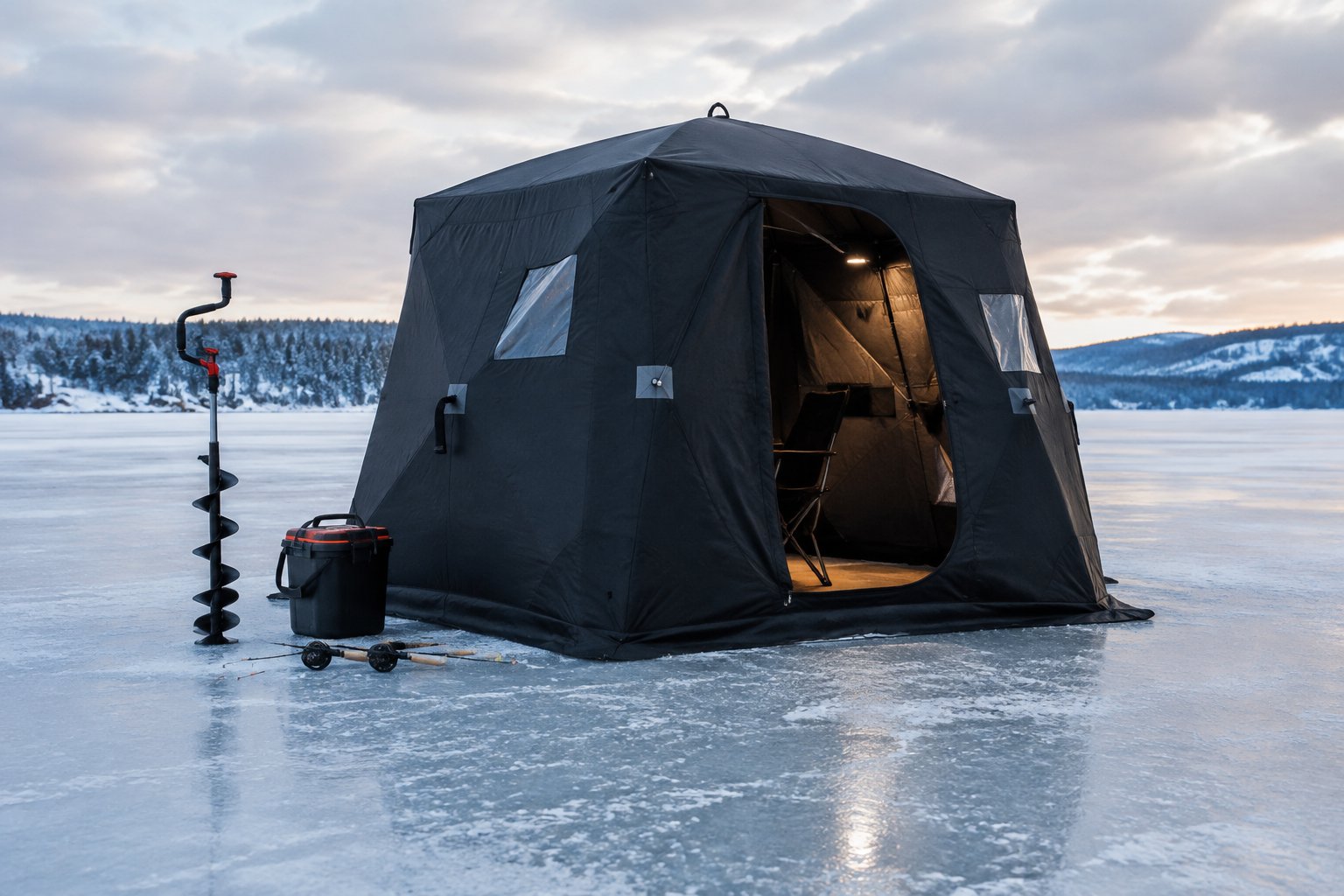
The Eskimo Quickfish 2i Insulated Shelter gives a family a covered place to fish and take breaks from wind. An insulated shelter helps create a more comfortable area for sitting, organizing tackle, and warming up during a longer outing.
Check the setup, anchoring, ventilation, and heating instructions before using the shelter. Keep fuel-burning heaters operated exactly as directed, with appropriate ventilation and carbon monoxide precautions. Never let children handle a heater or its fuel.
For a short trip, weigh the shelter’s setup time and transport needs against the forecast. It is most useful when you plan to stay in one spot or need a protected base for family breaks.
10. Otter Sport Sled Jr.
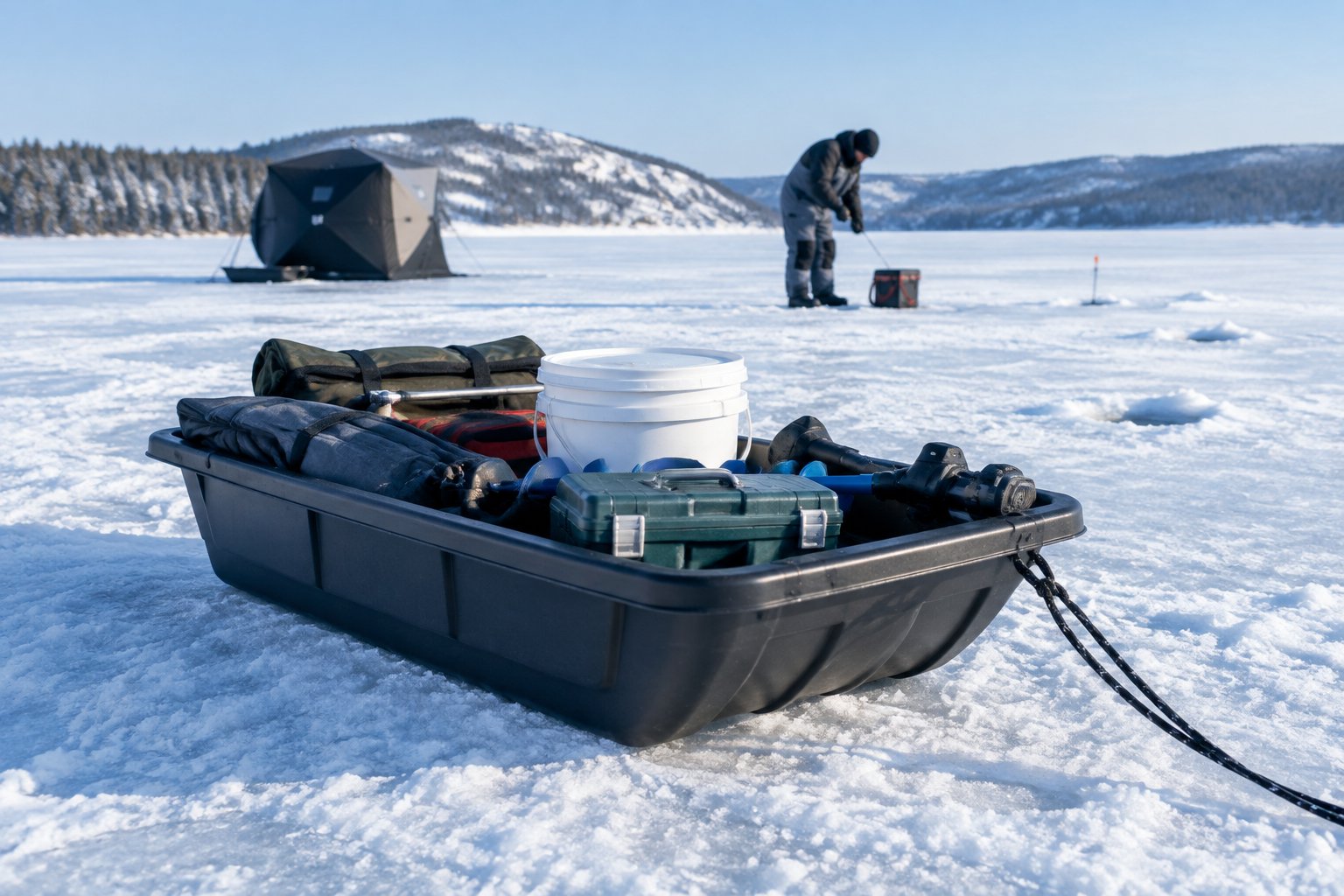
The Otter Sport Sled Jr. provides a compact way to haul ice-fishing equipment across snow and ice. Load your rod case, scoop, bait, extra clothing, and other supplies together so you can move them in one trip.
Balance the load and secure loose items before pulling the sled. Keep emergency equipment easy to reach, and avoid piling gear so high that it blocks your view of children or the route ahead.
A sled also gives kids a simple way to help carry light items under adult supervision. Leave sharp tools and heavy equipment for an adult to handle.
Build a Minimal Ice Fishing Starter Kit
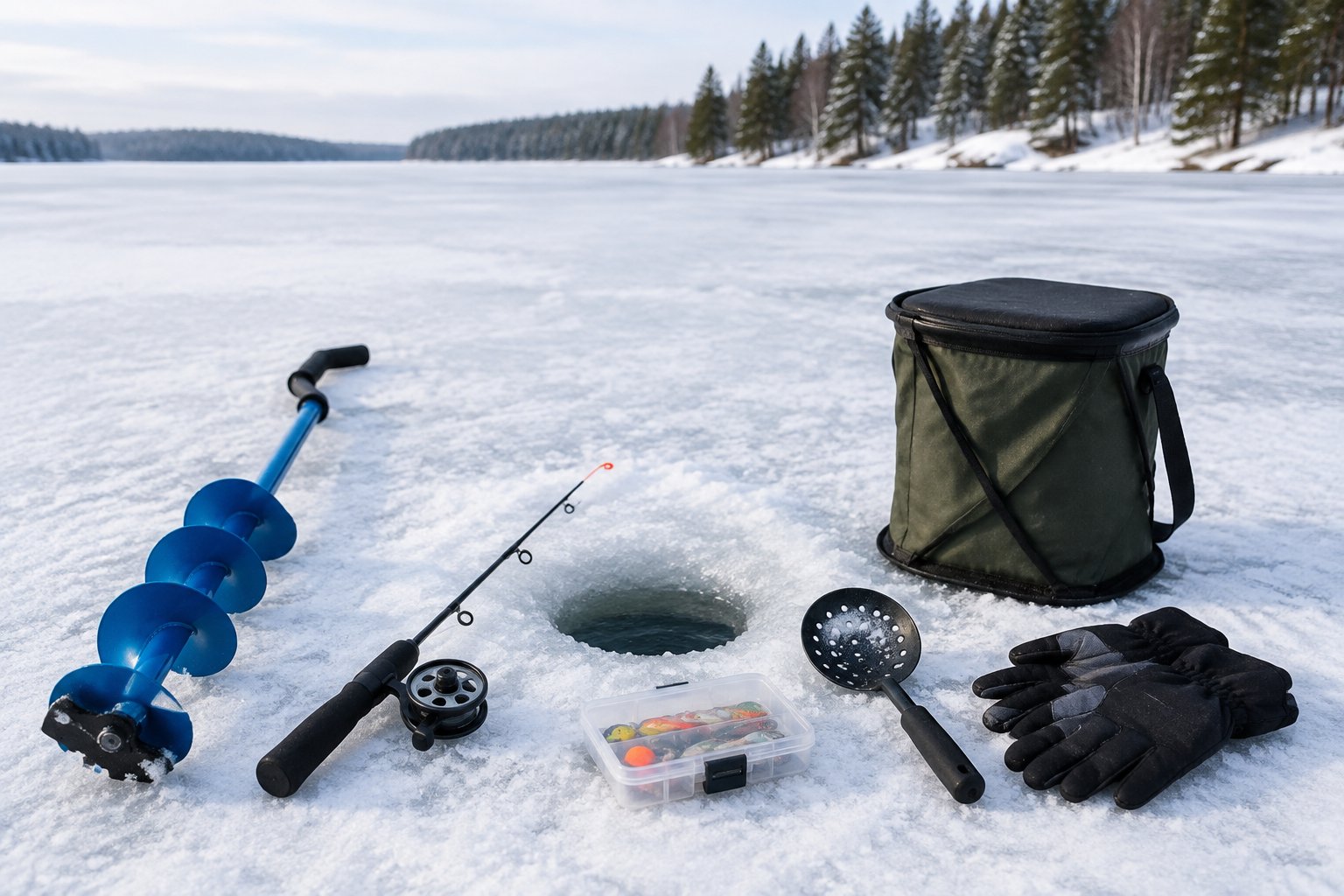
A minimal starter kit needs a rod and reel, bait or a simple jig, a scoop, warm layers, and individual safety equipment. Add an auger or shelter only when your access plan and trip length call for them.
What gear do you need for a short first trip?
Pack one ice rod and reel per angler, line, a few simple jigs or hooks, and bait allowed by local regulations. Bring an ice scoop, a small tackle container, water, snacks, and a dry bag with spare gloves and socks.
Each person should have ice picks and suitable footwear with traction. Dress in layers and carry a charged phone in a protected pocket. Before leaving, confirm ice conditions with a reliable local source and make a plan for reaching the fishing spot safely.
If you are new to fishing, a compact beginner fishing kit can help you compare basic tackle needs, though ice-specific safety equipment still requires separate attention.
Which items can you borrow or skip at first?
Borrow an auger, flasher, tip-up, and shelter from an experienced angler or outfitter when possible. For a short outing, you can skip powered hole-drilling equipment and sonar if someone has already prepared a safe fishing location.
Keep personal safety gear on your own checklist, especially ice picks, warm clothing, and footwear traction. Ask the local bait shop about regulations, bait choices, and current access conditions before packing.
Family Ice Fishing Safety Checklist
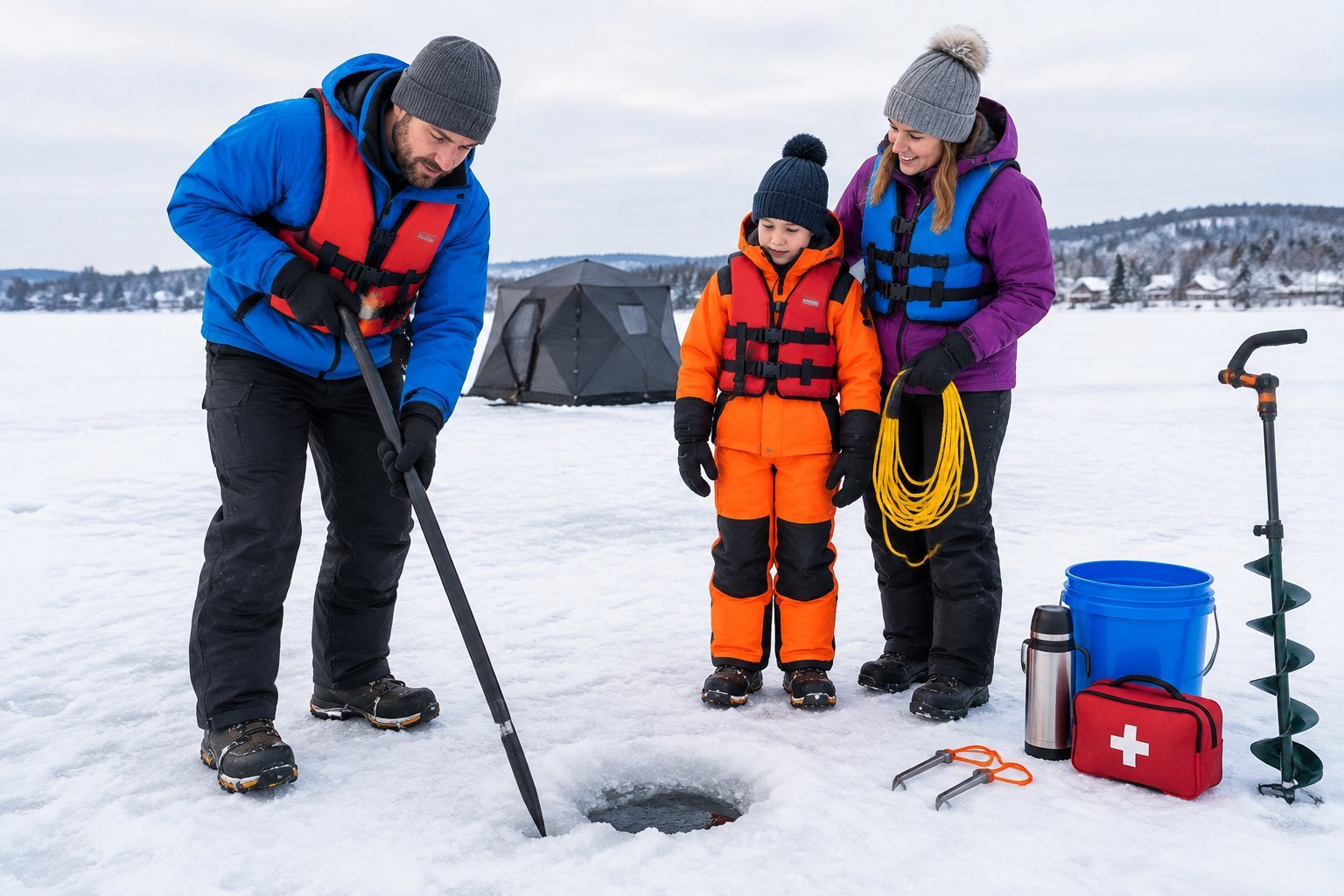
A family ice-fishing plan should give every person safety gear, warm clothing, and a clear adult-supervision rule. Check conditions before departure and keep children close throughout the trip.
What safety gear should every person carry?
Give each person accessible ice picks and footwear with traction. Adults should carry a charged phone in a protected pocket, and the group should bring a first-aid kit and spare dry clothing.
Wear layers suited to the forecast, including insulated outerwear, warm gloves, and head protection. Keep emergency gear within reach rather than buried under tackle or food.
What should parents check before heading onto the ice?
Check local ice reports and advisories on the day of the trip, and follow the guidance of local authorities. Ice thickness and quality can vary across one body of water, so avoid unverified areas, current, inlets, outlets, and visible cracks or open water.
Tell someone where your family plans to fish and when you expect to return. Confirm each child’s clothing and footwear fit, review the route, and set a boundary that keeps children beside an adult. Turn back when conditions change or visibility drops.
How can you keep kids warm, visible, and within reach?
Dress children in adjustable layers and pack dry gloves, socks, and an extra warm layer in a waterproof bag. Use bright outerwear so adults can spot them against snow and ice.
Keep children within arm’s reach near holes, tools, and the shoreline. Give them simple jobs such as carrying a light item or watching a tip-up, while an adult handles the auger, hooks, and any heater.
Frequently Asked Questions
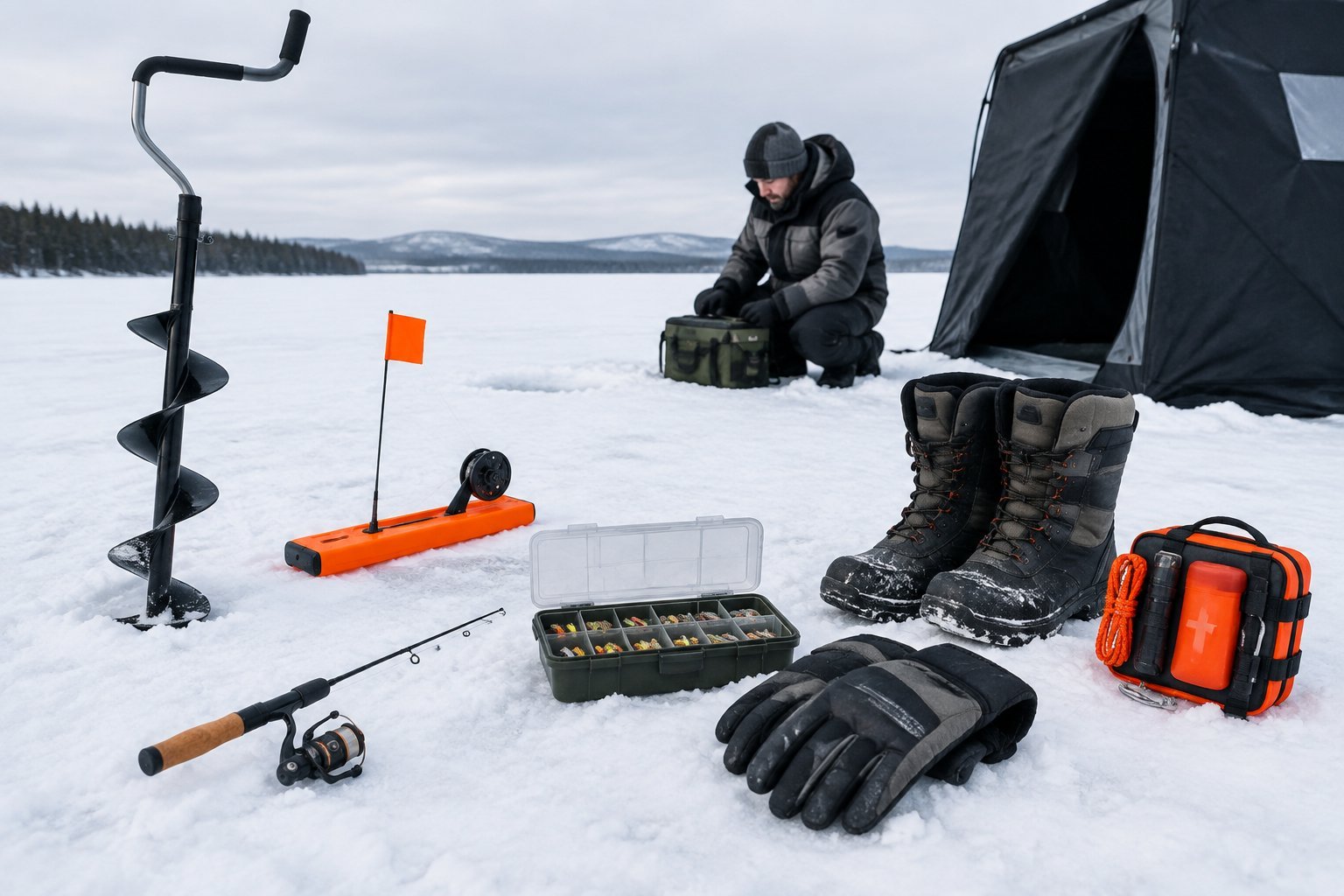
What does every ice fisherman need?
Every ice angler needs suitable winter clothing, a rod and reel, bait or lures, and a safe way to reach and fish the location. Carry ice picks and footwear traction, and check local ice guidance before stepping onto a frozen lake.
What is the best gear for a beginner ice fisherman?
A rod-and-reel combo such as the Frabill Ice Hunter Pro 30-Inch Combo gives a beginner a simple starting setup. Add a scoop, basic tackle, warm layers, and personal safety equipment before considering a flasher or shelter.
Do you need an ice auger for your first trip?
You need a safe, legal way to access a fishing hole, though you do not have to own an auger for your first outing. Arrange access to a prepared hole through an experienced companion or outfitter, and follow local safety guidance.
What safety gear should kids have for ice fishing?
Each child should have accessible ice picks, warm layers, dry spare clothing, and footwear with traction. Keep children within arm’s reach near holes and equipment, with an adult supervising them at all times.
What is a good ice fishing gift for a beginner?
A beginner-friendly ice rod-and-reel combo, ice scoop, or personal safety gear makes a useful gift. Check what the angler already owns and choose equipment suited to local regulations and the kind of trips they take.